What I Learned From My Students Who Became Teachers — from edsurge.com by Corey Winchester

Excerpt:

After nearly two hours of laughter, tears and thoughtful discussion with students who have become teachers, I walked away with two important messages that affirm why teachers decide to stay and why our stories deserve to be heard.
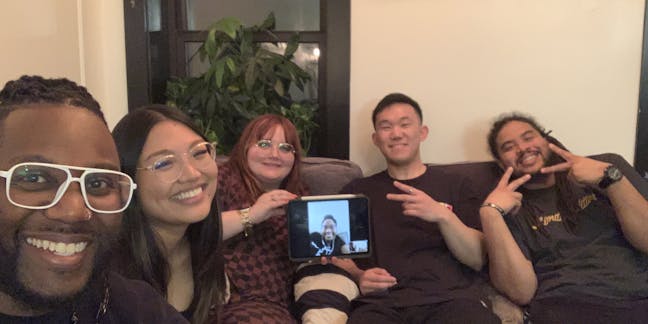
Pictured from left to right: Corey Winchester, Paula Katrina Camaya, Victoria Kosiba, Gariecia Rose (on Zoom), John Lee and Nick Davis. Photo courtesy of Winchester.

Our dinner conversation revealed that sometimes, it feels like we’re swimming against the flow of what we know is right for students and ourselves, while our education system emphasizes laws, mandates and standards purported to guide the next generation. Because of that, I worry that too many educators – newcomers and veterans alike – feel like they won’t be able to sustain the work. Now more than ever, educators need to be acknowledged and celebrated for the important work we do, especially when stories like ours reveal that meaningful relationships matter, especially when we have the ability and support to meet young people where they’re at.

To Improve a Child’s Education, We Must Be Willing to Let Old Practices Die — from edsurge.com by Isabel Bozada-Jones

Excerpt:

As the weeks turned to months and the surge from the pandemic finally ended, the question still hung in the air: what are we willing to lose in order to change a child’s life? We are still buckling under the weight of the inequitable education system that preceded the pandemic and the makeshift solutions created during the pandemic. At the same time, we fear losing what has kept us going. In order to answer this question, we need to shift from a mindset of scarcity and claim abundance.

They Left Teaching in Search of a Better Life. Did They Find It? — from edsurge.com by Emily Tate Sullivan

Excerpt:

To find out what happens after teachers put in their notice, as they transition into their next acts, EdSurge talked with six former classroom teachers who resigned at the end of the last school year, after that NEA survey was conducted. Is life on the other side everything they hoped and expected — and are they happy now?

How Music Technology Helped My Students Tap Into Their Creativity — from edsurge.com by David Casali

OPINION: Post-pandemic, let’s develop true education-to-workforce pathways to secure a better future — from hechingerreport.org by Mat Gandal
New partnerships will help smooth the way from high school to higher education and careers

That’s why it is once again time for a major evolution in how we think about U.S. education. If we want to address the challenges and inequities faced by students and the ongoing needs of employers and communities, we must deliver on a concept that has gained substantial momentum in recent years: education-to-workforce pathways.
…
Through LAUNCH, teams of legislative, K-12, higher education and workforce leaders will be deeply analyzing existing education systems to identify barriers for students. They’ll also come up with ways to help students persist and complete high-quality pathways.

 

The top online learning statistics in 2023 — from Devlin Peck’s Online Learning Statistics: The Ultimate List in 2023

  • Worldwide, 49% of students have completed some sort of online learning
  • Online learning is the fastest-growing market in the education industry – it has grown 900% since its creation in 2000
  • 70% of students say online learning is better than traditional classroom learning
  • The number of online learning users is expected to increase to 57 million by 2027
  • 80% of businesses now offer online learning or training solutions
  • 63% of students in the US engage in online learning activities daily
  • Online learning can increase student and employee retention to as much as 50%
  • Online learning can reduce the time needed to learn a subject by 40% to 60%
  • The online learning industry is projected to be worth more than $370 billion by 2026
  • Online learning and training can improve employee performance by 15% to 25%

Trade programs — unlike other areas of higher education — are in hot demand — from hechingerreport.org by Olivia Sanchez
Many young people choose to pursue short-term credentials over traditional college because they see them as a quicker and a more affordable path to a good

Excerpt:

While almost every sector of higher education is seeing fewer students registering for classes, many trade school programs are booming. Jones and his classmates, seeking certificates and other short-term credentials, not associate degrees, are part of that upswing.

Mechanic and repair trade programs saw an enrollment increase of 11.5 percent from spring 2021 to 2022, according to the National Student Clearinghouse. Enrollment in construction trades courses increased by 19.3 percent, while culinary program enrollment increased 12.7 percent, according to the Clearinghouse.


Death of a Traditional Lecture — from by

Excerpts:

However, some of the digital/remote content is better than what we can provide in the physical classroom. For example, in a biology course, instructors can watch students interact with thousands of 3D models, such as those found on Sketchfab or virtual programs such as BioDigital. Additionally, students can follow along virtually as instructors point out different structures. This approach is not possible in a physical classroom unless each student has their own physical model or they bring their computers.
…
We should welcome the unfamiliarity of new and blended course designs and strive to build courses based on the best approach for the content regardless of the format, rather than revert to the comfort of analog lecturing.


How College Students Say They Learn Best— from insidehighered.com by Colleen Flaherty
In a new Student Voice survey, students share their preferences for class format, active learning strategies and note-taking. Interactive lectures and case studies are especially popular.


OPM Market Landscape And Dynamics: Spring 2023 Updates — from philhillaa.com by Phil Hill

Excerpt:

OPM Market Landscape

  • Market valuations of publicly-traded OPM companies have continued to drop, with 2U/edX, Coursera, and Keypath all down 75% or more from March 2021.
  • Pearson tapped out of the market, agreeing to sell its OPM business to private equity firm Regent.
  • Zovio is no more. It has ceased to be.
  • FutureLearn sold the remnants of its business to a for-profit system, and it now has the most obnoxious website of any OPM provider, past or present.
  • Byju’s, which (according to multiple media accounts) had been considering an acquisition of 2U/edX or Coursera, abandoned these plans to go off and deal with its own financial crisis.
  • Noodle acquired South Africa-based Hubble Studios.
  • The Government Accountability Office (GAO) released a report on the OPM market, triggering (but not causing) official efforts to make massive regulatory changes.

Harvard and MIT Launch Nonprofit to Increase College Access — from edsurge.com by Jeffrey R. Young
The effort is backed by the $800 million sale of the online platform edX in 2021.

Excerpt:

What would you do if you had $800 million to build a new nonprofit to support innovation in online learning?

That’s the privileged question that officials at Massachusetts Institute of Technology and Harvard University have been mulling over for the last two years, and late last month they announced some answers.

The result is a new nonprofit named Axim Collaborative, and its focus will be on serving learners that higher education has historically left behind.

As the group’s new CEO, Stephanie Khurana, put it in an interview with EdSurge this week: “The focus of the mission is to really help postsecondary completion and issues of economic mobility.”


California helps college students cut their debt by paying them to help their communities — from hechingerreport.org by Gail Cornwall
Inspired by service programs from earlier eras, the College Corps program puts low-income, first-generation students to work in education, food insecurity and climate mitigation


‘The reckoning is here’: More than a third of community college students have vanished — from hechingerreport.org by Jon Marcus
Among those who do enroll, red tape and a lack of support are crushing their ambition


The Importance of Student Agency and Self-Direction — from evolllution.com by Cathrael Kazin

Excerpt:

The traditional higher education model is not a one-size-fits all. And students are increasingly calling for adaptability and flexibility to meet their needs. The focus on student agency is a tactic that many leaders can leverage when looking to support these needs and thrive moving forward. In this interview, Cathrael Kazin discusses the need for student agency and self-direction, the challenges that come with it and how to improve student retention and success.


The future of education in a world of AI — from oneusefulthing.org by Ethan Mollick
A positive vision for the transformation to come

Excerpt:

Imagine introducing high-quality AI tutors into the flipped classroom model. These AI-powered systems have the potential to significantly enhance the learning experience for students and make flipped classrooms even more effective. They provide personalized learning, where AI tutors can tailor instruction to each student’s unique needs while continually adjusting content based on performance. This means that students can engage with the content at home more effectively, ensuring they come to class better prepared and ready to dive into hands-on activities or discussions.

With AI tutors taking care of some of the content delivery outside of class, teachers can devote more time to fostering meaningful interactions with their students during class. They can also use insights from the AI tutors to identify areas where students might need extra support or guidance, enabling them to provide more personalized and effective instruction. And with AI assistance, they can design better active learning opportunities in class to make sure learnings stick.


Also relevant/see:

ChatGPT is going to change education, not destroy it — from technologyreview.com by Will Douglas Heaven
The narrative around cheating students doesn’t tell the whole story. Meet the teachers who think generative AI could actually make learning better.

Advanced chatbots could be used as powerful classroom aids that make lessons more interactive, teach students media literacy, generate personalized lesson plans, save teachers time on admin, and more.

Will ChatGPT Change How Professors Assess Learning? — from chronicle.com by Becky Supiano
It won’t be easy without their colleges’ support.

What the Past Can Teach Us About the Future of AI and Education — from campustechnology.com by Dr. David Wiley
Current attitudes toward generative AI hearken back to early skepticism about the impact of the internet on education. Both then and now, technology has created challenges but also opportunities that can’t be ignored.


How Easy Is It/Will It Be to Use AI to Design a Course? — from wallyboston.com by Wally Boston

Excerpt:

Last week I received a text message from a friend to check out a March 29th Campus Technology article about French AI startup, Nolej. Nolej (pronounced “Knowledge”) has developed an OpenAI-based instructional content generator for educators called NolejAI.

Access to NolejAI is through a browser. Users can upload video, audio, text documents, or a website url. NolejAI will generate an interactive micro-learning package which is a standalone digital lesson including content transcript, summaries, a glossary of terms, flashcards, and quizzes. All the lesson materials generated is based upon the uploaded materials.


From DSC:
I wonder if this will turn out to be the case:

I am sure it’s only a matter of time before NolejAI or another product becomes capable of generating a standard three credit hour college course. Whether that is six months or two years, it’s likely sooner than we think.


Also relevant/see:

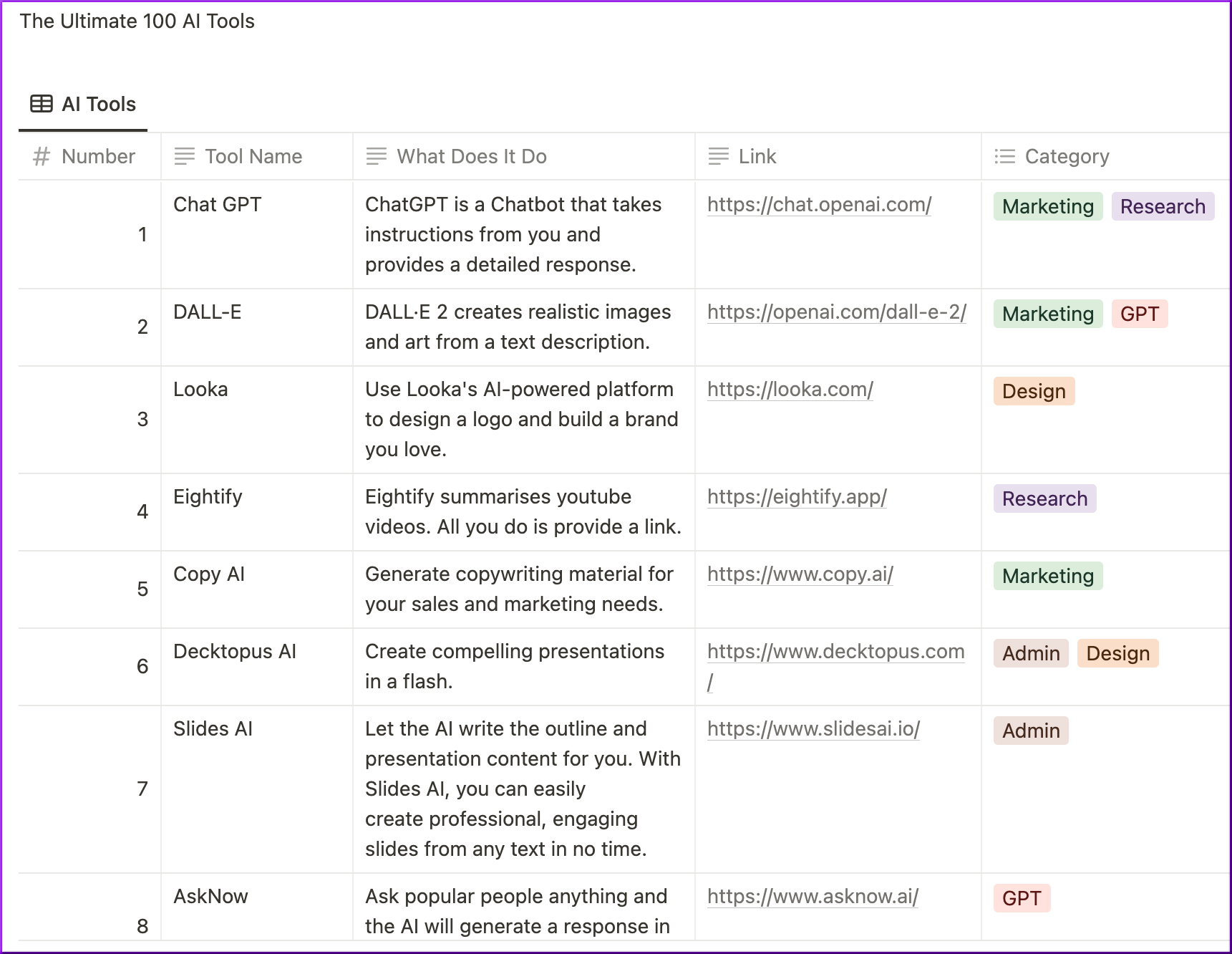
The Ultimate 100 AI Tools

The Ultimate 100 AI Tools -- as of 4-12-23


From DSC:
Before we get to Scott Belsky’s article, here’s an interesting/related item from Tobi Lutke:


Our World Shaken, Not Stirred: Synthetic entertainment, hybrid social experiences, syncing ourselves with apps, and more. — from implications.com by Scott Belsky
Things will get weird. And exciting.

Excerpts:

Recent advances in technology will stir shake the pot of culture and our day-to-day experiences. Examples? A new era of synthetic entertainment will emerge, online social dynamics will become “hybrid experiences” where AI personas are equal players, and we will sync ourselves with applications as opposed to using applications.

A new era of synthetic entertainment will emerge as the world’s video archives – as well as actors’ bodies and voices – will be used to train models. Expect sequels made without actor participation, a new era of ai-outfitted creative economy participants, a deluge of imaginative media that would have been cost prohibitive, and copyright wars and legislation.

Unauthorized sequels, spin-offs, some amazing stuff, and a legal dumpster fire: Now lets shift beyond Hollywood to the fast-growing long tail of prosumer-made entertainment. This is where entirely new genres of entertainment will emerge including the unauthorized sequels and spinoffs that I expect we will start seeing.


Also relevant/see:

Digital storytelling with generative AI: notes on the appearance of #AICinema — from bryanalexander.org by Bryan Alexander

Excerpt:

This is how I viewed a fascinating article about the so-called #AICinema movement.  Benj Edwards describes this nascent current and interviews one of its practitioners, Julie Wieland.  It’s a great example of people creating small stories using tech – in this case, generative AI, specifically the image creator Midjourney.

Bryan links to:

Artists astound with AI-generated film stills from a parallel universe — from arstechnica.com by Benj Edwards
A Q&A with “synthographer” Julie Wieland on the #aicinema movement.

An AI-generated image from an #aicinema still series called Vinyl Vengeance by Julie Wieland, created using Midjourney.


From DSC:
How will text-to-video impact the Learning and Development world? Teaching and learning? Those people communicating within communities of practice? Those creating presentations and/or offering webinars?

Hmmm…should be interesting!


The Future of Teaching is Here — from samchaltain.substack.com by Sam Chaltain

Excerpts (emphasis DSC):

It’s not sexy, but I feel like Sal Khan’s recent video introducing his Academy’s GPT-fueled AI tutor augurs the future of the teaching profession — and not just at Khan Academy.
…
The tutor is already fully capable of offering personalized feedback, hints and suggestions for just about any topic for which there are already clearly established answers — from solving math equations with parentheses to digesting John Locke’s political philosophy.
…
But now we’ve entered a new chapter — dare I say, a Technological Singularity (20 years early) — one in which Chat-GPT in particular, and the daily flood of AI tools more generally, has changed the nature of the teacher/student relationship even more irrevocably than before.

As a result, from this day forward, the job of a teacher REALLY needs to stop being about transmission.

So what should it start being instead?
…
In which case, the future of teaching is not about transmission, but it is about the other trans- words: transmedia exploration, transdisciplinary weaving, transcultural understanding, and, yes, personal and societal transformation.


How to Create Compelling Writing Assignments in a ChatGPT Age — from chronicle.com by James M. Lang
A recent book offers a road map to new kinds of assignments to inspire your students to write.

Excerpt:

A few days after I returned from the conference, I received a book in the mail that affirmed my newfound sense that 2023 has the potential to usher in an age of creative thinking about teaching and writing: Jessica Singer Early’s Next Generation Genres: Teaching Writing for Civic and Academic Engagement. Although her book doesn’t directly address ChatGPT, it offers exactly the kind of innovative ideas we need as we wrestle — or dance — with the implications of artificial intelligence for college teaching.
…
Clearly Jessica Singer Early has joined the leaning-into camp, seeing artificial intelligence as another invitation to reinvent ourselves in the classroom — just as she encourages readers to do in Next Generation Genres, and as this teacher plans to do in the fall.


Why some college professors are adopting ChatGPT AI as quickly as students — from cnbc.com by Carolyn Chun

Key Points:

  • A recent analysis by researchers at NYU, Princeton and the Wharton School finds that many of the jobs that will be most “exposed” to generative AI such as ChatGPT are in the college teaching profession.
  • One of the first narratives to emerge from the sudden explosion in usage of ChatGPT is the risk of students cheating on writing assignments.
  • But use by college teachers is growing quickly too, and adoption by educators may be critical to making the case that AI will augment the jobs humans are doing rather than replace them.

Also relevant/see:


The Secret to Great Learning Design? Focus on Problems, not Solutions — from drphilippahardman.substack.com by Dr. Philippa Hardman
What a recent resurgence of research into problem-based learning has taught us about the value & impact of problem-based approaches

Excerpts:

Problem-based learning is an instructional approach that engages students in active, collaborative, and self-directed learning by exploring complex, real-world problems (rather than sitting and listening to a stage on the stage).

In a Problem-based learning scenario, students work in small groups and, under the guidance of a facilitator or instructor, identify, research, and analyse a problem before proposing and evaluating potential solutions and reaching a resolution.
…
Here are five of the most interesting research projects published on problem-based learning in the last few months:


Teaching: What You Can Learn From Students About ChatGPT — from chronicle.com by Beth McMurtrie

Excerpts (emphasis DSC):

Like a lot of you, I have been wondering how students are reacting to the rapid launch of generative AI tools. And I wanted to point you to creative ways in which professors and teaching experts have helped involve them in research and policymaking.

At Kalamazoo College, Autumn Hostetter, a psychology professor, and six of her students surveyed faculty members and students to determine whether they could detect an AI-written essay, and what they thought of the ethics of using various AI tools in writing. You can read their research paper here.
…
Next, participants were asked about a range of scenarios, such as using Grammarly, using AI to make an outline for a paper, using AI to write a section of a paper, looking up a concept on Google and copying it directly into a paper, and using AI to write an entire paper. As expected, commonly used tools like Grammarly were considered the most ethical, while writing a paper entirely with AI was considered the least. But researchers found variation in how people approached the in-between scenarios. Perhaps most interesting: Students and faculty members shared very similar views with each scenario.


Also relevant/see:

This Was Written By a Human: A Real Educator’s Thoughts on Teaching in the Age of ChatGPT — from er.educause.edu educause.org by Jered Borup
The well-founded concerns surrounding ChatGPT shouldn’t distract us from considering how it might be useful.


ChatGPT: Student insights are necessary to help universities plan for the future — from theconversation.com by Alpha Abebe and Fenella Amarasinghe

Excerpt:

In the race to get ahead of new technologies, are we forgetting about the perspectives of the most important stakeholders within our post-secondary institutions: the students?

Leaving students out of early discussions and decision-making processes is almost always a recipe for ill-fitting, ineffective and/or damaging approaches. The mantra “nothing for us without us” comes to mind here.


To help new students adapt, some colleges are eliminating grades — from npr.org by Jon Marcus

Excerpt (emphasis DSC):

Experiences like these are among the reasons behind a growing movement to stop assigning conventional A through F letter grades to first-year college students and, sometimes, upperclassmen.

Called “un-grading,” the idea is meant to ease the transition to higher education — especially for freshmen who are the first in their families to go to college or who weren’t well prepared for college-level work in high school and need more time to master it.

But advocates say the most important reason to adopt un-grading is that students have become so preoccupied with grades, they aren’t actually learning.


Higher Learning Commission's 2023 Trends


How can we teach and assess with ChatGPT? — from timeshighereducation.com by Soumyadeb Chowdhury and Samuel Fosso Wamba
A guide to designing teaching and assessments that encourage students to learn with and about ChatGPT

Excerpts:

  1. Design activities that require reflection:
  2. Link essay-type assignments to novel case studies:
  3. Ask for more in essay assessments:
  4. Discuss openly the importance of human skills in their future careers:

Also relevant/see:

  • ChatGPT can generate, but can it create? — from ecampusnews.com Dr. Lee Ann Dickerson; with thanks to Ray Schroeder for posting this resource on LinkedIn
    The AI chatbot is taking many of us in education by surprise and startling more of us to attention

Also relevant/see:


Also relevant/see:

AI in the Classroom, Teachers as Learners, Denver-bound, and more — from ed3.beehiiv.com by Scott Meyer
The most exciting ideas in education, hand-picked for you

 
© 2025 | Daniel Christian