2022 EDUCAUSE Horizon Action Plan: Hybrid Learning — from library.educause.edu

Excerpts:

Building on the trends, technologies, and practices described in the 2022 Horizon Report: Teaching and Learning Edition, the panel crafted its vision of the future along with practical action items the teaching and learning community can employ to make this future a reality. Any stakeholder in higher education who teaches in or supports hybrid learning modalities will find this report helpful in preparing for the future of hybrid learning. The future we want is within reach, but only if we work together.

Asked to describe the goals and elements of hybrid learning that they would like to see 10 years from now, panelists collaboratively constructed their preferred future for institutions, students, instructors, and staff.

Institutions

  • Higher education is available on demand.
  • Learning is not measured by seat time.
  • Collaboration across institutions facilitates advancement.
  • College and university campuses are not the sole locations for learning spaces.

Students, Instructors, and Staff

  • Everything is hybrid.
  • Student equity is centered in all modalities.
  • Professional development is ongoing, integrated, and valued.
 

How to Cope With Presentation Anxiety — from chronicle.com by James M. Lang
Here’s how a professor and experienced public speaker has learned to deal with the academic version of stage fright.

Excerpts:

Build a pause into the initial minutes of a presentation, so that you can stop and catch your breath. I don’t mean the kind of brief pause you might make between two sentences. I mean a substantive pause in which you are able to stop speaking — for at least 30 seconds — because you have given your audience something to view, think about, or discuss.

The remedy: Don’t envision yourself speaking for 45 minutes. Instead, soothe your brain and nervous system by persuading them that you only have to get through the next five minutes.

Your audience wants to learn from you. But real learning requires active thought from the learner. So use those early moments of your talk to start them thinking and take some of the pressure off you.


Learning from Our Students: Student Perspectives on Good Teaching — from everylearnereverywhere.org; with thanks to Beth McMurtrie for this resource

Excerpt (emphasis DSC):

Twenty-two students trusted us with their stories and their reflections on good teaching. We honor that trust and hope that instructors who read this document gain as much insight about teaching from the students as we did. While we often write of students in the plural, each one of these students had an individual experience with learning and therefore a unique story to tell about good teaching. The key takeaways from their stories are:

  1. Students want to be recognized as individuals and appreciated in the classroom.
  2. Students want real life in the classroom.
  3. Students want to be treated with respect and trust.

We hope readers will likewise ask their own students, “What do your best instructors do?” and use that feedback to continuously improve their craft as teachers.

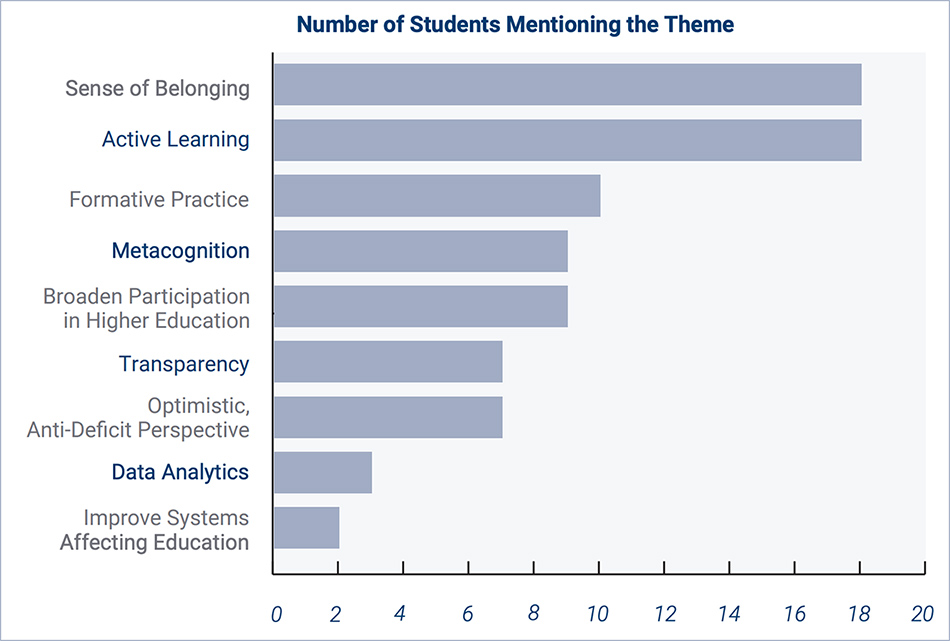
Out of 22 students:

active learning and a sense of belonging were the most frequently mentioned items from these 22 students


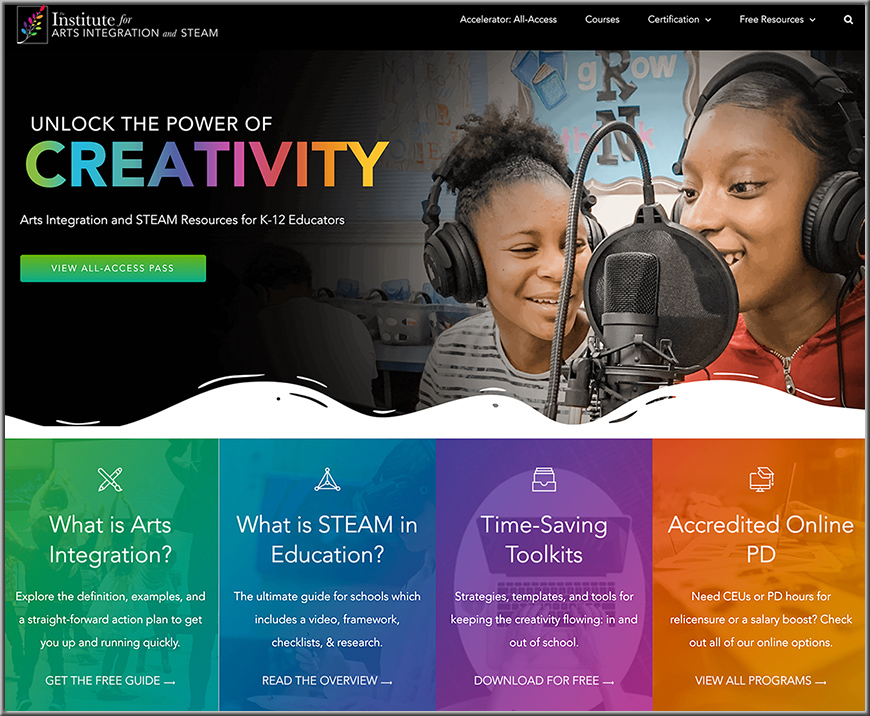
Arts Integration and STEAM Resources for K-12 Educators

Unlock the power of creativity -- arts integration and STEAM resources for K-12 educators

Official Trailer (Art Works for Teachers)

Excerpt:

Introducing the Art Works for Teacher Podcast Trailer! Get a quick sneak peek at what you can expect from this new show, launching September 22, 2022. New episodes will be available each Thursday on your favorite podcast platform, on YouTube, and right here on our site.


From DSC:
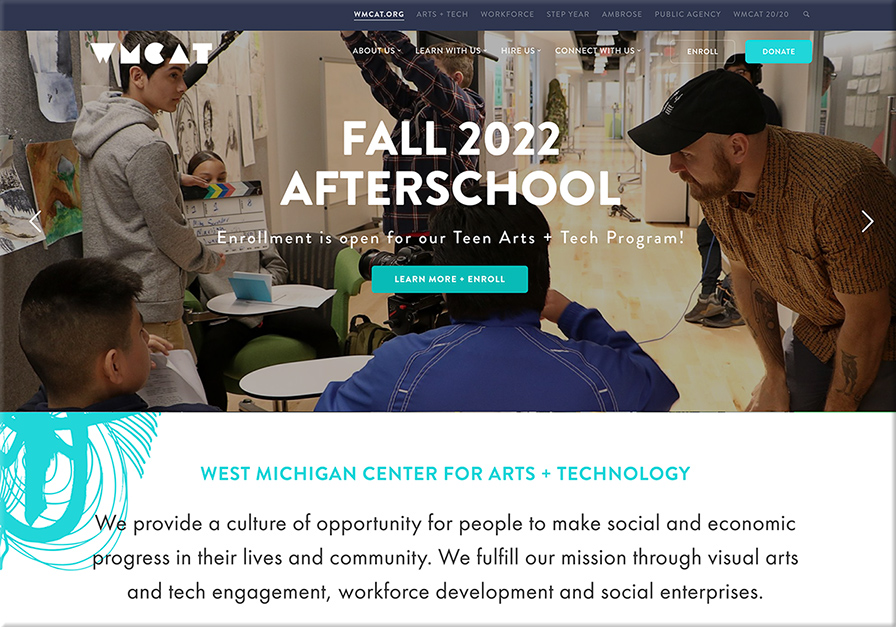
Along these lines, also see WEST MICHIGAN CENTER FOR ARTS + TECHNOLOGY. Such a learning environment builds skills and creativity while supercharging participation and engagement!


How I Learned (Almost) Everything I Know — from byrdseed.com by Ian Bryd

You’ve Got To See It
In short, the great educational leaders in my life did one of two things:

  1. Showed me exactly what to do.
  2. Sent me to the right person so I could watch it in action.


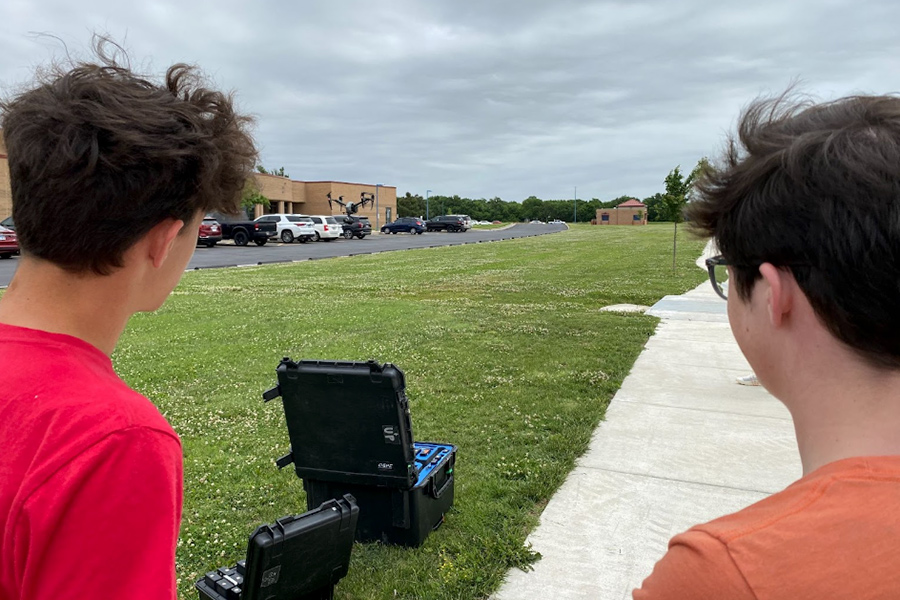
Diving into Drones – How your journalism program can use DJI drones to enhance your visuals — from jeadigitalmedia.org by Spencer O’Daniel

Excerpt:

Here’s our journey to getting started in the drone world and how our visuals took off (no pun intended) when we listened to the students and began actively using the drones in the field to cover stories in our surrounding community. Buckle up-I’m not an expert on drones by any means but here’s some information to get you started in the drone world.


To Improve Outcomes for Students, We Must Improve Support for Faculty — from campustechnology.com by Dr. David Wiley
The doctoral programs that prepare faculty for their positions often fail to train them on effective teaching practices. We owe it to our students to provide faculty with the professional development they need to help learners realize their full potential.

Excerpts:

Why do we allow so much student potential to go unrealized? Why are well-researched, highly effective teaching practices not used more widely?

The doctoral programs that are supposed to prepare them to become faculty in physics, philosophy, and other disciplines don’t require them to take a single course in effective teaching practices. 

The entire faculty preparation enterprise seems to be caught in a loop, unintentionally but consistently passing on an unawareness that some teaching practices are significantly more effective than others. How do we break this cycle and help students realize their full potential as learners?

From DSC:
First of all, I greatly appreciate the work of Dr. David Wiley. His career has been dedicated to teaching and learning, open educational resources, and more. I also appreciate and agree with what David is saying here — i.e., that professors need to be taught how to teach as well as what we know about how people learn at this point in time. 

For years now, I’ve been (unpleasantly) amazed that we hire and pay our professors primarily for their research capabilities — vs. their teaching competence. At the same time, we continually increase the cost of tuition, books, and other fees. Students have the right to let their feet do the walking. As the alternatives to traditional institutions of higher education increase, I’m quite sure that we’ll see that happen more and more.

While I think that training faculty members about effective teaching practices is highly beneficial, I also think that TEAM-BASED content creation and delivery will deliver the best learning experiences that we can provide. I say this because multiple disciplines and specialists are involved, such as:

  • Subject Matter Experts (i.e., faculty members)
  • Instructional Designers
  • Graphic Designers
  • Web Designers
  • Learning Scientists; Cognitive Learning Researchers
  • Audio/Video Specialists  and Learning Space Designers/Architects
  • CMS/LMS Administrators
  • Programmers
  • Multimedia Artists who are skilled in working with digital audio and digital video
  • Accessibility Specialists
  • Librarians
  • Illustrators and Animators
  • and more

The point here is that one person can’t do it all — especially now that the expectation is that courses should be offered in a hybrid format or in an online-based format. For a solid example of the power of team-based content creation/delivery, see this posting.

One last thought/question here though. Once a professor is teaching, are they open to working with and learning from the Instructional Designers, Learning Scientists, and/or others from the Teaching & Learning Centers that do exist on their campus? Or do they, like many faculty members, think that such people are irrelevant because they aren’t faculty members themselves? Oftentimes, faculty members look to each other and don’t really care what support is offered (unless they need help with some of the technology.)


Also relevant/see:


From DSC:
The first item below is from Harsh Makadia — with thanks to educatorstechnology.com for mentioning Harsh on this posting.


Also see:

Great Tips for Using Chrome — from lawpracticetipsblog.com by Jim Calloway

…as well as the Tweet below


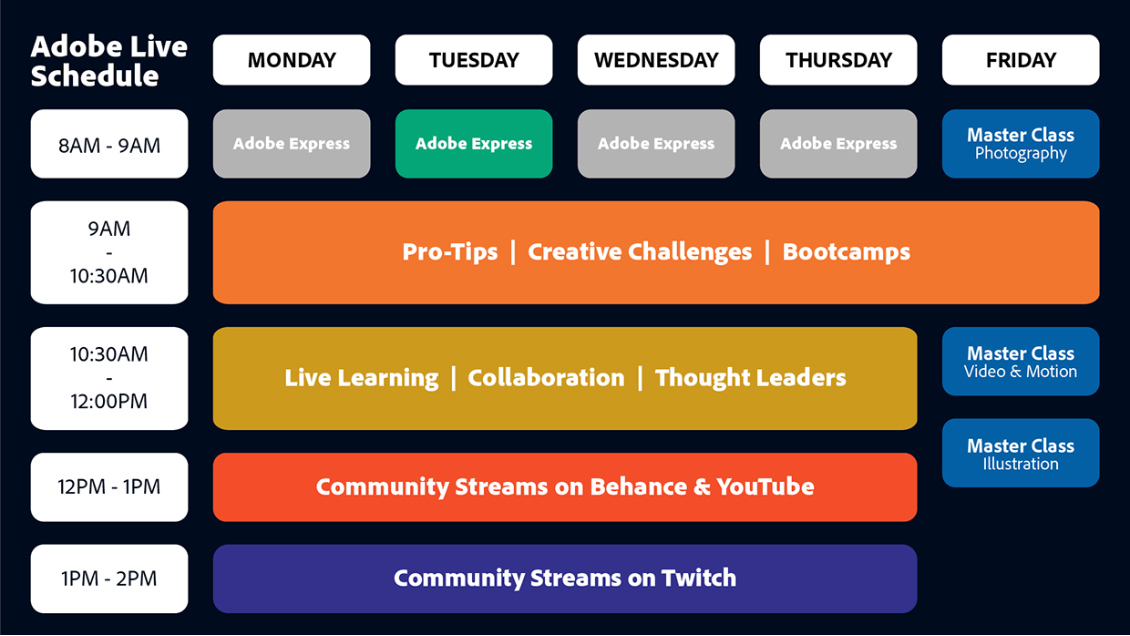
Per Adobe today (emphasis DSC):

And we’re live! Starting 9:30am pst on Adobe Live’s YouTube Channel

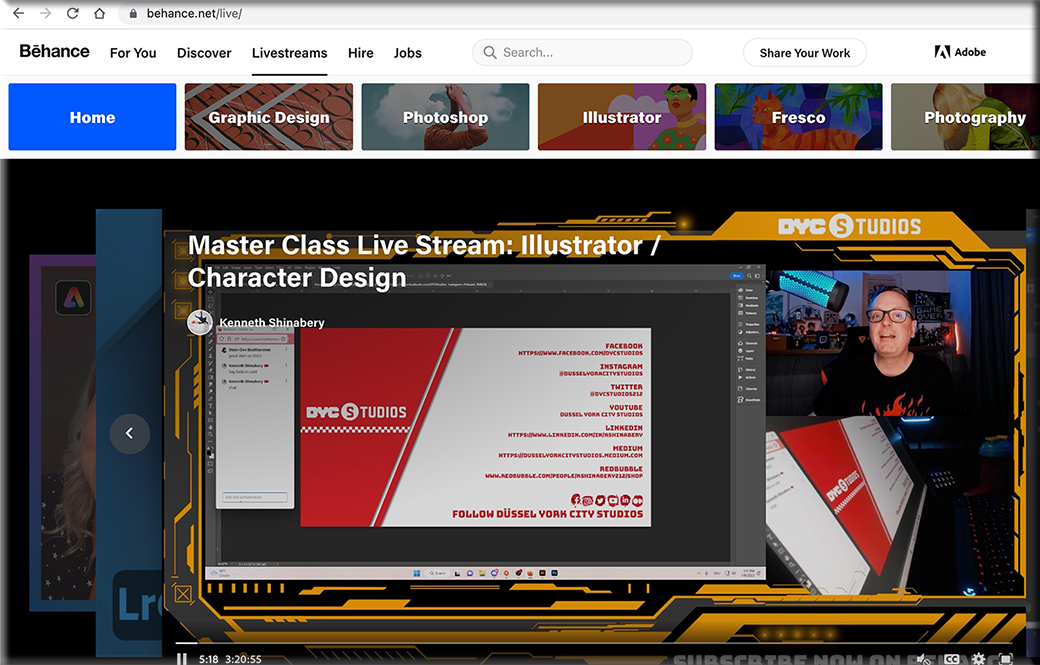
After years of partnering with the Creative Cloud YouTube channel to bring our community inspiration and advice, Adobe Live will be streaming to our own YouTube channel (+Behance!) starting 9/6! This gives the Adobe Live team an exciting opportunity to connect closely with YOU, our community, through tailored content, YouTube’s community tab and, of course, LIVE streams.

Make sure to subscribe to the Adobe Live channel NOW!
.

Adobe Live is now on YouTube -- as of 9-6-22


EdTech Giant Unacademy Launches 50 New Channels On YouTube To Democratise Online Education — from edtechreview.in by Shalini Pathak

Excerpt:

Unacademy, an Indian EdTech unicorn and one of the leading online learning platform, has recently launched 50 new education channels on Google-owned YouTube. The channels significantly help in increasing accessibility for millions of learners across academic and non-academic categories.

Few of these 50 channels are built on the existing content categories as offered by Unacademy. They mark Unacademy’s foray into newer terrains such as ‘Tick Tock Tax’- to simplify the direct and indirect tax concepts, and Life After IIT – a platform to crack JEE and discuss success stories of top rankers.


Learning by Scientific Design podcast, Ep. 4: Empowering educators & elevating the teaching profession — from by Deans for Impact

Description of podcast:
Learning by Scientific Design is a podcast series by Deans for Impact that explores how an understanding of cognitive science, or the science of how students learn, can lead to more rigorous, equitable and inclusive teaching.

How can the growing adoption of learning science in teacher preparation contribute to systemic change in U.S. education? In this episode, you’ll hear from:

  • Louise Vose, Adjunct Professor, School of Education, Endicott College
  • Peter Fishman, Vice President of Strategy, Deans for Impact
  • Leah Brown, Assistant Professor, School of Education, University of Alaska Fairbanks

From DSC:
This podcast reminds me of the graphic (below) that I created not too long ago…

We need to take more of the research from learning science and apply it in our learning spaces.

.


Also see:

.


Top Tools for Learning 2022 [Jane Hart]

Top Tools for Learning 2022


Top tools for learning 2022 — from toptools4learning.com by Jane Hart

Excerpt:

In fact, it has become clear that whilst 2021 was the year of experimentation – with an explosion of tools being used as people tried out new things, 2022 has been the year of consolidation – with people reverting to their trusty old favourites. In fact, many of the tools that were knocked off their perches in 2021, have now recovered their lost ground this year.


Also somewhat relevant/see:


Mindful Leadership for Change — from gettingsmart.com by Rebecca Midles

Key Points

  • This blog builds upon Framing and Designing the How.
  • It digs into strategies for determining the ideal pace for implementation of innovation.

Also from gettingsmart.com, see:

States Partner on Micro-Credentials to Personalize Teacher Learning — from gettingsmart.com by Tom Vander Ark

Key Points

  • In 2020, more than 2000 educators earned more than 4000 micro-credentials.
  • Schools and systems adopted this new approach to give teachers more voice and choice in their learning.
 

10 Arguments for Inciting Learning — from insidehighered.com by Cathy N. Davidson and Christina Katopodis
Active learning has been clearly shown to be more effective than traditional modes, write Cathy N. Davidson and Christina Katopodis, who outline its many merits to those who continue to resist it.

Excerpts:

So what can we do to convince more instructors to actually support and use active learning? Over the past several years, we’ve been researching and interviewing faculty members around the world for our upcoming book on teaching and learning, The New College Classroom. And a number of those faculty have asked us how they can best explain the merits of active learning to colleagues and administrators—and even to students and their parents— who continue to be resistant to it. Here are 10 principles, or convincing arguments, that we’ve shared with them.

“Nothing will change until faculty incentives do.
Until we change our academic reward structures for hiring and promotion, faculty members have no reason to take valuable time out from writing monographs or refereed papers to rethink their role in the classroom. We cannot incite students to learn without inciting—and incentivizing—their instructors first so they will invest in understanding and applying active learning. We’ve already made the case for why such an educational approach is vitally important, so we now say simply to top administrators: let’s do it!

Audre Lorde


Accommodations for students with ADHD — from thetechedvocate.org by Matthew Lynch

Accommodations for students with Dyspraxia — from thetechedvocate.org by Matthew

Excerpt:

Dyspraxia, also known as Apraxia, is a learning disability that is noticeable by difficulty in carrying out routines that need balance, fine motor skills, and coordination. Often, we think of these kids as being ordinarily “clumsy” or “awkward.” Kids with Dyspraxia need to be that an occupational therapist treats them to help boost their fine gross motor skills. Verbal Dyspraxia describes a reduction in the capacity to use speech sounds, which is commonly the sign of a developmental delay. Verbal Dyspraxia can either be separate or accompany Dyspraxia. Children with Dyspraxia may also suffer from a bit of impediment in speech and short-term memory loss.

From DSC:
If you don’t think teaching is incredibly tough, check out these lists of potential accommodations for just a few of the potential students in a classroom.


© 2025 | Daniel Christian