LinkedIn Grad’s Guide 2026: Starting your career in the AI era — from linkedin.com by Gianna Prudente
To help you head off in the right direction, we’ve identified where those starting their careers are finding opportunity, based on data from millions of LinkedIn member profiles.

While all of this is happening, colleges are still catching up. Many students are graduating without having spent much time learning how AI actually fits into day-to-day work — even as employers seek out those exact skills.

“Colleges are moving into an era of, we’ll let the faculty decide, which leads to a very uneven experience for students because some faculty are really into AI and other faculty are not,” says Jeff Selingo, a higher education strategist. “Employers are the same; they don’t really know how to act around early careers.”

Taken together, new grads are entering a uniquely challenging environment: fewer traditional entry points, slower turnover and a workplace that’s evolving faster than the systems preparing people for it.

.


I knew my writing students were using AI. Their confessions led to a powerful teaching moment — from theguardian.com by Micah Nathan
The problem wasn’t just the perfectly polished, yet mediocre prose. It’s what’s lost when we surrender the struggle to translate thought into words

For a few moments, all was quiet except the classroom’s ticking radiators. Then, a teary-eyed confession: one of the ostensible authors said she only used AI because she was scared of looking stupid, of being criticized for bad writing. She said she loved writing stories and hated having used AI. But she couldn’t stop herself, recounting a sequence similar to an addict’s descent: at first she fed her story into AI for a grammar check, it suggested line edits and she accepted, then it asked if she wanted structural edits, then it offered to rewrite the entire piece.

The other would-be author admitted he had never written a short story before and he had an idea but didn’t know where to start. I asked him why he didn’t reach out to me for help. He shrugged.

One of the other students raised her hand, saying she didn’t understand why it was bad for AI to write stories as long as the stories are based on their ideas. More students spoke: one wanted to know how using AI was any different from using a human editor. Another wanted me to answer why, at a university that launched one of the world’s first AI research programs in 1959, were we even having this debate? Isn’t AI meant to make everyone’s life easier? Less stressful? Isn’t the point of AI to free humans from the tedium of rote tasks?

The conversation that followed their confessions was one of the most productive teaching moments of my eight years at MIT. Writing, I told them, isn’t supposed to be easy, and of course it can be tedious but that doesn’t make it rote. Writing isn’t just the production of sentences – it’s the training of endurance by way of sustained attention. It’s a way of learning what one thinks by attempting to say it. 


This $10K AI School Promises to Future-Proof Your Career — from builtin.com by Matthew Urwin
Khan Academy, TED and ETS are starting a new program to equip students and professionals with the skills to thrive in an increasingly AI-driven economy. Here’s what you need to know.

Summary: The Khan TED Institute is a higher-education program that will teach students and workers how to use AI through interactive learning. The program’s AI-centric curriculum is an unproven approach, though, casting doubt on whether it will actually improve learning outcomes and career prospects.


Want Students to Build a Healthier Relationship With Technology? Start With The Arts — from techlearning.com by Adrianna Marshall
Arts classrooms demonstrate what technology integration at its best can look like

But at a moment defined by rapid AI adoption and ongoing debates about screen time, the argument for protecting and investing in arts education needs to take on a new tone. The arts continue to be one of the most effective places in school for students to build healthier, more intentional relationships with technology.

In short, in the age of AI, we need the arts more than ever.

Digital composition software, notation tools, and recording platforms allow students to experiment, revise, and refine their ideas in ways that would have been far more time-consuming a decade ago. Students can layer tracks, hear immediate playback, annotate their own scores, and collaborate across devices. The same is true in other contexts besides music; in visual arts, for instance, a variety of digital drawing and painting platforms enable students to practice with new mediums, styles, and techniques without having to worry about supplies or messes. But in either case, the core intellectual work of looking and listening critically, understanding structure, and making aesthetic choices remains entirely human and part of the learning.


From DSC:
I agree. At one of my previous positions, I spent 10 years supervising a digital studio — helping professors and students use a variety of applications to create things. The applications were from Adobe, Apple, and a variety of smaller vendors. The deliverables could be graphics, edited soundtracks, music, videos, flyers, posters, collages, edited photographs, presentations, websites, and more. I longed for people to discover the power of multimedia to communicate their messages, tell stories, stir emotion, powerfully engage themselves (and others), and unleash their creativity.

There were several obstacles to our digital studio being more impactful at that institution. It was under the IT department, not the academic side of the house. It was in the basement of the library, where few students and faculty traveled. During those years, it was highly uncommon for faculty members to require multimedia-based assignments — so many students had to WANT to develop these skills on their own time. The majority of students didn’t see the value in developing the types of digital skills that we were trying to build…or they didn’t have the time.


Also relevant/see:


This $10K AI School Promises to Future-Proof Your Career — from builtin.com by Matthew Urwin
Khan Academy, TED and ETS are starting a new program to equip students and professionals with the skills to thrive in an increasingly AI-driven economy. Here’s what you need to know.

Summary: The Khan TED Institute is a higher-education program that will teach students and workers how to use AI through interactive learning. The program’s AI-centric curriculum is an unproven approach, though, casting doubt on whether it will actually improve learning outcomes and career prospects.

Higher education might be on the verge of a radical overhaul to bring it up to speed in the age of artificial intelligence. At the TED2026 conference, Khan Academy, TED and ETS announced that they’re partnering to establish the Khan TED Institute — a new program that reorients the college curriculum around AI. By joining forces, the education technology trio aims to develop an alternative to traditional universities that better tracks student progress, teaches more relevant skills and provides a more personalized learning experience.

Accessibility is another major tenet of the Khan TED Institute. Its virtual nature allows anyone with an internet connection to participate in the program and makes it easier for students to move at their preferred pace. And because its curriculum prioritizes competency over course credits, advanced learners can complete the program in a shorter period. Time isn’t the only thing students can save on, either: The Institute promises a bachelor’s degree for less than $10,000, offering a much more affordable alternative to the typical four-year degree. 


From DSC:
Faculty senates don’t do well with this pace of change. But to their credit, few organizations can begin to deal with this pace of change.


When anyone can build a course, the real job is deciding which ones shouldn’t exist — from drphilippahardman.substack.com by Dr. Philippa Hardman
Why deciding is the only L&D skill AI can’t replace.

The biggest AI risk that L&D faces isn’t that it gets left behind: it’s that we build more — and flood the organisation with meh-quality content nobody needed in the first place.

In this post, I’ll make the case that:

  • The L&D job has just split in two — and most of us are still working on the wrong half.
  • There’s a new operating model coming for the role, and it’s already running inside a lot of the companies you’ve heard of.
  • The smartest critique of everything I’m about to argue comes from Ethan Mollick — and I think he’s half right.

The question we’ve been asking for the last two years — “how do I get faster at building?” — was the wrong one.

The real question is: can I look at fifteen AI-generated learning assets and decide which three are worth scaling — and put my name to that decision?


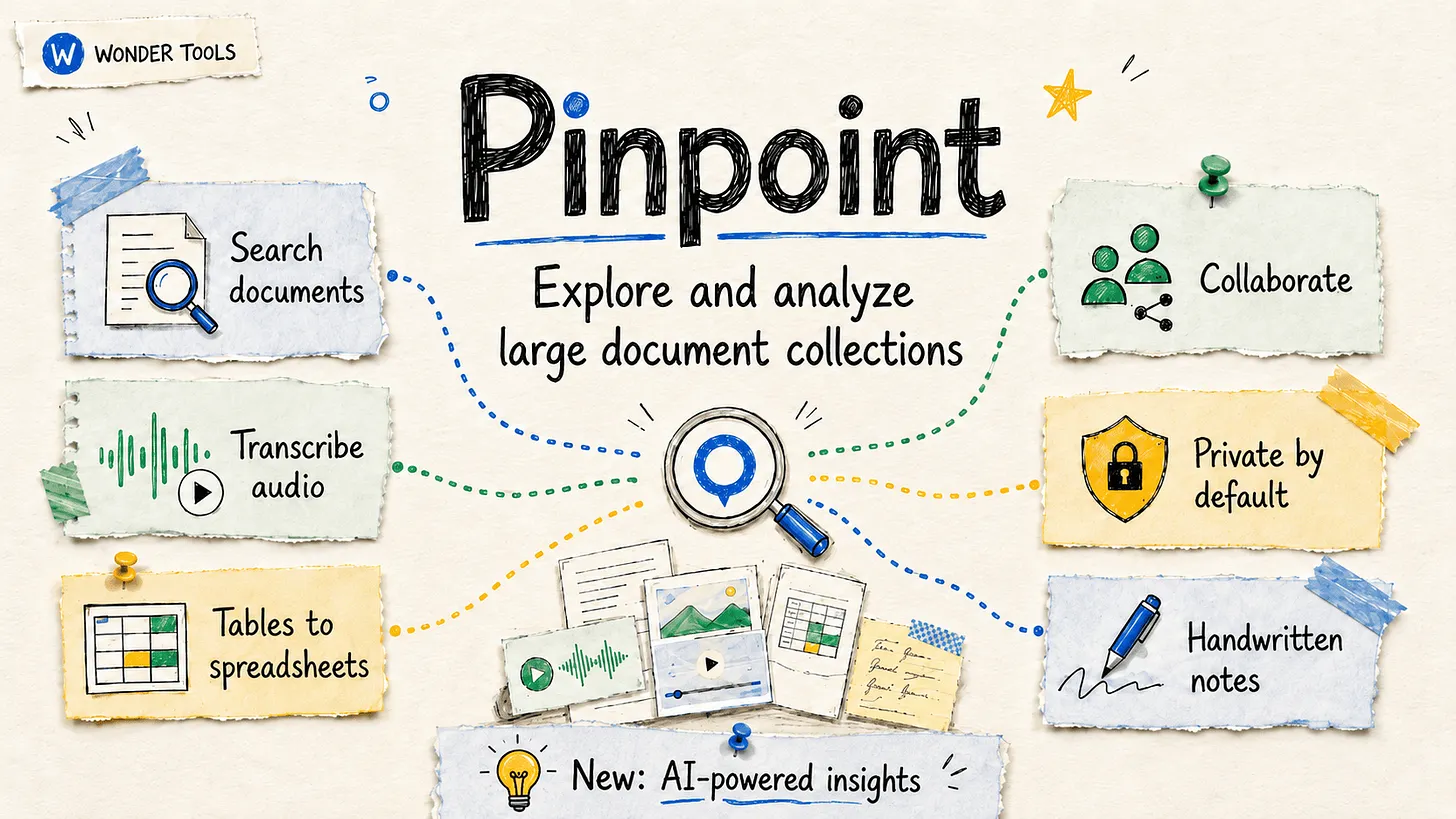
Let AI Interview You — from wondertools.substack.com by Jeremy Caplan & Jay Dixit
A smarter way to get past the blank page

There’s nothing wrong with using AI to get answers to your questions. But there’s another mode of interacting with AI that many people never consider — one I find much more useful for my creative process.

Here’s what I do instead: I flip the script and let the AI ask the questions. Instead of prompting AI, I get the AI to prompt me.


6 Reasons Universities Are Building Media Labs Now — from edtechmagazine.com by Brad Grimes
Digital production centers help institutions close the gap between academic training and professional practice.

Higher education is undergoing a significant transformation in how it prepares the next generation of media professionals. Across the country, universities are investing in state-of-the-art media labs — facilities built not around traditional classroom instruction, but around the tools, workflows and collaborative environments that define today’s professional production landscape. These spaces represent a fundamental rethinking of what it means to train students for careers in film, animation, gaming and digital storytelling.


Why Sal Khan’s AI revolution hasn’t happened yet, according to Sal Khan — from chalkbeat.org by Matt Barnum

Three years ago, as Khan Academy founder Sal Khan rolled out an AI-powered tutoring chatbot, he predicted a revolution in learning.

So far, the revolution hasn’t happened, he acknowledges.

“For a lot of students, it was a non-event,” Khan told me recently about his eponymous chatbot, Khanmigo. “They just didn’t use it much.”

Khan gives this analogy: Imagine he walked into a class, sat in the back of the room, and waited for students to seek out help. “Some will; most won’t,” he said. That’s been the experience with AI tutoring, he said. It doesn’t necessarily make students motivated to learn or fill in gaps in knowledge needed to ask questions.

“AI is going to help,” said Khan of this reimagined Khan Academy. “But I think our biggest lever is really investing in the human systems.”


Recording at LegalWeek in New York, Zach sits down with Shlomo Klapper (founder of Learned Hand) and Bridget McCormack, former Chief Justice of the Michigan Supreme Court and now CEO of the American Arbitration Association, to challenge one of the biggest double standards in legal AI: “AI for me, but not for thee.” Lawyers are now widely using AI like #Harvey and #Legora — and now more than ever #claude — but the moment it touches judges or arbitrators, support drops off.

That hesitation comes as courts are under real strain, with judges handling thousands of cases a year and only minutes to decide each one, and no realistic way to keep up. Shlomo describes Learned Hand’s “AI law clerk,” built to support judicial research, analysis, and drafting, while Bridget brings the perspective of someone who has both made decisions on the bench and has pioneered the American Arbitration Association’s AI Arbitrator, a first of its kind. The conversation moves beyond AI as an assistant and into a harder shift: AI as part of decision-making itself, and whether the system can continue to function without it.


Also see:

Are Judges the Next To Adopt AI? Is That a Good Thing? — from legallydisrupted.com by Zach Abramowitz
Episode 46 of Legally Disrupted Has the Two Best Experts on the Topic

This brings us to an admitted, glaring double standard between lawyers and judges. Lawyers are totally fine with lawyers using AI, but those same lawyers become apoplectic at the thought of judges or arbitrators using AI. It is very much “AI for me, but not for thee.” A survey last year from White & Case and Queen Mary University of London School of Law showed that nearly 90% of lawyers were deeply supportive of AI for their own research and analytics, but that support drops to just 23% when it comes to a judge or arbitrator using it to make a decision.

Yet, despite that hullabaloo, there is a massive need for alternative forms of intelligence in our courts. Right now, the system is drowning. We have state court trial judges disposing of 2,500 cases a year, meaning they have barely half an hour to spend on a single case. We are simply not going to lawyer our way out of this 50-year backlog. If we just use humans, we have a massive demand for intelligence but a severely limited supply. AI could step in to give these judges the capacity they desperately need for the courts to actually function.


What the Future of Learning Looks Like in the Era of AI — from the Center for Academic Innovation at the University of Michigan, by Sean Corp

AI & the Future of Learning Summit brings industry, education leaders together to discuss higher education’s opportunity to lead, what students need, and what partnerships are possible

As artificial intelligence rapidly reshapes the nature of work and learning, speakers at the University of Michigan’s AI & the Future of Learning Summit delivered a clear message: higher education must take a leading role in defining what comes next.

One CEO of a leading educational technology company put it like this: “The only bad thing would be universities standing still.”

Universities must embrace their roles as providers of continuous, lifelong learning that evolves alongside technological change. 


This shift is already affecting early-career pathways. Employers are placing greater emphasis on experience, while traditional entry-level roles are becoming less accessible. There is often a gap between what a credential represents and the expectations of employers.

That gap is particularly evident in access to internships. Chris Parrish, co-founder and president of Podium, noted that millions of students compete for a limited number of internships each year, making it increasingly difficult to gain the experience employers demand.

“If you miss out on an internship, you’re twice as likely to be unemployed,” Parrish said. 


The quest to build a better AI tutor — from hechingerreport.org by Jill Barshay
Researchers make progress with an older ed tech idea: personalized practice

One promising idea has less to do with how an AI tutor explains concepts and more with what it asks students to practice next.

A team at the University of Pennsylvania, which included some AI skeptics, recently tested this approach in a study of close to 800 Taiwanese high school students learning Python programming. All the students used the same AI tutor, which was designed not to give away answers.

But there was one key difference. Half the students were randomly assigned to a fixed sequence of practice problems, progressing from easy to hard. The other half received a personalized sequence with the AI tutor continuously adjusting the difficulty of each problem based on how the student was performing and interacting with the chatbot.

The idea is based on what educators call the “zone of proximal development.” When problems are too easy, students get bored. When they’re too hard, students get frustrated. The goal is to keep students in a sweet spot: challenged, but not overwhelmed.

The researchers found that students in the personalized group did better on a final exam than students in the fixed problem group. The difference was characterized as the equivalent of 6 to 9 months of additional schooling, an eye-catching claim for an after-school online course that lasted only five months.

To address this, Chung’s team combined a large language model with a separate machine-learning algorithm that analyzes how students interact with the online course platform — how they answer the practice questions, how many times they revise or edit their coding, and the quality of their conversations with the chatbot — and uses that information to decide which problem to serve up next.


Legal AI Access at 83%, But Trust Issues Remain — from artificiallawyer.com

A new survey of over 200 inhouse and law firm leaders provides solid evidence that while AI tools are now ‘standard’ across our sector, that trust in AI outputs fundamentally drives usage, along with ROI – and vice versa.

The data, from ALSP Factor, shows that 83% had ‘broad AI access’, which is up from 61% in 2025, and in itself is a very positive development that tells us legal AI is now becoming ubiquitous for commercial lawyers, with around 54% using such tools ‘often’.


From DSC:
I have been proposing that the AI-based learning platform of the future will be constantly doing this — every single day. It will know what the in-demand skills are — at any given moment in time. It will then be able to direct you to resources that will help you gain those skills. Though in my vision, the system is querying actual/open job descriptions, not analyzing learning data from enterprise learners. Perhaps I should add that to the vision.


Coursera’s Job Skills Report 2026: Top skills for your students — from coursera.org

The Job Skills Report 2026 analyzes learning data from more than 6 million enterprise learners to identify the future job skills organizations need most. It’s designed for HR and L&D leaders; data, IT, and software & product development leaders; higher education administrators; and government agencies seeking actionable insights on workforce skills trends and AI-driven transformation.

Drawing on data from 6 million enterprise learners across nearly 7,000 organizations, the Job Skills Report 2026 guides you through the skills reshaping the global economy. This year’s analysis spans Data, IT, and Software & Product Development—and the Generative AI skills becoming essential for every role.


© 2025 | Daniel Christian