In the 2030 and beyond world, employers will no longer be a separate entity from the education establishment. Pressures from both the supply and demand side are so large that employers and learners will end up, by default, co-designing new learning experiences, where all learning counts.


OBJECTIVES FOR CONVENINGS

  • Identify the skills everyone will need to navigate the changing relationship between machine intelligence and people over the next 10-12 years.
  • Develop implications for work, workers, students, working learners, employers, and policymakers.
  • Identify a preliminary set of actions that need to be taken now to best prepare for the changing work + learn ecosystem.

Three key questions guided the discussions:

  1. What are the LEAST and MOST essential skills needed for the future?
  2. Where and how will tomorrow’s workers and learners acquire the skills they really need?
  3. Who is accountable for making sure individuals can thrive in this new economy?

This report summarizes the experts’ views on what skills will likely be needed to navigate the work + learn ecosystem over the next 10–15 years—and their suggested steps for better serving the nation’s future needs.


In a new world of work, driven especially by AI, institutionally-sanctioned curricula could give way to AI-personalized learning. This would drastically change the nature of existing social contracts between employers and employees, teachers and students, and governments and citizens. Traditional social contracts would need to be renegotiated or revamped entirely. In the process, institutional assessment and evaluation could well shift from top-down to new bottom-up tools and processes for developing capacities, valuing skills, and managing performance through new kinds of reputation or accomplishment scores.


…

In October 2017, Chris Wanstrath, CEO of Github, the foremost code-sharing and social networking resource for programmers today, made a bold statement: “The future of coding is no coding at all.” He believes that the writing of code will be automated in the near future, leaving humans to focus on “higher-level strategy and design of software.” Many of the experts at the convenings agreed. Even creating the AI systems of tomorrow, they asserted, will likely require less human coding than is needed today, with graphic interfaces turning AI programming into a drag-and-drop operation.

Digital fluency does not mean knowing coding languages. Experts at both convenings contended that effectively “befriending the machine” will be less about teaching people to code and more about being able to empathize with AIs and machines, understanding how they “see the world” and “think” and “make decisions.” Machines will create languages to talk to one another.

…

Here’s a list of many skills the experts do not expect to see much of—if at all—in the future:

  • Coding. Systems will be self-programming.
  • Building AI systems. Graphic interfaces will turn AI programming into drag-and-drop operations.
  • Calendaring, scheduling, and organizing. There won’t be need for email triage.
  • Planning and even decision-making. AI assistants will pick this up.
  • Creating more personalized curricula. Learners may design more of their own personalized learning adventure.
  • Writing and reviewing resumes. Digital portfolios, personal branding, and performance reputation will replace resumes.
  • Language translation and localization. This will happen in real time using translator apps.
  • Legal research and writing. Many of our legal systems will be automated.
  • Validation skills. Machines will check people’s work to validate their skills.
  • Driving. Driverless vehicles will replace the need to learn how to drive.

Here’s a list of the most essential skills needed for the future:

  • Quantitative and algorithmic thinking.  
  • Managing reputation.  
  • Storytelling and interpretive skills.  
  • First principles thinking.  
  • Communicating with machines as machines.  
  • Augmenting high-skilled physical tasks with AI.
  • Optimization and debugging frame of mind.
  • Creativity and growth mindset.
  • Adaptability.
  • Emotional intelligence.
  • Truth seeking.
  • Cybersecurity.


The rise of machine intelligence is just one of the many powerful social, technological, economic, environmental, and political forces that are rapidly and disruptively changing the way everyone will work and learn in the future. Because this largely tech-driven force is so interconnected with other drivers of change, it is nearly impossible to understand the impact of intelligent agents on how we will work and learn without also imagining the ways in which these new tools will reshape how we live.


MIT plans $1B computing college, AI research effort — from educationdive.com by James Paterson

Dive Brief (emphasis DSC):

  • The Massachusetts Institute of Technology is creating a College of Computing with the help of a $350 million gift from billionaire investor Stephen A. Schwarzman, who is the CEO and co-founder of the private equity firm Blackstone, in a move the university said is its “most significant reshaping” since 1950.
  • Featuring 50 new faculty positions and a new headquarters building, the $1 billion interdisciplinary initiative will bring together computer science, artificial intelligence (AI), data science and related programs across the institution. MIT will establish a new deanship for the college.
  • The new college…will explore and promote AI’s use in non-technology disciplines with a focus on ethical considerations, which are a growing concern as the technology becomes embedded in many fields.


Also see:

Alexa Sessions You Won’t Want to Miss at AWS re:Invent 2018 — from developer.amazon.com

Excerpts — with an eye towards where this might be leading in terms of learning spaces:

Alexa and AWS IoT — Voice is a natural interface to interact not just with the world around us, but also with physical assets and things, such as connected home devices, including lights, thermostats, or TVs. Learn how you can connect and control devices in your home using the AWS IoT platform and Alexa Skills Kit.

Connect Any Device to Alexa and Control Any Feature with the Updated Smart Home Skill API — Learn about the latest update to the Smart Home Skill API, featuring new capability interfaces you can use as building blocks to connect any device to Alexa, including those that fall outside of the traditional smart home categories of lighting, locks, thermostats, sensors, cameras, and audio/video gear. Start learning about how you can create a smarter home with Alexa.

Workshop: Build an Alexa Skill with Multiple Models — Learn how to build an Alexa skill that utilizes multiple interaction models and combines functionality into a single skill. Build an Alexa smart home skill from scratch that implements both custom interactions and smart home functionality within a single skill. Check out these resources to start learning:


An open letter to Microsoft and Google’s Partnership on AI — from wired.com by Gerd Leonhard
In a world where machines may have an IQ of 50,000, what will happen to the values and ethics that underpin privacy and free will?

Excerpt:

This open letter is my modest contribution to the unfolding of this new partnership. Data is the new oil – which now makes your companies the most powerful entities on the globe, way beyond oil companies and banks. The rise of ‘AI everywhere’ is certain to only accelerate this trend. Yet unlike the giants of the fossil-fuel era, there is little oversight on what exactly you can and will do with this new data-oil, and what rules you’ll need to follow once you have built that AI-in-the-sky. There appears to be very little public stewardship, while accepting responsibility for the consequences of your inventions is rather slow in surfacing.


In a world where machines may have an IQ of 50,000 and the Internet of Things may encompass 500 billion devices, what will happen with those important social contracts, values and ethics that underpin crucial issues such as privacy, anonymity and free will?


My book identifies what I call the “Megashifts”. They are changing society at warp speed, and your organisations are in the eye of the storm: digitization, mobilisation and screenification, automation, intelligisation, disintermediation, virtualisation and robotisation, to name the most prominent. Megashifts are not simply trends or paradigm shifts, they are complete game changers transforming multiple domains simultaneously.


If the question is no longer about if technology can do something, but why…who decides this?

Gerd Leonhard


From DSC:
Though this letter was written 2 years ago back in October of 2016, the messages, reflections, and questions that Gerd puts on the table are very much still relevant today.  The leaders of these powerful companies have enormous power — power to do good, or to do evil. Power to help or power to hurt. Power to be a positive force for societies throughout the globe and to help create dreams, or power to create dystopian societies while developing a future filled with nightmares. The state of the human heart is extremely key here — though many will hate me saying that. But it’s true. At the end of the day, we need to very much care about — and be extremely aware of — the characters and values of the leaders of these powerful companies. 


Also relevant/see:

Spray-on antennas will revolutionize the Internet of Things — from networkworld.com by Patrick Nelson
Researchers at Drexel University have developed a method to spray on antennas that outperform traditional metal antennas, opening the door to faster and easier IoT deployments.

 From DSC:
Again, it’s not too hard to imagine in this arena that technologies can be used for good or for ill.


The 11 coolest announcements Google made at its biggest product event of the year — from businessinsider.com by Dave Smith

Excerpt:

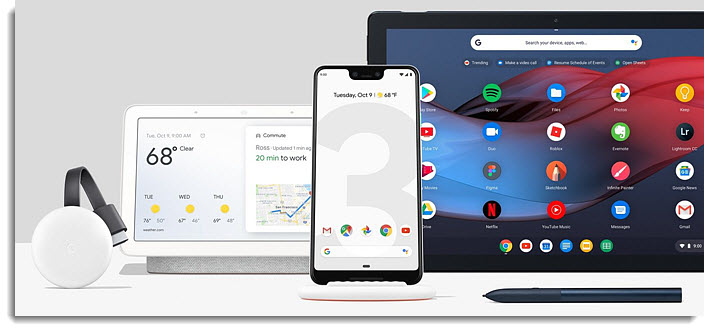
On Tuesday (10/9), Google invited journalists to New York City to debut its newest smartphone, the Pixel 3, among several other hardware goodies.

Google made dozens of announcements in its 75-minute event, but a handful of “wow” moments stole the show.

Here are the 11 coolest announcements Google made at its big hardware event…


Google’s Pixel 3 event in 6 minutes — from businessinsider.com


Google unveiled its new Home Hub but it might be ‘late to the market’ — from barrons.com by Emily Bary

Excerpt:

Alphabet ’s Google has sold millions of voice-enabled speakers, but it inched toward the future at a Tuesday launch event when it introduced the Home Hub smart screen.

Google isn’t the first company to roll out a screen-enabled home device with voice-assistant technology— Amazon.com released its Echo Show in July 2017. Meanwhile, Lenovo has gotten good reviews for its Smart Display, and Facebook introduced the Portal on Monday.

For the most part, though, consumers have stuck to voice-only devices, and it will be up to Google and its rivals to convince them that an added screen is worth paying for. They’ll also have to reassure consumers that they can trust big tech to maintain their privacy, an admittedly harder task these days after recent security issues at Google and Facebook.


Amazon was right to realize early on that consumers aren’t always comfortable buying items they can’t even see pictures of, and that it’s hard to remember directions you’ve heard but not seen.


Google has announced its first smart speaker with a screen — from businessinsider.com by Brandt Ranj

  • Google has announced the Google Hub, its first smart home speaker with a screen. It’s available for pre-order at Best Buy, Target, and Walmart for $149. The Hub will be released on October 22.
  • The Hub has a 7″ touchscreen and sits on a base with a built-in speaker and microphones, which you can use to play music, watch videos, get directions, and control smart home accessories with your voice.
  • Its biggest advantage is its ability to hook into Google’s first-party services, like YouTube and Google Maps, which none of its competitors can use.
  • If you’re an Android or Chromecast user, trust Google more than Amazon, or want a smaller smart home speaker with a screen, the Google Hub is now your best bet.


Google is shutting down Google+ for consumers following security lapse — from theverge.com by Ashley Carman

Excerpt:

Google is going to shut down the consumer version of Google+ over the next 10 months, the company writes in a blog post today. The decision follows the revelation of a previously undisclosed security flaw that exposed users’ profile data that was remedied in March 2018.


Google shutters Google+ after users’ personal data exposed — from cbsnews.com


Google+ is shutting down, and the site’s few loyal users are mourning – from cnbc.com by Jillian D’Onfro

  • Even though Google had diverted resources away from Google+, there’s a small loyal base of users devastated to see it go away.
  • One fan said the company is using its recently revealed security breach as an excuse to shutter the site.
  • Google said it will be closing Google+ in the coming months.


10 jobs that are safe in an AI world — from linkedin.com by Kai-Fu Lee

Excerpts:

Teaching
AI will be a great tool for teachers and educational institutions, as it will help educators figure out how to personalize curriculum based on each student’s competence, progress, aptitude, and temperament. However, teaching will still need to be oriented around helping students figure out their interests, teaching students to learn independently, and providing one-on-one mentorship. These are tasks that can only be done by a human teacher. As such, there will still be a great need for human educators in the future.

Criminal defense law
Top lawyers will have nothing to worry about when it comes to job displacement. reasoning across domains, winning the trust of clients, applying years of experience in the courtroom, and having the ability to persuade a jury are all examples of the cognitive complexities, strategies, and modes of human interaction that are beyond the capabilities of AI. However, a lot of paralegal and preparatory work like document review, analysis, creating contracts, handling small cases, packing cases, and coming up with recommendations can be done much better and more efficiently with AI. The costs of law make it worthwhile for AI companies to go after AI paralegals and AI junior lawyers, but not top lawyers.


From DSC:
In terms of teaching, I agree that while #AI will help personalize learning, there will still be a great need for human teachers, professors, and trainers. I also agree w/ my boss (and with some of the author’s viewpoints here, but not all) that many kinds of legal work will still need the human touch & thought processes. I diverge from his thinking in terms of scope — the need for human lawyers will go far beyond just lawyers involved in crim law.


Also see:

15 business applications for artificial intelligence and machine learning — from forbes.com

Excerpt:

Fifteen members of Forbes Technology Council discuss some of the latest applications they’ve found for AI/ML at their companies. Here’s what they had to say…


Microsoft's conference room of the future


From DSC:
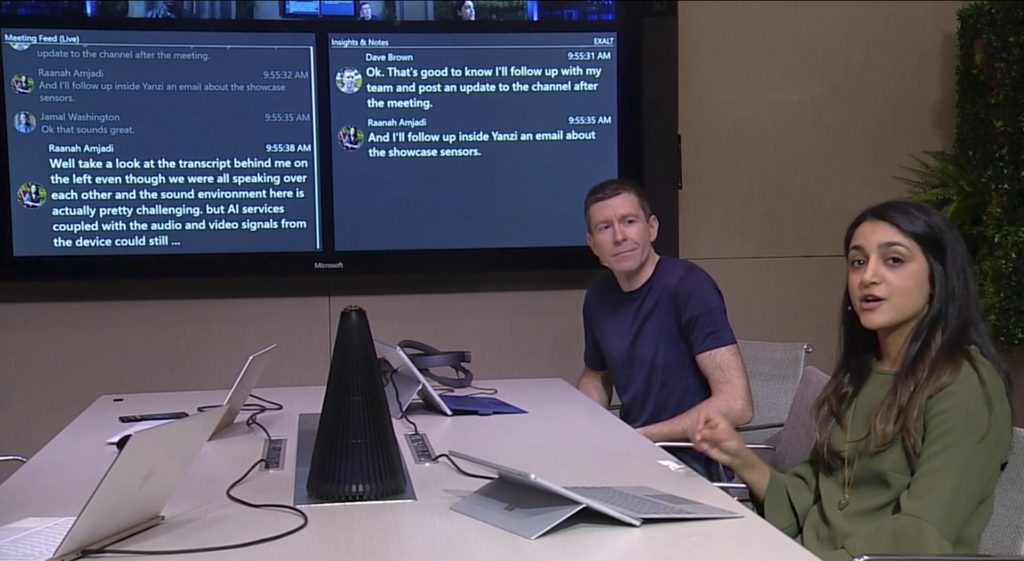
Microsoft’s conference room of the future “listens” to the conversations of the team and provides a transcript of the meeting. It also is using “artificial intelligence tools to then act on what meeting participants say. If someone says ‘I’ll follow up with you next week,’ then they’ll get a notification in Microsoft Teams, Microsoft’s Slack competitor, to actually act on that promise.”

This made me wonder about our learning spaces in the future. Will an #AI-based device/cloud-based software app — in real-time — be able to “listen” to the discussion in a classroom and present helpful resources in the smart classroom of the future (i.e., websites, online-based databases, journal articles, and more)?

Will this be a feature of a next generation learning platform as well (i.e., addressing the online-based learning realm)? Will this be a piece of an intelligent tutor or an intelligent system?

Hmmm…time will tell.


Also see this article out at Forbes.com entitled, “There’s Nothing Artificial About How AI Is Changing The Workplace.” 

Here is an excerpt:

The New Meeting Scribe: Artificial Intelligence

As I write this, AI has already begun to make video meetings even better. You no longer have to spend time entering codes or clicking buttons to launch a meeting. Instead, with voice-based AI, video conference users can start, join or end a meeting by simply speaking a command (think about how you interact with Alexa).

Voice-to-text transcription, another artificial intelligence feature offered by Otter Voice Meeting Notes (from AISense, a Zoom partner), Voicefox and others, can take notes during video meetings, leaving you and your team free to concentrate on what’s being said or shown. AI-based voice-to-text transcription can identify each speaker in the meeting and save you time by letting you skim the transcript, search and analyze it for certain meeting segments or words, then jump to those mentions in the script. Over 65% of respondents from the Zoom survey said they think AI will save them at least one hour a week of busy work, with many claiming it will save them one to five hours a week.


To higher ed: When the race track is going 180mph, you can’t walk or jog onto the track. [Christian]

From DSC:
When the race track is going 180mph, you can’t walk or jog onto the track.  What do I mean by that? 

Consider this quote from an article that Jeanne Meister wrote out at Forbes entitled, “The Future of Work: Three New HR Roles in the Age of Artificial Intelligence:”*

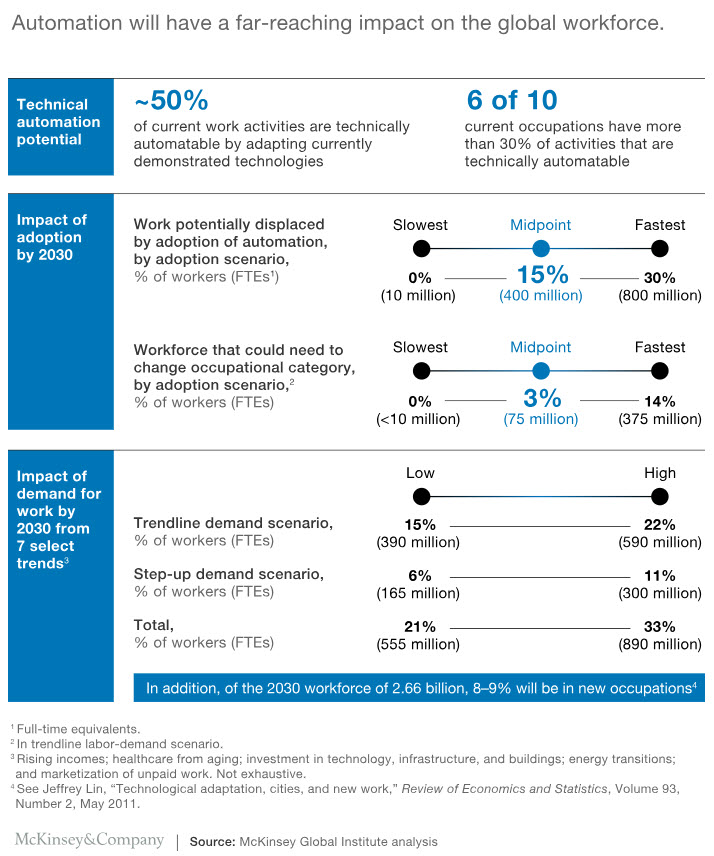
This emphasis on learning new skills in the age of AI is reinforced by the most recent report on the future of work from McKinsey which suggests that as many as 375 million workers around the world may need to switch occupational categories and learn new skills because approximately 60% of jobs will have least one-third of their work activities able to be automated.

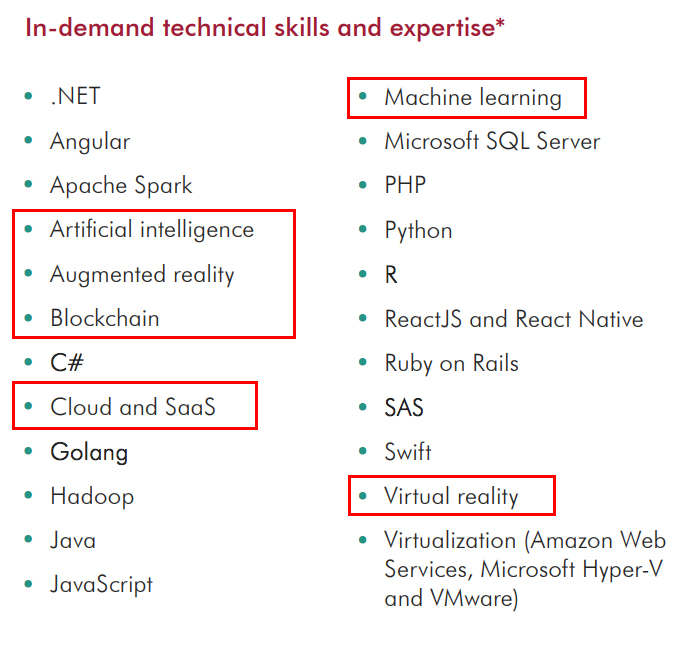
Go scan the job openings and you will likely see many that have to do with technology, and increasingly, with emerging technologies such as artificial intelligence, deep learning, machine learning, virtual reality, augmented reality, mixed reality, big data, cloud-based services, robotics, automation, bots, algorithm development, blockchain, and more. 


From Robert Half’s 2019 Technology Salary Guide 


How many of us have those kinds of skills? Did we get that training in the community colleges, colleges, and universities that we went to? Highly unlikely — even if you graduated from one of those institutions only 5-10 years ago. And many of those institutions are often moving at the pace of a nice leisurely walk, with some moving at a jog, even fewer are sprinting. But all of them are now being asked to enter a race track that’s moving at 180mph. Higher ed — and society at large — are not used to moving at this pace. 

This is why I think that higher education and its regional accrediting organizations are going to either need to up their game hugely — and go through a paradigm shift in the required thinking/programming/curricula/level of responsiveness — or watch while alternatives to institutions of traditional higher education increasingly attract their learners away from them.

This is also, why I think we’ll see an online-based, next generation learning platform take place. It will be much more nimble — able to offer up-to-the minute, in-demand skills and competencies. 


The below graphic is from:
Jobs lost, jobs gained: What the future of work will mean for jobs, skills, and wages


* Three New HR Roles To Create Compelling Employee Experiences
These new HR roles include:

  1. IBM: Vice President, Data, AI & Offering Strategy, HR
  2. Kraft Heinz Senior Vice President Global HR, Performance and IT
  3. SunTrust Senior Vice President Employee Wellbeing & Benefits

What do these three roles have in common? All have been created in the last three years and acknowledge the growing importance of a company’s commitment to create a compelling employee experience by using data, research, and predictive analytics to better serve the needs of employees. In each case, the employee assuming the new role also brought a new set of skills and capabilities into HR. And importantly, the new roles created in HR address a common vision: create a compelling employee experience that mirrors a company’s customer experience.


An excerpt from McKinsey Global Institute | Notes from the Frontier | Modeling the Impact of AI on the World Economy 

Workers.
A widening gap may also unfold at the level of individual workers. Demand for jobs could shift away from repetitive tasks toward those that are socially and cognitively driven and others that involve activities that are hard to automate and require more digital skills.12 Job profiles characterized by repetitive tasks and activities that require low digital skills may experience the largest decline as a share of total employment, from some 40 percent to near 30 percent by 2030. The largest gain in share may be in nonrepetitive activities and those that require high digital skills, rising from some 40 percent to more than 50 percent. These shifts in employment would have an impact on wages. We simulate that around 13 percent of the total wage bill could shift to categories requiring nonrepetitive and high digital skills, where incomes could rise, while workers in the repetitive and low digital skills categories may potentially experience stagnation or even a cut in their wages. The share of the total wage bill of the latter group could decline from 33 to 20 percent.13 Direct consequences of this widening gap in employment and wages would be an intensifying war for people, particularly those skilled in developing and utilizing AI tools, and structural excess supply for a still relatively high portion of people lacking the digital and cognitive skills necessary to work with machines.


Prudenti: Law schools facing new demands for innovative education — from libn.com by A. Gail Prudenti

Excerpt (emphasis DSC):

Law schools have always taught the law and the practice thereof, but in the 21st century that is not nearly enough to provide students with the tools to succeed.

Clients, particularly business clients, are not only looking for an “attorney” in the customary sense, but a strategic partner equipped to deal with everything from project management to metrics to process enhancement. Those demands present law schools with both an opportunity for and expectation of innovation in legal education.

At Hofstra Law, we are in the process of establishing a new Center for Applied Legal Technology and Innovation where law students will be taught to use current and emerging technology, and to apply those skills and expertise to provide cutting-edge legal services while taking advantage of interdisciplinary opportunities.

Our goal is to teach law students how to use technology to deliver legal services and to yield graduates who combine exceptional legal acumen with the skill and ability to travel comfortably among myriad disciplines. The lawyers of today—and tomorrow—must be more than just conversant with other professionals. Rather, they need to be able to collaborate with experts in other fields to serve the myriad and intertwined interests of the client.


Also see:

Workforce of the future: The competing forces shaping 2030 — from pwc.com

Excerpt (emphasis DSC):

We are living through a fundamental transformation in the way we work. Automation and ‘thinking machines’ are replacing human tasks and jobs, and changing the skills that organisations are looking for in their people. These momentous changes raise huge organisational, talent and HR challenges – at a time when business leaders are already wrestling with unprecedented risks, disruption and political and societal upheaval.

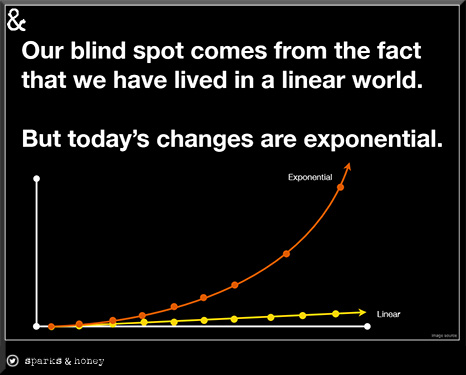
The pace of change is accelerating.


Graphic by DSC


Competition for the right talent is fierce. And ‘talent’ no longer means the same as ten years ago; many of the roles, skills and job titles of tomorrow are unknown to us today. How can organisations prepare for a future that few of us can define? How will your talent needs change? How can you attract, keep and motivate the people you need? And what does all this mean for HR?

This isn’t a time to sit back and wait for events to unfold. To be prepared for the future you have to understand it. In this report we look in detail at how the workplace might be shaped over the coming decade.


From DSC:

Peruse the titles of the articles in this document (that features articles from the last 1-2 years) with an eye on the topics and technologies addressed therein! 


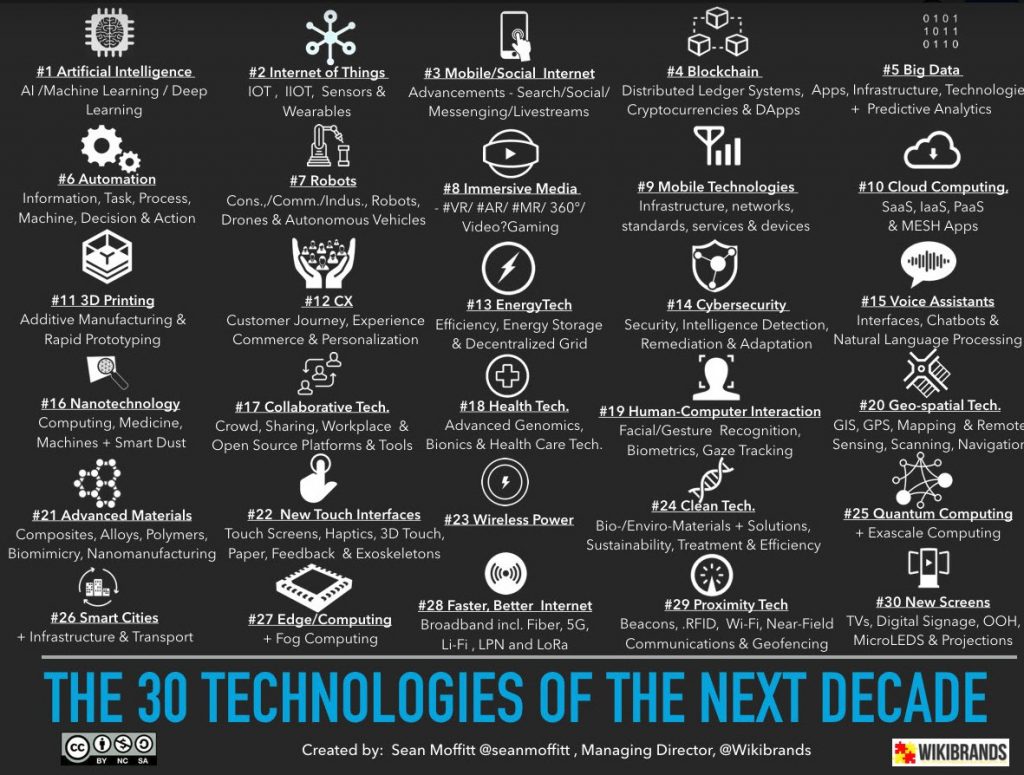
Artificial Intelligence (AI), virtual reality, augmented reality, robotics, drones, automation, bots, machine learning, NLP/voice recognition and personal assistants, the Internet of Things, facial recognition, data mining, and more. How these technologies roll out — and if some of them should be rolling out at all — needs to be discussed and dealt with sooner. This is due to the fact that the pace of change has changed. If you can look at those articles  — with an eye on the last 500-1000 years or so to compare things to — and say that we aren’t living in times where the trajectory of technological change is exponential, then either you or I don’t know the meaning of that word.


The ABA and law schools need to be much more responsive and innovative — or society will end up suffering the consequences.

Daniel Christian


For museums, augmented reality is the next frontier — from wired.com by Arielle Pardes

Excerpt:

Mae Jemison, the first woman of color to go into space, stood in the center of the room and prepared to become digital. Around her, 106 cameras captured her image in 3-D, which would later render her as a life-sized hologram when viewed through a HoloLens headset.

Jemison was recording what would become the introduction for a new exhibit at the Intrepid Sea, Air, and Space Museum, which opens tomorrow as part of the Smithsonian’s annual Museum Day. In the exhibit, visitors will wear HoloLens headsets and watch Jemison materialize before their eyes, taking them on a tour of the Space Shuttle Enterprise—and through space history. They’re invited to explore artifacts both physical (like the Enterprise) and digital (like a galaxy of AR stars) while Jemison introduces women throughout history who have made important contributions to space exploration.

Interactive museum exhibits like this are becoming more common as augmented reality tech becomes cheaper, lighter, and easier to create.


Oculus will livestream it’s 5th Connect Conference on Oculus venues — from vrscout.com by Kyle Melnick

Excerpt (emphasis DSC):

Using either an Oculus Go standalone device or a mobile Gear VR headset, users will be able to login to the Oculus Venues app and join other users for an immersive live stream of various developer keynotes and adrenaline-pumping esports competitions.


From DSC:
What are the ramifications of this for the future of webinars, teaching and learning, online learning, MOOCs and more…?


10 new AR features in iOS 12 for iPhone & iPad — from mobile-ar.reality.news by Justin Meyers

Excerpt:

Apple’s iOS 12 has finally landed. The big update appeared for everyone on Monday, Sept. 17, and hiding within are some pretty amazing augmented reality upgrades for iPhones, iPads, and iPod touches. We’ve been playing with them ever since the iOS 12 beta launched in June, and here are the things we learned that you’ll want to know about.

For now, here’s everything AR-related that Apple has included in iOS 12. There are some new features aimed to please AR fanatics as well as hook those new to AR into finally getting with the program. But all of the new AR features rely on ARKit 2.0, the latest version of Apple’s augmented reality framework for iOS.


Berkeley College Faculty Test VR for Learning— from campustechnology.com by Dian Schaffhauser

Excerpt:

In a pilot program at Berkeley College, members of a Virtual Reality Faculty Interest Group tested the use of virtual reality to immerse students in a variety of learning experiences. During winter 2018, seven different instructors in nearly as many disciplines used inexpensive Google Cardboard headsets along with apps on smartphones to virtually place students in North Korea, a taxicab and other environments as part of their classwork.

Participants used free mobile applications such as Within, the New York Times VR, Discovery VR, Jaunt VR and YouTube VR. Their courses included critical writing, international business, business essentials, medical terminology, international banking, public speaking and crisis management.


Skype chats are coming to Alexa devices — from engadget.com by Richard Lawlor
Voice controlled internet calls to or from any device with Amazon’s system in it.

Excerpt:

Aside from all of the Alexa-connected hardware, there’s one more big development coming for Amazon’s technology: integration with Skype. Microsoft and Amazon said that voice and video calls via the service will come to Alexa devices (including Microsoft’s Xbox One) with calls that you can start and control just by voice.


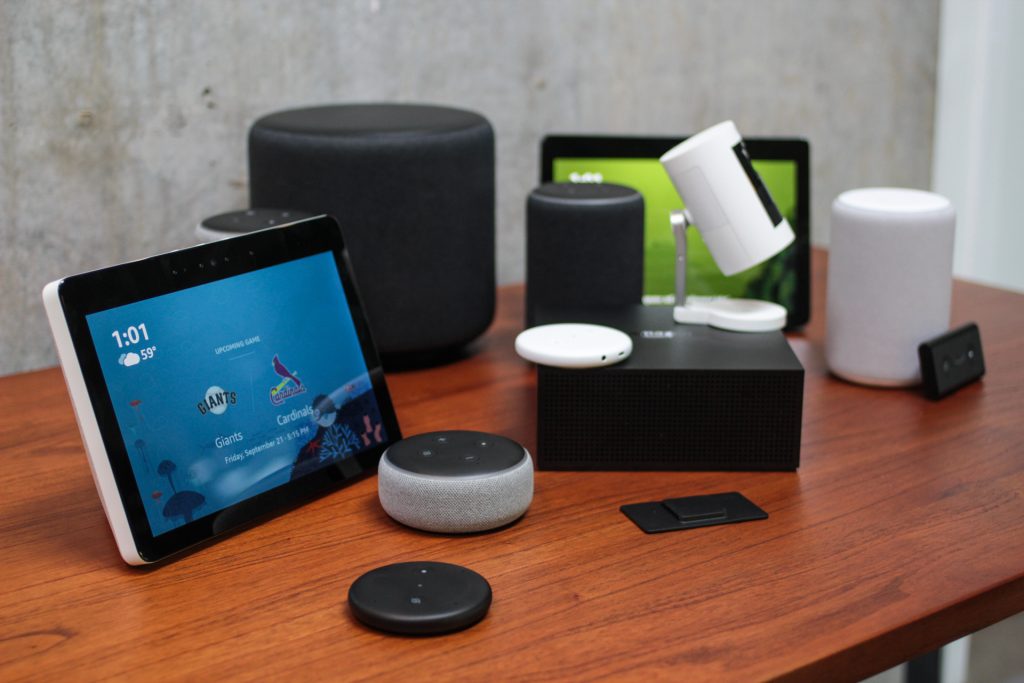
Amazon Hardware Event 2018
From techcrunch.com


Echo HomePod? Amazon wants you to build your own — by Brian Heater
One of the bigger surprises at today’s big Amazon event was something the company didn’t announce. After a couple of years of speculation that the company was working on its own version of the Home…


The long list of new Alexa devices Amazon announced at its hardware event — by Everyone’s favorite trillion-dollar retailer hosted a private event today where they continued to…


Amazon introduces APL, a new design language for building Alexa skills for devices with screensAlong with the launch of the all-new Echo Show, the Alexa-powered device with a screen, Amazon also introduced a new design language for developers who want to build voice skills that include multimedia…

Excerpt:

Called Alexa Presentation Language, or APL, developers will be able to build voice-based apps that also include things like images, graphics, slideshows and video, and easily customize them for different device types – including not only the Echo Show, but other Alexa-enabled devices like Fire TV, Fire Tablet, and the small screen of the Alexa alarm clock, the Echo Spot.


From DSC:
This is a great move by Amazon — as NLP and our voices become increasingly important in how we “drive” and utilize our computing devices.


Amazon launches an Echo Wall Clock, because Alexa is gonna be everywhere — by Sarah Perez


Amazon’s new Echo lineup targets Google, Apple and Sonos — from engadget.com by Nicole Lee
Alexa, dominate the industry.

The business plan from here is clear: Companies pay a premium to be activated when users pose questions related to their products and services. “How do you cook an egg?” could pull up a Food Network tutorial; “How far is Morocco?” could enable the Expedia app.
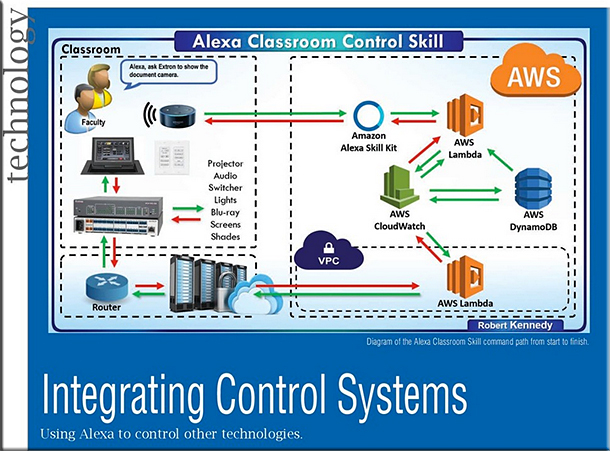
Also see how Alexa might be a key piece of smart classrooms in the future:
 

Why one London university is now offering degrees in VR — from techrepublic.com by Conner Forrest
London College of Communication, UAL is launching a master’s degree in virtual reality for the 2018-19 academic year.

The big takeaways for tech leaders:

  • London College of Communication, UAL is launching a Master of Arts in VR degree for the 2018-19 academic year.
  • The demand for VR professionals is growing in the film and media industries, where these technologies are being used most frequently.


From DSC:
Collaboration/videoconferencing tools like Webex, Blackboard Collaborate, Zoom, Google Hangouts, Skype, etc. are being used in a variety of scenarios. That platform has been well established. It will be interesting to see how VR might play into web-based collaboration, training, and learning.


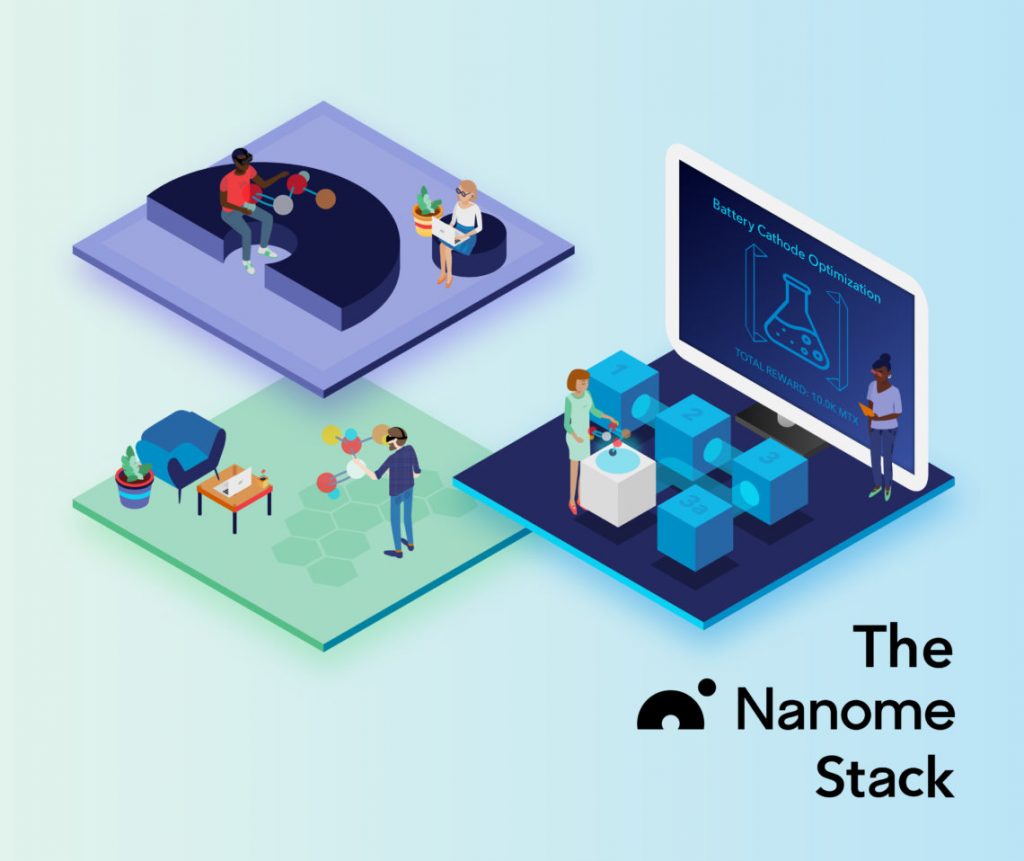
San Diego’s Nanome Inc. releases collaborative VR-STEM software for free — from vrscout.com by Becca Loux

Excerpt:

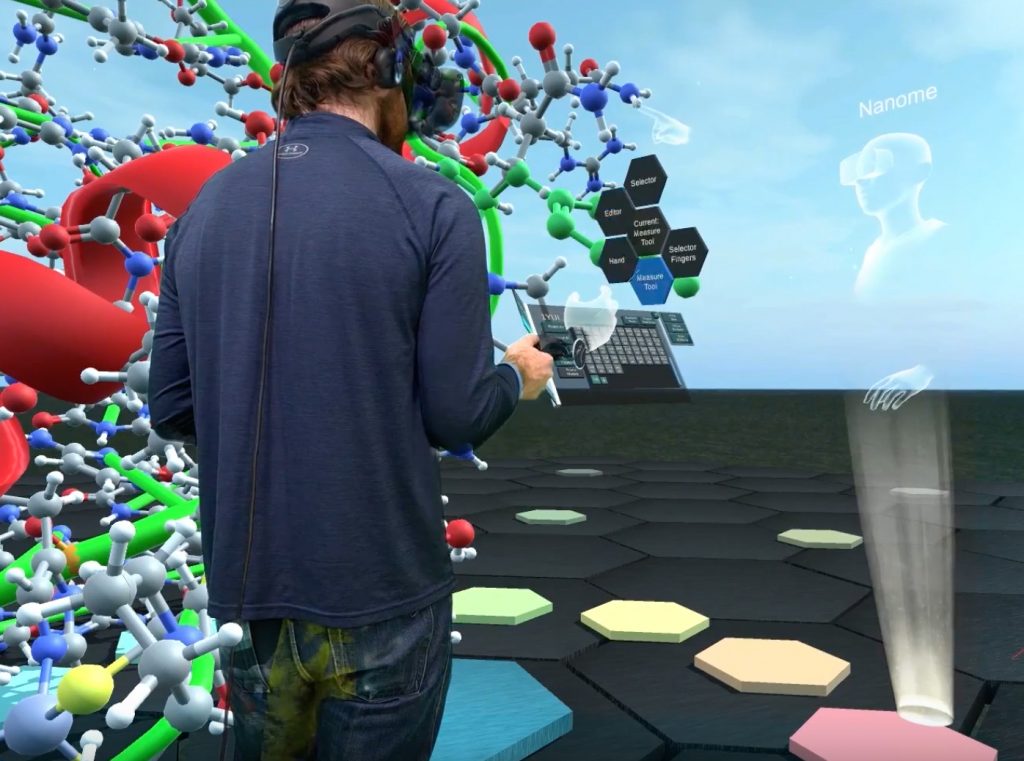
The first collaborative VR molecular modeling application was released August 29 to encourage hands-on chemistry experimentation.

The open-source tool is free for download now on Oculus and Steam.

Nanome Inc., the San Diego-based start-up that built the intuitive application, comprises UCSD professors and researchers, web developers and top-level pharmaceutical executives.


“With our tool, anyone can reach out and experience science at the nanoscale as if it is right in front of them. At Nanome, we are bringing the craftsmanship and natural intuition from interacting with these nanoscale structures at room scale to everyone,” McCloskey said.


San Diego’s Nanome Inc. Releases Collaborative VR-STEM Software For Free


10 ways VR will change life in the near future — from forbes.com

Excerpts:

  1. Virtual shops
  2. Real estate
  3. Dangerous jobs
  4. Health care industry
  5. Training to create VR content
  6. Education
  7. Emergency response
  8. Distraction simulation
  9. New hire training
  10. Exercise


From DSC:
While VR will have its place — especially for timeswhen you need to completely immerse yourself into another environment — I think AR and MR will be much larger and have a greater variety of applications. For example, I could see where instructions on how to put something together in the future could use AR and/or MR to assist with that process. The system could highlight the next part that I’m looking for and then highlight the corresponding parts where it goes — and, if requested, can show me a clip on how it fits into what I’m trying to put together.


How MR turns firstline workers into change agents — from virtualrealitypop.com by Charlie Finkand
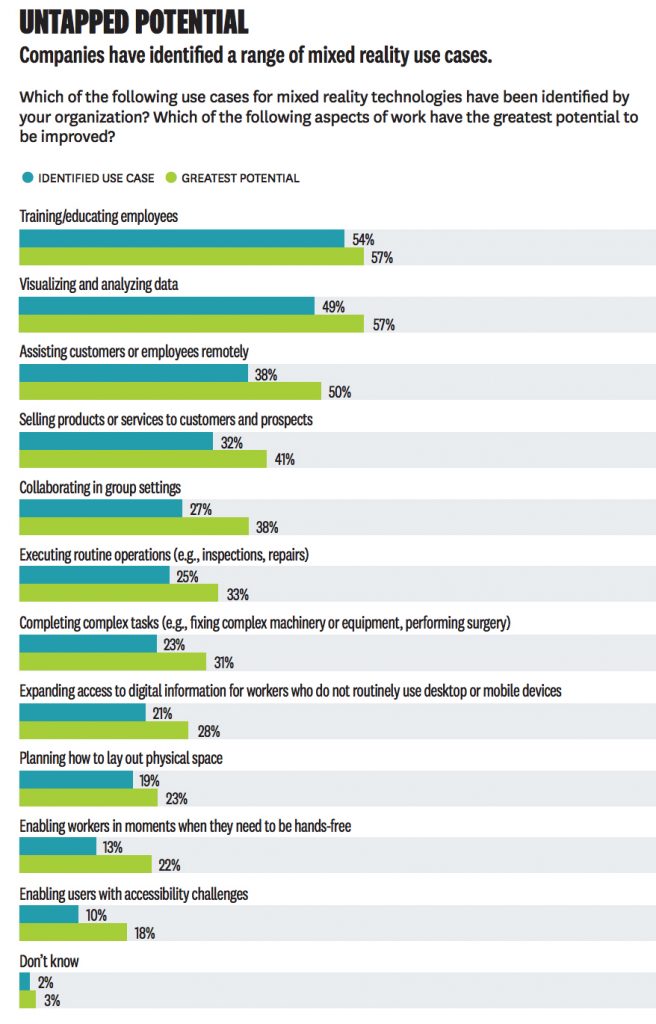
Mixed Reality, a new dimension of work — from Microsoft and Harvard Business Review

Excerpts:

Workers with mixed-reality solutions that enable remote assistance, spatial planning, environmentally contextual data, and much more,” Bardeen told me. With the HoloLens Firstline Workers workers conduct their usual, day-to-day activities with the added benefit of a heads-up, hands-free, display that gives them immediate access to valuable, contextual information. Microsoft says speech services like Cortana will be critical to control along with gesture, according to the unique needs of each situation.


Expect new worker roles. What constitutes an “information worker” could change because mixed reality will allow everyone to be involved in the collection and use of information. Many more types of information will become available to any worker in a compelling, easy-to-understand way. 


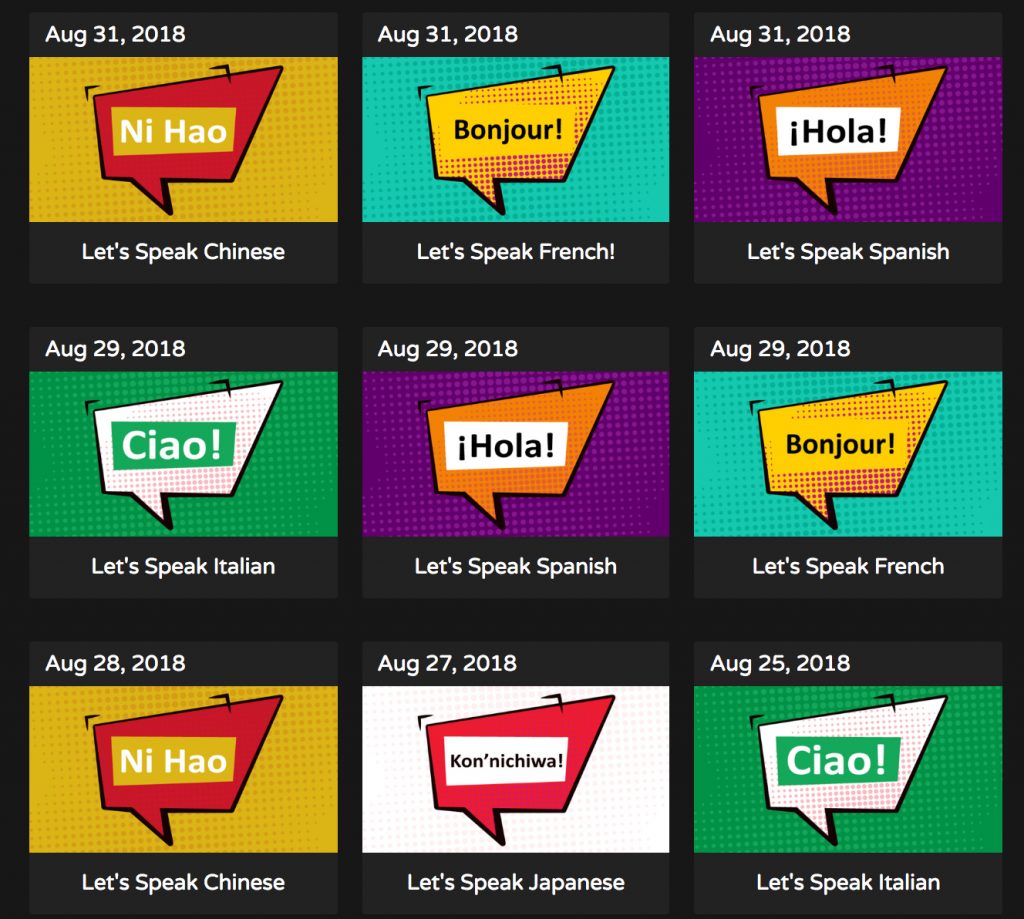
Let’s Speak: VR language meetups — from account.altvr.com


Microsoft’s AI-powered Sketch2Code builds websites and apps from drawings — from alphr.com by Bobby Hellard
Microsoft Released on GitHub, Microsoft’s AI-powered developer tool can shave hours off web and app building

Excerpt:

Microsoft has developed an AI-powered web design tool capable of turning sketches of websites into functional HTML code.

Called Sketch2Code, Microsoft AI’s senior product manager Tara Shankar Jana explained that the tool aims to “empower every developer and every organisation to do more with AI”. It was born out of the “intrinsic” problem of sending a picture of a wireframe or app designs from whiteboard or paper to a designer to create HTML prototypes.


Google’s VR Labs provide STEM students with hands-on experience — from vrscout.com by Kyle Melnick

Excerpt:

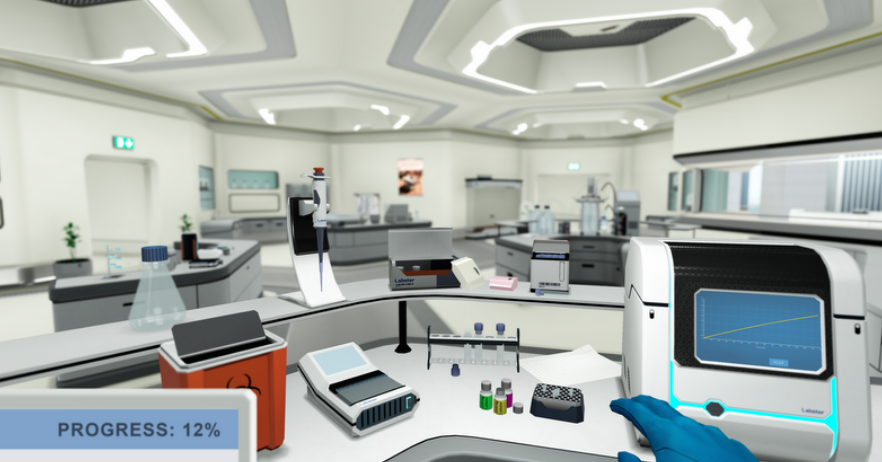
STEM students engaged in scientific disciplines, such as biochemistry and neuroscience, are often required by their respective degrees to spend a certain amount of time engaged in an official laboratory environment. Unfortunately, crowded universities and the rise of online education have made it difficult for these innovators-in-training to access properly equipped labs and log their necessary hours.

Cue Google VR Labs, a series of comprehensive virtual lab experiences available on the Google Daydream platform. Developed as part of partnership between Google and simulation education company Labster, the in-depth program boasts 30 interactive lab experiences in which biology students can engage in a series of hands-on scientific activities in a realistic environment.

These actions can include everything from the use of practical tools, such as DNA sequencers and microscopes, to reality-bending experiences only capable in a virtual environment, like traveling to the surface of the newly discovered Astakos IV exoplanet or examining and altering DNA on a molecular level.


Google’s VR Labs Provide STEM Students With Hands-On Experience


Also see:


© 2025 | Daniel Christian