Higher ed’s ‘hunker-down mindset’— from open-campus-dispatch.beehiiv.com by Colleen Murphy A tight housing market and a fragile job market mean those working in higher ed have fewer options than ever.
Faculty and administrators could be just as constrained by the golden handcuffs of a 2% interest rate as everybody else. That makes them less likely to move for a new job, Kelchen said, especially since they’re unlikely to get the type of salary increase they’d need to offset more pricey mortgage payments. Plus, even finding an affordable house in the first place could be a challenge right now.
All of this contributes to what Kelchen called a “hunker-down mindset” in higher ed.
“Even if the institutions are giving out pay raises, the pay raises aren’t matching housing costs,” Kelchen said. “And then that creates a pressure to stay.”
While that might seem like a “first-world problem,” it also affects college and university staff members, Kelchen told me. Often the only way for staff members to make more money is to move universities — there aren’t the same in-house growth opportunities as there are for faculty. But that’s easier said than done.
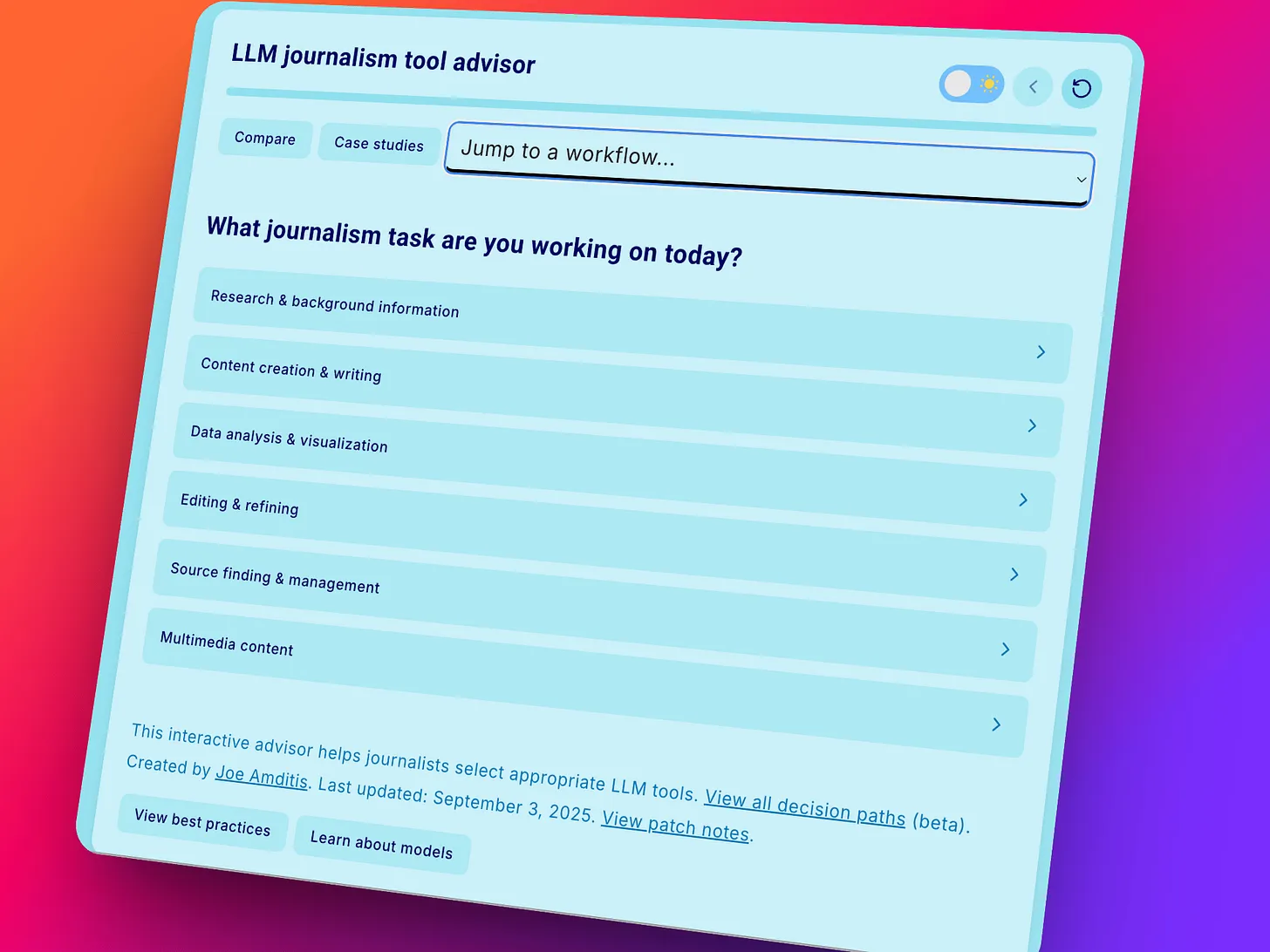
As news organizations scramble to update their digital toolkits, I invited one of the most tech savvy journalism advisors I know to share his guidance.
In the guest post below, Joe Amditis shares a bunch of useful resources. A former CUNY student of mine, Joe now serves as associate director of operations at the Center for Cooperative Media at Montclair State University.
Economist Oksana Leukhina, an economic policy advisor at the Federal Reserve Bank of St. Louis, sat down for a conversation about underemployment, including:
The effects it has on college graduates’ income and careers
The kinds of degrees underemployed grads are more likely to have
In this month’s edition of the State of the Labor Market, we dive deeper into recent hiring trends, including revisiting entry-level work. This edition also examines labor market churn and its importance to the overall health of a dynamic labor market. We end by taking a closer look at the growing divide between worker and executive sentiment.
SINGAPORE Sept. 3, 2025 /PRNewswire/ — Today, Midoo AIproudly announces the launch of the world’s first AI language learning agent, a groundbreaking innovation set to transform language education forever.
For decades, language learning has pursued one ultimate goal: true personalization. Traditional tools offered smart recommendations, gamified challenges, and pre-written role-play scripts—but real personalization remained out of reach. Midoo AI changes that. Here is the >launch video of Midoo AI.
Imagine a learning experience that evolves with you in real time. A system that doesn’t rely on static courses or scripts but creates a dynamic, one-of-a-kind language world tailored entirely to your needs. This is the power of Midoo’s Dynamic Generation technology.
“Midoo is not just a language-learning tool,” said Yvonne, co-founder of Midoo AI. “It’s a living agent that senses your needs, adapts instantly, and shapes an experience that’s warm, personal, and alive. Learning is no longer one-size-fits-all—now, it’s yours and yours alone.”
Language learning apps have traditionally focused on exercises, quizzes, and progress tracking. Midoo AI introduces a different approach. Instead of presenting itself as a course provider, it acts as an intelligent learning agent that builds, adapts, and sustains a learner’s journey.
This review examines how Midoo AI operates, its feature set, and what makes it distinct from other AI-powered tutors.
Midoo AI in Context: Purpose and Position
Midoo AI is not structured around distributing lessons or modules. Its core purpose is to provide an agent-like partner that adapts in real time. Where many platforms ask learners to select a “level” or “topic,”
Midoo instead begins by analyzing goals, usage context, and error patterns. The result is less about consuming predesigned units and more about co-constructing a pathway.
Turning Time Saved Into Better Learning
AI can save teachers time, but what can that time be used for (besides taking a breath)? For most of us, it means redirecting energy into the parts of teaching that made us want to pursue this profession in the first place: connecting with our students and helping them grow academically.
Differentiation Every classroom has students with different readiness levels, language needs, and learning preferences. AI tools like Diffit or MagicSchool can instantly create multiple versions of a passage or assignment, differentiated by grade level, complexity, or language. This allows every student to engage with the same core concept, moving together as one cohesive class. Instead of spending an evening retyping and rephrasing, teachers can review and tweak AI drafts in minutes, ready for the next lesson.
Mass Intelligence — from oneusefulthing.org by Ethan Mollick From GPT-5 to nano banana: everyone is getting access to powerful AI
When a billion people have access to advanced AI, we’ve entered what we might call the era of Mass Intelligence. Every institution we have — schools, hospitals, courts, companies, governments — was built for a world where intelligence was scarce and expensive. Now every profession, every institution, every community has to figure out how to thrive with Mass Intelligence. How do we harness a billion people using AI while managing the chaos that comes with it? How do we rebuild trust when anyone can fabricate anything? How do we preserve what’s valuable about human expertise while democratizing access to knowledge?
By the time today’s 9th graders and college freshman enter the workforce, the most disruptive waves of AGI and robotics may already be embedded into part society.
What replaces the old system will not simply be a more digital version of the same thing. Structurally, schools may move away from rigid age-groupings, fixed schedules, and subject silos. Instead, learning could become more fluid, personalized, and interdisciplinary—organized around problems, projects, and human development rather than discrete facts or standardized assessments.
AI tutors and mentors will allow for pacing that adapts to each student, freeing teachers to focus more on guidance, relationships, and high-level facilitation. Classrooms may feel less like miniature factories and more like collaborative studios, labs, or even homes—spaces for exploring meaning and building capacity, not just delivering content.
…
If students are no longer the default source of action, then we need to teach them to:
Design agents,
Collaborate with agents,
Align agentic systems with human values,
And most of all, retain moral and civic agency in a world where machines act on our behalf.
We are no longer educating students to be just doers.
We must now educate them to be judges, designers, and stewards of agency.
Meet Your New AI Tutor — from wondertools.substack.com by Jeremy Caplan Try new learning modes in ChatGPT, Claude, and Gemini
AI assistants are now more than simple answer machines. ChatGPT’s new Study Mode, Claude’s Learning Mode, and Gemini’s Guided Learningrepresent a significant shift. Instead of just providing answers, these free tools act as adaptive, 24/7 personal tutors.
That’s why, in preparation for my next bootcamp which kicks off September 8th 2025, I’ve just completed a full refresh of my list of the most powerful & popular AI tools for Instructional Designers, complete with tips on how to get the most from each tool.
The list has been created using my own experience + the experience of hundreds of Instructional Designers who I work with every week.
It contains the 50 most powerful AI tools for instructional design available right now, along with tips on how to optimise their benefits while mitigating their risks.
Addendums on 9/4/25:
AI Companies Roll Out Educational Tools — from insidehighered.com by Ray Schroeder This fall, Google, Anthropic and OpenAI are rolling out powerful new AI tools for students and educators, each taking a different path to shape the future of learning.
So here’s the new list of essential skills I think my students will need when they are employed to work with AI five years from now:
They can follow directions, analyze outcomes, and adapt to change when needed.
They can write or edit AI to capture a unique voice and appropriate tone in sync with an audience’s needs
They have a deep understanding of one or more content areas of a particular profession, business, or industry, so they can easily identify factual errors.
They have a strong commitment to exploration, a flexible mindset, and a broad understanding of AI literacy.
They are resilient and critical thinkers, ready to question results and demand better answers.
They are problem solvers.
And, of course, here is a new rubric built on those skills:
Educators use AI in and out of the classroom Educators’ uses range from developing course materials and writing grant proposals to academic advising and managing administrative tasks like admissions and financial planning.
Educators aren’t just using chatbots; they’re building their own custom tools with AI
Faculty are using Claude Artifacts to create interactive educational materials, such as chemistry simulations, automated grading rubrics, and data visualization dashboards.
Educators tend to automate the drudgery while staying in the loop for everything else
Tasks requiring significant context, creativity, or direct student interaction—like designing lessons, advising students, and writing grant proposals—are where educators are more likely to use AI as an enhancement. In contrast, routine administrative work such as financial management and record-keeping are more automation-heavy.
Some educators are automating grading; others are deeply opposed
In our Claude.ai data, faculty used AI for grading and evaluation less frequently than other uses, but when they did, 48.9% of the time they used it in an automation-heavy way (where the AI directly performs the task). That’s despite educator concerns about automating assessment tasks, as well as our surveyed faculty rating it as the area where they felt AI was least effective.
The Online Education Marketplace Is Increasingly Competitive: …
Alternative Credentials Take Center Stage: …
AI Integration Lacks Strategic Coordination: …
Just 28% of faculty are considered fully prepared for online course design, and 45% for teaching. Alarmingly, only 28% of institutions report having fully developed academic continuity plans for future emergency pivots to online.
Cultural resistance remains strong. Many [Chief Online Learning Officers] COLOs say faculty and deans still believe in-person learning is “just better,” creating headwinds even for modest online growth. As one respondent at a four-year institution with a large online presence put it:
Supportive departments [that] see the value in online may have very different levels of responsiveness compared to academic departments [that] are begrudgingly online. There is definitely a growing belief that students “should” be on-ground and are only choosing online because it’s easy/ convenient. Never mind the very real and growing population of nontraditional learners who can only take online classes, and the very real and growing population of traditional-aged learners who prefer online classes; many faculty/deans take a paternalistic, “we know what’s best” approach.
… Ultimately, what we need is not just more ambition but better ambition. Ambition rooted in a realistic understanding of institutional capacity, a shared strategic vision, investments in policy and infrastructure, and a culture that supports online learning as a core part of the academic mission, not an auxiliary one. It’s time we talked about what it really takes to grow online learning , and where ambition needs to be matched by structure.
From DSC: Yup. Culture is at the breakfast table again…boy, those strategies taste good.
I’d like to take some of this report — like the graphic below — and share it with former faculty members and members of a couple of my past job families’ leadership. They strongly didn’t agree with us when we tried to advocate for the development of online-based learning/programs at our organizations…but we were right. We were right all along. And we were LEADING all along. No doubt about it — even if the leadership at the time said that we weren’t leading.
The cultures of those organizations hurt us at the time. But our cultivating work eventually led to the development of online programs — unfortunately, after our groups were disbanded, they had to outsource those programs to OPMs.
Arizona State University — with its dramatic growth in online-based enrollments.
Young workers are getting hit in fields where generative-AI tools such as ChatGPT can most easily automate tasks done by humans, such as software development, according to a paper released Tuesday by three Stanford University economists. They crunched anonymized data on millions of employees at tens of thousands of firms, including detailed information on workers’ ages and jobs, making this one of clearest indicators yet of AI’s disruptive impact.
Young workers in jobs where AI could act as a helper, rather than a replacement, actually saw employment growth, economists found.
The AI Education Revolution — from linkedin.com by Whitney Kilgore We’re witnessing the biggest shift in education since the textbook—and most institutions are still deciding whether to allow it.
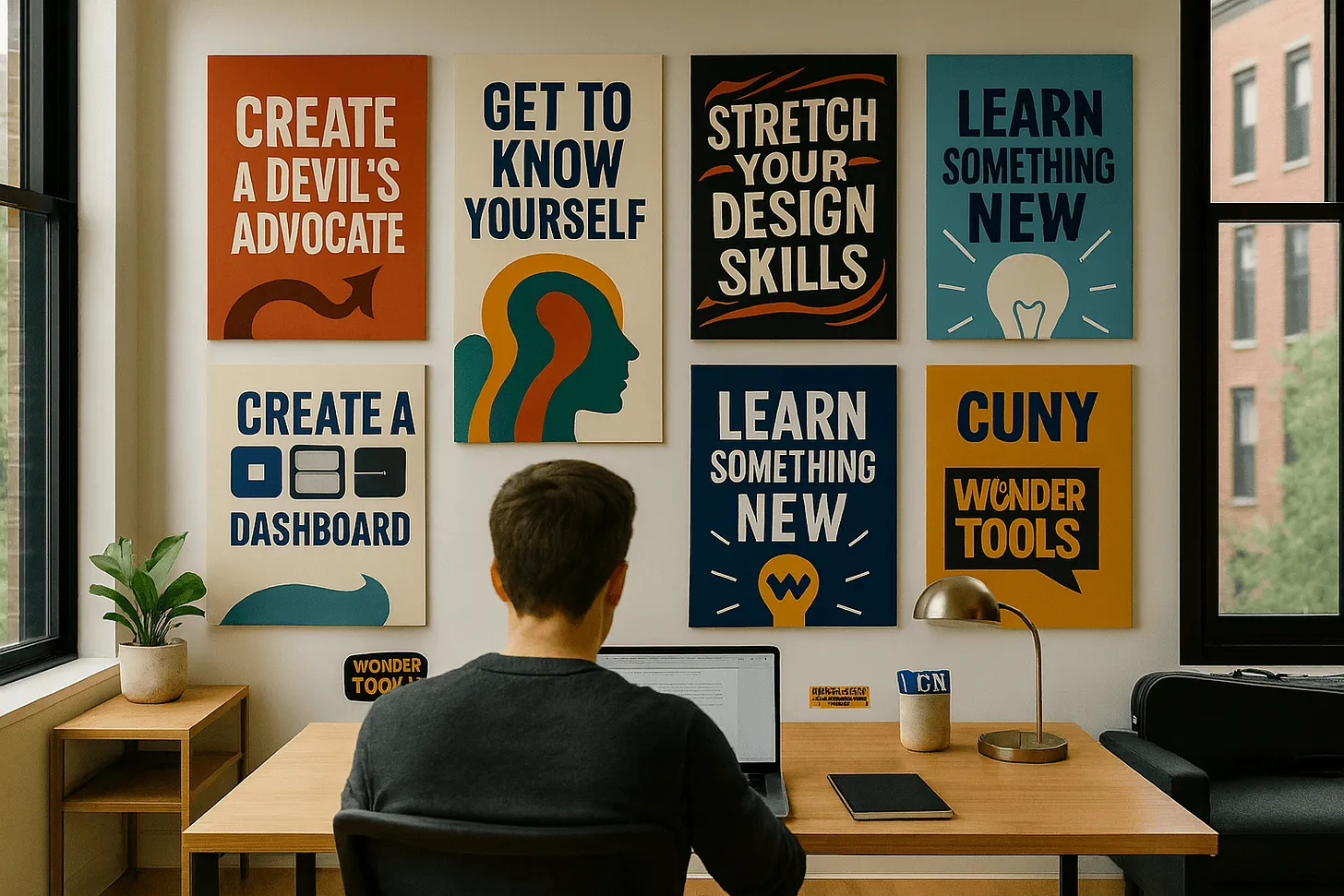
Learn something new. Map out a personalized curriculum
Try this: Give an AI assistant context about what you want to learn, why, and how.
Detail your rationale and motivation, which may impact your approach.
Note your current knowledge or skill level, ideally with examples.
Summarize your learning preferences
Note whether you prefer to read, listen to, or watch learning materials.
Mention if you like quizzes, drills, or exercises you can do while commuting or during a break at work.
If you appreciate learning games, task your AI assistant with generating one for you, using its coding capabilities detailed below.
Ask for specific book, textbook, article, or learning path recommendations using the Web search or Deep Research capabilities of Perplexity, ChatGPT, Gemini or Claude. They can also summarize research literature about effective learning tactics.
If you need a human learning partner, ask for guidance on finding one or language you can use in reaching out.
GPT-5 for Instructional Designers — from drphilippahardman.substack.com by Dr Philippa Hardman 10 Hacks to Work Smarter & Safer with OpenAI’s Latest Model
The TLDR is that as Instructional Designers, we can’t afford to miss some of the very real benefits of GPT-5’s potential, but we also can’t ensure our professional standards or learner outcomes if we blindly accept its outputs without due testing and validation.
For this reason, I decided to synthesise the latest GPT-5 research—from OpenAI’s technical documentation to independent security audits to real-world user testing—into 10 essential reality checks for using GPT-5 as an Instructional Designer.
These aren’t theoretical exercises; they’re practical tests designed to help you safely unlock GPT-5’s benefits while identifying and mitigating its most well-documented limitations.
While I regularly use tools like ChatGPT, Grammarly, Microsoft Copilot, and even YouTube Premium (I would cancel Netflix before this), Perplexity has earned a top spot in my toolkit. It blends AI and real-time web search into one seamless, research-driven platform that saves time and improves the quality of information I rely on every day.
The rates of student loan non payment between April and June climbed sharply, so that 12.9 percent of debt is now subject to “serious delinquency,” according to new data released by the Federal Reserve Bank of New York. … Federal Reserve Bank of New York’s Center for Microeconomic Data released its Quarterly Report on Household Debt and Credit on Wednesday, which found the number of student loans transitioning into serious delinquency, or 90 days past due, rose “sharply” in the second quarter of 2025.
What next for EDI? Protecting equality of opportunity in HE — from timeshighereducation.com by Laura Duckett As equity, diversity and inclusion practices face mounting political and cultural challenges, this guide includes strategies from academics around the world on preserving fair access and opportunity for all
As many in this guide explain, hostility to efforts to create fairer, inclusive and diverse institutions of higher education runs a lot deeper than the latest US presidential agenda and it cannot be ignored and rejected as a momentary political spike. Yet the continued need for EDI (or DEI as it is called in America) work to address historic and systemic injustice is clear from the data. In the US, Black, Hispanic, Latino, Native American and Pacific Islander people are under-represented in university student and staff populations. Students from these groups also have worse academic outcomes.
In the UK, only 1 per cent of professors are Black, women remain under-represented on the higher rungs of the academic ladder and the attainment gap between students from minoritised backgrounds and their white counterparts remains stubbornly evident across the higher education sector.
While not all EDI work has proved successful, significant progress has been made on widening participation in higher education and building more inclusive universities in which students and academics can thrive.
This guide shares lessons from academics on navigating increasingly choppy waters relating to EDI, addressing misconceptions about the work and its core ambitions, strategies for allyship, anti-racism and inclusion and how to champion EDI through your teaching and institutional culture.
As a new academic year begins, many instructors, trainers, and program leaders are bracing for familiar challenges—keeping learners engaged, making complex material accessible, and preparing students for real-world application.
But there’s a quiet shift happening in classrooms and online courses everywhere.
This fall, it’s not the syllabus that’s guiding the learning experience—it’s the conversation between the learner and an AI tool.
From bootcamp to bust: How AI is upending the software development industry — from reuters.com by Anna Tong; via Paul Fain Coding bootcamps have been a mainstay in Silicon Valley for more than a decade. Now, as AI eliminates the kind of entry-level roles for which they trained people, they’re disappearing.
Coding bootcamps have been a Silicon Valley mainstay for over a decade, offering an important pathway for non-traditional candidates to get six-figure engineering jobs. But coding bootcamp operators, students and investors tell Reuters that this path is rapidly disappearing, thanks in large part to AI.
“Coding bootcamps were already on their way out, but AI has been the nail in the coffin,” said Allison Baum Gates, a general partner at venture capital fund SemperVirens, who was an early employee at bootcamp pioneer General Assembly.
Gates said bootcamps were already in decline due to market saturation, evolving employer demand and market forces like growth in international hiring.
Welcome back to school! For most of us (myself included), the whirlwind of lesson prep, meetings, professional development—and of course, teaching—is here. Keep reading for my favorite back-to-school activities to engage students with retrieval practice during the first week of class.
…
It may (or may not) surprise you to know that my first day of class is full of retrieval practice. Even if you haven’t introduced content yet, use retrieval practice the first day or week of class. Here’s how, with quick activities you can adapt for K–12 students, higher ed courses, and all content areas:
Build a welcoming class culture with mnemonics to remember student names (spoiler alert: trying to memorize names with students’ LMS photos doesn’t work)
I’ll start, as we academics so love to do, with a little bit of theory — specifically, four core principles that can help shape your planning for the first day of your course.
Next, I’ll cover the logistics of a successful first day, including managing the space and technology as well as getting to know your students.
To show you how to put the principles and the logistics into practice, I will provide examples of what a good set of first-day activities might look like in four disciplines.
I’ll finish with some suggestions for how to support the good work you have done on the first day with some follow-up activities.
7 Pieces of Advice for New Teachers — from edutopia.org by Brienne May Focus on relationships with students and colleagues to make a good start to the year—and remember to ask for what you need.
Too often, teacher preparation programs are rich in theory but light on practical guidance. After working hard through my undergraduate classes, completing student teaching, and spending countless hours laminating and cutting, I still found myself on the first day of school, standing in front of a room full of expectant faces with eager eyes, and realized I had no idea what to do next. I didn’t know what to say to students in that moment, let alone how to survive the following 180 days. Twelve years later, I have collected a trove of advice I wish I could have shared with that fresh-faced teacher.
Each fall, one of the first routines I introduce is our classroom job board. It’s more than a list of tasks—it helps students feel that they belong and have real roles in our shared space. Over the years, I’ve expanded beyond classic jobs like Line Leader and Pencil Sharpener to include creative roles with quirky titles that engage and resonate with students.
Here are the jobs that have helped my students feel seen, trusted, and excited to contribute.
Guiding Students to Overcome Learned Helplessness— from edutopia.org by Michelle Singh New teachers can create an environment where students feel supported and understand that mistakes are part of the learning process.
Creating a Kid-Led Hall of Fame for Books — from edutopia.org by Eric Hall Allowing elementary students to nominate and vote for their favorite books of the year can create a culture of celebration in the classroom.
When I started teaching, I remembered that conversation with my elementary school librarian. I thought, “Why should adults have all the fun?” I wanted my students to experience the excitement of recognizing books they thought were the best. And just like that, the Hallbery Awards were born and continued twice a year for over 15 years. (Why Hallbery? Because my last name is Hall.)
Today, we’re taking a look at the three primary forms of assessments—diagnostic, formative, and summative—with the goal of not only differentiating between them but also better understanding the purpose and potential power of each.
At their core, each of the three primary assessment types serves a distinct purpose. Diagnostic assessments are used before instruction to help identify where students are in their comprehension of academic content. Formative assessments are used while content is being taught to understand what students are picking up, to guide their learning, and to help teachers determine what to focus on moving forward. Summative assessments are used after instruction to evaluate the outcomes of student learning: what, or how much, they ultimately learned.
The “New Indiana Diploma” — which was signed into law in April and goes into effect for all incoming first-year students this academic year — gives students the option to earn different “seals” in addition to a basic diploma, depending on whether they plan to attend college, go straight to work or serve in the military. Jenner describes it as an effort to tailor the diploma to students’ interests, expose students to careers and recognize different forms of student achievement.
Students in one Arizona district will take fewer standardized tests this school year, the result of an educator-led push to devote less time to testing.
The Tucson Education Association, backed by the school board and several parents, reached an agreement with the Tucson Unified school system in May to reduce the number of district-mandated standardized assessments students take annually starting in the 2025-26 academic year.
Just 25 percent of educators agreed that state-mandated tests provide useful information for the teachers in their school, according to a 2023 EdWeek Research Center survey of teachers, principals, and district leaders.
30 Ways to Bring Calm to a Noisy High School Classroom — from edutopia.org by Anne Noyes Saini From ‘finding the lull’ to the magic of a dramatic whisper, these teacher-tested strategies quickly get high school students focused and back on track.
Approaching Experiential Learning as a Continuum — from edutopia.org by Bill Manchester Teachers can consider 12 characteristics of experiential learning to make lessons more or less active for students.
To rise above the threshold, consider the skills that our board member and Northeastern University President Joseph Aoun outlines as essential literacies in Robot-Proof: Higher Education in the Age of Artificial Intelligence. In addition to technical and data literacies, he shares two key components of human literacy.
First, a set of “catalytic capacities” that include:
Initiative and self-reliance
Comfort with risk
Flexibility and adaptability
Second, a set of “creative capacities” that include:
Opportunity recognition, or the ability to see and experience problems as opportunities to create solutions
Creative innovation, or the ability to create solutions without clearly defined structures
Future innovation, or the disposition to orient toward future developments in society
The most effective approach to achieve these outcomes? Interdisciplinary models that embed skills flexibly across curriculum, that engage learners as part of networks, teams, and exploration, and that embed applied experiences in real-world contexts. Scott Carlson and Ned Laff have laid out some great examples of what this looks like in action in Hacking College.
The bottom line: the expectations of entry-level talent are rising while the systems to achieve that level of context and understanding are not necessarily keeping pace.