2026 Survey of College and University Presidents — from insidehighered.com, Liaison, & Jenzabar
Download and explore exclusive insights from the 2026 Survey of College and University Presidents to see how these campus leaders are responding to financial volatility, political interference, rapid advances in AI, and where they believe the biggest risks and opportunities lie as they look toward 2030.

In this year’s survey, presidents share perspectives on:

  • How presidents assess the second Trump administration’s impact on higher education
  • Which emerging or evolving educational models they plan to add or expand in the coming years
  • How effective they believe higher education has been in shaping national conversations arout AI
  • The issues presidents expect will have the greatest impact on higher education by 2030


The Future of Learning Looks Like Workforce Infrastructure — from workshift.org by Bruno V. Manno

For years, “ed tech” was an umbrella term grouping schools, online platforms, courses, credentials, and software under one idea: technology applied to education. That shorthand made it easier for investors, policymakers, and institutions to talk about innovation without rethinking how learning fits into the economy. Today, it no longer explains what’s happening.

That’s the central insight of “The European Learning & Work Funding Report” by Brighteye Ventures, a research and advisory firm tracking investment at the intersection of learning, work, and productivity. The report’s seventh edition shows that learning is no longer funded primarily as education. It is increasingly funded as part of how work gets done.

Across Europe, and increasingly the U.S., capital is flowing not toward courses or credentials but toward systems that are closer to production, including hiring platforms, staffing firms, clinical decision tools, payroll systems, and compliance software. These are not educational products, though learning is embedded throughout them.

In these systems, learning is not the point. Outcomes are.

Build hybrid institutions that erase boundaries. Stop forcing learners to navigate disconnected systems. Create partnerships that blend K-12 schools, community colleges, training providers, and employers into one integrated system, so students move through one coherent system, not four separate bureaucracies.


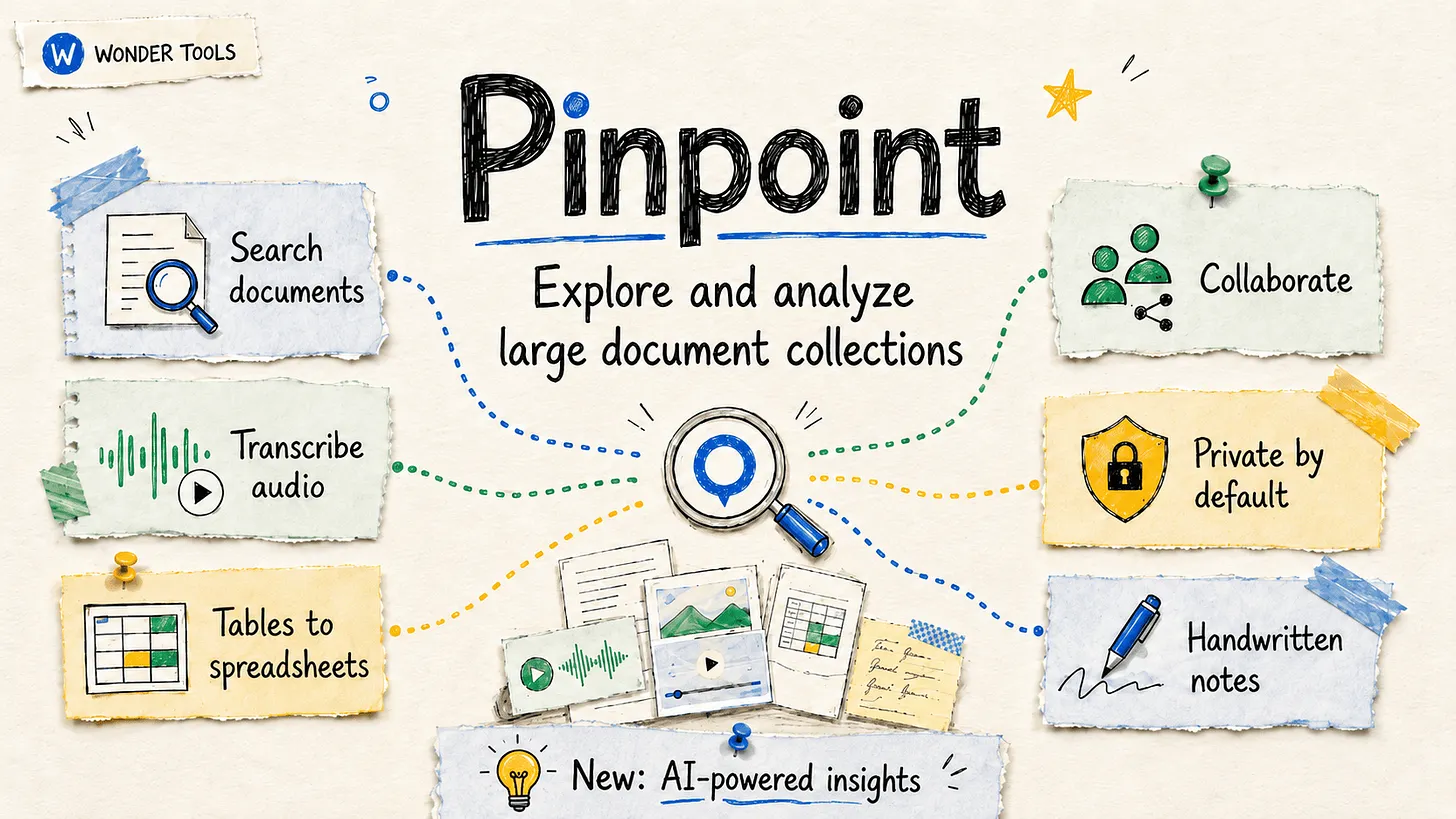
Teach Smarter with AI — from wondertools.substack.com by Jeremy Caplan and Lance Eaton
10 tested strategies from two educators who actually use them

I recently talked with Lance Eaton, Senior Associate Director of AI and Teaching & Learning at Northeastern University and writer of AI + Education = Simplified. We traded ideas about what’s actually working. We came up with 10 specific, practical ways anyone who teaches, coaches, or leads can put AI to work.

Watch the full conversation above, or read highlights below.


Beyond Audio Summaries: How to Use NotebookLM to *Actually* Design Better Learning — from drphilippahardman.substack.com by Dr. Philippa Hardman
Five methods to maximise the value of NotebookLM’s features

In practice, what makes NotebookLM different for learning designers is four things:

  • Answers grounded in your sources (with citations):
  • Source toggling:
  • Multi-format studio & multi-source summaries:
  • Persistent workspace:


5 Evidence-Based Methods NotebookLM Operationalises…


Shadow AI Isn’t a Threat: It’s a Signal — from campustechnology.com by Damien Eversmann
Unofficial AI use on campus reveals more about institutional gaps than misbehavior.

Key Takeaways

  • Shadow AI is widespread in higher education: Faculty, researchers, students, and staff are using AI tools outside official IT channels, including consumer platforms and public cloud services that may involve sensitive data.
  • Unauthorized AI use creates data, compliance, and cost risks: Consumer AI tools may store or reuse user data, while uncoordinated adoption drives redundant licenses, unpredictable cloud costs, and weaker security oversight.
  • Institutions are shifting from restriction to enablement: Some campuses are making approved paths easier by offering ready-to-use research environments, campus-managed AI tools, clear guidance on data and vendors, and streamlined approval processes.

How L&D Can Lead in the Age of AI Even If Your Company’s Not Ready — from learningguild.com

How to lead even when your company doesn’t allow AI
Even if your corporation isn’t ready for AI, you can still research tools personally to stay ahead of the curve, so when organizational restrictions lift, you are ready to use AI for learning right away. Here are some tools you can test at home if they’re restricted in your workplace:

  • Content generation – Start testing text-based tools to get a taste of how AI can accelerate content creation. Then take it to the next level by exploring tools that generate voices, music, and sound effects.
  • AI coaching tools – Have AI pose as a customer co-worker or customer to get a taste of what it’s like to use it as a conversation coach. Next, use the voice and video capabilities in an app like ChatGPT to explore how AI can coach someone through tasks.
  • In-the-flow learning assistants – Test turning documents into a conversational avatar and interacting with it to see how it feels. Then think about how the technology could potentially transform static content into dynamic learning experiences for employees.
  • Vibe-coded simulations – Experiment with this technology by creating a simple, fun game. Afterwards, brainstorm some ideas on how it could quickly create simulations for your learners in the future.

The Higher Ed Playbook for AI Affordability — from campustechnology.com by Jason Dunn-Potter

Key Takeaways

  • Affordable AI adoption focuses on evolving existing systems: Universities are embedding AI into current devices, workflows, and legacy systems rather than rebuilding infrastructure or investing in new data centers.
  • Edge AI reduces costs and improves access: Running AI models on local devices or networks lowers cloud processing costs, enhances security, and supports learning use cases such as tutoring, translation, transcription, and adaptive learning.
  • Enterprise integration and governance drive impact: Institutions are applying AI across admissions, advising, facilities, and research workflows, supported by shared resource hubs, data governance, AI literacy, and outcome-driven implementation.


“But what’s happening right now is exponential.” — from linkedin.com by Josh Cavalier

Excerpt:

I need to be honest with you. I’ve been running experiments this week with Claude Code and Opus 4.6, and we have reached the precipice in the collapse of time required to produce high-quality text-based ID outputs.

This includes performance consulting reports, learning needs analyses, action mapping, scripts, storyboards, facilitator guides, rubrics, and technical specs.

I just mapped the entire performance consulting process into a multimodal AI integration architecture (diagram image). Every phase. Entry and contracting. Performance analysis. Cause analysis. Solution design. Implementation. Evaluation. Thirty files. System specifications for each. The next step is to vet out each “skill” with an expert performance consultant.

Then I attempted a learning output: an 8-module course built with a cognitive scaffold that moves beyond content delivery to facilitate deliberate practice, meaning-making, and guided reflection within the learner’s own context.

The result:


AI and human-centered learning — from linkedin.com by Patrick Blessinger

Democratizing opportunities

AI adaptive learning can adapt learning in real-time. These tools have the potential to provide a more personalized learning experience, but only if used properly.

The California State University system uses ChatGPT Edu (OpenAI, 2025). Students use it for AI-assisted tutoring, study aids, and writing support. These resources provide 24/7 availability of subject-matter expertise tailored to students’ learning needs. It is not a replacement for professors. Rather, it extends the reach of mentorship by reducing access barriers.

However, we must proceed with intellectual humility and ethical responsibility. Even though AI can customize messages, it cannot replace the encouragement of a teacher or professor, or the social and emotional aspects of learning. It’s at the intersection of humanistic values and knowledge development that education must find its balance.


How storytelling can turn international students into the most powerful voices in the room — from timeshighereducation.com by Natalie Cummins
Turning presentations into a visual storytelling task allows international students to demonstrate their learning through elements such as sound, visuals, silence and pacing rather than just language

Rather than changing the assessment, I shared a simple storytelling checklist that emphasised structure – a strong opening, a clear human dilemma at the centre and a purposeful ending – alongside explicit inspiration for communicating meaning through visuals, video, metaphor, sound and pacing rather than language alone.

On presentation day, the group told a moving story grounded in a global extractive firm where one student’s family worked. What stood out was not linguistic fluency but clarity of meaning. Their story allowed a complex organisational problem of unsafe work conditions to unfold, with non-verbal elements carrying the ethical and human weight of the case.

This group delivered one of the most compelling presentations I have ever seen. The room was transfixed.


Funding cuts, shifts in aid could make college harder to afford for low-income families — from hechingerreport.org by Jon Marcus
Advocates worry that the promise of a higher education will soon drift further out of reach

Now TRIO has come under the scrutiny of the Trump administration, which has already moved to cancel TRIO funding for some participating colleges (though this was paused in January by a federal court and remains in litigation) and proposes to eliminate it altogether; letters from the Department of Education to those colleges show the money was cut off because the programs were considered part of diversity, equity and inclusion, or DEI, efforts.

At a time of rising income inequality, it’s one of several developments advocates worry are converging to make things even harder for lower-income Americans who want to go to and get through college — a group that already faces considerable challenges, and whose proportion of enrollment has been falling for a decade and a half.


The Campus AI Crisis — by Jeffrey Selingo; via Ryan Craig
Young graduates can’t find jobs. Colleges know they have to do something. But what?

Only now are colleges realizing that the implications of AI are much greater and are already outrunning their institutional ability to respond. As schools struggle to update their curricula and classroom policies, they also confront a deeper problem: the suddenly enormous gap between what they say a degree is for and what the labor market now demands. In that mismatch, students are left to absorb the risk. Alina McMahon and millions of other Gen-Zers like her are caught in a muddled in-between moment: colleges only just beginning to think about how to adapt and redefine their mission in the post-AI world, and a job market that’s changing much, much faster.

“Colleges and universities face an existential issue before them,” said Ryan Craig, author of Apprentice Nation and managing director of a firm that invests in new educational models. “They need to figure out how to integrate relevant, in-field, and hopefully paid work experience for every student, and hopefully multiple experiences before they graduate.”


Jim VandeHei’s note to his kids: Blunt AI talk — from axios.com by CEO Jim VandeHei
Axios CEO Jim VandeHei wrote this note to his wife, Autumn, and their three kids. She suggested sharing it more broadly since so many families are wrestling with how to think and talk about AI. So here it is …

Dear Family:
I want to put to words what I’m hearing, seeing, thinking and writing about AI.

  • Simply put, I’m now certain it will upend your work and life in ways more profound than the internet or possibly electricity. This will hit in months, not years.
  • The changes will be fast, wide, radical, disorienting and scary. No one will avoid its reach.

I’m not trying to frighten you. And I know your opinions range from wonderment to worry. That’s natural and OK. Our species isn’t wired for change of this speed or scale.

  • My conversations with the CEOs and builders of these LLMs, as well as my own deep experimentation with AI, have shaken and stirred me in ways I never imagined.

All of you must figure out how to master AI for any specific job or internship you hold or take. You’d be jeopardizing your future careers by not figuring out how to use AI to amplify and improve your work. You’d be wise to replace social media scrolling with LLM testing.

Be the very best at using AI for your gig.

more here.


Also see:


Also relevant/see:


The Essential Retrieval Practice Handbook — from edutopia.org
Retrieval practice is one of the most effective ways to strengthen learning. Here’s a collection of our best resources to use in your classroom today.
January 29, 2026


Also see:

What is retrieval practice? — from retrievalpractice.org

When we think about learning, we typically focus on getting information into students’ heads. What if, instead, we focus on getting information out of students’ heads?


Farewell to Traditional Universities | What AI Has in Store for Education

Premiered Jan 16, 2026

Description:

What if the biggest change in education isn’t a new app… but the end of the university monopoly on credibility?

Jensen Huang has framed AI as a platform shift—an industrial revolution that turns intelligence into infrastructure. And when intelligence becomes cheap, personal, and always available, education stops being a place you go… and becomes a system that follows you. The question isn’t whether universities will disappear. The question is whether the old model—high cost, slow updates, one-size-fits-all—can survive a world where every student can have a private tutor, a lab partner, and a curriculum designer on demand.

This video explores what AI has in store for education—and why traditional universities may need to reinvent themselves fast.

In this video you’ll discover:

  • How AI tutors could deliver personalized learning at scale
  • Why credentials may shift from “degrees” to proof-of-skill portfolios
  • What happens when the “middle” of studying becomes automated
  • How universities could evolve: research hubs, networks, and high-trust credentialing
  • The risks: cheating, dependency, bias, and widening inequality
  • The 3 skills that become priceless when information is everywhere: judgment, curiosity, and responsibility

From DSC:
There appears to be another, similar video, but with a different date and length of the video. So I’m including this other recording as well here:


The End of Universities as We Know Them: What AI Is Bringing

Premiered Jan 27, 2026

What if universities don’t “disappear”… but lose their monopoly on learning, credentials, and opportunity?

AI is turning education into something radically different: personal, instant, adaptive, and always available. When every student can have a 24/7 tutor, a writing coach, a coding partner, and a study plan designed specifically for them, the old model—one professor, one curriculum, one pace for everyone—starts to look outdated. And the biggest disruption isn’t the classroom. It’s the credential. Because in an AI world, proof of skill can become more valuable than a piece of paper.

This video explores the end of universities as we know them: what AI is bringing, what will break, what will survive, and what replaces the traditional path.

In this video you’ll discover:

  • Why AI tutoring could outperform one-size-fits-all lectures
  • How “degrees” may shift into skill proof: portfolios, projects, and verified competency
  • What happens when the “middle” of studying becomes automated
  • How universities may evolve: research hubs, networks, high-trust credentialing
  • The dark side: cheating, dependency, inequality, and biased evaluation
  • The new advantage: judgment, creativity, and responsibility in a world of instant answers
 

AI and the Work of Centers for Teaching and Learning — from derekbruff.org by Derek Bruff

  • Penelope Adams Moon suggested that instead [of] framing a workshop around “How can we integrate AI into the work of teaching?” we should ask “Given what we know about learning, how might AI be useful?” I love that reframing, and I think it connects to the students’ requests for more AI knowhow. Students have a lot of options for learning: working with their instructor, collaborating with peers, surfing YouTube for explainer videos, university-provided social annotation platforms, and, yes, using AI as a kind of tutor. I think our job (collectively) isn’t just to teach students how to use AI (as they’re requesting) but also to help them figure out when and how AI is helpful for their learning. That’s highly dependent on the student and the learning task! I wrote about this kind of metacognition on my blog.

In the same way, when I approach any kind of educational technology, I’m looking for tools that can be responsive to my pedagogical aims. The pedagogy should drive the technology use, not the other way around.


What’s Happening to Jobs for New Grads — from linkedin.com by Jeff Selingo

No matter where you go to college, the job market math for new graduates is grim right now, as I write in a new article out yesterday in New York magazine.

There were 15% fewer entry-level and internship job postings in 2025 than the year before, according to Handshake, a job-search platform popular with college students; meanwhile, applications per posting rose 26%.

How much AI is to blame for the fragile entry-level job market is unclear. Several research studies show AI is hitting young college-educated workers disproportionately, but broader economic forces are part of the story, too.

As Christine Y. Cruzvergara, Handshake’s chief education strategy officer, told me, AI isn’t “taking” jobs so much as employers are “choosing” to replace parts of jobs with automation rather than redesign roles around workers. “They’re replacing people instead of enabling their workforce,” she said.

Today’s graduates are stuck in an in-between moment. Many started college before AI mattered and graduated into a labor market reshaped almost overnight, where entry-level roles are disappearing faster than students can adapt.


© 2025 | Daniel Christian