Cambridge library installation gives readers control of their sensory space — from cambridge.wickedlocal.com by Hannah Schoenbaum

Excerpts:

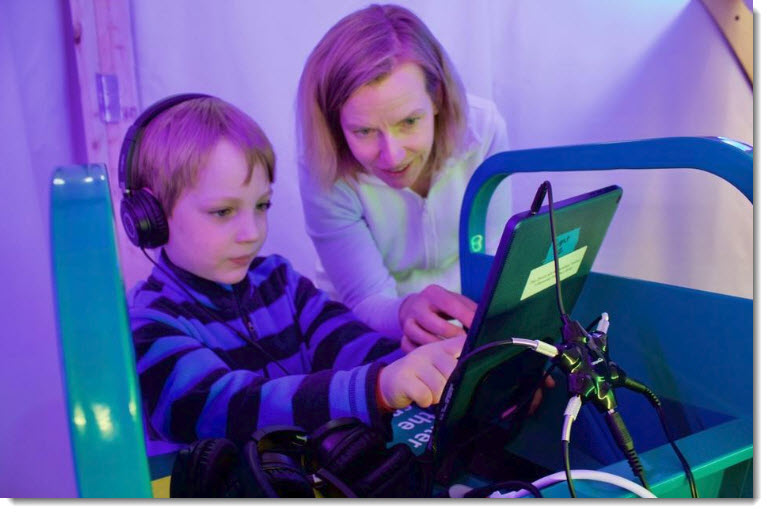
A luminous igloo-shaped structure in the front room of the Cambridge Public Library beckoned curious library visitors during the snowy first weekend of March, inviting them to explore a space engineered for everyone, yet uniquely their own.

Called “Alterspace” and developed by Harvard’s metaLAB and Library Innovation Lab, this experiment in adaptive architecture granted the individual control over the sensory elements in his or her space. A user enters the LED-illuminated dome to find headphones, chairs and an iPad on a library cart, which displays six modes: Relax, Read, Meditate, Focus, Create and W3!Rd.

From the cool blues and greens of Relax mode to a rainbow overload of excitement in the W3!Rd mode, Alterspace is engineered to transform its lights, sounds and colors into the ideal environment for a particular action.


From DSC:
This brings me back to the question/reflection…in the future, will students using VR headsets be able to study by a brook? An ocean? In a very quiet library (i.e., the headset would come with solid noise cancellation capabilities build into it)?  This type of room/capability would really be helpful for our daughter…who is easily distracted and doesn’t like noise.


HBS Online: Why Harvard Business School’s digital rebrand is big news for online learning — from businessbecause.com by Seb Murray
Name change from HBX to Harvard Business School Online symbolizes a maturing market. We speak to Patrick Mullane, executive director of HBS Online, to find out more

Excerpt:

At first glance, it may have seemed like an inconsequential name change: Harvard Business School’s digital learning platform HBX would be called HBS Online.

But commentators have billed the recent rebrand as having the potential for a big impact on online education. For one, the makeover could help to further legitimize the market.

Online learning was initially considered second-rate to campus study, due to concerns about teaching quality and interactivity online. Nitin Nohria, the dean of HBS, saying in 2010 that the school would never go online in his lifetime, appeared to confirm the scepticism.

But he has since admitted he ‘misjudged the potential of online education’ and is…


From DSC:
This is very old hat…but those who haven’t taught online should not judge online teaching and learning. If I gave you the writeups from my students from a class that I have taught in both a face-to-face format as well as in an online format — where I ask them what they learned during the class — I swear that you could not tell which documents represented those courses taught online vs. those taught face-to-face. I guarantee it. So as the saying goes…don’t judge it if you haven’t tried it.

Oh…and by the way, many of the innovations in teaching and learning are happening in the digital/virtual realm. Not all, but many. And we haven’t seen anything yet. 


Is Thomas Frey right? “…by 2030 the largest company on the internet is going to be an education-based company that we haven’t heard of yet.”

From a fairly recent e-newsletter from edsurge.com — though I don’t recall the exact date (emphasis DSC):

New England is home to some of the most famous universities in the world. But the region has also become ground zero for the demographic shifts that promise to disrupt higher education.

This week saw two developments that fit the narrative. On Monday, Southern Vermont College announced that it would shut its doors, becoming the latest small rural private college to do so. Later that same day, the University of Massachusetts said it would start a new online college aimed at a national audience, noting that it expects campus enrollments to erode as the number of traditional college-age students declines in the coming years.

“Make no mistake—this is an existential threat to entire sectors of higher education,” said UMass president Marty Meehan in announcing the online effort.

The approach seems to parallel the U.S. retail sector, where, as a New York Times piece outlines this week, stores like Target and WalMart have thrived by building online strategies aimed at competing with Amazon, while stores like Gap and Payless, which did little to move online, are closing stores. Of course, college is not like any other product or service, and plenty of campuses are touting the richness of the experience that students get by actually coming to a campus. And it’s not clear how many colleges can grow online to a scale that makes their investments pay off.


“It’s predicted that over the next several years, four to five major national players with strong regional footholds will be established. We intend to be one of them.”

University of Massachusetts President Marty Meehan


From DSC:
That last quote from UMass President Marty Meehan made me reflect upon the idea of having one or more enormous entities that will provide “higher education” in the future. I wonder if things will turn out to be that we’ll have more lifelong learning providers and platforms in the future — with the idea of a 60-year curriculum being an interesting idea that may come into fruition.

Long have I predicted that such an enormous entity would come to pass. Back in 2008, I named it the Forthcoming Walmart of Education. But then as the years went by, I got bumbed out on some things that Walmart was doing, and re-branded it the Forthcoming Amazon.com of Higher Education. We’ll see how long that updated title lasts — but you get the point. In fact, the point aligns very nicely with what futurist Thomas Frey has been predicting for years as well:

“I’ve been predicting that by 2030 the largest company on the internet is going to be an education-based company that we haven’t heard of yet,” Frey, the senior futurist at the DaVinci Institute think tank, tells Business Insider. (source)

I realize that education doesn’t always scale well…but I’m thinking that how people learn in the future may be different than how we did things in the past…communities of practice comes to mind…as does new forms of credentialing…as does cloud-based learner profiles…as does the need for highly efficient, cost-effective, and constant opportunities/means to reinvent oneself.

Also see:


Addendum:

74% of consumers go to Amazon when they’re ready to buy something. That should be keeping retailers up at night. — from cnbc.com

Key points (emphasis DSC)

  • Amazon remains a looming threat for some of the biggest retailers in the country — like Walmart, Target and Macy’s.
  • When consumers are ready to buy a specific product, nearly three-quarters of them, or 74 percent, are going straight to Amazon to do it, according to a new study by Feedvisor.
  • By the end of this year, Amazon is expected to account for 52.4 percent of the e-commerce market in the U.S., up from 48 percent in 2018.


“In New England, there will be between 32,000 and 54,000 fewer college-aged students just seven years from now,” Meehan said. “That means colleges and universities will have too much capacity and not enough demand at a time when the economic model in higher education is already straining under its own weight.” (Marty Meehan at WBUR)


Huge study finds professors’ attitudes affect students’ grades — and it’s doubly true for minority students. — from arstechnica.com by Scott Johnson

Excerpt:

Instead, the researchers think the data suggests that—in any number of small ways—instructors who think their students’ intelligence is fixed don’t keep their students as motivated, and perhaps don’t focus as much on teaching techniques that can encourage growth. And while this affects all students, it seems to have an extra impact on underrepresented minority students.

The good news, the researchers say, is that instructors can be persuaded to adopt more of a growth mindset in their teaching through a little education of their own. That small attitude adjustment could make them a more effective teacher, to the significant benefit of a large number of students.


Along these lines, also see:


Five key trends for professional and continuing education leaders in the next five years — from evolllution.com by Ray Schroeder

Excerpts:

Higher education is on the cusp of major changes. Enrollments are on the decline—both online and on campus—and the trend is expected to accelerate.[1] Graduates are laboring under substantial college loan debts totaling more than $1.5 trillion.[2] Employers are demanding that applicants possess soft and hard skills that many college graduates do not hold.[3] At the same time new and emerging technologies are changing the way credentials are shared and work is done.

It is in this context that continuing, professional and online programs have been imported from the periphery to the center of traditional universities. Students and employers alike have made clear that their top priority is relevance to the rapidly changing workplace. Artificial intelligence, blockchain, augmented/virtual reality and other technologies are driving the changes. Professional and Continuing Education (PCE) has long been the leader in providing relevant courses, certificates and degrees that connect students with the needs of employers.


…the Online Master’s Science in Computer Science degree at Georgia Tech is now the largest computer science program in the world. And the degree costs less than $9,000.


Also see:

Interview with Hunt Lambert – What is the 60-year curriculum?
Colleges and universities used to be primarily responsible for a four-year learning experience. We now need to envision a 60-year curriculum, whereby educational institutions partner with learners at all stages of their professional career, providing skills and knowledge as needed.


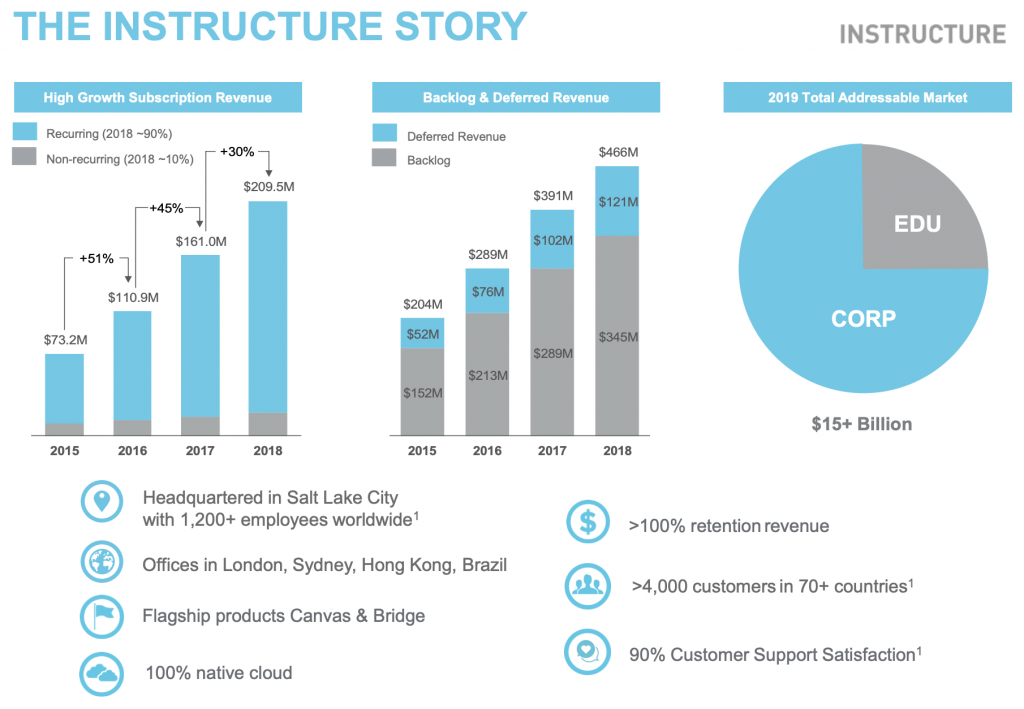
Instructure: Plans to expand beyond Canvas LMS into machine learning and AI — from mfeldstein.com by Phill Hill

Excerpts:

On the same day as Instructure’s earnings call and release of FY2018 financial results, the company announced the acquisition of Portfolium for $43 million, a small startup focusing on “ePortfolio network, student-centered assessment, job matching capabilities, and academic and co-curricular pathways”.
…
Instructure now views itself as a company with a suite of products, and they are much more open to using corporate M&A to build this portfolio.
…

We already have analytical capabilities in our Canvas platform. I want to be really clear and delineate the difference between an analytics and reporting capability, and a machine learning and AI platform.
…
We have the most comprehensive database on the educational experience in the globe. So given that information that we have, no one else has those data assets at their fingertips to be able to develop those algorithms and predictive models.
…

What’s even more interesting and compelling is that we can take that information, correlate it across all sorts of universities, curricula, etc, and we can start making recommendations and suggestions to the student or instructor in how they can be more successful. Watch this video, read this passage, do problems 17-34 in this textbook, spend an extra two hours on this or that. When we drive student success, we impact things like retention, we impact the productivity of the teachers, and it’s a huge opportunity. That’s just one small example. Our DIG initiative, it is first and foremost a platform for ML and AI, and we will deliver and monetize it by offering different functional domains of predictive algorithms and insights. Maybe things like student success, retention, coaching and advising, career pathing, as well as a number of the other metrics that will help improve the value of an institution or connectivity across institutions.


7 Things You Should Know About Accessibility Policy — from library.educause.edu

Excerpt:

Websites from the Accessible Technology Initiative (ATI) of the California State University, Penn State, the University of Virginia, and the Web Accessibility Initiative feature rich content related to IT accessibility policies. A California State University memorandum outlines specific responsibilities and reporting guidelines in support of CSU’s Policy on Disability Support and Accommodations. Cornell University developed a multiyear “Disability Access Management Strategic Plan.” Specific examples of accessibility policies focused on electronic communication and information technology can be found at Penn State, Purdue University, Yale University, and the University of Wisconsin– Madison. Having entered into a voluntary agreement with the National Federation of the Blind to improve accessibility, Wichita State University offers substantial accessibility-related resources for its community, including specific standards for ensuring accessibility in face-to face instruction.


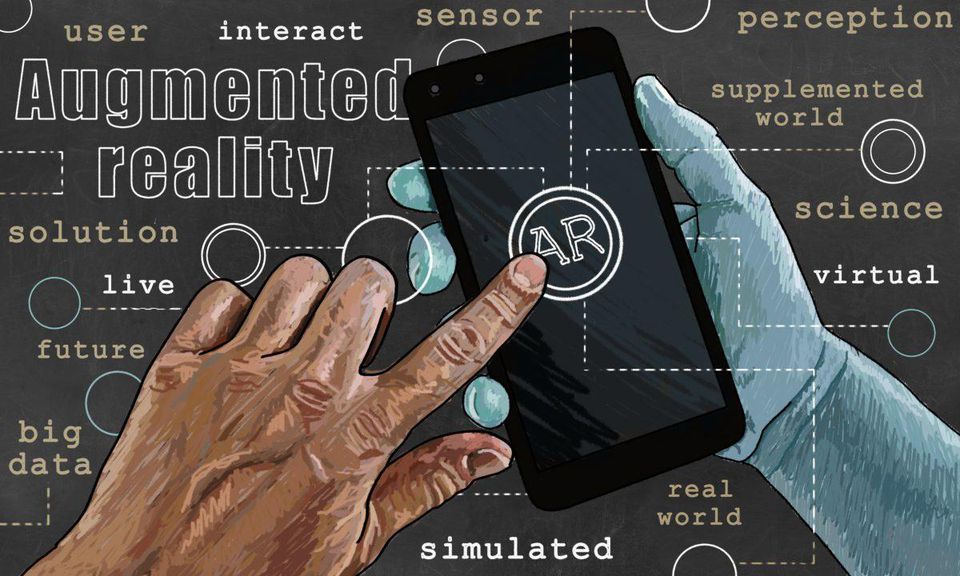
The 10+ best real-world examples of augmented reality — from forbes.com by Bernard Marr

Excerpt:

Augmented reality (AR) can add value, solve problems and enhance the user experience in nearly every industry. Businesses are catching on and increasing investments to drive the growth of augmented reality, which makes it a crucial part of the tech economy.


As referenced by Bernard in his above article:


From DSC:
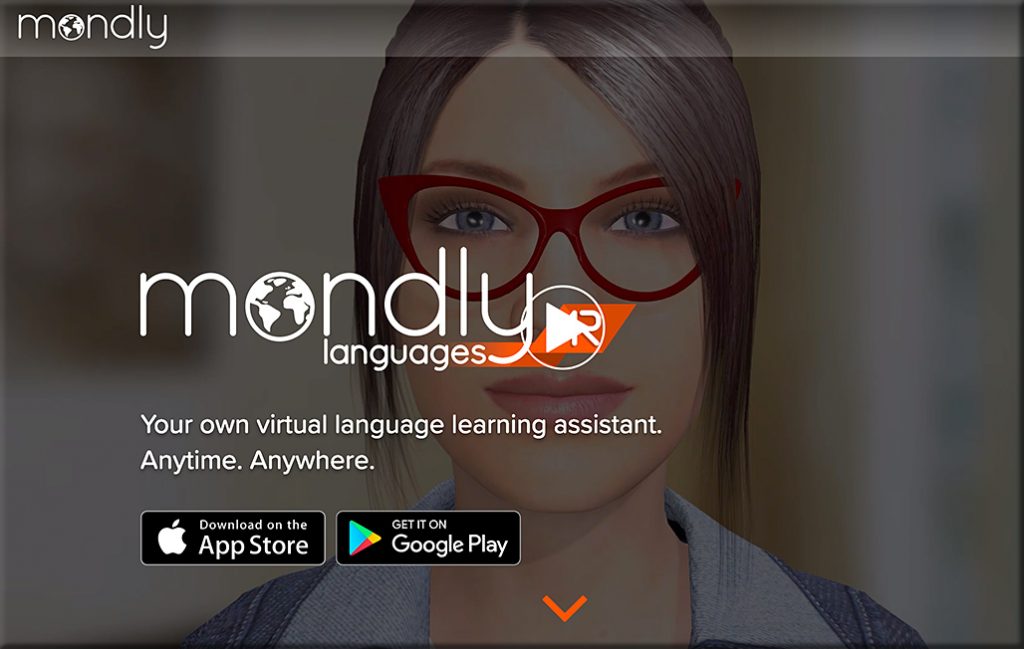
Along these lines, I really appreciate the “translate” feature within Twitter. It helps open up whole new avenues of learning for me from people across the globe. A very cool, practical, positive, beneficial feature/tool!!!


Horizon Report Preview 2019 — from library.educause.edu
Analytics, Artificial Intelligence (AI), Badges and Credentialing, Blended Learning, Blockchain, Digital Learning, Digital Literacy, Extended Reality (XR), Instructional Design, Instructional Technologies, Learning Analytics, Learning Space, Mobile Learning, Student Learning Support, Teaching and Learning

Abstract
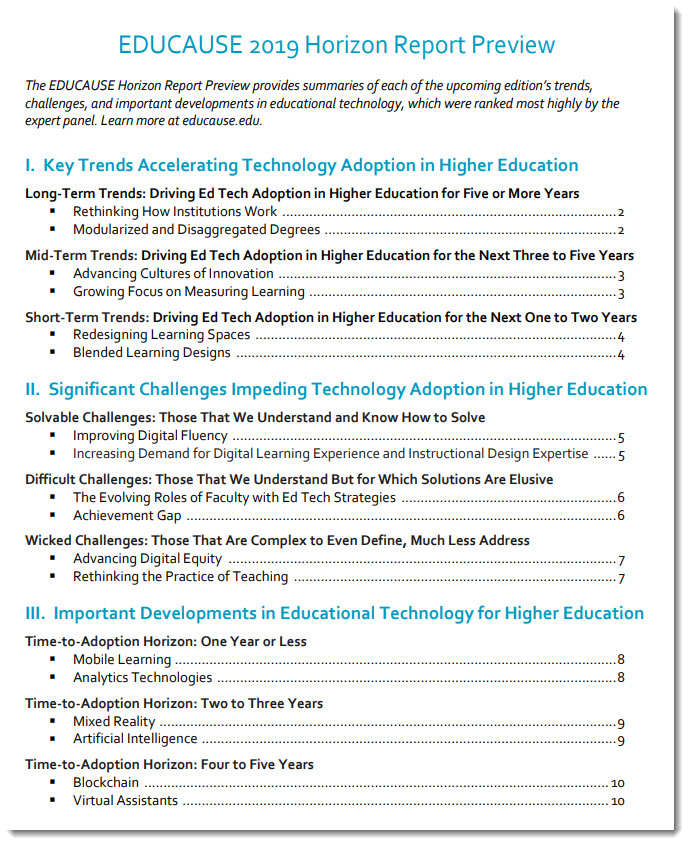
The EDUCAUSE Horizon Report Preview provides summaries of each of the upcoming edition’s trends, challenges, and important developments in educational technology, which were ranked most highly by the expert panel. This year’s trends include modularized and disaggregated degrees, the advancing of digital equity, and blockchain.

For more than a decade, EDUCAUSE has partnered with the New Media Consortium (NMC) to publish the annual Horizon Report – Higher Education Edition. In 2018, EDUCAUSE acquired the rights to the NMC Horizon project.


Excerpt:

CONCLUSION
This paper has outlined the plethora of new credential types, uses, and modes of delivery. It also has highlighted advancements in assessment. In terms of assessment content, the progression of mastery-based assessments is a distinct departure from the traditional knowledge-based assessment approaches. New assessments are likely to enter the market, as companies see the tremendous growth of competency-based assessments that will be critical and necessary in the future ecosystem described.

Assessments are no longer just a source of grades for gradebooks. They have forged two meaningful bypass routes to seat time in higher education. In the first, competency-based education assessments gate the pace of student progress through the curriculum. In the second, certification by an exam delivers not a grade, but a degree-like credential in a relevant occupation, indicating skill and expertise. For some occupations, this exam-as-credential has already been market validated by employers’ willingness to require it, hire by it, and pay a salary premium for it.

All of these innovations are driving towards a common end. The future learning-to employment ecosystem will be heavily reliant on credentials and assessments. We see:

  • A future in which credentials will no longer be limited to degrees, but will come in varying shapes and sizes, offered by many organizations, training providers, and employers;
  • A future in which credentials will, however, be able to articulate a set of underlying “know” knowledge and “do” performance skill competencies;
  • A future in which a credential’s scope will be described by the set of competencies it covers, and measured via assessment;
  • A future in which a credential’s quality will be indicated by evidence of mastery within each competency before it is awarded;
  • A future in which quality metrics, such as consumer reviews or employer use of credentials will come into play, bringing the best and most usable credentials and assessments to the forefront.

And, finally, the future ecosystem will depend heavily on online and technology-enabled strategies and solutions. The working learner will turn away from those stringent solutions that require seat time and offer little flexibility. They will drive the market hard for innovations that will lead to consumer-facing marketplaces that allow them a “one-stop shop” approach for working, learning, and living.

The massive market of the working learner/the learning worker is here to stay. The future is that learner. Credentials and assessment will find their own strong footing to help successfully meet both the learners’ needs and the employers’ needs. We applaud this SHIFT. For, it will be an ecosystem that services many more learners than today’s education to employment system serves.


Most coherent report I have read on the erosion of degrees and the rise of assessing-for-work and amassing certifications as the competencies for the modern workplace. Jamai Blivin, of www.innovate-educate.org, and Merrilea Mayo, of Mayo Enterprises, have put in one report the history, current trends and the illogic for many people of paying for a retail bachelor’s degree when abundant certifications are beginning to prove themselves. Workforce and community colleges, this is a must-read. Kudos! 

Per Gordon Freedman on LinkedIn


Inspiring Leaders | Anthony G. Picciano — from virtuallyinspired.org
Co-founder of CUNY Online and founding member of the Online Learning Consortium, shares his insights on his new book, “Online Education: Foundations, Planning, and Pedagogy,” building a community in an online classroom, gaming and more.


Excerpts/items mentioned in this video:

  • Research Initiative for Teaching Effectiveness, University of Central Florida
  • Reports from the Babson Survey Research Group, Babson College
  • 2010 U.S. Dept of Education meta-analysis — older now, but still a pivotal study
  • Tap into what students already know; have students bring their own experiences into the topics/discussions; bring their own materials and interests
  • Have students own the course as much as possible
  • Limit the amount of lecturing — introduce humor where possible; tap into students’ interests
  • Chunk lecturing up into 6-8 minute pieces — then introduce some activity that forces the students to do something
  • The River City — Chris Dede (mainly for high school students)
  • MIT elude — how to deal w/ depression
  • Fortnite
  • Elegance in simplicity — clean format, where things are, streamlined –6-7 clearly-labeled buttons, I understand what I have to do here; make it simple, not complex; use techs where makes good pedagogical sense
  • Future: AI, nanotechnology will lead to more quantum computing, cloud computing


Quantum computing is a whole of the level of digital circuitry design.  That will allow much more power, much more speed, the likes of which we have not seen in digital technology.  When that comes, that opens up lots of other possibilities in applications like artificial intelligence, like robotics, like cloud computing.  All of these will be significantly enhanced as we move to a quantum computing type environment.  When that happens, we will see a whole other level of digital activity not just in teaching and learning but everything we do.


Also see:


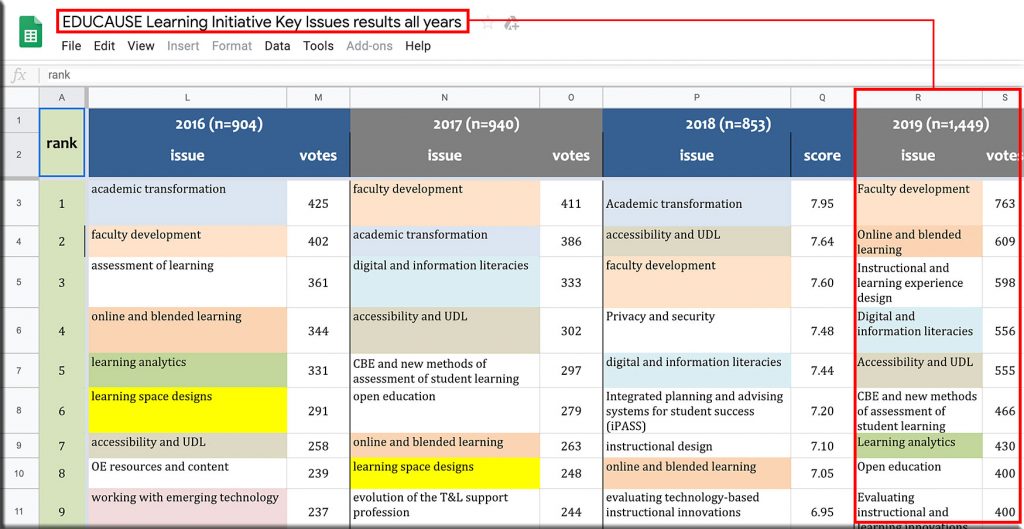
Learning and Student Success: Presenting the Results of the 2019 Key Issues Survey — from er.educause.edu by Malcolm Brown

Excerpts:

Here are some results that caught (Malcolm’s) eye, with a few speculations tossed in:

  • The issue of faculty development reclaimed the top spot.
  • Academic transformation, previously a consistent top-three finisher, took a tumble in 2019 down to 10th.
  • After falling to 16th last year, the issue of competency-based education and new methods of learning assessment jumped up to 6th for 2019.
  • The issues of accessibility and universal design for learning (UDL) and of digital and information literacy held more or less steady.
  • Online and blended learning has rebounded significantly.


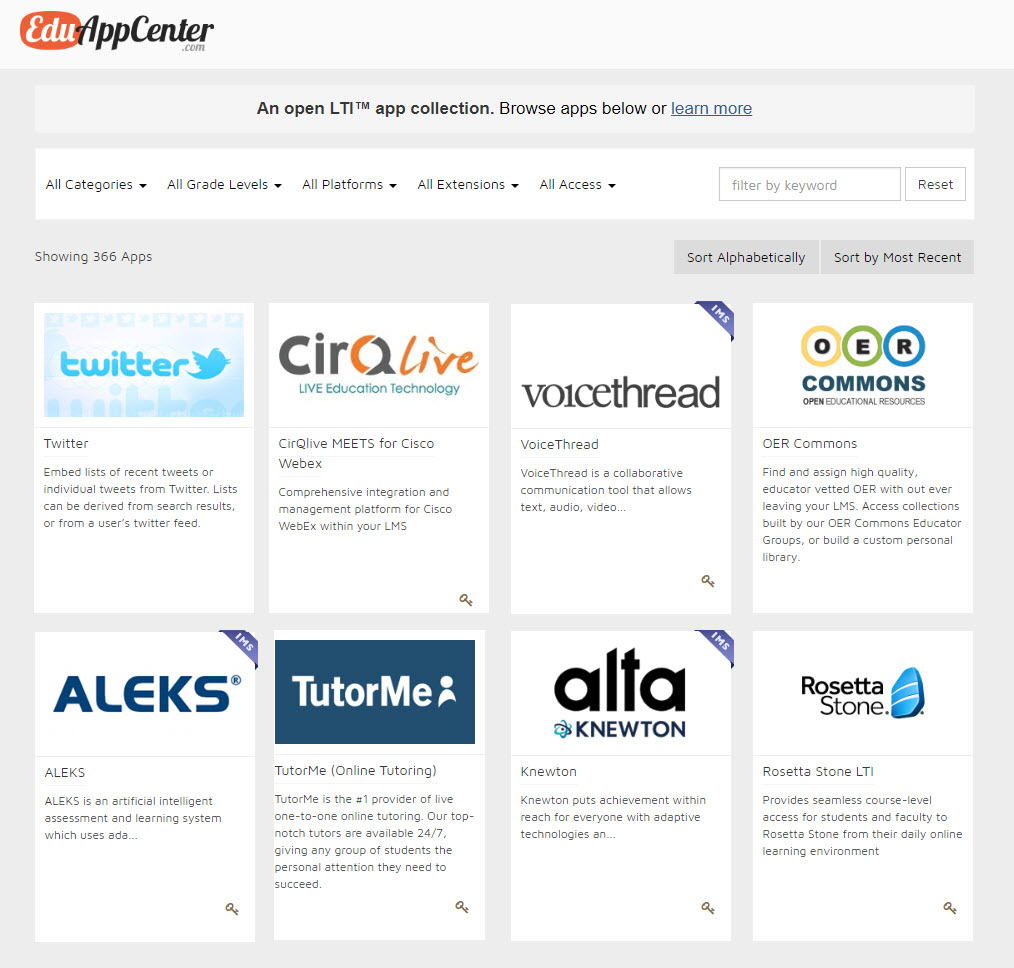
For a next gen learning platform: A Netflix-like interface to check out potential functionalities / educationally-related “apps” [Christian]

From DSC:
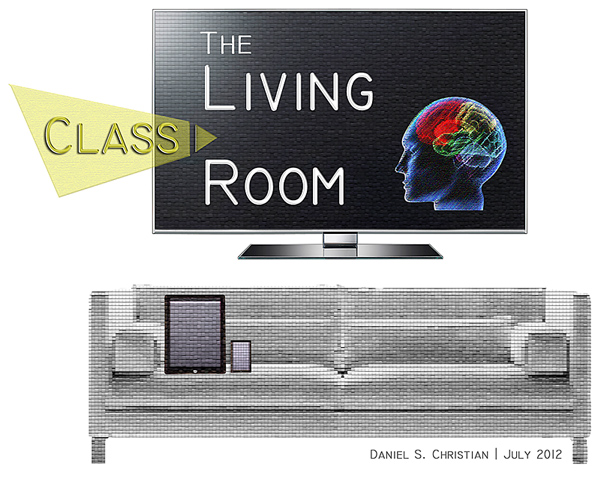
In a next generation learning system, it would be sharp/beneficial to have a Netflix-like interface to check out potential functionalities that you could turn on and off (at will) — as one component of your learning ecosystem that could feature a setup located in your living room or office.

For example, put a Netflix-like interface to the apps out at eduappcenter.com (i.e., using a rolling interface at first, then going to a static page/listing of apps…again…similar to Netflix).


A Netflix-like interface to check out potential functionalities / educationally-related apps


How Museums are using Augmented Reality — from museumnext.com by Charlotte Coates

Excerpt:

How can museums use augmented reality?
There are many possibilities for the use of AR in museums. The most straightforward way is to use it to add explanations of pieces. This means visitors will get more information when they view exhibitions using AR. Museums could even use it to display digital versions of artists next to their work. These 3D personas are then able to provide a narration. AR gives an opportunity to add a third dimension to displays, bringing objects or scenes to life. There are already many institutions around the world using AR. These projects bring something new to existing collections and attract wider audiences. Here are some interesting ways that museums are using augmented reality.


Online curricula helps teachers tackle AI in the classroom — from educationdive.com by Lauren Barack

Dive Brief:

  • Schools may already use some form of artificial intelligence (AI), but hardly any have curricula designed to teach K-12 students how it works and how to use it, wrote EdSurge. However, organizations such as the International Society for Technology in Education (ISTE) are developing their own sets of lessons that teachers can take to their classrooms.
  • Members of “AI for K-12” — an initiative co-sponsored by the Association for the Advancement of Artificial Intelligence and the Computer Science Teachers Association — wrote in a paper that an AI curriculum should address five basic ideas:
    • Computers use sensors to understand what goes on around them.
    • Computers can learn from data.
    • With this data, computers can create models for reasoning.
    • While computers are smart, it’s hard for them to understand people’s emotions, intentions and natural languages, making interactions less comfortable.
    • AI can be a beneficial tool, but it can also harm society.
  • These kinds of lessons are already at play among groups including the Boys and Girls Club of Western Pennsylvania, which has been using a program from online AI curriculum site ReadyAI. The education company lent its AI-in-a-Box kit, which normally sells for $3,000, to the group so it could teach these concepts.


AI curriculum is coming for K-12 at last. What will it include? — from edsurge.com by Danielle Dreilinger

Excerpt:

Artificial intelligence powers Amazon’s recommendations engine, Google Translate and Siri, for example. But few U.S. elementary and secondary schools teach the subject, maybe because there are so few curricula available for students. Members of the “AI for K-12” work group wrote in a recent Association for the Advancement of Artificial Intelligence white paper that “unlike the general subject of computing, when it comes to AI, there is little guidance for teaching at the K-12 level.”

But that’s starting to change. Among other advances, ISTE and AI4All are developing separate curricula with support from General Motors and Google, respectively, according to the white paper. Lead author Dave Touretzky of Carnegie Mellon has developed his own curriculum, Calypso. It’s part of the “AI-in-a-Box” kit, which is being used by more than a dozen community groups and school systems, including Carter’s class.


© 2025 | Daniel Christian