


Also see:
On 03/18/2020,
in adjunct faculty, colleges, community colleges, digital learning, distance education, elearning, higher education, instructional design, learning, online learning, pedagogy, remote teaching and learning, teachers, teaching & learning, teaching online,
by Daniel Christian
On 03/18/2020,
in blogs / blogging / vlogging, digital audio, digital learning, digital photography, digital storytelling, digital video, education technology, photography, podcasting, productivity / tips and tricks, tools, vendors,
by Daniel Christian
Best Vlogging Camera in 2020 — from adventurerinyou.com
Excerpt (emphasis DSC):
Making videos for YouTube has become a profession. Video blogging today is not just a hobby. This is a way of earning, which has saved many from having to go to work. The so-called vlogs (short for “video blog“) have become extremely popular. But the most difficult question for beginners: what camera to use to shoot your first video? I have prepared a list of the best cameras for YouTube, given their cost, quality and popularity.
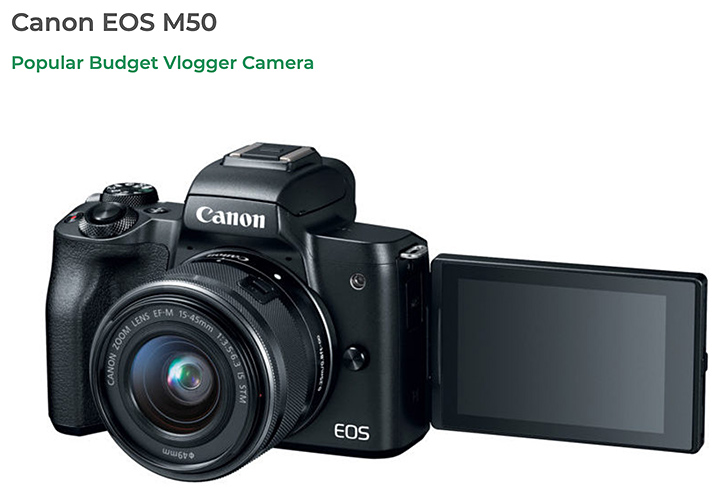
Video blogging can be an interesting way to tell stories, gain recognition, or even make a living. If you want to make a video blog of your dreams or just want to shoot funny videos to entertain your friends, you can always find the right camera. And remember, if you find it difficult to make a decision, a rental service can be a good way to decide. Try working with different cameras before you invest in one. So you will be sure that you will get exactly what you need.
On 03/10/2020,
in A/V -- audio/visual, active learning, adjunct faculty, adult learning, attention, colleges, communities of practice, community colleges, corporate / business world, corporate universities / corporate training, Daniel S. Christian, design, digital audio, digital learning, digital storytelling, digital video, education, elearning, engagement / engaging students, face-to-face, faculty/staff, higher education, homeschooling/homeschoolers, ideas, instructional design, K-12 related, law schools, learning, learning ecosystem, learning theories, multimedia, online learning, pedagogy, presentations, productivity / tips and tricks, student-related, teachers, teaching & learning, teaching online, training / L&D, United States, universities, user experience (UX),
by Daniel Christian
From DSC:
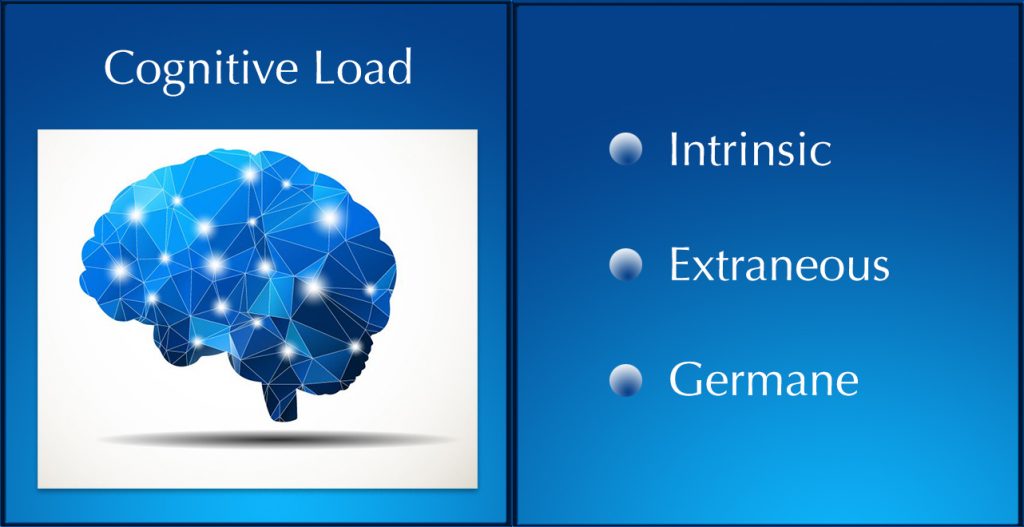
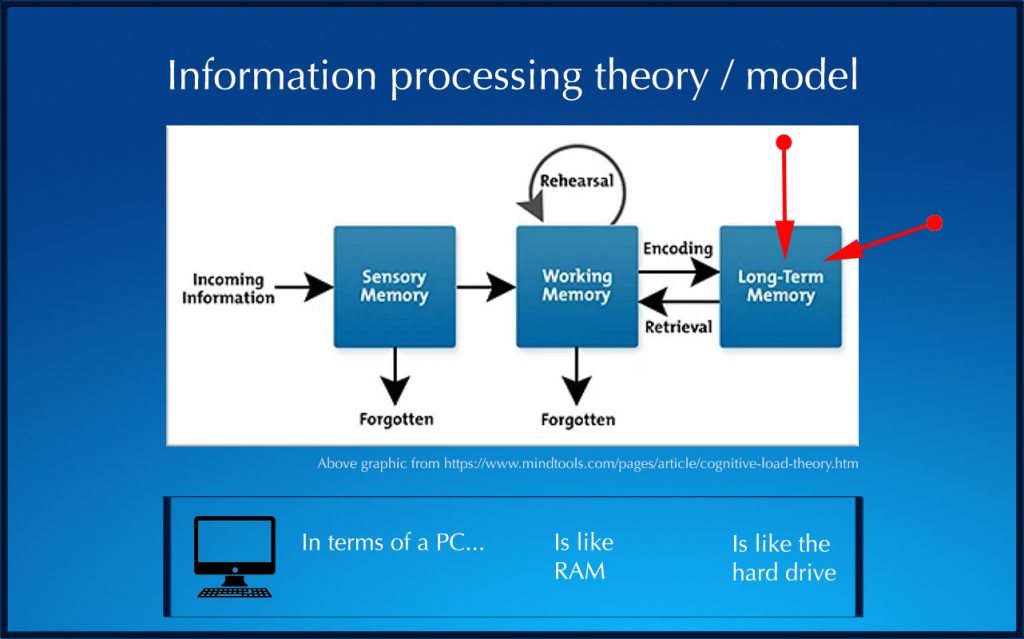
For those of you who teach and/or give presentations, you might be interested in a new video that I put together regarding cognitive load. It addresses at least two main questions:
- What is cognitive load?
and - Why should I care about it?
How do I put it into practice?
- Simplify the explanations of what you’re presenting as much as possible and break down complex tasks into smaller parts
- Don’t place a large amount of text on a slide and then talk about it at the same time — doing so requires much more processing than most people can deal with.
- Consider creating two versions of your PowerPoint files:
- A text-light version that can be used for presenting that content to students
- A text-heavy version — which can be posted to your LMS for the learners to go through at their own pace — and without trying to process so much information (voice and text, for example) at one time.
- Design-wise:
- Don’t use decorative graphics — everything on a slide should be there for a reason
- Don’t use too many fonts or colors — this can be distracting
- Don’t use background music when you are trying to explain something
On 03/06/2020,
in 21st century, 24x7x365 access, A/V -- audio/visual, Amazon, analytics, Artificial Intelligence/Agents/LLMs/and Related, assistive technologies, bots, career development, cloud-based computing / apps / other cloud-related, CMS/LMS, communications, content development, aggregation, repositories, convergence, Daniel S. Christian, digital learning, education technology, emerging technologies, future, human-computer interaction (HCI), innovation, intelligent systems, intelligent tutoring, interaction design, interactivity, internet, languages and translation, learning, learning agents, learning ecosystem, Learning from the Living [Class] Room, learning hubs & pods & microschooling, learning spaces, lifelong learning, mobile learning, mobile technologies, MOOCs -- Massive Open Online Courses, more voice more choice more control, multimedia, Natural Language Processing (NLP), new business models, online learning, online media, online tutoring, personalized/customized learning, platforms, podcasting, productivity / tips and tricks, smart classrooms, teaching online, technologies for your home, telecommunications, tools, trends, TVs, United States, vendors, voice recognition / voice enabled interfaces,
by Daniel Christian
How innovations in voice technology are reshaping education — from edsurge.com by Diana Lee
Voice is the most accessible form you can think of when you think about any interface. In education, it’s already started to take off.
It could be basic questions about, “Am I taking a class to become X?” or “How strong are my skills relative to other people?” An assistant can help with that. It could potentially be a coach, something that follows you the rest of your life for education. I’m excited about that. People that can’t normally get access to this kind of information will get access to it. That’s the future.
From DSC:
The use of voice will likely be a piece of a next-generation learning platform.
On 02/26/2020,
in 21st century, 24x7x365 access, Artificial Intelligence/Agents/LLMs/and Related, blended learning, CMS/LMS, colleges, community colleges, digital learning, higher education, immersion, innovation, mobile learning, mobile technologies, MOOCs -- Massive Open Online Courses, online learning, trends, universities, vendors, Virtual Reality (VR) / worlds / learning,
by Daniel Christian
On 02/12/2020,
in adjunct faculty, adult learning, assessment, blended learning, colleges, community colleges, corporate universities / corporate training, digital learning, education, elearning, face-to-face, faculty/staff, higher education, ideas, instructional design, K-12 related, law schools, learning, online learning, pedagogy, teachers, teaching & learning, tools, training / L&D, universities,
by Daniel Christian
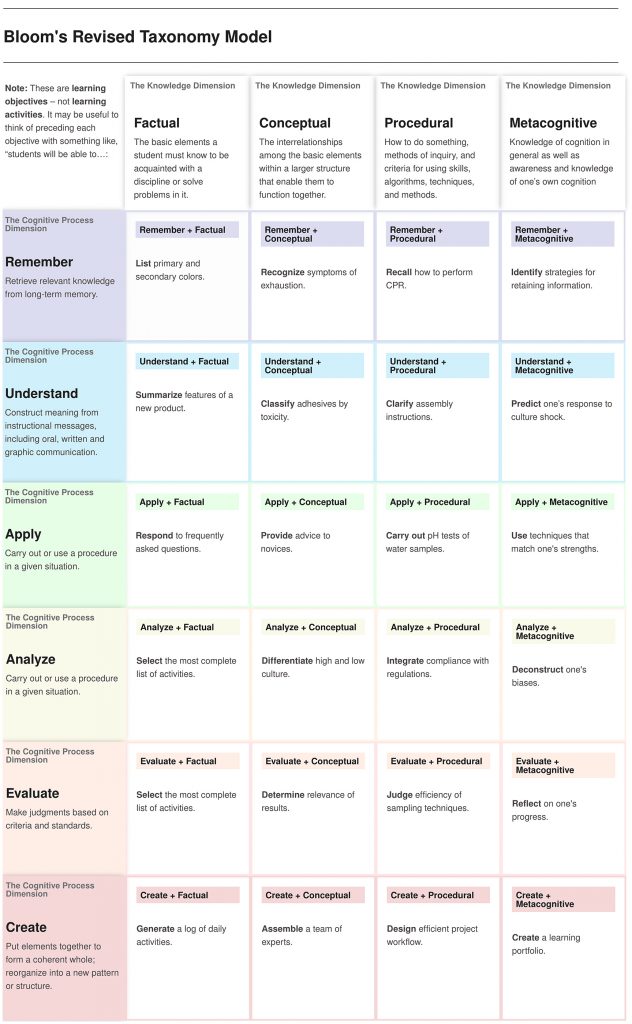
Revised Bloom’s Taxonomy — from Iowa State University; with a shout out to Matt Miller for his blog posting entitled, “10 tips for lesson planning writer’s block” — where I saw this reference
On 02/09/2020,
in 21st century, A/V -- audio/visual, Apple, Augmented Reality (AR), Daniel S. Christian, digital learning, digital video, distance education, ideas, innovation, online learning, teaching online, technologies for your home, user experience (UX), user interface design, vendors,
by Daniel Christian
From DSC:
I wonder if this patent — or these types of technologies — might enable remote learners to select/control more of their preferred viewing angles?!
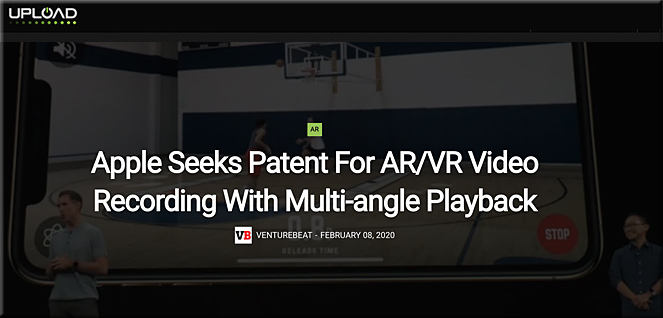
Apple Seeks Patent For AR/VR Video Recording With Multi-angle Playback — from uploadvr.com by Jeremy Horwitz
Excerpt (emphasis DSC):
If you’ve watched YouTube streams of conventional 2D videos — such as commentaries on games, TV shows, movies, or trailers — you know that the streams are visually flat: video of the content, sometimes with a person’s face superimposed in the corner for added discussion. But Apple appears set to change that paradigm for augmented and virtual reality streaming. A just-published patent application reveals that it’s been working on compositing multiple streams in a way that could let AR and VR viewers watch streamed content from their choice of angles.
On 01/25/2020,
in 21st century, 24x7x365 access, CMS/LMS, corporate / business world, corporate universities / corporate training, digital learning, future, future of higher education, game-changing environment, higher education, ideas, innovation, instructional design, law schools, learner profiles, learning, learning ecosystem, Learning from the Living [Class] Room, lifelong learning, training / L&D, United States, vendors, workplace,
by Daniel Christian
Modular, stackable learning — What it means and why it will transform learning in the workplace — from linkedin.com by Anant Agarwal
Excerpt:
One example is by unbundling the traditional learning “packages” — Associate’s, Bachelor’s, and Master’s degrees — into more manageable learning chunks that are also tied to real career and life outcomes. This is what we call modular learning, and it’s the foundation of all the programs available on edX. Modular learning enables working professionals to learn new skills in shorter amounts of time, even while they work, and those seeking a degree are able to do so in a much more attainable way. They also earn credentials for the smaller modules of learning, thereby garnering value and positive feedback early in the process of advancing towards full degrees. This early positive feedback also increases motivation for learners to persist towards the full degree, if that is their goal.
On 01/16/2020,
in 21st century, A/V -- audio/visual, active learning, attention, collaboration, colleges, community colleges, corporate universities / corporate training, Daniel S. Christian, digital learning, education technology, engagement / engaging students, experimentation, face-to-face, faculty/staff, higher education, human-computer interaction (HCI), ideas, innovation, instructional design, IT in HE, K-12 related, law schools, learning, learning ecosystem, Learning from the Living [Class] Room, learning hubs & pods & microschooling, learning spaces, liberal arts, multimedia, participation, platforms, second screen apps, smart classrooms, student teaching/teacher education, student-related, teachers, teaching & learning, teaching online, tools, training / L&D, universities, user experience (UX), vendors, videoconferencing, web-based collaboration,
by Daniel Christian
From DSC:
If you are using a tool like Cisco Webex in your school, consider implementing the idea below. I’d like to thank Mr. Steve Grant and Mr. Nelson Miller from the WMU-Cooley Law School for their work in implementing/recommending this approach.
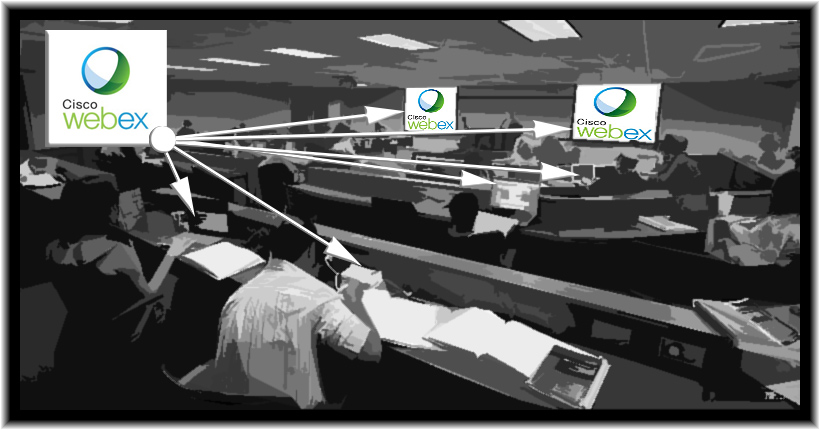
If you are using a tool like Cisco Webex, you can use it to share content to displays, laptops, smartphones, and tablets. If the professor starts a Cisco Webex Meeting Center session using their own personal room, the students can then join that meeting via their devices. (To eliminate noise and confusion — as well as to reduce bandwidth — the students should mute their microphones and choose not to send the video from their webcams.)
If you were doing a think-pair-share, for example, and you really liked what a certain pair of students had going on, one of the students could share their work with the rest of the class. By doing so, whatever was going on on that student’s device could be displayed by any projectors in the room, as well as on any other devices that were connected to the Cisco Webex Meeting Room.
“So you could project any student’s work as students proceed with in-class exercises. Projecting student work adds another level of accountability, excitement, and concentration to in-class exercises.”
*********
Also, using the Cisco Webex Meeting Center in your face-to-face classroom not only opens up that sort of collaboration channel, but, via the chat feature, it can also open up a running backchannel to draw out your more introverted students, or those students who have questions but don’t want to have the spotlight thrown on them.
*********