Nvidia CEO Jensen Huang and the future of…everything — from fierceelectronics.com by Matt Hamblen

Excerpt:

Nvidia CEO Jensen Huang confirmed his reputation as a futurist, predicting every single car, truck, cell tower—indeed every single edge device—will in effect be a data center in a decade.

 He also said in a call with reporters on Tuesday that the chip shortage hurting automakers will sort itself out in a couple of years.

The concept of edge devices acting with the capabilities of a data center might not be completely new, but Huang cemented it.

“Every single data center will have its infrastructure computing platform isolated from the application platform in five or 10 years,” he told reporters as part of the company’s GTC21 event.  “It’s going to be complete. Every single edge device will be a data center…Every single cell tower will be a data center, every base station…Every single car… truck, shuttle will be a data center.”


Pro:

AI-powered chatbots automate IT help at Dartmouth — from edscoop.com by Ryan Johnston

Excerpt:

To prevent a backlog of IT requests and consultations during the coronavirus pandemic, Dartmouth College has started relying on AI-powered chatbots to act as an online service desk for students and faculty alike, the school said Wednesday.

Since last fall, the Hanover, New Hampshire, university’s roughly 6,600 students and 900 faculty have been able to consult with “Dart” — the virtual assistant’s name — to ask IT or service-related questions related to the school’s technology. More than 70% of the time, their question is resolved by the chatbot, said Muddu Sudhakar, the co-founder and CEO of Aisera, the company behind the software.

Con:

The Foundations of AI Are Riddled With Errors — from wired.com by Will Knight
The labels attached to images used to train machine-vision systems are often wrong. That could mean bad decisions by self-driving cars and medical algorithms.

Excerpt:

“What this work is telling the world is that you need to clean the errors out,”says Curtis Northcutt, a PhD student at MIT who led the new work.“Otherwise the models that you think are the best for your real-world business problem could actually be wrong.”


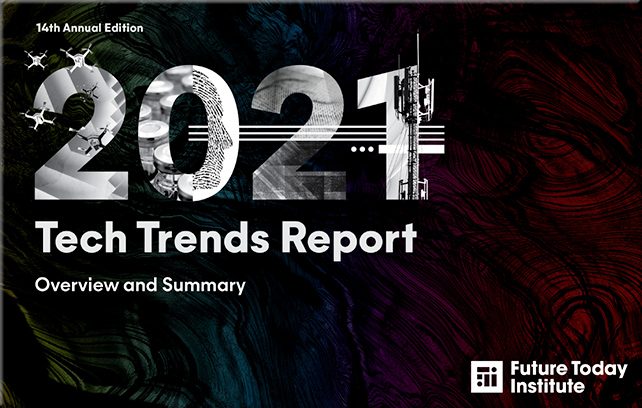
Clicking this image will take you to the 2021 Tech Trends Report -- from the Future Today Institute

14th Annual Edition | 2021 Tech Trends Report — from the Future Today Institute

Our 2021 Tech Trends Report is designed to help you confront deep uncertainty, adapt and thrive. For this year’s edition, the magnitude of new signals required us to create 12 separate volumes, and each report focuses on a cluster of related trends. In total, we’ve analyzed  nearly 500 technology and science trends across multiple industry sectors. In each volume, we discuss the disruptive forces, opportunities and strategies that will drive your organization in the near future.

Now, more than ever, your organization should examine the potential near and long-term impact of tech trends. You must factor the trends in this report into your strategic thinking for the coming year, and adjust your planning, operations and business models accordingly. But we hope you will make time for creative exploration. From chaos, a new world will come.

Some example items noted in this report:

  • Natural language processing is an area experiencing high interest, investment, and growth.
  • + No-code or low-code systems are unlocking new use cases for businesses.
  • Amazon Web Services, Azure, and Google Cloud’s low-code and no-code offerings will trickle down to everyday people, allowing them to create their own artificial intelligence applications and deploy them as easily as they could a website.
  • The race is on to capture AI cloudshare—and to become the most trusted provider of AI on remote servers.
  • COVID-19 accelerated the use of AI in drug discovery last year. The first trial of an AI-discovered drug is underway in Japan.
 

How Facebook got addicted to spreading misinformation — from technologyreview.com by Karen Hao

Excerpt (emphasis DSC):

By the time thousands of rioters stormed the US Capitol in January, organized in part on Facebook and fueled by the lies about a stolen election that had fanned out across the platform, it was clear from my conversations that the Responsible AI team had failed to make headway against misinformation and hate speech because it had never made those problems its main focus. More important, I realized, if it tried to, it would be set up for failure.

The reason is simple. Everything the company does and chooses not to do flows from a single motivation: Zuckerberg’s relentless desire for growth. Quiñonero’s AI expertise supercharged that growth. His team got pigeonholed into targeting AI bias, as I learned in my reporting, because preventing such bias helps the company avoid proposed regulation that might, if passed, hamper that growth. Facebook leadership has also repeatedly weakened or halted many initiatives meant to clean up misinformation on the platform because doing so would undermine that growth.

In other words, the Responsible AI team’s work—whatever its merits on the specific problem of tackling AI bias—is essentially irrelevant to fixing the bigger problems of misinformation, extremism, and political polarization. And it’s all of us who pay the price.

Artificial Intelligence In 2021: Five Trends You May (or May Not) Expect — from forbes.com by Nisha Talagala

5 trends for AI in 2021


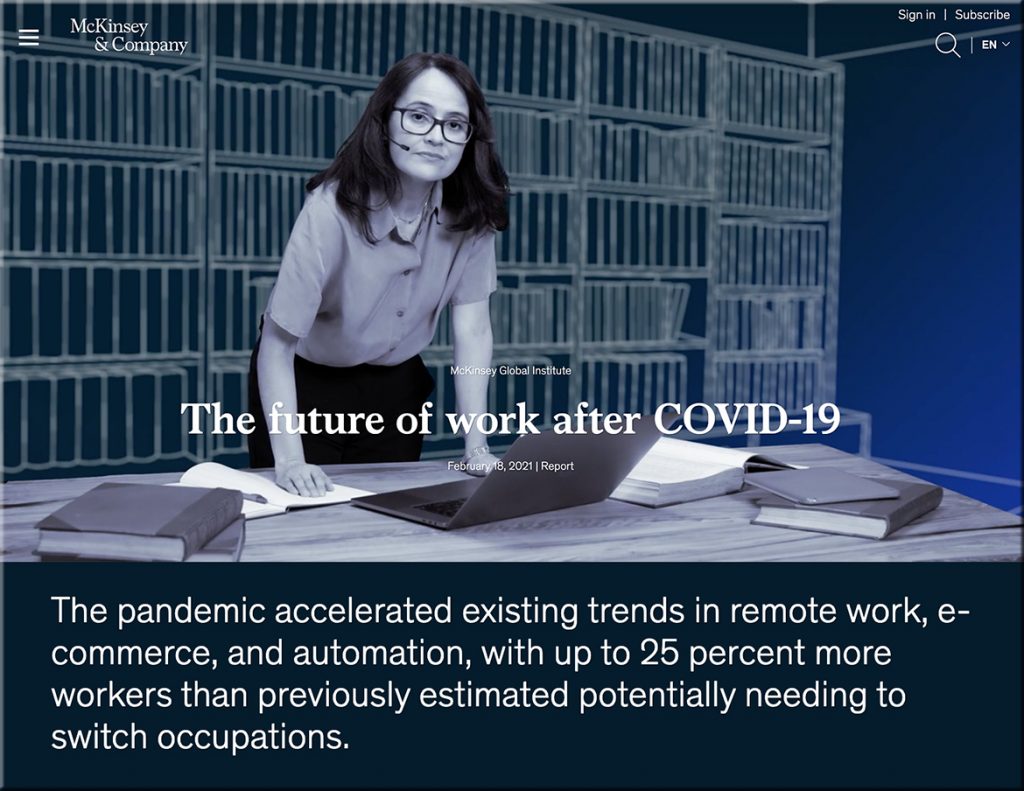
The future of work after COVID-19 -- Woman working on a computer with wireless headset

The future of work after COVID-19 — from mckinsey.com

Excerpts:

This report on the future of work after COVID-19 is the first of three MGI reports that examine aspects of the postpandemic economy. The others look at the pandemic’s long-term influence on consumption and the potential for a broad recovery led by enhanced productivity and innovation. Here, we assess the lasting impact of the pandemic on labor demand, the mix of occupations, and the workforce skills required in eight countries with diverse economic and labor market models: China, France, Germany, India, Japan, Spain, the United Kingdom, and the United States. Together, these eight countries account for almost half the global population and 62 percent of GDP.

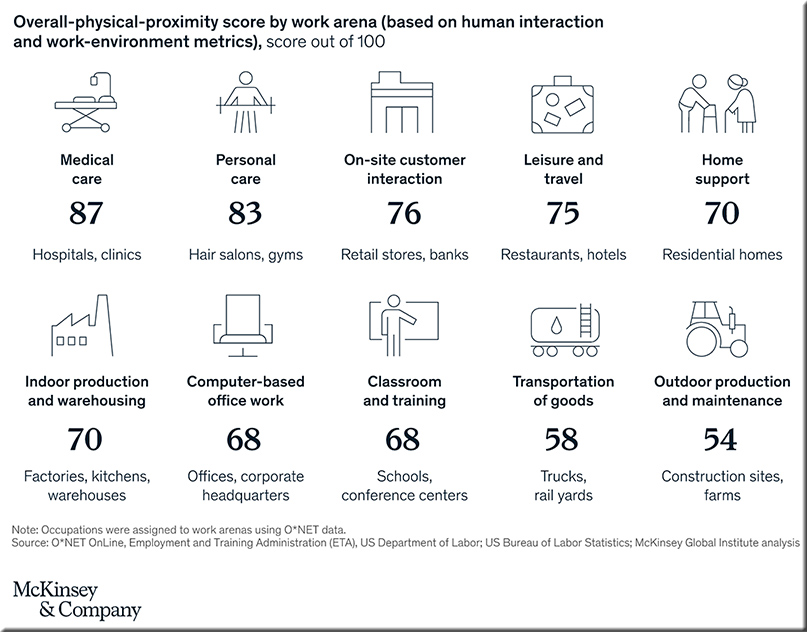
Physical proximity scores of a variety of occupations


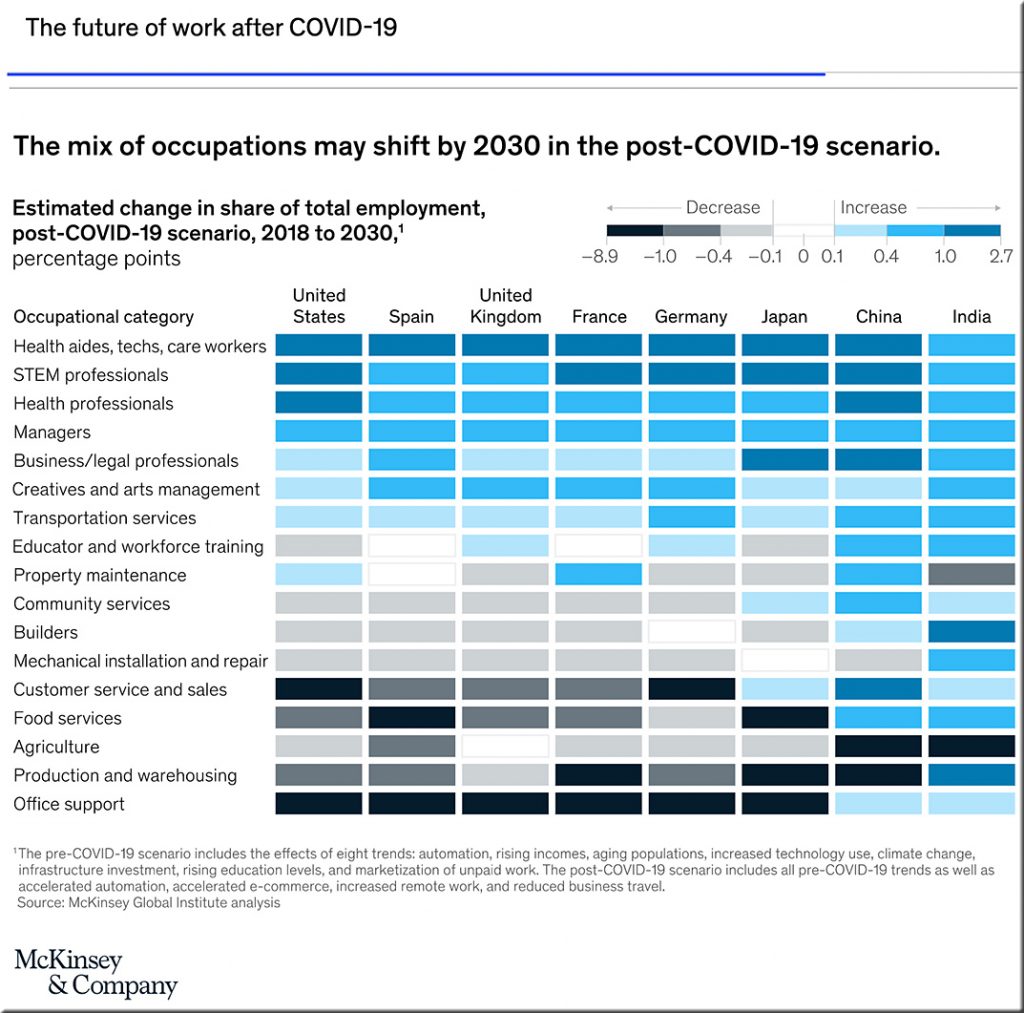
Future occupations in 2030 -- increases or decreases


LexisNexis Extends Its Context Language Analytics to Cover Attorneys’ Briefs and Motions — from legaltechmonitor.com Bob Ambrogi

Excerpt:

Last year, LexisNexis introduced Context, a refinement of an analytics tool originally developed by Ravel Law that analyzes the language of a judge’s opinions to determine the cases and arguments the judge finds most persuasive in deciding specific types of issues. As I reported then, that original launch also included Context for expert witnesses, and, since then, LexisNexis has expanded Context to also cover courts and companies.

Today, LexisNexis is further expanding Context with the introduction of Attorney Analytics, the fifth module in the platform, for researching opposing attorneys in litigation matters.

Also see:


Hiperwall Introduces Cost-Effective ‘Essentials’ Video Wall Hardware and Software Packages — from hiperwall.com with thanks to Michael Farino for this resource
Hiperwall Essentials video wall bundles eliminate barriers to entry for organizations wanting enhanced collaboration, clearer communication, and the ability to make informed real-time decisions

Excerpt:

February 24, 2021 – IRVINE, Calif., – Hiperwall Inc., an industry-leader in commercialized, IP-based visualization technology, today introduces ‘Hiperwall Essentials,’ two all-inclusive video wall hardware and software bundles that get users started with a full-featured, control-room grade video wall powered by Hiperwall for just $9,995.

Most major decisions made in the public and private sectors are driven by vast amounts of data. Due to the volume of data sources, data complexity, and different analytics tools, video walls have become the perfect canvas for decision-makers to put all of this data together clearly to arrive at an informed decision faster and more confidently.

At a price point that effectively removes barriers to implementation for small to medium businesses, small government agencies, and local law enforcement, Hiperwall Essentials serves as a great baseline for integrating video wall technology into any organization. As dependence on the video wall grows, Hiperwall’s modular platform makes scaling the video wall footprint and capabilities seamless and cost-effective.


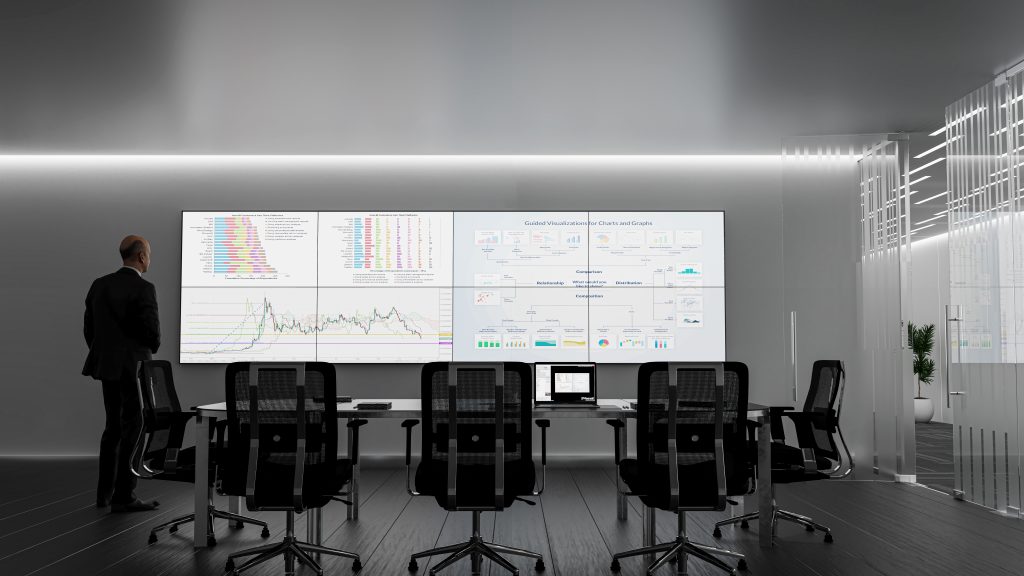
Below are some example settings:

For those interested in video walls, this is worth checking out. These pictures are example settings.


For those interested in video walls, this is worth checking out. These pictures are example settings.


For those interested in video walls, this is worth checking out. These pictures are example settings.


For those interested in video walls, this is worth checking out. These pictures are example settings.


For those interested in video walls, this is worth checking out. These pictures are example settings.


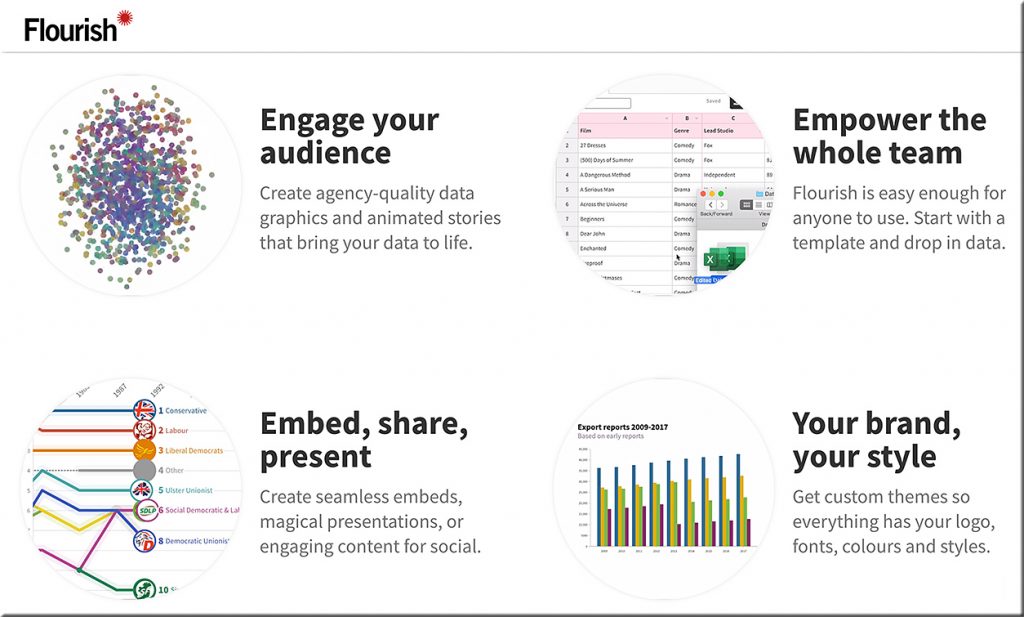
Wonder Tools | The Best Data Viz Tool — from wondertools.substack.com by Jeremy Caplan
How and why to use Flourish to make impressive charts fast and for free

Excerpt:

Flourish is a terrific tool for visualizing data. It’s easy to use and free. Unlike some complex tools aimed at data professionals, Flourish is simple enough for anyone to use. It’s also flexible and polished enough to use in professional newsroom projects. And it comes with a wide range of templates so you can create a strong interactive data visual to embed on any site within a couple of hours.

 
Flourish -- a great data visualization tool that non-professionals can use as well!


Artificial intelligence will go mainstream in 2021 — from manilatimes.net by Noemi Lardizabal-Dado; with thanks to Matthew Lamons for this resource

Excerpt:

In his December 21 Forbes website article, titled “Why Covid Will Make AI Go Mainstream In 2021,” data scientist Ganes Kesari predicts AI will transform 2021 by accelerating pharmaceutical drug discovery beyond Covid-19. He says the face of telecommuting would change, and that AI would transform edge computing and make devices around us truly intelligent.

Artificial Intelligence in 2021: Endless Opportunities and Growth — from analyticsinsight.net by Priya Dialani; with thanks to Matthew Lamons for this resource

Excerpts:

In 2021, the grittiest of organizations will push AI to new boondocks, for example, holographic meetings for telecommunication  and on-demand, personalised manufacturing. They will gamify vital planning, incorporate simulations in the meeting room and move into intelligent edge experiences.

According to Rohan Amin, the Chief Information Officer at Chase, “In 2021, we will see more refined uses of machine learning and artificial intelligence across industries, including financial services. There will be more noteworthy incorporation of AI/ML models and abilities into numerous business operations and processes to drive improved insights and better serve clients.”

From DSC:
I’m a bit more cautious when facing the growth of AI in our world, in our lives, in our society. I see some very positive applications (such as in healthcare and in education), but I’m also concerned about techs involved with facial recognition and other uses of AI that could easily become much more negative and harmful to us in the future.


How E-Learning Content Is Evolving: 7 Trends You Need to Know About — from trainingmag.com by Tiffany Harper
Continuous, personalized learning in small bites through a storytelling approach—that sums up the future of the e-learning industry.

Excerpt:

VR and AR
Technological innovations let us play better games. The progress of VR and AR technology (virtual reality and augmented reality) is closely related to the gaming industry, but that doesn’t mean it stays there.

We can turn any space into an environment that’s ready to explore. If we learn about the universe, we can see it around us. If we learn about industrial technology, we can be virtually present in a plant. This technology is especially important for corporate learning. Instead of sending employees away to develop new skills, companies benefit with lower expenses and greater convenience.

We haven’t seen the best of virtual and augmented reality in e-learning yet. But as the trend progresses and more learners get their devices, it won’t be unusual for AR and VR to be included in every online course of the future.


The AI Roundup – Top 15 Blogs of 2020 — from blog.re-work.co

Excerpt:

Below we have rounded up our 15 most-read blogs of the year, including must-read papers suggestions from AI experts, advice for those starting out in AI, Netflix predictive algorithms and more. See a summary of each blog and link below!


Can algorithms save college admissions?

Can Algorithms Save College Admissions? — from chronicle.com by Brian Rosenberg
We’ve tried a system based on competition long enough. It isn’t working.

Excerpt (emphasis DSC):

Here is an alternative and much more radical proposal: What if we replaced the current and longstanding admissions process among private colleges with a match process, similar to what has for years been used to match medical-school graduates with residency and fellowship positions? What if, in other words, we used data and algorithms instead of travel, merit aid, and free food to drive college admissions?

From DSC:
Love the “What if…” thinking here and the spirit of innovation behind it. I wonder if AI and cloud-based learner profiles might play into something like this in the future…?

Also see:

7 Ways To Make College Admissions More Equitable — from stradaeducation.org by Patty Reinert Mason and Jeff Selingo
Is it time to reconsider early-decision applications, legacy preferences, and reliance on feeder high schools?
Selingo offers these practical steps colleges and universities can take to make admissions more equitable:

  • Eliminate early-decision applications.
  • Be upfront about what you’re looking for in this year’s incoming class so students and parents have the information they need.
  • Be transparent about what it costs to study at your school.
  • Look beyond traditional “feeder high schools” for recruitment, creating opportunity for a more diverse group of students.
  • Reduce preferences given to athletes and legacies.
  • Rethink application requirements to put more emphasis on high school coursework and grades and less on extracurriculars, recommendations, and essays.
  • Expand the size of freshman classes.

Also see:


Oracle joins Silicon Valley exodus — from linkedin.com by Jake Perez

Excerpt:

Oracle is joining the Silicon Valley exodus and moving its headquarters to Austin, Texas. A spokesperson for the tech giant said the move will “best position Oracle for growth and provide our personnel with more flexibility about where and how they work.” As the pandemic has spurred a gradual acceptance of remote work, some major companies are bailing on California’s high taxes and cost of living. Earlier this month, Hewlett Packard Enterprise announced it was moving from San Jose, Calif., to Houston, and Tesla founder Elon Musk announced his move to Texas this week.


The State of AI in 2020 -- from McKinsey and Company

Where AI is being used most in 2020

From DSC:
I saw this item out at:

  • AI is delivering a growing share of earnings, says McKinsey — from which-50.com by Andrew Birmingham
    Excerpt:
    Some companies are generating an increasing share of the profits in a way that is directly attributable to AI, and the best performers are likely to increase their investments setting up a world of algorithmic leaders and laggards, according to a new paper from McKinsey & Company. Called The State of AI in 2020, the report notes that we could start to see a widening divide between AI leaders and the majority of companies still struggling to capitalise on the technology.

Also see:

 
© 2025 | Daniel Christian