The American legal system has been designed by lawyers for lawyers, on the assumption that parties with legal needs will be represented by lawyers. But in more than 76 percent of civil cases in state courts today, at least one of the parties is unrepresented by counsel. The result is a system that is not adequately serving tens of millions of people every year. In response, the regulations that govern legal services are starting to shift in ways that have the potential to transform the legal system so that it better serves the public. Arizona and Utah are leaders in this regulatory reform movement. In this virtual webinar, participants describe the conditions that are driving change, explain Arizona’s and Utah’s innovations, and share their visions for the future of legal services regulation.
On an individual level, we need to be mindful that small things that may seem inconsequential to us may have detrimental impacts on others. Numerous articles and resources are readily available detailing best practices for creating more inclusive environments for students. Small things that can help to foster a sense of belonging and inclusiveness include the following:
being intentional in selecting course content that reflects diverse people and voices,
ensuring that resources and materials reflect individuals from underrepresented groups,
sharing gender pronouns,
learning preferred names and asking students to correct mispronunciation,
having students do a short online biographic sketch,
using small group learning,
giving students agency in assessments and grading, and
Students cooking ramen noodle packets in the dorm microwave have come to symbolize what is deemed to be the universal college experience. However, that image demeans the dire situation of students experiencing food and housing insecurity in higher education.
But it doesn’t have to be this way. Through advocacy on campuses and in communities and ongoing state and federal investment in the real cost of higher education—including housing, food and other supports—we can and should make a firm commitment to students who are doing everything they can to become economically self-sufficient.
In this article, we’ll talk about three current impacts AI has had on the legal industry as well as three obstacles it needs to overcome before we see widespread adoption.
Consider JPMorgan’s Contract Intelligence (COIN) software. Rather than rely on lawyers to pour over their commercial loan contracts, the banking giant now uses COIN to review these documents for risk, accuracy and eligibility. Not only does this save JPMorgan 360,000 hours per year in contract review, it also results in fewer errors. One can also look to major law firms like DLA Piper, which now regularly rely on AI for M&A due diligence. At Exigent, we’ve had first-hand experience using AI to support document analysis for our clients as well.
2. Legal departments need to build cross-functional expertise
…bringing greater diversity into the legal department is essential if the efficiencies promised by AI in the legal industry are to be realized.
Fortunately, some legal departments have begun to bring data scientists on board in addition to lawyers. And the industry is beginning to open up to hybrid roles, like legal technologists, legal knowledge engineers, legal analysts and other cross-functional experts. It’s clear that a greater diversity of skills are in the legal department’s future; it’s just a matter of how smoothly the transition goes.
February is Black History Month, a time to learn about, reflect on, celebrate and honor the pivotal role Black Americans have played in U.S. history.
Throughout the month, we’ll take time to learn about Black culture and spotlight some incredible Edmentors, educators, and students each week who are working to make a difference in the lives of kids all over the world. You’ll hear from some fantastic Edmentors about what inspires them and gain insight into the ways in which Black culture, identity, and perspectives help Edmentum succeed as an organization.
Michigan residents 25 and older who don’t have a college degree can now apply for funding to cover community college tuition costs or skilled trades training scholarships.
The initiative, known as the Michigan Reconnect program, is being funded initially by a $30 million appropriation in the state budget that had bipartisan backing from Gov. Gretchen Whitmer and the Republican-majority legislature.
91 movies and TV shows to stream for Black History Month — from fastcompany.com by Joe Berkowitz For Black History Month, here’s a streaming guide to historical fiction, biopics, documentaries, and sitcoms, made by and about Black Americans.
Musical Mentors Collaborative Announces Requiem-20 The resulting compendium is a tribute to the pandemic world we live in today
Philadelphia, PA — January 19, 2021 — Musical Mentors Collaborative (“MMC”), which provides free private music instruction and instruments to students who would not otherwise have access, presents Requiem-20, a collaborative, multimedia, multi-genre reflection on the ineffable loss of life in 2020 due to the Coronavirus pandemic. Featuring music by young but brilliant early-career composers, this project offered these artists a chance to help culture make meaning in a time of seeming creative impossibility. Produced in cooperation with Musical Mentors Collaborative and performed by MMC’s Teaching Fellows, this project represents a coalescence, a meeting place for creative artists to express and process the difficulties of this time.
“With the looming loss of millions of lives to Coronavirus, 11 composers and 23 artists have come together to form a musical collaborative work called, Requiem-20, a modern day Requiem in response to Covid-19. During this pandemic and with the lack of so many live performances, composers, especially young composers are feeling that their musical voices are not able to be displayed as normal and are looking for ways to stay connected and be relevant to the world right now.
This is their musical reaction to all the loss that is experienced during this time. A requiem not just for the loss of so many lives, but also for the loss of everyday life as we knew it, the loss of so many things that we had, the loss of getting to do things we love and see the people we love, the loss of so many jobs and livelihoods, the loss of so much continues and is expressed here in this montage and continuous melange of 11 short expressions that is interwoven to formulate Requiem-20,” says Says Daniel Matsukawa, principal bassoon of the Philadelphia Orchestra, professor at the Curtis Institute of Music, and the creator of this project.
Given the continuing loss of so many musicians’ jobs and livelihoods, we hope that the feelings and stories conveyed through Requiem-20 give you faith that artistic expression lives on as robustly as ever. We also hope that this project may prompt other musicians to compose and add to the concept, thus creating their own musical tribute in response to the current pandemic-filled world.
“Musical Mentors Collaborative encourages creativity through connection, and employs the ingenuity of economically displaced musicians to create connections in communities with the least access to music’s undisputed benefits. This project furthers our mission of connecting artists and young people with this crucial resource in this troubled time,” said Teddy Poll, Artistic and Educational Director of MMC. “We are excited to share Requiem-20 and for the public.”
Requiem-20, as well as more detailed information about the piece, can be seen/heard here: www.requiem-20.com.
More than 5,100 law school faculty, deans, professional staff, and sponsors gathered virtually, January 5-9 at the 2021 AALS Annual Meeting.
Over five days, the meeting included moderated panels, interactive discussions, and networking events. The programs closely reflected the most pressing issues of the day, including sessions related to the pandemic’s impact on civil rights, disability law, the economy, executive powers, eviction, voting, and workers’ rights, among other topics. There were also several sessions on how the pandemic has affected law schools, especially as it relates to online and hybrid teaching.
The theme of the meeting was “The Power of Words,” selected by 2020 AALS President Darby Dickerson, Dean and Professor of Law at UIC John Marshall Law School.
“Words matter and how we use words matter,” Dickerson said during a welcome video introducing the meeting. “Words are powerful tools. They can inspire social movements, evoke emotions, and create allegiances. They can help and they can heal, but like many tools, words can also be wielded as weapons to hurt and hinder and to mislead and manipulate.”
…the introduction of educational games to kids helps increase their motivation and engagement, enhance visual skills, improve students’ interaction and collaboration abilities with their peers, and apply gaming values in a real-world situation; most importantly, it improves learning.
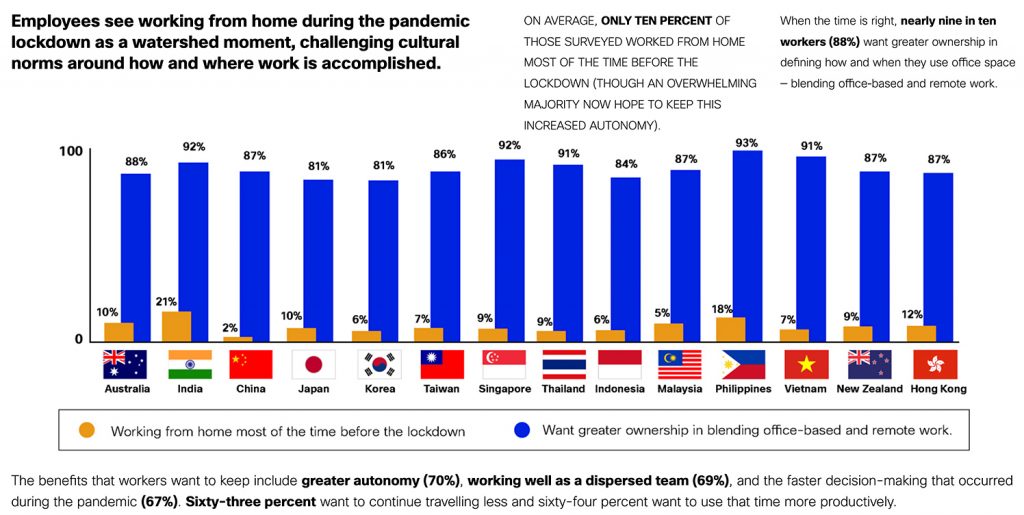
To better understand the evolving expectations of employers and workplaces in a post-pandemic environment, Cisco surveyed more than 14,000 office-based employees across 14 markets in Asia Pacific and captured the findings in a newly launched Workforce of the Future report.
In this article, we share perspectives from four influential thought leaders on the future of work and how organizations in Asia Pacific can leverage technology to support the workforce of the future.
In this episode staff writer Sara Weissman shares a story that focuses on the digital divide for Native Americans by bringing in voices of tribal college leaders and their students during the COVID 19 pandemic.
Many don’t know but Native American colleges and universities have long struggled with the worst internet connectivity in the nation while ironically paying the highest rates for service. Hear first-hand how students from Diné College and other institutions are currently affected. Carrie Billie (Big Water Clan), President & CEO of the American Indian Higher Education Consortium (AIHEC) and Dr. Cynthia Lindquist (Star Horse Woman), President of Cankdeska Cikana Community College in North Dakota, break down the data and lay out critical next steps necessary to address the digital divide.
Many don’t know but Native American colleges and universities have long struggled with the worst internet connectivity in the nation while ironically paying the highest rates for service.
From DSC: When will there be justice!? Let’s join in and make amends and provide the funding, concrete assistance, products, and services to Native American colleges, universities, and communities. Some potential ideas:
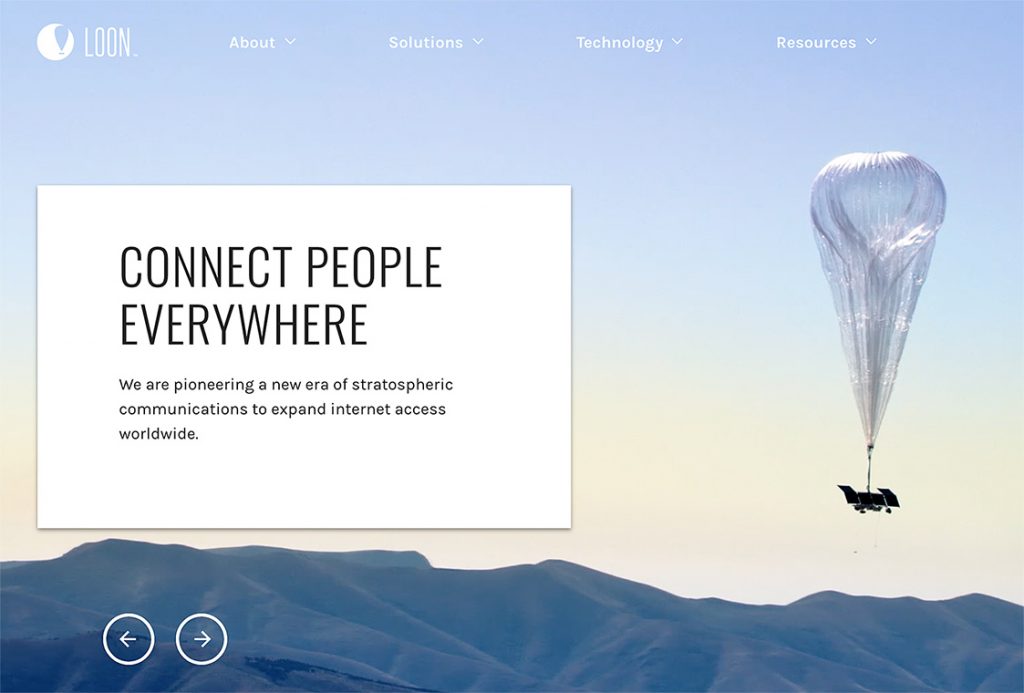
For the short term, could there be Loon balloons deployed immediately to provide free and stronger access to the Internet?
Could our Federal Government make amends and do the right thing here? (e-rate program, put Internet access in, make policy changes, offer more grants, other?)
Could Silicon Valley assist with hardware and software? For example:
Can Apple, HP, Microsoft, and others donate hardware and software?
Can Zoom, Adobe, Cisco Webex, Microsoft Teams, and others donate whatever these communities need to provide videoconferencing licenses?
Could telecom providers provide free internet access?
Could MOOCs offer more free courses?
Could furniture makers such as Steelcase, Herman Miller, and others donate furniture and help establish connected learning spaces?
How might faculty members and staff within higher education contribute?
How could churches, synagogues, and such get involved?
Could the rest of us locate and donate to charities that aim to provide concrete assistance to Native American schools, colleges, universities, and communities?
We need to do the right thing here. This is another area* where our nation can do much better.
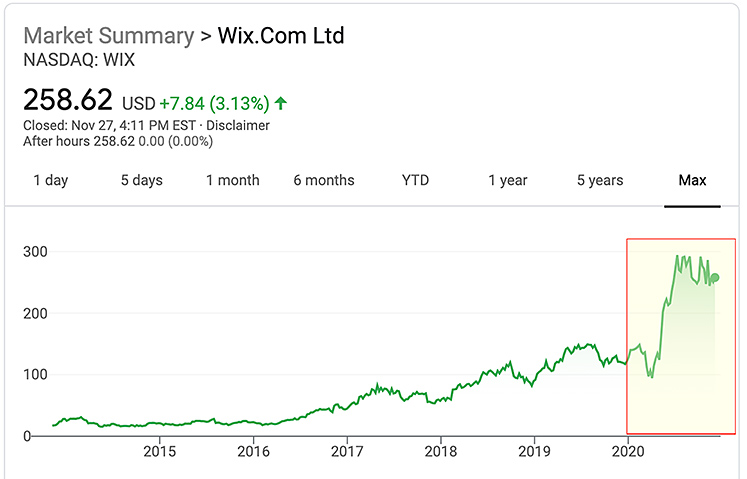
Websites are back. After years of being sucked into the vortexes of Facebook and Yelp pages, devoting their time to amassing Twitter followers and Instagram likes, creators and businesses alike have seen the benefits of hanging up their own shingle again. Legions of writers are setting up Substack newsletters. Millions of people and businesses are setting up shop for the first time online using Squarespace or WordPress. Wix reported 7.8 million new users in the last quarter alone, and more than 29% revenue growth.
…
Substack doesn’t see itself as a newsletter platform, or an email-based product. The company is fundamentally interested in fostering direct relationships between readers and writers, rather than let them be mediated by companies whose interests are not always aligned with either side.
The driving force behind all that growth? Thanks to a pandemic closing stores, keeping people at home and leaving a lot of people without jobs, the only way to move forward is to figure out the internet.
From DSC: Though I really like WordPress — and this blog uses it — look at the stock performance in 2020 for Wix!
Our youngest daughter and I are going to set up a blog for her, as she loves to write. The idea was from her and my wife, but I love it! I think it’s highly motivating to her and she can have a voice…that she can share her writings with others. She’s got quite an imagination — so look out all! 🙂
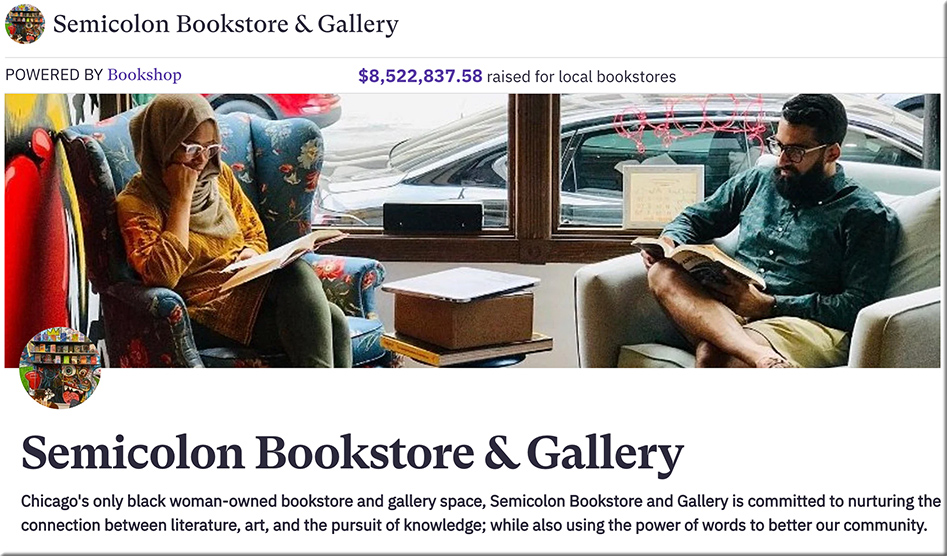
From DSC: Our oldest daughter told me about this great/cool WIN-WIN situation here! I thought it was so cool, that I wanted to pass it along. What a great way to help communities, students, folks who want to read/write/produce art and more!
Powered by Bookshop: Supporting local, independent bookstores.
Chicago’s only black woman-owned bookstore and gallery space, Semicolon Bookstore and Gallery is committed to nurturing the connection between literature, art, and the pursuit of knowledge; while also using the power of words to better our community.
LANSING, Mich. — Western Michigan University Cooley Law School, with campuses in Michigan and Florida, was named a top 10 law school for racial and ethnic minority enrollment in 2019 by Enjuris, a collection of independent legal resources for legal professionals.