The EdSurge Product Index

About:

Since 2012, the EdSurge Product Index has been the first stop for educators in search of learning technology solutions. The redesigned EdSurge Product Index(BETA) features enhanced product profiles and validations from trusted education and technology organizations. Now, educators will be able to find the most complete, reliable and up-to-date information available on learning technology products.

Also see:


Why Aren’t Professors Taught to Teach? — from techlearning.com by Erik Ofgang
Professors are experts in their subject matters but many have limited training in actually teaching their students.

Excerpt:

“A lot of faculty are just modeling their instruction after the instruction they’ve received as an undergraduate or graduate student,” says Tanya Joosten, senior scientist and director of digital learning at University of Wisconsin-Milwaukee and the lead of the National Research Center for Distance Education and Technological Advancements.

As a perpetually short-on-time adjunct professor, I understand those who worry about mandatory training and required course reviews, but Pelletier stresses that she’s advocating for a more organic shift and that a top-down approach isn’t best. “That’s not as collaborative and generative as really just embracing that we have these two different kinds of experts, one type of expert is an expert in their subject, and the other expert is an expert in teaching and learning,” she says. More attention is needed to meld these two kinds of expertise. 

From DSC:
It’s not just that colleges and universities are big business — if you have any remaining doubts about that perspective, take a moment to look at this new, interactive database to see what I mean. But it’s also that this type of business often rewards research, not teaching. And yet the students over the last several decades have continued to pay ever-increasing prices for skilled researchers, instead of increasingly skilled teachers. 
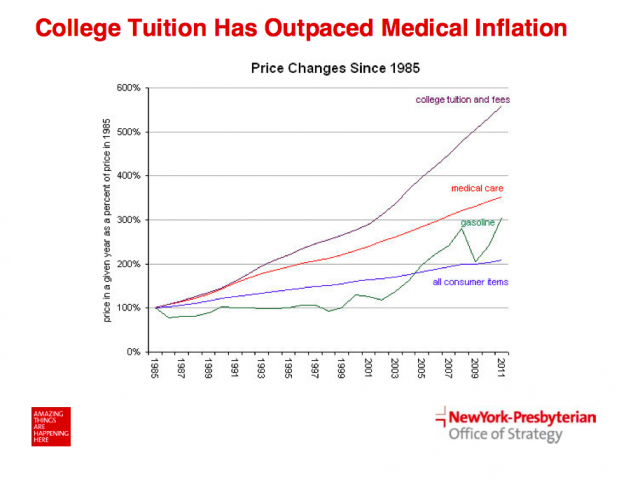
Healthcare and higher education face similar challenges and transformations -- costs continue to soar

Image from Inside Higher Ed


Would people put up with this with other types of purchases? I don’t think so. I wouldn’t want to…would you?  Would we like to pay for something that we aren’t getting — like paying for all the extra options on a new car, but not getting them?

What goes around, comes around.
But by allowing this to have occurred, a backlash against the value of higher education has been building for years now. In many learners’ minds, they are questioning whether it’s worth taking on (potentially) decades’ worth of debt. At a minimum, the higher the price of obtaining degrees and/or other credentials becomes, the less Return on Investment (ROI) is realized by the learners (i.e., the purchasers of these goods and services). So while getting a degree is often still worth it, the ROI is going down.
And this doesn’t address how relevant/up-to-date the educations are that these learners are receiving, which the employers out there will take issue with.

From an Instructional Designer’s perspective, it isn’t just time that’s the issue here. There continues to exist a tiered hierarchy within higher education. Faculty see themselves as more knowledgeable because they are teaching and because they are the Subject Matter Experts (SMEs). But they are not expert teachers. Many full-time faculty members don’t listen to people who are knowledgeable in the learning science world, and they often don’t value that expertise. (This can be true of administrators as well.) But when a fellow faculty member (i.e., their “true peer” from their perspective) suggests the same idea that Instructional Designers have been recommending for years, they suddenly open their eyes and ears to see and hear this seemingly new, wonderful approach.

Some possible scenarios
Thus, a wave has been building against traditional institutions of higher education — readers of this blog will have picked up on this years ago. Once alternatives significantly hit the radar — ones that get the learners solid, good-paying jobs — there could be a mass exodus out of what we think of as traditional higher education. At least that’s one potential scenario.

For example, if a next-generation learning platform comes along that offers teams and individuals the ability to deliver lifelong learning at 50% or more off the price of an average degree, then be on the lookout for massive change. If professors and/or teams of specialists — those who are skilled in instructional design and teaching —  can go directly to their learners — it could be an interesting world indeed. (Outschool is like this, by the way.) In that scenario, below are two potential methods of providing what accreditation agencies used to provide:

  • Obtaining the skills and competencies being requested from the workplace to “pass the tests” (whatever those assessments turn out to be)
  • Voting a course up or down (i.e., providing crowd-sourced rating systems)

Other possible scenarios
Another scenario is that traditional institutions of higher education really kick their innovation efforts into high gear. They reward teaching. They develop less expensive methods of obtaining degrees. They truly begin delivering more cost-effective means of obtaining lifelong learning and development “channels” for educating people.

And there are other possible scenarios, some of which I could think of and many I would likely miss. But to even ask the solid and highly-relevant question as plainly stated in the article above — Why Aren’t Professors Taught to Teach? — that is something that must be dealt with. Those organizations that use a team-based approach are likely to be able to better answer and address that question.


How to Support Students and Families through Technology and Innovation — from thejournal.com by Jeremy Davis

Excerpt:

Here are just a few district-wide innovations that resulted from the pandemic:

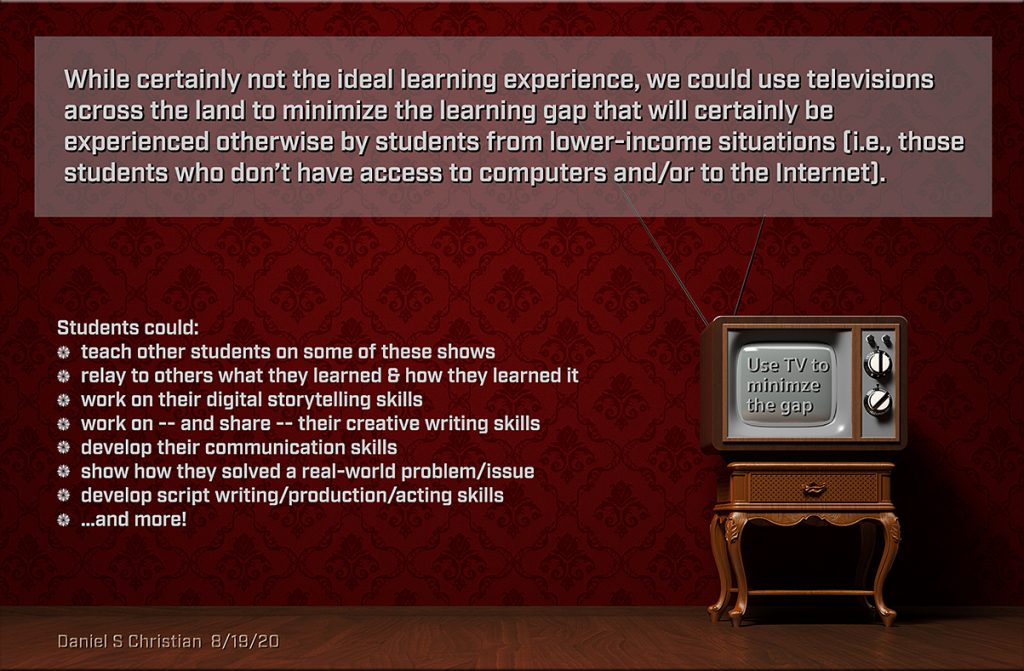
  • Worked with our local public access television station to broadcast district updates and educational resources. We contracted with Discovery Education to post some of their content to local channel 3 for students without home Internet access, and we built a television studio where our Innovation team worked with district teachers to produce content for local cable from 8–3 every week day.

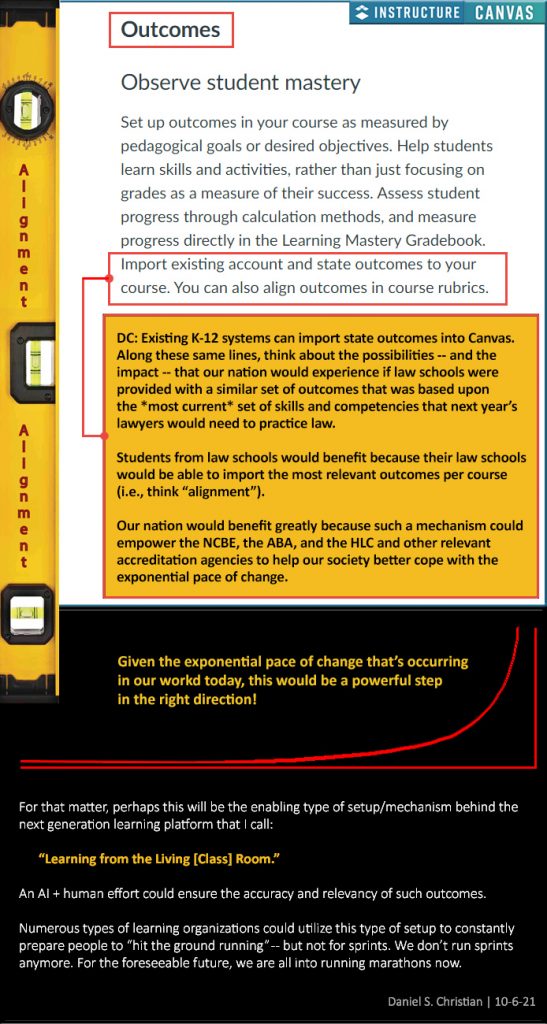
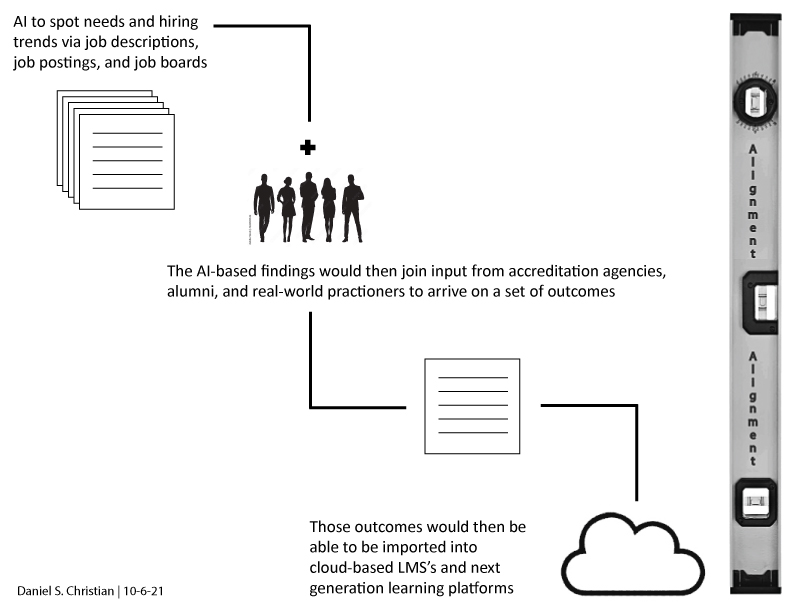
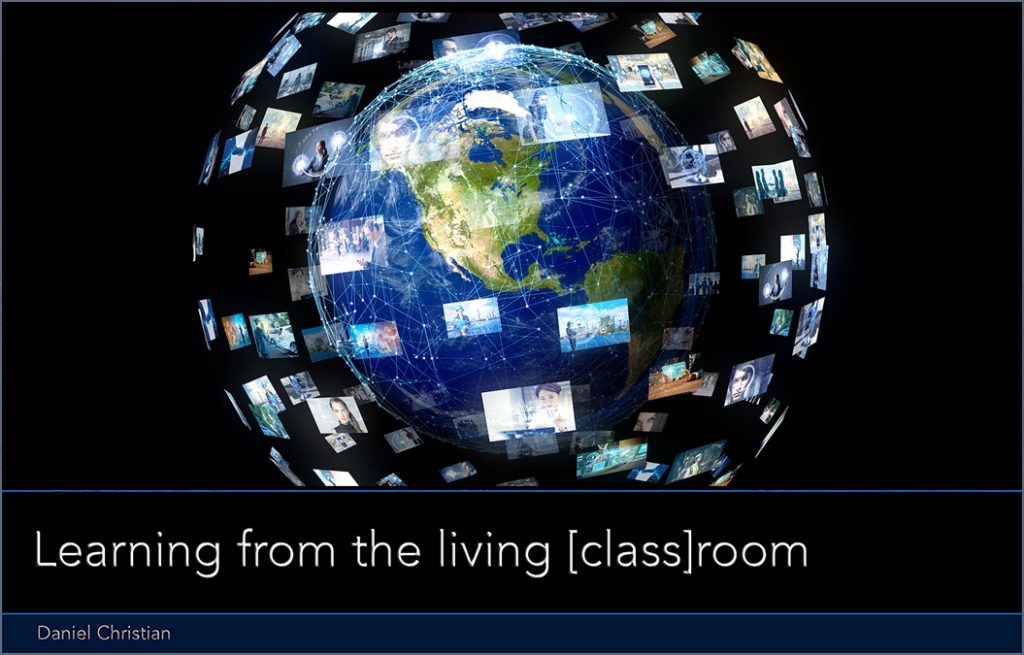
DC: Which reminds me of this idea/graphic:

  • Students were provided with Internet hotspots to ensure every student in the district could access the content and the video conferencing lessons with their teachers.
  • The Educational Services department created an amazing curriculum and summer school program where students could log in and complete curricular activities as enhancements to the curriculum and throughout the summer.
  • Created videos of “how” we could do both live and online teaching at the same time to help teachers feel more comfortable with the new way of teaching.


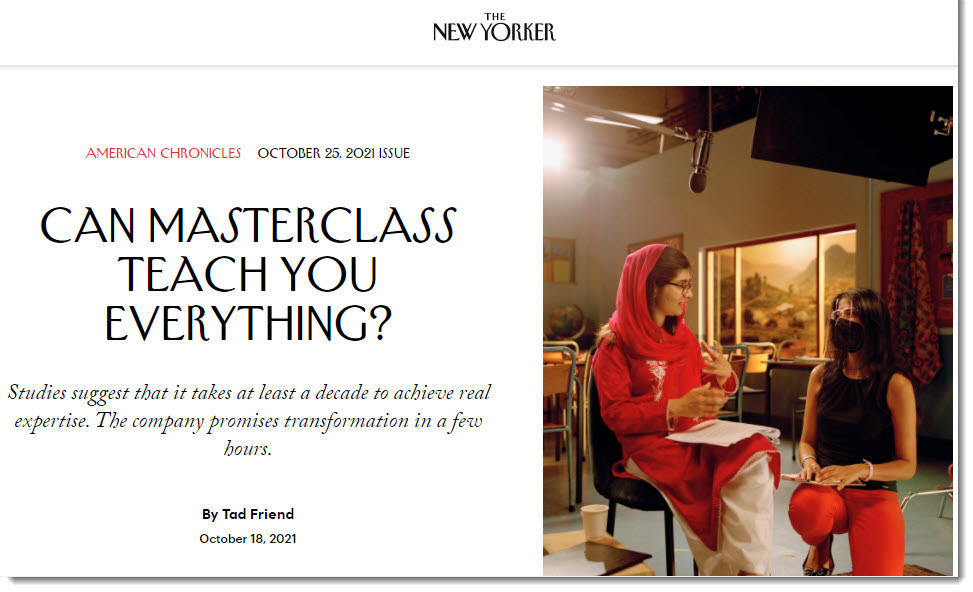
Can MasterClass teach you everything? — from newyorker.com by Tad Friend

Can MasterClass teach you everything?

Malala Yousafzai on set. Though the site’s C.E.O., David Rogier, says, “Learning is uncomfortable,” the shoots are lavish. Photograph by Lewis Khan for The New Yorker

Excerpt:

When MasterClass launched, in 2015, it offered three courses: Dustin Hoffman on acting, James Patterson on writing, and Serena Williams on tennis. Today, there are a hundred and thirty, in categories from business to wellness. During the pandemic lockdown, demand was up as much as tenfold from the previous year; last fall, when the site had a back-to-school promotion, selling an annual subscription for a dollar instead of a hundred and eighty dollars, two hundred thousand college students signed up in a day. MasterClass will double in size this year, to six hundred employees, as it launches in the U.K., France, Germany, and Spain. It’s a Silicon Valley investor’s dream, a rolling juggernaut of flywheels and network effects dedicated to helping you, as the instructor Garry Kasparov puts it, “upgrade your software.”


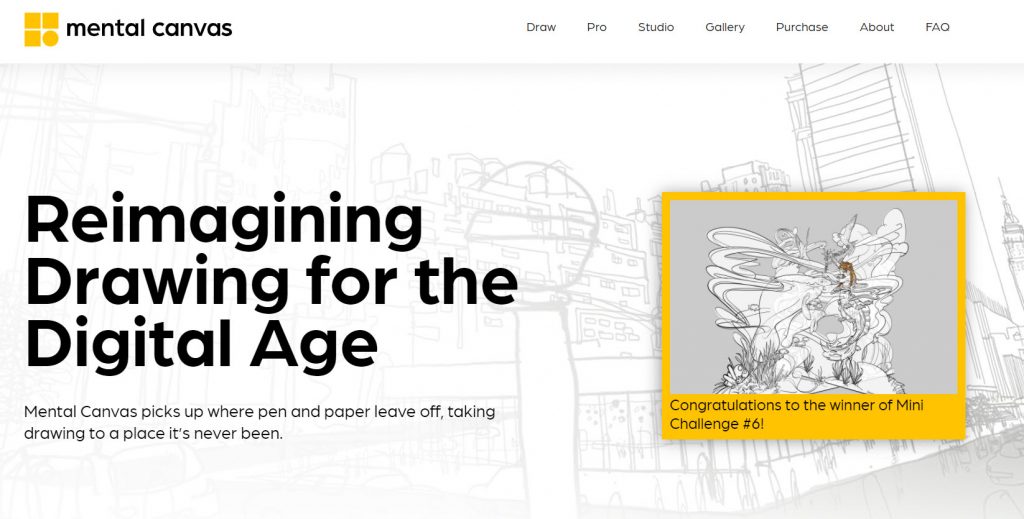
Mental Canvas will unleash some serious creativity!

Cehck out what you can do with Mental Canvas! The app seamlessly combines 2D and 3D!


Also see:

Mental Canvas: App for drawing in 3D  — from microsoft.com in Germany; Google translated the excerpt below:

When I first saw Mental Canvas in action, I was instantly impressed. Drawings are created in 3D in the app. You can even fly through your own sketches and comics. Mental Canvas offers teachers completely new possibilities to design blackboard pictures, to illustrate content and to try out creative things. The tutorials and examples immediately make you want to draw in three dimensions. Mental Canvas is currently available as a free download. In this blog article you will get to know the app.


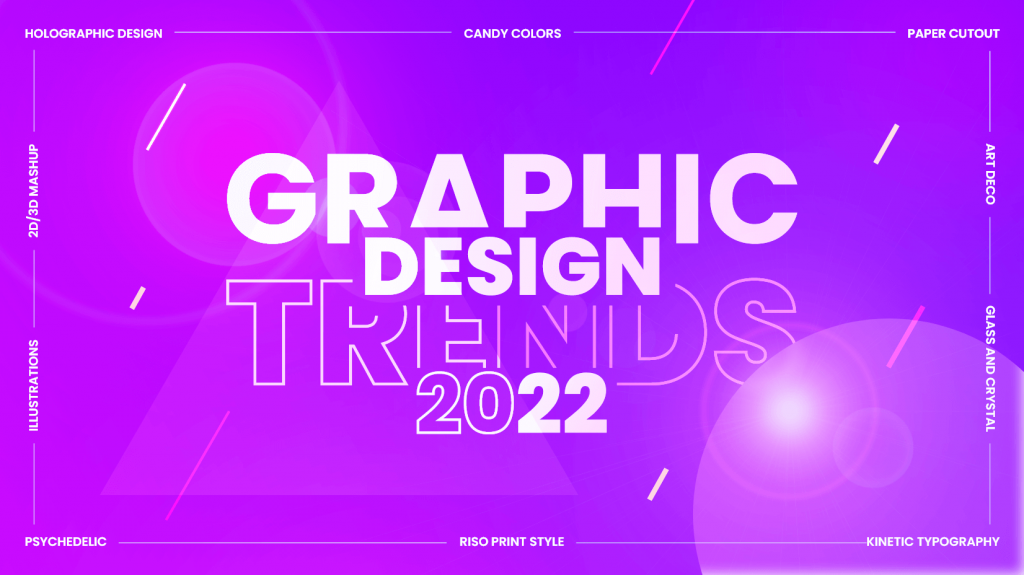
Top Graphic Design Trends 2022: Raising the Game — from graphicmama.com by Lyudmil Enchev

Graphic design trends for 2022

Excerpt:

The coming 2022 is just around the corner and it’s already breaking all the rules for graphic design. Everything is permitted and it’s going to be glorious. If we can summarize the Graphic Design Trends 2022 in one sentence, it’s time to raise the game because the floodgates are open, bringing a mix of the unmixable, nostalgia, movement, and open-mindedness.


Common Anxieties in Beginning HyFlex: Learning to Teach a HyFlex Class — from hyflexlearning.org by Brian Beatty

Excerpt:

Not surprisingly, one of the biggest anxieties – FEARS – for many faculty considering or implementing a HyFlex approach for the first time is learning how to do so, and to do so effectively the very first time. No one likes to feel like they aren’t equipped to do the work they are required (or challenged) to do; perhaps especially teachers who are normally in full control of their classrooms and the activities that take place in them. When you are planning to teach HyFlex, it may seem like you are planning for CHAOS, or at least planning to lose control over the class environment(s), the teaching process, and ultimately student learning. Let’s address those concerns one at a time, but briefly.

If we assume you are an effective classroom teacher, then a common design path that I usually recommend is to start with your plans for an effective classroom experience and work to translate those to the other modes, accessing expert guidance as needed (such as, instructional designers, online course design books, your colleagues). What are the learning outcomes (or instructional objectives) for the classroom? How will those translate into the online mode(s) you are planning? What about the instructional content and associated activities for the classroom? How do those translate? What about plans for assessment? Start with what you know, and are confident with, and then layer in approaches for the other modes. 


From DSC:
For IDs, trainers, teachers, faculty members, & teams who are working on creating and delivering online-based learning……the following article is a good one for us to check out and reflect upon:

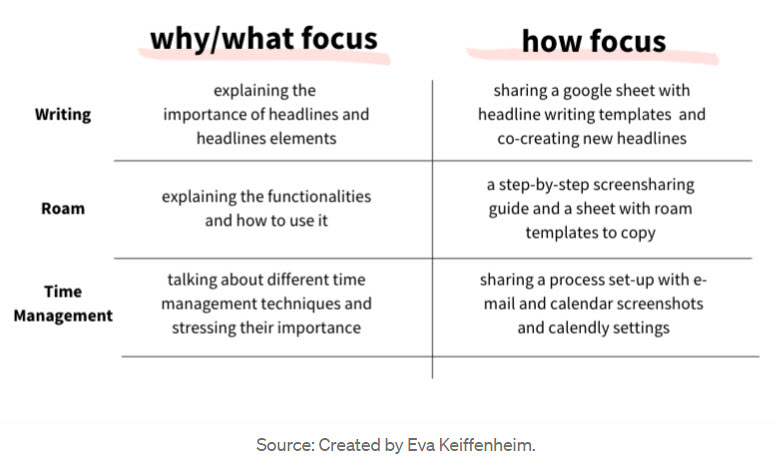
Most Online Courses Are a Waste of Your Time — Here’s How You Know — from medium.com by Eva Keiffenheim
A quick guide that helps you find the worthy ones.

Excerpts:

Not all learning investments are created equal. People who’ve excelled at their craft are often not the best teachers. Likewise, creators who write the best sales copy don’t offer the most value.

Here’s precisely how you can spot bad online courses so that you won’t waste your time and money.

…

 
© 2025 | Daniel Christian