UNC’s $97 Million Plan to Reach Adult Online Learners — from insidehighered.com by Suzanne Smalley
University of North Carolina will create an internal unit to build and manage online programs from the system’s 17 campuses for learners largely ignored by many universities.

Excerpt:

The University of North Carolina system is leveraging $97 million in pandemic recovery funding to launch a nonprofit ed-tech start-up intended to bolster adult online education in a state with a looming need for more skilled workers.

Project Kitty Hawk is named after the North Carolina beach town the Wright brothers returned to repeatedly before achieving their dream of flight, an apt metaphor for an undertaking that UNC leaders herald as a transformative effort to reach the state’s estimated one million working adults who have some college education but no degree.


Adobe’s Creative Cloud Express brings content editing to the masses — from protocol.com by Lizzy Lawrence
It’s competing directly with Canva, a template-builder for non-professionals.

Excerpt:

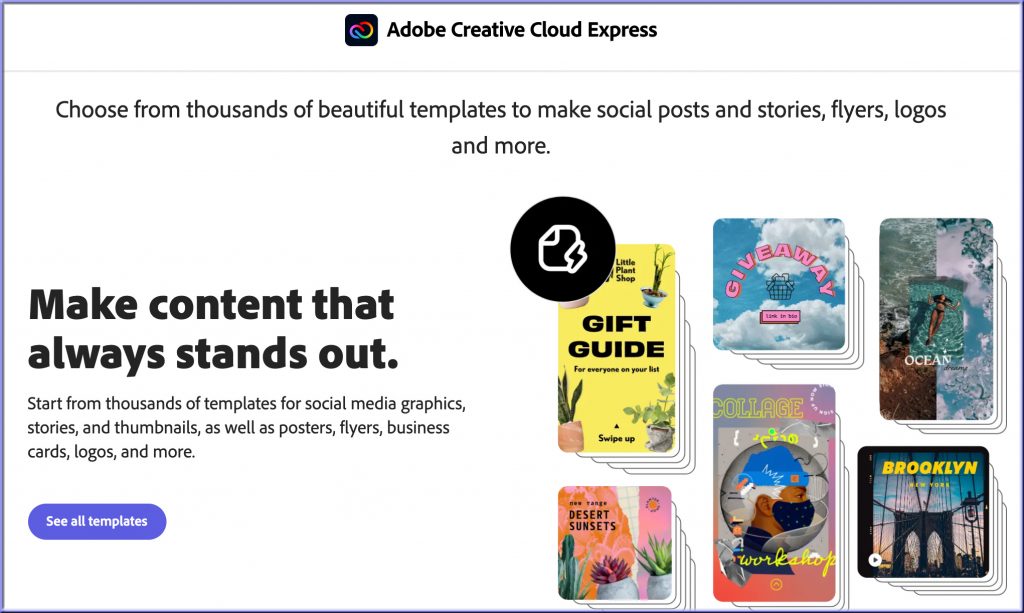
Historically, Adobe’s software was made for the pros. Applications like Photoshop, Illustrator and Premiere Pro all require a paid Creative Cloud subscription and a certain level of expertise. But with Monday’s launch of Creative Cloud Express, Adobe is targeting anyone who might find graphic design useful: small businesses, students and social media influencers.

Also see:

Also see:

Adobe Creative Cloud Express


The 35 Best Apple and Google Apps of 2021 — from wonderoftech.com by Carolyn Nicander Mohr

Excerpt:

As 2021 draws to a close, Apple and Google have been busy creating their lists of the best apps of the year. These lists may include apps you already have or are familiar with. You may also discover your new favorite must-have app you’ll be eager to share with your friends.


ELC 070: Conversation Design for the Voice User Interface — from theelearningcoach.com (ELC) by Connie Malamed
A Conversation with Myra Roldan

Excerpt (emphasis DSC):

Do you wonder what learning experience designers will be doing in the future? I think one area where we will need to upskill is in conversation design. Think of the possibilities that chatbots and voice interfaces will provide for accessing information for learning and for support in the flow of work. In this episode, I speak with Myra Roldan about conversation design for the voice user interface (VUI). We discuss what makes an effective conversation and the technologies for getting started with voice user interface design.


The next age of the internet could suck power away from Big Tech while living on the same backbone as cryptocurrencies. Here’s what to know about Web3. — from businessinsider.com by Katie Canales

Excerpts (emphasis DSC):

  • Web3 is the next generation of the internet and will exist on the blockchain.
  • It will be decentralized, meaning it won’t be controlled entities like Facebook or Google.
  • Twitter, GameStop, Reddit, and VC firm a16z are all putting resources into building Web3.

…

One aspect of the metaverse is that users will hopefully be able to go virtually from platform to platform with one single account — just like we will in Web3. 

And NFTs, one-of-a-kind tokens representing your ownership of a virtual good, could be more easily bought and sold with cryptocurrencies within a space like Web3. 


From DSC:
How might “Web3” translate into the future of lifelong learning? Here’s one vision/possibility:

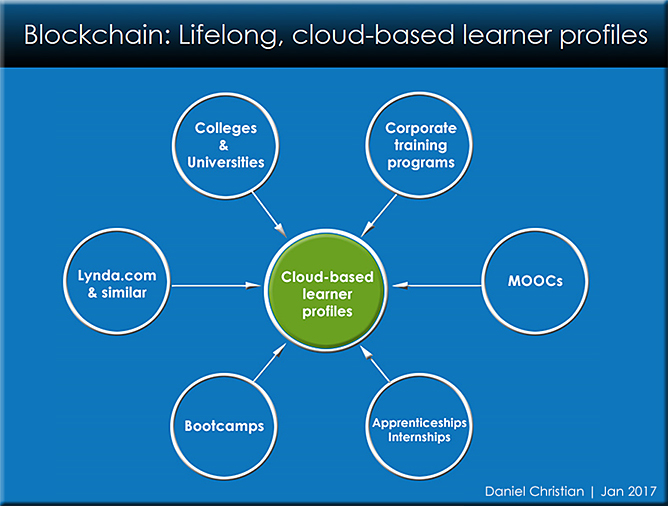
There could be several entities and services feeding one's cloud-based learner profile

Each person would have a learner profile/account that could seamlessly log into multiple education/training providers’ platforms and services. The results of that learning could be stored in one’s cloud-based learner profile. This type of next-generation learning platform would still need subject matter experts, instructional designers, programmers, and other team members. But the focus would be on building skills — skills that an artificial intelligence-backed interface would demonstrate are currently being requested by the modern workplace.  This constantly-being-updated list of skills could then link to the learning-related experiences and resources that people could choose from in order to develop those skills.

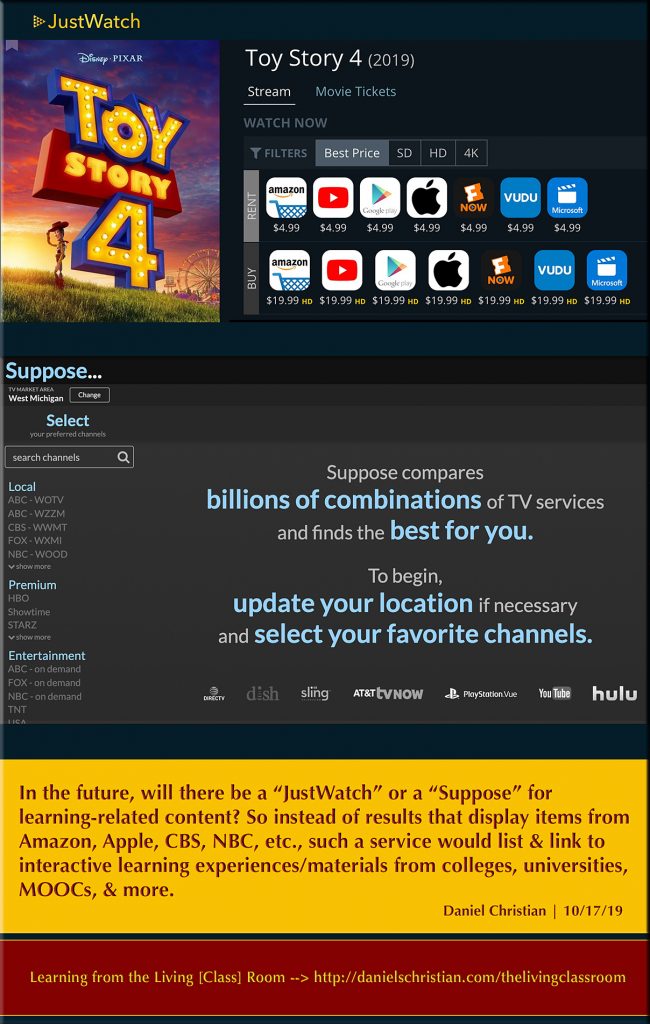
The following vision/graphic also comes to my mind:

Learning from the living class room


The Humanities May Be Declining at Universities — But They’re Thriving on Zoom — from edsurge.com by Rebecca Koenig

Excerpt:

Throughout the pandemic, versions of this close-reading conversation have taken place week after week. Organized through new nonprofits and small startups including the Catherine Project, Night School Bar and Premise, they bring together adults who want to spend their free time talking to strangers about literature and philosophy.

It sounds at first like an ambitious book club—except for the fact that many of these seminars are organized and led by college professors, some so eager to participate that they do it for free.

“Mostly it’s a way for them to do a kind of teaching they can’t do at their regular jobs,” explains Zena Hitz, founder of the Catherine Project and a tutor (faculty member) at St. John’s College in Annapolis, Maryland.

From DSC:
I’ve often thought that online-based learning may be the thing that saves the liberal arts (i.e., available throughout one’s lifetime and would be far less expensive). It would be ironic though, as many liberal arts institutions have not been proponents of online-based learning.


Antonio Sacre on the Power of Storytelling in Education — from spencerauthor.com by John Spencer

Per John:

I had the honor of interviewing celebrated author Antonio Sacre on the power of storytelling in education. Check out the podcast below.

The power of story in education -- Spencer and Sacre

Born in Boston to a Cuban father and Irish-American mother, Sacre is an internationally touring storyteller, author, and solo performance artist, based in Los Angeles. He has performed at the National Book Festival at the Library of Congress, the Kennedy Center, the National Storytelling Festival, as well as museums, schools, libraries, and festivals. Deemed “a charismatic, empathetic presence” by the Chicago Tribune, his stories have appeared in numerous magazines, journals, and on National Public Radio.


Making Your Research Applicable for Mainstream Audiences — from insidehighered.com by Diana Brazzell
Four ways to extend the reach of your scholarly work beyond academe.

Excerpt:

Many academics I work with struggle to make their research applicable for audiences outside academia. They’re doing important, even ground-breaking work, but they aren’t sure how their ideas can make the leap from labs and libraries to newspapers, boardrooms, hospitals and the halls of government.
…
Below are four ways you can make your research applicable to policy, business, public health and people’s everyday lives, along with examples of how some of the academics we collaborate with at Footnote have used these techniques.

From DSC:
Faculty members, doing this could help reduce the backlash that’s been building against higher education. Folks out in society could see how the work that you are doing is relevant to them. For example, your podcasts, Tweets, postings out on LinkedIn, your vidcasts, or your blog postings could be read by students, teachers, administrators or others within the K-12 space. And the topic could peak their interest and curiosity. Who knows, your research may just jump start someone else’s passion in that area or even someone else’s career. But at minimum, it could show that some faculty members are interested in talking to/with a far wider audience than just the peers in their discipline.


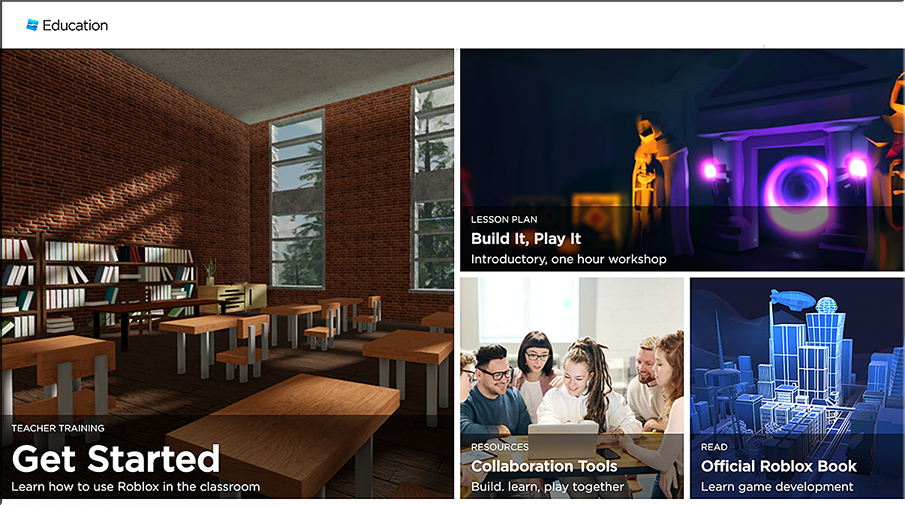
Teaching in the ‘Metaverse’? Roblox Looks to Make It a Reality — from edweek.org by Benjamin Herold
With millions in new grants to STEM organizations like Project Lead the Way, the gaming platform is moving into K-12 education.

Excerpts:

Hoping to expand its presence in K-12 schools, gaming company Roblox announced this month a new $10 million fund to support the creation of online learning experiences that take advantage of its platform’s unique way of letting users play, explore, and socialize in an endlessly evolving virtual world.
…
Roblox aims to play a major role in the emerging metaverse. Expanding into classroom education is a key vehicle for making that happen, Kantar told investors at a November conference. The company’s stated goal is to reach 100 million students worldwide by the end of the decade.

Making such inroads with K-12 schools, however, is no sure bet.

Also see:

Roblox Education


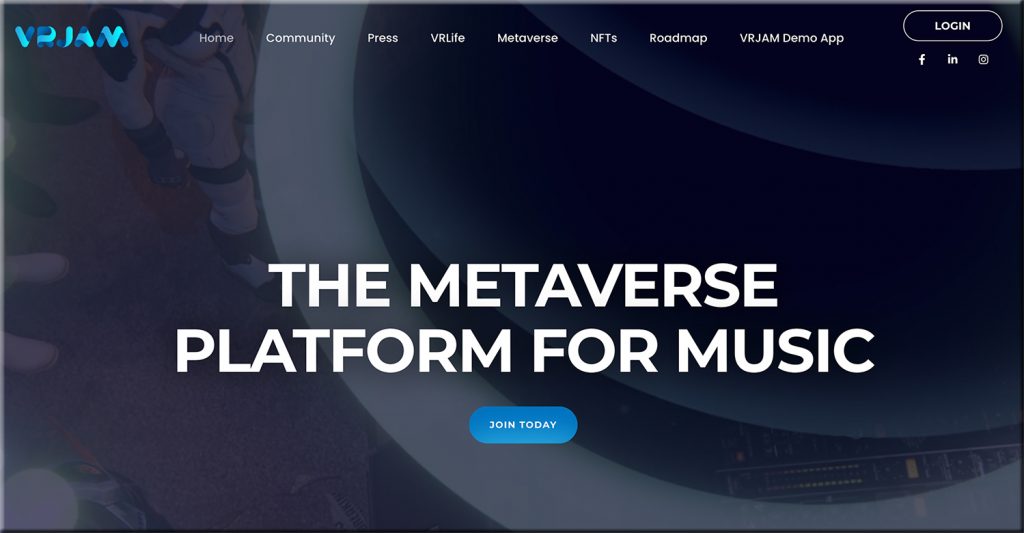
VRJAM -- the metaverse platform for music

The VRJAM metaverse platform is coming to transform the world of live entertainment 

VRJAM, the UK’s leading creator of live music experiences in virtual reality, today teased the launch of the VRJAM platform, a revolutionary new metaverse events platform and NFT creation solution. 

To bring the VRJAM metaverse platform to life, VRJAM has partnered with market leading NFT software developer Enjin.io to launch a rich virtual reality world that offers a host of new solutions for artists to render and monetize their music and live shows in amazing new ways using NFT’s, blockchain and immersive technology.  

The VRJAM platform promises to open up completely new ways for both fans and artist to experience live music events and represents the next step in the evolution of live music. 

Ownership of this virtual world will be shared by a guild of globally recognised artists and record labels who will cooperate to create value and define new possibilities for music inside the metaverse. 

VRJAM’s metaverse platform offers solutions for true live performance using technology that is years ahead of other similar platforms. It provides unsurpassed user experience and offers fans, artists and labels an array of unique features:
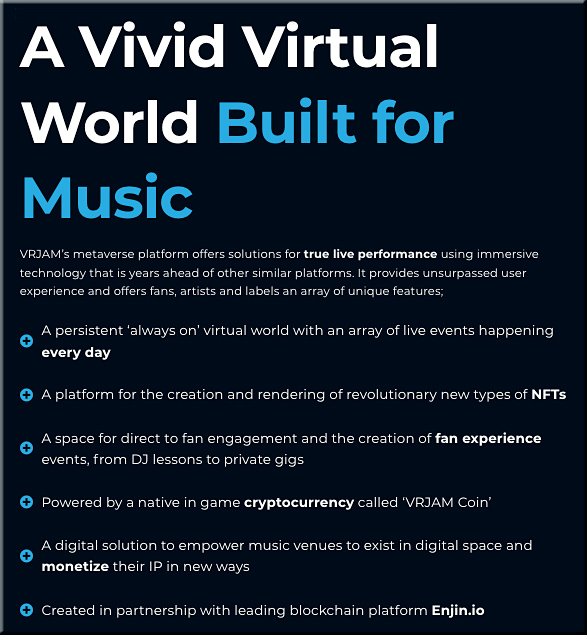
VRJAM's metaverse -- a vivid virtual world built for music

At the heart of the VRJAM metaverse platform is a blockchain based trading and finance system, VRJAM Coin. This revolutionary new cryptocurrency will create ways for both artists and fans to earn money inside the metaverse and promises to create entirely new business models for artists, venues and labels at a time when their traditional ways of making money have been turned upside down by the Covid 19 pandemic. 

The VRJAM cryptocurrency is backed by investment from 5 of the world’s leading blockchain specialist investment and venture capital firms, demonstrating the exciting potential of VRJAM’s tech.

The VRJAM platform is scheduled to go live in early 2022, follow on social media to stay up to date.


From DSC:
Hmmmmm….might this type of thing spill over into the worlds of teaching and learning? More direct-to-consumer (learner) types of offerings? Will this open up the doors for new methods of earning a living or for  those interested in building a teaching & learning-based brand?

Alternatively, will this impact what actors, actresses, and comedians will be able to do?


Addendum on 12/2/21:


EduMAX 2021 recap: Together for student success around the globe — from blog.adobe.com by Sebastian Distefano

Excerpt:

University CIOs, deans, provosts, faculty and staff from more than 100 institutions convened online for the Adobe EduMAX 2021 conference, where academic leaders shared how they are transforming teaching and learning practices across their campuses. Key discussion points included:

  • How digital literacy increases engagement to bring faculty and students together, whether they are in-person, online or in a hybrid environment.
  • How digital literacy closes the skills gap in higher education and industry by fostering critical essential skills that employers value.
  • How faculty can integrate digital literacy across the curriculum for all students.
 

Understanding the Web Content Accessibility Guidelines (WCAG) for Learning Disabilities — from inclusionhub.com by Meredith Kreisa
Following the WCAG for learning disabilities can make your content more accessible to the millions of individuals with dyslexia, dyscalculia, and other conditions

Excerpt:

Advancements in digital technology have made disseminating information to the masses quick and easy. Unfortunately, your audience might not be as big as you think. For millions of people with learning disabilities, some content may be prohibitively challenging to read. This effectively renders information that many take for granted inaccessible to others.

Luckily, by using simple, common-sense methods, your content can be more approachable for those with learning and other types of disabilities. The World Wide Web Consortium (W3C) Web Accessibility Initiative (WAI) maintains Web Content Accessibility Guidelines (WCAG) to provide guidance on supportive techniques.

How Does WCAG Apply to Learning Disabilities?
While cognitive and learning disabilities are distinct conditions, they can lead to similar accessibility issues. Therefore, WCAG groups them together. WCAG’s cognitive and learning disability guidelines fall into eight main objectives:


The Push-Pull of Leading Motivation Using Microlearning — from learningsolutionsmag.com by Robyn Defelice

Excerpt:

So, let’s pick up from there: You’re a learning leader in an organization that has aligned all these elements and is ready to see microlearning put to good use. So, what’s the obstacle in your path?

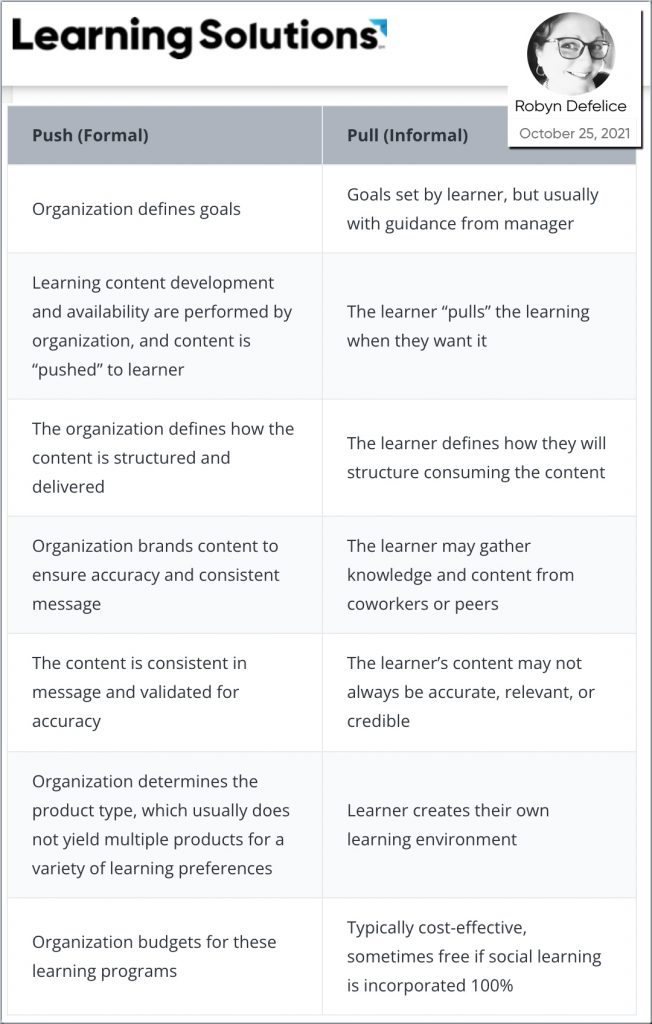
Maybe you’re stuck on using microlearning as a motivational tool for performance growth but are not sure if a formal or informal approach will have more appeal. Should you push or pull, as they ask. Let’s get you out of this tug-of-war and address how your L&D team can lead the way in motivating the learning audience for new performance gains by implementing a microlearning campaign (or two or three)!

Push (formal) vs pull (informal)


One Year Later . . . and Counting: Reflections on Emergency Remote Teaching and Online Learning — from er.educause.edu by Stephanie Moore, Torrey Trust, Barb Lockee, Aaron Bond and Charles Hodges

Excerpts (emphasis DSC):

Colleges with significant previous investments in online education, and ones that have worked to embed that experience into the campus’s mainstream, have seen the biggest jumps in enrollment.” In asking the question “When should a college invest heavily in online education?,” Hill concluded: “It seems increasingly clear that the answer is: at least a decade ago.” A view from “one year later” must include consideration of what college and university leaders chose to do years ago, when the decisions that created this reinforcing feedback loop were made.
…
Then there are the colleges and universities that resisted online learning for years or invested only in very isolated instances. These institutions were less prepared and suffered steeper enrollment and budget declines than their counterparts.
…
Aesop’s fable “The Oak and the Reeds” offers us ancient wisdom. In the story, the Oak mocks the Reeds that bend in the breezes. But when hit by a hurricane, the Reeds flex with the wind and survive while the Oak is beaten and broken. Some colleges and universities were more like the Oak, stubbornly resisting and finding that they could not resist the hurricane that was the pandemic. Other institutions proved more like the Reeds and were more agile in the winds, allowing flexibility and survival during a time of crisis.


© 2025 | Daniel Christian