We have to provide instructors the support they need to leverage educational technologies like generative AI effectively in the service of learning. Given the amount of benefit that could accrue to students if powerful tools like generative AI were used effectively by instructors, it seems unethical not to provide instructors with professional development that helps them better understand how learning occurs and what effective teaching looks like. Without more training and support for instructors, the amount of student learning higher education will collectively “leave on the table” will only increase as generative AI gets more and more capable. And that’s a problem.
From DSC: As is often the case, David put together a solid posting here. A few comments/reflections on it:
I agree that more training/professional development is needed, especially regarding generative AI. This would help achieve a far greater ROI and impact.
The pace of change makes it difficult to see where the sand is settling…and thus what to focus on
The Teaching & Learning Groups out there are also trying to learn and grow in their knowledge (so that they can train others)
The administrators out there are also trying to figure out what all of this generative AI stuff is all about; and so are the faculty members. It takes time for educational technologies’ impact to roll out and be integrated into how people teach.
As we’re talking about multiple disciplines here, I think we need more team-based content creation and delivery.
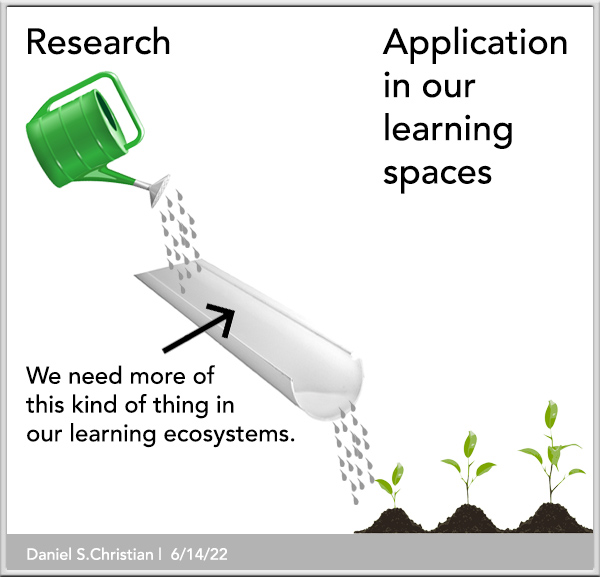
There needs to be more research on how best to use AI — again, it would be helpful if the sand settled a bit first, so as not to waste time and $$. But then that research needs to be piped into the classrooms far better. .
Introducing Gen-3 Alpha: Runway’s new base model for video generation.
Gen-3 Alpha can create highly detailed videos with complex scene changes, a wide range of cinematic choices, and detailed art directions.https://t.co/YQNE3eqoWf
Introducing GEN-3 Alpha – The first of a series of new models built by creatives for creatives. Video generated with @runwayml‘s new Text-2-Video model.
Learning personalisation. LinkedIn continues to be bullish on its video-based learning platform, and it appears to have found a strong current among users who need to skill up in AI. Cohen said that traffic for AI-related courses — which include modules on technical skills as well as non-technical ones such as basic introductions to generative AI — has increased by 160% over last year.
You can be sure that LinkedIn is pushing its search algorithms to tap into the interest, but it’s also boosting its content with AI in another way.
For Premium subscribers, it is piloting what it describes as “expert advice, powered by AI.” Tapping into expertise from well-known instructors such as Alicia Reece, Anil Gupta, Dr. Gemma Leigh Roberts and Lisa Gates, LinkedIn says its AI-powered coaches will deliver responses personalized to users, as a “starting point.”
These will, in turn, also appear as personalized coaches that a user can tap while watching a LinkedIn Learning course.
Personalized learning for everyone: Whether you’re looking to change or not, the skills required in the workplace are expected to change by 68% by 2030.
Expert advice, powered by AI: We’re beginning to pilot the ability to get personalized practical advice instantly from industry leading business leaders and coaches on LinkedIn Learning, all powered by AI. The responses you’ll receive are trained by experts and represent a blend of insights that are personalized to each learner’s unique needs. While human professional coaches remain invaluable, these tools provide a great starting point.
Personalized coaching, powered by AI, when watching a LinkedIn course: As learners —including all Premium subscribers — watch our new courses, they can now simply ask for summaries of content, clarify certain topics, or get examples and other real-time insights, e.g. “Can you simplify this concept?” or “How does this apply to me?”
From DSC: Last Thursday, I presented at the Educational Technology Organization of Michigan’s Spring 2024 Retreat. I wanted to pass along my slides to you all, in case they are helpful to you.
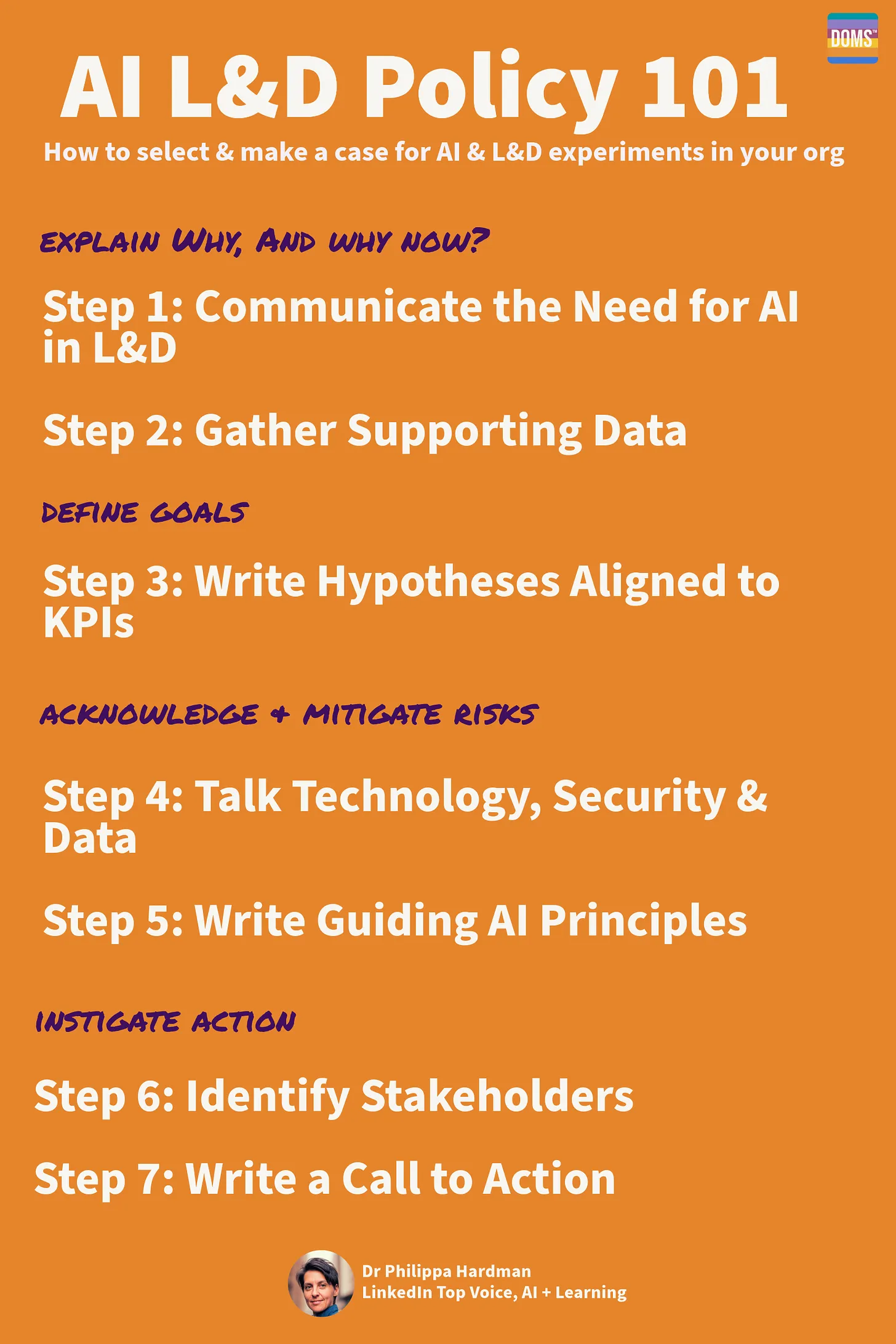
AI Policy 101: a Beginners’ Framework — from drphilippahardman.substack.com by Dr. Philippa Hardman How to make a case for AI experimentation & testing in learning & development
The role of learning & development
Given these risks, what can L&D professionals do to ensure generative AI contributes to effective learning? The solution lies in embracing the role of trusted learning advisors, guiding the use of AI tools in a way that prioritizes achieving learning outcomes over only speed. Here are three key steps to achieve this:
1. Playtest and Learn About AI… 2. Set the Direction for AI to Be Learner-Centered…
3. Become Trusted Learning Advisors…
In the last year, AI has become even more intertwined with our education system. More teachers, parents, and students are aware of it and have used it themselves on a regular basis. It is all over our education system today.
While negative views of AI have crept up over the last year, students, teachers, and parents feel very positive about it in general. On balance they see positive uses for the technology in school, especially if they have used it themselves.
Most K-12 teachers, parents, and students don’t think their school is doing much about AI, despite its widespread use. Most say their school has no policy on it, is doing nothing to offer desired teacher training, and isn’t meeting the demand of students who’d like a career in a job that will need AI.
The AI vacuum in school policy means it is currently used “unauthorized,” while instead people want policies that encourage AI. Kids, parents, and teachers are figuring it out on their own/without express permission, whereas all stakeholders would rather have a policy that explicitly encourages AI from a thoughtful foundation.
There is much discourse about the rise and prevalence of AI in education and beyond. These debates often lack the perspectives of key stakeholders – parents, students and teachers.
In 2023, the Walton Family Foundation commissioned the first national survey of teacher and student attitudes toward ChatGPT. The findings showed that educators and students embrace innovation and are optimistic that AI can meaningfully support traditional instruction.
A new survey conducted May 7-15, 2024, showed that knowledge of and support for AI in education is growing among parents, students and teachers. More than 80% of each group says it has had a positive impact on education.
Every six months or so, I write a guide to doing stuff with AI. A lot has changed since the last guide, while a few important things have stayed the same. It is time for an update.
…
To learn to do serious stuff with AI, choose a Large Language Model and just use it to do serious stuff – get advice, summarize meetings, generate ideas, write, produce reports, fill out forms, discuss strategy – whatever you do at work, ask the AI to help. A lot of people I talk to seem to get the most benefit from engaging the AI in conversation, often because it gives good advice, but also because just talking through an issue yourself can be very helpful. I know this may not seem particularly profound, but “always invite AI to the table” is the principle in my book that people tell me had the biggest impact on them. You won’t know what AI can (and can’t) do for you until you try to use it for everything you do. And don’t sweat prompting too much, though here are some useful tips, just start a conversation with AI and see where it goes.
You do need to use one of the most advanced frontier models, however.
How Humans Do (and Don’t) Learn— from drphilippahardman.substack.com by Dr. Philippa Hardman One of the biggest ever reviews of human behaviour change has been published, with some eye-opening implications for how we design & deliver learning experiences
Excerpts (emphasis DSC):
This month, researchers from the University of Pennsylvania publishedone of the biggest ever reviews of behaviour change efforts– i.e. interventions which do (and don’t) lead to behavioural change in humans.
…
Research into human behaviour change suggests that, in order to impact capability in real, measurable terms, we need to rethink how we typically design and deliver training.
The interventions which we use most frequently to behaviour change – such as video + quiz approaches and one off workshops – have a negligible impact on measurable changes in human behaviour.
For learning professionals who want to change how their learners think and behave, this research shows conclusively the central importance of:
Shifting attention away from the design of content to the design of context.
Delivering sustained cycles of contextualised practice, support & feedback.
Microsoft’s new ChatGPT competitor… — from The Rundown AI
The Rundown: Microsoft is reportedly developing a massive 500B parameter in-house LLM called MAI-1, aiming to compete with top AI models from OpenAI, Anthropic, and Google.
Hampton runs a private community for high-growth tech founders and CEOs. We asked our community of founders and owners how AI has impacted their business and what tools they use
Here’s a sneak peek of what’s inside:
The budgets they set aside for AI research and development
The most common (and obscure) tools founders are using
Measurable business impacts founders have seen through using AI
Where they are purposefully not using AI and much more
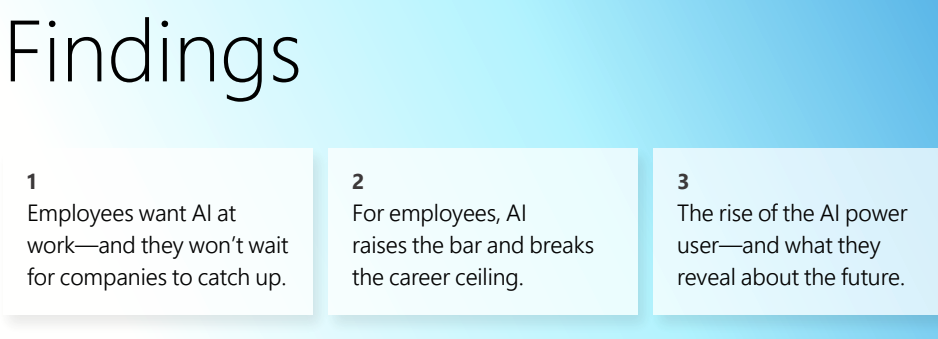
To help leaders and organizations overcome AI inertia, Microsoft and LinkedIn looked at how AI will reshape work and the labor market broadly, surveying 31,000 people across 31 countries, identifying labor and hiring trends from LinkedIn, and analyzing trillions of Microsoft 365 productivity signals as well as research with Fortune 500 customers. The data points to insights every leader and professional needs to know—and actions they can take—when it comes to AI’s implications for work.
Are Colleges Ready For an Online-Education World Without OPMs?— from edsurge.com by Robert Ubell (Columnist) Online Program Management companies have helped hundreds of colleges build online degree programs, but the sector is showing signs of strain.
For more than 15 years, a group of companies known as Online Program Management providers, or OPMs, have been helping colleges build online degree programs. And most of them have relied on an unusual arrangement — where the companies put up the financial backing to help colleges launch programs in exchange for a large portion of tuition revenue.
…
As a longtime administrator of online programs at colleges, I have mixed feelings about the idea of shutting down the model. And the question boils down to this: Are colleges ready for a world without OPMs?
This conversation went in a bunch of unexpected directions. And that’s what’s so fun about it. After all, podcasting is all about bringing audio back and turning learning into leisure. And the question Guy and his partner Mindy Thomas asked a while back was: Why not bring kids in on the fun? Guy shared how his studio, Tinkercast, is leveraging the medium to inspire and educate the next generation of problem solvers.
We discussed the power of audio to capture curiosities and foster imagination, how Tinkercast is doing that in and out of the classroom, and how it can help re-engage students in building needed skills at a critical time. Enjoy!
NEW: Is this America’s next big middle-class job?
28,000 more “technicians” will soon be needed to run giant machines that make tiny semiconductor chips used in phones, cars, missiles, etc.
Education Companies in the Education industry, which includes schools and universities, cut the second-most jobs last monthwith 8,092 for a total of 17,892. That is a 635% increase from the 2,435 cuts announced during the first four months of 2023.
“April is typically the time school districts are hiring and setting budgets for the next fiscal year. Certainly, there are budgetary constraints, as labor costs rise, but school systems also have a retention and recruitment issue,” said Challenger.
The lifetime rate of return for a college education differs significantly by major, but it also varies by a student’s gender and race or ethnicity, according to new peer-reviewed research published in the American Educational Research Journal.
A bachelor’s degree in general provides a roughly 9% rate of return for men, and nearly 10% for women, researchers concluded. The majors with the best returns were computer science and engineering.
Black, Hispanic and Asian college graduates had slightly higher rates of return than their White counterparts, the study found.
The rapid rise of artificial intelligence appears to be taking a toll on the shares of online education companies Chegg and Coursera.
Both stocks sank by more than 10% on Tuesday after issuing disappointing guidance in part because of students using AI tools such as ChatGPT from OpenAI.
“Combining AI Literacy with Core Humanities Learning Goals: Practical, Critical, and Playful Approaches”
It was amazing to get to do an in-person keynote at @csunorthridge‘s AI Pedagogy Showcase.
Sharing slides: https://t.co/LDIGAZ3ORO 1/2
— Anna Mills, annamillsoer.bsky.social, she/her (@AnnaRMills) May 3, 2024
Synthetic Video & AI Professors— from drphilippahardman.substack.com by Dr. Philippa Hardman Are we witnessing the emergence of a new, post-AI model of async online learning?
TLDR: by effectively tailoring the learning experience to the learner’s comprehension levels and preferred learning modes, AI can enhance the overall learning experience, leading to increased “stickiness” and higher rates of performance in assessments.
…
TLDR: AI enables us to scale responsive, personalised “always on” feedback and support in a way that might help to solve one of the most wicked problems of online async learning – isolation and, as a result, disengagement.
…
In the last year we have also seen the rise of an unprecedented number of “always on” AI tutors, built to provide coaching and feedback how and when learners need it.
Perhaps the most well-known example is Khan Academy’s Khanmigo and its GPT sidekick Tutor Me. We’re also seeing similar tools emerge in K12 and Higher Ed where AI is being used to extend the support and feedback provided for students beyond the physical classroom.
Given the potential ramifications of artificial intelligence (AI) diffusion on matters of diversity, equity, inclusion, and accessibility, now is the time for higher education institutions to adopt culturally aware, analytical decision-making processes, policies, and practices around AI tools selection and use.
The theme of the day was Human Connection V Innovative Technology. I see this a lot at conferences, setting up the human connection (social) against the machine (AI). I think this is ALL wrong. It is, and has always been a dialectic, human connection (social) PLUS the machine. Everyone had a smartphone, most use it for work, comms and social media. The binary between human and tech has long disappeared.
I recently created an AI version of myself—REID AI—and recorded a Q&A to see how this digital twin might challenge me in new ways. The video avatar is generated by Hour One, its voice was created by Eleven Labs, and its persona—the way that REID AI formulates responses—is generated from a custom chatbot built on GPT-4 that was trained on my books, speeches, podcasts and other content that I’ve produced over the last few decades. I decided to interview it to test its capability and how closely its responses match—and test—my thinking. Then, REID AI asked me some questions on AI and technology. I thought I would hate this, but I’ve actually ended up finding the whole experience interesting and thought-provoking.
From DSC: This ability to ask questions of a digital twin is very interesting when you think about it in terms of “interviewing” a historical figure. I believe character.ai provides this kind of thing, but I haven’t used it much.
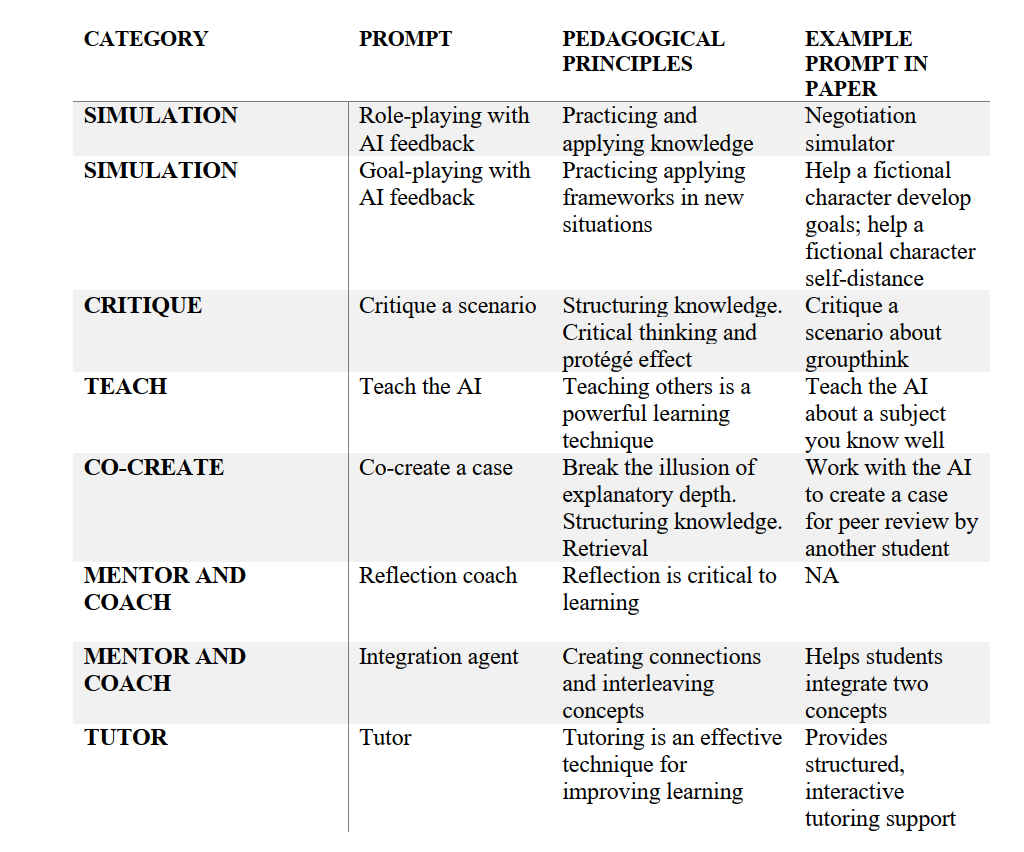
This paper explores how instructors can leverage generative AI to create personalized learning experiences for students that transform teaching and learning. We present a range of AI-based exercises that enable novel forms of practice and application including simulations, mentoring, coaching, and co-creation. For each type of exercise, we provide prompts that instructors can customize, along with guidance on classroom implementation, assessment, and risks to consider. We also provide blueprints, prompts that help instructors create their own original prompts. Instructors can leverage their content and pedagogical expertise to design these experiences, putting them in the role of builders and innovators. We argue that this instructor-driven approach has the potential to democratize the development of educational technology by enabling individual instructors to create AI exercises and tools tailored to their students’ needs. While the exercises in this paper are a starting point, not a definitive solutions, they demonstrate AI’s potential to expand what is possible in teaching and learning.
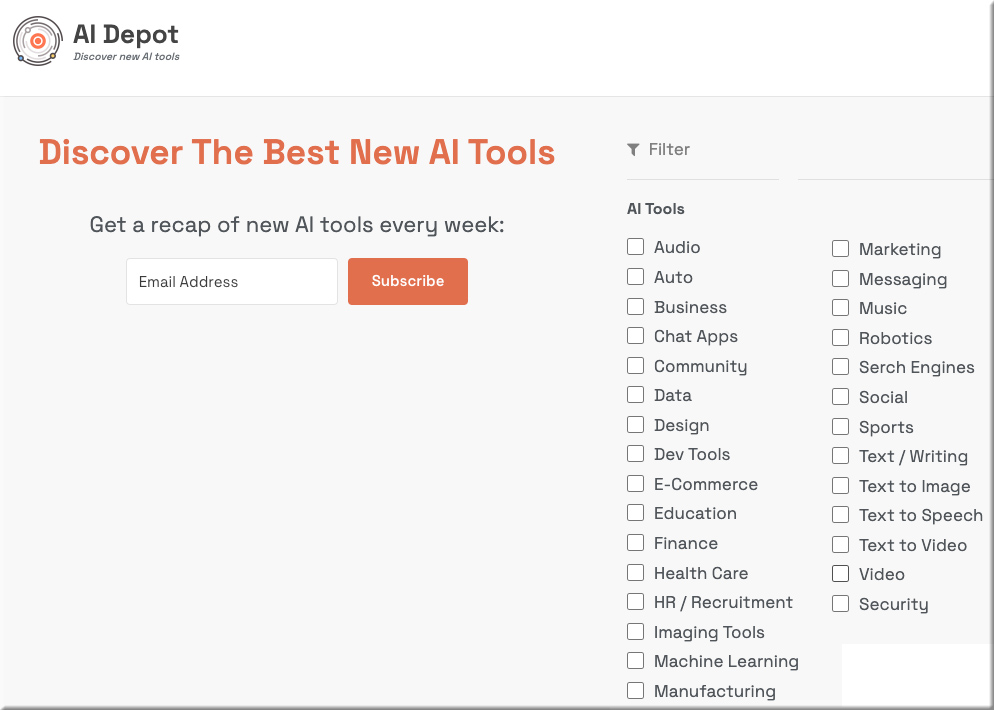
Since AI in education has been moving at the speed of light, we built this AI Tools in Education database to keep track of the most recent AI tools in education and the changes that are happening every day. This database is intended to be a community resource for educators, researchers, students, and other edtech specialists looking to stay up to date. This is a living document, so be sure to come back for regular updates.
The day started out with a short talk about AI (slides). Some of it is my usual schtick where I do a bit of Q&A with folks around myths and misunderstandings of generative AI in order to establish some common ground. These are often useful both in setting the tone and giving folks a sense of how I come to explore generative AI: with a mixture of humor, concern, curiosity, and of course, cat pics.
From there, we launched into a series of mini-workshops where folks had time to first play around with some previously created prompts around teaching and learning before moving onto prompts for administrative work. The prompts and other support materials are in this Workshop Resource Document. The goal was to just get them into using one or more AI tools with some useful prompts so they can learn more about its capabilities.
The Edtech Insiders Rundown of ASU+GSV 2024 — from edtechinsiders.substack.com by by Sarah Morin, Alex Sarlin, and Ben Kornell And more on Edtech Insiders+, upcoming events, Gauth, AI Reading Tutors, The Artificial Intelligence Interdisciplinary Institute, and TeachAI Policy Resources
Alex Sarlin
4. Everyone is Edtech Now This year, in addition to investors, entrepreneurs, educators, school leaders, university admins, non-profits, publishers, and operators from countless edtech startups and incumbents, there were some serious big tech companies in attendance like Meta, Google, OpenAI, Microsoft, Amazon, Tiktok, and Canva. Additionally, a horde of management consultancies, workforce organizations, mental health orgs, and filmmakers were in attendance.
Edtech continues to expand as an industry category and everyone is getting involved.
It was such a delight to chat with Ana. She’s brilliant and passionate, a talented educator, and an advocate for better ways of learning for children and adults. We cover ways to transform schools so that students get real-world skills, learn resilience and how to embrace challenges, and are prepared for an unpredictable future. And we go hard on why we must keep learning no matter our age, become generalists, and leverage technology in order to adapt to the fast-changing world.
The Texas Tribune reports an “automated scoring engine” that utilizes natural language processing — the technology that enables chatbots like OpenAI’s ChatGPT to understand and communicate with users — is being rolled out by the Texas Education Agency (TEA) to grade open-ended questions on the State of Texas Assessments of Academic Readiness (STAAR) exams. The agency is expecting the system to save $15–20 million per year by reducing the need for temporary human scorers, with plans to hire under 2,000 graders this year compared to the 6,000 required in 2023.
Debating About AI: An Easy Path to AI Awareness and Basic Literacy — from stefanbauschard.substack.com by Stefan Bauschard If you are an organization committed to AI literacy, consider sponsoring some debate topics and/or debates next year and expose thousands of students to AI literacy.
Resolved: Teachers should integrate generative AI in their teaching and learning.
The topic is simple but raises an issue that students can connect with.
While helping my students prepare and judging debates, I saw students demonstrate an understanding of many key issues and controversies.
These included—
*AI writing assessment/grading
*Bias
*Bullying
*Cognitive load
*Costs of AI systems
*Declining test scores
*Deep fakes
*Differentiation
*Energy consumption
*Hallucinations
*Human-to-human connection
*Inequality and inequity in access
*Neurodiversity
*Personalized learning
*Privacy
*Regulation (lack thereof)
*The future of work and unemployment
*Saving teachers time
*Soft skills
*Standardized testing
*Student engagement
*Teacher awareness and AI training; training resource trade-offs
*Teacher crowd-out
*Transparency and explainability
*Writing detectors (students had an exaggerated sense of the workability of these tools).
The artificial intelligence sector has never been more competitive. Forbes received some 1,900 submissions this year, more than double last year’s count. Applicants do not pay a fee to be considered and are judged for their business promise and technical usage of AI through a quantitative algorithm and qualitative judging panels. Companies are encouraged to share data on diversity, and our list aims to promote a more equitable startup ecosystem. But disparities remain sharp in the industry. Only 12 companies have women cofounders, five of whom serve as CEO, the same count as last year. For more, see our full package of coverage, including a detailed explanation of the list methodology, videos and analyses on trends in AI.
New Generative AI video tools coming to Premiere Pro this year will streamline workflows and unlock new creative possibilities, from extending a shot to adding or removing objects in a scene
Adobe is developing a video model for Firefly, which will power video and audio editing workflows in Premiere Pro and enable anyone to create and ideate
Adobe previews early explorations of bringing third-party generative AI models from OpenAI, Pika Labs and Runway directly into Premiere Pro, making it easy for customers to draw on the strengths of different models within the powerful workflows they use every day
AI-powered audio workflows in Premiere Pro are now generally available, making audio editing faster, easier and more intuitive