One thing often happens at keynotes and conferences. It surprised me…. — from donaldclarkplanb.blogspot.com by Donald Clark

AI is welcomed by those with dyslexia, and other learning issues, helping to mitigate some of the challenges associated with reading, writing, and processing information. Those who want to ban AI want to destroy the very thing that has helped most on accessibility. Here are 10 ways dyslexics, and others with issues around text-based learning, can use AI to support their daily activities and learning.

    • Text-to-Speech & Speech-to-Text Tools…
    • Grammar and Spelling Assistants…
    • Comprehension Tools…
    • Visual and Multisensory Tools…
    • …and more

Let’s Make a Movie Teaser With AI — from whytryai.com by Daniel Nest
How to use free generative AI tools to make a teaser trailer.

Here are the steps and the free tools we can use for each.

  1. Brainstorm ideas & flesh out the concept.
    1. Claude 3.5 Sonnet
    2. Google Gemini 1.5 Pro
    3. …or any other free LLM
  2. Create starting frames for each scene.
    1. FLUX.1 Pro
    2. Ideogram
    3. …or any other free text-to-image model
  3. Bring the images to life.
    1. Kling AI
    2. Luma Dream Machine
    3. Runway Gen-2
  4. Generate the soundtrack.
    1. Udio
    2. Suno
  5. Add sound effects.
    1. ElevenLabs Sound Effects
    2. ElevenLabs VideoToSoundEffects
    3. Meta Audiobox
  6. Put everything together.
    1. Microsoft Clipchamp
    2. DaVinci Resolve
    3. …or any other free video editing tool.

Here we go.


Is AI in Schools Promising or Overhyped? Potentially Both, New Reports Suggest — from the74million.org by Greg Toppo; via Claire Zau
One urges educators to prep for an artificial intelligence boom. The other warns that it could all go awry. Together, they offer a reality check.

Are U.S. public schools lagging behind other countries like Singapore and South Korea in preparing teachers and students for the boom of generative artificial intelligence? Or are our educators bumbling into AI half-blind, putting students’ learning at risk?

Or is it, perhaps, both?

Two new reports, coincidentally released on the same day last week, offer markedly different visions of the emerging field: One argues that schools need forward-thinking policies for equitable distribution of AI across urban, suburban and rural communities. The other suggests they need something more basic: a bracing primer on what AI is and isn’t, what it’s good for and how it can all go horribly wrong.


Bite-Size AI Content for Faculty and Staff — from aiedusimplified.substack.com by Lance Eaton
Another two 5-tips videos for faculty and my latest use case: creating FAQs!

I had an opportunity recently to do more of my 15-minute lightning talks. You can see my lightning talks from late winter in this post, or can see all of them on my YouTube channel. These two talks were focused on faculty in particular.


Also from Lance, see:


AI in Education: Leading a Paradigm Shift — from gettingsmart.com by Dr. Tyler Thigpen

Despite possible drawbacks, an exciting wondering has been—What if AI was a tipping point helping us finally move away from a standardized, grade-locked, ranking-forced, batched-processing learning model based on the make believe idea of “the average man” to a learning model that meets every child where they are at and helps them grow from there?

I get that change is indescribably hard and there are risks. But the integration of AI in education isn’t a trend. It’s a paradigm shift that requires careful consideration, ongoing reflection, and a commitment to one’s core values. AI presents us with an opportunity—possibly an unprecedented one—to transform teaching and learning, making it more personalized, efficient, and impactful. How might we seize the opportunity boldly?


California and NVIDIA Partner to Bring AI to Schools, Workplaces — from govtech.com by Abby Sourwine
The latest step in Gov. Gavin Newsom’s plans to integrate AI into public operations across California is a partnership with NVIDIA intended to tailor college courses and professional development to industry needs.

California Gov. Gavin Newsom and tech company NVIDIA joined forces last week to bring generative AI (GenAI) to community colleges and public agencies across the state. The California Community Colleges Chancellor’s Office (CCCCO), NVIDIA and the governor all signed a memorandum of understanding (MOU) outlining how each partner can contribute to education and workforce development, with the goal of driving innovation across industries and boosting their economic growth.


Listen to anything on the go with the highest-quality voices — from elevenlabs.io; via The Neuron
The ElevenLabs Reader App narrates articles, PDFs, ePubs, newsletters, or any other text content. Simply choose a voice from our expansive library, upload your content, and listen on the go.

Per The Neuron

Some cool use cases:

  • Judy Garland can teach you biology while walking to class.
  • James Dean can narrate your steamy romance novel.
  • Sir Laurence Olivier can read you today’s newsletter—just paste the web link and enjoy!

Why it’s important: ElevenLabs shared how major Youtubers are using its dubbing services to expand their content into new regions with voices that actually sound like them (thanks to ElevenLabs’ ability to clone voices).
Oh, and BTW, it’s estimated that up to 20% of the population may have dyslexia. So providing people an option to listen to (instead of read) content, in their own language, wherever they go online can only help increase engagement and communication.


How Generative AI Improves Parent Engagement in K–12 Schools — from edtechmagazine.com by Alexadner Slagg
With its ability to automate and personalize communication, generative artificial intelligence is the ideal technological fix for strengthening parent involvement in students’ education.

As generative AI tools populate the education marketplace, the technology’s ability to automate complex, labor-intensive tasks and efficiently personalize communication may finally offer overwhelmed teachers a way to effectively improve parent engagement.

These personalized engagement activities for students and their families can include local events, certification classes and recommendations for books and videos. “Family Feed might suggest courses, such as an Adobe certification,” explains Jackson. “We have over 14,000 courses that we have vetted and can recommend. And we have books and video recommendations for students as well.”

Including personalized student information and an engagement opportunity makes it much easier for parents to directly participate in their children’s education.


Will AI Shrink Disparities in Schools, or Widen Them? — edsurge.com by Daniel Mollenkamp
Experts predict new tools could boost teaching efficiency — or create an “underclass of students” taught largely through screens.


Using Classroom Observations for Support as a New Teacher — from edutopia.org by Sunaina Sharma
Constructive feedback from colleagues helps new teachers identify areas of strength and growth and develop strategies to achieve their goals.

Stepping into the classroom for the first time as a new teacher can feel like navigating uncharted territory. The mix of excitement and nerves is palpable, and the fear of making mistakes looms large. Amid the whirlwind of lesson planning and classroom management, one often-overlooked opportunity for growth is classroom observations. Approach observations with an open mind and a willingness to learn. Embrace vulnerability as a sign of strength, and use feedback as a springboard for growth.


Teaching Young Students About Classroom Expectations in the First Week — from edutopia.org by Alicia Meyers
Early childhood educators can use a series of fun catchphrases during the first week of school to teach students some ground rules.

The first week of school for pre-K to second-grade teachers comes with an ever-evolving list of expectations to teach. Cue Montell Jordan: “This is how we do it…”

The first week is our blank slate, our opportunity to create a foundation to build off of. The earlier we introduce and enforce our expectations, the earlier learning can begin. It’s essential that we teach, model, and role-play each expectation with students, and the more fun we have with it, the more it will stick.

Below are five of my favorite first-week catchphrases that teach clear expectations, which I call the “first week [fun]damentals,” along with how to teach them, the why, and teacher tips to make execution easier.


Your New? Your Better? Your Stronger? — from thebrokencopier.substack.com by Marcus Luther
A back-to-school reflection for educators (and my own answers!)

Which is how I arrived at these three questions to ask myself:

  • What is one thing I want to do new this year?
  • What is one thing I want to get better at as a teacher?
  • What is one strength I want to be even stronger?

Three questions that are really three lenses to look forward with and hold myself accountable for:


The Instructor Mental Health Landscape — from wiley.com

According to the results of a new survey by Wiley, an increasing number of instructors – along with students – are facing mental health difficulties post-pandemic. And while instructors are aware of the challenges their students are trying to cope with, they’re also feeling the strain, with levels of exhaustion and burnout on the rise. Faced with being asked to do more with less, instructors turn to their family and peers for support. However, as the stigma around mental health lessens many are also seeking out professional help.

Read our report to discover key takeaways from the front lines of the ongoing mental health crisis and explore the implications for instructors, schools, and students alike.


Very creative architecture!


From DSC:
I thought this was very creative! Nice work.


A Curtain-Like Facade Wraps a Seoul Textile Maker in Billowing Brick — from thisiscolossal.com by Kate Mothes and German architecture firm behet bondzio lin architekten

A South Korea fashion brand and textile manufacturer’s headquarters in Seoul gets a stunning new look thanks to German architecture firm behet bondzio lin architekten. Located in Seongsu-dong, a neighborhood historically known for its red brick factory buildings, the new multistory structure defies the material’s traditionally angular application by incorporating an undulating, drapery-like facade.

The architects conceived of a design inspired both by the flow and flexibility of textiles and the consistent rhythm of ocean waves.
.


In ‘Old Growth,’ Mitch Epstein Travels the U.S. to Capture Monumental Ancient Relics — from thisiscolossal.com by Kate Mothes and Mitch Epstein


Free Sites for Back to School — from techlearning.com by Diana Restifo
Top free and freemium sites for learning

An internet search for free learning resources will likely return a long list that includes some useful sites amid a sea of not-really-free and not-very-useful sites.

To help teachers more easily find the best free and freemium sites they can use in their classrooms and curricula, I’ve curated a list that describes the top free/freemium sites for learning.

In some cases, Tech & Learning has reviewed the site in detail, and those links are included so readers can find out more about how to make the best use of the online materials. In all cases, the websites below provide valuable educational tools, lessons, and ideas, and are worth exploring further.


Two bonus postings here! 🙂 


100 Life-Sized Elephants Lumber Along a Newport Cliff in a Global Conservation Project — from thisiscolossal.com by the CoExistence Collective


Also for some fun and creative items, see:


Thirteen Prodigious Sculptures Nestle Among the Trees in ‘La Forêt Monumentale’ — from thisiscolossal.com by Jackie Andres and various artists


Paul Villinski’s Sculptures Swoop and Swarm in ‘Flight Patterns’ — from  thisiscolossal.com by Kate Mothes and Paul Villinski


Landscapes Radiate Light and Drama in Erin Hanson’s Vibrant Oil Paintings — from thisiscolossal.com by Kate Mothes and Erin Hanson


Exquisite artwork!


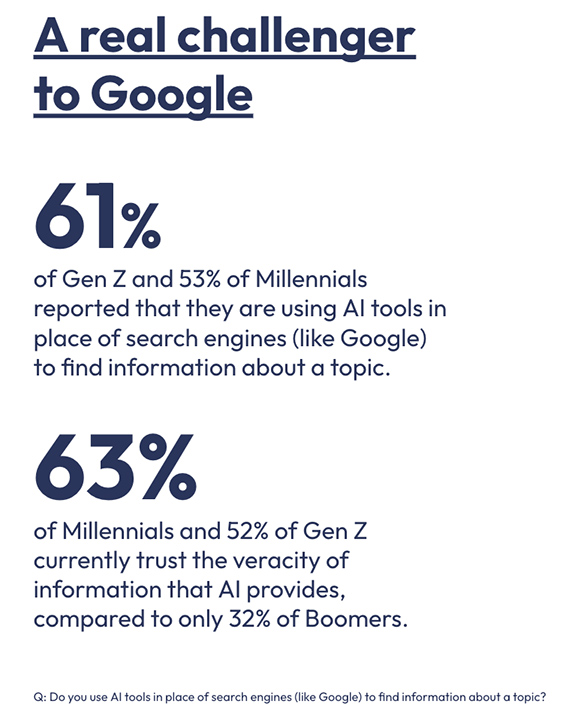
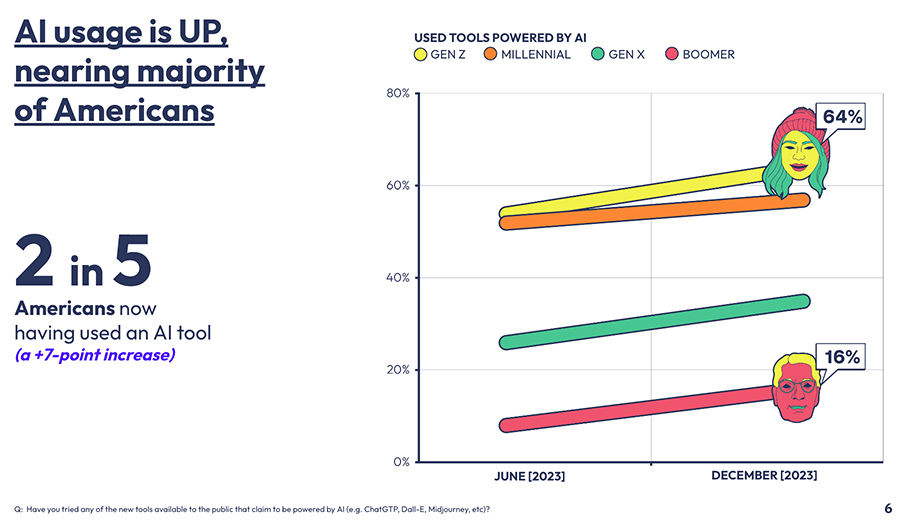
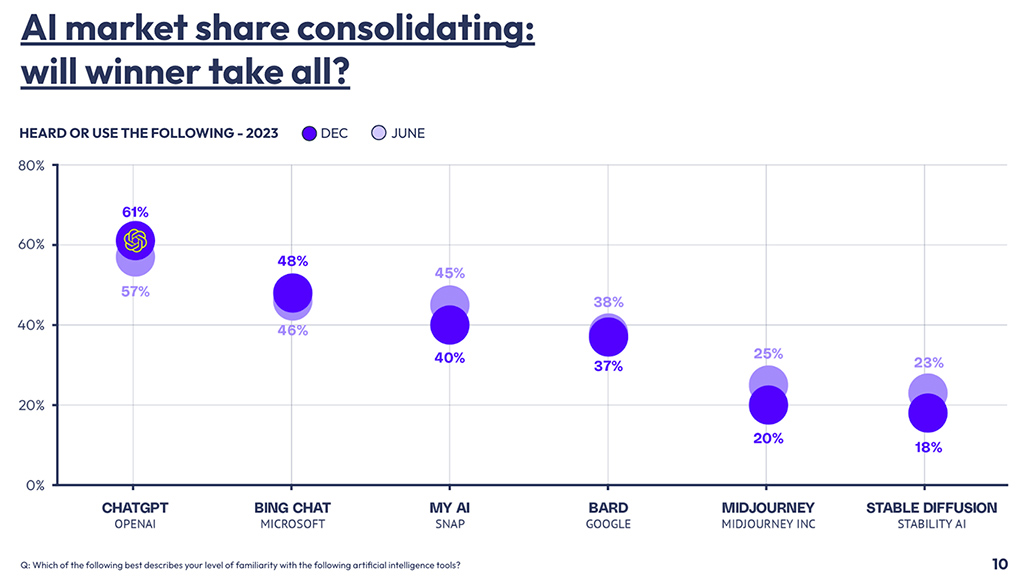
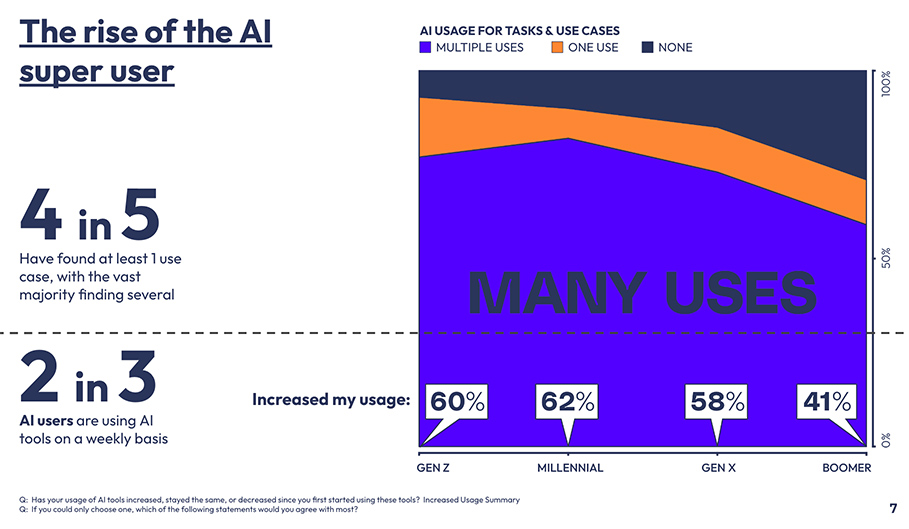
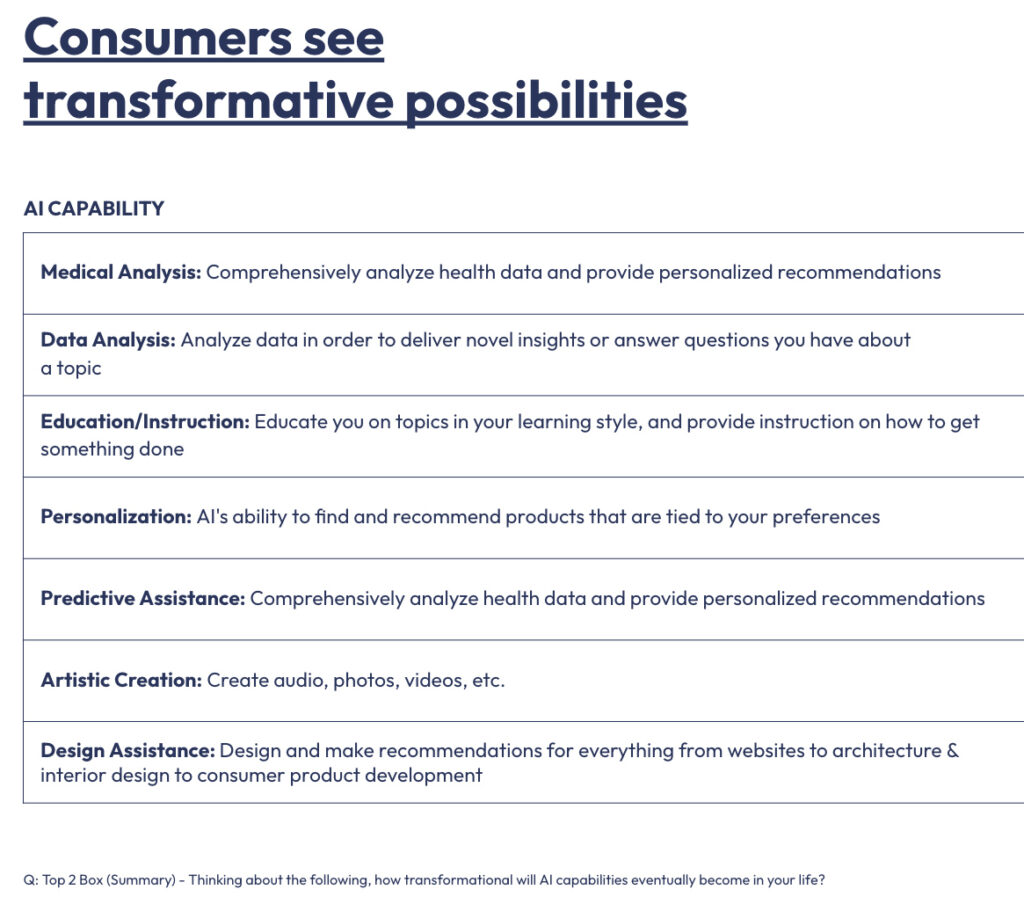
The Verge | What’s Next With AI | February 2024 | Consumer Survey


Microsoft AI creates talking deepfakes from single photo — from inavateonthenet.net


The Great Hall – where now with AI? It is not ‘Human Connection V Innovative Technology’ but ‘Human Connection + Innovative Technology’ — from donaldclarkplanb.blogspot.com by Donald Clark

The theme of the day was Human Connection V Innovative Technology. I see this a lot at conferences, setting up the human connection (social) against the machine (AI). I think this is ALL wrong. It is, and has always been a dialectic, human connection (social) PLUS the machine. Everyone had a smartphone, most use it for work, comms and social media. The binary between human and tech has long disappeared. 


Techno-Social Engineering: Why the Future May Not Be Human, TikTok’s Powerful ForYou Algorithm, & More — from by Misha Da Vinci

Things to consider as you dive into this edition:

  • As we increasingly depend on technology, how is it changing us?
  • In the interaction between humans and technology, who is adapting to whom?
  • Is the technology being built for humans, or are we being changed to fit into tech systems?
  • As time passes, will we become more like robots or the AI models we use?
  • Over the next 30 years, as we increasingly interact with technology, who or what will we become?

 
© 2025 | Daniel Christian