Why the World’s First Virtual Reality High School Changes Everything — from steve-grubbs.medium.com by Steve Grubs

Excerpts:

The recipe required key ingredients to happen. In addition to an accredited school to manage students, admissions and the for-credit learning, it also needed a platform. That’s where EngageVR comes in. There are other platforms that will ultimately host schools, perhaps AltSpace, Horizon or others, but the first is on Engage.
…
The bottom line is this: creators, coders, educators, entrepreneurs, investors, corporations, parents and students all played a role in finally bringing the first global virtual reality high school to life. It won’t be the last school to open in the metaverse, but to all those involved in this inaugural launch — the Neil Armstrongs of your age — a special tip of the hat today for having the vision and the willingness to launch a better and more equitable era of education.

Also see:

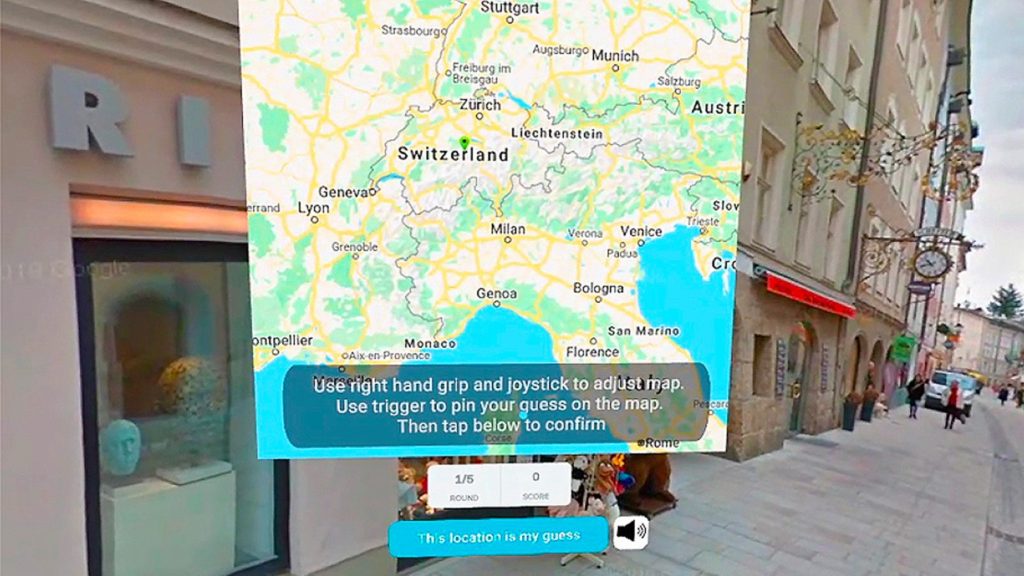
This is a snapshot from the Geo Guesser VR game


A whole new world: Education meets the metaverse — from brookings.edu by Kathy Hirsh-Pasek, Jennifer M. Zosh, Helen Shwe Hadani, Roberta Michnick Golinkoff, Kevin Clark, Chip Donohue, and Ellen Wartella

Excerpt:

The metaverse is upon us. Soon it will be as omnipresent as TikTok, Instagram, and Facebook (now Meta). As technology advances to bring us new immersive and imaginary worlds, how we educate children and prepare teachers must also advance to meet these new opportunities. When education lags the digital leaps, the technology rather than educators defines what counts as educational opportunity. This is largely what happened with the introduction of “educational” apps designed to be used on smartphones and tablets meant for adults. Today, as the metaverse infrastructure is still under construction, researchers, educators, policymakers, and digital designers have a chance to lead the way rather than get caught in the undertow. To leverage the potential of the metaverse as a 3D, global, interconnected, immersive, and real-time online space, we need new ways to connect the physical world with augmented and virtual reality (VR) experiences.

In the end, we challenge those creating educational products for the metaverse to partner with educators and scientists to ensure that children experience real human social interaction as they navigate virtual spaces, children’s agency is supported as they explore these spaces, and there is a real eye to diversity in the representation and access to what is created.  

Also relevant/see:

The metaverse can provide a whole new opportunity for education. Here’s what to consider — from fastcompany.com by Stephen Fromkin
The cofounder of Talespin looks at an existing immersive learning program that delivers results and says our next priority should be getting it into the hands of as many learners as possible through the metaverse.


Holograms? Check! Now what? — from blog.webex.com by Elizabeth Bieniek

Excerpt (emphasis DSC):

Two years ago, I wrote about the Future of Meetings in 2030 and hinted at an effort my team was building to make this a reality. Now, we have publicly unveiled Webex Hologram and brought the reality of a real-time, end-to-end holographic meeting solution to life.

With Webex Hologram, you can feel co-located with a colleague who is thousands of miles away. You can share real objects in incredible multi-dimensional detail and collaborate on 3D content to show perspective, share, and approve design changes in real-time, all from the comfort of your home workspace.

As the hype dies down, the focus on entirely virtual experiences in fanciful environments will abate and a resurgence in focus on augmented experiences—interjecting virtual content into the physical world around you for an enhanced experience that blends the best of physical and virtual—will emerge.

The ability to have curated information at one’s fingertips, still holds an incredible value prop that has yet to be realized. Applying AI to predict, find, and present this type of augmented information in both 2D and 3D formats will become incredibly useful. 

From DSC:
As I think of some of the categories that this posting about establishing a new kind of co-presence relates to, there are many relevant ones:

  • 21st century
  • 24x7x365
  • 3D
  • Audio/Visual (A/V)
  • Artificial Intelligence (AI)
  • Cloud-based
  • Collaboration/web-based collaboration
  • Intelligent tutoring
  • Law schools, legal, government
  • Learning, learning agents, learning ecosystems, Learning from the Living [Class] Room, learning spaces/hubs/pods
  • Libraries/librarians
  • K-12, higher education, corporate training
  • Metaverse
  • Online learning
  • Telelegal, telemedicine
  • Videoconferencing
  • Virtual courts, virtual tutoring, virtual field trips
  • Web3
 

Exploring Virtual Reality [VR] learning experiences in the classroom — from blog.neolms.com by Rachelle Dene Poth

Excerpt:

With the start of a new year, it is always a great time to explore new ideas or try some new methods that may be a bit different from what we have traditionally done. I always think it is a great opportunity to stretch ourselves professionally, especially after a break or during the spring months.

Finding ways to boost student engagement is important, and what I have found is that by using tools like Augmented Reality (AR) and Virtual Reality (VR), we can immerse students in unique and personalized learning experiences. The use of augmented and virtual reality has increased in K-12 and Higher Ed, especially during the past two years, as educators have sought new ways to facilitate learning and give students the chance to connect more with the content. The use of these technologies is increasing in the workplace, as well.

With all of these technologies, we now have endless opportunities to take learning beyond what has been a confined classroom “space” and access the entire world with the right devices.


Technology We Need: Documenting the complete Learner Record — from gettingsmart.com by Nate McClennen and Rebecca Midles

Key Points

  • Most innovative schools and a number of states have built Graduate Profiles/Learner Profiles and a handful have created K12 competency progressions that articulate pathways towards meeting the profile.
  • These learning organizations are using a learning management system (LMS) that does not accommodate comprehensive Learner Records, does not capture or report transparent growth to learners or their families and does not capture out-of-course learning experiences.
  • We issue a challenge to those building and creating solutions.

From DSC:
The above posting reminds me of the following graphic:


What Could Web3 Mean for Education? — from edsurge.com by Rebecca Koenig

Excerpts:

It’s an ecosystem that could transform schools—sites for teaching and learning—into marketplaces—sites for buying and selling.

That includes higher education. In the vein of MOOC platforms, Web3 systems could make it easier to “unbundle” college courses from degree programs and universities, enabling individuals to sign up for whatever classes they want and instructors to market their courses to consumers directly, says Vriti Saraf, a former charter school teacher and administrator and Teach for America alumna who founded a startup called k20 Educators.


From DSC:
How can we better get the word out to our learners regarding how they can maximize their Return On Investment (ROI) from their studying time and efforts?

Two ideas come to mind here:

  1. Place learning-related tips directly into our banners within our CMS’s and LMS’s
    and/or
  2. Link our banners to some other web pages/resources that provide such best practices and tips for our learners 

Let's put best practices on studying directly within our LMSs banners!

Or we could link to resources regarding best practices in studying!

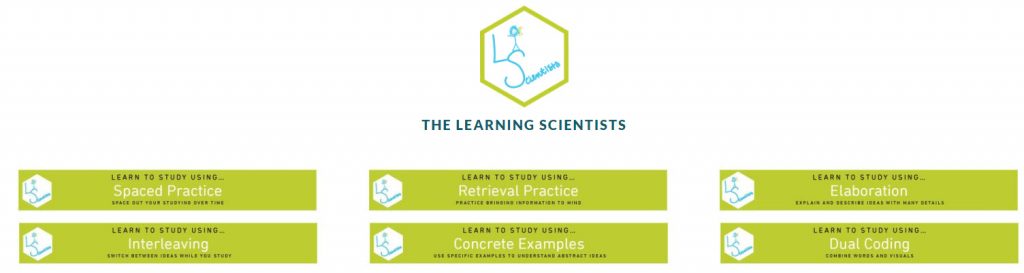
Along these lines, we should have 11″x17″ (or larger) posters like this plastered in every hallway of every learning space out there:

We should plaster these types of posters throughout our learning spaces!!!


Some would also add:

  • Active learning
  • Flipping the classroom
  • Providing individualized feedback
  • Metacognition (which was referenced in the first graphic above in regards to identifying gaps in one’s knowledge)
 

From DSC:
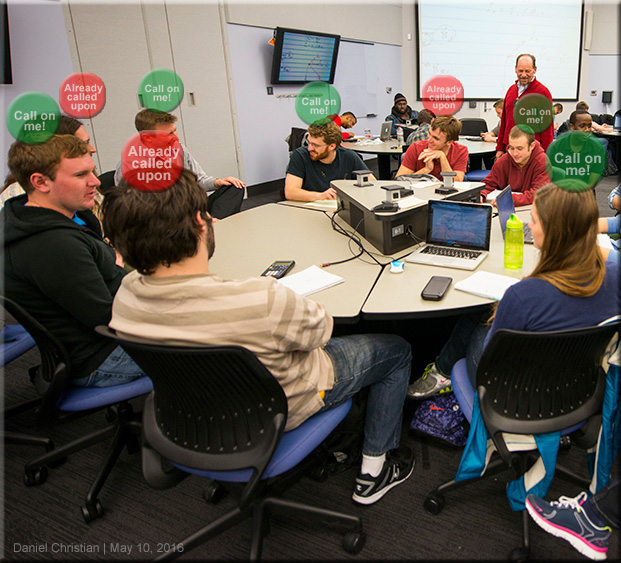
Here’s a brief example of what teaching & learning could like in the metaverse. I realize this is just one example, and there will likely be a variety of options and formats…but it’s an interesting thought experiment.


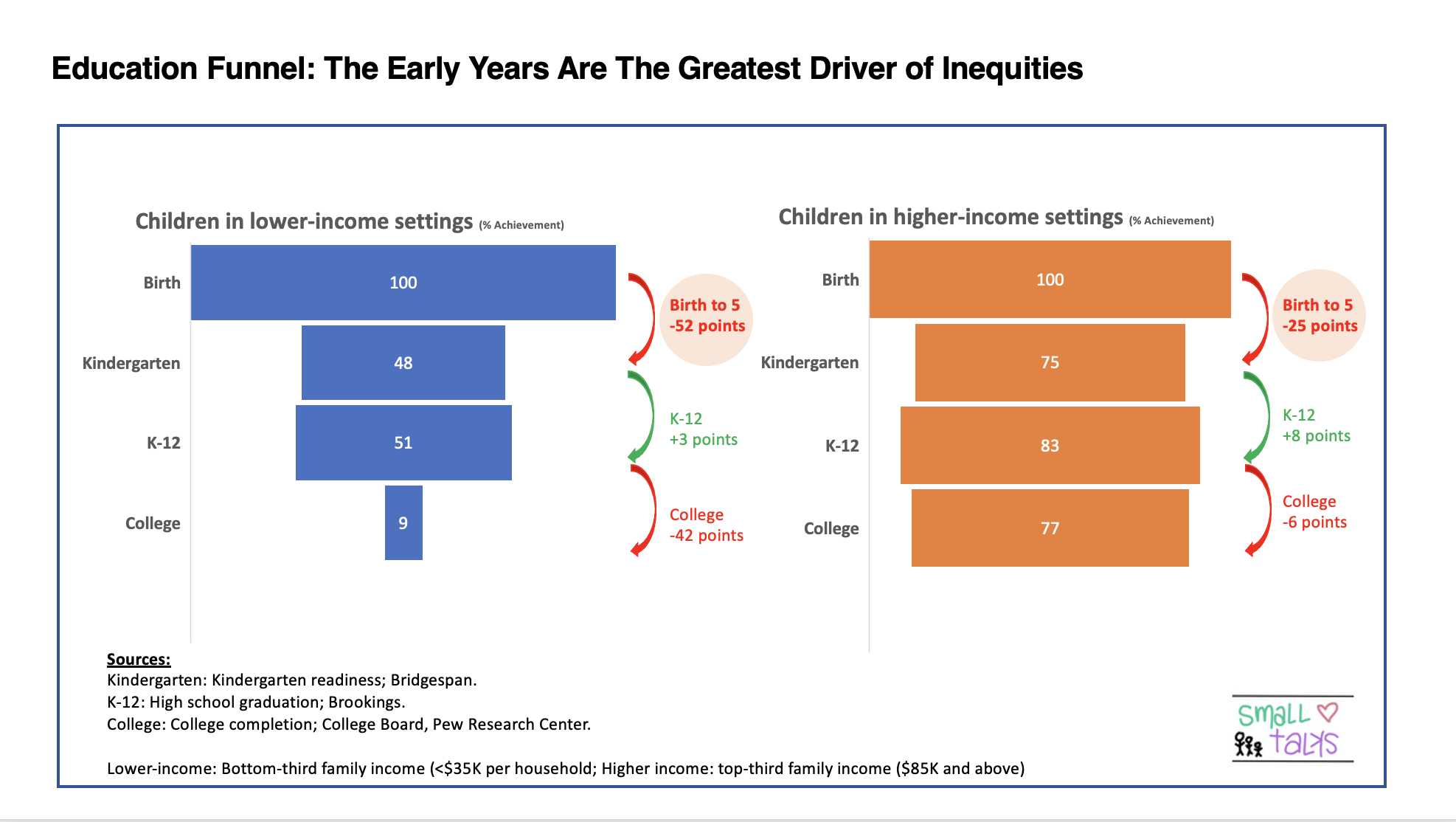
Education Has Been Hammering the Wrong Nail. We Have to Focus on the Early Years. — from edsurge.com by Isabelle Hau
This article is part of the guide Survival Mode: Educators Reflect on a Tough 2021 and Brace for the Future.

Excerpt:

Moreover, children who are expelled in preschool or early elementary are 10 times more likely to be incarcerated. Those later societal costs might have been avoided if the children are provided the nurturing attention in their early years to regulate their emotions and buffer toxic stress, which often results from exposure to trauma.
…
The value of the human potential unlocked by early education and social and emotional interventions is more difficult to assess: it is arguably limitless.


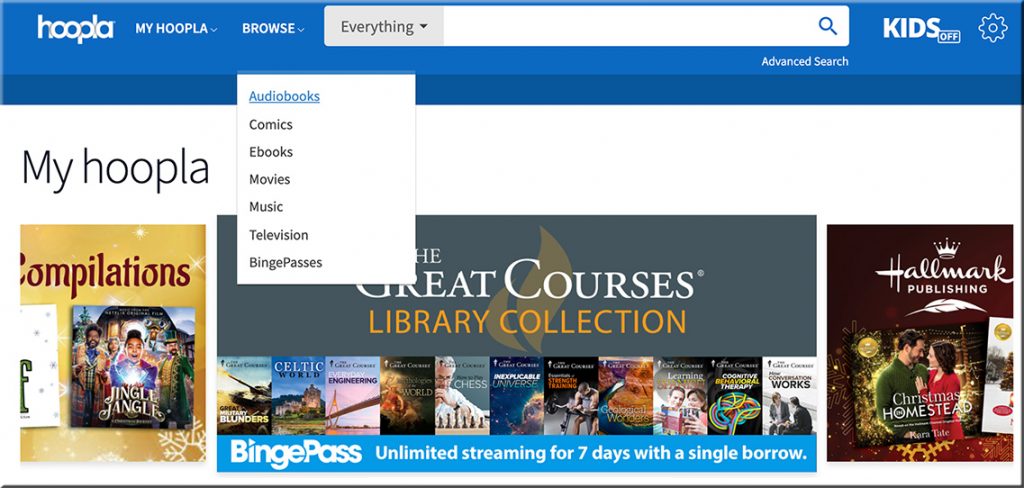
hoopla digital streaming service -- borrow books, music, movies, and more. Very cool service.

hoopla digital is a digital streaming service for library users to access eBooks, eAudiobooks, music, movies, and TV shows using portable devices like smartphones and tablets.

From DSC:
I downloaded this app yesterday and borrowed a classical Christmas album on the spot. Our local library gives us 10 items per month:

  • Books are available for 21 days
  • Videos are available for 72 hours
  • Music titles are available for 7 days

NOTE: hoopla is available on desktops, phones, tablets, Alexa devices, Rokus, Apple TVs, Fire TVs, and Android TVs.


The next age of the internet could suck power away from Big Tech while living on the same backbone as cryptocurrencies. Here’s what to know about Web3. — from businessinsider.com by Katie Canales

Excerpts (emphasis DSC):

  • Web3 is the next generation of the internet and will exist on the blockchain.
  • It will be decentralized, meaning it won’t be controlled entities like Facebook or Google.
  • Twitter, GameStop, Reddit, and VC firm a16z are all putting resources into building Web3.

…

One aspect of the metaverse is that users will hopefully be able to go virtually from platform to platform with one single account — just like we will in Web3. 

And NFTs, one-of-a-kind tokens representing your ownership of a virtual good, could be more easily bought and sold with cryptocurrencies within a space like Web3. 


From DSC:
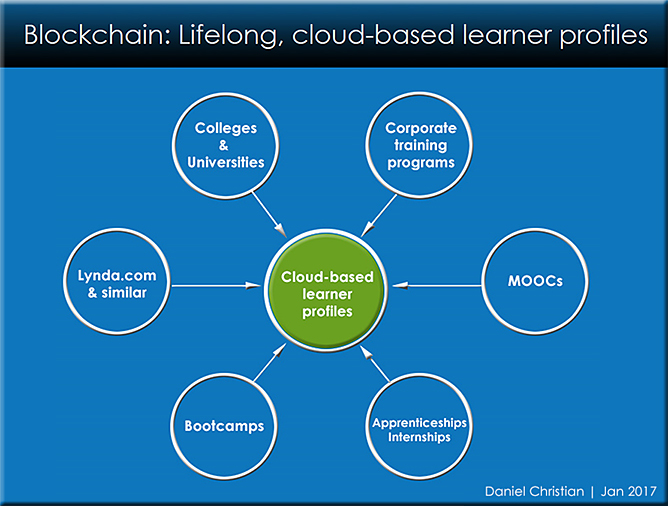
How might “Web3” translate into the future of lifelong learning? Here’s one vision/possibility:

There could be several entities and services feeding one's cloud-based learner profile

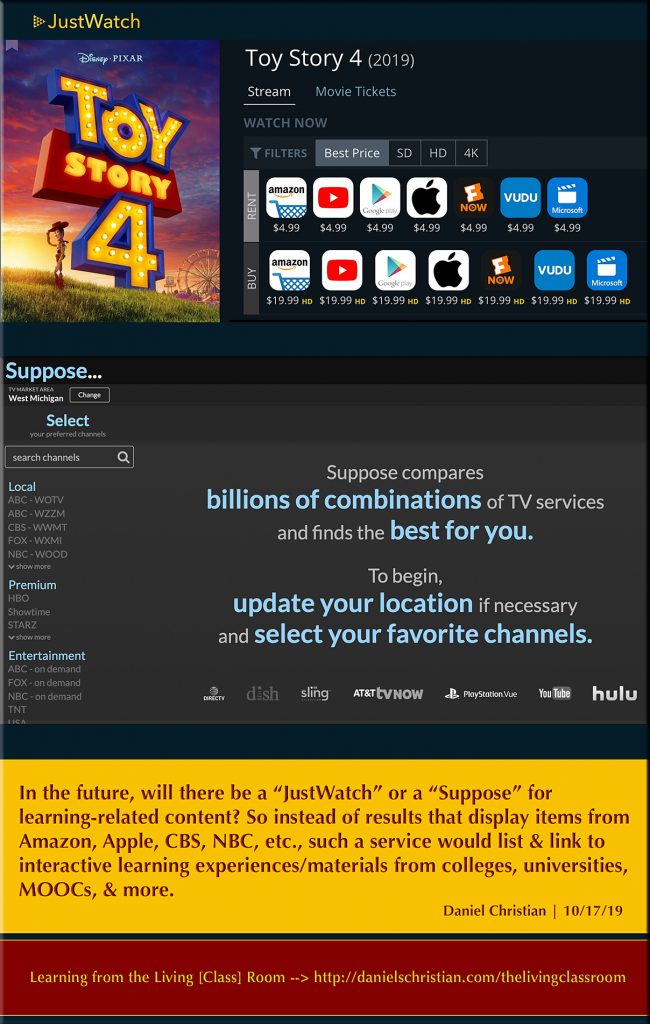
Each person would have a learner profile/account that could seamlessly log into multiple education/training providers’ platforms and services. The results of that learning could be stored in one’s cloud-based learner profile. This type of next-generation learning platform would still need subject matter experts, instructional designers, programmers, and other team members. But the focus would be on building skills — skills that an artificial intelligence-backed interface would demonstrate are currently being requested by the modern workplace.  This constantly-being-updated list of skills could then link to the learning-related experiences and resources that people could choose from in order to develop those skills.

The following vision/graphic also comes to my mind:

Learning from the living class room


The Humanities May Be Declining at Universities — But They’re Thriving on Zoom — from edsurge.com by Rebecca Koenig

Excerpt:

Throughout the pandemic, versions of this close-reading conversation have taken place week after week. Organized through new nonprofits and small startups including the Catherine Project, Night School Bar and Premise, they bring together adults who want to spend their free time talking to strangers about literature and philosophy.

It sounds at first like an ambitious book club—except for the fact that many of these seminars are organized and led by college professors, some so eager to participate that they do it for free.

“Mostly it’s a way for them to do a kind of teaching they can’t do at their regular jobs,” explains Zena Hitz, founder of the Catherine Project and a tutor (faculty member) at St. John’s College in Annapolis, Maryland.

From DSC:
I’ve often thought that online-based learning may be the thing that saves the liberal arts (i.e., available throughout one’s lifetime and would be far less expensive). It would be ironic though, as many liberal arts institutions have not been proponents of online-based learning.

 
© 2025 | Daniel Christian