Shares of two big online education stocks tank more than 10% as students use ChatGPT — from cnbc.com by Michelle Fox; via Robert Gibson on LinkedIn

The rapid rise of artificial intelligence appears to be taking a toll on the shares of online education companies Chegg and Coursera.

Both stocks sank by more than 10% on Tuesday after issuing disappointing guidance in part because of students using AI tools such as ChatGPT from OpenAI.


Synthetic Video & AI Professors — from drphilippahardman.substack.com by Dr. Philippa Hardman
Are we witnessing the emergence of a new, post-AI model of async online learning?

TLDR: by effectively tailoring the learning experience to the learner’s comprehension levels and preferred learning modes, AI can enhance the overall learning experience, leading to increased “stickiness” and higher rates of performance in assessments.
…
TLDR: AI enables us to scale responsive, personalised “always on” feedback and support in a way that might help to solve one of the most wicked problems of online async learning – isolation and, as a result, disengagement.
…
In the last year we have also seen the rise of an unprecedented number of “always on” AI tutors, built to provide coaching and feedback how and when learners need it.

Perhaps the most well-known example is Khan Academy’s Khanmigo and its GPT sidekick Tutor Me. We’re also seeing similar tools emerge in K12 and Higher Ed where AI is being used to extend the support and feedback provided for students beyond the physical classroom.


Our Guidance on School AI Guidance document has been updated — from stefanbauschard.substack.com by Stefan Bauschard

We’ve updated the free 72-page document we wrote to help schools design their own AI guidance policies.

There are a few key updates.

  1. Inclusion of Oklahoma and significant updates from North Carolina and Washington.
  2. More specifics on implementation — thanks NC and WA!
  3. A bit more on instructional redesign. Thanks to NC for getting this party started!

Creating a Culture Around AI: Thoughts and Decision-Making — from er.educause.edu by Courtney Plotts and Lorna Gonzalez

Given the potential ramifications of artificial intelligence (AI) diffusion on matters of diversity, equity, inclusion, and accessibility, now is the time for higher education institutions to adopt culturally aware, analytical decision-making processes, policies, and practices around AI tools selection and use.


The Digital Transformation Journey: Lessons For Lawyers Embracing AI — from abovethelaw.com by Olga V. Mack
The journey from the days of leather-bound law books to the digital age — and now toward an AI-driven future — offers valuable lessons for embracing change.

No One Will Miss The ‘Good Old Days’
I have yet to meet a lawyer nostalgic for the days of manually updating law reports or sifting through stacks of books for a single precedent. The convenience, speed, and breadth of digital research tools have made the practice of law more efficient and effective. As we move further into the AI era, the enhancements in predictive analytics, document automation, and legal research will make the “good old days” of even the early digital age seem quaint. The efficiencies and capabilities AI brings to the table are likely to become just as indispensable as online databases are today.

The Way We ‘Law’ Will Change For The Better
The ultimate goal of integrating AI into legal practice isn’t just to replace old methods with new ones; it’s to enhance our ability to serve justice, increase access to legal services, and improve the quality of our work. AI promises to automate mundane tasks, predict legal outcomes with greater accuracy, and unearth insights from vast data. These advancements will free us to focus more on the nuanced, human aspects of law — strategy, empathy, and ethical judgment.


AI to Help Double Legal Tech Market Over Five Years, Gartner Says — from news.bloomberglaw.com by Isabel Gottlieb (behind a paywall)

  • Tech to take up a bigger share of in-house legal spend
  • Generative AI boom has much longer to run

The legal tech market will expand to $50 billion by 2027, driven by the generative artificial intelligence boom, according to an analysis by market research firm Gartner Inc.

That growth, up from about $23 billion in 2022, will be driven by continued law firm spending on AI legal tech, as well as in-house departments allocating more of their overall budgets to technology, said Chris Audet, chief of research in Gartner’s legal, risk and compliance leaders practice. The market size prediction, released publicly on Thursday, comes from a late-2023 analysis for Gartner clients, and the 2022 market size comes from …


Legal Tech Market To See Huge Lift Off Thanks to GenAI — from digit.fyi by Elizabeth Greenberg

The global legal technology market has grown significantly in recent years and generative AI (GenAI) will accelerate this growth, meaning the market will reach $50 billion in value by 2027, according to Gartner.

“GenAI has huge potential for bringing more automation to the legal space,” said Chris Audet, chief of research in the Gartner for legal, risk & compliance leaders practice.

“Rapid GenAI developments, and the widespread availability of consumer tools such as OpenAI’s ChatGPT and Google’s Bard, will quickly increase the number of established legal technology use cases, in turn creating growing market conditions for an increasing number of legal-focused tools.”

“New technologies can fundamentally change the way legal organizations do business, and GenAI has enormous potential to do this,” an analyst at Gartner said.


Revolutionizing Legal Tech in 48 Hours — from law.stanford.edu by Monica Schreiber
At CodeX Hackathon, SLS Students Help Create Award-Winning AI Tools to Help Veterans and Streamline M&A

Disabled veterans seeking to file claims with the Veterans Administration are faced with multiple hurdles and reams of paperwork. Many vets resort to paying third-party companies thousands of dollars to help them with the process.

What if there were a way to streamline the claims process—to condense burdensome information gathering and data inputting into a linear, simplified set of tasks guided by a chatbot? How long would it take to roll out a tool that could accomplish that?

The answer: about 48 hours—at least for an interdisciplinary team of students from Stanford University’s schools of Law, Business, and Computer Science collaborating feverishly during Codex’s Large Language Model (LLM) Hackathon held recently on campus.


What If Your Law Firm Had A Blank Page For Legal Tech? — from artificiallawyer.com

f law firms had a blank page for legal technology and innovation, what would they do?

While organisations across all sectors are getting to grips with the opportunities and risks posed by genAI, forward-thinking law firm leaders are considering what it means for their businesses – today, tomorrow, and the day after tomorrow.

But some firms remain constrained by yesterday, due to legacy processes, ways of working and mindsets. To create the conditions for change, firms need to adopt a ‘blank page’ approach and review all areas of their businesses by asking: if we were starting afresh, how would we design the organisation to future-proof it to achieve transformative growth with genAI at the core?

From DSC:
This sentence reminds me of the power of culture:

But some firms remain constrained by yesterday, due to legacy processes, ways of working and mindsets.


Fresh Voices on Legal Tech with Sarah Glassmeyer — from legaltalknetwork.com by Dennis Kennedy, Tom Mighell, and Sarah Glassmeyer

What if, instead of tech competence being this scary, overwhelming thing, we showed lawyers how to engage with technology in a more lighthearted, even playful, way? The reality is—tech competency doesn’t have an endpoint, but the process of continuous learning shouldn’t be dull and confusing. Sarah Glassmeyer joins Dennis and Tom to talk about her perspectives on technology education for attorneys, the latest trends in the legal tech world and new AI developments, and growing your knowledge of technology by building on small skills, one at a time.
.



How Legal Technology Can Add Value to an M&A Practice — from lexology.com

Following is a primer on some of the A.I.-driven legal technologies, from contract review and automated due-diligence solutions to deal collaboration and closing-management tools, that can drive productivity and efficiency during the four phases of an M&A transaction, as well as enhance market insight and client service.


Smart(er) Glasses: Introducing New Ray-Ban | Meta Styles + Expanding Access to Meta AI with Vision — from meta.com

  • Share Your View on a Video Call
  • Meta AI Makes Your Smart Glasses Smarter
  • All In On AI-Powered Hardware

New Ray-Ban | Meta Smart Glasses Styles and Meta AI Updates — from about.fb.com

Takeaways

  • We’re expanding the Ray-Ban Meta smart glasses collection with new styles.
  • We’re adding video calling with WhatsApp and Messenger to share your view on a video call.
  • We’re rolling out Meta AI with Vision, so you can ask your glasses about what you’re seeing and get helpful information — completely hands-free.


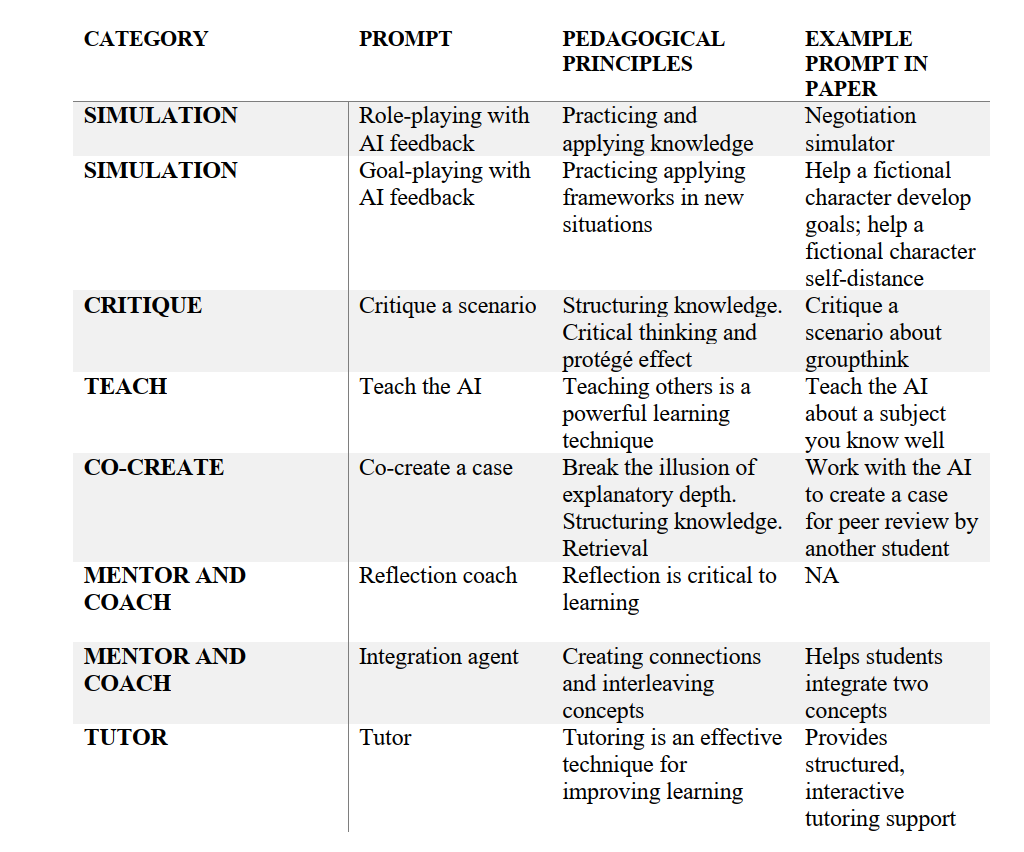
Instructors as Innovators: a Future-focused Approach to New AI Learning Opportunities, With Prompts –from papers.ssrn.com by Ethan R. Mollick and Lilach Mollick

Abstract

This paper explores how instructors can leverage generative AI to create personalized learning experiences for students that transform teaching and learning. We present a range of AI-based exercises that enable novel forms of practice and application including simulations, mentoring, coaching, and co-creation. For each type of exercise, we provide prompts that instructors can customize, along with guidance on classroom implementation, assessment, and risks to consider. We also provide blueprints, prompts that help instructors create their own original prompts. Instructors can leverage their content and pedagogical expertise to design these experiences, putting them in the role of builders and innovators. We argue that this instructor-driven approach has the potential to democratize the development of educational technology by enabling individual instructors to create AI exercises and tools tailored to their students’ needs. While the exercises in this paper are a starting point, not a definitive solutions, they demonstrate AI’s potential to expand what is possible in teaching and learning.


The AI Tools in Education Database — from aitoolsdirectory.notion.site; via George Siemens

Since AI in education has been moving at the speed of light, we built this AI Tools in Education database to keep track of the most recent AI tools in education and the changes that are happening every day. This database is intended to be a community resource for educators, researchers, students, and other edtech specialists looking to stay up to date. This is a living document, so be sure to come back for regular updates.


Another Workshop for Faculty and Staff — from aiedusimplified.substack.com by Lance Eaton
A recent workshop with some adjustments.

The day started out with a short talk about AI (slides). Some of it is my usual schtick where I do a bit of Q&A with folks around myths and misunderstandings of generative AI in order to establish some common ground. These are often useful both in setting the tone and giving folks a sense of how I come to explore generative AI: with a mixture of humor, concern, curiosity, and of course, cat pics.

From there, we launched into a series of mini-workshops where folks had time to first play around with some previously created prompts around teaching and learning before moving onto prompts for administrative work. The prompts and other support materials are in this Workshop Resource Document. The goal was to just get them into using one or more AI tools with some useful prompts so they can learn more about its capabilities.


The Edtech Insiders Rundown of ASU+GSV 2024 — from edtechinsiders.substack.com by by Sarah Morin, Alex Sarlin, and Ben Kornell
And more on Edtech Insiders+, upcoming events, Gauth, AI Reading Tutors, The Artificial Intelligence Interdisciplinary Institute, and TeachAI Policy Resources

Alex Sarlin

4. Everyone is Edtech Now
This year, in addition to investors, entrepreneurs, educators, school leaders, university admins, non-profits, publishers, and operators from countless edtech startups and incumbents, there were some serious big tech companies in attendance like Meta, Google, OpenAI, Microsoft, Amazon, Tiktok, and Canva. Additionally, a horde of management consultancies, workforce organizations, mental health orgs, and filmmakers were in attendance.

Edtech continues to expand as an industry category and everyone is getting involved.


Ep 18 | Rethinking Education, Lessons to Unlearn, Become a Generalist, & More — Ana Lorena Fábrega — from mishadavinci.substack.com by Misha da Vinci

It was such a delight to chat with Ana. She’s brilliant and passionate, a talented educator, and an advocate for better ways of learning for children and adults. We cover ways to transform schools so that students get real-world skills, learn resilience and how to embrace challenges, and are prepared for an unpredictable future. And we go hard on why we must keep learning no matter our age, become generalists, and leverage technology in order to adapt to the fast-changing world.

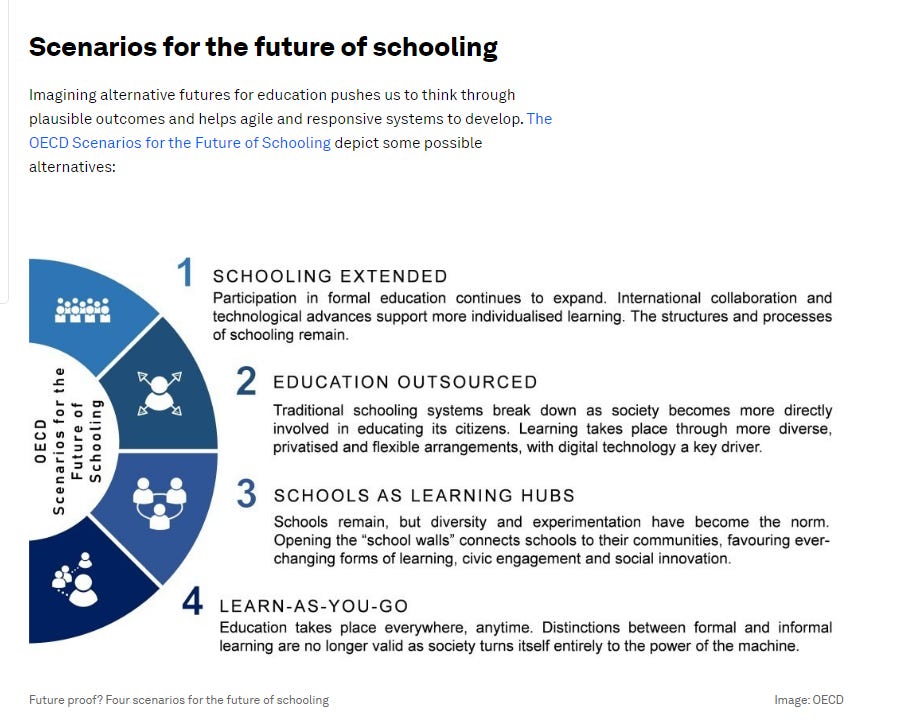
Misha also featured an item re: the future of schooling and it contained this graphic:


Texas is replacing thousands of human exam graders with AI — from theverge.com by Jess Weatherbed

The Texas Tribune reports an “automated scoring engine” that utilizes natural language processing — the technology that enables chatbots like OpenAI’s ChatGPT to understand and communicate with users — is being rolled out by the Texas Education Agency (TEA) to grade open-ended questions on the State of Texas Assessments of Academic Readiness (STAAR) exams. The agency is expecting the system to save $15–20 million per year by reducing the need for temporary human scorers, with plans to hire under 2,000 graders this year compared to the 6,000 required in 2023.


Debating About AI: An Easy Path to AI Awareness and Basic Literacy — from stefanbauschard.substack.com by Stefan Bauschard
If you are an organization committed to AI literacy, consider sponsoring some debate topics and/or debates next year and expose thousands of students to AI literacy.

Resolved: Teachers should integrate generative AI in their teaching and learning.

The topic is simple but raises an issue that students can connect with.

While helping my students prepare and judging debates, I saw students demonstrate an understanding of many key issues and controversies.

These included—

*AI writing assessment/grading
*Bias
*Bullying
*Cognitive load
*Costs of AI systems
*Declining test scores
*Deep fakes
*Differentiation
*Energy consumption
*Hallucinations
*Human-to-human connection
*Inequality and inequity in access
*Neurodiversity
*Personalized learning
*Privacy
*Regulation (lack thereof)
*The future of work and unemployment
*Saving teachers time
*Soft skills
*Standardized testing
*Student engagement
*Teacher awareness and AI training; training resource trade-offs
*Teacher crowd-out
*Transparency and explainability
*Writing detectors (students had an exaggerated sense of the workability of these tools).


AI Cheatsheet Collection — from enchanting-trader-463.notion.site; via George Siemens
Here are the 30 best AI Cheat Sheets/Guides we collected from the internet


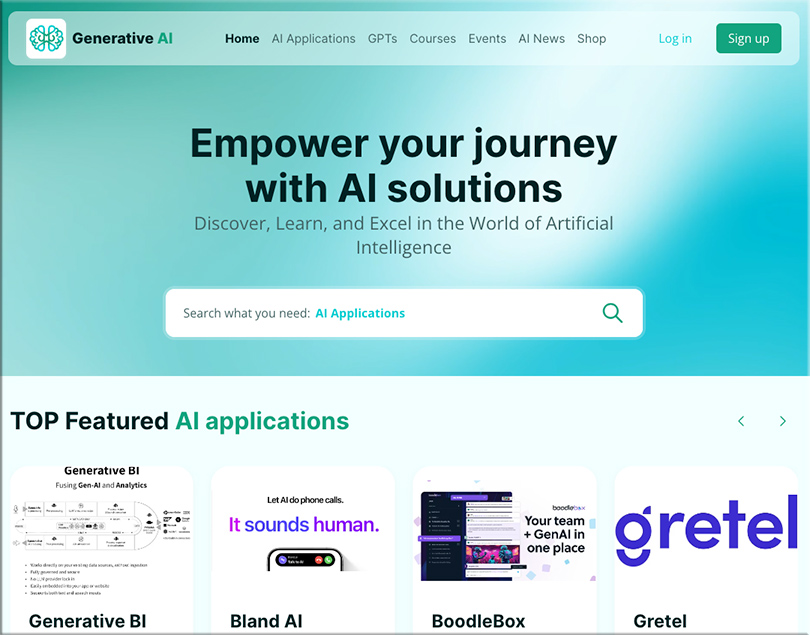
Generative AI: Empower your journey with AI solutions

Empower your journey with AI solutions. Discover, Learn, and Excel in the World of Artificial Intelligence


From The Rundown AI

The Rundown: Adobe just announced a new upgrade to its Firefly image generation model, bringing improvements in image quality, stylization capabilities, speed, and details – along with new AI integrations.

The details:

  • Firefly Image 3 promises new photorealistic quality, improved text rendering, better prompt understanding, and enhanced illustration capabilities.
  • New Structure and Style Reference tools allow users more precise control over generations.
  • Photoshop updates include an improved Generative Fill, Generate Image, Generate Similar, Generate Background, and Enhance Detail.
  • Adobe emphasized training the model on licensed content, with Firefly images automatically getting an AI metadata tag.

Why it matters…


Wonder Tools | Best apps for building good habits — from wondertools.substack.com by Jeremy Caplan and Andrea Engstrom

Most New Year’s resolutions are buried by now. April’s a great time for a fresh start. So today’s post focuses on simple, useful tools to help you revive a good habit or two. Read on for my favorite app for tracking habits and a few alternatives.

Streaks


Forbes 2024 AI 50 List: Top Artificial Intelligence Startups  — from forbes.com by Kenrick Cai

The artificial intelligence sector has never been more competitive. Forbes received some 1,900 submissions this year, more than double last year’s count. Applicants do not pay a fee to be considered and are judged for their business promise and technical usage of AI through a quantitative algorithm and qualitative judging panels. Companies are encouraged to share data on diversity, and our list aims to promote a more equitable startup ecosystem. But disparities remain sharp in the industry. Only 12 companies have women cofounders, five of whom serve as CEO, the same count as last year. For more, see our full package of coverage, including a detailed explanation of the list methodology, videos and analyses on trends in AI.


Adobe Previews Breakthrough AI Innovations to Advance Professional Video Workflows Within Adobe Premiere Pro — from news.adobe.com

  • New Generative AI video tools coming to Premiere Pro this year will streamline workflows and unlock new creative possibilities, from extending a shot to adding or removing objects in a scene
  • Adobe is developing a video model for Firefly, which will power video and audio editing workflows in Premiere Pro and enable anyone to create and ideate
    Adobe previews early explorations of bringing third-party generative AI models from OpenAI, Pika Labs and Runway directly into Premiere Pro, making it easy for customers to draw on the strengths of different models within the powerful workflows they use every day
  • AI-powered audio workflows in Premiere Pro are now generally available, making audio editing faster, easier and more intuitive

Also relevant see:


AI RESOURCES AND TEACHING (Kent State University) — from aiadvisoryboards.wordpress.com

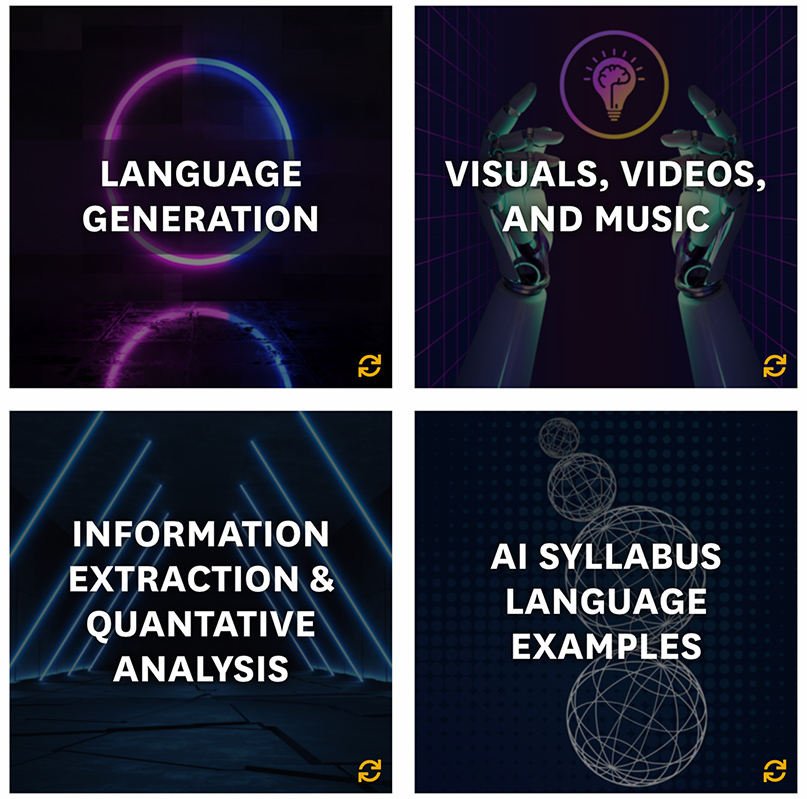
AI Resources and Teaching | Kent State University offers valuable resources for educators interested in incorporating artificial intelligence (AI) into their teaching practices. The university recognizes that the rapid emergence of AI tools presents both challenges and opportunities in higher education.

The AI Resources and Teaching page provides educators with information and guidance on various AI tools and their responsible use within and beyond the classroom. The page covers different areas of AI application, including language generation, visuals, videos, music, information extraction, quantitative analysis, and AI syllabus language examples.


A Cautionary AI Tale: Why IBM’s Dazzling Watson Supercomputer Made a Lousy Tutor — from the74million.org by Greg Toppo
With a new race underway to create the next teaching chatbot, IBM’s abandoned 5-year, $100M ed push offers lessons about AI’s promise and its limits.

For all its jaw-dropping power, Watson the computer overlord was a weak teacher. It couldn’t engage or motivate kids, inspire them to reach new heights or even keep them focused on the material — all qualities of the best mentors.

It’s a finding with some resonance to our current moment of AI-inspired doomscrolling about the future of humanity in a world of ascendant machines. “There are some things AI is actually very good for,” Nitta said, “but it’s not great as a replacement for humans.”

His five-year journey to essentially a dead-end could also prove instructive as ChatGPT and other programs like it fuel a renewed, multimillion-dollar experiment to, in essence, prove him wrong.
…

To be sure, AI can do sophisticated things such as generating quizzes from a class reading and editing student writing. But the idea that a machine or a chatbot can actually teach as a human can, he said, represents “a profound misunderstanding of what AI is actually capable of.” 

Nitta, who still holds deep respect for the Watson lab, admits, “We missed something important. At the heart of education, at the heart of any learning, is engagement. And that’s kind of the Holy Grail.”

From DSC:
This is why the vision that I’ve been tracking and working on has always said that HUMAN BEINGS will be necessary — they are key to realizing this vision. Along these lines, here’s a relevant quote:

Another crucial component of a new learning theory for the age of AI would be the cultivation of “blended intelligence.” This concept recognizes that the future of learning and work will involve the seamless integration of human and machine capabilities, and that learners must develop the skills and strategies needed to effectively collaborate with AI systems. Rather than viewing AI as a threat to human intelligence, a blended intelligence approach seeks to harness the complementary strengths of humans and machines, creating a symbiotic relationship that enhances the potential of both.

Per Alexander “Sasha” Sidorkin, Head of the National Institute on AI in Society at California State University Sacramento.


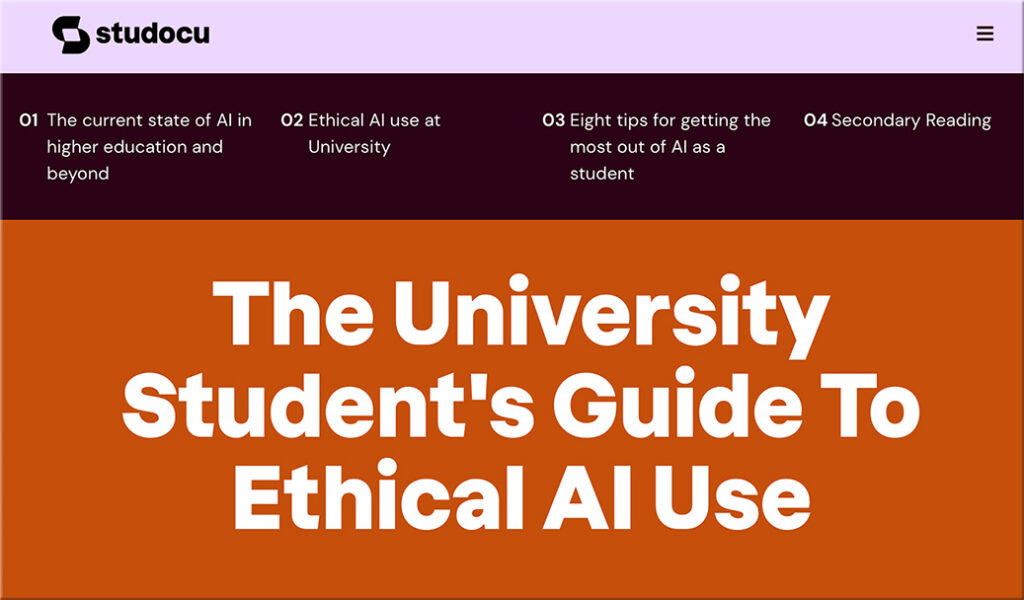
The University Student’s Guide To Ethical AI Use  — from studocu.com; with thanks to Jervise Penton at 6XD Media Group for this resource

This comprehensive guide offers:

  • Up-to-date statistics on the current state of AI in universities, how institutions and students are currently using artificial intelligence
  • An overview of popular AI tools used in universities and its limitations as a study tool
  • Tips on how to ethically use AI and how to maximize its capabilities for students
  • Current existing punishment and penalties for cheating using AI
  • A checklist of questions to ask yourself, before, during, and after an assignment to ensure ethical use

Some of the key facts you might find interesting are:

  • The total value of AI being used in education was estimated to reach $53.68 billion by the end of 2032.
  • 68% of students say using AI has impacted their academic performance positively.
  • Educators using AI tools say the technology helps speed up their grading process by as much as 75%.
 

[Report] The Top 100 AI for Work – April 2024 — from flexos.work; with thanks to Daan van Rossum for this resource
AI is helping us work up to 41% more effectively, according to recent Bain research. We review the platforms to consider for ourselves and our teams.

Following our AI Top 150, we spent the past few weeks analyzing data on the top AI platforms for work. This report shares key insights, including the AI tools you should consider adopting to work smarter, not harder.

While there is understandable concern about AI in the work context, the platforms in this list paint a different picture. It shows a future of work where people can do what humans are best suited for while offloading repetitive, digital tasks to AI.

This will fuel the notion that it’s not AI that takes your job but a supercharged human with an army of AI tools and agents. This should be a call to action for every working person and business leader reading this.


Colin Levy Discusses His New Book The Legal Tech Ecosystem & the Skills Needed to Succeed in Legal Tech — from tlpodcast.com by Chad Main

In the latest episode, legal tech guru and Head of Legal at contract lifecycle management company Malbek, Colin Levy, discusses his journey into legal tech and insights from his new book “The Legal Tech Ecosystem“. His book is a plainly written look into the legal tech field, emphasizing practical tools over AI hype and underscoring the importance of adaptability, risk-taking, and continuous learning in this evolving industry.

Also see:


Virtual Legal Advising: Mastering Business and Property Matters Online — from ventsmagazine.com by Abdus Subhan

Digital transformation has dominated every industry, the legal industry has not been left behind. Virtual law, or providing legal services through online platforms, has emerged as a vital resource for individuals and businesses alike. This article explores the idea of online professional legal advice, focusing on business and property matters. It serves as a thorough guide to navigating legal issues in these domains with the aid of virtual law.


Assessment of Student Learning Is Broken — from insidehighered.com by Zach Justus and Nik Janos
And generative AI is the thing that broke it, Zach Justus and Nik Janos write.

Generative artificial intelligence (AI) has broken higher education assessment. This has implications from the classroom to institutional accreditation. We are advocating for a one-year pause on assessment requirements from institutions and accreditation bodies.
…
Implications and Options
The data we are collecting right now are literally worthless. These same trends implicate all data gathered from December 2022 through the present. So, for instance, if you are conducting a five-year program review for institutional accreditation you should separate the data from before the fall 2022 term and evaluate it independently. Whether you are evaluating writing, STEM outputs, coding, or anything else, you are now looking at some combination of student/AI work. This will get even more confounding as AI tools become more powerful and are integrated into our existing production platforms like Microsoft Office and Google Workspace.

The burden of adapting to artificial intelligence has fallen to faculty, but we are not positioned or equipped to lead these conversations across stakeholder groups.


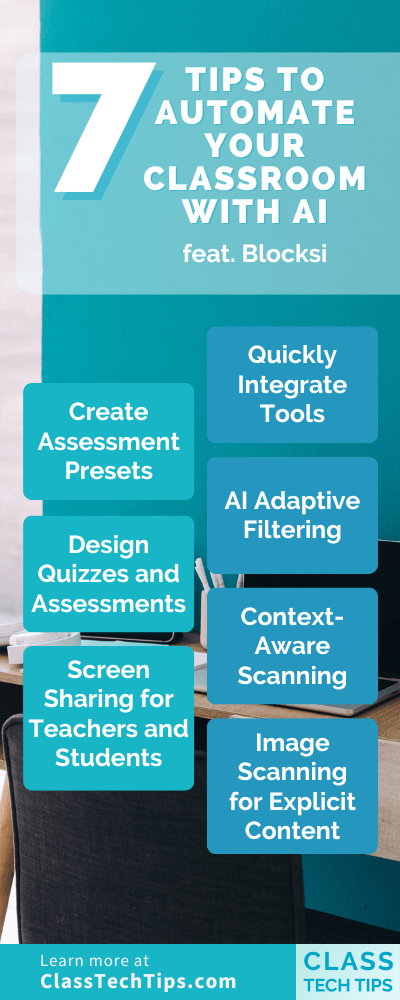
7 TIPS TO AUTOMATE YOUR CLASSROOM WITH AI — from classtechtips.com by Dr. Monica Burns
.


Do We Need Emotionally Intelligent AI? — from marcwatkins.substack.com by Marc Watkins

We keep breaking new ground in AI capabilities, and there seems little interest in asking if we should build the next model to be more life-like. You can now go to Hume.AI and have a conversation with an Empathetic Voice Interface. EVI is groundbreaking and extremely unnerving, but it is no more capable of genuine empathy than your toaster oven.
…

    • You can have the eLLM mimic a political campaign and call potential voters to sway their vote. You can do this ethically or program it to prey upon people with misinformation.
    • An eLLM can be used to socially engineer the public based on the values someone programs into it. Whose values, though?
    • Any company with a digital presence can use an eLLM like EVI to influence their customers. Imagine Alexa suddenly being able to empathize with you as a means to help persuade you to order more products.
    • An always-on, empathetic system can help a student stay on track to graduate or manipulate them into behaviors that erode their autonomy and free will.
    • Any foreign government could deploy such a system against a neighboring population and use empathy as a weapon to sow discontent within the opposing population.

From DSC:
Marc offers some solid thoughts that should make us all pause and reflect on what he’s saying. 

We can endlessly rationalize away the reasons why machines possessing such traits can be helpful, but where is the line that developers and users of such systems refuse to cross in this race to make machines more like us?

Marc Watkins

Along these lines, also see:

  • Student Chatbot Use ‘Could Be Increasing Loneliness’ — from insidehighered.com by Tom Williams
    Study finds students who rely on ChatGPT for academic tasks feel socially supported by artificial intelligence at the expense of their real-life relationships.

    …
    They found “evidence that while AI chatbots designed for information provision may be associated with student performance, when social support, psychological well-being, loneliness and sense of belonging are considered it has a net negative effect on achievement,” according to the paper published in Studies in Higher Education.

Editing your images with DALL·E — from help.openai.com via The Rundown
You can now edit images you create with DALL·E
 
© 2025 | Daniel Christian