Technology Trends for 2022 — from oreilly.com
What O’Reilly Learning Platform Usage Tells Us About Where the Industry Is Headed

Excerpt:

It’s been a year since our last report on the O’Reilly learning platform. Last year we cautioned against a “horse race” view of technology. That caution is worth remembering: focus on the horse race and the flashy news and you’ll miss the real stories. While new technologies may appear on the scene suddenly, the long, slow process of making things that work rarely attracts as much attention. We start with an explosion of fantastic achievements that seem like science fiction—imagine, GPT-3 can write stories!—but that burst of activity is followed by the process of putting that science fiction into production, of turning it into real products that work reliably, consistently, and fairly. AI is making that transition now; we can see it in our data. But what other transitions are in progress? What developments represent new ways of thinking, and what do those ways of thinking mean? What are the bigger changes shaping the future of software development and software architecture? This report is about those transitions.

O’Reilly Answers
We’re very excited about O’Reilly Answers, the newest product on the platform. Answers is an intelligent search that takes users directly to relevant content, whether that’s a paragraph from a book, a snippet of a video, or a block of code that answers a question. Rather than searching for an appropriate book or video and skimming through it, you can ask a specific question like “How do you flatten a list of lists in Python?” (a question I’ve asked several times). 


Also see:


Announcing the 2022 AI Index Report — from hai.stanford.edu by Stanford University

Excerpt/description:

Welcome to the Fifth Edition of the AI Index

The AI Index is an independent initiative at the Stanford Institute for Human-Centered Artificial Intelligence (HAI), led by the AI Index Steering Committee, an interdisciplinary group of experts from across academia and industry. The annual report trackscollatesdistills, and visualizes data relating to artificial intelligence, enabling decision-makers to take meaningful action to advance AI responsibly and ethically with humans in mind.

The 2022 AI Index report measures and evaluates the rapid rate of AI advancement from research and development to technical performance and ethics, the economy and education, AI policy and governance, and more. The latest edition includes data from a broad set of academic, private, and non-profit organizations as well as more self-collected data and original analysis than any previous editions.

Also relevant/see:

  • Andrew Ng predicts the next 10 years in AI — from venturebeat.com by George Anadiotis
  • Nvidia’s latest AI wizardry turns 2D photos into 3D scenes in milliseconds — from thenextweb.com by Thomas Macaulay
    The Polaroid of the future?
    Nvidia events are renowned for mixing technical bravado with splashes of showmanship — and this year’s GTC conference was no exception. The company ended a week that introduced a new enterprise GPU and an Arm-based “superchip” with a trademark flashy demo. Some 75 years after the world’s first instant photo captured the 3D world in a 2D picture…

Nvidia believes Instant NeRF could generate virtual worlds, capture video conferences in 3D, and reconstruct scenes for 3D maps.


Experts discuss gender diversity in the technology industry — from technative.io

Excerpt:

The International Day of Women and Girls in Science presents an opportunity for organisations in the technology industry to reflect on their efforts to correct gender imbalances

Fortunately, the industry does seem to be starting to move in the right direction. ONS statistics from last year reveal that the number of women working in technology has continued to increase, with 31% of UK tech jobs now held by women. While the industry is not there yet, it is starting to show signs of improvement.

With that in mind, a host of tech experts have shared their thoughts on the importance of encouraging young females to pursue STEM subjects in school, and some of the stereotypes that need to be banished in the sector:


2022 10 Breakthrough Technologies -- from the MIT Technology Review

2022 10 Breakthrough Technologies — from MIT Technology Review; with thanks to Mr. Paul Czarapata for posting this out on Twitter

About the list:

Our annual list of 10 Breakthrough Technologies highlights the technological advances that we think will have the biggest impact on the world in the years to come. Every year, our reporters and editors survey a wide range of topics, from medicine to energy to digital technologies, to select advances that will affect our lives in meaningful ways. Some have already started to change the way we live and work, while others are poised to do so soon. This is the 21st year we’ve published this list. We hope you enjoy this glimpse into the future.

Also relevant/see:


Accelerated Digital Skills and the ‘Bootcamp Boom’. — from holoniq.com
The market for accelerated digital skills is stepping up to a whole new level. Bootcamps, among others, are evolving rapidly to meet the opportunity.

Excerpt:

Tech Bootcamps re-skilled and up-skilled over 100,000 professionals globally in 2021, up from less than 20,000 in 2015. We expect this number to reach over 380,000 by 2025 representing over $3B of expenditure with significant upside as tech up-skilling models and modes overlap and converge. Governments, employers, universities and colleges everywhere are embracing rapid, high ROI training to build capacity in software, marketing, cyber and tech sales to drive their economies and growth.

Also from holoniq.com, see:

Also relevant/see:


The innovation imperative: Lessons from high-growth companies — from deloitte.com by Khalid Kark, Tim Smith, Lou DiLorenzo Jr, and Mike Bechtel
Successful innovation functions display unique characteristics, one of them being technology’s prominent role in driving these initiatives. How can CIOs and technology leaders seize this opportunity and ensure they play a pivotal role in their company’s growth?

Excerpt:

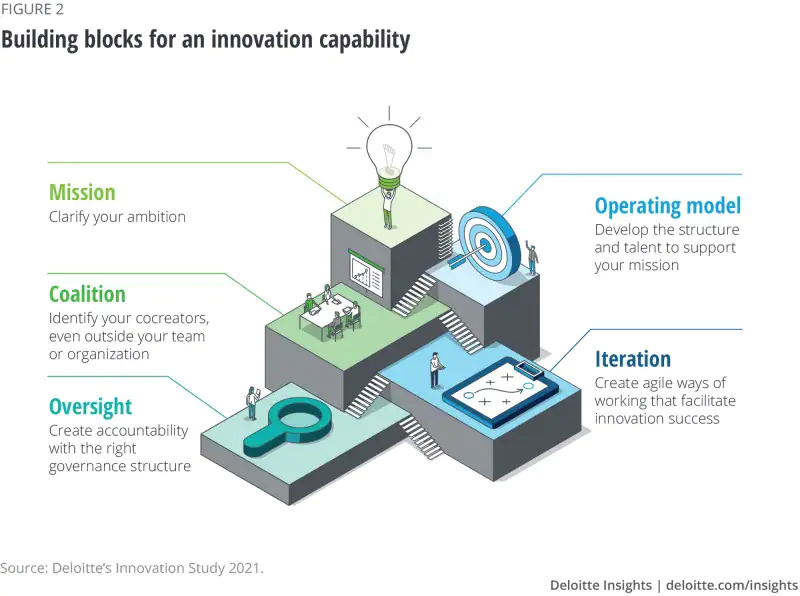
Many enterprises now have an innovation function, whether it be a team that is dedicated to seeking out new opportunities or an executive tasked with finding new ways of working. But according to the latest Deloitte survey, only half of innovation efforts are achieving their desired value, and companies with successful innovation functions have unique characteristics. The study revealed that most leading companies view innovation as something both new—which can include new applications of existing tools—and improved—which may mean simply a measurable advance over legacy alternatives. This covers everything from incremental gains to moonshots.

Five key differentiators of successful innovation programs

Also see Deloitte’s Ten Types of Innovations.


Google wants 20,000 Americans to have higher-paying jobs — from protocol.com by Amber Burton
Google’s Career Certificate Fund is aimed at creating a sustainable model of support for American job seekers.

Excerpt:

The program is designed for students to pay zero upfront costs for the three to six-month courses, but Google certificate students are expected to repay program costs if they land a job that pays at least $40,000 annually. While the exact amount of the monthly payments was not shared in the announcement, Google said it will be low no-interest payments for Social Finance to reinvest in the program for additional participants.

Our new $100 million Google Career Certificates Fund — from blog.google by Sundar Pichai

It’s another promising example of how the entire ecosystem — from private companies to nonprofits — can work together to help more Americans access economic opportunities.

Addendum on 3/2/22:


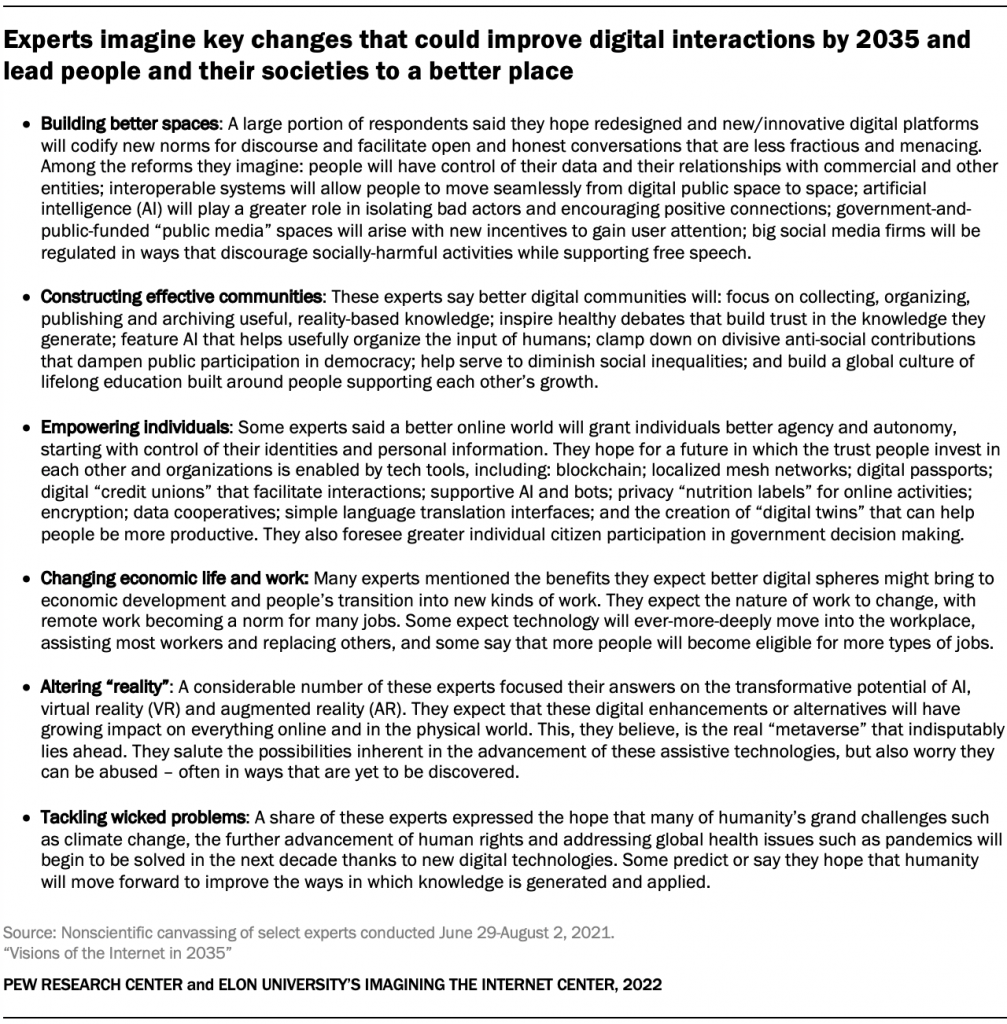
Visions of the Internet in 2035 — from pewresearch.org

Excerpt:

This report is the second of two analyzing the insights of hundreds of technology experts who responded in the summer of 2021 to a canvassing of their predictions about the evolution of online public spaces and their role in democracy in the coming years. In response to the primary research question, many said they expect that these forums will be significantly improved by 2035 if reformers, big technology firms, governments and activists tackle the problems created by misinformation, disinformation and toxic discourse. At the same time, they expressed ongoing concerns about the destructive forces in culture and technology that could continue to plague online life and disrupt beneficial change in the coming years.

Visions of the Internet in 2035


Tech skill gaps are decimating the global workforce and could put workers—and companies—in crisis — from fortune.com by Colin Lodewick

Excerpt:

The pandemic laid bare the value of digital skills when it forced people around the world to shift their lives even more online. Understanding and using technology is no longer a “nice-to-have” but essential for anyone looking for a job. Still, is the workforce ready for this change?

Salesforce released its Global Digital Skills Index* on Thursday, which offers insights into how the global workforce feels about the future of work in a world that continues to prioritize tech savviness and a digital-first mindset.

The report found 76% of respondents said they do not feel prepared for that future.

*An excerpt from that skills index:
Across 19 surveyed countries, workers scored 33 out of a possible 100 points on the Digital Skills Readiness Index across areas such as preparedness, access to learning resources, skill level, and participation in training. Workers in the United States fared slightly better at 36 out of 100 points.


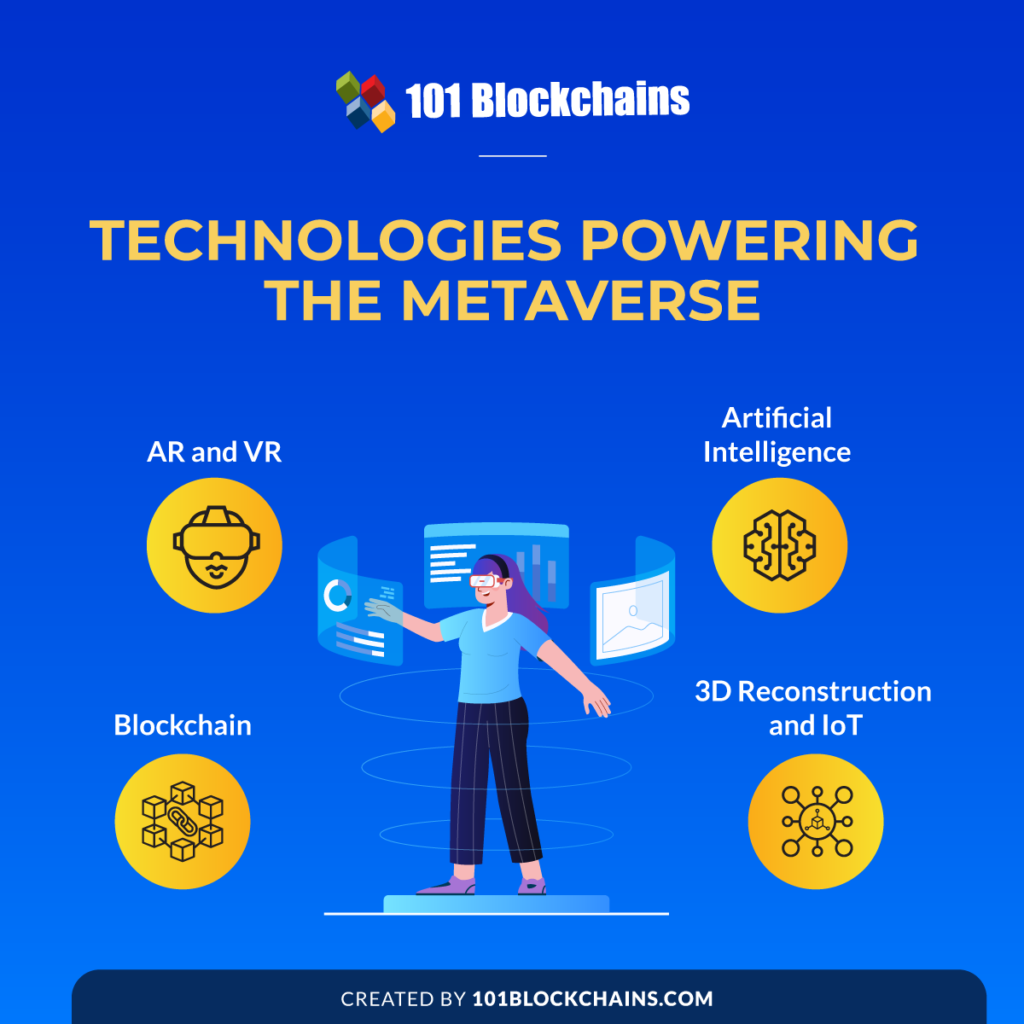
Why The Metaverse Is More Than Hype — from linkedin.com by Amy LaMeyer

Excerpt:

There are fundamental reasons why there is more to the current Metaverse enthusiasm than hype. As an angel investor, start-up advisor and fund manager, I’ve been studying this space for almost six years, have ridden the trough of disillusionment, and have seen the shift that promises signs of growth. In particular, it is not about the virtual worlds themselves,  although content is very important, it is the growth in the surrounding technology ecosystem that is supporting and signaling an accelerated virtual future. I’ll highlight those building blocks below.

Also relevant/see:

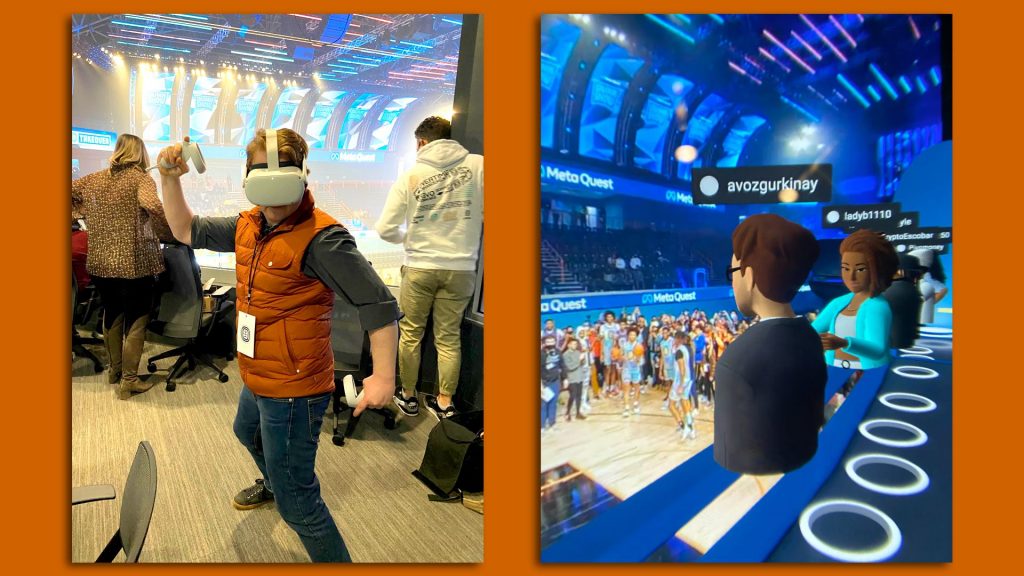
My night in the metaverse — from axios.com by Thomas Wheatley

Two images -- on left is person wearing a VR headset. On right side, image of being in a virtual place..

Excerpt:

Sports teams and brands are cannonballing into the metaverse, giving fans new ways to experience games in a way TV can’t offer.

Why it matters: Boosters of the virtual reality realm say the metaverse could create a new economy, new experiences, new relationships — essentially a whole new life, and a new revenue source for the brands, teams, bands and companies that want to be there when the crowds arrive.


The biggest tech trends of 2022, according to over 40 experts — from fastcompany.com by Mark Sullivan
Startup founders, Big Tech execs, VCs, and tech scholars offer their predictions on how Web3, the metaverse, and other emerging ideas will shape the next year.

We asked startup founders, Big Tech execs, VCs, scholars, and other experts to speculate on the coming year within their field of interest. Altogether, we collected more than 40 predictions about 2022. Together, they offer a smart composite look at the things we’re likely to be talking about by this time next year.


School in the metaverse: How tech and the pandemic are changing online education — from protocol.com by David Pierce
Coursera’s CEO and chief content officer see a future of learning that’s more on-demand, more personalized and more immersive.

Excerpts:

Maggioncalda and Coursera Chief Content Officer Betty Vandenbosch joined the Source Code podcast to talk about the chaotic state of online education, what’s next for corporate training, how softer skills are becoming part of the work curriculum, how learning might work in the metaverse and much more.

“We know, broadly, that learning will become more available, it’ll be more online, and there’ll be a lot more people learning for a lot more of their lives,” said Coursera CEO Jeff Maggioncalda.


Addendum on 1/10/22:

 
© 2025 | Daniel Christian