Global Education Market to reach $10 Trillion by 2030 — from holoniq.com

Excerpt:

The global education market is set to reach at least $10T by 2030 as population growth in developing markets fuels a massive expansion and technology drives unprecedented re-skilling and up-skilling in developed economies. The next decade will see an additional 350 million post secondary graduates and nearly 800 million more K12 graduates than today. Asia and Africa are the driving force behind the expansion. The world needs to add 1.5 million teachers per year on average, approaching 100 million in total in order to keep pace with the unprecedented changes ahead in education around the world.


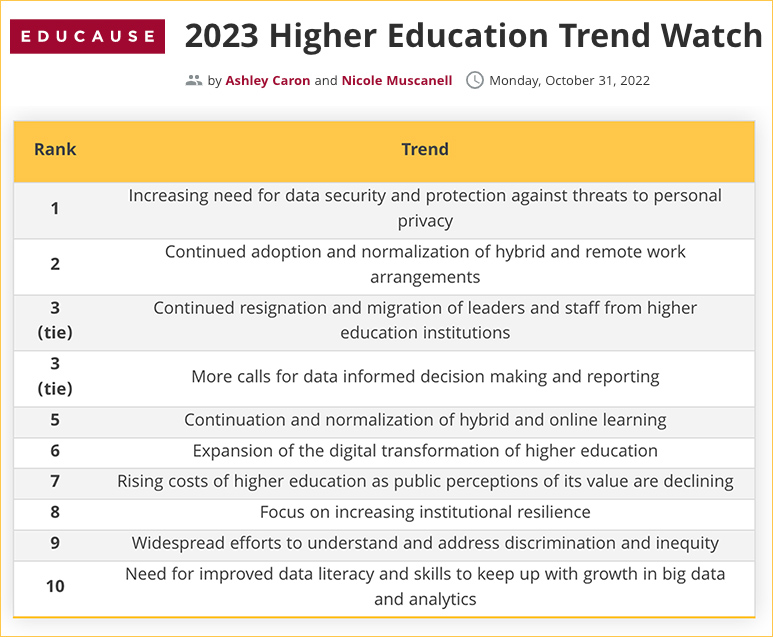
2023 Higher Education Trend Watch — from educause.edu

2023 Higher Education Trend Watch

Also see:

2023 Strategic Trends Glossary — from educause.edu

Excerpts:

  • Closer alignment of higher education with workforce needs and skills-based learning
  • Continuation and normalization of hybrid and online learning
  • Continued adoption and normalization of hybrid and remote work arrangements
  • Continued resignation and migration of leaders and staff from higher education institutions
  • Declining public funding for higher education
  • …and more
 

New Report from Global Google Research Project Considers the ‘Future of Education’ — from thejournal.com by Kristal Kuykendall
Global Trends and ‘Preparing for the Future’ Highlighted in First of Three Reports

As we march towards a radically different future, what should the role of education be and how might it look? To begin to answer this question, we collaborated with research partner Canvas8 to conduct a global study in 24 countries that synthesizes insights from 94 educational experts, two years of peer-reviewed academic literature, and a media narrative analysis across the education sector.

Excerpts:

Google for Education has released the first report from a massive, two-year study considering the role of education in a “radically different future,” and what that might look like.

Part 1 of Google’s Future of Education report focuses on big-picture themes seen as most likely to impact education and the future workforce in the coming years and decades.
…
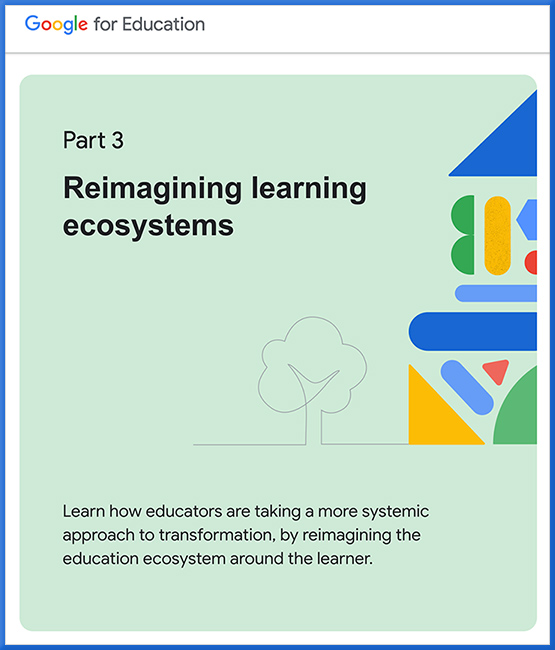
Parts two and three of the Future of Education project will be released in the coming months, said Magiera, who was a K–12 classroom teacher for a decade in New York City and Chicago before working as a district leader, a chief information officer, and as an advisor for the Obama administration’s ed tech planning efforts. Part two will focus on “evolving how we teach and learn” and part three will be about “reimagining the learning ecosystems and the spaces,” she said.

Reimagining Learning Ecosystems -- by Google for Education


From DSC:
I’d like to thank Sarah Huibregtse for her post out on LinkedIn where she commented on and referenced the following item from Nicholas Thompson (CEO at The Atlantic):


Also relevant/see:


Also related/see the following item which I thank Sam DeBrule’s Machine Learnings newsletter for:


Also, somewhat related, see the following item that Julie Johnston mentioned out on LinkedIn:

Top 10 conversational AI trends for 2023 — from linkedin.com by Kane Simms and  Tim Holve, Tarren Corbett-Drummond, Arte Merritt, and Kevin Fredrick.

Excerpt:

In 2023, businesses will realise that, in order to get out of FAQ Land, they need to synchronise business systems together to deliver personalised transactional experiences for customers.

“We finally have the technologies to do all the things we imagined 10 years ago.”


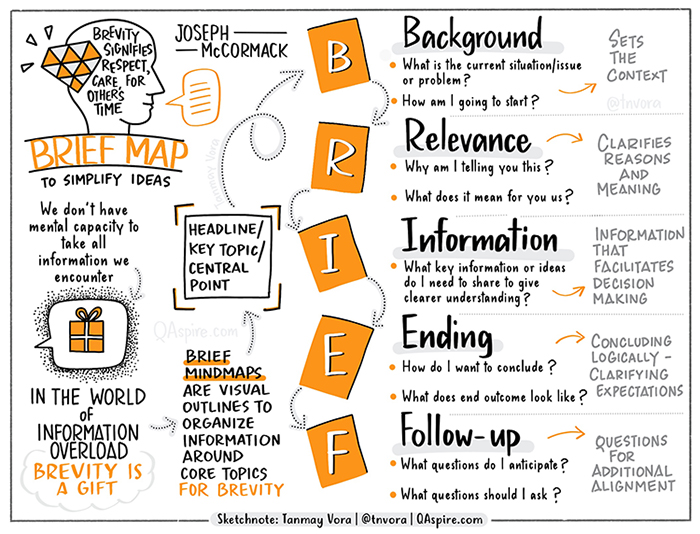
How to Communicate with Brevity — from qaspire.com by Tanmay Vora; with thanks to Roberto Ferraro for this resource
We live in a world of information overload. In such a world, communicating with brevity is a gift to others.


‘Press Play’ Isn’t a Teaching Strategy: Why Educators Need New Methods for Video — from edsurge.com by Reed Dickson

Excerpt:

As I prepared to teach my first educational videography course earlier this year, I found that we lacked a common vocabulary for talking about how we design learning with video in mind. Since then, I’ve been advancing the term “video paratext” to reflect the myriad ways that we design educational guidance, prompts, activities or interactive elements to surround or be included within a video.

I pulled the word “paratext” from the field of poetry translation because, personally, I love the “paratext” that precedes or follows a poem—or even interrupts it. At poetry readings in particular, I lean into the words that a poet shares before or after reading each poem. Paratext helps me connect with and make sense of the poem.

Likewise, I ask educators to consider how to help students connect with videos through various prompts and activities that surround, or are included within, the video.” Might such “paratext” inspire students to take a closer look at a video they’ve watched, the way I might want to reread a poem to see how it works or what it means?

Resources for Teachers of Psychology — from teachpsych.org; with thanks to Christine Renner for this resource

Excerpt:

The Society for the Teaching of Psychology (STP) curates and distributes teaching and advising materials to all teachers of psychology (e.g., 4-year instructors, 2-year instructors, and high-school teachers).  The resources available below are documents that can pertain to any aspect of teaching. (NOTE:  Syllabi have their own listings under Project Syllabus.)

Instructors have generously shared classroom activities, annotated bibliographies, film guides, lab manuals, advising aids, textbook compendiums, and much more. Notations indicate those that developed from Instructional Resource Awards.

Strategies for Teaching Quantitative Concepts Online — from facultyecommons.com

Excerpt:

Collaborative learning is particularly helpful in statistics education. Technology can facilitate and promote collaborative exploration and inquiry allowing students to generate their own knowledge of a concept or new method in a constructivist learning environment. Group interactions have an important role in questioning and critiquing individual perspectives in a mutually supportive fashion so that a clear understanding of statistical concepts energy and knowledge of statistical ideas develops. Research has shown that it is important to discuss the output and results with the students and require them to provide explanations and justifications for the conclusions they draw from the output and to be able to communicate their conclusions effectively.

Worksheet to WOW: 10 ways to upgrade your worksheet — from ditchthattextbook.com by Matt Miller

Excerpt:

Can we turn a worksheet into a “WOW” experience?

We’re about to find out! Here are 10 ways your classroom technology can help transform your worksheet to “WOW” …

Which Blended Learning Model Should I Use? — from catlintucker.com by Dr. Catlin Tucker

Excerpts:

I get this question all the time in coaching and training sessions! First, let’s be clear about the definition of blended learning.

Blended learning is the combination of active, engaged learning online with active, engaged learning offline to provide students with more control over the time, place, pace, and path of their learning.
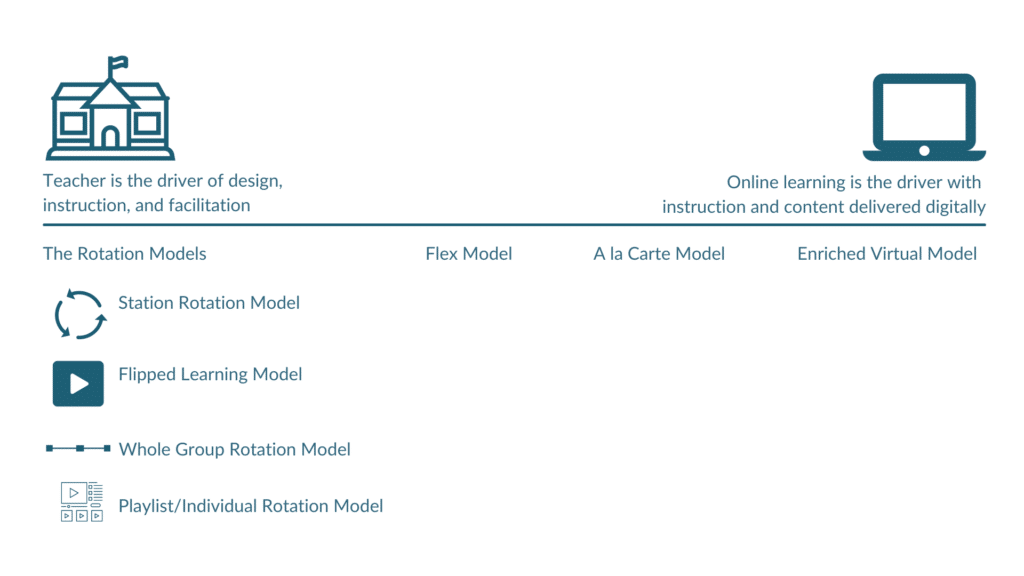
This graphic shows the different rotation models

Creating Classroom Camaraderie to Promote Learning: 3 Strategies — from scholarlyteacher.com by Donna Downs

Key Statement: Intentionally developing a welcoming classroom environment increases student engagement and cultivates meaningful classroom relationships.

Keywords: engagement, motivation, relationship

Although researchers suggest flipped classrooms, engaging humor, and online polling, I have found taking a more personal approach to engagement to be successful, specifically the following three guidelines: show your human side, share your professional experiences and wisdom, and admit your mistakes.


Somewhat related:

How to Receive Feedback With a Growth Mindset — from neuroleadership.com by the NeuroLeadership Institute

Excerpt:

A growth mindset can help us view feedback as a good thing, which ultimately makes performance reviews more effective. After all, we want to learn, grow, and improve our skills. People with a fixed mindset view criticism as an attack on their self-worth. Growth mindset, by contrast, leaves room for the possibility that we all have blind spots — and that your manager may have valuable insights on how you can hone your skills. Feedback, in other words, isn’t personal. A manager may critique our performance, but a growth mindset helps keep us from tying our performance to our identity.


Understanding the Overlap Between UDL and Digital Accessibility — from boia.org

Excerpt:

Implementing UDL with a Focus on Accessibility
UDL is a proven methodology that benefits all students, but when instructors embrace universal design, they need to consider how their decisions will affect students with disabilities.

Some key considerations to keep in mind:

  • Instructional materials should not require a certain type of sensory perception.
  • A presentation that includes images should have accurate alternative text (also called alt text) for those images.
  • Transcripts and captions should be provided for all audio content.
  • Color alone should not be used to convey information, since some students may not perceive color (or have different cultural understandings of colors).
  • Student presentations should also follow accessibility guidelines. This increases the student’s workload, but it’s an excellent opportunity to teach the importance of accessibility.
 

Homeschooling high school with interest-led learning — from raisinglifelonglearners.com by Colleen Kessler

Excerpt:

There is a misconception that interest-led learning is not appropriate for a high school education in your homeschool. The good news is that all the same benefits of interest-led learning still apply in the middle and high school years.
…
Think of an interest-led homeschool as one that functions more as a college than a high school. Just as a college student declares a major and the bulk of their study is in that topic area with supplemental general education, your interest-led high school can function the same way.

Allowing interests to guide the educational path you take in your high school has tremendous benefits including:

    • Less resistance
    • Less learner anxiety
    • Increased self-confidence in learning
    • More in-depth studies in topics of interest
    • Self-motivated learning that can be applied in later college and career settings
 

TL;DR: Women prefer text contributions over talk in remote classes — from highereddive.com by Laura Spitalniak (BTW, TL;DR: is short for “too long; didn’t read”)

Dive Brief (emphasis DSC):

  • Female students show a stronger preference for contributing to remote classes via text chat than their male counterparts, according to peer-reviewed research published in PLOS One, an open-access journal.
  • Researchers also found all students were more likely to use the chat function to support or amplify their peers’ comments than to diminish them.
  • Given these findings, the researchers suggested incorporating text chats into class discussions could boost female participation in large introductory science classrooms, where women are less likely to participate than men.
 

10 Must Read Books for Learning Designers — from linkedin.com by Amit Garg

Excerpt:

From the 45+ #books that I’ve read in last 2 years here are my top 10 recommendations for #learningdesigners or anyone in #learninganddevelopment

Speaking of recommended books (but from a more technical perspective this time), also see:

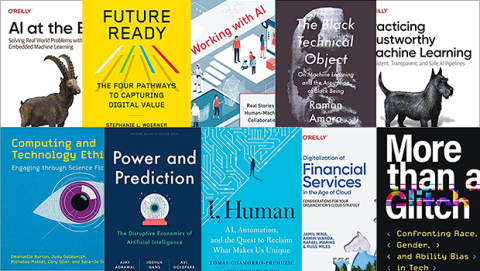
10 must-read tech books for 2023 — from enterprisersproject.com by Katie Sanders (Editorial Team)
Get new thinking on the technologies of tomorrow – from AI to cloud and edge – and the related challenges for leaders

10 must-read tech books for 2023 -- from enterprisersproject.com by Katie Sanders


Learning in the brain — from sites.google.com by Efrat Furst; with thanks to 3-Star Learning Experiences for this resource

Excerpts:

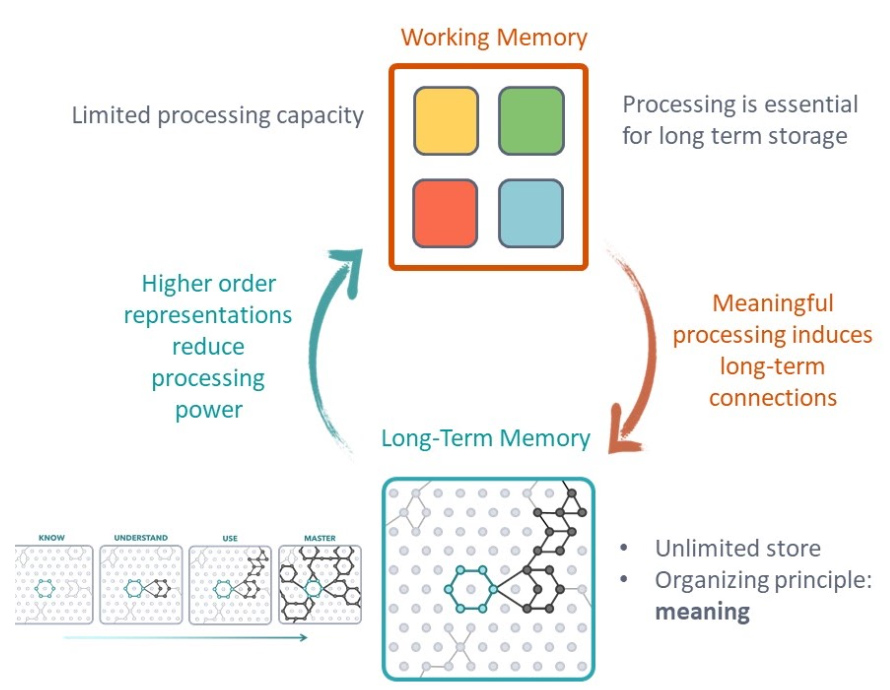
Think of working memory as the reception counter to a huge archive.

To summarize, working memory processing resources are highly limited, and yet meaningful processing is essential for storage in long-term memory. It is therefore important to use these resources effectively when learning. There are many tested and proven effective teaching strategies, but a question that often comes up is when to apply each strategy for the best results?

Long-term memory and working memory interactions


edX Announces 2022 edX Prize Finalists for Innovation in Online Teaching — from prnewswire.com by 2U, Inc.

Excerpt:

The 2022 finalists include (sorted alphabetically by institution):

Other recent items from GSV:

“The reason TikTok is so popular is because it’s short-form and engaging; the opposite to the usual two-hour training course.

“Spacing out micro-learning chunks across the course of a year gives you a much better chance of retaining it and actually acting on it. That’s why GoodCourse is built to engage a Gen Z workforce.”


Homeschooling High School With Interest-Led Learning — from raisinglifelonglearners.com by Colleen Kessler

Excerpt:

Think of an interest-led homeschool as one that functions more as a college than a high school. Just as a college student declares a major and the bulk of their study is in that topic area with supplemental general education, your interest-led high school can function the same way.

Also relevant/see:

This approach allows you to help them develop their interests, communicate that you see their interests as valuable, and it gives your child the chance to follow their own paths of interest. It’s an outstanding way to facilitate a self-motivated, self-directed learner and thinker. 


Stephen Downes’ reflection on “Every Student Needs a Learning Coach” — from by Nate McClennen

Excerpt (from Stephen):

The key to making this happen, I think, is to reorganize local schooling to take advantage of online (and increasingly, AI-generated) learning services, allowing in-person educators to adopt this coaching function.

Key points from Nate’s article:

  • As learning becomes more personalized, learning opportunities expanded and unbounded, and learning science research more robust, an updated and revised advisory role is more important than ever.
  • Redefining the coaching/mentor/advisor role as the educational landscape shifts is critical to ensure success for every learner.

Also relevant to using AI in education/see:


Can a Group of MIT Professors Turn a White Paper Into a New Kind of College? — from edsurge.com by Jeffrey R. Young

Excerpt:

A group of professors at Massachusetts Institute of Technology dropped a provocative white paper in September that proposed a new kind of college that would address some of the growing public skepticism of higher education. This week, they took the next step toward bringing their vision from idea to reality.

That next step was holding a virtual forum that brought together a who’s who of college innovation leaders, including presidents of experimental colleges, professors known for novel teaching practices and critical observers of the higher education space.

The MIT professors who authored the white paper tried to make clear that even though they’re from an elite university, they do not have all the answers. Their white paper takes pains to describe itself as a draft framework and to invite input from players across the education ecosystem so they can revise and improve the plan.

IDEAS FOR DESIGNING An Affordable New Educational Institution

IDEAS FOR DESIGNING An Affordable New Educational Institution

The goal of this document is simply to propose some principles and ideas that we hope will lay the groundwork for the future, for an education that will be both more affordable and more effective.
…
Promotions and titles will be much more closely tied to educational performance—quality, commitment, outcomes, and innovation—than to research outcomes. 

 
© 2025 | Daniel Christian