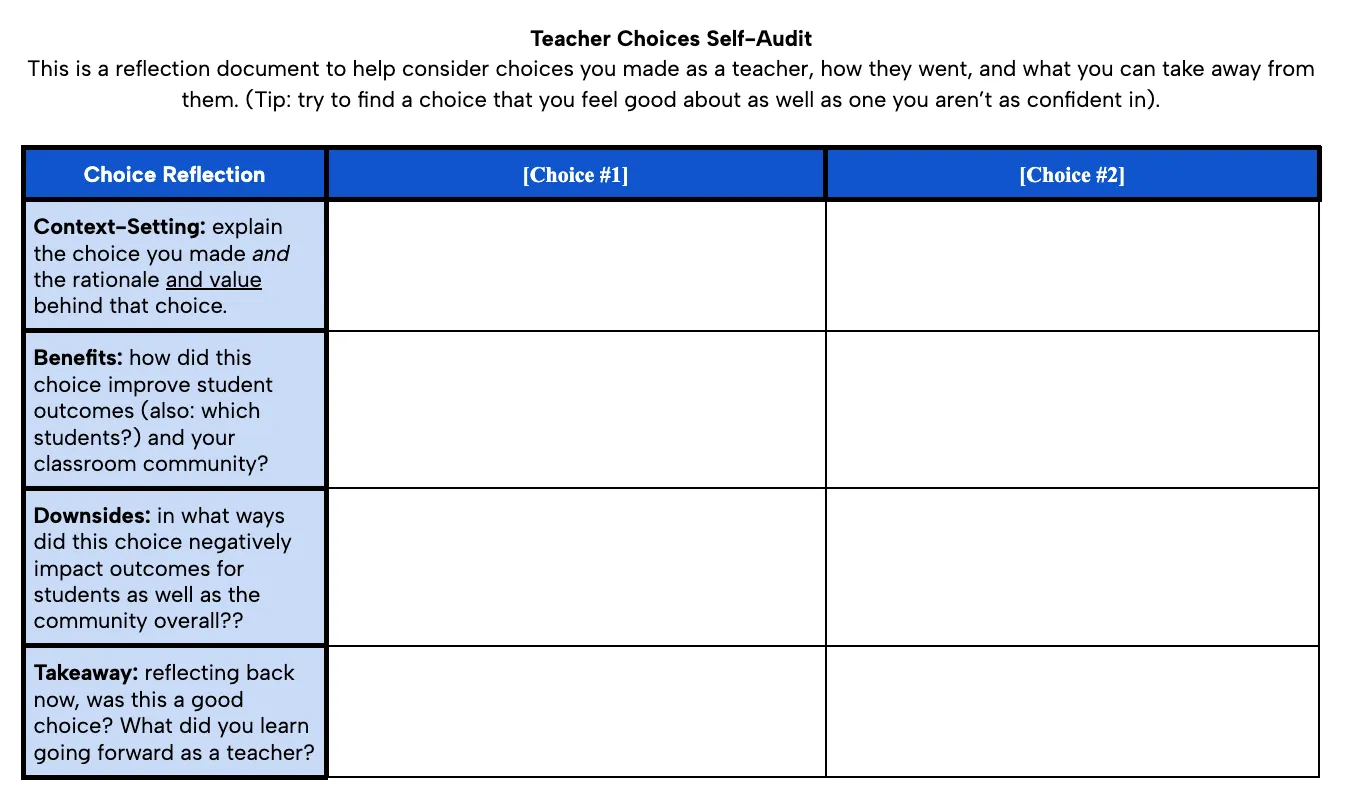
However, in my experience, far too often there is too little time actually spent considering and reflecting upon the choices we make as teachers.
So that’s what I wanted to write about today—along with a tool that I’m using refocus my own reflections around the choices I’ve made in my classroom this year. .
How do I put positive behavior strategies into practice?
How can families support this at home?
Additional resources and research
Empathetic sentence starters for teachers — from understood.org by Amanda Morin Learn how sentence starters can help you respond to your students with empathy. Get a one-page printable of empathetic sentence starters to help you get started.
Before jumping into fix-it mode, ask some open-ended questions and give kids time to answer. Try not to make assumptions or impose your viewpoint. Use sentence starters like these:
For the first time ever, the average teacher salary in America has topped $70,000 this school year.
Teacher salaries are growing faster than at any previous point since the Great Recession—but with inflation factored in, teachers still take home less on average than they did a decade ago, according to the nation’s largest teachers’ union.
Are Colleges Ready For an Online-Education World Without OPMs?— from edsurge.com by Robert Ubell (Columnist) Online Program Management companies have helped hundreds of colleges build online degree programs, but the sector is showing signs of strain.
For more than 15 years, a group of companies known as Online Program Management providers, or OPMs, have been helping colleges build online degree programs. And most of them have relied on an unusual arrangement — where the companies put up the financial backing to help colleges launch programs in exchange for a large portion of tuition revenue.
…
As a longtime administrator of online programs at colleges, I have mixed feelings about the idea of shutting down the model. And the question boils down to this: Are colleges ready for a world without OPMs?
This conversation went in a bunch of unexpected directions. And that’s what’s so fun about it. After all, podcasting is all about bringing audio back and turning learning into leisure. And the question Guy and his partner Mindy Thomas asked a while back was: Why not bring kids in on the fun? Guy shared how his studio, Tinkercast, is leveraging the medium to inspire and educate the next generation of problem solvers.
We discussed the power of audio to capture curiosities and foster imagination, how Tinkercast is doing that in and out of the classroom, and how it can help re-engage students in building needed skills at a critical time. Enjoy!
NEW: Is this America’s next big middle-class job?
28,000 more “technicians” will soon be needed to run giant machines that make tiny semiconductor chips used in phones, cars, missiles, etc.
Education Companies in the Education industry, which includes schools and universities, cut the second-most jobs last monthwith 8,092 for a total of 17,892. That is a 635% increase from the 2,435 cuts announced during the first four months of 2023.
“April is typically the time school districts are hiring and setting budgets for the next fiscal year. Certainly, there are budgetary constraints, as labor costs rise, but school systems also have a retention and recruitment issue,” said Challenger.
The lifetime rate of return for a college education differs significantly by major, but it also varies by a student’s gender and race or ethnicity, according to new peer-reviewed research published in the American Educational Research Journal.
A bachelor’s degree in general provides a roughly 9% rate of return for men, and nearly 10% for women, researchers concluded. The majors with the best returns were computer science and engineering.
Black, Hispanic and Asian college graduates had slightly higher rates of return than their White counterparts, the study found.
OpenAI rolls out Memory feature for ChatGPT
OpenAI has introduced a cool update for ChatGPT (rolling out to paid and free users – but not in the EU or Korea), enabling the AI to remember user-specific details across sessions. This memory feature enhances personalization and efficiency, making your interactions with ChatGPT more relevant and engaging.
.
Key Features
Automatic Memory Tracking
ChatGPT now automatically records information from your interactions such as preferences, interests, and plans. This allows the AI to refine its responses over time, making each conversation increasingly tailored to you.
Enhanced Personalization
The more you interact with ChatGPT, the better it understands your needs and adapts its responses accordingly. This personalization improves the relevance and efficiency of your interactions, whether you’re asking for daily tasks or discussing complex topics.
Memory Management Options
You have full control over this feature. You can view what information is stored, toggle the memory on or off, and delete specific data or all memory entries, ensuring your privacy and preferences are respected.
Memory is now available to all ChatGPT Plus users. Using Memory is easy: just start a new chat and tell ChatGPT anything you’d like it to remember.
Memory can be turned on or off in settings and is not currently available in Europe or Korea. Team, Enterprise, and GPTs to come. pic.twitter.com/mlt9vyYeMK
From DSC: The ability of AI-based applications to remember things about us will have major and positive ramifications for us when we think about learning-related applications of AI.
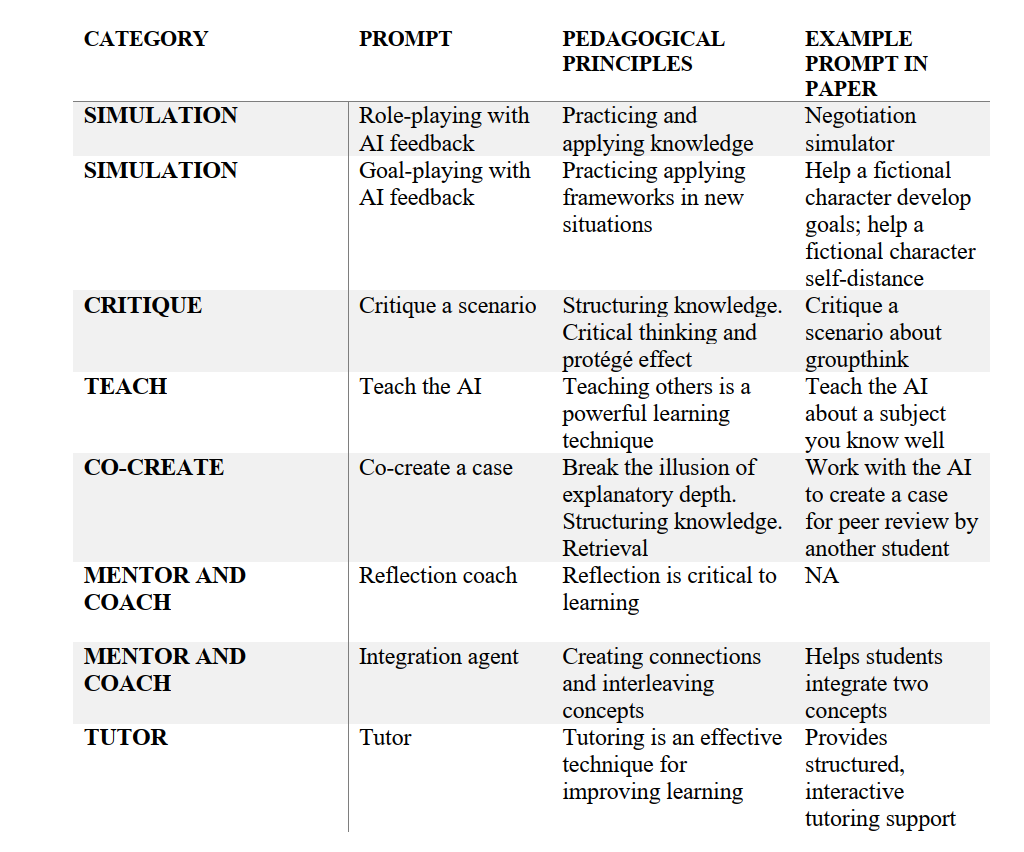
This paper explores how instructors can leverage generative AI to create personalized learning experiences for students that transform teaching and learning. We present a range of AI-based exercises that enable novel forms of practice and application including simulations, mentoring, coaching, and co-creation. For each type of exercise, we provide prompts that instructors can customize, along with guidance on classroom implementation, assessment, and risks to consider. We also provide blueprints, prompts that help instructors create their own original prompts. Instructors can leverage their content and pedagogical expertise to design these experiences, putting them in the role of builders and innovators. We argue that this instructor-driven approach has the potential to democratize the development of educational technology by enabling individual instructors to create AI exercises and tools tailored to their students’ needs. While the exercises in this paper are a starting point, not a definitive solutions, they demonstrate AI’s potential to expand what is possible in teaching and learning.
$1.5 billion The accumulated deficit that 2U has racked up following years of operating losses, according to its financial statements. Student advocacy groups recently called on the U.S. Department of Education to prepare for the “looming collapse” of the online program management company, though 2U has pushed back against those predictions.
[Per Chris Dede] We often think of the product of teaching as the outcome (e.g. an essay, a drawing, etc.). The essence of education, in my view, lies not in the products or outcomes of learning but in the journey itself. The artifact is just a symbol that you’ve taken the journey.
The process of learning — the exploration, challenges, and personal growth that occur along the way — is where the real value lies. For instance, the act of writing an essay is valuable not merely for the final product but for the intellectual journey it represents. It forces you to improve and organize your thinking on a subject.
This distinction becomes important with the rise of generative AI, because it uniquely allows us to produce these artifacts without taking the journey.
As I’ve argued previously, I am worried that all this hype around LLMs renders them a “type of digital duct-tape to hold together an obsolete industrial-era educational system”.
Speaking of AI in our learning ecosystems, also see:
Usage Guidelines for AI Generative Tools at College Unbound These guidelines were created and reviewed by College Unbound students in Spring 2023 with the support of Lance Eaton, Director of Faculty Development & Innovation. The students include S. Fast, K. Linder-Bey, Veronica Machado, Erica Maddox, Suleima L., Lora Roy.
A recent study has found that scientific citations generated by ChatGPT often do not correspond to real academic work. The study, published in the Canadian Psychological Association’s Mind Pad, found that “false citation rates” across various psychology subfields ranged from 6% to 60%. Surprisingly, these fabricated citations feature elements such as legitimate researchers’ names and properly formatted digital object identifiers (DOIs), which could easily mislead both students and researchers.
…
MacDonald found that a total of 32.3% of the 300 citations generated by ChatGPT were hallucinated. Despite being fabricated, these hallucinated citations were constructed with elements that appeared legitimate — such as real authors who are recognized in their respective fields, properly formatted DOIs, and references to legitimate peer-reviewed journals.
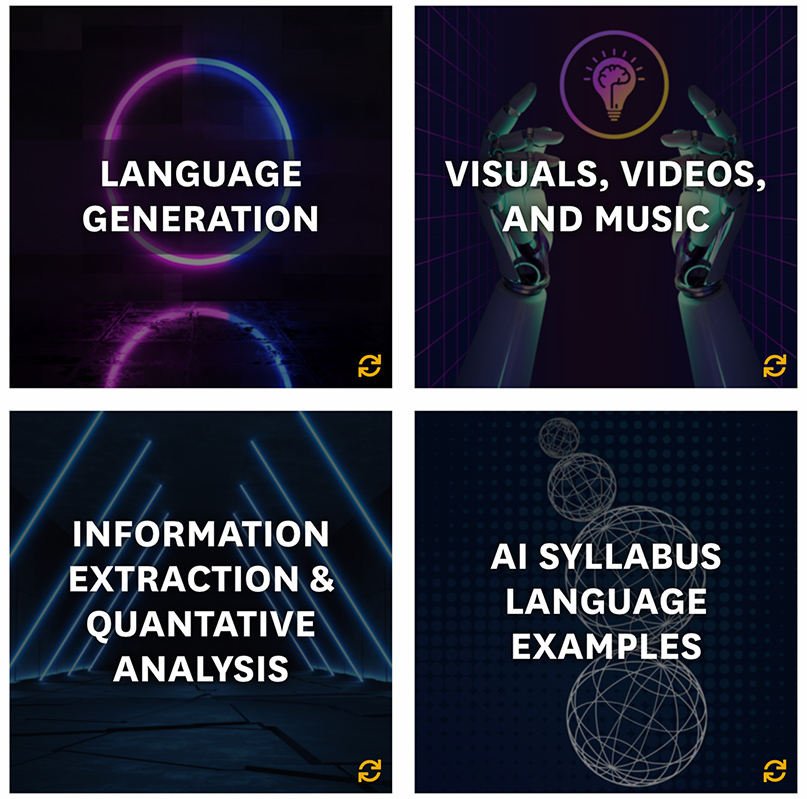
AI Resources and Teaching | Kent State University offers valuable resources for educators interested in incorporating artificial intelligence (AI) into their teaching practices. The university recognizes that the rapid emergence of AI tools presents both challenges and opportunities in higher education.
The AI Resources and Teaching page provides educators with information and guidance on various AI tools and their responsible use within and beyond the classroom. The page covers different areas of AI application, including language generation, visuals, videos, music, information extraction, quantitative analysis, and AI syllabus language examples.
For all its jaw-dropping power, Watson the computer overlord was a weak teacher. It couldn’t engage or motivate kids, inspire them to reach new heights or even keep them focused on the material — all qualities of the best mentors.
It’s a finding with some resonance to our current moment of AI-inspired doomscrolling about the future of humanity in a world of ascendant machines. “There are some things AI is actually very good for,” Nitta said, “but it’s not great as a replacement for humans.”
His five-year journey to essentially a dead-end could also prove instructive as ChatGPT and other programs like it fuel a renewed, multimillion-dollar experiment to, in essence, prove him wrong.
…
To be sure, AI can do sophisticated things such as generating quizzes from a class reading and editing student writing. But the idea that a machine or a chatbot can actually teach as a human can, he said, represents “a profound misunderstanding of what AI is actually capable of.”
Nitta, who still holds deep respect for the Watson lab, admits, “We missed something important. At the heart of education, at the heart of any learning, is engagement. And that’s kind of the Holy Grail.”
From DSC: This is why the vision that I’ve been tracking and working on has always said that HUMAN BEINGS will be necessary — they are key to realizing this vision. Along these lines, here’s a relevant quote:
Another crucial component of a new learning theory for the age of AI would be the cultivation of “blended intelligence.” This concept recognizes that the future of learning and work will involve the seamless integration of human and machine capabilities, and that learners must develop the skills and strategies needed to effectively collaborate with AI systems. Rather than viewing AI as a threat to human intelligence, a blended intelligence approach seeks to harness the complementary strengths of humans and machines, creating a symbiotic relationship that enhances the potential of both.
Per Alexander “Sasha” Sidorkin, Head of the National Institute on AI in Society at California State University Sacramento.
AWS, Educause partner on generative AI readiness tool — from edscoop.com by Skylar Rispens Amazon Web Services and the nonprofit Educause announced a new tool designed to help higher education institutions gauge their readiness to adopt generative artificial intelligence.
Amazon Web Services and the nonprofit Educause on Monday announced they’ve teamed up to develop a tool that assesses how ready higher education institutions are to adopt generative artificial intelligence.
Through a series of curated questions about institutional strategy, governance, capacity and expertise, AWS and Educause claim their assessment can point to ways that operations can be improved before generative AI is adopted to support students and staff.
“Generative AI will transform how educators engage students inside and outside the classroom, with personalized education and accessible experiences that provide increased student support and drive better learning outcomes,” Kim Majerus, vice president of global education and U.S. state and local government at AWS, said in a press release. “This assessment is a practical tool to help colleges and universities prepare their institutions to maximize this technology and support students throughout their higher ed journey.”
Speaking of AI and our learning ecosystems, also see:
At a moment when the value of higher education has come under increasing scrutiny, institutions around the world can be exactly what learners and employers both need. To meet the needs of a rapidly changing job market and equip learners with the technical and ethical direction needed to thrive, institutions should familiarize students with the use of AI and nurture the innately human skills needed to apply it ethically. Failing to do so can create enormous risk for higher education, business and society.
What is AI literacy?
To effectively utilize generative AI, learners will need to grasp the appropriate use cases for these tools, understand when their use presents significant downside risk, and learn to recognize abuse to separate fact from fiction. AI literacy is a deeply human capacity. The critical thinking and communication skills required are muscles that need repeated training to be developed and maintained.
Making your campus neurodivergent friendly — from timeshighereducation.com How to create a university where neurodivergent staff and students feel welcome and thrive in the classroom, in the lab and throughout campus
Neurodivergent students and staff think about, interact with and see the world differently from their neurotypical peers and colleagues. Universities that adopt inclusive practices to welcome people with ADHD, autism, dyslexia, dyspraxia and other disabilities to campus also foster their distinct strengths and talents in the classroom, labs, boardrooms and social spaces. This collection of resources offers advice for teachers, researchers, PhD supervisors and administrators for supporting neurodiversity in higher education.
It was only a matter of time before a college would have the nerve to quote its cost of attendance at nearly $100,000 a year. This spring, we’re catching our first glimpse of it.
One letter to a newly admitted Vanderbilt University engineering student showed an all-in price — room, board, personal expenses, a high-octane laptop — of $98,426. A student making three trips home to Los Angeles or London from the Nashville campus during the year could hit six figures.
This eye-popping sum is an anomaly. Only a tiny fraction of college-going students will pay anything close to this anytime soon, and about 35 percent of Vanderbilt students — those who get neither need-based nor merit aid — pay the full list price.
But a few dozen other colleges and universities that reject the vast majority of applicants will probably arrive at this threshold within a few years. Their willingness to cross it raises two questions for anyone shopping for college: How did this happen, and can it possibly be worth it?
‘Running Out of Road’ for FAFSA Completion — from insidehighered.com by Liam Knox The number of students who filled out the federal aid form is down nearly 30 percent. The ramifications for access and enrollment could be devastating.
And that’s probably an optimistic estimate, said Bill DeBaun, NCAN’s senior director of data and strategic initiatives; if the pace of completion doesn’t pick up, the decline could be closer to 700,000 students. That could translate to up to a 4 percent drop in college-goers come fall, DeBaun said, which would be the largest enrollment drop since the COVID-19 pandemic—and one that’s likely to be made up primarily of low-income and first-generation students.
Only 60 percent of students who enrolled in college earned a degree or credential within eight years of graduating high school.
That’s one of the biggest takeaways from a new report the National Center for Education Statistics released Monday that analyzed the enrollment, completion and financial aid outcomes of students.
The researchers tracked the postsecondary educational outcomes of roughly 23,000 students beginning in 2009 when they were freshman in high school through 2021, when the cohort was eight years out from graduating high school.
Taken together, the two recent decisions illustrate a blurring of the lines between the two- and four-year sectors that is taking place not just in Idaho, but nationwide, as colleges struggle to overcome enrollment declines and skepticism about the value of a bachelor’s degree.
“It’s pretty clear that higher education is in a funk,” said Robert M. Zemsky, a University of Pennsylvania professor, who has been advocating for three-year programs for more than 15 years. “There’s a sense that we have to do something to make the product better, more relevant, and less costly to students.”
Bottom line: While critics of a shorter degree see it as a lesser replacement for the four-year baccalaureate degree, advocates see it as another option for students who might not be interested in college at a time when enrollment is falling.
“We need to use this opportunity to redesign and do things better,” Carrell said. “That means that we all need to stay curious. We need to be a learning enterprise…and learn from the evidence we produce.”
The U.S. faces a serious shortage of workers in the skilled trades—fields like HVAC, plumbing, electrical, solar, and construction. And those labor gaps are likely to widen as the federal government spends billions on infrastructure projects.
Employers in these industries are desperate for hires, says Doug Donovan, the founder and CEO of Interplay Learning. Yet the “challenge is not employer demand for workers,” he says, “but rather ensuring that learners learn about skilled trades careers and pursue them.”
The Austin-based Interplay offers online and VR training for workers in the skilled trades. The company was founded in 2016 with a focus on upskilling the hands-on worker. Even before the pandemic exacerbated labor shortages, Donovan says companies in these trades needed to hire workers who didn’t have all the skills required for jobs.
Interplay’s online courses and 3D, interactive simulations get close to what a learner is going to see on the job, says Donovan. “We aren’t trying to replace hands-on, instructor-led training,” he says. “We are trying to deliver tools that enhance that hands-on time or make it more efficient.”
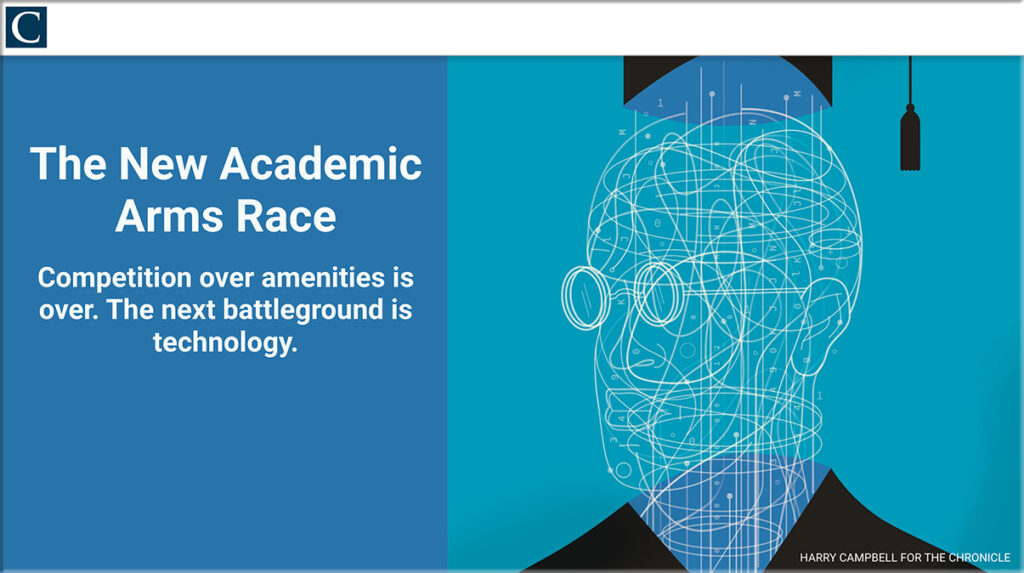
Now, after the pandemic, with the value of the bachelor’s degree foremost in the minds of students and families, a new academic arms race is emerging. This one is centered around academic innovation. The winners will be those institutions that in the decade ahead better apply technology in teaching and learning and develop different approaches to credentialing.
Sure, technology is often seen as plumbing on campuses — as long as it works, we don’t worry about it. And rarely do prospective students on a tour ever ask about academic innovations like extended reality or microcredentials. Campus tours prefer to show off the bells and whistles of residential life within dorms and dining halls.
That’s too bad.
The problem is not a lack of learners, but rather a lack of alignment in what colleges offer to a generation of learners surrounded by Amazon, Netflix, and Instagram, where they can stream entertainment and music anytime, anywhere.
From DSC: When I worked for Calvin (then College, now University) from 2007-2017, that’s exactly how technologies and the entire IT Department were viewed — as infrastructure providers. We were not viewed as being able to enhance the core business/offerings of the institution. We weren’t relevant in that area. In fact, the IT Department was shoved down in the basement of the library. Our Teaching & Learning Digital Studio was sidelined in a part of the library where few students went to. The Digitial Studio’s marketing efforts didn’t help much, as faculty members didn’t offer assignments that called for multimedia-based deliverables. It was a very tough and steep hill to climb.
Also the Presidents and Provosts over the last couple of decades (not currently though) didn’t think much of online-based learning, and the top administrators dissed the Internet’s ability to provide 24/7 worldwide conversations and learning. They missed the biggest thing to come along in education in 500 years (since the invention of the printing press). Our Teaching & Learning Group provided leadership by starting a Calvin Online pilot. We had 13-14 courses built and inquiries from Christian-based high schools were coming in for dual enrollment scenarios, but when it came time for the College to make a decision, it never happened. The topic/vote never made it to the floor of the Faculty Senate. The faculty and administration missed an enormous opportunity.
When Calvin College became Calvin University in 2019, they were forced to offer online-based classes. Had they supported our T&L Group’s efforts back in the early to mid-2010’s, they would have dove-tailed very nicely into offering more courses to working adults. They would have built up the internal expertise to offer these courses/programs. But the culture of the college put a stop to online-based learning at that time. They now regret that decision I’m sure (as they’ve had to outsource many things and they now offer numerous online-based courses and even entire programs — at a high cost most likely).
My how times have changed.
For another item re: higher education at the 30,000-foot level, see:
Lifelong Learning Models for a Changing Higher Ed Marketplace — from changinghighered.com by Dr. Drumm McNaughton and Amrit Ahluwalia Exploring the transformation of higher education into lifelong learning hubs for workforce development, with innovative models and continuing education’s role.
Higher education is undergoing transformational change to redefine its role as a facilitator of lifelong learning and workforce development. In this 200th episode of Changing Higher Ed, host Dr. Drumm McNaughton and guest Amrit Ahluwalia, incoming Executive Director for Continuing Studies at Western University, explore innovative models positioning universities as sustainable hubs for socioeconomic mobility.
The Consumer-Driven Educational Landscape
Over 60% of today’s jobs will be redefined by 2025, driving demand for continuous upskilling and reskilling to meet evolving workforce needs. However, higher education’s traditional model of imparting specific knowledge through multi-year degrees is hugely misaligned with this reality.
Soaring education costs have fueled a consumer mindset shift, with learners demanding a clear return on investment directly aligned with their career goals. The expectation is to see immediate skills application and professional impact from their educational investments, not just long-term outcomes years after completion.
At last week’s event, we continued our focus on supporting neurodivergent students by taking a closer look at four specific conditions that could impact student behaviors and academic work. By spreading greater awareness and understanding, we hope to interrupt potentially harmful assumptions and foster greater curiosity and empathy for our students. Doing so can help us create environments that support learning, mental health, and academic success.
Dyscalculia is a learning disability in math. It makes it hard to work with and make sense of numbers. Learn more about dyscalculia and why people have trouble with math. Discover ways to help.
What about course videos? Professors can create them (by lecturing into a camera for several hours hopefully in different clothes) from the readings, from their interpretations of the readings, from their own case experiences – from anything they like. But now professors can direct the creation of the videos by talking – actually describing – to a CustomGPTabout what they’d like the video to communicate with their or another image. Wait. What?They can make a video by talking to a CustomGPT and even select the image they want the “actor” to use? Yes. They can also add a British accent and insert some (GenAI-developed) jokes into the videos if they like. All this and much more is now possible. This means that a professor can specify how long the video should be, what sources should be consulted and describe the demeanor the professor wants the video to project.
From DSC: Though I wasn’t crazy about the clickbait type of title here, I still thought that the article was solid and thought-provoking. It contained several good ideas for using AI.
Excerpt from a recent EdSurge Higher Ed newsletter:
There are darker metaphors though — ones that focus on the hazards for humanity of the tech. Some professors worry that AI bots are simply replacing hired essay-writers for many students, doing work for a student that they can then pass off as their own (and doing it for free).
From DSC: Hmmm…the use of essay writers was around long before AI became mainstream within higher education. So we already had a serious problem where students didn’t see the why in what they were being asked to do. Some students still aren’t sold on the why of the work in the first place. The situation seems to involve ethics, yes, but it also seems to say that we haven’t sold students on the benefits of putting in the work. Students seem to be saying I don’t care about this stuff…I just need the degree so I can exit stage left.
My main point: The issue didn’t start with AI…it started long before that.
This financial stagnation is occurring as we face a multitude of escalating challenges. These challenges include but are in no way limited to, chronic absenteeism, widespread student mental health issues, critical staff shortages, rampant classroom behavior issues, a palpable sense of apathy for education in students, and even, I dare say, hatred towards education among parents and policymakers.
…
Our current focus is on keeping our heads above water, ensuring our students’ safety and mental well-being, and simply keeping our schools staffed and our doors open.
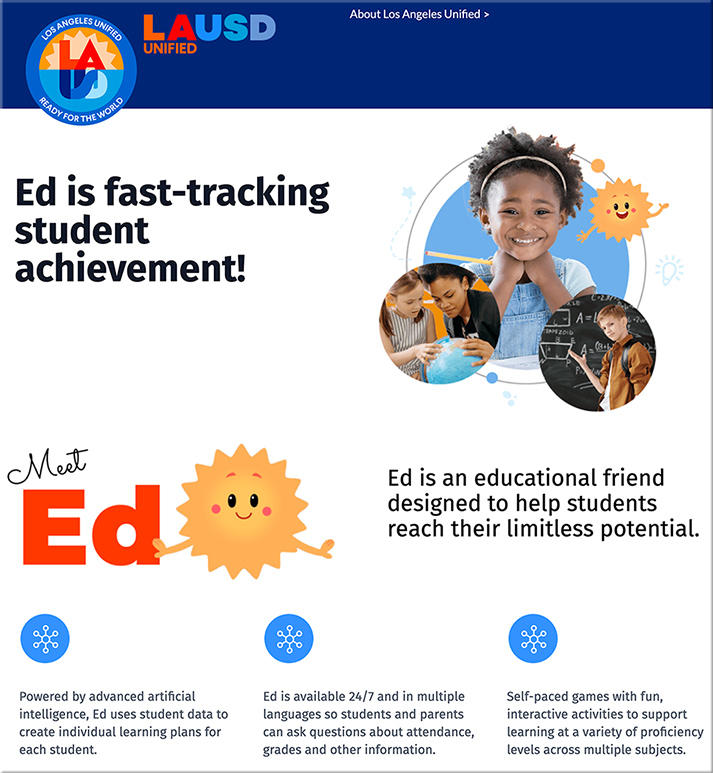
What is Ed? An easy-to-understand learning platform designed by Los Angeles Unified to increase student achievement. It offers personalized guidance and resources to students and families 24/7 in over 100 languages.
Also relevant/see:
Los Angeles Unified Bets Big on ‘Ed,’ an AI Tool for Students — from by Lauraine Langreo
The Los Angeles Unified School District has launched an AI-powered learning tool that will serve as a “personal assistant” to students and their parents.The tool, named “Ed,” can provide students from the nation’s second-largest district information about their grades, attendance, upcoming tests, and suggested resources to help them improve their academic skills on their own time, Superintendent Alberto Carvalho announced March 20. Students can also use the app to find social-emotional-learning resources, see what’s for lunch, and determine when their bus will arrive.
Could OpenAI’s Sora be a big deal for elementary school kids?— from futureofbeinghuman.com by Andrew Maynard Despite all the challenges it comes with, AI-generated video could unleash the creativity of young children and provide insights into their inner worlds – if it’s developed and used responsibly
Like many others, I’m concerned about the challenges that come with hyper-realistic AI-generated video. From deep fakes and disinformation to blurring the lines between fact and fiction, generative AI video is calling into question what we can trust, and what we cannot.
And yet despite all the issues the technology is raising, it also holds quite incredible potential, including as a learning and development tool — as long as we develop and use it responsibly.
I was reminded of this a few days back while watching the latest videos from OpenAI created by their AI video engine Sora — including the one below generated from the prompt “an elephant made of leaves running in the jungle”
…
What struck me while watching this — perhaps more than any of the other videos OpenAI has been posting on its TikTok channel — is the potential Sora has for translating the incredibly creative but often hard to articulate ideas someone may have in their head, into something others can experience.
Can AI Aid the Early Education Workforce? — from edsurge.com by Emily Tate Sullivan During a panel at SXSW EDU 2024, early education leaders discussed the potential of AI to support and empower the adults who help our nation’s youngest children.
While the vast majority of the conversations about AI in education have centered on K-12 and higher education, few have considered the potential of this innovation in early care and education settings.
At the conference, a panel of early education leaders gathered to do just that, in a session exploring the potential of AI to support and empower the adults who help our nation’s youngest children, titled, “ChatECE: How AI Could Aid the Early Educator Workforce.”
Hau shared that K-12 educators are using the technology to improve efficiency in a number of ways, including to draft individualized education programs (IEPs), create templates for communicating with parents and administrators, and in some cases, to support building lesson plans.
Educators are, perhaps rightfully so, cautious about incorporating AI in their classrooms. With thoughtful implementation, however, AI image generators, with their ability to use any language, can provide powerful ways for students to engage with the target language and increase their proficiency.
While AI offers numerous benefits, it’s crucial to remember that it is a tool to empower educators, not replace them. The human connection between teacher and student remains central to fostering creativity, critical thinking, and social-emotional development. The role of teachers will shift towards becoming facilitators, curators, and mentors who guide students through personalized learning journeys. By harnessing the power of AI, educators can create dynamic and effective classrooms that cater to each student’s individual needs. This paves the way for a more engaging and enriching learning experience that empowers students to thrive.
In this article, seven teachers across the world share their insights on AI tools for educators. You will hear a host of varied opinions and perspectives on everything from whether AI could hasten the decline of learning foreign languages to whether AI-generated lesson plans are an infringement on teachers’ rights. A common theme emerged from those we spoke with: just as the internet changed education, AI tools are here to stay, and it is prudent for teachers to adapt.
Even though it’s been more than a year since ChatGPT made a big splash in the K-12 world, many teachers say they are still not receiving any training on using artificial intelligence tools in the classroom.
More than 7 in 10 teachers said they haven’t received any professional development on using AI in the classroom, according to a nationally representative EdWeek Research Center survey of 953 educators, including 553 teachers, conducted between Jan. 31 and March 4.
From DSC: This article mentioned the following resource:
One problem, of course, is that it’s prohibitively expensive to hire a tutor for every average or struggling student, or even one for every two or three of them. This was the two-sigma “problem” that Bloom alluded to in the title of his essay: how can the massive benefits of tutoring possibly be scaled up? Both Khan and Zuckerberg have argued that the answer is to have computers, maybe powered by artificial intelligence, serve as tutors instead of humans.
From DSC: I’m hoping that AI-backed learning platforms WILL help many people of all ages and backgrounds. But I realize — and appreciate what Natalie is saying here as well — that human beings are needed in the learning process (especially at younger ages).
But without the human element, that’s unlikely to be enough. Students are more likely to work hard to please a teacher than to please a computer.
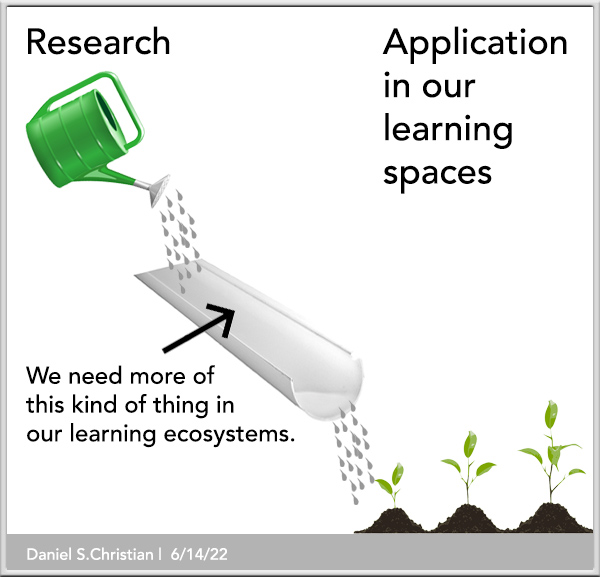
Natalie goes on to talk about training all teachers in cognitive science — a solid idea for sure. That’s what I was trying to get at with this graphic: .
.
But I’m not as hopeful in all teachers getting trained in cognitive science…as it should have happened (in the Schools of Education and in the K12 learning ecosystem at large) by now. Perhaps it will happen, given enough time.
And with more homeschooling and blended programs of education occurring, that idea gets stretched even further.
Parents are looking for a different kind of education for their children.A 2024 poll of parents reveals that 72% are considering, 63% are searching for, and 44% have selected a new K-12 school option for their children over the past few years. So, what type of education are they seeking?
Additional polling data reveals that 49% of parents would prefer their child learn from home at least one day a week.While 10% want full-time homeschooling, the remaining 39% of parents desire their child to learn at home one to four days a week, with the remaining days attending school on-campus. Another parent poll released this month indicates that an astonishing 64% of parents indicated that if they were looking for a new school for their child, they would enroll him or her in a hybrid school.