Below is an excerpt from 2024: The State of Generative AI in the Enterprise — from Menlo Ventures

  • Legal: Historically resistant to tech, the legal industry ($350 million in enterprise AI spend) is now embracing generative AI to manage massive amounts of unstructured data and automate complex, pattern-based workflows. The field broadly divides into litigation and transactional law, with numerous subspecialties. Rooted in litigation, Everlaw* focuses on legal holds, e-discovery, and trial preparation, while Harvey and Spellbook are advancing AI in transactional law with solutions for contract review, legal research, and M&A. Specific practice areas are also targeted AI innovations: EvenUp focuses on injury law, Garden on patents and intellectual property, Manifest on immigration and employment law, while Eve* is re-inventing plaintiff casework from client intake to resolution.

Excerpt from Brainyacts #250 (from 11/22/24) — from the Leveraging Generative AI in Client Interviews section

Here’s what the article from Forbes said:

  • CodeSignal, an AI tech company, has launched Conversation Practice, an AI-driven platform to help learners practice critical workplace communication and soft skills.
  • Conversation Practice uses multiple AI models and a natural spoken interface to simulate real-world scenarios and provide feedback.
  • The goal is to address the challenge of developing conversational skills through iterative practice, without the awkwardness of peer role-play.

What I learned about this software changed my perception about how I can prepare in the future for client meetings. Here’s what I’ve taken away from the potential use of this software in a legal practice setting:


Why Technology-Driven Law Firms Are Poised For Long-Term Success — from forbes.com by Daniel Farrar

I see the shift to cloud-based digital systems, especially for small and midsized law firms, as evening the playing field by providing access to robust tools that can aid legal services. Here are some examples of how legal professionals are leveraging tech every day:

    • Cloud-based case management solutions. These help enhance productivity through collaboration tools and automated workflows while keeping data secure.
    • E-discovery tools. These tools manage vast amounts of data and help speed up litigation processes.
    • Artificial intelligence. AI has helped automate tasks for legal professionals including for case management, research, contract review and predictive analytics.
 

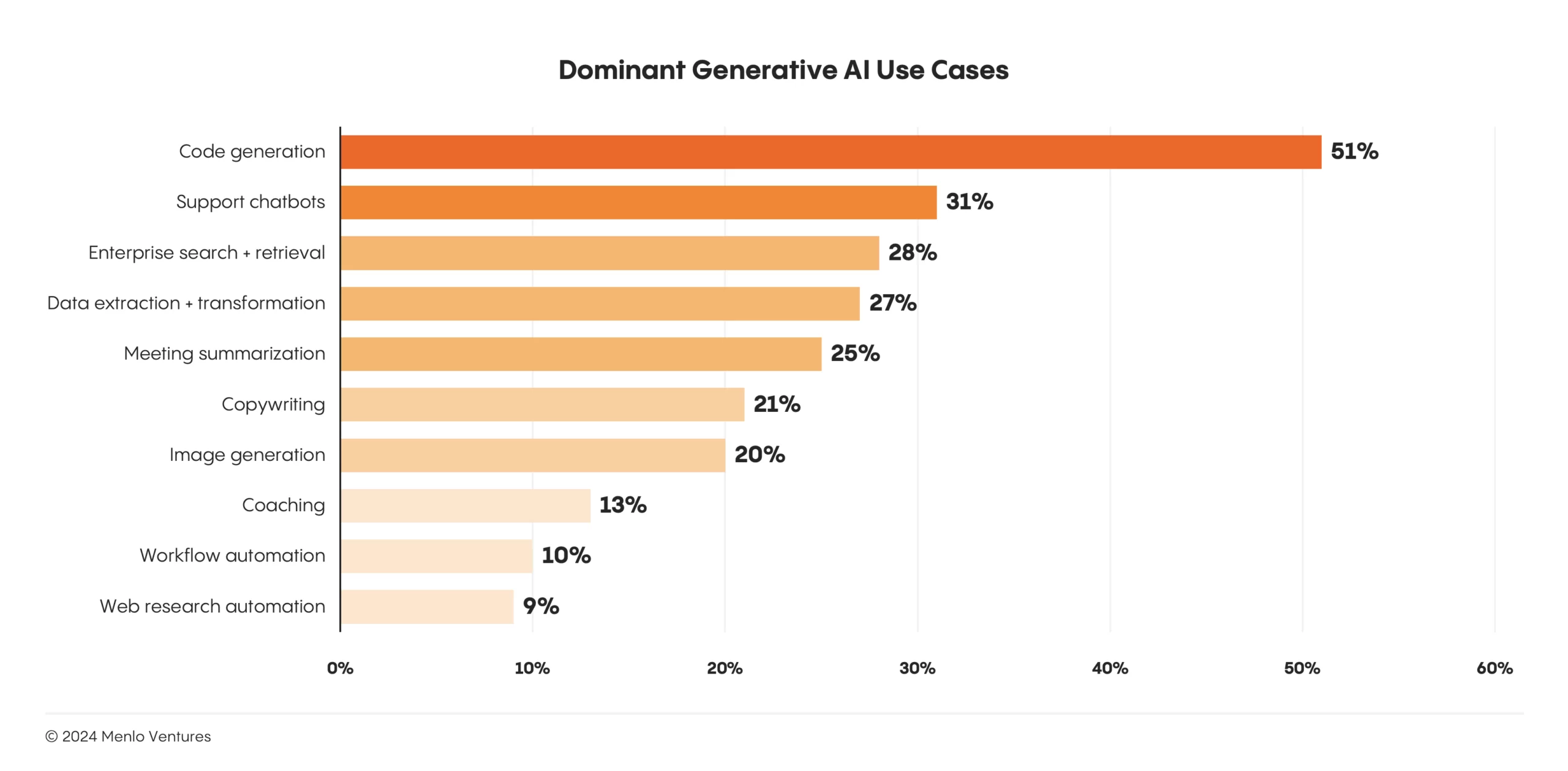
2024: The State of Generative AI in the Enterprise — from menlovc.com (Menlo Ventures)
The enterprise AI landscape is being rewritten in real time. As pilots give way to production, we surveyed 600 U.S. enterprise IT decision-makers to reveal the emerging winners and losers.

This spike in spending reflects a wave of organizational optimism; 72% of decision-makers anticipate broader adoption of generative AI tools in the near future. This confidence isn’t just speculative—generative AI tools are already deeply embedded in the daily work of professionals, from programmers to healthcare providers.

Despite this positive outlook and increasing investment, many decision-makers are still figuring out what will and won’t work for their businesses. More than a third of our survey respondents do not have a clear vision for how generative AI will be implemented across their organizations. This doesn’t mean they’re investing without direction; it simply underscores that we’re still in the early stages of a large-scale transformation. Enterprise leaders are just beginning to grasp the profound impact generative AI will have on their organizations.


Business spending on AI surged 500% this year to $13.8 billion, says Menlo Ventures — from cnbc.com by Hayden Field

Key Points

  • Business spending on generative AI surged 500% this year, hitting $13.8 billion — up from just $2.3 billion in 2023, according to data from Menlo Ventures released Wednesday.
  • OpenAI ceded market share in enterprise AI, declining from 50% to 34%, per the report.
  • Amazon-backed Anthropic doubled its market share from 12% to 24%.

Microsoft quietly assembles the largest AI agent ecosystem—and no one else is close — from venturebeat.com by Matt Marshall

Microsoft has quietly built the largest enterprise AI agent ecosystem, with over 100,000 organizations creating or editing AI agents through its Copilot Studio since launch – a milestone that positions the company ahead in one of enterprise tech’s most closely watched and exciting  segments.
…
The rapid adoption comes as Microsoft significantly expands its agent capabilities. At its Ignite conference [that started on 11/19/24], the company announced it will allow enterprises to use any of the 1,800 large language models (LLMs) in the Azure catalog within these agents – a significant move beyond its exclusive reliance on OpenAI’s models. The company also unveiled autonomous agents that can work independently, detecting events and orchestrating complex workflows with minimal human oversight.


Now Hear This: World’s Most Flexible Sound Machine Debuts — from
Using text and audio as inputs, a new generative AI model from NVIDIA can create any combination of music, voices and sounds.

Along these lines, also see:


AI Agents Versus Human Agency: 4 Ways To Navigate Our AI-Driven World — from forbes.com by Cornelia C. Walther

To understand the implications of AI agents, it’s useful to clarify the distinctions between AI, generative AI, and AI agents and explore the opportunities and risks they present to our autonomy, relationships, and decision-making.
…
AI Agents: These are specialized applications of AI designed to perform tasks or simulate interactions. AI agents can be categorized into:

    • Tool Agents…
    • Simulation Agents..

While generative AI creates outputs from prompts, AI agents use AI to act with intention, whether to assist (tool agents) or emulate (simulation agents). The latter’s ability to mirror human thought and action offers fascinating possibilities — and raises significant risks.


2024-11-22: The Race to the TopDario Amodei on AGI, Risks, and the Future of Anthropic — from emergentbehavior.co by Prakash (Ate-a-Pi)

Risks on the Horizon: ASL Levels
The two key risks Dario is concerned about are:

a) cyber, bio, radiological, nuclear (CBRN)
b) model autonomy

These risks are captured in Anthropic’s framework for understanding AI Safety Levels (ASL):

1. ASL-1: Narrow-task AI like Deep Blue (no autonomy, minimal risk).
2. ASL-2: Current systems like ChatGPT/Claude, which lack autonomy and don’t pose significant risks beyond information already accessible via search engines.
3. ASL-3: Agents arriving soon (potentially next year) that can meaningfully assist non-state actors in dangerous activities like cyber or CBRN (chemical, biological, radiological, nuclear) attacks. Security and filtering are critical at this stage to prevent misuse.
4. ASL-4: AI smart enough to evade detection, deceive testers, and assist state actors with dangerous projects. AI will be strong enough that you would want to use the model to do anything dangerous. Mechanistic interpretability becomes crucial for verifying AI behavior.
5. ASL-5: AGI surpassing human intelligence in all domains, posing unprecedented challenges.

Anthropic’s if/then framework ensures proactive responses: if a model demonstrates danger, the team clamps down hard, enforcing strict controls.


Should You Still Learn to Code in an A.I. World? — from nytimes.com by
Coding boot camps once looked like the golden ticket to an economically secure future. But as that promise fades, what should you do? Keep learning, until further notice.

Compared with five years ago, the number of active job postings for software developers has dropped 56 percent, according to data compiled by CompTIA. For inexperienced developers, the plunge is an even worse 67 percent.
“I would say this is the worst environment for entry-level jobs in tech, period, that I’ve seen in 25 years,” said Venky Ganesan, a partner at the venture capital firm Menlo Ventures.

For years, the career advice from everyone who mattered — the Apple chief executive Tim Cook, your mother — was “learn to code.” It felt like an immutable equation: Coding skills + hard work = job.

Now the math doesn’t look so simple.

Also see:

AI builds apps in 2 mins flat — where the Neuron mentions this excerpt about Lovable:

There’s a new coding startup in town, and it just MIGHT have everybody else shaking in their boots (we’ll qualify that in a sec, don’t worry).

It’s called Lovable, the “world’s first AI fullstack engineer.”
…
Lovable does all of that by itself. Tell it what you want to build in plain English, and it creates everything you need. Want users to be able to log in? One click. Need to store data? One click. Want to accept payments? You get the idea.

Early users are backing up these claims. One person even launched a startup that made Product Hunt’s top 10 using just Lovable.

As for us, we made a Wordle clone in 2 minutes with one prompt. Only edit needed? More words in the dictionary. It’s like, really easy y’all.


When to chat with AI (and when to let it work) — from aiwithallie.beehiiv.com by Allie K. Miller

Re: some ideas on how to use Notebook LM:

  • Turn your company’s annual report into an engaging podcast
  • Create an interactive FAQ for your product manual
  • Generate a timeline of your industry’s history from multiple sources
  • Produce a study guide for your online course content
  • Develop a Q&A system for your company’s knowledge base
  • Synthesize research papers into digestible summaries
  • Create an executive content briefing from multiple competitor blog posts
  • Generate a podcast discussing the key points of a long-form research paper

Introducing conversation practice: AI-powered simulations to build soft skills — from codesignal.com by Albert Sahakyan

From DSC:
I have to admit I’m a bit suspicious here, as the “conversation practice” product seems a bit too scripted at times, but I post it because the idea of using AI to practice soft skills development makes a great deal of sense:


7 Legal Tech Trends To Watch In 2025 — from lexology.com by Sacha Kirk
Australia, United Kingdom November 25 2024

In-house legal teams are changing from a traditional support function to becoming proactive business enablers. New tools are helping legal departments enhance efficiency, improve compliance, and to deliver greater strategic value.

Here’s a look at seven emerging trends that will shape legal tech in 2025 and insights on how in-house teams can capitalise on these innovations.

1. AI Solutions…
2. Regulatory Intelligence Platforms…
…
7. Self-Service Legal Tools and Knowledge Management
As the demand on in-house legal teams continues to grow, self-service tools are becoming indispensable for managing routine legal tasks. In 2025, these tools are expected to evolve further, enabling employees across the organisation to handle straightforward legal processes independently. Whether it’s accessing pre-approved templates, completing standard agreements, or finding answers to common legal queries, self-service platforms reduce the dependency on legal teams for everyday tasks.

Advanced self-service tools go beyond templates, incorporating intuitive workflows, approval pathways, and built-in guidance to ensure compliance with legal and organisational policies. By empowering business users to manage low-risk matters on their own, these tools free up legal teams to focus on complex and high-value work.


How to use NotebookLM for personalized knowledge synthesis — from ai-supremacy.com by Michael Spencer and Alex McFarland
Two powerful workflows that unlock everything else. Intro: Golden Age of AI Tools and AI agent frameworks begins in 2025.

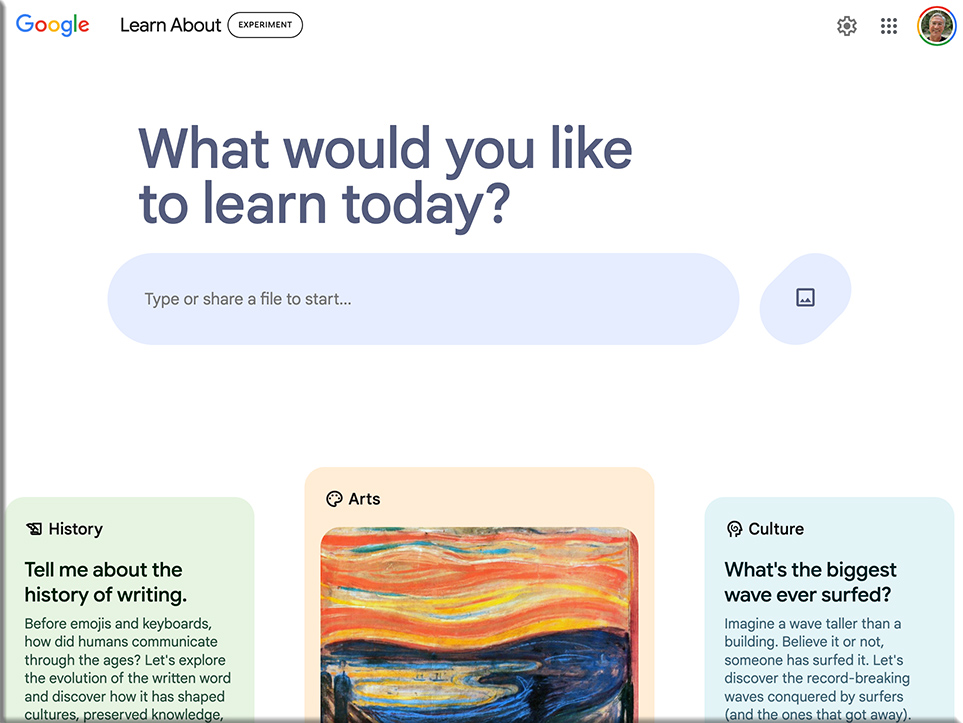
What is Google Learn about?
Google’s new AI tool, Learn About, is designed as a conversational learning companion that adapts to individual learning needs and curiosity. It allows users to explore various topics by entering questions, uploading images or documents, or selecting from curated topics. The tool aims to provide personalized responses tailored to the user’s knowledge level, making it user-friendly and engaging for learners of all ages.

Is Generative AI leading to a new take on Educational technology? It certainly appears promising heading into 2025.

The Learn About tool utilizes the LearnLM AI model, which is grounded in educational research and focuses on how people learn. Google insists that unlike traditional chatbots, it emphasizes interactive and visual elements in its responses, enhancing the educational experience. For instance, when asked about complex topics like the size of the universe, Learn About not only provides factual information but also includes related content, vocabulary building tools, and contextual explanations to deepen understanding.


Introducing Copilot Actions, new agents, and tools to empower IT teams — from microsoft.com by Jared Spataro

[On November 19th] at Microsoft Ignite 2024, we’re accelerating our ambition to empower every employee with Copilot as a personal assistant and to transform every business process with agents built in Microsoft Copilot Studio.

Announcements include:

  • Copilot Actions in Microsoft 365 Copilot to help you automate everyday repetitive tasks.
  • New agents in Microsoft 365 to unlock SharePoint knowledge, provide real-time language interpretation in Microsoft Teams meetings, and automate employee self-service.
  • The Copilot Control System to help IT professionals confidently manage Copilot and agents securely.

These announcements build on our wave 2 momentum, including the new autonomous agent capabilities that we announced in October 2024.

Per the Rundown AI:
By integrating AI agents directly into Microsoft’s billion-plus users’ daily workflows, this release could normalize agentic AI faster than any previous rollout. Just as users now reach for specific apps or plugins to solve particular problems, specialized agents could soon become the natural first stop for getting work done.

Along these lines, also see:

AI agents — what they are, and how they’ll change the way we work — from news.microsoft.com by Susanna Ray

An agent takes the power of generative AI a step further, because instead of just assisting you, agents can work alongside you or even on your behalf. Agents can do a range of things, from responding to questions to more complicated or multistep assignments. What sets them apart from a personal assistant is that they can be tailored to have a particular expertise.

For example, you could create an agent to know everything about your company’s product catalog so it can draft detailed responses to customer questions or automatically compile product details for an upcoming presentation.

Microsoft pitches AI ‘agents’ that can perform tasks on their own at Ignite 2024 — from techxplore.com
Microsoft CEO Satya Nadella told customers at a conference in Chicago on Tuesday that the company is teaching a new set of artificial intelligence tools how to “act on our behalf across our work and life.”


From DSC:
I am not trying to push all things AI. There are serious concerns that I and others have with agents and other AI-based technologies especially:

  • When competitive juices get going and such forces throw people and companies into a sort of an AI arms race, and
  • When many people haven’t yet obtained the wisdom of reflecting on things like “just because we CAN build this doesn’t mean we SHOULD build it”, or
  • When governments seek to be the leader of AI due to military applications (and yes, I’m looking at the U.S. Federal Government especially here)
  • Etc, etc. 

But there are also areas where I’m more hopeful and positive about AI-related technologies — such as providing personalized learning and productivity tools (like those from Microsoft above).


VR training aims to help doctors avoid bias — from inavateonthenet.net

A new virtual reality training programme aims to tackle biases in healthcare settings, aimed at improving recognition, understanding, and addressing implicit bias towards black mothers.

Participants in the program at the University of Illinois Urbana-Champaign underwent a series of three modules, with the first module focusing on implicit bias and how it can negatively affect a patient at a doctor’s appointment.


What DICE does in this posting will be available 24x7x365 in the future [Christian]

From DSC:
First of all, when you look at the following posting:


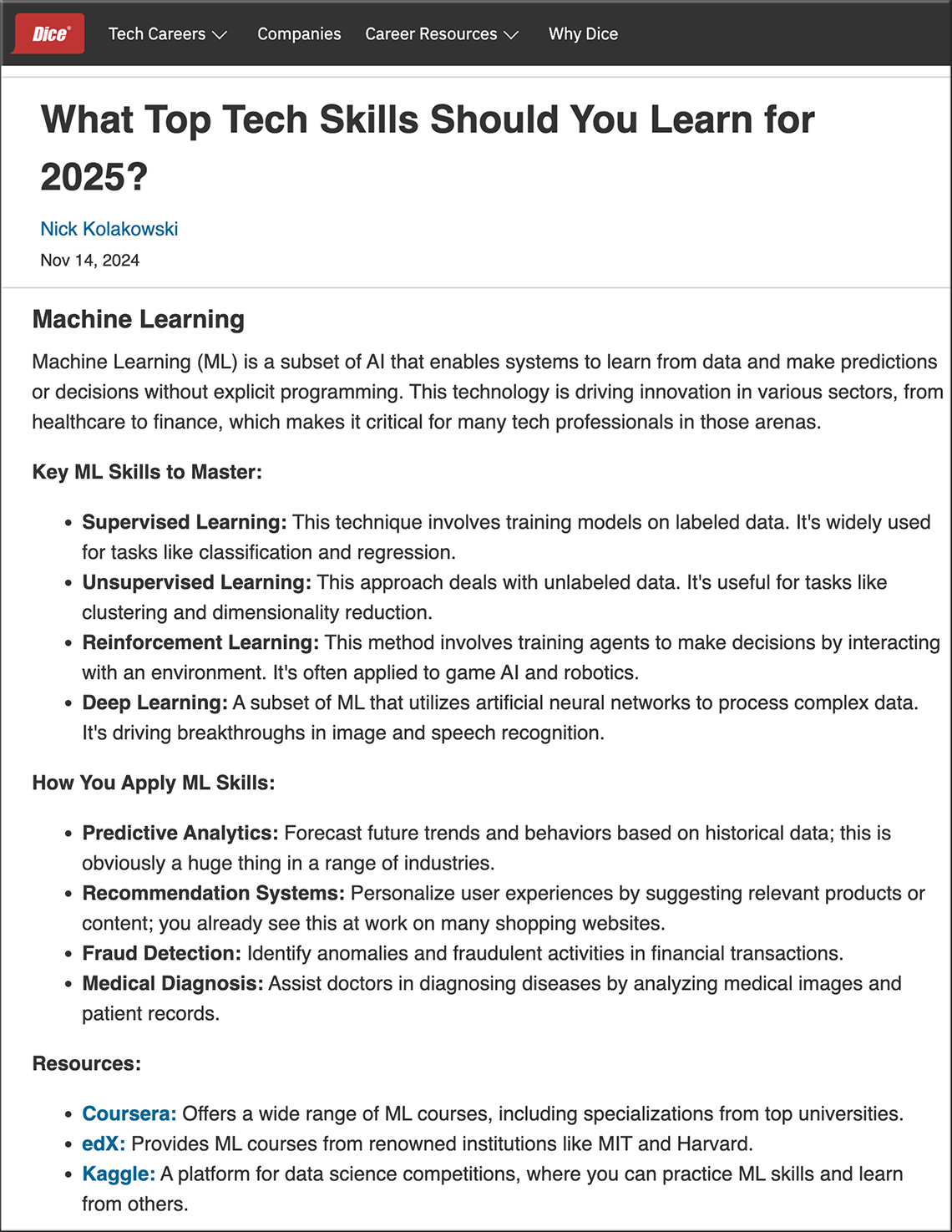
What Top Tech Skills Should You Learn for 2025? — from dice.com by Nick Kolakowski


…you will see that they outline which skills you should consider mastering in 2025 if you want to stay on top of the latest career opportunities. They then list more information about the skills, how you apply the skills, and WHERE to get those skills.

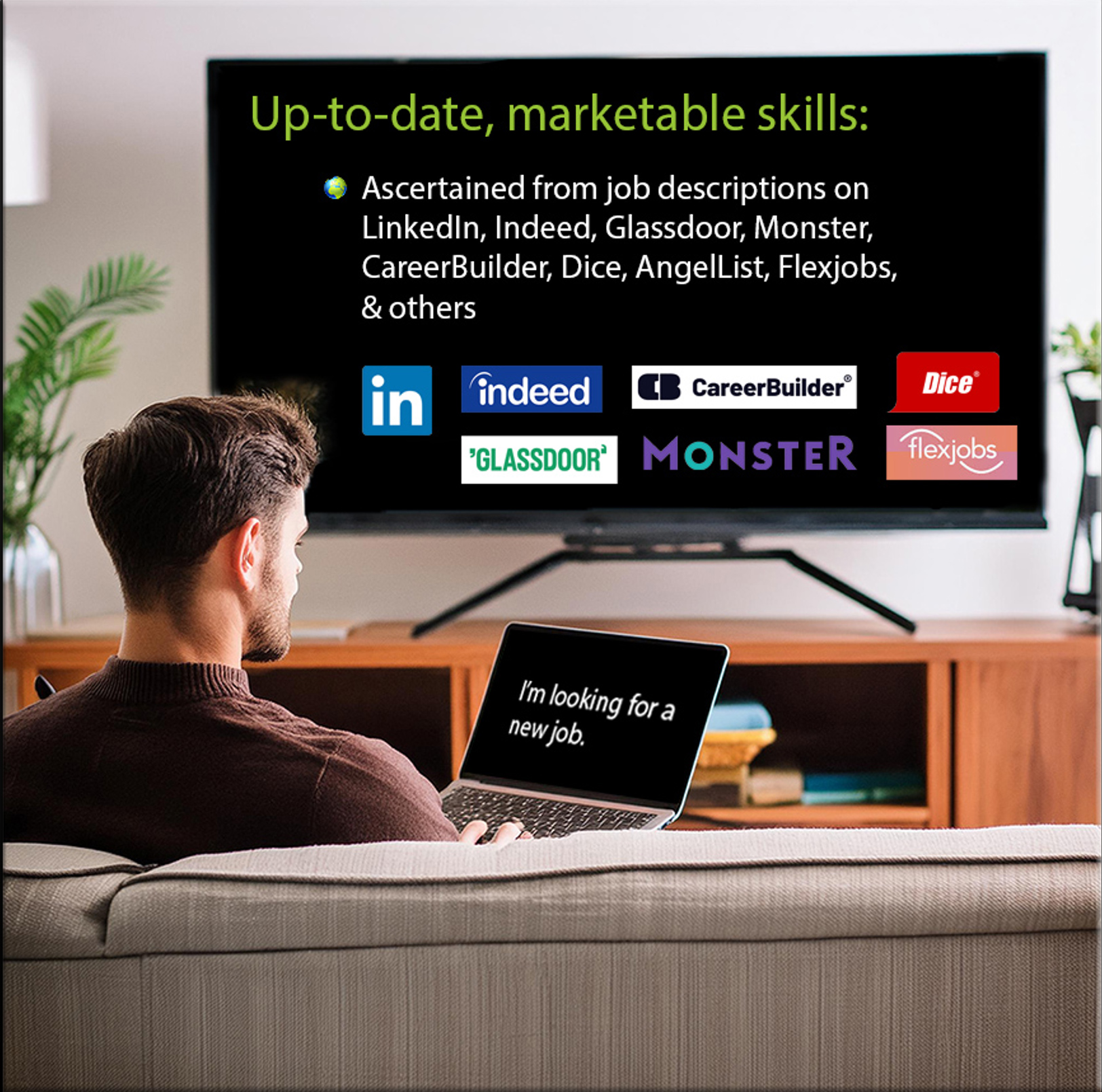
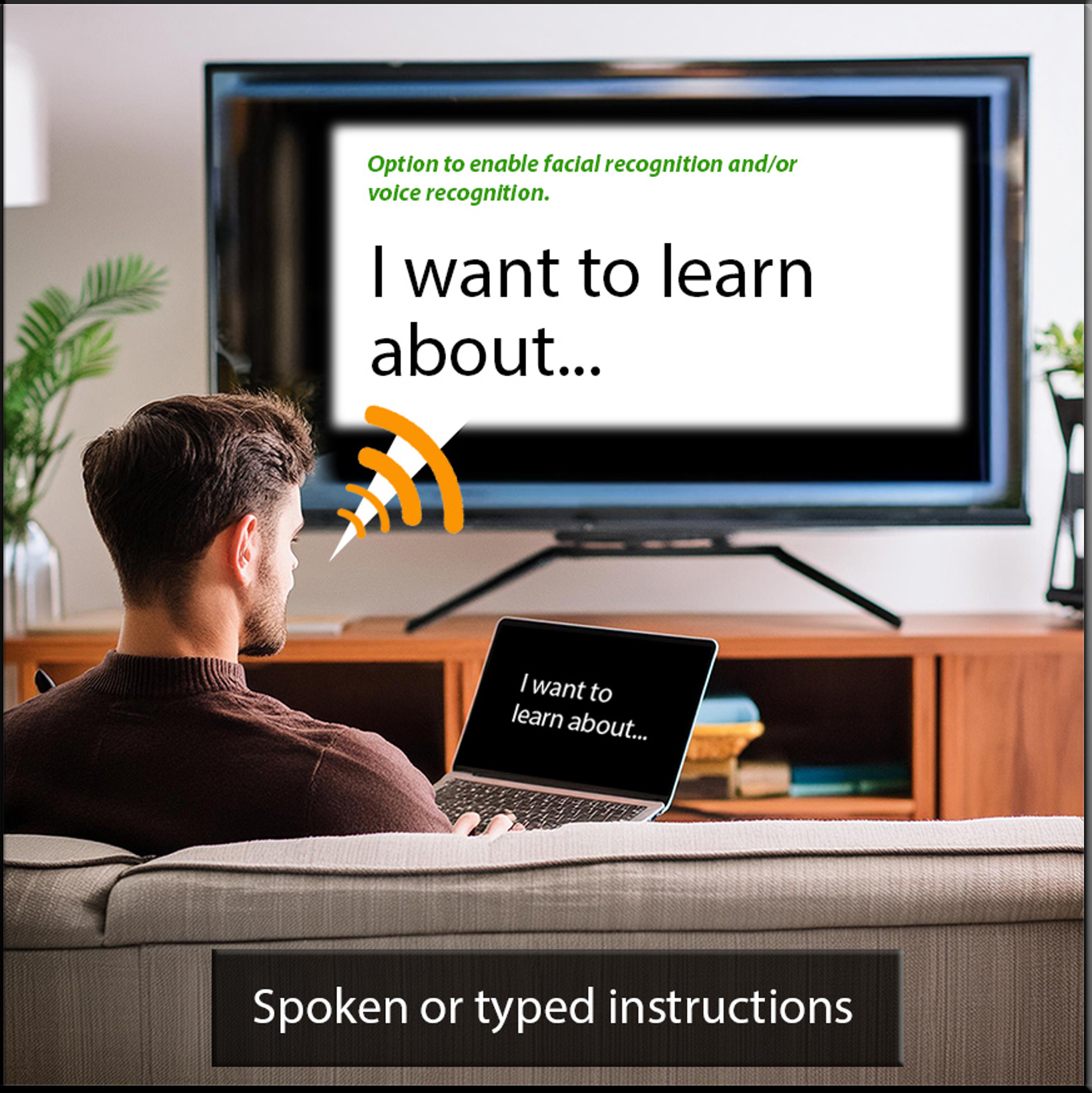
I assert that in the future, people will be able to see this information on a 24x7x365 basis.

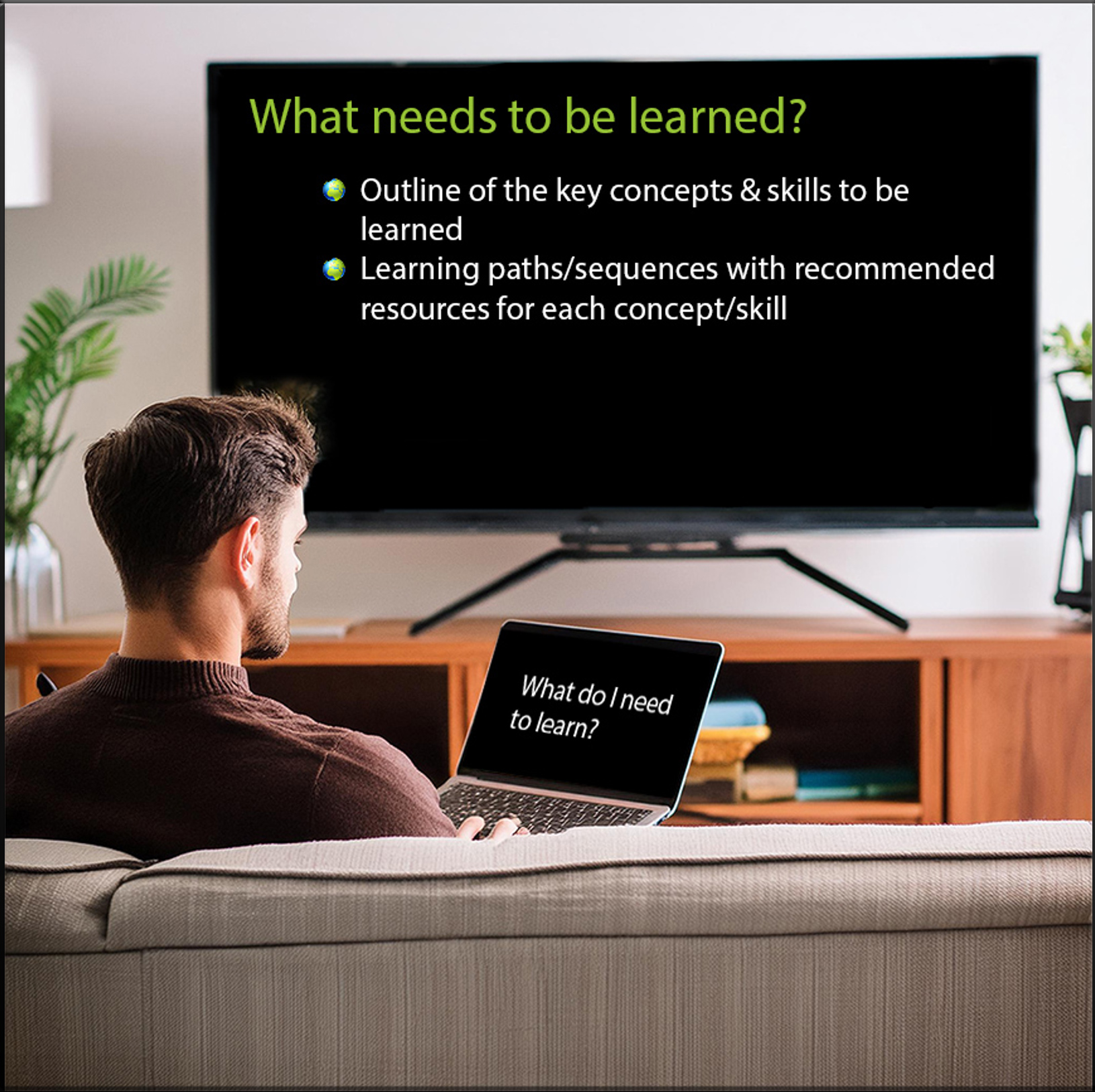
  • Which jobs are in demand?
  • What skills do I need to do those jobs?
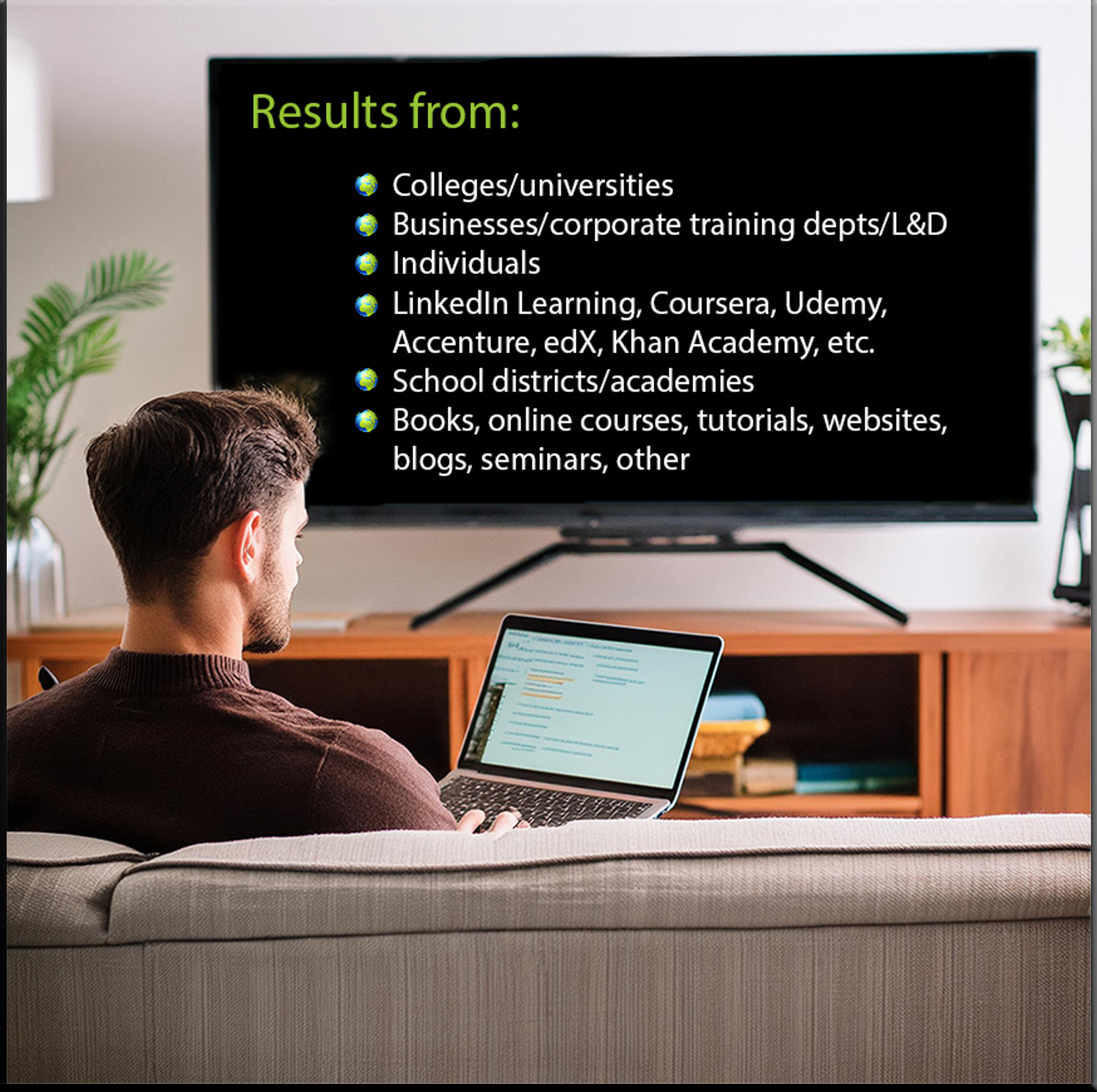
  • WHERE do I get/develop those skills?


And that last part (about the WHERE do I develop those skills) will pull from many different institutions, people, companies, etc.

BUT PEOPLE are the key! Oftentimes, we need to — and prefer to — learn with others!


“The Value of Doing Things: What AI Agents Mean for Teachers” — from nickpotkalitsky.substack.com by guest author Jason Gulya, Professor of English and Applied Media at Berkeley College in New York City

AI Agents make me nervous. Really nervous.

I wish they didn’t.

I wish I could write that the last two years have made me more confident, more self-assured that AI is here to augment workers rather than replace them.

But I can’t.

I wish I could write that I know where schools and colleges will end up. I wish I could say that AI Agents will help us get where we need to be.

But I can’t.

At this point, today, I’m at a loss. I’m not sure where the rise of AI agents will take us, in terms of how we work and learn. I’m in the question-asking part of my journey. I have few answers.

So, let’s talk about where (I think) AI Agents will take education. And who knows? Maybe as I write I’ll come up with something more concrete.

It’s worth a shot, right?

From DSC: 
I completely agree with Jason’s following assertion:

A good portion of AI advancement will come down to employee replacement. And AI Agents push companies towards that. 

THAT’s where/what the ROI will be for corporations. They will make their investments up in the headcount area, and likely in other areas as well (product design, marketing campaigns, engineering-related items, and more). But how much time it takes to get there is a big question mark.

One last quote here…it’s too good not to include:

Behind these questions lies a more abstract, more philosophical one: what is the relationship between thinking and doing in a world of AI Agents and other kinds of automation?


How Good are Claude, ChatGPT & Gemini at Instructional Design? — from drphilippahardman.substack.com by Dr Philippa Hardman
A test of AI’s Instruction Design skills in theory & in practice

By examining models across three AI families—Claude, ChatGPT, and Gemini—I’ve started to identify each model’s strengths, limitations, and typical pitfalls.

Spoiler: my findings underscore that until we have specialised, fine-tuned AI copilots for instructional design, we should be cautious about relying on general-purpose models and ensure expert oversight in all ID tasks.

From DSC — I’m going to (have Nick) say this again:
I simply asked my students to use AI to brainstorm their own learning objectives. No restrictions. No predetermined pathways. Just pure exploration. The results? Astonishing.

Students began mapping out research directions I’d never considered. They created dialogue spaces with AI that looked more like intellectual partnerships than simple query-response patterns. 


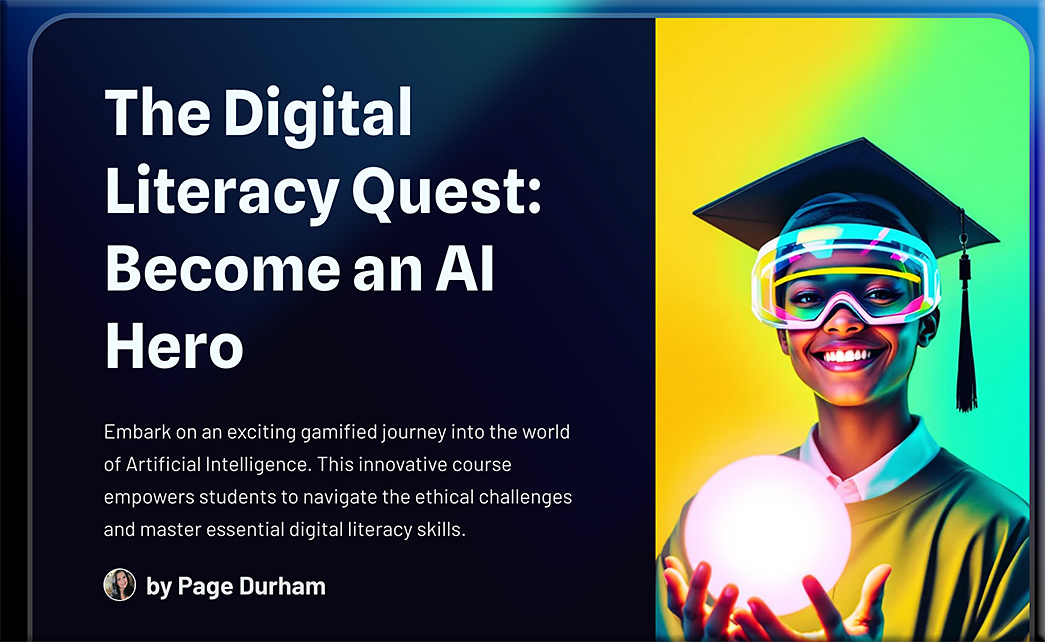
The Digital Literacy Quest: Become an AI Hero — from gamma.app

From DSC:
I have not gone through all of these online-based materials, but I like what they are trying to get at:

  • Confidence with AI
    Students gain practical skills and confidence in using AI tools effectively.
  • Ethical Navigation
    Learn to navigate the ethical landscape of AI with integrity and responsibility. Make informed decisions about AI usage.
  • Mastering Essential Skills
    Develop critical thinking and problem-solving skills in the context of AI.


Expanding access to the Gemini app for teen students in education — from workspaceupdates.googleblog.com

Google Workspace for Education admins can now turn on the Gemini app with added data protection as an additional service for their teen users (ages 13+ or the applicable age in your country) in the following languages and countries. With added data protection, chats are not reviewed by human reviewers or otherwise used to improve AI models. The Gemini app will be a core service in the coming weeks for Education Standard and Plus users, including teens,


5 Essential Questions Educators Have About AI  — from edsurge.com by Annie Ning

Recently, I spoke with several teachers regarding their primary questions and reflections on using AI in teaching and learning. Their thought-provoking responses challenge us to consider not only what AI can do but what it means for meaningful and equitable learning environments. Keeping in mind these reflections, we can better understand how we move forward toward meaningful AI integration in education.


FrontierMath: A Benchmark for Evaluating Advanced Mathematical Reasoning in AI — from epoch.ai
FrontierMath presents hundreds of unpublished, expert-level mathematics problems that specialists spend days solving. It offers an ongoing measure of AI complex mathematical reasoning progress.

We’re introducing FrontierMath, a benchmark of hundreds of original, expert-crafted mathematics problems designed to evaluate advanced reasoning capabilities in AI systems. These problems span major branches of modern mathematics—from computational number theory to abstract algebraic geometry—and typically require hours or days for expert mathematicians to solve.


Rising demand for AI courses in UK universities shows 453% growth as students adapt to an AI-driven job market — from edtechinnovationhub.com

The demand for artificial intelligence courses in UK universities has surged dramatically over the past five years, with enrollments increasing by 453%, according to a recent study by Currys, a UK tech retailer.

The study, which analyzed UK university admissions data and surveyed current students and recent graduates, reveals how the growing influence of AI is shaping students’ educational choices and career paths.

This growth reflects the broader trend of AI integration across industries, creating new opportunities while transforming traditional roles. With AI’s influence on career prospects rising, students and graduates are increasingly drawn to AI-related courses to stay competitive in a rapidly changing job market.


How Legal Education Must Evolve In The Age Of AI: Insights From An In-House Legal Innovator — from by abovethelaw.com Olga Mack
Traditional legal education has remained largely unchanged for decades, focusing heavily on theoretical knowledge and case law analysis.

As we stand on the brink of a new era defined by artificial intelligence (AI) and data-driven decision-making, the question arises: How should legal education adapt to prepare the next generation of lawyers for the challenges ahead?

Here are three unconventional, actionable insights from our conversation that highlight the need for a radical rethinking of legal education.

  1. Integrate AI Education Into Every Aspect Of Legal Training…
  2. Adopt A ‘Technology-Agnostic’ Approach To AI Training…
  3. Redefine Success In Legal Education To Include Technological Proficiency…


Google’s worst nightmare just became reality — from aidisruptor.ai by Alex McFarland
OpenAI just launched an all-out assault on traditional search engines.

Google’s worst nightmare just became reality. OpenAI didn’t just add search to ChatGPT – they’ve launched an all-out assault on traditional search engines.

It’s the beginning of the end for search as we know it.

Let’s be clear about what’s happening: OpenAI is fundamentally changing how we’ll interact with information online. While Google has spent 25 years optimizing for ad revenue and delivering pages of blue links, OpenAI is building what users actually need – instant, synthesized answers from current sources.

The rollout is calculated and aggressive: ChatGPT Plus and Team subscribers get immediate access, followed by Enterprise and Education users in weeks, and free users in the coming months. This staged approach is about systematically dismantling Google’s search dominance.


Open for AI: India Tech Leaders Build AI Factories for Economic Transformation — from blogs.nvidia.com
Yotta Data Services, Tata Communications, E2E Networks and Netweb are among the providers building and offering NVIDIA-accelerated infrastructure and software, with deployments expected to double by year’s end.


AI Tutors Double Rates of Learning in Less Learning Time — by drphilippahardman.substack.com Dr. Philippa Hardman
Inside Harvard’s new groundbreaking study

Conclusion
This Harvard study provides robust evidence that AI tutoring, when thoughtfully designed, can significantly enhance learning outcomes. The combination of doubled learning gains, increased engagement, and reduced time to competency suggests we’re seeing just the beginning of AI’s potential in education and that its potential is significant.

If this data is anything to go by, and if we – as humans – are open and willing to acting on it, it’s possible AI will have a significant and for some deeply positive impact on how we design and deliver learning experiences.

That said, as we look forward, the question shouldn’t just be, “how AI can enhance current educational methods?”, but also “how it might AI transform the very nature of learning itself?”. With continued research and careful implementation, we could be moving toward an era of education that’s more effective but also more accessible than ever before.


Three Quick Examples of Teaching with and about Generative AI — from derekbruff.org Derek Bruff

  • Text-to-Podcast.
  • Assigning Students to Groups.
  • AI Acceptable Use Scale.

Also from Derek’s blog, see:


From Mike Sharples on LinkedIn: 


ChatGPT’s free voice wizard — from wondertools.substack.com by Jeremy Caplan
How and why to try the new Advanced Voice Mode

7 surprisingly practical ways to use voice AI
Opening up ChatGPT’s Advanced Voice Mode (AVM) is like conjuring a tutor eager to help with whatever simple — or crazy — query you throw at it. Talking is more fluid and engaging than typing, especially if you’re out and about. It’s not a substitute for human expertise, but AVM provides valuable machine intelligence.

  • Get a virtual museum tour. …
  • Chat with historical figures….
  • Practice languages. …
  • Explore books. …
  • Others…


Though not AI-related, this is along the lines of edtech:


…which links to:


Are ChatGPT, Claude & NotebookLM *Really* Disrupting Education? — from drphilippahardman.substack.com
Evaluating Gen AI’s *real* impact on human learning

The TLDR here is that, as useful as popular AI tools are for learners, as things stand they only enable us to take the very first steps on what is a long and complex journey of learning.

AI tools like ChatGPT 4o, Claude 3.5 & NotebookLM can help to give us access to information but (for now at least) the real work of learning remains in our – the humans’ – hands.


To which Anna Mills had a solid comment:

It might make a lot of sense to regulate generated audio to require some kind of watermark and/or metadata. Instructors who teach online and assign voice recordings, we need to recognize that these are now very easy and free to auto-generate. In some cases we are assigning this to discourage students from using AI to just autogenerate text responses, but audio is not immune.


Opening Keynote – GS1

Bringing generative AI to video with Adobe Firefly Video Model

Adobe Launches Firefly Video Model and Enhances Image, Vector and Design Models

  • The Adobe Firefly Video Model (beta) expands Adobe’s family of creative generative AI models and is the first publicly available video model designed to be safe for commercial use
  • Enhancements to Firefly models include 4x faster image generation and new capabilities integrated into Photoshop, Illustrator, Adobe Express and now Premiere Pro
  • Firefly has been used to generate 13 billion images since March 2023 and is seeing rapid adoption by leading brands and enterprises

Photoshop delivers powerful innovation for image editing, ideation, 3D design, and more

Even more speed, precision, and power: Get started with the latest Illustrator and InDesign features for creative professionals

Adobe Introduces New Global Initiative Aimed at Helping 30 Million Next-Generation Learners Develop AI Literacy, Content Creation and Digital Marketing Skills by 2030

Add sound to your video via text — Project Super Sonic:


New Dream Weaver — from aisecret.us
Explore Adobe’s New Firefly Video Generative Model

Cybercriminals exploit voice cloning to impersonate individuals, including celebrities and authority figures, to commit fraud. They create urgency and trust to solicit money through deceptive means, often utilizing social media platforms for audio samples.


Articulate AI & the “Buttonification” of Instructional Design — from drphilippahardman.substack.com by Dr. Philippa Hardman
A new trend in AI-UX, and its implications for Instructional Design

1. Using AI to Scale Exceptional Instructional Design Practice
Imagine a bonification system that doesn’t just automate tasks, but scales best practices in instructional design:

  • Evidence-Based Design Button…
  • Learner-Centered Objectives Generator…
    Engagement Optimiser…

2. Surfacing AI’s Instructional Design Thinking
Instead of hiding AI’s decision-making process, what if we built an AI system which invites instructional designers to probe, question, and learn from an expert trained AI?

  • Explain This Design…
  • Show Me Alternatives…
  • Challenge My Assumptions…
  • Learning Science Insights…

By reimagining the role of AI in this way, we would…


Recapping OpenAI’s Education Forum — from marcwatkins.substack.com by Marc Watkins

OpenAI’s Education Forum was eye-opening for a number of reasons, but the one that stood out the most was Leah Belsky acknowledging what many of us in education had known for nearly two years—the majority of the active weekly users of ChatGPT are students. OpenAI has internal analytics that track upticks in usage during the fall and then drops off in the spring. Later that evening, OpenAI’s new CFO, Sarah Friar, further drove the point home with an anecdote about usage in the Philippines jumping nearly 90% at the start of the school year.

I had hoped to gain greater insight into OpenAI’s business model and how it related to education, but the Forum left me with more questions than answers. What app has the majority of users active 8 to 9 months out of the year and dormant for the holidays and summer breaks? What business model gives away free access and only converts 1 out of every 20-25 users to paid users? These were the initial thoughts that I hoped the Forum would address. But those questions, along with some deeper and arguably more critical ones, were skimmed over to drive home the main message of the Forum—Universities have to rapidly adopt AI and become AI-enabled institutions.


Off-Loading in the Age of Generative AI — from insidehighered.com by James DeVaney

As we embrace these technologies, we must also consider the experiences we need to discover and maintain our connections—and our humanity. In a world increasingly shaped by AI, I find myself asking: What are the experiences that define us, and how do they influence the relationships we build, both professionally and personally?

This concept of “off-loading” has become central to my thinking. In simple terms, off-loading is the act of delegating tasks to AI that we would otherwise do ourselves. As AI systems advance, we’re increasingly confronted with a question: Which tasks should we off-load to AI?

 
© 2025 | Daniel Christian