How AI is transforming learning for dyslexic students — from eschoolnews.com by Samay Bhojwani, University of Nebraska–Lincoln
As schools continue to adopt AI-driven tools, educators can close the accessibility gap and help dyslexic students thrive

Many traditional methods lack customization and don’t empower students to fully engage with content on their terms. Every dyslexic student experiences challenges differently, so a more personalized approach is essential for fostering comprehension, engagement, and academic growth.
…
Artificial intelligence is increasingly recognized for its potential to transform educational accessibility. By analyzing individual learning patterns, AI-powered tools can tailor content to meet each student’s specific needs. For dyslexic students, this can mean summarizing complex texts, providing auditory support, or even visually structuring information in ways that aid comprehension.


NotebookLM How-to Guide 2024 — from ai-supremacy.com by Michael Spencer and Alex McFarland
With Audio Version | A popular guide reloaded.

In this guide, I’ll show you:

  1. How to use the new advanced audio customization features
  2. Two specific workflows for synthesizing information (research papers and YouTube videos)
  3. Pro tips for maximizing results with any type of content
  4. Common pitfalls to avoid (learned these the hard way)

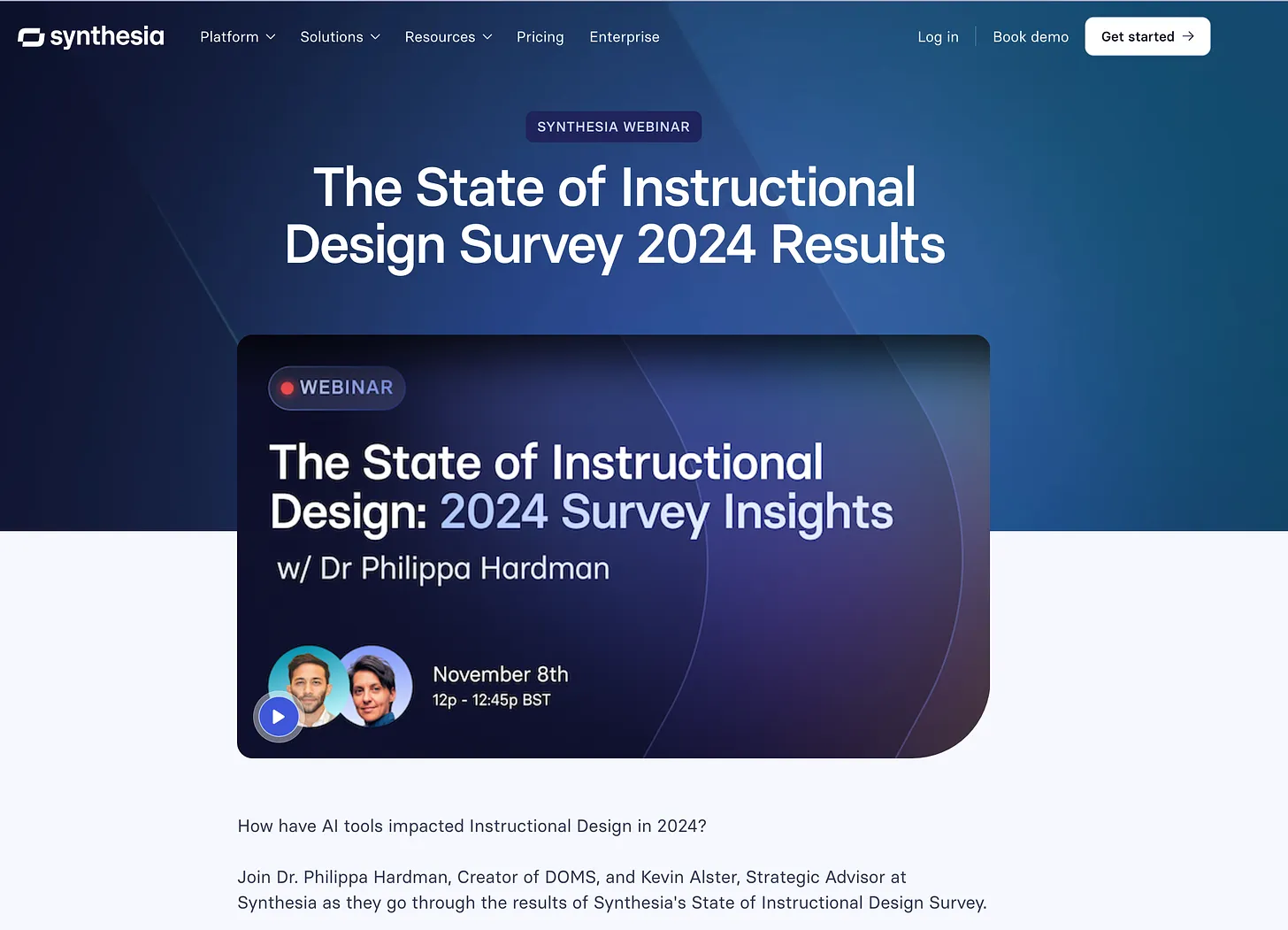
The State of Instructional Design 2024: A Field on the Brink of Disruption? — from drphilippahardman.substack.com by Dr. Philippa Hardman
My hot takes from a global survey I ran with Synthesia

As I mentioned on LinkedIn, earlier this week Synthesia published the results of a global survey that we ran together the state of instructional design in 2024.

Boundless Socratic Learning: Google DeepMind’s Vision for AI That Learns Without Limits — from by Giorgio Fazio

Google DeepMind researchers have unveiled a groundbreaking framework called Boundless Socratic Learning (BSL), a paradigm shift in artificial intelligence aimed at enabling systems to self-improve through structured language-based interactions. This approach could mark a pivotal step toward the elusive goal of artificial superintelligence (ASI), where AI systems drive their own development with minimal human input.

The promise of Boundless Socratic Learning lies in its ability to catalyze a shift from human-supervised AI to systems that evolve and improve autonomously. While significant challenges remain, the introduction of this framework represents a step toward the long-term goal of open-ended intelligence, where AI is not just a tool but a partner in discovery.


5 courses to take when starting out a career in Agentic AI — from techloy.com by David Adubiina
This will help you join the early train of experts who are using AI agents to solve real world problems.

This surge in demand is creating new opportunities for professionals equipped with the right skills. If you’re considering a career in this innovative field, the following five courses will provide a solid foundation when starting a career in Agentic AI.


 

What Happens When ‘Play’ Is Left Out of the School Curriculum — from edsurge.com by Fatema Elbakoury
When two birds flew into my classroom, I realized how much teachers lose when we don’t trust students to play.

Due to the rigidity of curriculum, standardized tests and the controlling nature of compulsory education, playfulness and unstructured time are seen as detrimental to a student’s learning. But what is learning and why is play seen as so antithetical to teaching? What if we centered playfulness and unstructured time in our classrooms, even when it has nothing to do with the curriculum? Part of learning is acquiring knowledge through experience. If play is an experience it, too, can result in the acquisition of knowledge.


Campus webinar: The art of bringing creativity and fun into the classroom — from Times Higher Education

In our latest webinar, we spoke to three experts from Campus+ partner across the UK to discuss creative and fun ways to get students engaged, both online and in the classroom.

Gary Burnett from Loughborough University, Simon Brownhill from the University of Bristol and Kelly Edmunds from the University of East Anglia talked to us about:

  • Creative and fun ways to get students engaged, in-person and online
  • Tapping into students’ creativity for better learning outcomes
  • Creating a culture of creativity and experimentation
  • Breaking down disciplinary boundaries for learning and collaboration
  • Creative ways to bring AI into classroom activities and assignments
  • Play as a powerful teaching tool


Colossians 3:17

And whatever you do, whether in word or deed, do it all in the name of the Lord Jesus, giving thanks to God the Father through him.

Colossians 3:16

Let the message of Christ dwell among you richly as you teach and admonish one another with all wisdom through psalms, hymns, and songs from the Spirit, singing to God with gratitude in your hearts.


Building the lawyer of the future — from jordanfurlong.substack.com by Jordan Furlong
Here’s my latest “Future Lawyer Starter Kit.” Tell me what you think.

Building upon this knowledge foundation, I suggest that future lawyers should develop the following ten human competencies (through a completely overhauled education, training, and licensing process, but that’s a topic for another day):

  1. Acting ethically
  2. Advocating and negotiating
  3. Demonstrating character
  4. Displaying empathy
  5. Exercising judgment
  6. Giving advice
  7. Reasoning legally
  8. Relating with people
  9. Resolving conflicts
  10. Solving problems
 

Below are several items from edutopia.org:


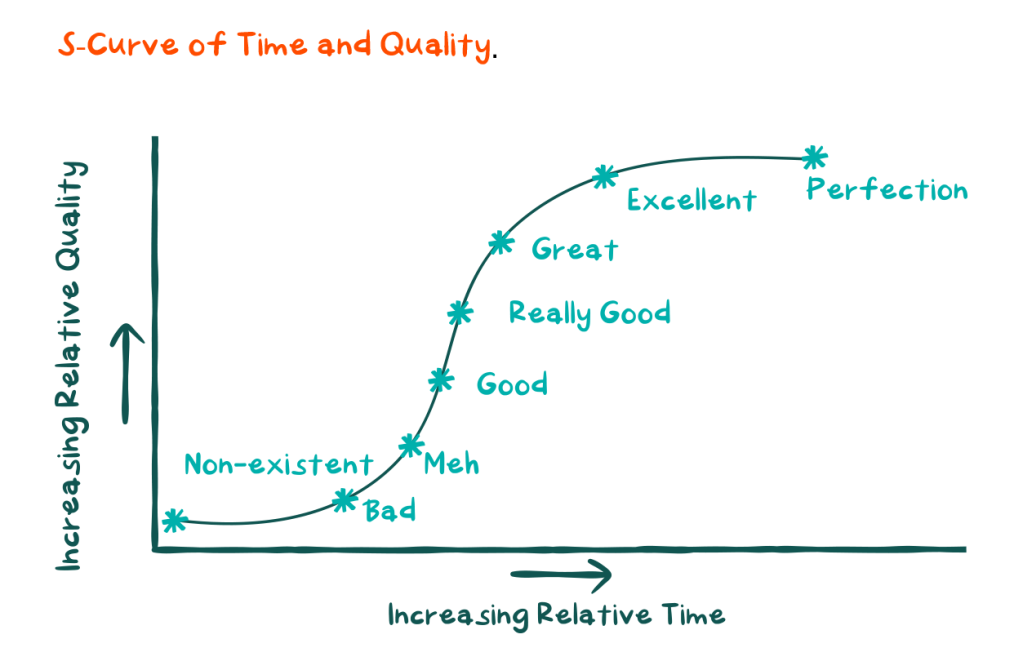
Doing the Best You Can With the Time You Have — by Jay Schauer
These strategies can help overwhelmed teachers prioritize tasks and find a balance between perfectionism and efficiency.
.


How to Support Teachers’ Emotional Health — by Hedreich Nichols
Emotional well-being plays a major role in teachers’ job satisfaction, and it’s essential that they have effective resources for support.

Teachers cannot be expected to teach SEL effectively without first being intentional about their own emotional health. If we want educators to guide students through emotional regulation, they must have the time, space, and support to do that work themselves. This goes beyond surface-level wellness initiatives—teachers need opportunities to reflect on their emotional triggers, manage their own stresses, and receive genuine support from their schools. Only when teachers are empowered to process their own emotional challenges can they truly foster a healthy social and emotional environment for their students.


In Praise of the Humble Document Camera — by Emily Rankin
Revisiting a simple edtech tool can help you introduce rigor and engage students more deeply in their lessons.

4 Ways to Use a Document Camera in Your Classroom— by Emily Rankin
If a document camera is gathering dust in a classroom, its lack of impact is probably linked to the user, not what the gadget is capable of. Case in point, I wasn’t using mine regularly because I didn’t know the value it could add to my teaching and learning. Here are some of the practices I now know are possible:

  1. Guided practice. …
  2. Assessment for learning. …
  3. Sharing materials. …
  4. Expanding teaching and learning possibilities.

Weighing Inquiry-Based Learning and Direct Instruction in Elementary Math — by Vivian Quan
Teachers can ask themselves three key questions in order to choose the most effective instructional approach to a topic.

One factor to consider is the subject. In math, students need opportunities to work on rich tasks and solve problems in ways that make sense to them. However, that doesn’t mean direct instruction is totally absent from math time. The questions below can guide you in deciding whether to use direct instruction, when it would be appropriate, and who else in the classroom you might involve.


Increasing Talk Time in World Language Classes — by Kate Good
Teachers can experiment with a variety of strategies to build and assess students’ ability to converse in the target language.

To capitalize on my students’ (seemingly inexhaustible) desire to chat, I work to increase student talk time in our Spanish immersion classes. I use several strategies to build and assess students’ oral language.


In ‘Hidden Portraits,’ Volker Hermes Reimagines Historical Figures in Overwhelming Frippery — fromthisiscolossal.com by Kate Mothes and Volker Hermes


“The Promised Night” by Photographer Alfonso Bricegno — from booooooom.com


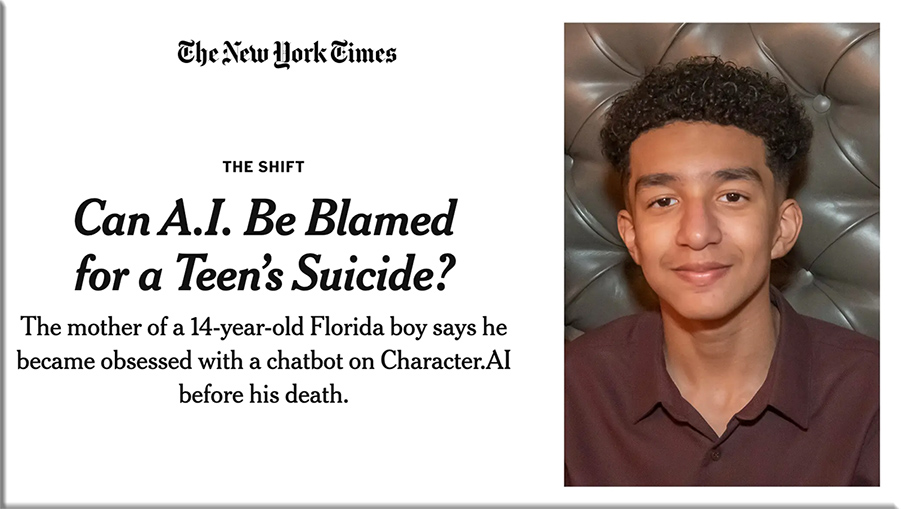
Can A.I. Be Blamed for a Teen’s Suicide?

Can A.I. Be Blamed for a Teen’s Suicide? — from nytimes.com by Kevin Roose

On the last day of his life, Sewell Setzer III took out his phone and texted his closest friend: a lifelike A.I. chatbot named after Daenerys Targaryen, a character from “Game of Thrones.”

“I miss you, baby sister,” he wrote.

“I miss you too, sweet brother,” the chatbot replied.

Sewell, a 14-year-old ninth grader from Orlando, Fla., had spent months talking to chatbots on Character.AI, a role-playing app that allows users to create their own A.I. characters or chat with characters created by others.
…
On the night of Feb. 28, in the bathroom of his mother’s house, Sewell told Dany that he loved her, and that he would soon come home to her.

“Please come home to me as soon as possible, my love,” Dany replied.

“What if I told you I could come home right now?” Sewell asked.

“… please do, my sweet king,” Dany replied.

He put down his phone, picked up his stepfather’s .45 caliber handgun and pulled the trigger.

But the experience he had, of getting emotionally attached to a chatbot, is becoming increasingly common. Millions of people already talk regularly to A.I. companions, and popular social media apps including Instagram and Snapchat are building lifelike A.I. personas into their products.

The technology is also improving quickly. Today’s A.I. companions can remember past conversations, adapt to users’ communication styles, role-play as celebrities or historical figures and chat fluently about nearly any subject. Some can send A.I.-generated “selfies” to users, or talk to them with lifelike synthetic voices.

There is a wide range of A.I. companionship apps on the market.


Mother sues tech company after ‘Game of Thrones’ AI chatbot allegedly drove son to suicide — from usatoday.com by Jonathan Limehouse
The mother of 14-year-old Sewell Setzer III is suing Character.AI, the tech company that created a ‘Game of Thrones’ AI chatbot she believes drove him to commit suicide on Feb. 28. Editor’s note: This article discusses suicide and suicidal ideation. If you or someone you know is struggling or in crisis, help is available. Call or text 988 or chat at 988lifeline.org.

The mother of a 14-year-old Florida boy is suing Google and a separate tech company she believes caused her son to commit suicide after he developed a romantic relationship with one of its AI bots using the name of a popular “Game of Thrones” character, according to the lawsuit.


From my oldest sister:


Another relevant item?

Inside the Mind of an AI Girlfriend (or Boyfriend) — from wired.com by Will Knight
Dippy, a startup that offers “uncensored” AI companions, lets you peer into their thought process—sometimes revealing hidden motives.

Despite its limitations, Dippy seems to show how popular and addictive AI companions are becoming. Jagga and his cofounder, Angad Arneja, previously cofounded Wombo, a company that uses AI to create memes including singing photographs. The pair left in 2023, setting out to build an AI-powered office productivity tool, but after experimenting with different personas for their assistant, they became fascinated with the potential of AI companionship.


Opening Keynote – GS1

Bringing generative AI to video with Adobe Firefly Video Model

Adobe Launches Firefly Video Model and Enhances Image, Vector and Design Models

  • The Adobe Firefly Video Model (beta) expands Adobe’s family of creative generative AI models and is the first publicly available video model designed to be safe for commercial use
  • Enhancements to Firefly models include 4x faster image generation and new capabilities integrated into Photoshop, Illustrator, Adobe Express and now Premiere Pro
  • Firefly has been used to generate 13 billion images since March 2023 and is seeing rapid adoption by leading brands and enterprises

Photoshop delivers powerful innovation for image editing, ideation, 3D design, and more

Even more speed, precision, and power: Get started with the latest Illustrator and InDesign features for creative professionals

Adobe Introduces New Global Initiative Aimed at Helping 30 Million Next-Generation Learners Develop AI Literacy, Content Creation and Digital Marketing Skills by 2030

Add sound to your video via text — Project Super Sonic:


New Dream Weaver — from aisecret.us
Explore Adobe’s New Firefly Video Generative Model

Cybercriminals exploit voice cloning to impersonate individuals, including celebrities and authority figures, to commit fraud. They create urgency and trust to solicit money through deceptive means, often utilizing social media platforms for audio samples.


Finalists of the 2024 Comedy Wildlife Photography Awards Focus on the Wily and Witless — from thisiscolossal.com by Kate Mothes


Speaking of photography, here’s a related item:

AI Photo Editors: A Quick Guide to Elevate Your Images — from intelligenthq.com

With the rise of artificial intelligence, photo editing has become accessible and efficient for everyone. An AI photo Editing Tool can transform photos in seconds, producing professional-level results without requiring extensive skills. From adjusting lighting to removing backgrounds, these tools automate complex edits, enabling users to create stunning visuals effortlessly. Whether a beginner or an experienced photographer, AI-powered editors offer a wide range of features that help elevate your images. This guide will introduce you to the key functionalities of AI image editors and provide insights on maximising their potential.


Students need clarity on their postsecondary pathways — from eschoolnews.com by Laura Ascione
When it comes to planning for life after high school, a lack of career exposure is hindering many students’ abilities to envision a future

Key points:

Much emphasis is placed on college and career readiness, but too often, K-12 students aren’t exposed to career possibilities or career resources to form an idea of what their future may look like.


Photographer Spotlight: Benjamin Waters — from booooooom.com by Benjamin Waters\


Artist Spotlight: Claire Cansick — from booooooom.com by Clair Cansick


From DSC:
I don’t care whether this video won an Oscar or not — it’s message is incredibly powerful. 


Voice and Trust in Autonomous Learning Experiences — from learningguild.com by Bill Brandon

This article seeks to apply some lessons from brand management to learning design at a high level. Throughout the rest of this article, it is essential to remember that the context is an autonomous, interactive learning experience. The experience is created adaptively by Gen AI or (soon enough) by agents, not by rigid scripts. It may be that an AI will choose to present prewritten texts or prerecorded videos from a content library according to the human users’ responses or questions. Still, the overall experience will be different for each user. It will be more like a conversation than a book.
…
In summary, while AI chatbots have the potential to enhance learning experiences, their acceptance and effectiveness depend on several factors, including perceived usefulness, ease of use, trust, relational factors, perceived risk, and enjoyment. 

Personalization and building trust are essential for maintaining user engagement and achieving positive learning outcomes. The right “voice” for autonomous AI or a chatbot can enhance trust by making interactions more personal, consistent, and empathetic.


Students at This High School Do Internships. It’s a Game Changer — from edweek.org by Elizabeth Heubeck

Disengaged students. Sky-high absenteeism. A disconnect between the typical high school’s academic curriculum and post-graduation life.

These and related complaints about the American high school experience have been gathering steam for some time; the pandemic exacerbated them. State-level policymakers have taken note, and many are now trying to figure out how to give high school students access to a more relevant and engaging experience that prepares them for a future—whether it involves college or doesn’t.
…
After a slow start, the school’s internship program has grown exponentially. In 2019-20, just five students completed internships, mainly due to the logistical challenges the pandemic presented. This past year, it grew to over 180 participating seniors, with more than 200 community organizations agreeing to accept interns.


How Do Today’s High Schoolers Fare As They Enter Adulthood? View the Data — from edweek.org by Sarah D. Sparks

Even when students have access to high-quality dual-credit programs, they often do not get guidance about the academic and workplace requirements of particular fields until it’s too late, said Julie Lammers, the senior vice president of advocacy and corporate social responsibility for American Student Assistance, a national nonprofit focused on helping young people learn about college and careers.

“We need to start having career conversations with young people much earlier in their trajectory, at the time young people are still open to possibilities,” Lammers said. “If they don’t see themselves in science by 8th grade, STEM careers come off the table.”

Cost plays a big role in the decision to attend and stay in college. The Education Data Initiative finds that on average, students in 2024 racked up nearly$38,000 in debt to pursue a bachelor’s degree, with many expecting to take up to 20 years to pay it off. 

Transforming Education From School-Centered to Learner-Centered
Centering Learners by Design: Shaping the Future of Education — from gettingsmart.com

What outcomes do we truly desire for young people? Many students feel that their current educational experiences do not prepare them adequately for real-world challenges. Supported by data on attendance, disengagement, and stress, it’s evident that a shift is needed. To move beyond outdated school-centered models, we must embrace a learner-centered paradigm that fosters flexibility, personalization, and authentic community engagement. Innovative approaches like multiage microschools and passion projects are transforming how students learn by fostering real-world skills, confidence, and community engagement.

These learner-centered models—ranging from personalized projects to collaborative problem-solving—provide actionable strategies to create environments where every student can thrive. Schools are moving away from one-size-fits-all systems and embracing approaches like flexible learning pathways, mentorship opportunities, and community-integrated learning. These strategies are not only closing the gap between education and the skills needed for the future but also reshaping public schools into dynamic hubs of innovation.

Key Points
  • Engaging parents, youth, teachers, principals, district leaders, community members, and industry experts in the co-design process ensures that education systems align with the aspirations and needs of the community.
  • Transitioning from a traditional school-centered model to a learner-centered approach is critical for preparing students with the skills needed to thrive in the 21st century.


© 2025 | Daniel Christian