Brainyacts #57: Education Tech— from thebrainyacts.beehiiv.com by Josh Kubicki

Excerpts:

Let’s look at some ideas of how law schools could use AI tools like Khanmigo or ChatGPT to support lectures, assignments, and discussions, or use plagiarism detection software to maintain academic integrity.

  1. Personalized learning
  2. Virtual tutors and coaches
  3. Interactive simulations
  4. Enhanced course materials
  5. Collaborative learning
  6. Automated assessment and feedback
  7. Continuous improvement
  8. Accessibility and inclusivity

AI Will Democratize Learning — from td.org by Julia Stiglitz and Sourabh Bajaj

Excerpts:

In particular, we’re betting on four trends for AI and L&D.

  1. Rapid content production
  2. Personalized content
  3. Detailed, continuous feedback
  4. Learner-driven exploration

In a world where only 7 percent of the global population has a college degree, and as many as three quarters of workers don’t feel equipped to learn the digital skills their employers will need in the future, this is the conversation people need to have.
…
Taken together, these trends will change the cost structure of education and give learning practitioners new superpowers. Learners of all backgrounds will be able to access quality content on any topic and receive the ongoing support they need to master new skills. Even small L&D teams will be able to create programs that have both deep and broad impact across their organizations.

The Next Evolution in Educational Technologies and Assisted Learning Enablement — from educationoneducation.substack.com by Jeannine Proctor

Excerpt:

Generative AI is set to play a pivotal role in the transformation of educational technologies and assisted learning. Its ability to personalize learning experiences, power intelligent tutoring systems, generate engaging content, facilitate collaboration, and assist in assessment and grading will significantly benefit both students and educators.

How Generative AI Will Enable Personalized Learning Experiences — from campustechnology.com by Rhea Kelly

Excerpt:

With today’s advancements in generative AI, that vision of personalized learning may not be far off from reality. We spoke with Dr. Kim Round, associate dean of the Western Governors University School of Education, about the potential of technologies like ChatGPT for learning, the need for AI literacy skills, why learning experience designers have a leg up on AI prompt engineering, and more. And get ready for more Star Trek references, because the parallels between AI and Sci Fi are futile to resist.

The Promise of Personalized Learning Never Delivered. Today’s AI Is Different — from the74million.org by John Bailey; with thanks to GSV for this resource

Excerpts:

There are four reasons why this generation of AI tools is likely to succeed where other technologies have failed:

    1. Smarter capabilities
    2. Reasoning engines
    3. Language is the interface
    4. Unprecedented scale

Latest NVIDIA Graphics Research Advances Generative AI’s Next Frontier — from blogs.nvidia.com by Aaron Lefohn
NVIDIA will present around 20 research papers at SIGGRAPH, the year’s most important computer graphics conference.

Excerpt:

NVIDIA today introduced a wave of cutting-edge AI research that will enable developers and artists to bring their ideas to life — whether still or moving, in 2D or 3D, hyperrealistic or fantastical.

Around 20 NVIDIA Research papers advancing generative AI and neural graphics — including collaborations with over a dozen universities in the U.S., Europe and Israel — are headed to SIGGRAPH 2023, the premier computer graphics conference, taking place Aug. 6-10 in Los Angeles.

The papers include generative AI models that turn text into personalized images; inverse rendering tools that transform still images into 3D objects; neural physics models that use AI to simulate complex 3D elements with stunning realism; and neural rendering models that unlock new capabilities for generating real-time, AI-powered visual details.


Also relevant to the item from Nvidia (above), see:

Unreal Engine’s Metahuman Creator — with thanks to Mr. Steven Chevalia for this resource

Excerpt:

MetaHuman is a complete framework that gives any creator the power to use highly realistic human characters in any way imaginable.

It includes MetaHuman Creator, a free cloud-based app that enables you to create fully rigged photorealistic digital humans in minutes.
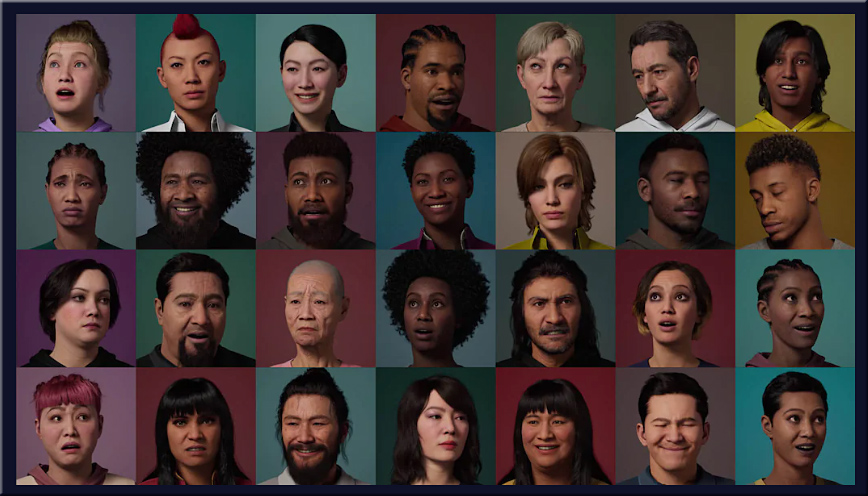

From Unreal Engine -- Dozens of ready-made MetaHumans are at your fingertips.


Lore Issue #29: AI Video and The Future of Hollywood — from lore.com

Key Insights:

  • Writers’ strike could hasten AI adoption in film.
  • AI video soon viable for games, film B-roll, and marketing.
  • Long-term: anyone could create their own movies; film budgets will drop.
  • Actionable Takeaway: Consider exploring AI-generated video in your industry. Educate yourself about what is currently possible.

Relevant Companies:


Poetry writing about Flint murals allows for ‘creative freedom’ in this high school classroom — from mlive.com  by Dylan Goetz (behind paywall)

Excerpt:

It’s a new tradition in the curriculum of the senior-level English class, where teacher Carrie Mattern asks her students to seek out a mural in Flint and write poetry about it.

This year, there was a focus on writing around cultural grief and the process of healing.

It’s become a favorite assignment for the students who’ve worked on the project, who say it allows them to use “creative freedom” in a way that other classes don’t.
.


Also see:


Cleveland Cavaliers Turn Their Arena Into An AR Arcade — from vrscout.com by Kyle Melnick

.

How Audi Used AR Tech To Build Its New Concept Car  — from vrscout.com by Kyle Melnick

.

Celebrate Earth Day With An Out-Of-This-World VR Film — from vrscout.com by Kyle Melnick


35 Ways Real People Are Using A.I. Right Now — from nytimes.com by Francesca Paris and Larry Buchanan

From DSC:
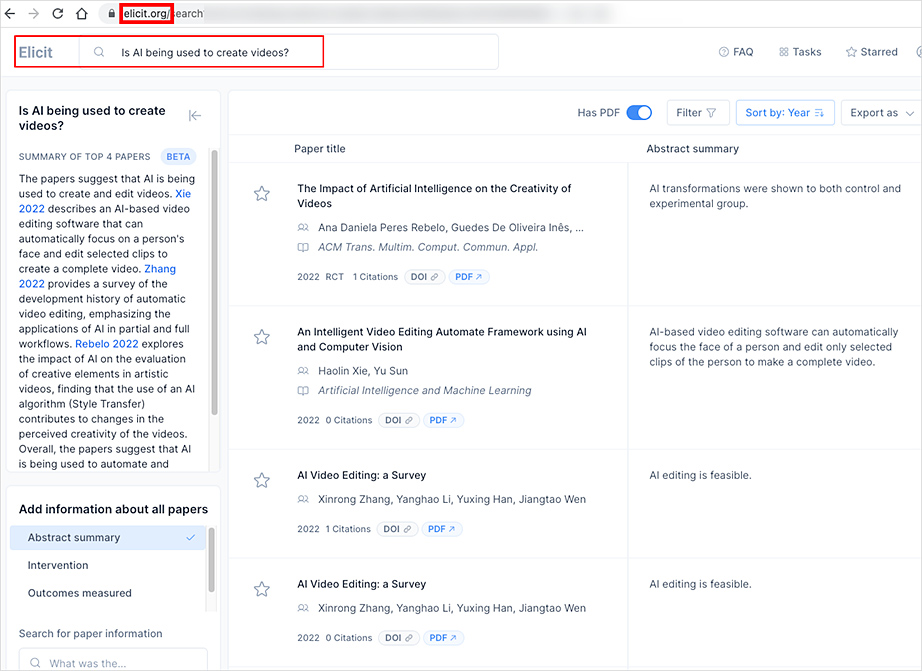
It was interesting to see how people are using AI these days. The article mentioned things from planning Gluten Free (GF) meals to planning gardens, workouts, and more. Faculty members, staff, students, researchers and educators in general may find Elicit, Scholarcy and Scite to be useful tools. I put in a question at Elicit and it looks interesting. I like their interface, which allows me to quickly resort things.
.

Snapshot of a query result from a tool called Elicit


There Is No A.I. — from newyorker.com by Jaron Lanier
There are ways of controlling the new technology—but first we have to stop mythologizing it.

Excerpts:

If the new tech isn’t true artificial intelligence, then what is it? In my view, the most accurate way to understand what we are building today is as an innovative form of social collaboration.
…
The new programs mash up work done by human minds. What’s innovative is that the mashup process has become guided and constrained, so that the results are usable and often striking. This is a significant achievement and worth celebrating—but it can be thought of as illuminating previously hidden concordances between human creations, rather than as the invention of a new mind.


Resource per Steve Nouri on LinkedIn


From DSC:
Before we get to Scott Belsky’s article, here’s an interesting/related item from Tobi Lutke:


Our World Shaken, Not Stirred: Synthetic entertainment, hybrid social experiences, syncing ourselves with apps, and more. — from implications.com by Scott Belsky
Things will get weird. And exciting.

Excerpts:

Recent advances in technology will stir shake the pot of culture and our day-to-day experiences. Examples? A new era of synthetic entertainment will emerge, online social dynamics will become “hybrid experiences” where AI personas are equal players, and we will sync ourselves with applications as opposed to using applications.

A new era of synthetic entertainment will emerge as the world’s video archives – as well as actors’ bodies and voices – will be used to train models. Expect sequels made without actor participation, a new era of ai-outfitted creative economy participants, a deluge of imaginative media that would have been cost prohibitive, and copyright wars and legislation.

Unauthorized sequels, spin-offs, some amazing stuff, and a legal dumpster fire: Now lets shift beyond Hollywood to the fast-growing long tail of prosumer-made entertainment. This is where entirely new genres of entertainment will emerge including the unauthorized sequels and spinoffs that I expect we will start seeing.


Also relevant/see:

Digital storytelling with generative AI: notes on the appearance of #AICinema — from bryanalexander.org by Bryan Alexander

Excerpt:

This is how I viewed a fascinating article about the so-called #AICinema movement.  Benj Edwards describes this nascent current and interviews one of its practitioners, Julie Wieland.  It’s a great example of people creating small stories using tech – in this case, generative AI, specifically the image creator Midjourney.

Bryan links to:

Artists astound with AI-generated film stills from a parallel universe — from arstechnica.com by Benj Edwards
A Q&A with “synthographer” Julie Wieland on the #aicinema movement.

An AI-generated image from an #aicinema still series called Vinyl Vengeance by Julie Wieland, created using Midjourney.


From DSC:
How will text-to-video impact the Learning and Development world? Teaching and learning? Those people communicating within communities of practice? Those creating presentations and/or offering webinars?

Hmmm…should be interesting!


A museum without screens: The Media Museum of Sound and Vision in Hilversum — from inavateonthenet.net

Excerpt:

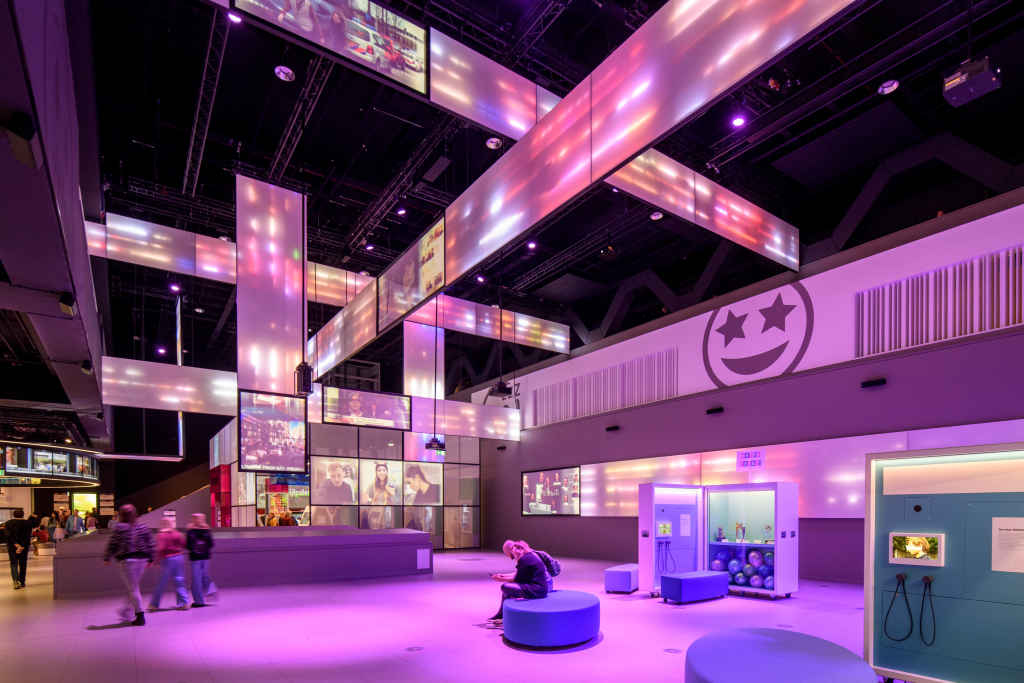
Re-opened to the public last month after five years of planning and two-and-a-half years of renovations, The Media Museum of Sound and Vision in Hilversum in the Netherlands, is an immersive experience exploring modern media. It’s become a museum that continuously adapts to the actions of its visitors in order to reflect the ever-changing face of media culture.

How we consume media is revealed in five zones in the building: Share, Inform, Sell, Tell and Play. The Media Museum includes more than 50 interactives, with hundreds of hours of AV material and objects from history. The experience uses facial recognition and the user’s own smartphone to make it a personalised museum journey for everyone.


A portion of the Media Museum in Hilversum, the Netherlands
Photo from Mike Bink

From DSC:
Wow! There is some serious AV work and creativity in the Media Museum of Sound and Vision!


What Is the Secret Sauce for Deeper Learning? — from cultofpedagogy.com by Jennifer Gonzalez

Excerpt:

One place that was a consistent source of deep learning was what Fine and Mehta referred to as “the periphery,” elective classes like art and robotics and extracurriculars like debate and athletics that are outside of what we consider to be the core academic classes. “Nobody talks very much about what’s going on in those spaces,” Fine says, “and yet they were the places where we saw the richest learning happening.” In these spaces, much of what they call the “grammar” of school is different: Students are there by choice, they have opportunities for apprenticeship and leadership, they can specialize in a subdomain of the field, and there’s usually a real product being produced for an authentic audience.

In the book, the authors used a school theater program as an example of this kind of learning at the periphery.


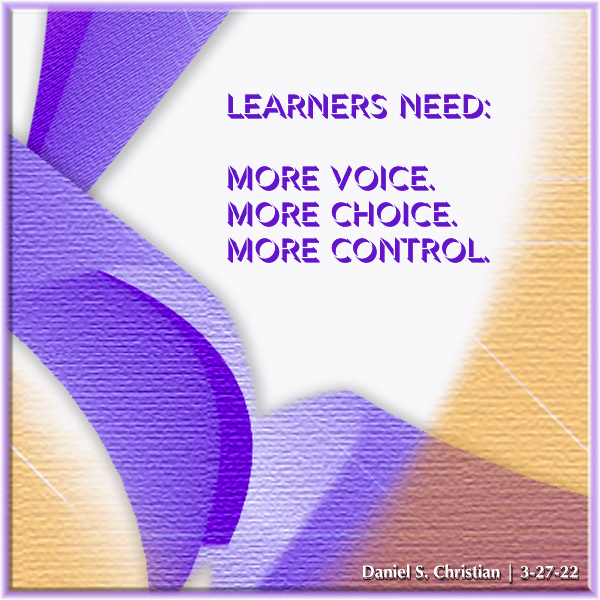
Learners need: More voice. More choice. More control. -- this image was created by Daniel Christian


Canva’s New AI Wonder Tools — from wondertools.substack.com  by Jeremy Caplan
A magic eraser, a branding kit, AI presentations, and more new features

Excerpt:

Canva launched a bunch of new features at a live event viewed by 1.5 million people globally. The Australian company is no longer an upstart. 125 million people use it monthly, including 13 million paid subscribers yielding $1.4 billion in revenue. Canva’s increasingly competing with Adobe to help people create eye-catching visuals. Here are its most useful new tricks.


How to use AI to do practical stuff: A new guide — from oneusefulthing.substack.com by Ethan Mollick
People often ask me how to use AI. Here’s an overview with lots of links.

Excerpts:

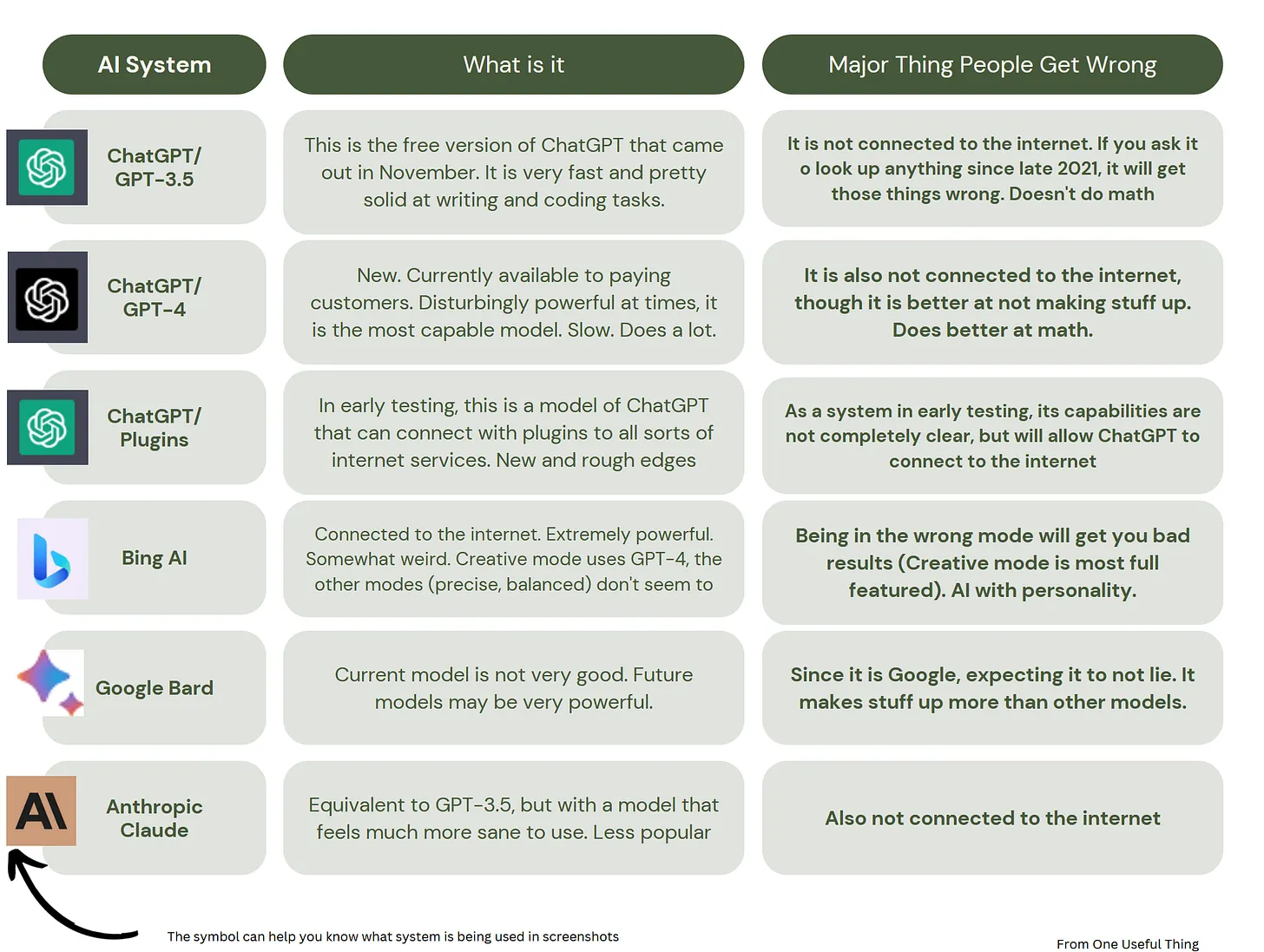
We live in an era of practical AI, but many people haven’t yet experienced it, or, if they have, they might have wondered what the big deal is. Thus, this guide. It is a modified version of one I put out for my students earlier in the year, but a lot has changed. It is an overview of ways to get AI to do practical things.
…
I want to try to show you some of why AI is powerful, in ways both exciting and anxiety-producing.

The Six Large Language Models


Also see Ethan’s posting:

Power and Weirdness: How to Use Bing AI
Bing AI is a huge leap over ChatGPT, but you have to learn its quirks


Artist Spotlight: Minyoung Choi [booooooom.com]

Artist Spotlight: Minyoung Choi — from booooooom.com

Painting of a fish tank with colorful guppies in it

 
© 2025 | Daniel Christian