In ‘The Order of Things,’ Wim Delvoye’s Playful Installations Reimagine a Museum’s Historical Collection — from thisiscolossal.com by Kate Mothes and Wim Delvoye


In ‘The Order of Things,’ Wim Delvoye’s Playful Installations Reimagine a Museum’s Historical Collection — from thisiscolossal.com by Kate Mothes and Wim Delvoye
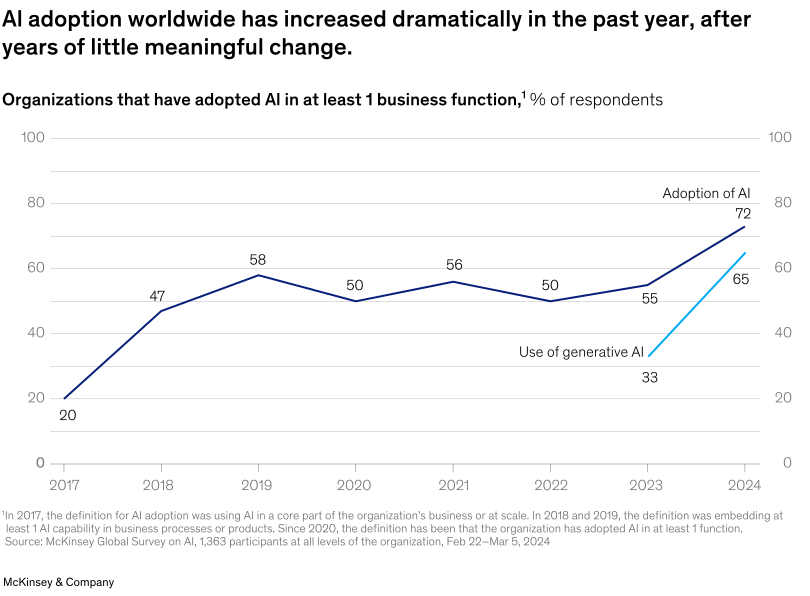
The state of AI in early 2024: Gen AI adoption spikes and starts to generate value — from mckinsey.com
As generative AI adoption accelerates, survey respondents report measurable benefits and increased mitigation of the risk of inaccuracy. A small group of high performers lead the way.
If 2023 was the year the world discovered generative AI (gen AI), 2024 is the year organizations truly began using—and deriving business value from—this new technology. In the latest McKinsey Global Survey on AI, 65 percent of respondents report that their organizations are regularly using gen AI, nearly double the percentage from our previous survey just ten months ago. Respondents’ expectations for gen AI’s impact remain as high as they were last year, with three-quarters predicting that gen AI will lead to significant or disruptive change in their industries in the years ahead.
Organizations are already seeing material benefits from gen AI use, reporting both cost decreases and revenue jumps in the business units deploying the technology. The survey also provides insights into the kinds of risks presented by gen AI—most notably, inaccuracy—as well as the emerging practices of top performers to mitigate those challenges and capture value.
.
.
What’s the future of AI? — from mckinsey.com
AI is here to stay. To outcompete in the future, organizations and individuals alike need to get familiar fast. This series of McKinsey Explainers dives deep into the seven technologies that are already shaping the years to come.
We’re in the midst of a revolution. Just as steam power, mechanized engines, and coal supply chains transformed the world in the 18th century, AI technology is currently changing the face of work, our economies, and society as we know it. We don’t know exactly what the future will look like. But we do know that these seven technologies will play a big role.
.
?ANNOUNCING SHOWRUNNER?
We believe the future is a mix of game & movie.
Simulations powering 1000s of Truman Shows populated by interactive AI characters.
?Welcome to Sim Francisco & Showrunner!?
SOUND ON!
Link to Signup in Bio pic.twitter.com/yptMocqOfW
— The Simulation (@fablesimulation) May 30, 2024
Generate an e-book in minutes with groqbook — from heatherbcooper.substack.com by Heather Cooper
Plus new Canva workflow tools, Perplexity Pages, and more
.

The new Canva
Canva announced “a whole new Canva” to improve workplace collaborative creation and a revamped platform to simplify its tools for anyone to use.
At Canva Create, several AI features were announced that enhance the design and content creation process:
Tools are the next big thing in AI — from link.wired.com by Will Knight
Things might get more interesting in business settings as AI companies start deploying so-called “AI agents,” which can take action by operating other software on a computer or via the internet.
Anthropic, a competitor to OpenAI, announced a major new product today that attempts to prove the thesis that tool use is needed for AI’s next leap in usefulness.
“Frameless” art museum in London where art truly comes to life pic.twitter.com/O4bP2NUE1K
— Historic Vids (@historyinmemes) May 17, 2024
Landscapes Radiate Light and Drama in Erin Hanson’s Vibrant Oil Paintings — from thisiscolossal.com by Kate Mothes and Erin Hanson

Thread of surreal sculpture details ?
1. Water flowing over toes pic.twitter.com/lAUjvyP3lg
— James Lucas (@JamesLucasIT) May 6, 2024
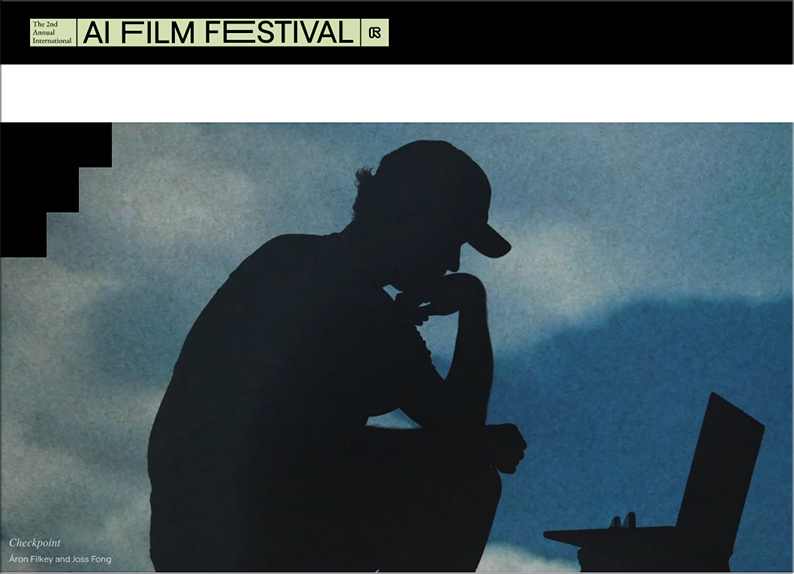
AI Film Festival | AI comes to filmmaking — from Bloomberg
This week Runway AI Inc., which makes AI video generating and editing tools, held its second annual AI Film Festival in Los Angeles — its first stop before heading to New York next week. To give a sense for how much the event has grown since last year, Runway co-founder CristóbalValenzuela said last year people submitted 300 videos for festival consideration. This year they sent in 3,000.
A crowd of hundreds of filmmakers, techies, artists, venture capitalists and at least one well-known actor (Poker Face star Natasha Lyonne) gathered at the Orpheum Theatre in downtown LA Wednesday night to view the 10 finalists chosen by the festival’s judges.
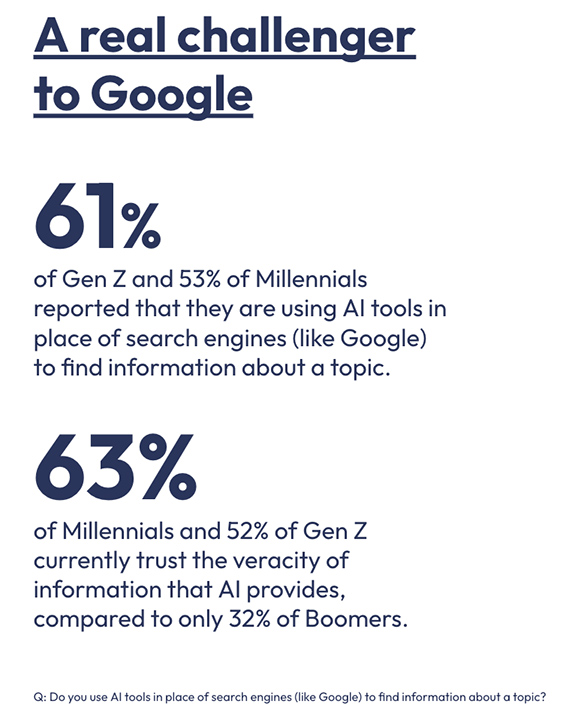
The Verge | What’s Next With AI | February 2024 | Consumer Survey
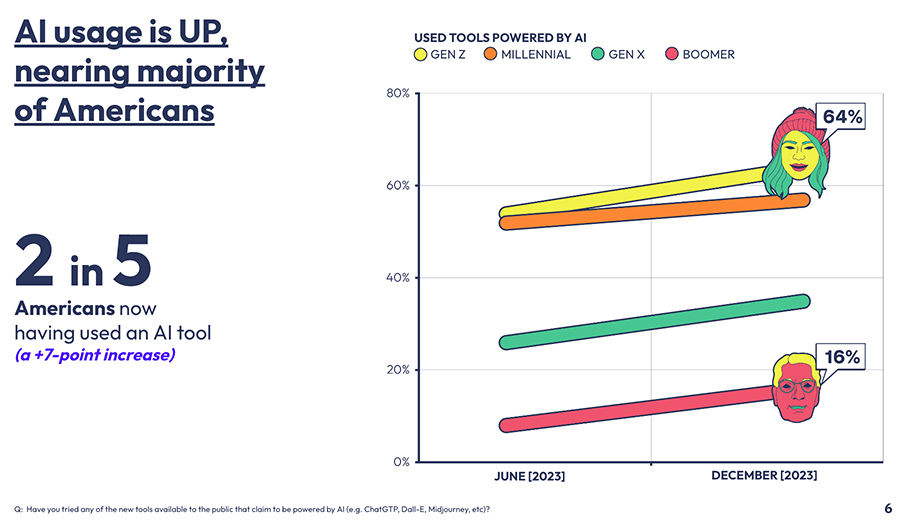
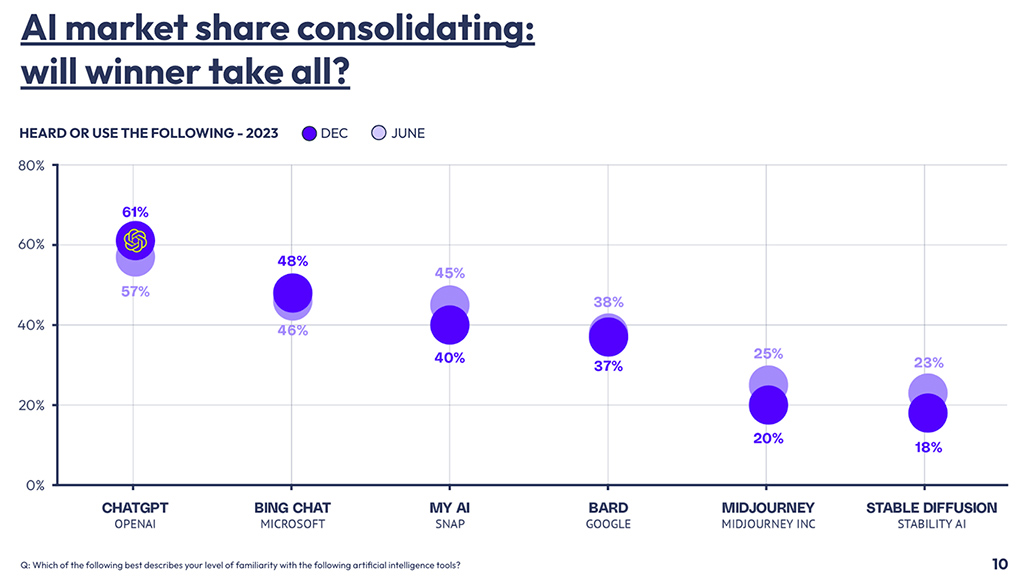
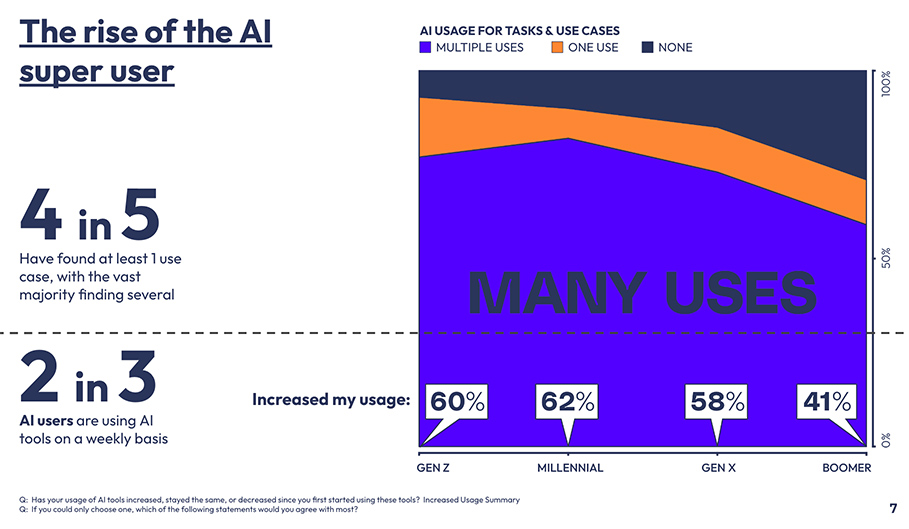
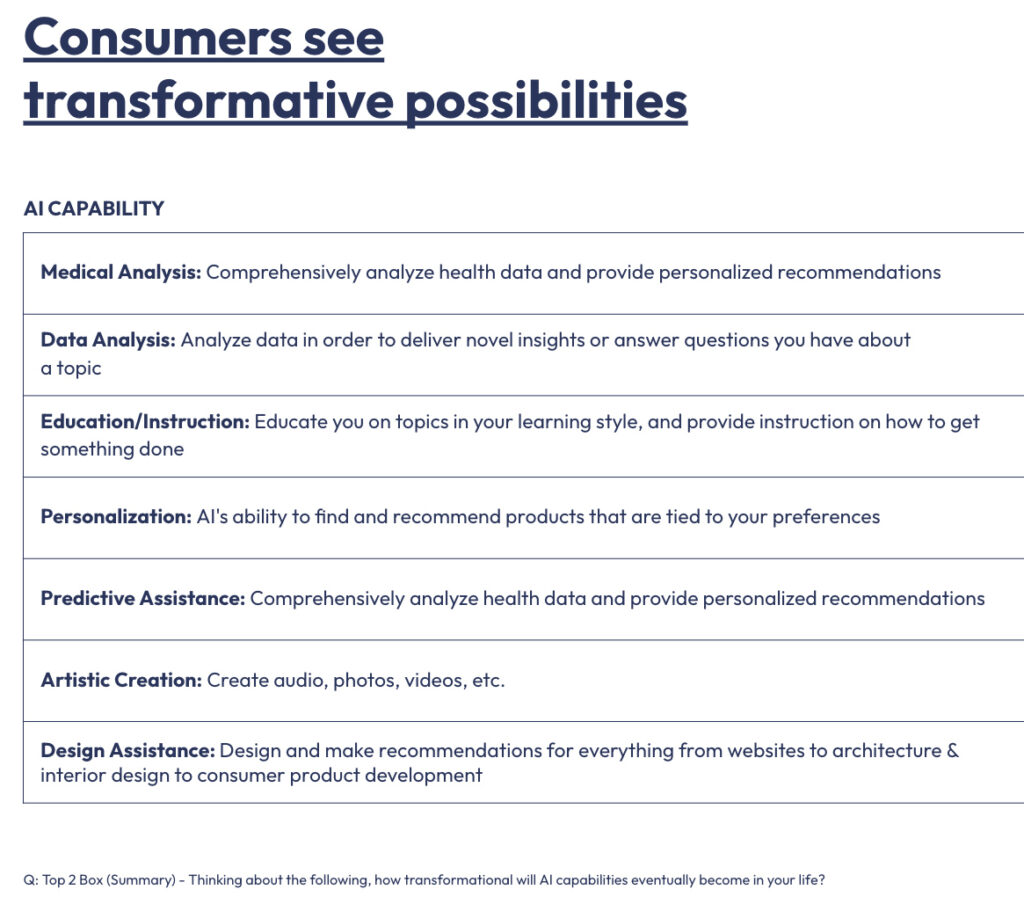
DC: Just because we can doesn’t mean we should.
It brings to mind #AI and #robotics and the #military — hmmmm…. https://t.co/1J4XKiHRUl
— Daniel Christian (he/him/his) (@dchristian5) April 25, 2024
Microsoft AI creates talking deepfakes from single photo — from inavateonthenet.net
The Great Hall – where now with AI? It is not ‘Human Connection V Innovative Technology’ but ‘Human Connection + Innovative Technology’ — from donaldclarkplanb.blogspot.com by Donald Clark
The theme of the day was Human Connection V Innovative Technology. I see this a lot at conferences, setting up the human connection (social) against the machine (AI). I think this is ALL wrong. It is, and has always been a dialectic, human connection (social) PLUS the machine. Everyone had a smartphone, most use it for work, comms and social media. The binary between human and tech has long disappeared.
Techno-Social Engineering: Why the Future May Not Be Human, TikTok’s Powerful ForYou Algorithm, & More — from by Misha Da Vinci
Things to consider as you dive into this edition:
It’s been an insane week for AI (part 2)
Here are 14 most impressive reveals from this week:
1/ China just released OpenAI’s Sora rival “Vidu” which can create realistic clips in seconds.pic.twitter.com/MnTv9Wxpef
— Barsee ? (@heyBarsee) April 27, 2024
Thread on the beauty of wildlife ?
1. When it’s cold enough to see the melody pic.twitter.com/NL1nbTZpGp
— James Lucas (@JamesLucasIT) April 18, 2024
Hyper realistic glass of water art
pic.twitter.com/V3ObMr6pQv— Science girl (@gunsnrosesgirl3) April 20, 2024
Great creativity. pic.twitter.com/KM4QhlqWov
— Figen (@TheFigen_) April 19, 2024
Thread on the beauty of our planet to celebrate Earth Day ?
1. Meteor over Mount Fuji by H. Manabe pic.twitter.com/ACjafIqCB6
— James Lucas (@JamesLucasIT) April 22, 2024
3. After 3 years of failed attempts, Leonardo Sens finally managed to capture this fantastic shot of the Christ the Redeemer statue in Brazil seemingly holding the moon. pic.twitter.com/9qQ1lXh0sz
— James Lucas (@JamesLucasIT) April 21, 2024
16. A cherry blossoms tunnels made of millions of LED bulbs. Nabana No Sato, Japan. pic.twitter.com/Y1NruoqwLI
— James Lucas (@JamesLucasIT) April 21, 2024
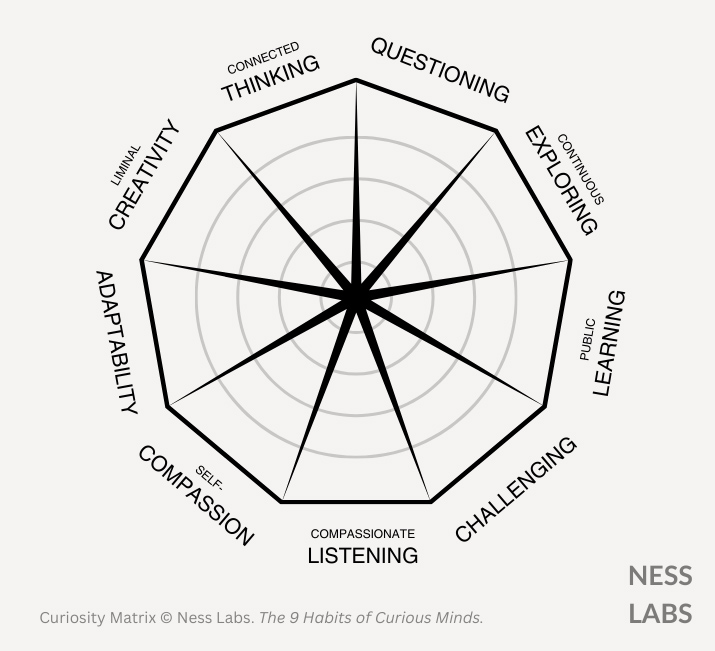
The Curiosity Matrix: 9 Habits of Curious Minds — from nesslabs.com by Anne-Laure Le Cunff; via Roberto Ferraro
As an adaptive trait, curiosity draws us to seek information and new experiences. It’s how we learn about ourselves, others, and the world.
…
They’re a diverse group of people, but the literature suggests that they share some common habits that support their personal and professional growth.
“Aravaipa” by Photographer Andrea Koesters — from booooooom.com

Satisfying photos for perfectionists – thread ?
1. Crescent Moon bridge by Yier Wang pic.twitter.com/bnnJ57zW3U
— James Lucas (@JamesLucasIT) April 10, 2024
Researchers Uncover Hundreds of New Marine Species in the Underwater Mountain Ecosystems of the Pacific Ocean — from thisiscolossal.com by Grace Ebert and Co.
The beauty of spring around the world – a thread ?
1. A desert bloom in Utah by Emily Dickey pic.twitter.com/jaltpej1S9
— James Lucas (@JamesLucasIT) April 12, 2024
Elaborate Fragments of Line and Color Transform into Bodies and Landscapes in Lui Ferreyra’s Vibrant Compositions — from thisiscolossal.com by Kate Mothese and Lui Ferreyra

Beautiful art pic.twitter.com/ojAc7OHah7
— Wolf of X (@tradingMaxiSL) April 4, 2024
Photographer Nicolas Bouvier Shoots Figures in Silhouette Against Mysterious and Foreboding Landscapes — from thisiscolossal.com by Christopher Jobson

Do We Need Emotionally Intelligent AI? — from marcwatkins.substack.com by Marc Watkins
We keep breaking new ground in AI capabilities, and there seems little interest in asking if we should build the next model to be more life-like. You can now go to Hume.AI and have a conversation with an Empathetic Voice Interface. EVI is groundbreaking and extremely unnerving, but it is no more capable of genuine empathy than your toaster oven.
…
From DSC:
Marc offers some solid thoughts that should make us all pause and reflect on what he’s saying.
We can endlessly rationalize away the reasons why machines possessing such traits can be helpful, but where is the line that developers and users of such systems refuse to cross in this race to make machines more like us?
Marc Watkins
Along these lines, also see:

Chatbot prompts to help support student creativity — from classtechtips.com by Dr. Monica Burns
Do you use chatbots as a thought partner and collaborator? This year, I’ve spent time with educators all across the country to lead workshops on using Generative AI for instructional planning. If you want to use AI to support student creativity in your classroom, I have a handful of prompts that are ready for you to try.
…
Today on the blog, we’ll look at prompts to help support student creativity. You can tailor to your instructional environment.
Speaking of prompting, also see:
NVIDIA just released FREE online courses in AI.
Here are 9 courses you can’t afford to miss: pic.twitter.com/4vkwX6SU07
— Shruti Mishra (@heyshrutimishra) March 22, 2024
How Early Adopters of Gen AI Are Gaining Efficiencies — from knowledge.wharton.upenn.edu by Prasanna (Sonny) Tambe and Scott A. Snyder; via Ray Schroeder on LinkedIn
Enterprises are seeing gains from generative AI in productivity and strategic planning, according to speakers at a recent Wharton conference.
Its unique strengths in translation, summation, and content generation are especially useful in processing unstructured data. Some 80% of all new data in enterprises is unstructured, he noted, citing research firm Gartner. Very little of that unstructured data that resides in places like emails “is used effectively at the point of decision making,” he noted. “[With gen AI], we have a real opportunity” to garner new insights from all the information that resides in emails, team communication platforms like Slack, and agile project management tools like Jira, he said.
6 YouTube Channels to Stay Up to Date with AI — from heaigirl.substack.com by Diana Dovgopol
Here are some cool AI YouTube channels.
Here are 6 YouTube channels I watch to stay up to date with AI. This list will be useful whether you’re a casual AI enthusiast or an experienced programmer.
1. Matt Wolfe: AI for non-coders
This is a fast-growing YouTube channel focused on artificial intelligence for non-coders. On this channel, you’ll find videos about ChatGPT, Midjourney, and any AI tool that it’s gaining popularity.
Top AI mobile apps, Stable Video 3D, & my AI film workflow — from by Heather Cooper
Plus 1-Click 3D animation and other cool AI tools
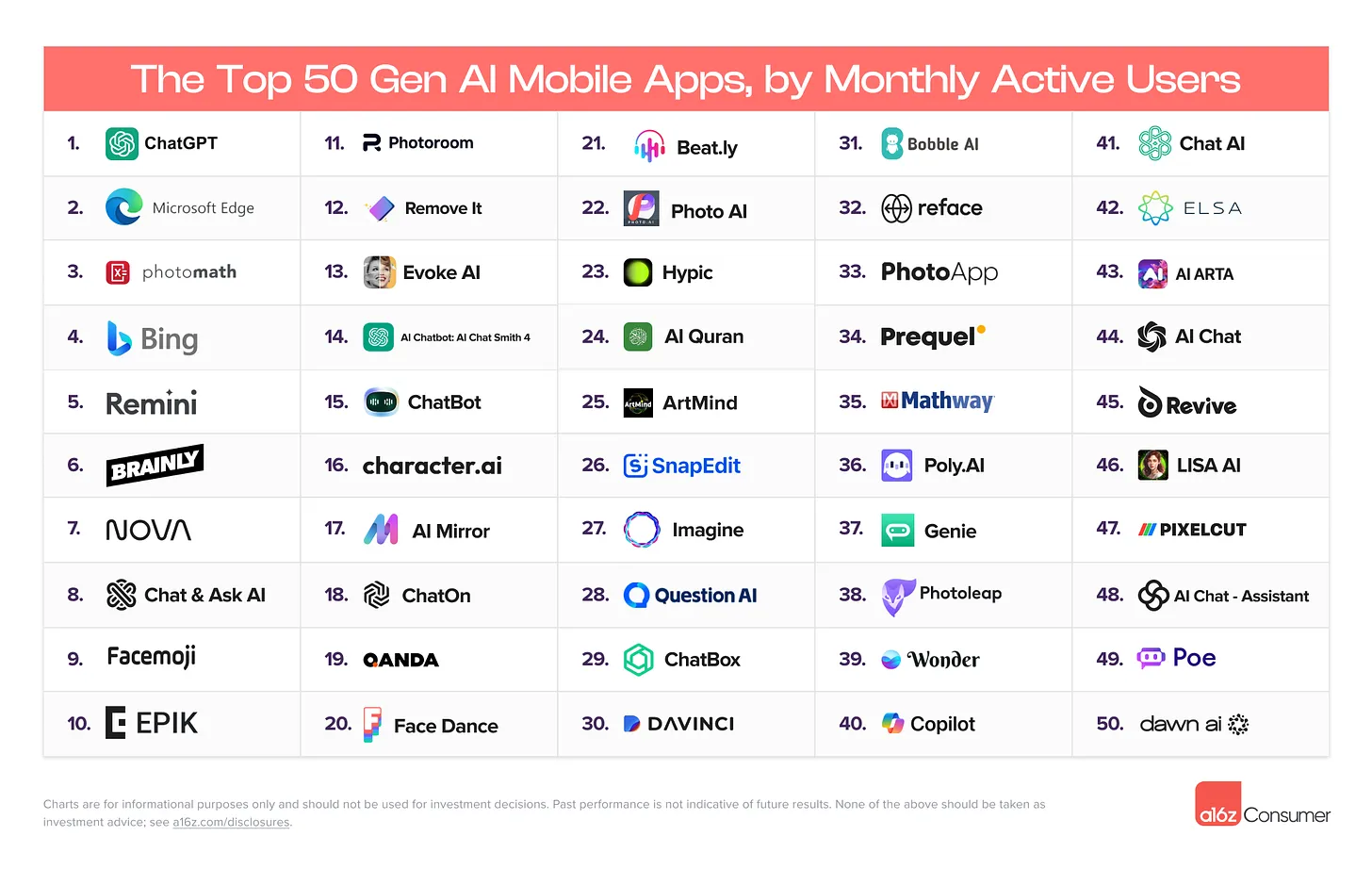
#3 Photomath
Photomath is a comprehensive math help app that provides step-by-step explanations for a wide range of math problems, from elementary to college level. Photomath is only available as a mobile app. (link)
Features:
Google researchers unveil ‘VLOGGER’, an AI that can bring still photos to life — from venturebeat.com by Michael Nuñez
Google researchers have developed a new artificial intelligence system that can generate lifelike videos of people speaking, gesturing and moving — from just a single still photo. The technology, called VLOGGER, relies on advanced machine learning models to synthesize startlingly realistic footage, opening up a range of potential applications while also raising concerns around deepfakes and misinformation.
Google just dropped VLOGGER and it’s insane
This is ChatGPT for Image to Talking Video
Here are 7 Powerful AI features you can’t afford to miss out pic.twitter.com/84gcWbQ4cG
— Poonam Soni (@CodeByPoonam) March 20, 2024
What We Risk By Automating Tasks We Loathe — from marcwatkins.substack.com by Marc Watkins
I’m fascinated by the potential of these tools to augment and enhance our work and creativity. There’s no denying the impressive capabilities we’re already seeing with text generation, image creation, coding assistance, and more. Used thoughtfully, AI can be a powerful productivity multiplier.
At the same time, I have significant concerns about the broader implications of this accelerating technology, especially for education and society at large. We’re traversing new ground at a breakneck pace, and it’s crucial that we don’t blindly embrace AI without considering the potential risks.
My worry is that by automating away too many tasks, even seemingly rote ones like creating slide decks, we risk losing something vital—humanity at the heart of knowledge work.
Nvidia Introduce AI Nurses — from wireprompt.substack.com | Weekkly AI Report from WirePrompt
Nvidia has announced a partnership with Hippocratic AI to introduce AI “agents” aimed at replacing nurses in hospitals. These AI “nurses” come at a significantly low cost compared to human nurses and are purportedly intended to address staffing issues by handling “low-risk,” patient-facing tasks via video calls. However, concerns are raised regarding the ethical implications and effectiveness of replacing human nurses with AI, particularly given the complex nature of medical care.
A glimpse of the future of AI at work:
I got early access to Devin, the “AI developer” – it is slow & breaks often, but you can start to see what an AI agent can do.
It makes a plan and executes it autonomously, doing research, writing code & debugging, without you watching. pic.twitter.com/HHBQQDQZ9q
— Ethan Mollick (@emollick) March 15, 2024
16 Changes to the Way Enterprises Are Building and Buying Generative AI — from a16z.com by Sarah Wang and Shangda Xu
TABLE OF CONTENTS
GTC March 2024 Keynote with NVIDIA CEO Jensen Huang
Also relevant/see:

Today is the beginning of our moonshot to solve embodied AGI in the physical world. I’m so excited to announce Project GR00T, our new initiative to create a general-purpose foundation model for humanoid robot learning.
The GR00T model will enable a robot to understand multimodal… pic.twitter.com/EqN19Z3cXH
— Jim Fan (@DrJimFan) March 18, 2024
NVIDIA just announced GR00T.
It will enable a robot to understand multimodal instructions like language, video, and motion.
Very soon we will see them cooking, preparing coffee, in supermarkets, changing tires, etc.pic.twitter.com/3PptgNS1Yi
— Barsee ? (@heyBarsee) March 19, 2024