


From DSC:
Notebook LM continues to make waves…
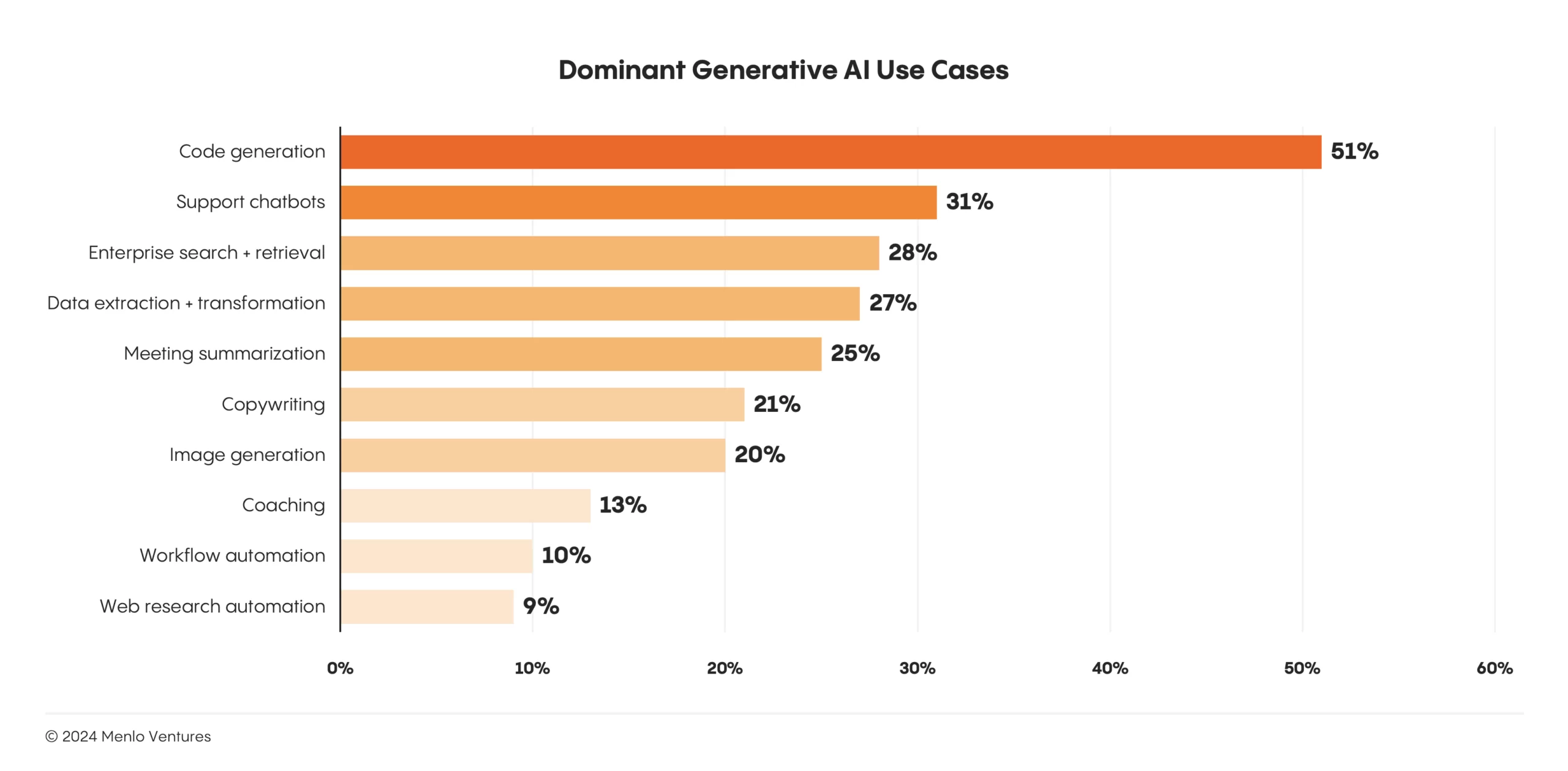
2024: The State of Generative AI in the Enterprise — from menlovc.com (Menlo Ventures)
The enterprise AI landscape is being rewritten in real time. As pilots give way to production, we surveyed 600 U.S. enterprise IT decision-makers to reveal the emerging winners and losers.
This spike in spending reflects a wave of organizational optimism; 72% of decision-makers anticipate broader adoption of generative AI tools in the near future. This confidence isn’t just speculative—generative AI tools are already deeply embedded in the daily work of professionals, from programmers to healthcare providers.
Despite this positive outlook and increasing investment, many decision-makers are still figuring out what will and won’t work for their businesses. More than a third of our survey respondents do not have a clear vision for how generative AI will be implemented across their organizations. This doesn’t mean they’re investing without direction; it simply underscores that we’re still in the early stages of a large-scale transformation. Enterprise leaders are just beginning to grasp the profound impact generative AI will have on their organizations.
Business spending on AI surged 500% this year to $13.8 billion, says Menlo Ventures — from cnbc.com by Hayden Field
Key Points
Microsoft quietly assembles the largest AI agent ecosystem—and no one else is close — from venturebeat.com by Matt Marshall
Microsoft has quietly built the largest enterprise AI agent ecosystem, with over 100,000 organizations creating or editing AI agents through its Copilot Studio since launch – a milestone that positions the company ahead in one of enterprise tech’s most closely watched and exciting segments.
…
The rapid adoption comes as Microsoft significantly expands its agent capabilities. At its Ignite conference [that started on 11/19/24], the company announced it will allow enterprises to use any of the 1,800 large language models (LLMs) in the Azure catalog within these agents – a significant move beyond its exclusive reliance on OpenAI’s models. The company also unveiled autonomous agents that can work independently, detecting events and orchestrating complex workflows with minimal human oversight.
Now Hear This: World’s Most Flexible Sound Machine Debuts — from
Using text and audio as inputs, a new generative AI model from NVIDIA can create any combination of music, voices and sounds.

Along these lines, also see:
AI Agents Versus Human Agency: 4 Ways To Navigate Our AI-Driven World — from forbes.com by Cornelia C. Walther
To understand the implications of AI agents, it’s useful to clarify the distinctions between AI, generative AI, and AI agents and explore the opportunities and risks they present to our autonomy, relationships, and decision-making.
…
AI Agents: These are specialized applications of AI designed to perform tasks or simulate interactions. AI agents can be categorized into:
While generative AI creates outputs from prompts, AI agents use AI to act with intention, whether to assist (tool agents) or emulate (simulation agents). The latter’s ability to mirror human thought and action offers fascinating possibilities — and raises significant risks.
From DSC:
First of all, when you look at the following posting:
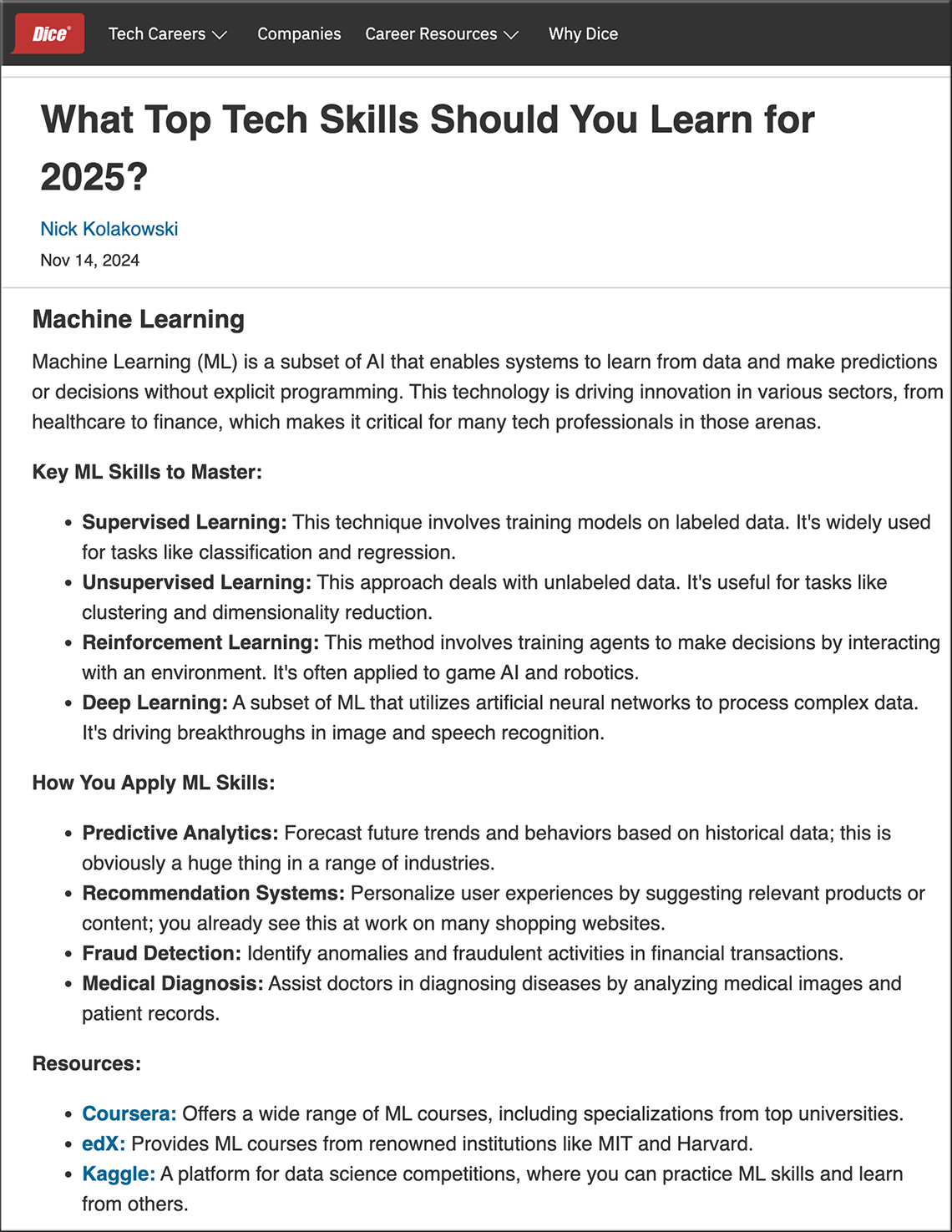
What Top Tech Skills Should You Learn for 2025? — from dice.com by Nick Kolakowski
…you will see that they outline which skills you should consider mastering in 2025 if you want to stay on top of the latest career opportunities. They then list more information about the skills, how you apply the skills, and WHERE to get those skills.
I assert that in the future, people will be able to see this information on a 24x7x365 basis.
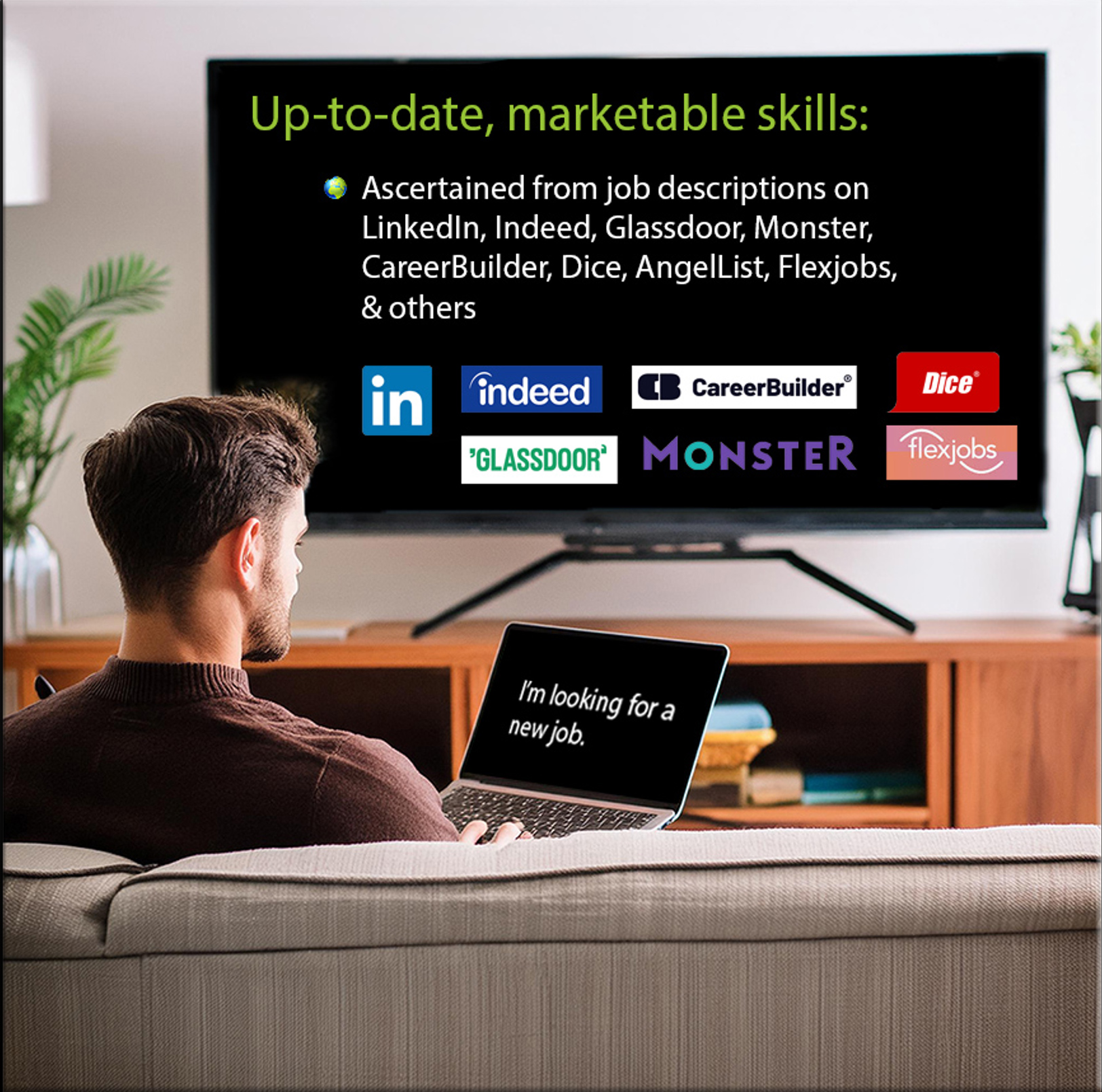
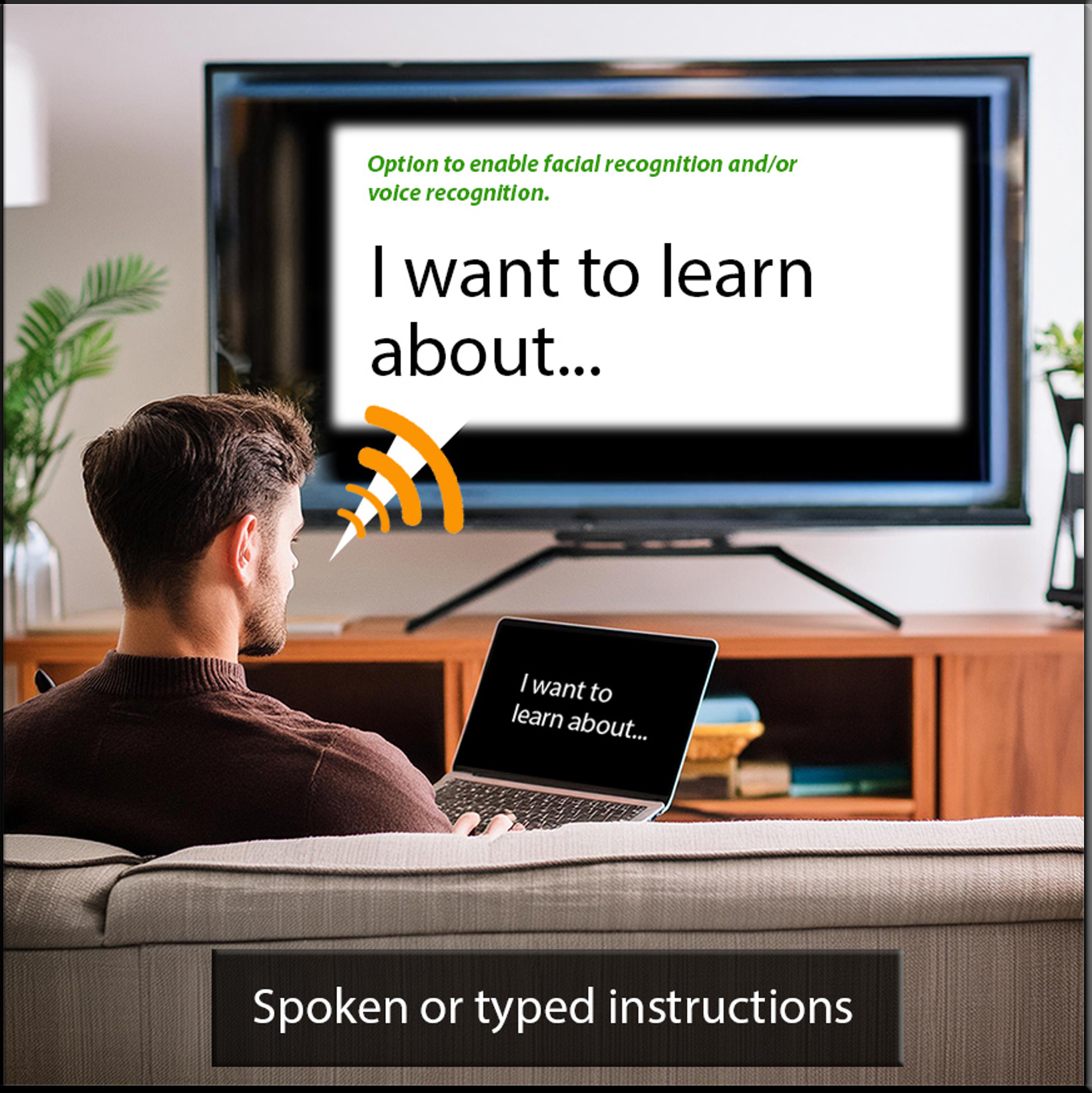
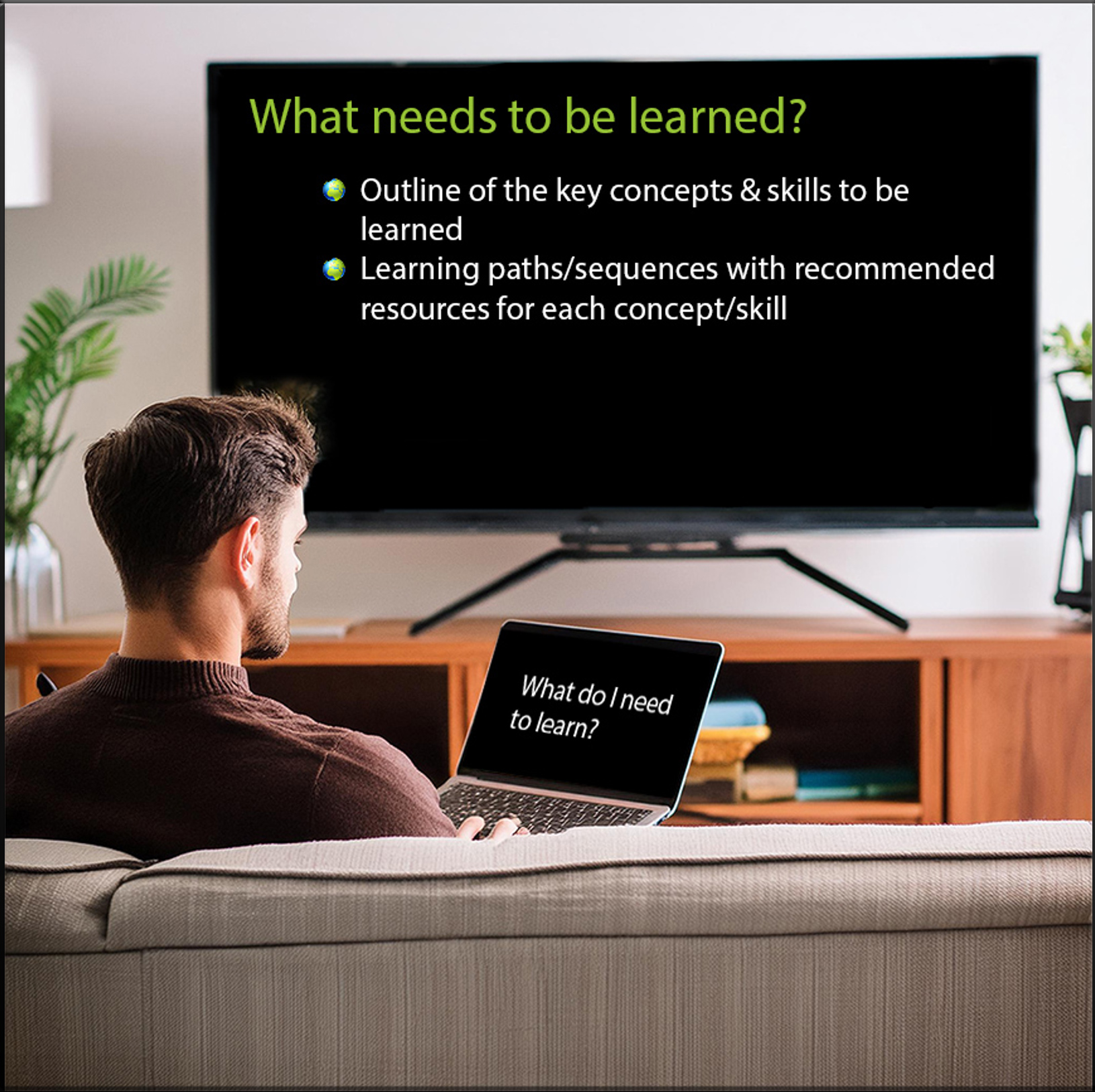
And that last part (about the WHERE do I develop those skills) will pull from many different institutions, people, companies, etc.
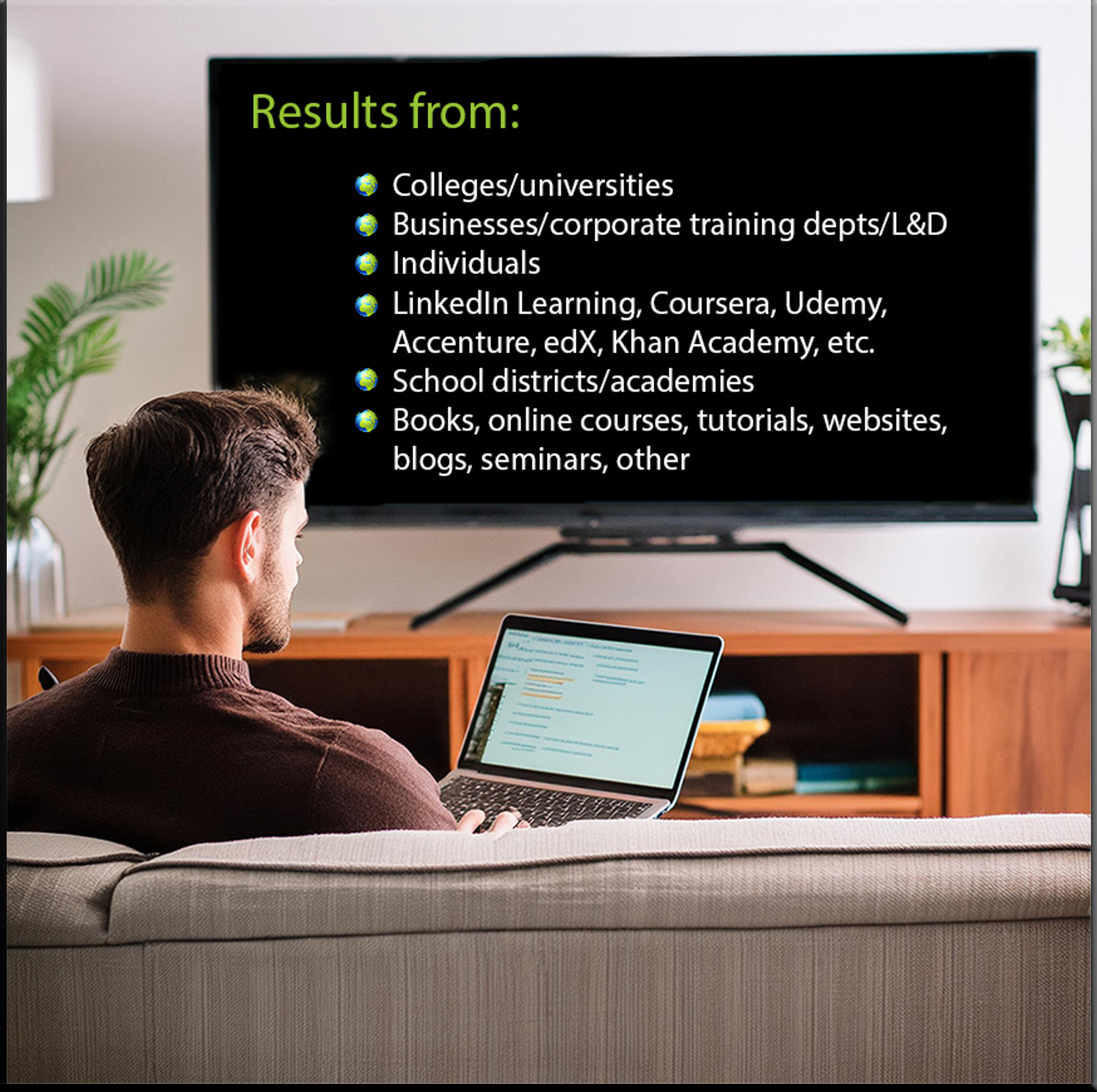
BUT PEOPLE are the key! Oftentimes, we need to — and prefer to — learn with others!


“The Value of Doing Things: What AI Agents Mean for Teachers” — from nickpotkalitsky.substack.com by guest author Jason Gulya, Professor of English and Applied Media at Berkeley College in New York City
AI Agents make me nervous. Really nervous.
I wish they didn’t.
I wish I could write that the last two years have made me more confident, more self-assured that AI is here to augment workers rather than replace them.
But I can’t.
I wish I could write that I know where schools and colleges will end up. I wish I could say that AI Agents will help us get where we need to be.
But I can’t.
At this point, today, I’m at a loss. I’m not sure where the rise of AI agents will take us, in terms of how we work and learn. I’m in the question-asking part of my journey. I have few answers.
So, let’s talk about where (I think) AI Agents will take education. And who knows? Maybe as I write I’ll come up with something more concrete.
It’s worth a shot, right?
From DSC:
I completely agree with Jason’s following assertion:
A good portion of AI advancement will come down to employee replacement. And AI Agents push companies towards that.
THAT’s where/what the ROI will be for corporations. They will make their investments up in the headcount area, and likely in other areas as well (product design, marketing campaigns, engineering-related items, and more). But how much time it takes to get there is a big question mark.
One last quote here…it’s too good not to include:
Behind these questions lies a more abstract, more philosophical one: what is the relationship between thinking and doing in a world of AI Agents and other kinds of automation?
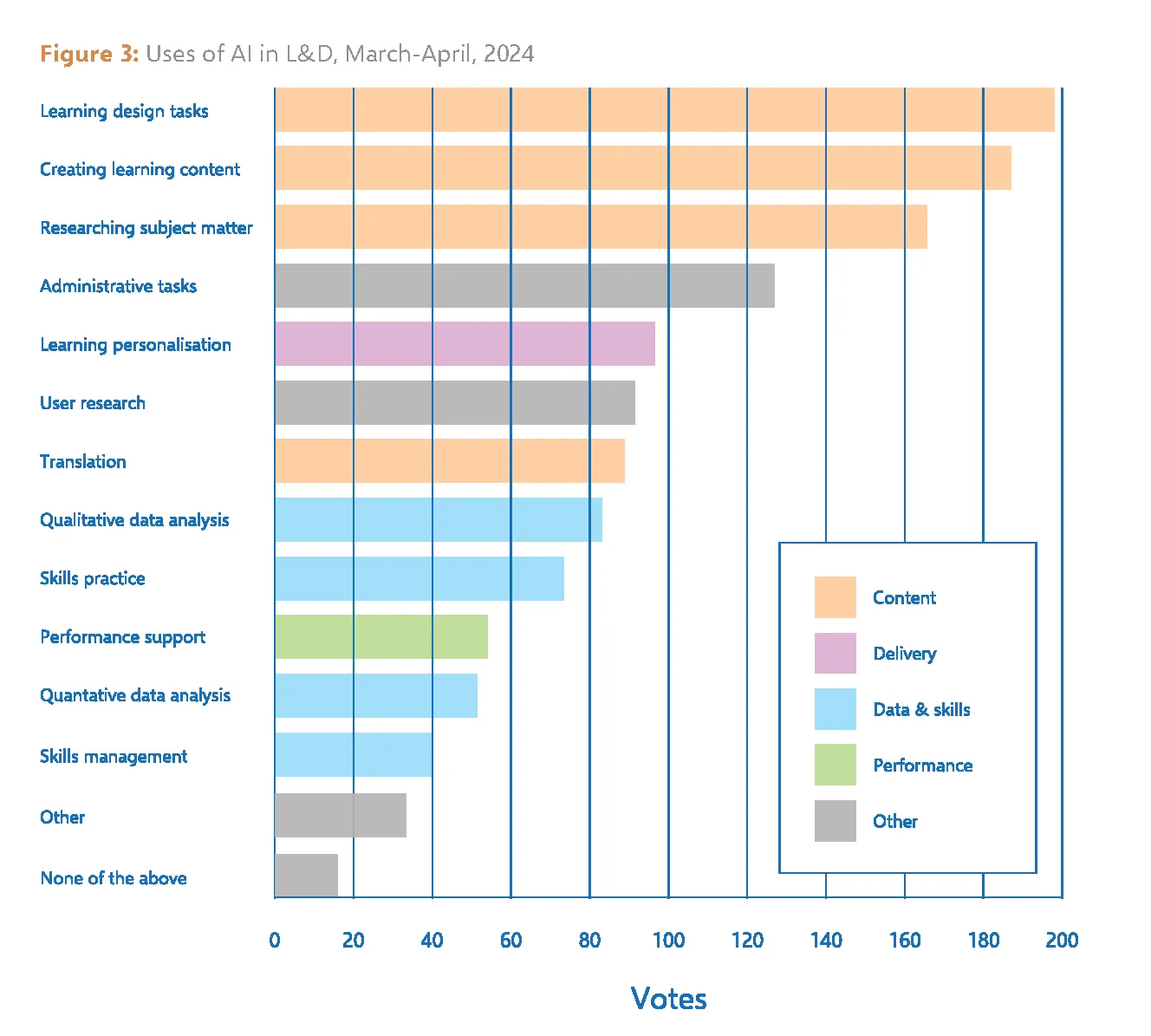
How Good are Claude, ChatGPT & Gemini at Instructional Design? — from drphilippahardman.substack.com by Dr Philippa Hardman
A test of AI’s Instruction Design skills in theory & in practice
By examining models across three AI families—Claude, ChatGPT, and Gemini—I’ve started to identify each model’s strengths, limitations, and typical pitfalls.
Spoiler: my findings underscore that until we have specialised, fine-tuned AI copilots for instructional design, we should be cautious about relying on general-purpose models and ensure expert oversight in all ID tasks.
From DSC — I’m going to (have Nick) say this again:
I simply asked my students to use AI to brainstorm their own learning objectives. No restrictions. No predetermined pathways. Just pure exploration. The results? Astonishing.Students began mapping out research directions I’d never considered. They created dialogue spaces with AI that looked more like intellectual partnerships than simple query-response patterns.
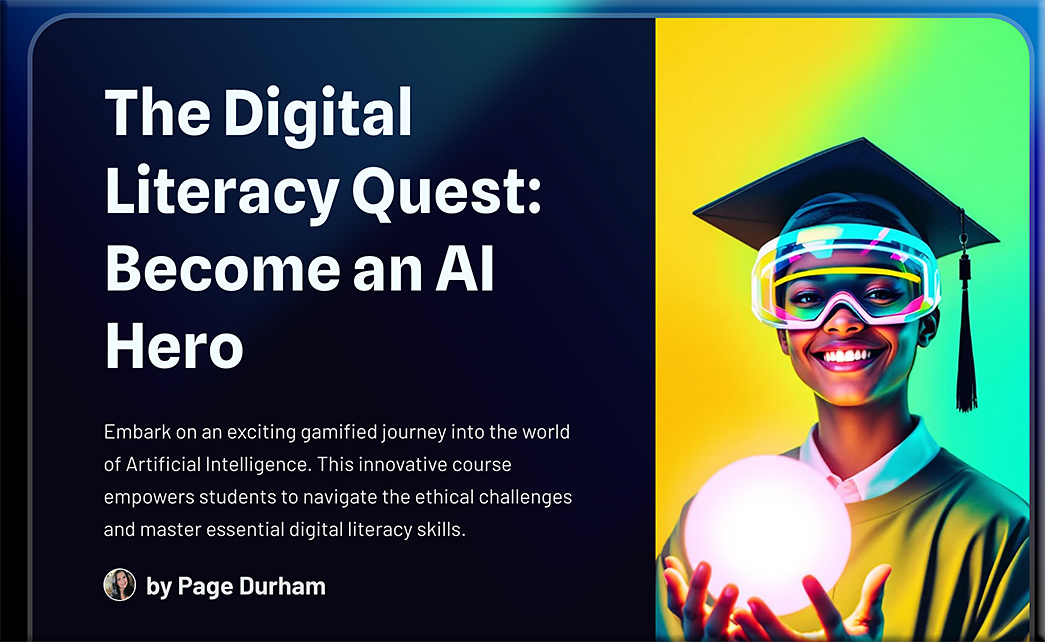
The Digital Literacy Quest: Become an AI Hero — from gamma.app
From DSC:
I have not gone through all of these online-based materials, but I like what they are trying to get at:
Expanding access to the Gemini app for teen students in education — from workspaceupdates.googleblog.com
Google Workspace for Education admins can now turn on the Gemini app with added data protection as an additional service for their teen users (ages 13+ or the applicable age in your country) in the following languages and countries. With added data protection, chats are not reviewed by human reviewers or otherwise used to improve AI models. The Gemini app will be a core service in the coming weeks for Education Standard and Plus users, including teens,
5 Essential Questions Educators Have About AI — from edsurge.com by Annie Ning
Recently, I spoke with several teachers regarding their primary questions and reflections on using AI in teaching and learning. Their thought-provoking responses challenge us to consider not only what AI can do but what it means for meaningful and equitable learning environments. Keeping in mind these reflections, we can better understand how we move forward toward meaningful AI integration in education.
FrontierMath: A Benchmark for Evaluating Advanced Mathematical Reasoning in AI — from epoch.ai
FrontierMath presents hundreds of unpublished, expert-level mathematics problems that specialists spend days solving. It offers an ongoing measure of AI complex mathematical reasoning progress.
We’re introducing FrontierMath, a benchmark of hundreds of original, expert-crafted mathematics problems designed to evaluate advanced reasoning capabilities in AI systems. These problems span major branches of modern mathematics—from computational number theory to abstract algebraic geometry—and typically require hours or days for expert mathematicians to solve.
Rising demand for AI courses in UK universities shows 453% growth as students adapt to an AI-driven job market — from edtechinnovationhub.com
The demand for artificial intelligence courses in UK universities has surged dramatically over the past five years, with enrollments increasing by 453%, according to a recent study by Currys, a UK tech retailer.
The study, which analyzed UK university admissions data and surveyed current students and recent graduates, reveals how the growing influence of AI is shaping students’ educational choices and career paths.
This growth reflects the broader trend of AI integration across industries, creating new opportunities while transforming traditional roles. With AI’s influence on career prospects rising, students and graduates are increasingly drawn to AI-related courses to stay competitive in a rapidly changing job market.
AI-governed robots can easily be hacked — from theaivalley.com by Barsee
PLUS: Sam Altman’s new company “World” introduced…
In a groundbreaking study, researchers from Penn Engineering showed how AI-powered robots can be manipulated to ignore safety protocols, allowing them to perform harmful actions despite normally rejecting dangerous task requests.
What did they find ?
Why does it matter?
This research highlights the importance of spotting weaknesses in AI systems to improve their safety, allowing us to test and train them to prevent potential harm.
From DSC:
Great! Just what we wanted to hear. But does it surprise anyone? Even so…we move forward at warp speeds.

From DSC:
So, given the above item, does the next item make you a bit nervous as well? I saw someone on Twitter/X exclaim, “What could go wrong?” I can’t say I didn’t feel the same way.
Introducing computer use, a new Claude 3.5 Sonnet, and Claude 3.5 Haiku — from anthropic.com
We’re also introducing a groundbreaking new capability in public beta: computer use. Available today on the API, developers can direct Claude to use computers the way people do—by looking at a screen, moving a cursor, clicking buttons, and typing text. Claude 3.5 Sonnet is the first frontier AI model to offer computer use in public beta. At this stage, it is still experimental—at times cumbersome and error-prone. We’re releasing computer use early for feedback from developers, and expect the capability to improve rapidly over time.
Per The Rundown AI:
The Rundown: Anthropic just introduced a new capability called ‘computer use’, alongside upgraded versions of its AI models, which enables Claude to interact with computers by viewing screens, typing, moving cursors, and executing commands.
…
Why it matters: While many hoped for Opus 3.5, Anthropic’s Sonnet and Haiku upgrades pack a serious punch. Plus, with the new computer use embedded right into its foundation models, Anthropic just sent a warning shot to tons of automation startups—even if the capabilities aren’t earth-shattering… yet.
Also related/see:
Introducing Act-One — from runwayml.com
A new way to generate expressive character performances using simple video inputs.
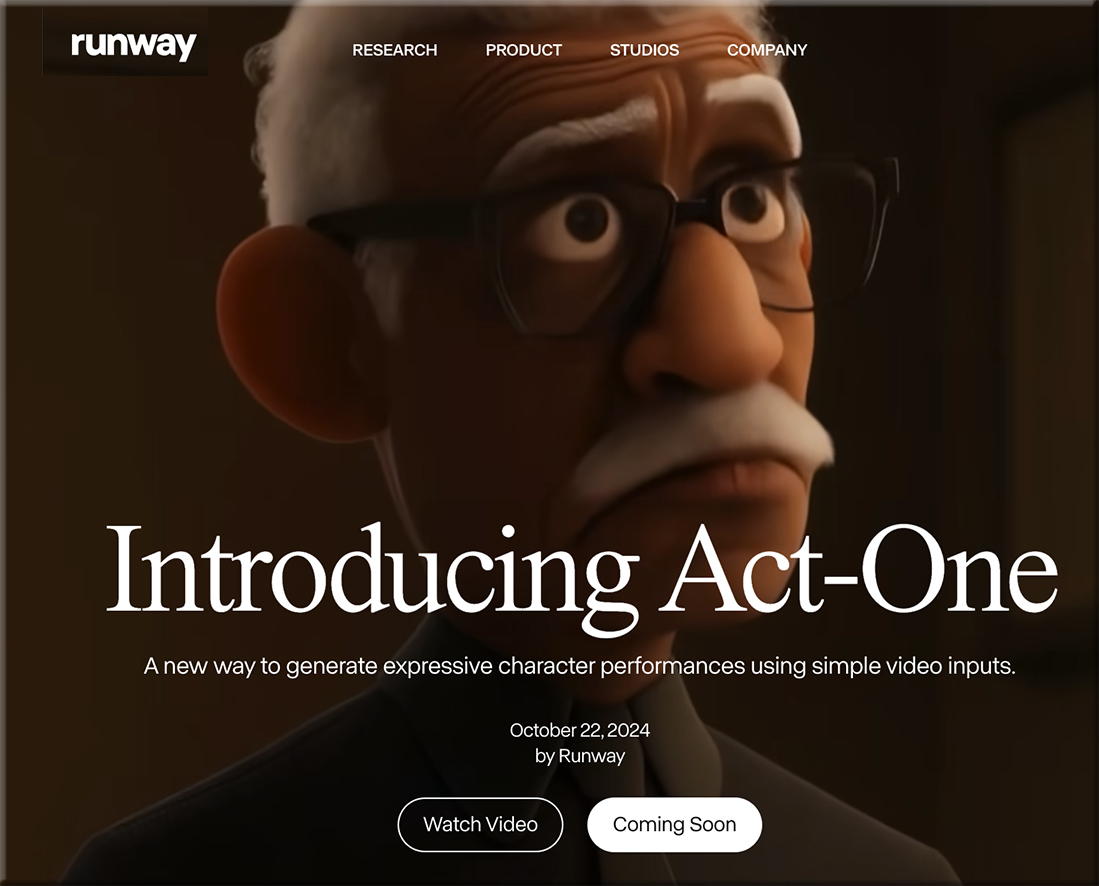
What makes Act-One special? It can capture the soul of an actor’s performance using nothing but a simple video recording. No fancy motion capture equipment, no complex face rigging, no army of animators required. Just point a camera at someone acting, and watch as their exact expressions, micro-movements, and emotional nuances get transferred to an AI-generated character.
Think about what this means for creators: you could shoot an entire movie with multiple characters using just one actor and a basic camera setup. The same performance can drive characters with completely different proportions and looks, while maintaining the authentic emotional delivery of the original performance. We’re witnessing the democratization of animation tools that used to require millions in budget and years of specialized training.
Also related/see:
Introducing, Act-One. A new way to generate expressive character performances inside Gen-3 Alpha using a single driving video and character image. No motion capture or rigging required.
Learn more about Act-One below.
(1/7) pic.twitter.com/p1Q8lR8K7G
— Runway (@runwayml) October 22, 2024
Google to buy nuclear power for AI datacentres in ‘world first’ deal — from theguardian.com
Tech company orders six or seven small nuclear reactors from California’s Kairos Power
Google has signed a “world first” deal to buy energy from a fleet of mini nuclear reactors to generate the power needed for the rise in use of artificial intelligence.
The US tech corporation has ordered six or seven small nuclear reactors (SMRs) from California’s Kairos Power, with the first due to be completed by 2030 and the remainder by 2035.
Related:
ChatGPT Topped 3 Billion Visits in September — from similarweb.com
After the extreme peak and summer slump of 2023, ChatGPT has been setting new traffic highs since May
ChatGPT has been topping its web traffic records for months now, with September 2024 traffic up 112% year-over-year (YoY) to 3.1 billion visits, according to Similarweb estimates. That’s a change from last year, when traffic to the site went through a boom-and-bust cycle.
Crazy “AI Army” — from aisecret.us
Also from aisecret.us, see World’s First Nuclear Power Deal For AI Data Centers
Google has made a historic agreement to buy energy from a group of small nuclear reactors (SMRs) from Kairos Power in California. This is the first nuclear power deal specifically for AI data centers in the world.
New updates to help creators build community, drive business, & express creativity on YouTube — from support.google.com
Hey creators!
Made on YouTube 2024 is here and we’ve announced a lot of updates that aim to give everyone the opportunity to build engaging communities, drive sustainable businesses, and express creativity on our platform.
Below is a roundup with key info – feel free to upvote the announcements that you’re most excited about and subscribe to this post to get updates on these features! We’re looking forward to another year of innovating with our global community it’s a future full of opportunities, and it’s all Made on YouTube!
New autonomous agents scale your team like never before — from blogs.microsoft.com
Today, we’re announcing new agentic capabilities that will accelerate these gains and bring AI-first business process to every organization.
10 Daily AI Use Cases for Business Leaders— from flexos.work by Daan van Rossum
While AI is becoming more powerful by the day, business leaders still wonder why and where to apply today. I take you through 10 critical use cases where AI should take over your work or partner with you.

Multi-Modal AI: Video Creation Simplified — from heatherbcooper.substack.com by Heather Cooper
Emerging Multi-Modal AI Video Creation Platforms
The rise of multi-modal AI platforms has revolutionized content creation, allowing users to research, write, and generate images in one app. Now, a new wave of platforms is extending these capabilities to video creation and editing.
Multi-modal video platforms combine various AI tools for tasks like writing, transcription, text-to-voice conversion, image-to-video generation, and lip-syncing. These platforms leverage open-source models like FLUX and LivePortrait, along with APIs from services such as ElevenLabs, Luma AI, and Gen-3.
AI Medical Imagery Model Offers Fast, Cost-Efficient Expert Analysis — from developer.nvidia.com/

AI’s Trillion-Dollar Opportunity — from bain.com by David Crawford, Jue Wang, and Roy Singh
The market for AI products and services could reach between $780 billion and $990 billion by 2027.
At a Glance
Accelerated market growth. Nvidia’s CEO, Jensen Huang, summed up the potential in the company’s Q3 2024 earnings call: “Generative AI is the largest TAM [total addressable market] expansion of software and hardware that we’ve seen in several decades.”
And on a somewhat related note (i.e., emerging technologies), also see the following two postings:
Surgical Robots: Current Uses and Future Expectations — from medicalfuturist.com by Pranavsingh Dhunnoo
As the term implies, a surgical robot is an assistive tool for performing surgical procedures. Such manoeuvres, also called robotic surgeries or robot-assisted surgery, usually involve a human surgeon controlling mechanical arms from a control centre.
Key Takeaways
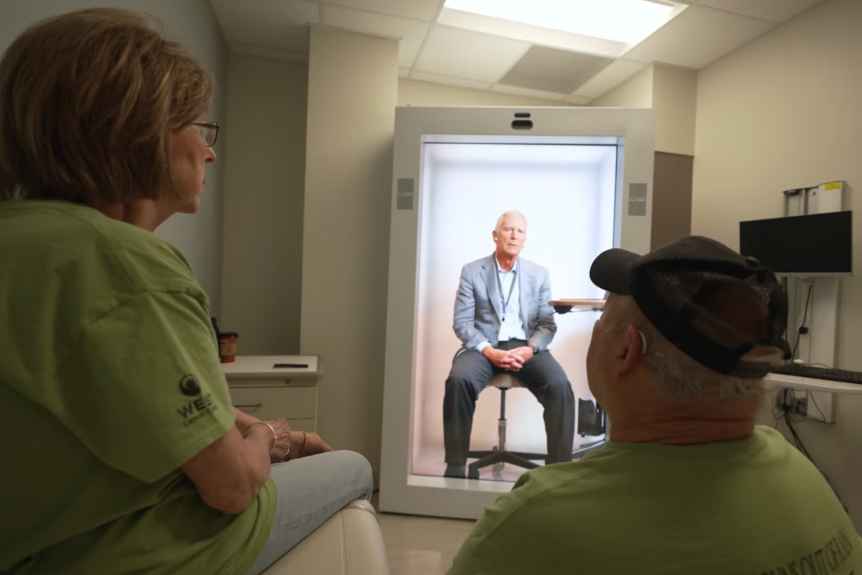
Proto hologram tech allows cancer patients to receive specialist care without traveling large distances — from inavateonthenet.net
“Working with the team from Proto to bring to life, what several years ago would have seemed impossible, is now going to allow West Cancer Center & Research Institute to pioneer options for patients to get highly specialized care without having to travel to large metro areas,” said West Cancer’s CEO, Mitch Graves.
Google just got MASSIVE upgrade
Gemini is now inside Chrome
Here’re 7 Powerful Features you don’t want to miss: pic.twitter.com/XcCypnaKb0
— Poonam Soni (@CodeByPoonam) September 27, 2024
Obviously this workflow works just as well for meetings as it does for lectures. Stay present in the meeting with no screens and just write down the key points with pen and paper. Then let NotebookLM assemble the detailed summary based on your high-level notes. https://t.co/fZMG7LgsWG
— Steven Johnson (@stevenbjohnson) September 26, 2024
Clone your voice in minutes: The AI trick 95% don’t know about — from aidisruptor.ai by Alex McFarland
Warning: May cause unexpected bouts of talking to yourself
Now that you’ve got your voice clone, what can you do with it?
185 real-world gen AI use cases from the world’s leading organizations — from blog.google by Brian Hall; via Daniel Nest’s Why Try AI
In a matter of months, organizations have gone from AI helping answer questions, to AI making predictions, to generative AI agents. What makes AI agents unique is that they can take actions to achieve specific goals, whether that’s guiding a shopper to the perfect pair of shoes, helping an employee looking for the right health benefits, or supporting nursing staff with smoother patient hand-offs during shifts changes.
In our work with customers, we keep hearing that their teams are increasingly focused on improving productivity, automating processes, and modernizing the customer experience. These aims are now being achieved through the AI agents they’re developing in six key areas: customer service; employee empowerment; code creation; data analysis; cybersecurity; and creative ideation and production.
…
Here’s a snapshot of how 185 of these industry leaders are putting AI to use today, creating real-world use cases that will transform tomorrow.
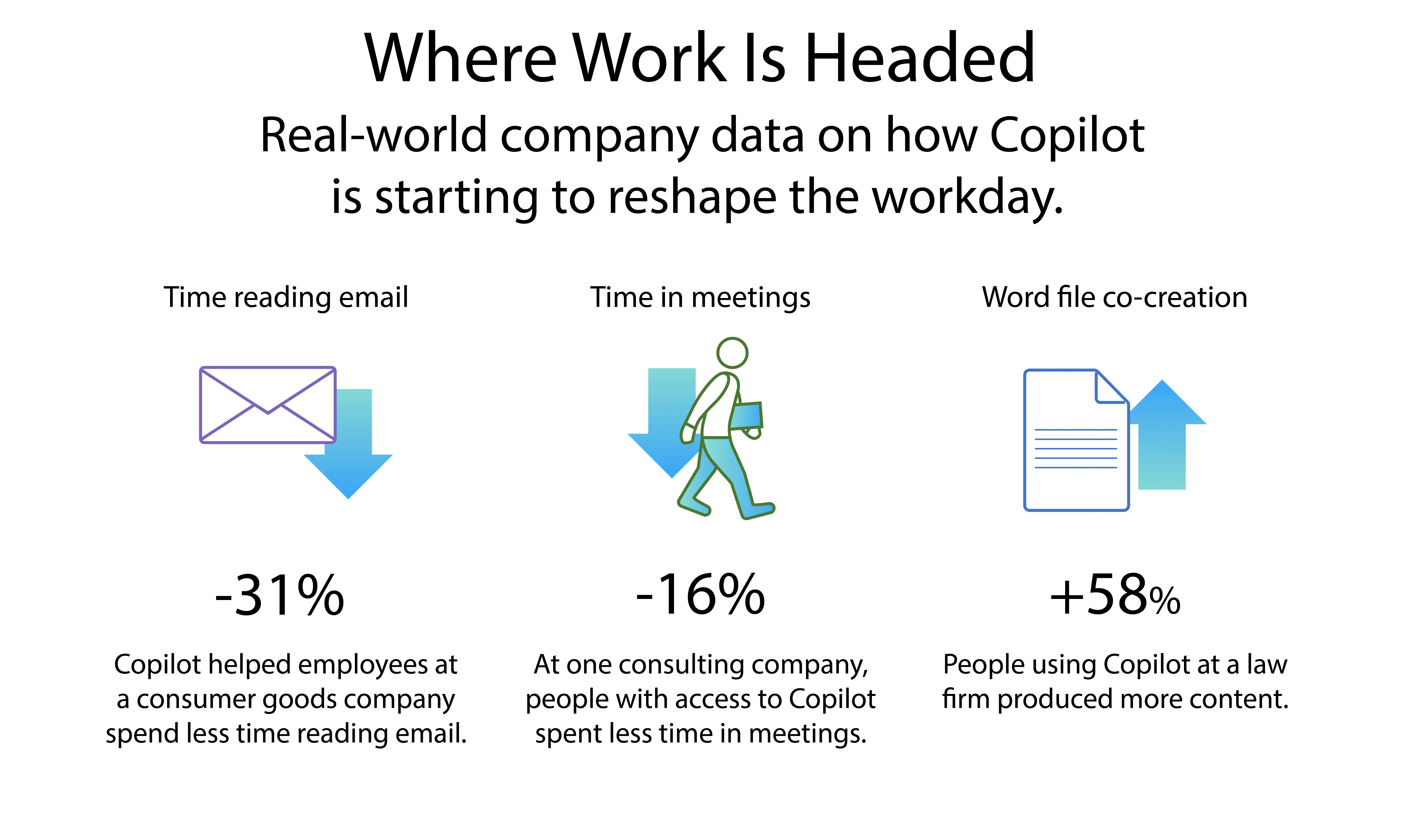
AI Data Drop: 3 Key Insights from Real-World Research on AI Usage — from microsoft.com; via Daniel Nest’s Why Try AI
One of the largest studies of Copilot usage—at nearly 60 companies—reveals how AI is changing the way we work.
*** Dharmesh has been working on creating agent.ai — a professional network for AI agents.***
Speaking of agents, also see:
Onboarding the AI workforce: How digital agents will redefine work itself — from venturebeat.com by Gary Grossman
AI in 2030: A transformative force
AI Video Tools You Can Use Today — from heatherbcooper.substack.com by Heather Cooper
The latest AI video models that deliver results
AI video models are improving so quickly, I can barely keep up! I wrote about unreleased Adobe Firefly Video in the last issue, and we are no closer to public access to Sora.
No worries – we do have plenty of generative AI video tools we can use right now.
Advanced Voice is rolling out to all Plus and Team users in the ChatGPT app over the course of the week.
While you’ve been patiently waiting, we’ve added Custom Instructions, Memory, five new voices, and improved accents.
It can also say “Sorry I’m late” in over 50 languages. pic.twitter.com/APOqqhXtDg
— OpenAI (@OpenAI) September 24, 2024
10 Ways I Use LLMs like ChatGPT as a Professor — from automatedteach.com by Graham Clay
ChatGPT-4o, Gemini 1.5 Pro, Claude 3.5 Sonnet, custom GPTs – you name it, I use it. Here’s how…

Excerpt:
From Caution to Calcification to Creativity: Reanimating Education with AI’s Frankenstein Potential — from nickpotkalitsky.substack.com by Nick Potkalitsky
A Critical Analysis of AI-Assisted Lesson Planning: Evaluating Efficacy and Pedagogical Implications
Excerpt (emphasis DSC):
As we navigate the rapidly evolving landscape of artificial intelligence in education, a troubling trend has emerged. What began as cautious skepticism has calcified into rigid opposition. The discourse surrounding AI in classrooms has shifted from empirical critique to categorical rejection, creating a chasm between the potential of AI and its practical implementation in education.
This hardening of attitudes comes at a significant cost. While educators and policymakers debate, students find themselves caught in the crossfire. They lack safe, guided access to AI tools that are increasingly ubiquitous in the world beyond school walls. In the absence of formal instruction, many are teaching themselves to use these tools, often in less than productive ways. Others live in a state of constant anxiety, fearing accusations of AI reliance in their work. These are just a few symptoms of an overarching educational culture that has become resistant to change, even as the world around it transforms at an unprecedented pace.
Yet, as this calcification sets in, I find myself in a curious position: the more I thoughtfully integrate AI into my teaching practice, the more I witness its potential to enhance and transform education
NotebookLM and Google’s Multimodal Vision for AI-Powered Learning Tools — from marcwatkins.substack.com by Marc Watkins
A Variety of Use Cases
Must-Have Competencies and Skills in Our New AI World: A Synthesis for Educational Reform — from er.educause.edu by Fawzi BenMessaoud
The transformative impact of artificial intelligence on educational systems calls for a comprehensive reform to prepare future generations for an AI-integrated world.
The urgency to integrate AI competencies into education is about preparing students not just to adapt to inevitable changes but to lead the charge in shaping an AI-augmented world. It’s about equipping them to ask the right questions, innovate responsibly, and navigate the ethical quandaries that come with such power.
AI in education should augment and complement their aptitude and expertise, to personalize and optimize the learning experience, and to support lifelong learning and development. AI in education should be a national priority and a collaborative effort among all stakeholders, to ensure that AI is designed and deployed in an ethical, equitable, and inclusive way that respects the diversity and dignity of all learners and educators and that promotes the common good and social justice. AI in education should be about the production of AI, not just the consumption of AI, meaning that learners and educators should have the opportunity to learn about AI, to participate in its creation and evaluation, and to shape its impact and direction.