


Who does need college anymore? About that book title … — from Education Design Lab

As you may know, Lab founder Kathleen deLaski just published a book with a provocative title: Who Needs College Anymore? Imagining a Future Where Degrees Won’t Matter.
Kathleen is asked about the title in every media interview, before and since the Feb. 25 book release. “It has generated a lot of questions,” she said in our recent book chat. “I tell people to focus on the word, ‘who.’ Who needs college anymore? That’s in keeping with the design thinking frame, where you look at the needs of individuals and what needs are not being met.”
In the same conversation, Kathleen reminded us that only 38% of American adults have a four-year degree. “We never talk about the path to the American dream for the rest of folks,” she said. “We currently are not supporting the other really interesting pathways to financial sustainability — apprenticeships, short-term credentials. And that’s really why I wrote the book, to push the conversation around the 62% of who we call New Majority Learners at the Lab, the people for whom college was not designed.” Watch the full clip
She distills the point into one sentence in this SmartBrief essay: “The new paradigm is a ‘yes and’ paradigm that embraces college and/or other pathways instead of college or bust.”
What can colleges do moving forward?
In this excellent Q&A with Inside Higher Ed, Kathleen shares her No. 1 suggestion: “College needs to be designed as a stepladder approach, where people can come in and out of it as they need, and at the very least, they can build earnings power along the way to help afford a degree program.”
In her Hechinger Report essay, Kathleen lists four more steps colleges can take to meet the demand for more choices, including “affordability must rule.”
From white-collar apprenticeships and micro-credential programs at local community colleges to online bootcamps, self-instruction using YouTube, and more—students are forging alternative paths to GREAT high-paying jobs. (source)
AI in K12: Today’s Breakthroughs and Tomorrow’s Possibilities (webinar)
How AI is Transforming Classrooms Today and What’s Next
Audio-Based Learning 4.0 — from drphilippahardman.substack.com by Dr. Philippa Hardman
A new & powerful way to leverage AI for learning?
At the end of all of this my reflection is that the research paints a pretty exciting picture – audio-based learning isn’t just effective, it’s got some unique superpowers when it comes to boosting comprehension, ramping up engagement, and delivering feedback that really connects with learners.
While audio has been massively under-used as a mode of learning, especially compared to video and text, we’re at an interesting turning point where AI tools are making it easier than ever to tap into audio’s potential as a pedagogical tool.
What’s super interesting is how the solid research backing audio’s effectiveness is and how well this is converging with these new AI capabilities.
From DSC:
I’ve noticed that I don’t learn as well via audio-only based events. It can help if visuals are also provided, but I have to watch the cognitive loads. My processing can start to get overloaded — to the point that I have to close my eyes and just listen sometimes. But there are people I know who love to listen to audiobooks and prefer to learn that way. They can devour content and process/remember it all. Audio is a nice change of pace at times, but I prefer visuals and reading often times. It needs to be absolutely quiet if I’m tackling some new information/learning.
In Conversation With… Ashton Cousineau — from drphilippahardman.substack.com by Dr. Philippa Hardman
A new video series exploring how L&D professionals are working with AI on the ground
The Learning Research Digest vol. 28 — from learningsciencedigest.substack.com by Dr. Philippa Hardman
Hot Off the Research Press This Month:
- AI-Infused Learning Design – A structured approach to AI-enhanced assignments using a three-step model for AI integration.
- Mathematical Dance and Creativity in STEAM – Using AI-powered motion capture to translate dance movements into mathematical models.
- AI-Generated Instructional Videos – How adaptive AI-powered video learning enhances problem-solving and knowledge retention.
- Immersive Language Learning with XR & AI – A new framework for integrating AI-driven conversational agents with Extended Reality (XR) for task-based language learning.
- Decision-Making in Learning Design – A scoping review on how instructional designers navigate complex instructional choices and make data-driven decisions.
- Interactive E-Books and Engagement – Examining the impact of interactive digital books on student motivation, comprehension, and cognitive engagement.
- Elevating Practitioner Voices in Instructional Design – A new initiative to amplify instructional designers’ contributions to research and innovation.
Deep Reasoning, Agentic AI & the Continued Rise of Specialised AI Research & Tools for Education — from learningfuturesdigest.substack.com by Dr. Philippa Hardman
Here’s a quick teaser of key developments in the world of AI & learning this month:
- DeepSeek R-1, OpenAI’s Deep Seek & Perplexity’s ‘Deep Research’ are the latest additions to a growing number of “reasoning models” with interesting implications for evidence-based learning design & development.
- The U.S. Education Dept release an AI Toolkit and a fresh policy roadmap enabling the adoption of AI use in schools.
- Anthropic Release “Agentic Claude”, another AI agent that clicks, scrolls, and can even successfully complete e-learning courses…
- Oxford University Announce the AIEOU Hub, a research-backed research lab to support research and implementation on AI in education.
- “AI Agents Everywhere”: A Forbes peek at how agentic AI will handle the “boring bits” of classroom life.
- [Bias klaxon!] Epiphany AI: My own research leads to the creation of a specialised, “pedagogy first” AI co-pilot for instructional design marking the continued growth of specialised AI tools designed for specific industries and workflows.
AI is the Perfect Teaching Assistant for Any Educator — from unite.ai by Navi Azaria, CPO at Kaltura

Through my work with leading educational institutions at Kaltura, I’ve seen firsthand how AI agents are rapidly becoming indispensable. These agents alleviate the mounting burdens on educators and provide new generations of tech-savvy students with accessible, personalized learning, giving teachers the support they need to give their students the personalized attention and engagement they deserve.

Learning HQ — from ai-disruptor-hq.notion.site
This HQ includes all of my AI guides, organized by tool/platform. This list is updated each time a new one is released, and outdated guides are removed/replaced over time.
How AI Is Reshaping Teachers’ Jobs — from edweek.org
Artificial intelligence is poised to fundamentally change the job of teaching. AI-powered tools can shave hours off the amount of time teachers spend grading, lesson-planning, and creating materials. AI can also enrich the lessons they deliver in the classroom and help them meet the varied needs of all students. And it can even help bolster teachers’ own professional growth and development.
Despite all the promise of AI, though, experts still urge caution as the technology continues to evolve. Ethical questions and practical concerns are bubbling to the surface, and not all teachers feel prepared to effectively and safely use AI.
In this special report, see how early-adopter teachers are using AI tools to transform their daily work, tackle some of the roadblocks to expanded use of the technology, and understand what’s on the horizon for the teaching profession in the age of artificial intelligence.
2025 EDUCAUSE AI Landscape Study: Into the Digital AI Divide — from library.educause.edu
The higher education community continues to grapple with questions related to using artificial intelligence (AI) in learning and work. In support of these efforts, we present the 2025 EDUCAUSE AI Landscape Study, summarizing our community’s sentiments and experiences related to strategy and leadership, policies and guidelines, use cases, the higher education workforce, and the institutional digital divide.
Law Prawfs Statement Regarding an Urgent Constitutional Crisis — from thefacultylounge.org
Over 400 law professors have signed the Call to Urgency below. The authors invite others to join in here.
A CALL TO URGENCY
The opening weeks of the second Trump administration convince us, as law professors who have spent years studying the American legal system, that we are beginning to see unfold the gravest threat to the rule of law and its constituent principles – the separation of governmental powers, the independence of prosecutorial authority, the inviolability of human rights, the transparency of government action, and the sanctity of constitutional accountability itself – ever presented in our lifetimes. The president’s and his associates’ actions, and threats of action, profoundly undermine the bedrock principle of our federal government system – that the Chief Executive and his agents are constrained by the United States Constitution. The fundamental guardrails of our constitutional democracy itself are threatened and notably battered. They are, as we write, at risk of complete collapse.
State of Higher Ed LMS Market for US and Canada: Year-End 2024 Edition — from onedtech.philhillaa.com by Phil Hill
Less about market share and more about diverging strategy
.

DeepSeek: How China’s AI Breakthrough Could Revolutionize Educational Technology — from nickpotkalitsky.substack.com by Nick Potkalitsky
Can DeepSeek’s 90% efficiency boost make AI accessible to every school?
The most revolutionary aspect of DeepSeek for education isn’t just its cost—it’s the combination of open-source accessibility and local deployment capabilities. As Azeem Azhar notes, “R-1 is open-source. Anyone can download and run it on their own hardware. I have R1-8b (the second smallest model) running on my Mac Mini at home.”
…
Real-time Learning Enhancement
- AI tutoring networks that collaborate to optimize individual learning paths
- Immediate, multi-perspective feedback on student work
- Continuous assessment and curriculum adaptation
The question isn’t whether this technology will transform education—it’s how quickly institutions can adapt to a world where advanced AI capabilities are finally within reach of every classroom.
Over 100 AI Tools for Teachers — from educatorstechnology.com by Med Kharbach, PhD

I know through your feedback on my social media and blog posts that several of you have legitimate concerns about the impact of AI in education, especially those related to data privacy, academic dishonesty, AI dependence, loss of creativity and critical thinking, plagiarism, to mention a few. While these concerns are valid and deserve careful consideration, it’s also important to explore the potential benefits AI can bring when used thoughtfully.
Tools such as ChatGPT and Claude are like smart research assistants that are available 24/7 to support you with all kinds of tasks from drafting detailed lesson plans, creating differentiated materials, generating classroom activities, to summarizing and simplifying complex topics. Likewise, students can use them to enhance their learning by, for instance, brainstorming ideas for research projects, generating constructive feedback on assignments, practicing problem-solving in a guided way, and much more.
The point here is that AI is here to stay and expand, and we better learn how to use it thoughtfully and responsibly rather than avoid it out of fear or skepticism.
Beth’s posting links to:
- Digital Education Council Global AI Faculty Survey 2025 — from digitaleducationcouncil.com
From Theory to Practice: How Generative AI is Redefining Instructional Materials — from edtechinsiders.substack.com by Alex Sarlin
Top trends and insights from The Edtech Insiders Generative AI Map research process about how Generative AI is transforming Instructional Materials
As part of our updates to the Edtech Insiders Generative AI Map, we’re excited to release a new mini market map and article deep dive on Generative AI tools that are specifically designed for Instructional Materials use cases.
In our database, the Instructional Materials use case category encompasses tools that:
- Assist educators by streamlining lesson planning, curriculum development, and content customization
- Enable educators or students to transform materials into alternative formats, such as videos, podcasts, or other interactive media, in addition to leveraging gaming principles or immersive VR to enhance engagement
- Empower educators or students to transform text, video, slides or other source material into study aids like study guides, flashcards, practice tests, or graphic organizers
- Engage students through interactive lessons featuring historical figures, authors, or fictional characters
- Customize curriculum to individual needs or pedagogical approaches
- Empower educators or students to quickly create online learning assets and courses
On a somewhat-related note, also see:
- Tech & Learning Announces Winners of Best of 2024 — from techlearning.com by TL Editors
This annual award celebrates recognizing the best in EdTech from 2024
Five things to know before you launch a research podcast — from timeshighereducation.com by David Allan and Andrew Murray
Starting a podcast can open up your research to a new audience. David Allan and Andrew Murray show how
Launching a podcast isn’t necessarily difficult. Sustaining it, on the other hand, is difficult. You’re entering a crowded market – it’s estimated that there are more than 4 million of them – and audience share is far from equal. An alarmingly high number fail to make it past their third episode before being scrapped, and the vast majority put out fewer than 20 episodes.
Despite these challenges, podcasts can be an astonishingly effective tool to promote research or academic knowledge. If you avoid the many pitfalls, you have a communication tool with full control of the message; a tool that exists in perpetuity, drawing attention to the work that you do.
Here, a highly experienced podcast producer and associate lecturer at the University of the West of Scotland and an award-winning former broadcast journalist draw on their experiences to share advice on how to successfully launch a research podcast.
Also from timeshighereducation.com:
An introvert’s guide to networking — from by Yalinu Poya
For academics, networking can greatly enhance your career. But if the very idea fills you with dread, Yalinu Poya offers her advice for putting yourself out there
In academia, meeting the right person can lead to a research collaboration, or it could lead to your work being shared with someone who can use it to make a difference. It could lead to public speaking opportunities or even mentorship. It all goes towards your long-term success.
For some of us, the idea of putting yourself out there in that way – of making an active effort to meet new people – is terrifying.
6% of Faculty Feel Supported on AI?! — from automatedteach.com by Graham Clay
Plus, a webinar on building AI tutors this Friday.
The Digital Education Council just released their Global AI Faculty Survey of 1,681 faculty members from 52 institutions across 28 countries, and the findings are eye-opening. (Click here if you missed their analogous survey of students.)
While 86% of faculty see themselves using AI in their future teaching [p. 21], only 6% strongly agree that their institutions have provided sufficient resources to develop their AI literacy [p. 35].
This is a concerning gap between the recognized power of AI and institutional support, and it’s a clear signal about where higher education needs to focus in 2025.
Speaking with faculty about AI around the world, I’ve seen this firsthand. But let’s dig into the survey’s findings.
.

…
Why the gap? Well, one explanation is that faculty lack institutional support.
The survey reveals that…
- 80% of faculty don’t find their institutional AI guidelines comprehensive [p. 32]
- 80% say their institutions haven’t made clear how AI can be used in teaching [p. 33]
- The top barrier to AI adoption, at 40%? “I don’t have time or resources to explore AI” [p. 9]
- The second-highest barrier, at 38%? “I am not sure how to use AI in my teaching” [p. 9]
From DSC:
I was in a teaching and learning group for 10+ years (and in several edtech-related positions before that). We had a senior staff established there but we were mainly called upon for edtech, instructional technology, learning spaces, or LMS types of tasks and questions. Though we could have brought a lot of value to the pedagogical table, the vast majority of the faculty wanted to talk to other faculty members. Our group’s hard-earned — and expensive — expertise didn’t count. We ourselves were teaching classes..but not enough to be on par with the faculty members (at least in their minds). They didn’t seek us out. Perhaps we should have gone door to door, but we didn’t have the resources to do that.
Book groups were effective when the T&L group met with faculty members to discuss things. The discussions were productive. And in those groups, we DID have a seat at the pedagogical table.
But I’m not going to jump on the “we don’t have enough support” bandwagon. Faculty members seek out other faculty members. In many cases, if you aren’t faculty, you don’t count.
So if I were still working and I was in a leadership position, I would sponsor some book study groups with faculty and personnel from teaching and learning centers. Topics for those books could be:
- What AI is
- What those techs can offer
- What the LMS vendors are doing in this regard
- and ideas on how to use AI in one’s teaching
AI Is Unavoidable, Not Inevitable — from marcwatkins.substack.com by Marc Watkins
I had the privilege of moderating a discussion between Josh Eyler and Robert Cummings about the future of AI in education at the University of Mississippi’s recent AI Winter Institute for Teachers. I work alongside both in faculty development here at the University of Mississippi. Josh’s position on AI sparked a great deal of debate on social media:
…
To make my position clear about the current AI in education discourse I want to highlight several things under an umbrella of “it’s very complicated.”
Most importantly, we all deserve some grace here. Dealing with generative AI in education isn’t something any of us asked for. It isn’t normal. It isn’t fixable by purchasing a tool or telling faculty to simply ‘prefer not to’ use AI. It is and will remain unavoidable for virtually every discipline taught at our institutions.
If one good thing happens because of generative AI let it be that it helps us clearly see how truly complicated our existing relationships with machines are now. As painful as this moment is, it might be what we need to help prepare us for a future where machines that mimic reasoning and human emotion refuse to be ignored.
“AI tutoring shows stunning results.”
See below article.
From chalkboards to chatbots: Transforming learning in Nigeria, one prompt at a time — from blogs.worldbank.org by Martín E. De Simone, Federico Tiberti, Wuraola Mosuro, Federico Manolio, Maria Barron, and Eliot Dikoru

Learning gains were striking
The learning improvements were striking—about 0.3 standard deviations. To put this into perspective, this is equivalent to nearly two years of typical learning in just six weeks. When we compared these results to a database of education interventions studied through randomized controlled trials in the developing world, our program outperformed 80% of them, including some of the most cost-effective strategies like structured pedagogy and teaching at the right level. This achievement is particularly remarkable given the short duration of the program and the likelihood that our evaluation design underestimated the true impact.
…
Our evaluation demonstrates the transformative potential of generative AI in classrooms, especially in developing contexts. To our knowledge, this is the first study to assess the impact of generative AI as a virtual tutor in such settings, building on promising evidence from other contexts and formats; for example, on AI in coding classes, AI and learning in one school in Turkey, teaching math with AI (an example through WhatsApp in Ghana), and AI as a homework tutor.
Comments on this article from The Rundown AI:
Why it matters: This represents one of the first rigorous studies showing major real-world impacts in a developing nation. The key appears to be using AI as a complement to teachers rather than a replacement — and results suggest that AI tutoring could help address the global learning crisis, particularly in regions with teacher shortages.
Other items re: AI in our learning ecosystems:
- Will AI revolutionise marking? — from timeshighereducation.com by Rohim Mohammed
Artificial intelligence has the potential to improve speed, consistency and detail in feedback for educators grading students’ assignments, writes Rohim Mohammed. Here he lists the pros and cons based on his experience - Marty the Robot: Your Classroom’s AI Companion — from rdene915.com by Dr. Rachelle Dené Poth
- Generative Artificial Intelligence: Cautiously Recognizing Educational Opportunities — from scholarlyteacher.com by Todd Zakrajsek, University of North Carolina at Chapel Hill
- Personal AI — from michelleweise.substack.com by Dr. Michelle Weise
“Personalized” Doesn’t Have To Be a Buzzword
Today, however, is a different kind of moment. GenAI is now rapidly evolving to the point where we may be able to imagine a new way forward. We can begin to imagine solutions truly tailored for each of us as individuals, our own personal AI (pAI). pAI could unify various silos of information to construct far richer and more holistic and dynamic views of ourselves as long-life learners. A pAI could become our own personal career navigator, skills coach, and storytelling agent. Three particular areas emerge when we think about tapping into the richness of our own data:- Personalized Learning Pathways & Dynamic Skill Assessment: …
- Storytelling for Employers:…
- Ongoing Mentorship and Feedback: …
- Speak — a language learning app — via The Neuron

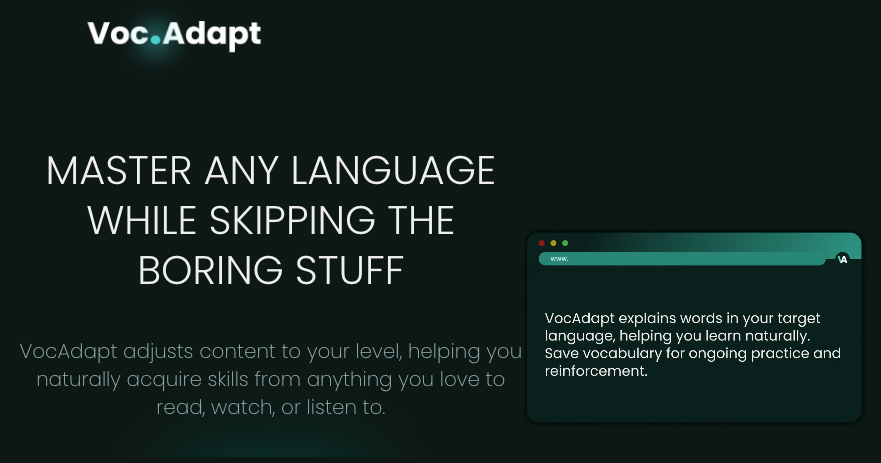
- Voc.Adapt — via The Neuron
AI educators are coming to this school – and it’s part of a trend — from techradar.com by Eric Hal Schwartz
Two hours of lessons, zero teachers
- An Arizona charter school will use AI instead of human teachers for two hours a day on academic lessons.
- The AI will customize lessons in real-time to match each student’s needs.
- The company has only tested this idea at private schools before but claims it hugely increases student academic success.
One school in Arizona is trying out a new educational model built around AI and a two-hour school day. When Arizona’s Unbound Academy opens, the only teachers will be artificial intelligence algorithms in a perfect utopia or dystopia, depending on your point of view.
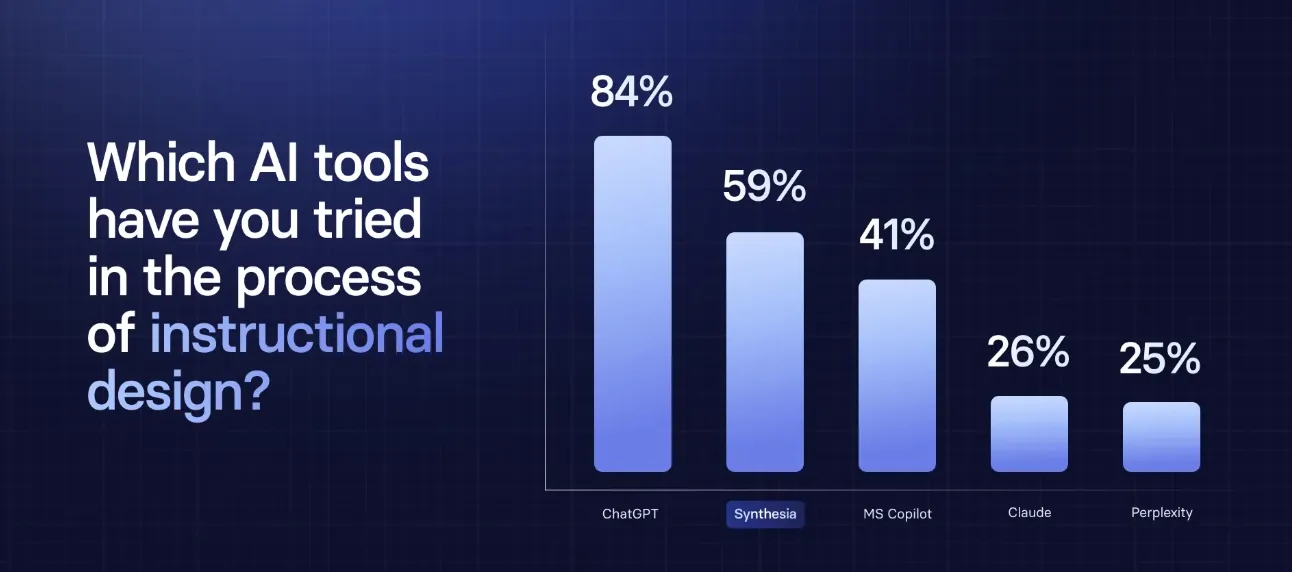
AI in Instructional Design: reflections on 2024 & predictions for 2025 — from drphilippahardman.substack.com by Dr. Philippa Hardman
Aka, four new year’s resolutions for the AI-savvy instructional designer.
Debating About AI: A Free Comprehensive Guide to the Issues — from stefanbauschard.substack.com by Stefan Bauschard
In order to encourage and facilitate debate on key controversies related to AI, I put together this free 130+ page guide to the main arguments and ideas related to the controversies.
Universities need to step up their AGI game — from futureofbeinghuman.com by Andrew Maynard
As Sam Altman and others push toward a future where AI changes everything, universities need to decide if they’re going to be leaders or bystanders in helping society navigate advanced AI transitions
And because of this, I think there’s a unique opportunity for universities (research universities in particular) to up their game and play a leadership role in navigating the coming advanced AI transition.
Of course, there are already a number of respected university-based initiatives that are working on parts of the challenge. Stanford HAI (Human-centered Artificial Intelligence) is one that stands out, as does the Leverhulm Center for the Future of Intelligence at the University of Cambridge, and the Center for Governance of AI at the University of Oxford. But these and other initiatives are barely scratching the surface of what is needed to help successfully navigate advanced AI transitions.
If universities are to be leaders rather than bystanders in ensuring human flourishing in an age of AI, there’s an urgent need for bolder and more creative forward-looking initiatives that support research, teaching, thought leadership, and knowledge mobilization, at the intersection of advanced AI and all aspects of what it means to thrive and grow as a species.
How AI Is Changing Education: The Year’s Top 5 Stories — from edweek.org by Alyson Klein
Ever since a new revolutionary version of chat ChatGPT became operable in late 2022, educators have faced several complex challenges as they learn how to navigate artificial intelligence systems.
…
Education Week produced a significant amount of coverage in 2024 exploring these and other critical questions involving the understanding and use of AI.
Here are the five most popular stories that Education Week published in 2024 about AI in schools.
What’s next with AI in higher education? — from msn.com by Science X Staff
Dr. Lodge said there are five key areas the higher education sector needs to address to adapt to the use of AI:
1. Teach ‘people’ skills as well as tech skills
2. Help all students use new tech
3. Prepare students for the jobs of the future
4. Learn to make sense of complex information
5. Universities to lead the tech change
5 Ways Teachers Can Use NotebookLM Today — from classtechtips.com by Dr. Monica Burns
