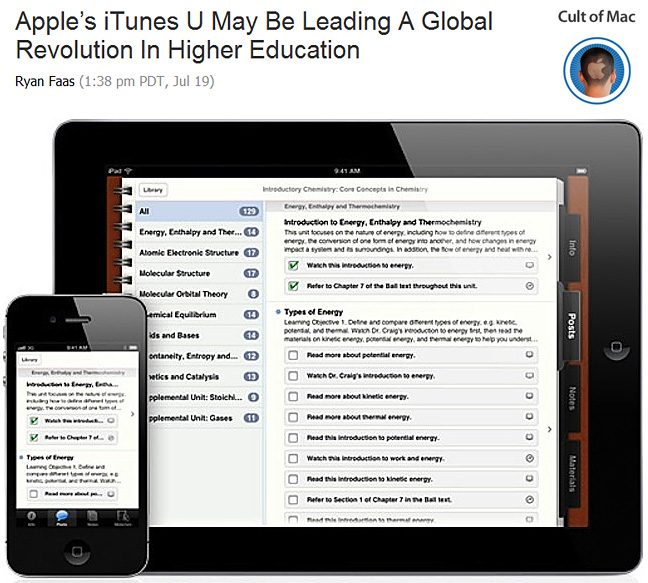
Apple's iTunes U may be leading a global revolution in higher education


From DSC:

Apple has been putting together a solid ecosystem of hardware and software that allows for the creation and distribution of content.  “Easy is hard” I like to say and Apple’s done a great job of creating easy-to-use devices and apps. They have a long way to go before iTunes U has all the built-in functionality needed to replace a Blackboard Learn or a Moodle type of CMS/LMS.  But given their solid history of creating highly-usable hardware and software, they could deal a smashing blow to what’s happening in the CMS/LMS world today. 

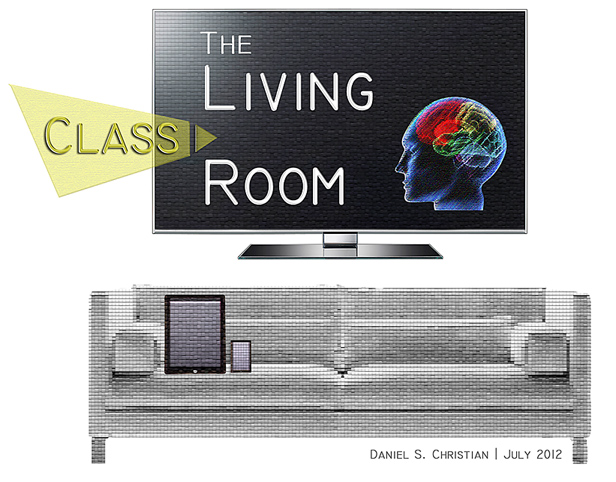
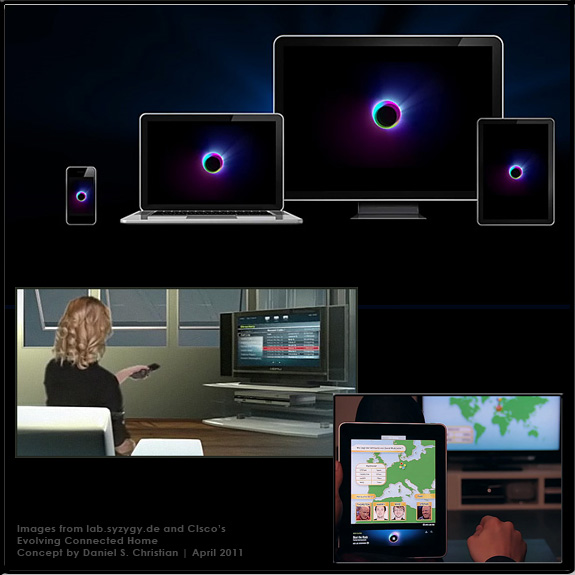
Plus, with Apple TV, Airplay mirroring, the growth of second screen-based apps, and machine-to-machine communications, Apple is poised to get into this game…big time. If my thoughts re: “Learning from the Living [Class] Room” come to fruition, Apple would be positioned for some serious worldwide impact on lifelong learning; especially when combined with the developments such as the use of MOOCs, AI and HCI-related innovations, learning agents, web-based learner profiles, and potential/upcoming changes to accreditation.

Too far fetched do you think? Hmmm….well considering that online learning has already been proven to be at least as affective as f2f learning — and in some studies has produced even greater learning outcomes/results — I wonder how things will look in mid-2015…? (That is, where is the innovation occurring?)


 Addendum:

  • Connected TV penetration to top 50% by 2017 — from worldscreen.com by Mansha Daswani
    Excerpt:
    SCOTTSDALE: ABI Research forecasts that more than 50 percent of television homes in North America and Western Europe will have Internet-connected TV sets by 2017, up from just 10 percent last year, while Blu-ray player penetration is expected to rise to more than 76 percent from about 25 percent. The report notes that the popularity of connected TV is not limited to developed markets—there have been increasing shipments to China, ABI notes.
    .
  • Advertisers need to pay attention to connected TV [INFOGRAPHIC] — from Mashable.com
    .
  • The future of TV is two screens, one held firmly in your hands — from FastCompany.com by Kit Eaton
    Excerpt:

    The connected TV, sometimes called the smart TV (and even branded as such by Samsung) is a growing phenomenon: TV makers are adding limited apps, Net connectivity, and even streaming media powers to their newer TVs in the hope they’ll persuade you to upgrade your newish LCD for a flatter, smarter unit. They’re desperate to, given how flat this market is. But according to new research from Pew, the future of TV may actually be a little more closely aligned with the notion of a “connected TV viewer,” an important distinction. Pew spoke to over 2,200 U.S. adults a couple of months ago and discovered that 52% of all adult cell phone owners now “incorporate their mobile devices into their television watching experiences.”
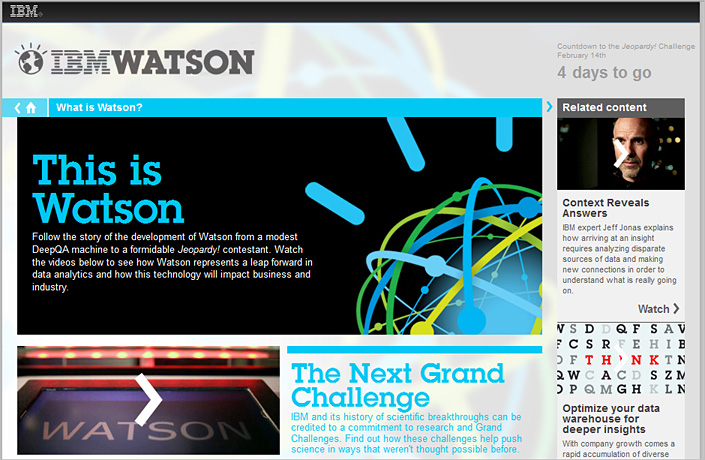
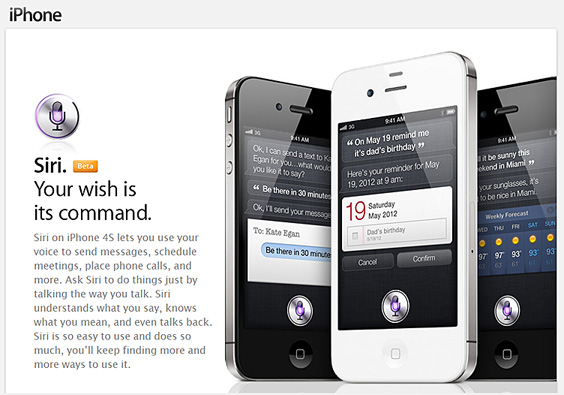
 

When the technologies behind Watson and Siri get perfected and integrated into the “Learning from the Living [Class] Room” environment [Christian]


From DSC:

When the technologies behind IBM’s Watson and Apple’s Siri get perfected and integrated into products and services that will make up the near future “Learning from the Living [Class] Room” environment— there will be:


  • A high degree of personalization and customization — available 24x7x365 on multiple kinds of devices
    .
  • The option to turn on tracking and analytics — reporting from which can be moved into the learner’s cloud-based profile upon completion of the unit/activity/badge
    .
  • Students of all ages will have access to their own virtual tutors so to speak
    .
  • When a virtual tutor is unable to resolve or address the student’s issue to the student’s satisfaction, the student will be able to instantly access a human tutor (with the option of keeping the existing work/issue/problems visible to the human tutor)


IBM's Watson -- incredible AI!


The Living [Class] Room -- by Daniel Christian -- July 2012 -- a second device used in conjunction with a Smart/Connected TV


.

Addendums:


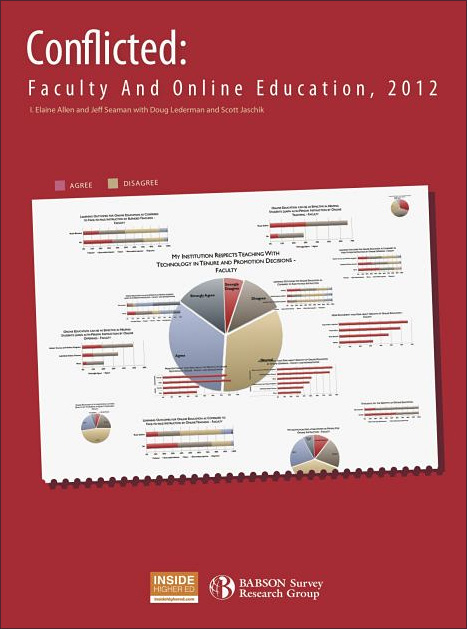
Conflicted: Faculty and Online Education - June 2012


.

Excerpt:

The study was based on a pair of related surveys about online education, co-designed by Inside Higher Ed and administered and analyzed by the Babson Survey Research Group, which has studied online education for more than a decade. The surveys garnered responses from representative samples of 4,564 faculty members (of about 60,000 who were sent invitations to participate) and 591 academic technology administrators, from all types of institution. The surveys asked a wide range of questions of both groups about their perceptions of online quality, institutional support and training in instructional technology, and compensation, among other things. The response rates for both surveys were below 10 percent.

A PDF copy of the study report can be downloaded here. To read the text of the report, click here.

.
From DSC:
I urge faculty members to give online learning a try — not only for your students’ sakes, but for your own career’s sake:
  • Take a course from an organization that has a good reputation for their online courses
    or
  • Take a course re: instructional design for teaching online
    or
  • Try your hand at teaching your own course online.
I don’t mention this piece of advice as a threat or to come across as a scaremonger.  Online learning has been — and continues to be — reality.  In Christensen’s terms, face-to-face classrooms practice sustaining innnovations but online learning is a disruptive technology that keeps gaining ground.   [When either mode are done well] it’s now not only at least as good as face-to-face learning, but the powerful tools that keep being added to online learning will take it far beyond what we are able to currently offer in a face-to-face classroom.
One comment at the end of the article stood out for me as well:
  • “In a capitalistic society consumer demand dictates the products it will provide and sell.”  

For those interested in this topic, take a moment to check out the other comments as well.

Excerpt from the Moodlerooms blog posting
Best Practices: Four Tips for Creating an Effective Online Syllabus

Tip #5: Make the most of Moodle modules.
As a best practice, we suggest using the Book module for your course syllabus. The Book module allows you to chunk your syllabus into logical segments (e.g., grading, participation, course description, course requirements, communication) using the Book’s chapter feature. It has in-module navigation that allows students to view the syllabus in chronological order, but also has a great Table of Contents, allowing students to jump to specific pages. The Book module also allows for printing—so students can print the syllabus for later use as well!

Tagged with: • • • •  

6 keys to engaging students online — from campustechnology.com by Richard Rose
While some instructors think online teaching will be a breeze, the truth is that the best teachers work really hard to connect with students. CT shares tips from an insider.

From DSC:
If properly done, both teaching online and taking courses online is hard work. I’d take a successful online learner any day — as they’ve shown they are self-starters, self-motivated, and they don’t need hand holding. And in terms of the teaching aspect, I’d recommend all faculty at least try their hand at teaching online — as their careers will be more stable if they do (i.e. they will be more marketable).


Items re: the connected living room; relates to what I call a future “learning from the living room” environment

The human voice, as game changer — from nytimes.com by Natasha Singer


Matthew Cavanaugh for The New York Times

Vlad Sejnoha demonstrated Nuance’s Dragon TV system, which obeys spoken commands to
flip channels, for example, or shop on screen on Amazon.com.

Apple’s iCloud will teach Apple’s Smart TV remote new tricks — from patentlyapple.com

6 answers about your next TV, with or without Apple — from forbes.com by Michael Humphrey

10 tech commandments for the TV industry — from thenextweb.com by Martin Bryant

Smart TVs are growing in popularity — from business-news.thestreet.com by Steve Adams

smartTV Quincy gh 032112-284-wihr.jpg

Image from Gary Higgins/The Patriot Ledger

Paul Berrini, a salesman at Hancock T.V.& Appliance in Quincy, demonstrates
some of the new features of “smart” televisions, Wednesday, March 21.

.

10 AirPlay-ready iPad apps that make Apple TV worth it — from  readwriteweb.com by John Paul Titlow

Entertainment and Streaming Media – The Recent Past and the Future — from homesystemintegration.com by Alan Ruby

Connected Living Room 1

.

TVs may soon be used to spy on you — from smartplanet.com by Tuan C. Nguyen


From DSC:
Arguably, Sal Kahn has become the most famous, influential educator on the planet today — his videos are watched millions of times a day now.  The question — which Eric Schmidt answers in the piece — I couldn’t help but ask was, “Why didn’t this type of innovation come from someone who was working in education at the time of their innovation?”

My thanks to Dr. Kate Byerwalter and her colleagues for passing along this resource.
The tags/associated categories for this posting point out the relevant areas covered.


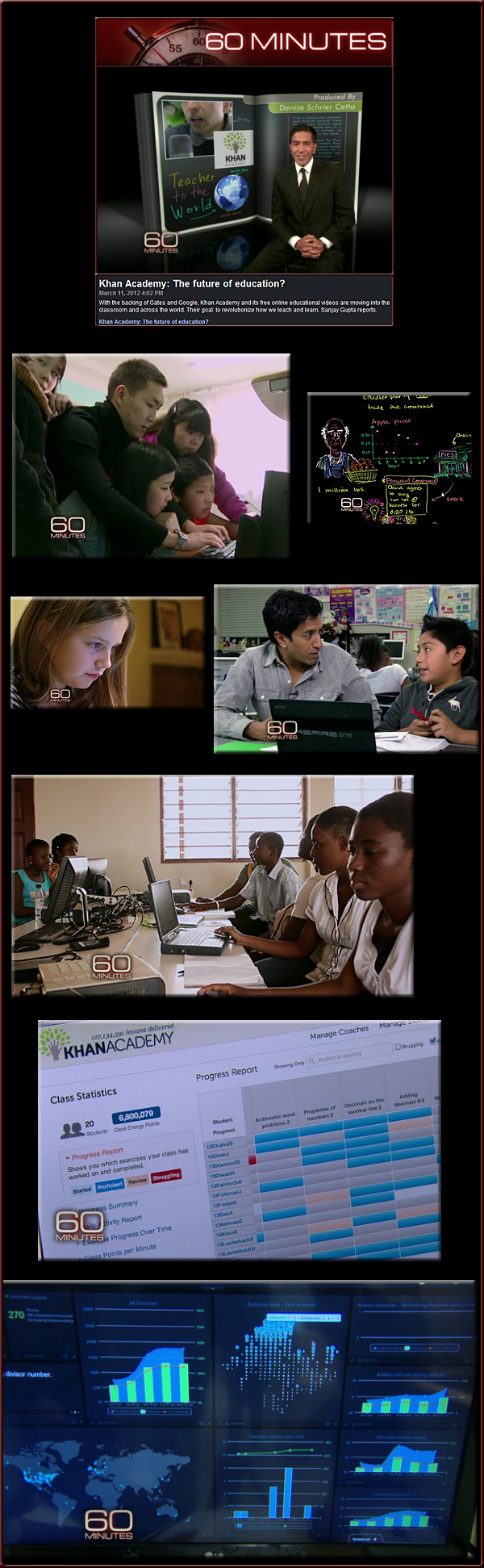
Khan Academy: The future of education?

Also see:

  • Khan Academy: The future of education?
    (CBS News) Sal Khan is a math, science, and history teacher to millions of students, yet none have ever seen his face. Khan is the voice and brains behind Khan Academy, a free online tutoring site that may have gotten your kid out of an algebra bind with its educational how-to videos. Now Khan Academy is going global. Backed by Google, Gates, and other Internet powerhouses, Sal Khan wants to change education worldwide, and his approach is already being tested in some American schools. Sanjay Gupta reports.

From DSC:
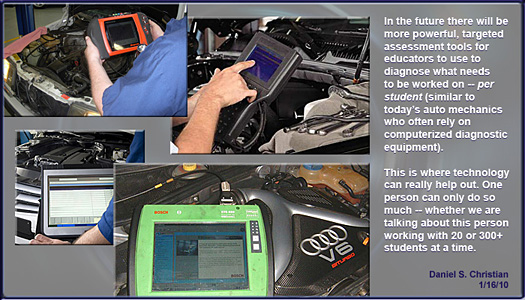
A relevant graphic comes to mind with what Sal is trying to achieve with analytics:

i.e. Highly-effective diagnostic tools for the educators and trainers out there!


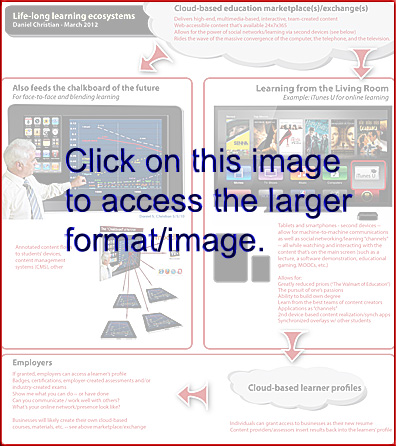
Lifelong learning ecosystems!!! A powerful vision for our future [Daniel Christian]

From DSC:
The vision below involves:
(click on the image below to access it)
 

  • The convergence of the telephone, the television, and the computer
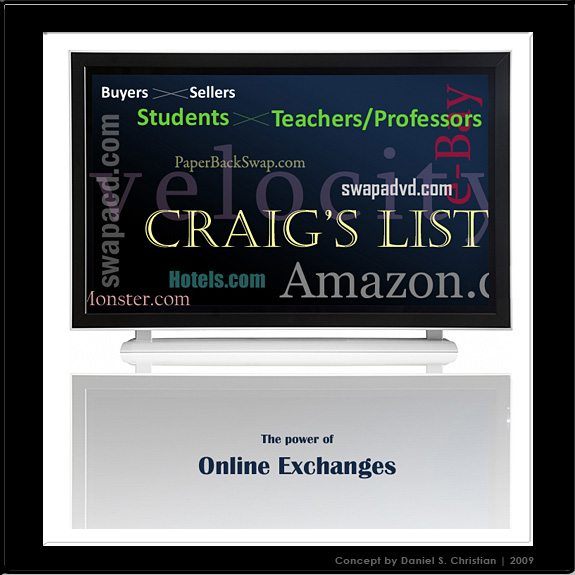
  • Cloud-based education stores/marketplaces/exchanges
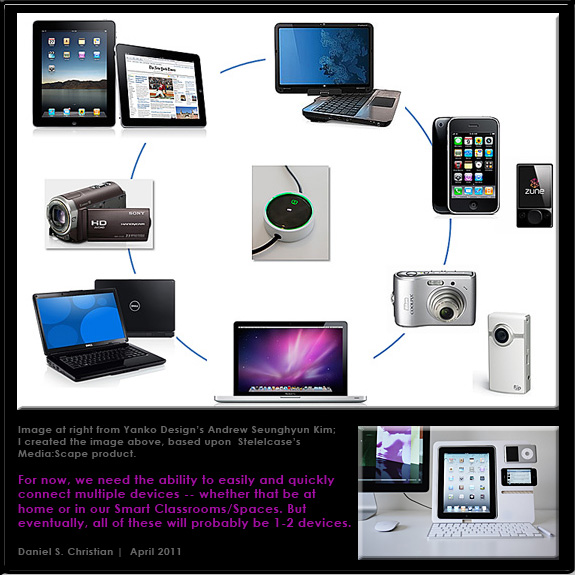
  • Second screen devices and machine-to-machine communications
  • Social networking/learning
  • Smart classrooms/learning spaces
  • Content recognition/synchronization applications
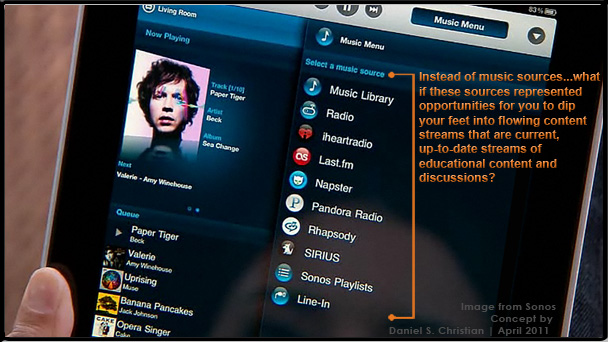
  • Apps as “channels”
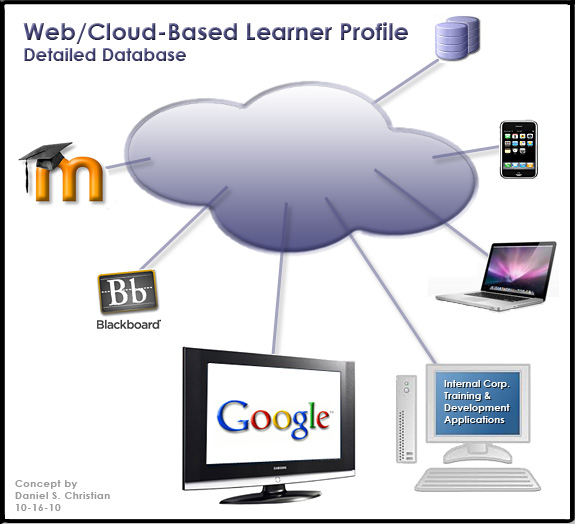
  • Web-based learner profiles
  • Video overlays
  • New business models in higher ed
  • New jobs/needs for the future
  • A new way for employers to hire highly-effective employees/contractors/consultants
  • …and more


Click this thumbnail image to access the larger image / vision

.


From Daniel Christian: Fasten your seatbelts! An accelerated ride through some ed-tech landscapes.


From DSC:
Immediately below is a presentation that I did for the Title II Conference at Calvin College back on August 11, 2011
It is aimed at K-12 audiences.


Daniel S. Christian presentation -- Fasten your seatbelts! An accelerated ride through some ed-tech landscapes (for a K-12 audience)


From DSC:
Immediately below is a presentation that I did today for the Calvin College Fall 2011 Conference.
It is aimed at higher education audiences.


 Daniel S. Christian presentation -- Fasten your seatbelts! An accelerated ride through some ed-tech landscapes (for a higher ed audience)


Note from DSC:

There is a great deal of overlap here, as many of the same technologies are (or will be) hitting the K-12 and higher ed spaces at the same time. However, there are some differences in the two presentations and what I stressed depended upon my audience.

Pending time, I may put some audio to accompany these presentations so that folks can hear a bit more about what I was trying to relay within these two presentations.


Tagged with: • • • • • • • • • • • • • • • • • • • • • • • • • • • • • • • • • • • • • • • • • • • • • • • • • • • • • • • • • • • • • • • • • • • • • • • • • • • • • • • • • • • • • • • • • • • • •  

Practical strategies for online faculty orientation — from Faculty Focus by Mary Bart

Excerpt:

At Penn State World Campus, new instructors have a three-part training program that includes online pedagogy, a tour of the Learning Management System (LMS), and an orientation on the nuts and bolts of teaching in an online classroom. The goal is to streamline the teaching and learning process, and minimize the learning curves for new instructors.

In the online seminar How to Orient New Instructors to an Online Course FAST!, Jennifer Berghage, an instructional designer at Penn State World Campus, discussed her approach to orienting new instructors. It all begins with a comprehensive instructor tip sheet, which lives within the course site hidden from students but is always just a click away from instructors.

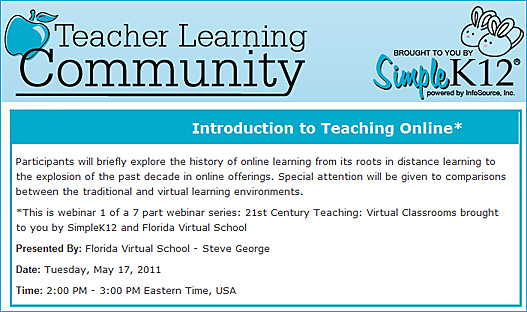
Intro to teaching online -- 7 week series from SimpleK12 and Florida Virtual School - begins May 2011


Not sure if there is a more recent edition here…but also see:


A hugely powerful vision: A potent addition to our learning ecosystems of the future


Daniel Christian:
A Vision of Our Future Learning Ecosystems


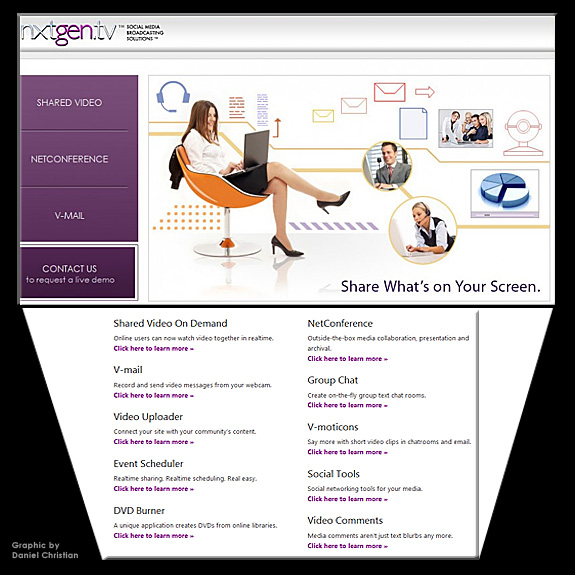
In the near future, as the computer, the television, the telephone (and more) continues to converge, we will most likely enjoy even more powerful capabilities to conveniently create and share our content as well as participate in a global learning ecosystem — whether that be from within our homes and/or from within our schools, colleges, universities and businesses throughout the world.

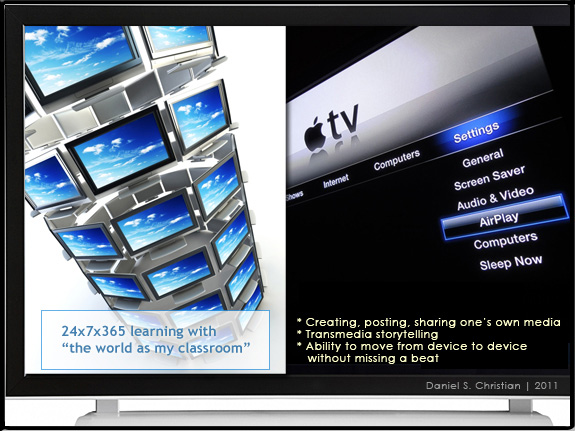
We will be teachers and students at the same time — even within the same hour — with online-based learning exchanges taking place all over the virtual and physical world.  Subject Matter Experts (SME’s) — in the form of online-based tutors, instructors, teachers, and professors — will be available on demand. Even more powerful/accurate/helpful learning engines will be involved behind the scenes in delivering up personalized, customized learning — available 24x7x365.  Cloud-based learner profiles may enter the equation as well.

The chances for creativity,  innovation, and entrepreneurship that are coming will be mind-blowing! What employers will be looking for — and where they can look for it — may change as well.

What we know today as the “television” will most likely play a significant role in this learning ecosystem of the future. But it won’t be like the TV we’ve come to know. It will be much more interactive and will be aware of who is using it — and what that person is interested in learning about. Technologies/applications like Apple’s AirPlay will become more standard, allowing a person to move from device to device without missing a  beat. Transmedia storytellers will thrive in this environment!

Much of the professionally done content will be created by teams of specialists, including the publishers of educational content, and the in-house teams of specialists within colleges, universities, and corporations around the globe. Perhaps consortiums of colleges/universities will each contribute some of the content — more readily accepting previous coursework that was delivered via their consortium’s membership.

An additional thought regarding higher education and K-12 and their Smart Classrooms/Spaces:
For input devices…
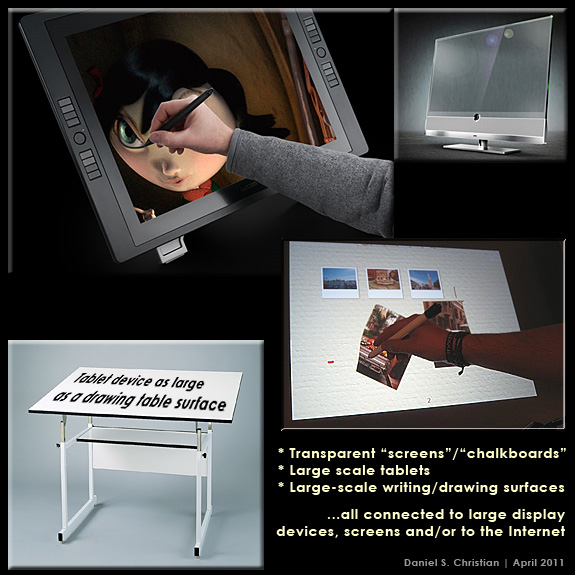
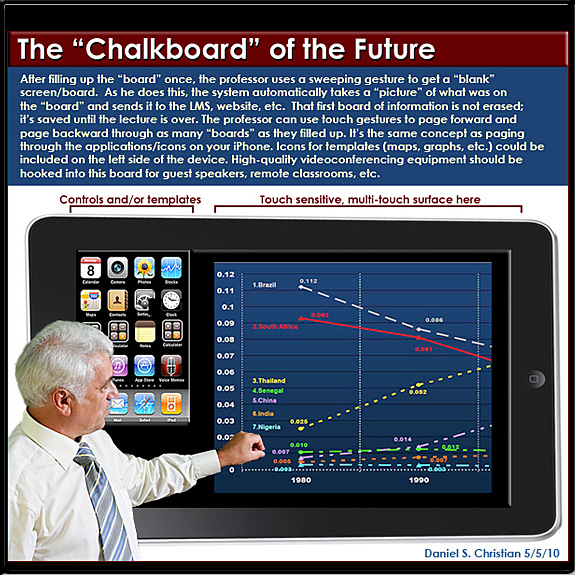
The “chalkboards” of the future may be transparent, or they may be on top of a drawing board-sized table or they may be tablet-based. But whatever form they take and whatever is displayed upon them, the ability to annotate will be there; with the resulting graphics saved and instantly distributed. (Eventually, we may get to voice-controlled Smart Classrooms, but we have a ways to go in that area…)

Below are some of the graphics that capture a bit of what I’m seeing in my mind…and in our futures.

Alternatively available as a PowerPoint Presentation (audio forthcoming in a future version)


— from Daniel S. Christian | April 2011

See also:

Addendum on 4-14-11:


Tagged with: • • • • • • • • • • • • • • • • • • • • • • • • • • • • • • • • • • • • • • • • • • • • • • • • • • • • • • • • • • • • • • • • • • • • • • • • • • • • • • • • • • • • • • • • • • • • • • • • • • • • • • • • • • • • • • • • • • •  

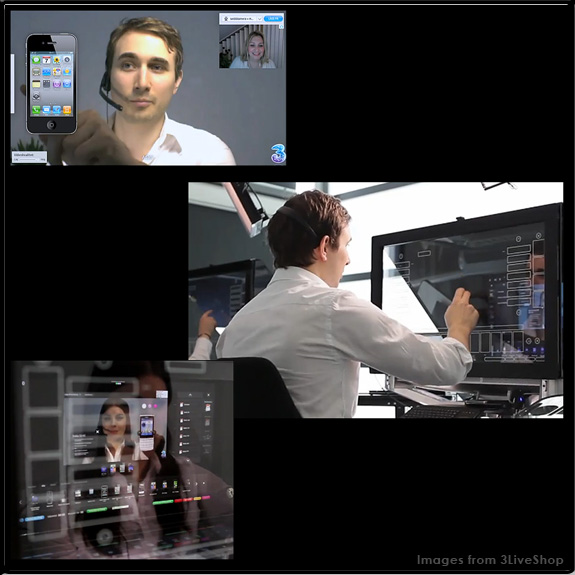
Swedish Online Store Features Live, Interactive Salespeople [VIDEO] — from Mashable.com
Excerpt:

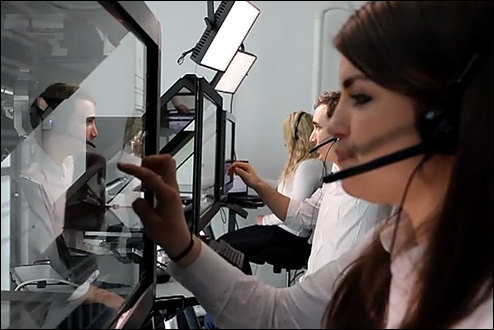
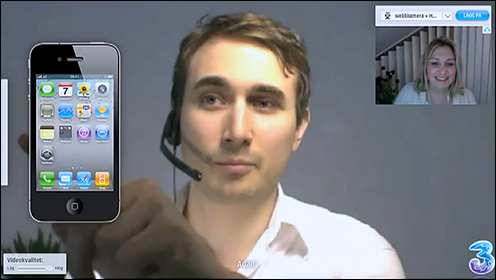
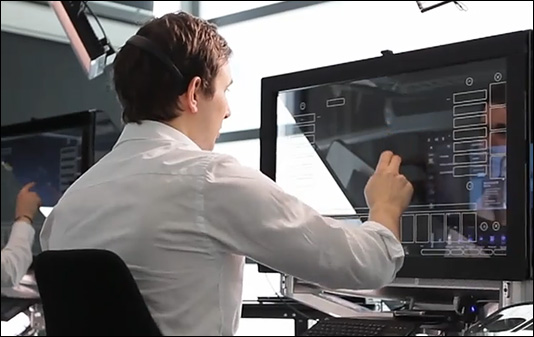
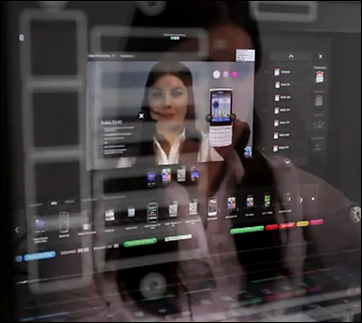
Swedish telecom company 3 Sweden has bridged the gap between Internet commerce and brick and mortar with 3LiveShop. The new site features employees interacting with customers, live, over videoscreens. As the video above shows, the Chatroulette-like site was made possible with custom-built touchscreens that look like they’re right out of The Minority Report. Using the screens, the online salespeople are able to bring up images of phones the company sells and field questions about them.


Questions/reflections from DSC:
If this does turn out to be the case:

  • Should students have a solid comfort level with technology in order to be marketable in the future?
  • What changes do we need to make to our curriculums — at all levels — to insure their success in this type of world?
  • Will this setup be similar for the online teachers/professors out there?
  • Will this type of setup lead to incredible levels of individualized attention? Or will such services only be for people who can afford this level of personalized attention?
  • What changes will the corporate world need to make to incorporate this type of channel?
  • Will this offer 24x7x365 access, with certain call centers either online 24 hours a day, or different call centers spread throughout the world coming online and offline in synch w/ each other?
© 2025 | Daniel Christian