Adobe Reinvents its Entire Creative Suite with AI Co-Pilots, Custom Models, and a New Open Platform — from theneuron.ai by Grant Harvey
Adobe just put an AI co-pilot in every one of its apps, letting you chat with Photoshop, train models on your own style, and generate entire videos with a single subscription that now includes top models from Google, Runway, and Pika.

Adobe came to play, y’all.

At Adobe MAX 2025 in Los Angeles, the company dropped an entire creative AI ecosystem that touches every single part of the creative workflow. In our opinion, all these new features aren’t about replacing creators; it’s about empowering them with superpowers they can actually control.

Adobe’s new plan is to put an AI co-pilot in every single app.

  • For professionals, the game-changer is Firefly Custom Models. Start training one now to create a consistent, on-brand look for all your assets.
  • For everyday creators, the AI Assistants in Photoshop and Express will drastically speed up your workflow.
  • The best place to start is the Photoshop AI Assistant (currently in private beta), which offers a powerful glimpse into the future of creative software—a future where you’re less of a button-pusher and more of a creative director.

Adobe MAX Day 2: The Storyteller Is Still King, But AI Is Their New Superpower — from theneuron.ai by Grant Harvey
Adobe’s Day 2 keynote showcased a suite of AI-powered creative tools designed to accelerate workflows, but the real message from creators like Mark Rober and James Gunn was clear: technology serves the story, not the other way around.

On the second day of its annual MAX conference, Adobe drove home a message that has been echoing through the creative industry for the past year: AI is not a replacement, but a partner. The keynote stage featured a powerful trio of modern storytellers—YouTube creator Brandon Baum, science educator and viral video wizard Mark Rober, and Hollywood director James Gunn—who each offered a unique perspective on a shared theme: technology is a powerful tool, but human instinct, hard work, and the timeless art of storytelling remain paramount.

From DSC:
As Grant mentioned, the demos dealt with ideation, image generation, video generation, audio generation, and editing.


Adobe Max 2025: all the latest creative tools and AI announcements — from theverge.com by Jess Weatherbed

The creative software giant is launching new generative AI tools that make digital voiceovers and custom soundtracks for videos, and adding AI assistants to Express and Photoshop for web that edit entire projects using descriptive prompts. And that’s just the start, because Adobe is planning to eventually bring AI assistants to all of its design apps.


Also see Adobe Delivers New AI Innovations, Assistants and Models Across Creative Cloud to Empower Creative Professionals plus other items from the News section from Adobe


Proverbs 10:12

Hatred stirs up conflict, but love covers over all wrongs.

Proverbs 9:10

The fear of the Lord is the beginning of wisdom, and knowledge of the Holy One is understanding.

Hebrews 4:12

For the word of God is alive and active. Sharper than any double-edged sword, it penetrates even to dividing soul and spirit, joints and marrow; it judges the thoughts and attitudes of the heart.

Proverbs 11:1

The LORD detests dishonest scales, but accurate weights find favor with him.


From DSC:
As a relevant aside, the following article made me think about some of the reasons why the LORD used parables/stories to speak to the people:

The 2-Minute Story That Saved My Career: How Storytelling Can Be The Most Effective Form of Feedback — from techlearning.com by Michael Gaskell
By harnessing the power of story, school leaders can create a culture in which feedback is embraced as an essential ingredient for growth

The Storytelling Approach
Sharing stories is effective because it seems to get around our defensiveness. When information is presented in a story form, people reason about it differently than if it were presented as a list of facts or a direct critique.

Here’s more of why and then how to implement it with success in your school leadership work.

1. Transportation and Distancing: Listening to a story pulls us out of a defensive mode (the “do I agree or do I disagree?” mindset) and into a thoughtful, observant framework. Being transported allows the individual to identify with others in a way that is different from experiencing the situation for themselves. It’s a third-person, objective mindset, a safe zone for people to evaluate a situation from.

2. Shifting Perspective: When individuals consider challenges from the perspective of someone who is not them, it dramatically alters their thinking. They gain the latitude and freedom to consider the available options without feeling personally attacked. That wise sage did this when he shared his story of struggling. Making it safe and helping me to see him as having an objective, difficult experience is why when I was able to take the perspective of a distanced other. It became easier to think about the situation in a wiser way and come up with a better solution.

3. Engaging Different Brain Systems: Fundamentally different pathways are triggered when processing stories compared to facts. Storytelling engages social relevance brain systems–those that help us understand what other people think and feel, such as empathy, another higher order processing mechanism.


From DSC:
I posted an excerpt of this in another posting, but I wanted to highlight these two powerful, extremely well-done video series for those who might be interested in them.


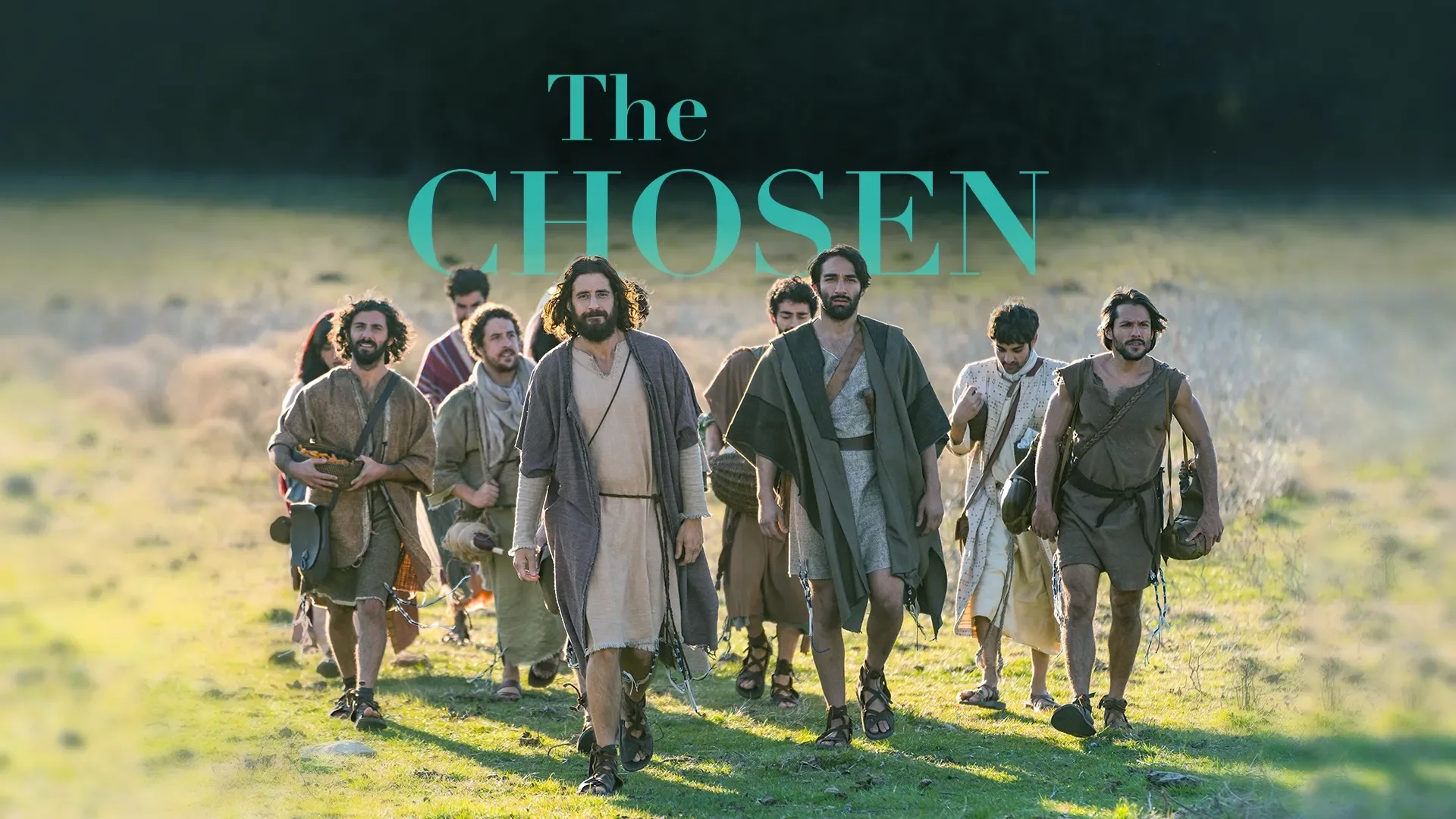
The House of David is very well done! I enjoyed watching Season 1. Like The Chosen, it brings the Bible to life in excellent, impactful ways! Both series convey the context and cultural tensions at the time. Both series are an answer to prayer for me and many others — as they are professionally-done. Both series match anything that comes out of Hollywood in terms of the acting, script writing, music, the sets, etc.  Again, both of these series are very well done.
.

The House of David

.

The Chosen


A sampling of others who cover The Chosen includes:


“A new L&D operating system for the AI Era?” [Hardman] + other items re: AI in our learning ecosystems

From 70/20/10 to 90/10 — from drphilippahardman.substack.com by Dr Philippa Hardman
A new L&D operating system for the AI Era?

This week I want to share a hypothesis I’m increasingly convinced of: that we are entering an age of the 90/10 model of L&D.

90/10 is a model where roughly 90% of “training” is delivered by AI coaches as daily performance support, and 10% of training is dedicated to developing complex and critical skills via high-touch, human-led learning experiences.

Proponents of 90/10 argue that the model isn’t about learning less, but about learning smarter by defining all jobs to be done as one of the following:

  • Delegate (the dead skills): Tasks that can be offloaded to AI.
  • Co-Create (the 90%): Tasks which well-defined AI agents can augment and help humans to perform optimally.
  • Facilitate (the 10%): Tasks which require high-touch, human-led learning to develop.

So if AI at work is now both real and material, the natural question for L&D is: how do we design for it? The short answer is to stop treating learning as an event and start treating it as a system.


My daughter’s generation expects to learn with AI, not pretend it doesn’t exist, because they know employers expect AI fluency and because AI will be ever-present in their adult lives.

— Jenny Maxell

The above quote was taken from this posting.


Unlocking Young Minds: How Gamified AI Learning Tools Inspire Fun, Personalized, and Powerful Education for Children in 2025 — from techgenyz.com by Sreyashi Bhattacharya

Table of Contents

Highlight

  • Gamified AI Learning Tools personalize education by adapting the difficulty and content to each child’s pace, fostering confidence and mastery.
  • Engaging & Fun: Gamified elements like quests, badges, and stories keep children motivated and enthusiastic.
  • Safe & Inclusive: Attention to equity, privacy, and cultural context ensures responsible and accessible learning.

How to test GenAI’s impact on learning — from timeshighereducation.com by Thibault Schrepel
Rather than speculate on GenAI’s promise or peril, Thibault Schrepel suggests simple teaching experiments to uncover its actual effects

Generative AI in higher education is a source of both fear and hype. Some predict the end of memory, others a revolution in personalised learning. My two-year classroom experiment points to a more modest reality: Artificial intelligence (AI) changes some skills, leaves others untouched and forces us to rethink the balance.

This indicates that the way forward is to test, not speculate. My results may not match yours, and that is precisely the point. Here are simple activities any teacher can use to see what AI really does in their own classroom.

4. Turn AI into a Socratic partner
Instead of being the sole interrogator, let AI play the role of tutor, client or judge. Have students use AI to question them, simulate cross-examination or push back on weak arguments. New “study modes” now built into several foundation models make this kind of tutoring easy to set up. Professors with more technical skills can go further, design their own GPTs or fine-tuned models trained on course content and let students interact directly with them. The point is the practice it creates. Students learn that questioning a machine is part of learning to think like a professional.


Assessment tasks that support human skills — from timeshighereducation.com by Amir Ghapanchi and Afrooz Purarjomandlangrudi
Assignments that focus on exploration, analysis and authenticity offer a road map for university assessment that incorporates AI while retaining its rigour and human elements

Rethinking traditional formats

1. From essay to exploration 
When ChatGPT can generate competent academic essays in seconds, the traditional format’s dominance looks less secure as an assessment task. The future lies in moving from essays as knowledge reproduction to assessments that emphasise exploration and curation. Instead of asking students to write about a topic, challenge them to use artificial intelligence to explore multiple perspectives, compare outputs and critically evaluate what emerges.

Example: A management student asks an AI tool to generate several risk plans, then critiques the AI’s assumptions and identifies missing risks.


What your students are thinking about artificial intelligence — from timeshighereducation.com by Florencia Moore and Agostina Arbia
GenAI has been quickly adopted by students, but the consequences of using it as a shortcut could be grave. A study into how students think about and use GenAI offers insights into how teaching might adapt

However, when asked how AI negatively impacts their academic development, 29 per cent noted a “weakening or deterioration of intellectual abilities due to AI overuse”. The main concern cited was the loss of “mental exercise” and soft skills such as writing, creativity and reasoning.

The boundary between the human and the artificial does not seem so easy to draw, but as the poet Antonio Machado once said: “Traveller, there is no path; the path is made by walking.”


Jelly Beans for Grapes: How AI Can Erode Students’ Creativity — from edsurge.com by Thomas David Moore

There is nothing new about students trying to get one over on their teachers — there are probably cuneiform tablets about it — but when students use AI to generate what Shannon Vallor, philosopher of technology at the University of Edinburgh, calls a “truth-shaped word collage,” they are not only gaslighting the people trying to teach them, they are gaslighting themselves. In the words of Tulane professor Stan Oklobdzija, asking a computer to write an essay for you is the equivalent of “going to the gym and having robots lift the weights for you.”


Deloitte will make Claude available to 470,000 people across its global network — from anthropic.com

As part of the collaboration, Deloitte will establish a Claude Center of Excellence with trained specialists who will develop implementation frameworks, share leading practices across deployments, and provide ongoing technical support to create the systems needed to move AI pilots to production at scale. The collaboration represents Anthropic’s largest enterprise AI deployment to date, available to more than 470,000 Deloitte people.

Deloitte and Anthropic are co-creating a formal certification program to train and certify 15,000 of its professionals on Claude. These practitioners will help support Claude implementations across Deloitte’s network and Deloitte’s internal AI transformation efforts.


How AI Agents are finally delivering on the promise of Everboarding: driving retention when it counts most — from premierconstructionnews.com

Everboarding flips this model. Rather than ending after orientation, everboarding provides ongoing, role-specific training and support throughout the employee journey. It adapts to evolving responsibilities, reinforces standards, and helps workers grow into new roles. For high-turnover, high-pressure environments like retail, it’s a practical solution to a persistent challenge.

AI agents will be instrumental in the success of everboarding initiatives; they can provide a much more tailored training and development process for each individual employee, keeping track of which training modules may need to be completed, or where staff members need or want to develop further. This personalisation helps staff to feel not only more satisfied with their current role, but also guides them on the right path to progress in their individual careers.

Digital frontline apps are also ideal for everboarding. They offer bite-sized training that staff can complete anytime, whether during quiet moments on shift or in real time on the job, all accessible from their mobile devices.


TeachLM: insights from a new LLM fine-tuned for teaching & learning — from drphilippahardman.substack.com by Dr Philippa Hardman
Six key takeaways, including what the research tells us about how well AI performs as an instructional designer

As I and many others have pointed out in recent months, LLMs are great assistants but very ineffective teachers. Despite the rise of “educational LLMs” with specialised modes (e.g. Anthropic’s Learning Mode, OpenAI’s Study Mode, Google’s Guided Learning) AI typically eliminates the productive struggle, open exploration and natural dialogue that are fundamental to learning.

This week, Polygence, in collaboration with Stanford University researcher Prof Dora Demszky. published a first-of-its-kind research on a new model — TeachLM — built to address this gap.

In this week’s blog post, I deep dive what the research found and share the six key findings — including reflections on how well TeachLM performs on instructional design.


The Dangers of using AI to Grade — from marcwatkins.substack.com by Marc Watkins
Nobody Learns, Nobody Gains

AI as an assessment tool represents an existential threat to education because no matter how you try and establish guardrails or best practices around how it is employed, using the technology in place of an educator ultimately cedes human judgment to a machine-based process. It also devalues the entire enterprise of education and creates a situation where the only way universities can add value to education is by further eliminating costly human labor.

For me, the purpose of higher education is about human development, critical thinking, and the transformative experience of having your ideas taken seriously by another human being. That’s not something we should be in a rush to outsource to a machine.


AI agents: Where are they now? From proof of concept to success stories — from hrexecutive.com by Jill Barth

The 4 Rs framework
Salesforce has developed what Holt Ware calls the “4 Rs for AI agent success.” They are:

  1. Redesign by combining AI and human capabilities. This requires treating agents like new hires that need proper onboarding and management.
  2. Reskilling should focus on learning future skills. “We think we know what they are,” Holt Ware notes, “but they will continue to change.”
  3. Redeploy highly skilled people to determine how roles will change. When Salesforce launched an AI coding assistant, Holt Ware recalls, “We woke up the next day and said, ‘What do we do with these people now that they have more capacity?’ ” Their answer was to create an entirely new role: Forward-Deployed Engineers. This role has since played a growing part in driving customer success.
  4. Rebalance workforce planning. Holt Ware references a CHRO who “famously said that this will be the last year we ever do workforce planning and it’s only people; next year, every team will be supplemented with agents.”

Synthetic Reality Unleashed: AI’s powerful Impact on the Future of Journalism — from techgenyz.com by Sreyashi Bhattacharya

Table of Contents

  • Highlights
  • What is “synthetic news”?
  • Examples in action
  • Why are newsrooms experimenting with synthetic tools
  • Challenges and Risks
  • What does the research say
    • Transparency seems to matter. —What is next: trends & future
  • Conclusion

The latest video generation tool from OpenAI –> Sora 2

Sora 2 is here — from openai.com

Our latest video generation model is more physically accurate, realistic, and more controllable than prior systems. It also features synchronized dialogue and sound effects. Create with it in the new Sora app.

And a video on this out at YouTube:

Per The Rundown AI:

The Rundown: OpenAI just released Sora 2, its latest video model that now includes synchronized audio and dialogue, alongside a new social app where users can create, remix, and insert themselves into AI videos through a “Cameos” feature.

Why it matters: Model-wise, Sora 2 looks incredible — pushing us even further into the uncanny valley and creating tons of new storytelling capabilities. Cameos feels like a new viral memetic tool, but time will tell whether the AI social app can overcome the slop-factor and have staying power past the initial novelty.


OpenAI Just Dropped Sora 2 (And a Whole New Social App) — from heneuron.ai by Grant Harvey
OpenAI launched Sora 2 with a new iOS app that lets you insert yourself into AI-generated videos with realistic physics and sound, betting that giving users algorithm control and turning everyone into active creators will build a better social network than today’s addictive scroll machines.

What Sora 2 can do

  • Generate Olympic-level gymnastics routines, backflips on paddleboards (with accurate buoyancy!), and triple axels.
  • Follow intricate multi-shot instructions while maintaining world state across scenes.
  • Create realistic background soundscapes, dialogue, and sound effects automatically.
  • Insert YOU into any video after a quick one-time recording (they call this “cameos”).

The best video to show what it can do is probably this one, from OpenAI researcher Gabriel Peters, that depicts the behind the scenes of Sora 2 launch day…


Sora 2: AI Video Goes Social — from getsuperintel.com by Kim “Chubby” Isenberg
OpenAI’s latest AI video model is now an iOS app, letting users generate, remix, and even insert themselves into cinematic clips

Technically, Sora 2 is a major leap. It syncs audio with visuals, respects physics (a basketball bounces instead of teleporting), and follows multi-shot instructions with consistency. That makes outputs both more controllable and more believable. But the app format changes the game: it transforms world simulation from a research milestone into a social, co-creative experience where entertainment, creativity, and community intersect.


Also along the lines of creating digital video, see:

What used to take hours in After Effects now takes just one text prompt. Tools like Google’s Nano Banana, Seedream 4, Runway’s Aleph, and others are pioneering instruction-based editing, a breakthrough that collapses complex, multi-step VFX workflows into a single, implicit direction.

The history of VFX is filled with innovations that removed friction, but collapsing an entire multi-step workflow into a single prompt represents a new kind of leap.

For creators, this means the skill ceiling is no longer defined by technical know-how, it’s defined by imagination. If you can describe it, you can create it. For the industry, it points toward a near future where small teams and solo creators compete with the scale and polish of large studios.

Bilawal Sidhu


OpenAI DevDay 2025: everything you need to know — from getsuperintel.com by Kim “Chubby” Isenberg
Apps Inside ChatGPT, a New Era Unfolds

Something big shifted this week. OpenAI just turned ChatGPT into a platform – not just a product. With apps now running inside ChatGPT and a no-code Agent Builder for creating full AI workflows, the line between “using AI” and “building with AI” is fading fast. Developers suddenly have a new playground, and for the first time, anyone can assemble their own intelligent system without touching code. The question isn’t what AI can do anymore – it’s what you’ll make it do.


Introducing the 2025 State of the L&D Industry Report — from community.elearningacademy.io

What’s changing is not the foundation—it’s the ecosystem. Teams are looking to create more flexible, scalable, and diverse learning experiences that meet people where they are.

What Did We Explore?
Everyone seems to have a take on what’s happening in L&D these days. From bold claims about six-figure roles to debates over whether portfolios or degrees matter more, everyone seems to have a take. So, we wanted to get to the heart of it by exploring five of the biggest, most debated areas shaping our work today:

  • Salaries: Are compensation trends really keeping pace with the value we deliver?
  • Hiring: What skills are managers actually looking for—and are those ATS horror stories true?
  • Portfolios: Are portfolios helping candidates stand out, and what are hiring managers actually looking for?
  • Tools & Modalities: What types of training are teams building, and what tools are they using to build it?
  • Artificial Intelligence: Who’s using it, how, and what concerns still exist?

These five areas are shaping the future of instructional design—not just for job seekers, but for team leaders, hiring managers, and the entire ecosystem of L&D professionals.

The takeaway? A portfolio is more than a collection of projects—it’s a storytelling tool. The ones that stand out highlight process, decision-making, and results—not just pretty screens.


These 40 Jobs May Be Replaced by AI. These 40 Probably Won’t — from inc.com by Bruce Crumley
A new Microsoft report ranks 80 professions by their risk of being replaced by AI tools.

A new study measuring the use of generative artificial intelligence in different professions has just gone public, and its main message to people working in some fields is harsh. It suggests translators, historians, text writers, sales representatives, and customer service agents might want to consider new careers as pile driver or dredge operators, railroad track layers, hardwood floor sanders, or maids — if, that is, they want to lower the threat of AI apps pushing them out of their current jobs.

From DSC:
Unfortunately, this is where the hyperscalers are going to get their ROI from all of the capital expenditures that they are making. Companies are going to use their services in order to reduce headcount at their organizations. CEOs are even beginning to brag about the savings that are realized by the use of AI-based technologies: (or so they claim.)

“As a CEO myself, I can tell you, I’m extremely excited about it. I’ve laid off employees myself because of AI. AI doesn’t go on strike. It doesn’t ask for a pay raise. These things that you don’t have to deal with as a CEO.”

My first position out of college was being a Customer Service Representative at Baxter Healthcare. It was my most impactful job, as it taught me the value of a customer. From then on, whoever I was trying to assist was my customer — whether they were internal or external to the organization that I was working for. Those kinds of jobs are so important. If they evaporate, what then? How will young people/graduates get their start? 

Also related/see:


Microsoft’s Edge Over the Web, OpenAI Goes Back to School, and Google Goes Deep — from thesignal.substack.com by Alex Banks

Alex’s take: We’re seeing browsers fundamentally transition from search engines ? answer engines ? action engines. Gone are the days of having to trawl through pages of search results. Commands are the future. They are the direct input to arrive at the outcomes we sought in the first place, such as booking a hotel or ordering food. I’m interested in watching Microsoft’s bet develop as browsers become collaborative (and proactive) assistants.


Everyone’s an (AI) TV showrunner now… — from theneurondaily.com by Grant Harvey

Amazon just invested in an AI that can create full TV episodes—and it wants you to star in them.

Remember when everyone lost their minds over AI generating a few seconds of video? Well, Amazon just invested in a company called Fable Studio whose system called Showrunner can generates entire 22-minute TV episodes.

Where does this go from here? Imagine asking AI to rewrite the ending of Game of Thrones, or creating a sitcom where you and your friends are the main characters. This type of tech could create personalized entertainment experiences just like that.

Our take: Without question, we’re moving toward a world where every piece of media can be customized to you personally. Your Netflix could soon generate episodes where you’re the protagonist, with storylines tailored to your interests and sense of humor.

And if this technology scales, the entire entertainment industry could flip upside down. The pitch goes: why watch someone else’s story when you can generate your own? 


The End of Work as We Know It — from gizmodo.com by Luc Olinga
CEOs call it a revolution in efficiency. The workers powering it call it a “new era in forced labor.” I spoke to the people on the front lines of the AI takeover.

Yet, even in this vision of a more pleasant workplace, the specter of displacement looms large. Miscovich acknowledges that companies are planning for a future where headcount could be “reduced by 40%.” And Clark is even more direct. “A lot of CEOs are saying that, knowing that they’re going to come up in the next six months to a year and start laying people off,” he says. “They’re looking for ways to save money at every single company that exists.”

But we do not have much time. As Clark told me bluntly: “I am hired by CEOs to figure out how to use AI to cut jobs. Not in ten years. Right now.”


AI Is Coming for the Consultants. Inside McKinsey, ‘This Is Existential.’ — from wsj.com by Chip Cutter; behind a paywall
If AI can analyze information, crunch data and deliver a slick PowerPoint deck within seconds, how does the biggest name in consulting stay relevant?


ChatGPT users shocked to learn their chats were in Google search results — from arstechnica.com by Ashley Belanger
OpenAI scrambles to remove personal ChatGPT conversations from Google results

Faced with mounting backlash, OpenAI removed a controversial ChatGPT feature that caused some users to unintentionally allow their private—and highly personal—chats to appear in search results.

Fast Company exposed the privacy issue on Wednesday, reporting that thousands of ChatGPT conversations were found in Google search results and likely only represented a sample of chats “visible to millions.” While the indexing did not include identifying information about the ChatGPT users, some of their chats did share personal details—like highly specific descriptions of interpersonal relationships with friends and family members—perhaps making it possible to identify them, Fast Company found.


Character.AI Launches World’s First AI-Native Social Feed — from blog.character.ai

Today, we’re dropping the world’s first AI-native social feed.

Feed from Character.AI is a dynamic, scrollable content platform that connects users with the latest Characters, Scenes, Streams, and creator-driven videos in one place.

This is a milestone in the evolution of online entertainment.

For the last 10 years, social platforms have been all about passive consumption. The Character.AI Feed breaks that paradigm and turns content into a creative playground. Every post is an invitation to interact, remix, and build on what others have made. Want to rewrite a storyline? Make yourself the main character? Take a Character you just met in someone else’s Scene and pop it into a roast battle or a debate? Now it’s easy. Every story can have a billion endings, and every piece of content can change and evolve with one tap.


Firefly adds new video capabilities, industry leading AI models, and Generate Sound Effects feature — from blog.adobe.com

Today, we’re introducing powerful enhancements to our Firefly Video Model, including improved motion fidelity and advanced video controls that will accelerate your workflows and provide the precision and style you need to elevate your storytelling. We are also adding new generative AI partner models within Generate Video on Firefly, giving you the power to choose which model works best for your creative needs across image, video and sound.

Plus, our new workflow tools put you in control of your video’s composition and style. You can now layer in custom-generated sound effects right inside the Firefly web app — and start experimenting with AI-powered avatar-led videos.

Generate Sound Effects (beta)
Sound is a powerful storytelling tool that adds emotion and depth to your videos. Generate Sound Effects (beta) makes it easy to create custom sounds, like a lion’s roar or ambient nature sounds, that enhance your visuals. And like our other Firefly generative AI models, Generate Sound Effects (beta) is commercially safe, so you can create with confidence.

Just type a simple text prompt to generate the sound effect you need. Want even more control? Use your voice to guide the timing and intensity of the sound. Firefly listens to the energy and rhythm of your voice to place sound effects precisely where they belong — matching the action in your video with cinematic timing.


20 AI Agent Examples in 2025 — from autogpt.net

AI Agents are now deeply embedded in everyday life and?quickly transforming industry after industry. The global AI market is expected to explode up to $1.59 trillion by 2030! That is a?ton of intelligent agents operating behind the curtains.

That’s why in this article, we explore?20 real-life AI Agents that are causing a stir today.


Top 100 Gen AI apps, new AI video & 3D — from eatherbcooper.substack.com by Heather Cooper
Plus Runway Restyle, Luma Ray2 img2vid keyframes & extend

?In the latest edition of Andreessen Horowitz’s “Top 100 Gen AI Consumer Apps,” the generative AI landscape has undergone significant shifts.

Notably, DeepSeek has emerged as a leading competitor to ChatGPT, while AI video models have advanced from experimental stages to more reliable tools for short clips. Additionally, the rise of “vibecoding” is broadening the scope of AI creators.

The report also introduces the “Brink List,” highlighting ten companies poised to enter the top 100 rankings.?


AI is Evolving Fast – The Latest LLMs, Video Models & Breakthrough Tools — from heatherbcooper.substack.com by Heather Cooper
Breakthroughs in multimodal search, next-gen coding assistants, and stunning text-to-video tech. Here’s what’s new:

I do these comparisons frequently to measure the improvements in different models for text or image to video prompts. I hope it is helpful for you, as well!

I included 6 models for an image to video comparison:

  • Pika 2.1 (I will do one with Pika’s new 2.2 model soon)
  • Adobe Firefly Video
  • Runway Gen-3
  • Kling 1.6
  • Luma Ray2
  • Hailuo I2V-01


Why Smart Companies Are Granting AI Immunity to Their Employees — from builtin.com by Matt Almassian
Employees are using AI tools whether they’re authorized or not. Instead of cracking down on AI usage, consider developing an AI amnesty program. Learn more.

But the smartest companies aren’t cracking down. They’re flipping the script. Instead of playing AI police, they’re launching AI amnesty programs, offering employees a safe way to disclose their AI usage without fear of punishment. In doing so, they’re turning a security risk into an innovation powerhouse.

Before I dive into solutions, let’s talk about what keeps your CISO or CTO up at night. Shadow AI isn’t just about unauthorized tool usage — it’s a potential dirty bomb of security, compliance and operational risks that could explode at any moment.

6 Steps to an AI Amnesty Program

  1. Build your AI governance foundation.
  2. Transform your IT department from gatekeeper to innovation partner.
  3. Make AI education easily accessible.
  4. Deploy your technical safety net.
  5. Create an AI-positive culture.
  6. Monitor, adapt and evolve.

A first-ever study on prompts… — from theneurondaily.com
PLUS: OpenAI wants to charge $20K a month to replace you?!

What they discovered might change how you interact with AI:

  • Consistency is a major problem. The researchers asked the same questions 100 times and found models often give different answers to the same question.
  • Formatting matters a ton. Telling the AI exactly how to structure its response consistently improved performance.
  • Politeness is… complicated. Saying “please” helped the AI answer some questions but made it worse at others. Same for being commanding (“I order you to…”).
  • Standards matter. If you need an AI to be right 100% of the time, you’re in trouble.

That’s also why we think you, an actual human, should always place yourself as a final check between whatever your AI creates and whatever goes out into the world.


Leave it to Manus
“Manus is a general AI agent that bridges minds and actions: it doesn’t just think, it delivers results. Manus excels at various tasks in work and life, getting everything done while you rest.”

From DSC:
What could possibly go wrong?!


AI Search Has A Citation Problem — from cjr.org (Columbia Journalism Review) by Klaudia Ja?wi?ska and Aisvarya Chandrasekar
We Compared Eight AI Search Engines. They’re All Bad at Citing News.

We found that…

Chatbots were generally bad at declining to answer questions they couldn’t answer accurately, offering incorrect or speculative answers instead.

  • Premium chatbots provided more confidently incorrect answers than their free counterparts.
  • Multiple chatbots seemed to bypass Robot Exclusion Protocol preferences.
  • Generative search tools fabricated links and cited syndicated and copied versions of articles.
  • Content licensing deals with news sources provided no guarantee of accurate citation in chatbot responses.

Our findings were consistent with our previous study, proving that our observations are not just a ChatGPT problem, but rather recur across all the prominent generative search tools that we tested.


5 new AI tools you’ll actually want to try — from wondertools.substack.com by Jeremy Kaplan
Chat with lifelike AI, clean up audio instantly, and reimagine your career

Hundreds of AI tools emerge every week. I’ve picked five new ones worth exploring. They’re free to try, easy to use, and signal new directions for useful AI.

Example:

Career Dreamer
A playful way to explore career possibilities with AI


Introducing the 2025 Wonder Media Calendar for tweens, teens, and their families/households. Designed by Sue Ellen Christian and her students in her Global Media Literacy class (in the fall 2024 semester at Western Michigan University), the calendar’s purpose is to help people create a new year filled with skills and smart decisions about their media use. This calendar is part of the ongoing Wonder Media Library.com project that includes videos, lesson plans, games, songs and more. The website is funded by a generous grant from the Institute of Museum and Library Services, in partnership with Western Michigan University and the Library of Michigan.


The Magic of Storytelling: Lessons from Penn Jillette — from learningguild.com by David Kelly
This fall we’re celebrating 20 Years of DevLearn. As part of that celebration, I’m reflecting on the insights I’ve gained from some of my favorite DevLearn keynote speakers over the years. I kick off this series by revisiting The Magic of Storytelling and Learning from Penn Jillette, from DevLearn 2016.

At the heart of Jillette’s message is the power of storytelling. He demonstrates that, much like a magician’s performance, effective learning experiences are crafted from engaging narratives. These stories, although selectively told, can ethically captivate and teach, making the learning process more impactful. Jillette’s career itself is a story of transformation and adaptation, one that resonates deeply with the ongoing journey of a learning professional.


Also from The Learning Guild, see:

AI’s Fusion with Hands-On Workshops Is Transforming Learning — from learningguild.com by Markus Bernhardt

Complementing these conversational approaches are learning experiences enhanced with AI. I highlighted the fast-growing role of immersive scenarios and simulations, produced in tandem with AI and powered through AI in their delivery.

Moreover, the integration of voice interactions, advanced image processing, and augmented reality (AR) and virtual reality (VR) technologies provides additional tools to enrich learning experiences.

The rapid adoption of AI signifies a real shift for our industry, and we are able to see sparks of what is coming our way throughout 2024 and beyond.

Practicing difficult conversations
One of the most compelling applications I’ve seen lies in managerial and leadership training, specifically in navigating complex interpersonal dynamics: practicing difficult conversations. Through interactions with sophisticated avatars capable of mimicking a diverse range of employee personalities and behaviors, learners can engage in realistic scenarios that challenge their communication skills.

Beyond AI: Why Technical Skill Development is Your Next Strategic Advantage — from learningguild.com by Bill Brandon

Table 1. Most Important Transferable Skills 2024–2028

Transferable Skill Description 
Problem-solving The ability to identify, analyze, and solve complex problems.
Critical thinking The ability to think objectively, analyze information, and form sound judgments.
Communication (written & verbal) The ability to effectively convey ideas and information to others, both in writing and verbally.
Collaboration The ability to work effectively with others to achieve a common goal.
Creativity & innovation The ability to think creatively and come up with new ideas and solutions.
Digital literacy & competency The ability of everyone from CEO to workers to use digital tools and technologies effectively.
Data analysis & interpretation The ability to collect, analyze, and interpret data to draw meaningful conclusions.
Self-directed learning & adaptability The ability to take initiative to learn new things and adapt to change.
Time management & organization The ability to manage time effectively and stay organized.
Emotional intelligence & empathy The ability to understand and manage one’s own emotions, and the emotions of others.

Also for the L&D world, see:

When Business Is Just a Game — from bloomberg.com by Robb Mandelbaum
Corporate trainer Abilitie uses simulations to teach lessons in management.

When is the high-stakes, high-pressure world of the C-suite just a game? When executives at emerging companies Compuline and Nanotel met on a Wednesday evening in May to manage existing products and roll out new ones, that’s exactly what it was. The “executives” were students in…


Below are some items for those creatives who might be interested in telling stories, designing games, crafting audio-based experiences, composing music, developing new worlds using 3D graphics, and more. 


CREATING THE SOUNDS OF LIGHTFALL — from bungie.net; via Mr. Robert Bender

The sounds of any game can make or break the experience for its players. Many of our favorite adventures come roaring back into our minds when we hear a familiar melody, or maybe it’s a special sound effect that reminds us of our time performing a particularly heroic feat… or the time we just caused some havoc with friends. With Lightfall sending Guardians to explore the new destination of Neomuna, there’s an entire universe hidden away within the sounds—both orchestral and diegetic—for Guardians to uncover and immerse themselves in. We recently assembled some of Destiny’s finest sound designers and composers to dive a little bit deeper into the stunning depths of Neomuna’s auditory experience.

Before diving into the interview with our incredible team, we wanted to make sure you have seen the Lightfall music documentary that went out shortly after the expansion’s release. This short video is a great introduction to how our team worked to create the music of Lightfall and is a must-see for audiophiles and Destiny fans alike.

.

.


Game Dev Diaries: The Hidden World of Audio — from lianaruppert.medium.com by Liana Ruppert, via Mr. Robert Bender

Every game has a story to tell, a journey to take players through that — if done well — can inspire wonderful memories that last a lifetime. Unlike other storytelling mediums, the art of video games is an intricate interweaving of experiences, including psychological cues that are designed to entrance players and make them feel like they’re a part of the story. One way this is achieved is through the art of audio. And no, we aren’t just talking about the many incredible soundtracks out there, we’re talking about the oftentimes overlooked universe of audio design.

What does an audio designer do?
“Number one? We don’t work on music. That’s a thing almost everyone thinks every audio designer does,” jokes Nyte when opening up about beginning her quest into the audio world. “That, or for a game like Destiny, people just assume we only work on weapon sounds and nothing else. Which, [Juan] Uribe does, but a lot of us don’t. There is this entire gamut of other sounds that are in-game that people don’t really notice. Some do, and that’s always cool, but audio is about all sounds coming together for a ‘whole’ audio experience.”


Also relevant/see:

The New Stack of Entertainment, Tensions of the AI Age, & Navigating Cambrian Explosions — from implications.com by Scott Belsky
Let’s explore some fun albeit heretical Hollywood possibilities, face key tensions, and talk about how to stay grounded with customer needs.

On the Transformation of Entertainment
What company will be the Pixar of the AI era? What talent agency will be the CAA of the AI era? How fast can the entertainment industry evolve to natively leverage AI, and what parts will be disrupted by the industry’s own ambivalence? Or are all of these questions myopic…and should we anticipate a wave of entirely new categories of entertainment?

We are starting to see material adoption of AI tools across many industries, including media and entertainment. No doubt, these tools will transform the processes behind generating content. But what entirely new genres of content might emerge? The platform shift to AI-based workflows might give rise to entirely new types of companies that transform entertainment as we know it – from actor representation, Hollywood economics, consumption devices and experiences, to the actual mediums of entertainment themselves. Let’s explore just a few of the more edgy implications:


How a Hollywood Director Uses AI to Make Movies — from every.to by Dan Shipper
Dave Clarke shows us the future of AI filmmaking

Dave told me that he couldn’t have made Borrowing Time without AI—it’s an expensive project that traditional Hollywood studios would never bankroll. But after Dave’s short went viral, major production houses approached him to make it a full-length movie. I think this is an excellent example of how AI is changing the art of filmmaking, and I came out of this interview convinced that we are on the brink of a new creative age.

We dive deep into the world of AI tools for image and video generation, discussing how aspiring filmmakers can use them to validate their ideas, and potentially even secure funding if they get traction. Dave walks me through how he has integrated AI into his movie-making process, and as we talk, we make a short film featuring Nicolas Cage using a haunted roulette ball to resurrect his dead movie career, live on the show.


Adobe Brings Conversational AI to Trillions of PDFs with the New AI Assistant in Reader and Acrobat — from news.adobe.com; via AI Secret

.

SAN JOSE, Calif. – [On 2/20/23], Adobe (Nasdaq:ADBE) introduced AI Assistant in beta, a new generative AI-powered conversational engine in Reader and Acrobat.

Simply open Reader or Acrobat and start working with the new capabilities, including:

  • AI Assistant: AI Assistant recommends questions based on a PDF’s content and answers questions about what’s in the document – all through an intuitive conversational interface.
  • Generative summary: Get a quick understanding of the content inside long documents with short overviews in easy-to-read formats.
  • Intelligent citations: Adobe’s custom attribution engine and proprietary AI generate citations so customers can easily verify the source of AI Assistant’s answers.
  • Easy navigation:
  • Formatted output:
  • Respect for customer data:  
  • Beyond PDF: Customers can use AI Assistant with all kinds of document formats (Word, PowerPoint, meeting transcripts, etc.)

Along these lines, also see:


5 ways Sora AI will change the creator economy and how to take advantage of that — from techthatmatters.beehiiv.com by Harsh Makadia

Essential skills to thrive with Sora AI
The realm of video editing isn’t about cutting and splicing.

A Video Editor should learn a diverse set of skills to earn money, such as:

  • Prompt Writing
  • Software Mastery
  • Problem-solving skills
  • Collaboration and communication skills
  • Creative storytelling and visual aesthetics

Invest in those skills that give you a competitive edge.


The text file that runs the internet — from theverge.com by David Pierce
For decades, robots.txt governed the behavior of web crawlers. But as unscrupulous AI companies seek out more and more data, the basic social contract of the web is falling apart. 


15+ YouTube Shorts Ideas For Your Next Video — from buffer.com by Tamilore Oladipo
If you’re looking for inspiration for your next short video, here are 18 YouTube Shorts ideas to help your content stand out and engage viewers in bite-sized bursts.

With more than 50 billion daily views, YouTube Shorts offers a unique opportunity for content creators to reach a wider audience, promote longer videos, and even increase subscribers.

For content creators and small businesses, Shorts can be a game-changer. Whether you’re repurposing old content, sharing clips from live streams, promoting exclusive content, or hopping on the latest trend, Shorts provide a versatile medium to engage viewers and potentially go viral.

From DSC:
Perhaps there are a few ideas in here for your students — as they continue to develop their skills in creating multimedia-based communications and presentations.


Also relevant/see:

11 YouTube Shorts Creators to Inspire Your Next Viral Video — from buffer.com by Kirsti Lang
A curated list of YouTube Shorts creators worth watching — both at the top of their game and on the rise — and how their content helps them stand out.

Short-form video is still thoroughly enjoying its heyday, due in no small part to YouTube Shorts.

The introduction of vertical, short-form videos to YouTube was a bold move for the Google-owned platform, and it’s paying off for both them and creators — 50 billion daily views is really nothing to be sneezed at.

It’s also ushered in a new wave of short-form video stars, many of whom are prioritizing Shorts over the likes of Facebook and Instagram Reels, and TikTok, with subscriber counts quickly dwarfing what it took years to amass on other platforms.


© 2025 | Daniel Christian