


The 5 college majors students are betting on right now — from linkedin.com by Taylor Border

On 05/22/2025,
in active learning, apprenticeships, drama/theater, education, education reform, Emotion, engagement / engaging students, experimentation, ideas, innovation, K-12 related, leadership, learning, learning ecosystem, Learning Experience Design, learning preferences, more voice more choice more control, motivation, music, pathways, pedagogy, project-based learning, real-world assignments, strategy, student-related, teachers, trends, vision/possibilities, vocational / trades, youth,
by Daniel Christian
Boys Are Struggling in School. What Can Be Done? — from edweek.org by Rick Hess
Scholar Richard Reeves says it’s time to take a hard look at gender equity
Rick: What kinds of strategies do you think would help?
Richard: In education, we should expand the use of male-friendly teaching methods, such as more hands-on and active learning approaches. We should also consider redshirting boys—starting them in school a year later—to account for developmental differences between boys and girls. We should also introduce more male mentors and role models in schools, particularly in elementary education, where male teachers are scarce. In the workforce, apprenticeship and vocational training programs need to be expanded to create pathways into stable employment for young men who may not pursue a four-year degree. Career counseling should also emphasize diverse pathways to ensure that boys who may not thrive in a traditional academic setting still have opportunities for success. Additionally, fatherhood policies should recognize the importance of male engagement in family life, supporting fathers in their role as caregivers and providers.
While on the topic of K12 education, also see:
How Electives Help All Students Succeed — from edutopia.org by Miriam Plotinsky
Giving students a choice of electives increases engagement and allows them to develop skills outside of core academic subjects.

I recently conducted a student focus group on the topic of school attendance. One of the participants, a high school junior who admitted to being frequently late or absent, explained why she still came to school: “I never want to miss Drama. My teacher is awesome. Her class is the reason I show up every day.” As the rest of the focus group chimed in with similar thoughts, I reflected on the power that elective courses hold for students of all ages.
These courses, from jazz band to yoga, cement students’ sense of self not just in their primary and secondary years, but also in their journey toward adulthood. In these tight economic times, schools or districts often slash electives to save money on staffing, which is highly detrimental to student success. Instead, not only should budget cuts be made elsewhere, but also elective offerings should increase to heighten student choice and well-being.

On 03/28/2024,
in animation, Artificial Intelligence/Agents/LLMs/and Related, Augmented Reality (AR), career development, digital audio, digital storytelling, drama/theater, multimedia, platforms, productivity / tips and tricks, tools, UK, United States, vendors, XR - extended reality,
by Daniel Christian
How Much Do Voice Actors Make? — from elevenlabs.io
Learn how much voice actors can expect to make and how to create passive income streams with ElevenLabs.
If you’re considering a career in the voice acting industry, you may be wondering how much do voice actors make?
A voice actor’s salary is based on many factors, from talent to type of voice work, and the ability to market yourself. Voice actors can experience massive earning potential, and a voice actor salary can range from tens of thousands of dollars to six figures a year.
In this article, we’ll explore how to make your voice talent work for you, whether you’re an entry-level voice actor or an experienced voice actor, the kind of voice actor’s salary you can expect, and what the highest-paid voice actors earn.
Also from elevenlabs.io see:
How Do Video Game AI Sound Effects Work?
Learn how AI tools are transforming the world of video game sound effect generation.
Have you ever wondered how video games create those immersive and dynamic sound effects that react to your every move? From the satisfying crunch of footsteps on different surfaces to the realistic reverberations of gunshots in various environments, game audio has come a long way.
Now, AI is revolutionizing the way video game audio is produced and experienced. AI algorithms and machine learning techniques are being leveraged to power real-time sound effect generation, creating more realistic, adaptive, and efficient sound effects that respond to player actions and in-game events in real-time. For example, ElevenLabs’ upcoming AI Sound Effects feature will allow video game developers to describe a sound and then generate it with AI.
What Are the Best AI Video Game Tools?
Looking to enhance your video generation process with AI tools? You’ve come to the right place. Learn all about the top tools and their specific use cases.
From generating realistic assets and environments to crafting compelling narratives and lifelike characters, AI is revolutionizing the way video games are designed and developed.
In this article, we will explore the different types of AI video game tools available and highlight some of the best tools in each category. We’ll delve into the key features and benefits of these tools, helping you understand how they can streamline your game development process and enhance the overall quality of your game.
Whether you’re an indie developer or part of a large studio, understanding the AI landscape and selecting the right tools for your project is crucial. We’ll provide insights into what to look for when choosing an AI video game tool, ensuring that you make an informed decision that aligns with your project’s requirements and budget.
Tools and Apps to Bring Augmented Reality into Your Classroom — from techlearning.com by Steve Baule and Dillon Martinez
These digital tools and platforms can support the use of augmented reality in the classroom, making a more dynamic and engaging learning experience
AR allows virtual 3D models, animations, and contextual information to be overlaid on the real world through mobile devices or AR headsets. The Franklin Institute provides a good overview of what constitutes AR, as does UK’s Talk Business and Tech & Learning. This immersive technology provides unique opportunities for interactive, experiential learning across numerous subjects.
For example, in a science class, students could use an AR app to visualize the 3D structure of a molecule they are studying and interact with it by rotating, resizing, or even building it atom-by-atom. For history lessons, AR can transport students to ancient archaeological sites projected on their desks, where they can explore 3D reconstructions of ruins and artifacts. Google’s Expeditions tool can allow students to take a virtual walkthrough South Africa and learn about its geography or visit the Seven New Wonders of the World.
London's Frameless is the ultimate immersive art experience. With 42 masterpieces in 4 different galleries, it's the largest permanent multi-sensory experience in the UK.pic.twitter.com/13OPRCLH2E
— Massimo (@Rainmaker1973) March 27, 2024
On 03/16/2024,
in art, career development, collaboration, content development, aggregation, repositories, creativity, design, digital audio, digital storytelling, digital video, drama/theater, educational games / serious games, media/film, multimedia, music, play, skills, story, storytelling, user experience (UX), vendors, vision/possibilities,
by Daniel Christian
Below are some items for those creatives who might be interested in telling stories, designing games, crafting audio-based experiences, composing music, developing new worlds using 3D graphics, and more.
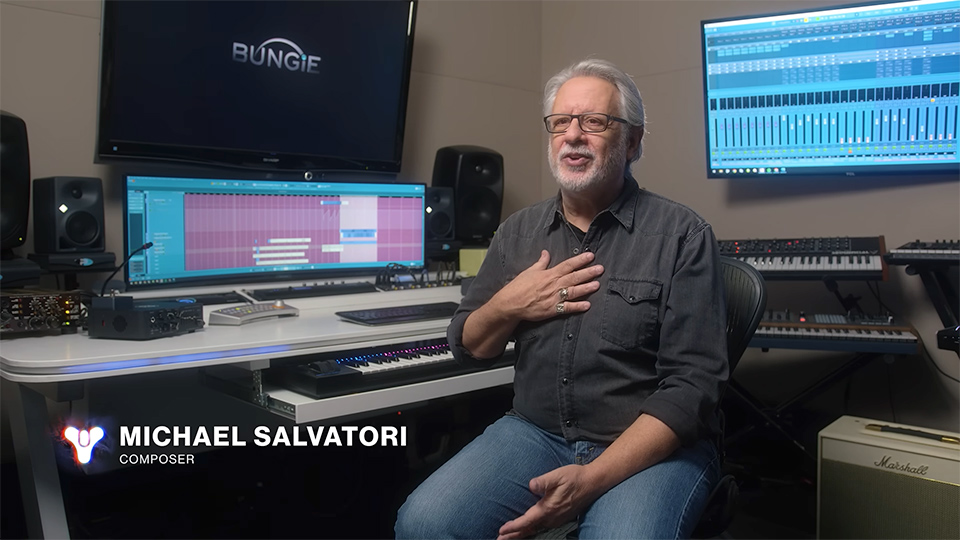
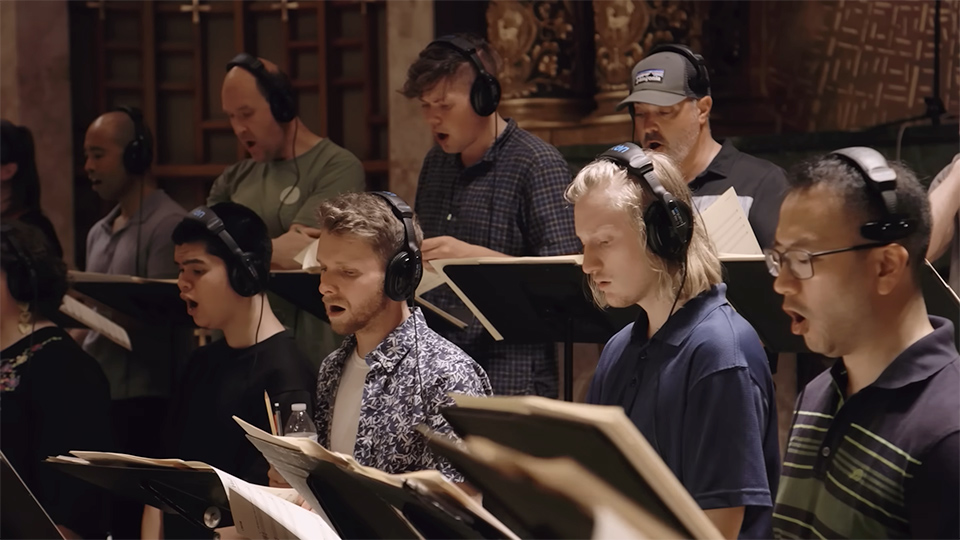
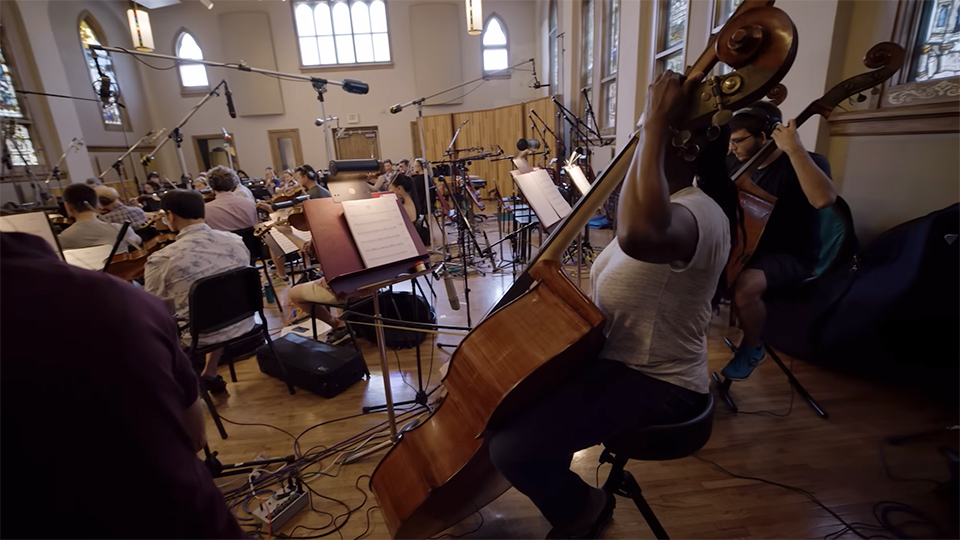
CREATING THE SOUNDS OF LIGHTFALL — from bungie.net; via Mr. Robert Bender
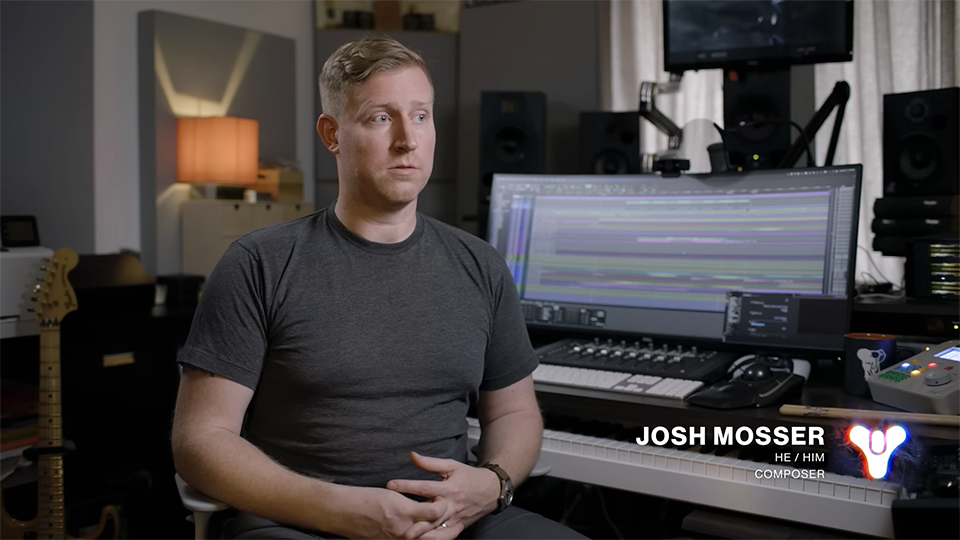
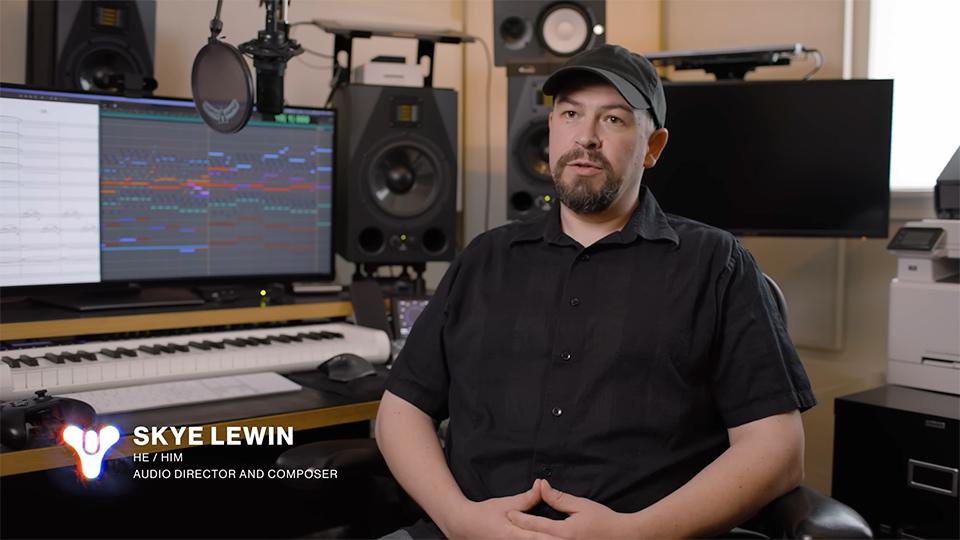
The sounds of any game can make or break the experience for its players. Many of our favorite adventures come roaring back into our minds when we hear a familiar melody, or maybe it’s a special sound effect that reminds us of our time performing a particularly heroic feat… or the time we just caused some havoc with friends. With Lightfall sending Guardians to explore the new destination of Neomuna, there’s an entire universe hidden away within the sounds—both orchestral and diegetic—for Guardians to uncover and immerse themselves in. We recently assembled some of Destiny’s finest sound designers and composers to dive a little bit deeper into the stunning depths of Neomuna’s auditory experience.
Before diving into the interview with our incredible team, we wanted to make sure you have seen the Lightfall music documentary that went out shortly after the expansion’s release. This short video is a great introduction to how our team worked to create the music of Lightfall and is a must-see for audiophiles and Destiny fans alike.
.
.

Game Dev Diaries: The Hidden World of Audio — from lianaruppert.medium.com by Liana Ruppert, via Mr. Robert Bender
Every game has a story to tell, a journey to take players through that — if done well — can inspire wonderful memories that last a lifetime. Unlike other storytelling mediums, the art of video games is an intricate interweaving of experiences, including psychological cues that are designed to entrance players and make them feel like they’re a part of the story. One way this is achieved is through the art of audio. And no, we aren’t just talking about the many incredible soundtracks out there, we’re talking about the oftentimes overlooked universe of audio design.
…
What does an audio designer do?
“Number one? We don’t work on music. That’s a thing almost everyone thinks every audio designer does,” jokes Nyte when opening up about beginning her quest into the audio world. “That, or for a game like Destiny, people just assume we only work on weapon sounds and nothing else. Which, [Juan] Uribe does, but a lot of us don’t. There is this entire gamut of other sounds that are in-game that people don’t really notice. Some do, and that’s always cool, but audio is about all sounds coming together for a ‘whole’ audio experience.”
Also relevant/see:
The New Stack of Entertainment, Tensions of the AI Age, & Navigating Cambrian Explosions — from implications.com by Scott Belsky
Let’s explore some fun albeit heretical Hollywood possibilities, face key tensions, and talk about how to stay grounded with customer needs.
On the Transformation of Entertainment
What company will be the Pixar of the AI era? What talent agency will be the CAA of the AI era? How fast can the entertainment industry evolve to natively leverage AI, and what parts will be disrupted by the industry’s own ambivalence? Or are all of these questions myopic…and should we anticipate a wave of entirely new categories of entertainment?
We are starting to see material adoption of AI tools across many industries, including media and entertainment. No doubt, these tools will transform the processes behind generating content. But what entirely new genres of content might emerge? The platform shift to AI-based workflows might give rise to entirely new types of companies that transform entertainment as we know it – from actor representation, Hollywood economics, consumption devices and experiences, to the actual mediums of entertainment themselves. Let’s explore just a few of the more edgy implications:
On 02/29/2024,
in Adobe, digital audio, drama/theater, media/film, multimedia, music, tools, vendors,
by Daniel Christian
Adobe previews new cutting-edge generative AI tools for crafting and editing custom audio — from blog.adobe.com by Adobe Research Team
New experimental work from Adobe Research is set to change how people create and edit custom audio and music. An early-stage generative AI music generation and editing tool, Project Music GenAI Control allows creators to generate music from text prompts, and then have fine-grained control to edit that audio for their precise needs.
On 02/28/2024,
in 21st century, 24x7x365 access, art, communications, content development, aggregation, repositories, digital audio, digital storytelling, digital video, drama/theater, emerging technologies, Emotion, engagement / engaging students, entrepreneurship, experimentation, future, media/film, multimedia, music, Natural Language Processing (NLP), new media literacies, participation, platforms, play, productivity / tips and tricks, story, storytelling, tools, vendors, vision/possibilities, voice recognition / voice enabled interfaces,
by Daniel Christian
How a Hollywood Director Uses AI to Make Movies — from every.to by Dan Shipper
Dave Clarke shows us the future of AI filmmaking
Dave told me that he couldn’t have made Borrowing Time without AI—it’s an expensive project that traditional Hollywood studios would never bankroll. But after Dave’s short went viral, major production houses approached him to make it a full-length movie. I think this is an excellent example of how AI is changing the art of filmmaking, and I came out of this interview convinced that we are on the brink of a new creative age.
We dive deep into the world of AI tools for image and video generation, discussing how aspiring filmmakers can use them to validate their ideas, and potentially even secure funding if they get traction. Dave walks me through how he has integrated AI into his movie-making process, and as we talk, we make a short film featuring Nicolas Cage using a haunted roulette ball to resurrect his dead movie career, live on the show.
On 02/09/2024,
in Artificial Intelligence/Agents/LLMs/and Related, Asia, bots, business, cloud-based computing / apps / other cloud-related, collaboration, communications, communities of practice, content development, aggregation, repositories, creativity, digital audio, digital video, drama/theater, experimentation, future, Google, Learning from the Living [Class] Room, media/film, multimedia, platforms, privacy, productivity / tips and tricks, society, the downsides of how people use tech, tools,
by Daniel Christian
Scammers trick company employee using video call filled with deepfakes of execs, steal $25 million — from techspot.com by Rob Thubron; via AI Valley
The victim was the only real person on the video conference call
The scammers used digitally recreated versions of an international company’s Chief Financial Officer and other employees to order $25 million in money transfers during a video conference call containing just one real person.
The victim, an employee at the Hong Kong branch of an unnamed multinational firm, was duped into taking part in a video conference call in which they were the only real person – the rest of the group were fake representations of real people, writes SCMP.
As we’ve seen in previous incidents where deepfakes were used to recreate someone without their permission, the scammers utilized publicly available video and audio footage to create these digital versions.
Letter from the YouTube CEO: 4 Big bets for 2024 — from blog.youtube by Neal Mohan, CEO, YouTube; via Ben’s Bites

.
#1: AI will empower human creativity.
#2: Creators should be recognized as next-generation studios.
#3: YouTube’s next frontier is the living room and subscriptions.
#4: Protecting the creator economy is foundational.
Viewers globally now watch more than 1 billion hours on average of YouTube content on their TVs every day.
Bard becomes Gemini: Try Ultra 1.0 and a new mobile app today — from blog.google by Sissie Hsiao; via Rundown AI
Bard is now known as Gemini, and we’re rolling out a mobile app and Gemini Advanced with Ultra 1.0.
Since we launched Bard last year, people all over the world have used it to collaborate with AI in a completely new way — to prepare for job interviews, debug code, brainstorm new business ideas or, as we announced last week, create captivating images.
Our mission with Bard has always been to give you direct access to our AI models, and Gemini represents our most capable family of models. To reflect this, Bard will now simply be known as Gemini.
A new way to discover places with generative AI in Maps — from blog.google by Miriam Daniel; via AI Valley
Here’s a look at how we’re bringing generative AI to Maps — rolling out this week to select Local Guides in the U.S.
Today, we’re introducing a new way to discover places with generative AI to help you do just that — no matter how specific, niche or broad your needs might be. Simply say what you’re looking for and our large-language models (LLMs) will analyze Maps’ detailed information about more than 250 million places and trusted insights from our community of over 300 million contributors to quickly make suggestions for where to go.
Starting in the U.S., this early access experiment launches this week to select Local Guides, who are some of the most active and passionate members of the Maps community. Their insights and valuable feedback will help us shape this feature so we can bring it to everyone over time.
Google Prepares for a Future Where Search Isn’t King — from wired.com by Lauren Goode
CEO Sundar Pichai tells WIRED that Google’s new, more powerful Gemini chatbot is an experiment in offering users a way to get things done without a search engine. It’s also a direct shot at ChatGPT.
On 10/31/2023,
in Artificial Intelligence/Agents/LLMs/and Related, biology, business, corporate / business world, creativity, drama/theater, emerging technologies, Google, health, leadership, Legal operations, legal reform, legal technologies, legislatures / government / legal, marketing/social marketing, Microsoft, new business models, productivity / tips and tricks, research, society, tools, UK, United States, vendors, workplace, writing,
by Daniel Christian
Nearly half of CEOs believe that AI not only could—but should—replace their own jobs — from finance.yahoo.com by Orianna Rosa Royle; via Harsh Makadia
Researchers from edX, an education platform for upskilling workers, conducted a survey involving over 1,500 executives and knowledge workers. The findings revealed that nearly half of CEOs believe AI could potentially replace “most” or even all aspects of their own positions.
What’s even more intriguing is that 47% of the surveyed executives not only see the possibility of AI taking over their roles but also view it as a desirable development.
Why? Because they anticipate that AI could rekindle the need for traditional leadership for those who remain.
“Success in the CEO role hinges on effective leadership, and AI can liberate time for this crucial aspect of their role,” Andy Morgan, Head of edX for Business comments on the findings.
“CEOs understand that time saved on routine tasks can stimulate innovation, nurture creativity, and facilitate essential upskilling for their teams, fostering both individual and organizational success,” he adds.
But CEOs already know this: EdX’s research echoed that 79% of executives fear that if they don’t learn how to use AI, they’ll be unprepared for the future of work.
From DSC:
By the way, my first knee-jerk reaction to this was:
WHAT?!?!?!? And this from people who earn WAAAAY more than the average employee, no doubt.
After a chance to calm down a bit, I see that the article does say that CEOs aren’t going anywhere. Ah…ok…got it.
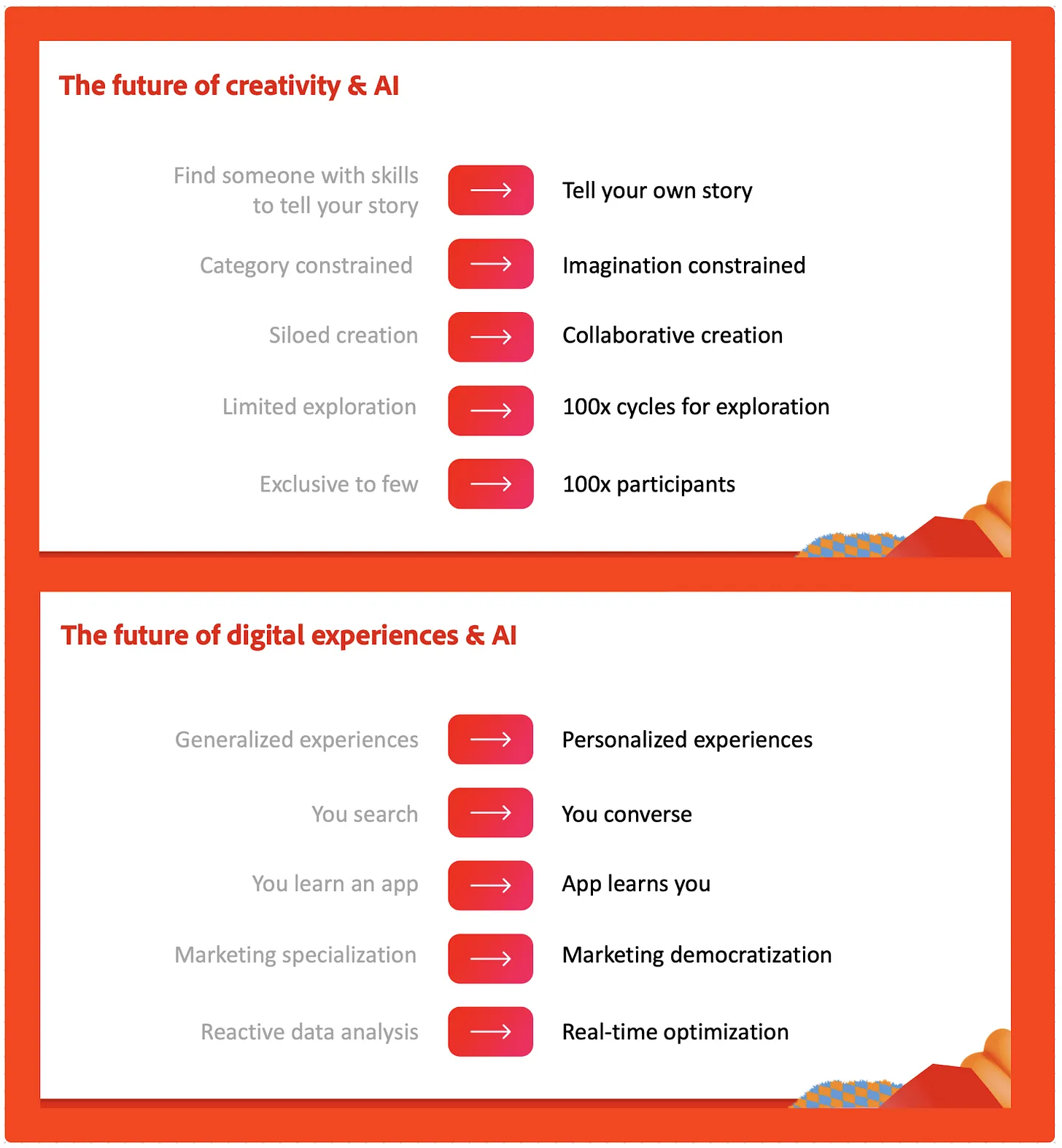
Strange Ways AI Disrupts Business Models, What’s Next For Creativity & Marketing, Some Provocative Data — from .implications.com by Scott Belsky
In this edition, we explore some of the more peculiar ways that AI may change business models as well as recent releases for the world of creativity and marketing.
Time-based business models are liable for disruption via a value-based overhaul of compensation. Today, as most designers, lawyers, and many trades in between continue to charge by the hour, the AL-powered step-function improvements in workflows are liable to shake things up.
…
In such a world, time-based billing simply won’t work anymore unless the value derived from these services is also compressed by a multiple (unlikely). The classic time-based model of billing for lawyers, designers, consultants, freelancers etc is officially antiquated. So, how might the value be captured in a future where we no longer bill by the hour? …
The worlds of creativity and marketing are rapidly changing – and rapidly coming together.
#AI #businessmodels #lawyers #billablehour
It becomes clear that just prompting to get images is a rather elementary use case of AI, compared to the ability to place and move objects, change perspective, adjust lighting, and many other actions using AI.
Huge new updates to ChatGPT / GPT-4.
1. Upload and chat with any PDF document
2. Use tools without switching chatsHere’s everything you need to know and my thoughts: pic.twitter.com/ESFt7bpGyy
— Rowan Cheung (@rowancheung) October 29, 2023
AlphaFold is an AI system developed by DeepMind that predicts a protein’s 3D structure from its amino acid sequence. It regularly achieves accuracy competitive with experiment.

After 25 years of growth for the $68 billion SEO industry, here’s how Google and other tech firms could render it extinct with AI — from fortune.com by Ravi Sen and The Conversation
But one other consequence is that I believe it may destroy the $68 billion search engine optimization industry that companies like Google helped create.
For the past 25 years or so, websites, news outlets, blogs and many others with a URL that wanted to get attention have used search engine optimization, or SEO, to “convince” search engines to share their content as high as possible in the results they provide to readers. This has helped drive traffic to their sites and has also spawned an industry of consultants and marketers who advise on how best to do that.
As an associate professor of information and operations management, I study the economics of e-commerce. I believe the growing use of generative AI will likely make all of that obsolete.
ChatGPT Plus members can upload and analyze files in the latest beta — from theverge.com by Wes Davis
ChatGPT Plus members can also use modes like Browse with Bing without manually switching, letting the chatbot decide when to use them.
OpenAI is rolling out new beta features for ChatGPT Plus members right now. Subscribers have reported that the update includes the ability to upload files and work with them, as well as multimodal support. Basically, users won’t have to select modes like Browse with Bing from the GPT-4 dropdown — it will instead guess what they want based on context.
Google agrees to invest up to $2 billion in OpenAI rival Anthropic — from reuters.com by Krystal Hu
Oct 27 (Reuters) – Alphabet’s (GOOGL.O) Google has agreed to invest up to $2 billion in the artificial intelligence company Anthropic, a spokesperson for the startup said on Friday.
The company has invested $500 million upfront into the OpenAI rival and agreed to add $1.5 billion more over time, the spokesperson said.
Google is already an investor in Anthropic, and the fresh investment would underscore a ramp-up in its efforts to better compete with Microsoft (MSFT.O), a major backer of ChatGPT creator OpenAI, as Big Tech companies race to infuse AI into their applications.
On 09/27/2023,
in 21st century, 24x7x365 access, A/V -- audio/visual, Artificial Intelligence/Agents/LLMs/and Related, Australia, bots, business, content development, aggregation, repositories, corporate / business world, drama/theater, innovation, intelligent systems, intelligent tutoring, Microsoft, multimedia, Natural Language Processing (NLP), platforms, tools, trends, vendors, vision/possibilities, voice recognition / voice enabled interfaces,
by Daniel Christian
ChatGPT can now see, hear, and speak — from openai.com
We are beginning to roll out new voice and image capabilities in ChatGPT. They offer a new, more intuitive type of interface by allowing you to have a voice conversation or show ChatGPT what you’re talking about.
Voice and image give you more ways to use ChatGPT in your life. Snap a picture of a landmark while traveling and have a live conversation about what’s interesting about it. When you’re home, snap pictures of your fridge and pantry to figure out what’s for dinner (and ask follow up questions for a step by step recipe). After dinner, help your child with a math problem by taking a photo, circling the problem set, and having it share hints with both of you.
We’re rolling out voice and images in ChatGPT to Plus and Enterprise users over the next two weeks. Voice is coming on iOS and Android (opt-in in your settings) and images will be available on all platforms.
Use your voice to engage in a back-and-forth conversation with ChatGPT. Speak with it on the go, request a bedtime story, or settle a dinner table debate.
Sound on ? pic.twitter.com/3tuWzX0wtS
— OpenAI (@OpenAI) September 25, 2023
Speak in your voice in the listener’s language, not your own, using the latest @OpenAI voice synthesis technology. Great use-case by Spotify: https://t.co/GhDlNrZVqZ https://t.co/s6MLFGx7aR
— Greg Brockman (@gdb) September 25, 2023
ChatGPT can now browse the internet to provide you with current and authoritative information, complete with direct links to sources. It is no longer limited to data before September 2021. pic.twitter.com/pyj8a9HWkB
— OpenAI (@OpenAI) September 27, 2023
OpenAI Seeks New Valuation of Up to $90 Billion in Sale of Existing Shares — from wsj.com (behind paywall)
Potential sale would value startup at roughly triple where it was set earlier this year
The World’s First AI Cinema Experience Starring YOU Is Open In NZ And Buzzy Doesn’t Cover It — from theedge.co.nz by Seth Gupwell
Allow me to manage your expectations.
Because it’s the first-ever on Earth, it’s hard to label what kind of entertainment Hypercinema is. While it’s marketed as a “live AI experience” that blends “theatre, film and digital technology”, Dr. Gregory made it clear that it’s not here to make movies and TV extinct.
Your face and personality are how HyperCinema sets itself apart from the art forms of old. You get 15 photos of your face taken from different angles, then answer a questionnaire – mine started by asking what my fave vegetable was and ended by demanding to know what I thought the biggest threat to humanity was. Deep stuff, but the questions are always changing, cos that’s how AI rolls.
All of this information is stored on your cube – a green, glowing accessory that you carry around for the whole experience and insert into different sockets to transfer your info onto whatever screen is in front of you. Upon inserting your cube, the “live AI experience” starts.
The AI has taken your photos and superimposed your face on a variety of made-up characters in different situations.
Announcing Microsoft Copilot, your everyday AI companion — from blogs.microsoft.com by Yusuf Mehdi
We are entering a new era of AI, one that is fundamentally changing how we relate to and benefit from technology. With the convergence of chat interfaces and large language models you can now ask for what you want in natural language and the technology is smart enough to answer, create it or take action. At Microsoft, we think about this as having a copilot to help navigate any task. We have been building AI-powered copilots into our most used and loved products – making coding more efficient with GitHub, transforming productivity at work with Microsoft 365, redefining search with Bing and Edge and delivering contextual value that works across your apps and PC with Windows.
Today we take the next step to unify these capabilities into a single experience we call Microsoft Copilot, your everyday AI companion. Copilot will uniquely incorporate the context and intelligence of the web, your work data and what you are doing in the moment on your PC to provide better assistance – with your privacy and security at the forefront.
DALL·E 3 understands significantly more nuance and detail than our previous systems, allowing you to easily translate your ideas into exceptionally accurate images.
DALL·E 3 is now in research preview, and will be available to ChatGPT Plus and Enterprise customers in October, via the API and in Labs later this fall.
On 09/11/2023,
in 21st century, 3D, accessibility / UDL, Augmented Reality (AR), Bias | Diversity Equity & Inclusion (DE&I), drama/theater, music, UK, vendors, Virtual Reality (VR) / worlds / learning, XR - extended reality,
by Daniel Christian
Birmingham Royal Ballet launches VR programme to improve accessibility— from inavateonthenet.net
The Birmingham Royal Ballet (BRB) has announced the launch of its virtual stage, a tech-focused project designed to bring immersive technologies into ballet.
The BRB has received funding from Bloomberg Philanthropies’ Digital Accelerator Programme, allowing the institution to invest in equipment and staff training to allow its team to explore immersive technologies with its partners Canon and RiVR.
The virtual stage project aims to explore ways in which AR, VR, 3D mapping and motion capture can be used to enhance the BRB’s productions and experiences.

On 08/25/2023,
in 21st century, 24x7x365 access, A/V -- audio/visual, business, career development, content development, aggregation, repositories, drama/theater, media/film, personalized/customized learning, workplace,
by Daniel Christian
A TV show with no ending — from joinsuperhuman.ai by Zain Kahn
ALSO: Turbocharged GPT is here
We’re standing on the cusp of artificially generated content that could theoretically never end. According to futurist Sinéad Bovell, “Generative artificial intelligence also means that say we don’t want a movie or a series to end. It doesn’t have to, you could use AI to continue to generate more episodes and other sequels and have this kind of ongoing storyline.”
If we take this logic further, we could also see hyper-personalized content that’s created just for us. Imagine getting an AI generated album from your favourite artist every week. Or a brand new movie starring actors who are no longer alive, like a new romcom with Marylin Monroe and Frank Sinatra.
While this sounds like a compelling proposition for consumers, it’s mostly bad news for actors, writers, and other professionals working in the media industry. Hollywood studios are already investing heavily in generative AI, and many professionals working in the industry are afraid to lose their jobs.