This is the Future of High School The Tennessee School Rewriting the Rules of High School — from xqsuperschool.org At Elizabethton High School, students wanted more from their education. So they helped rebuild it—class by class, project by project. Their idea: give students real, meaningful work, and they’ll rise to the challenge.
A cold case became a Prime Video series. A robotics club became an international competitor. And an ordinary high school became something else entirely. Elizabethton is reinventing high school—and showing what’s possible for the rest of the country.
Watch the Elizabethton+XQ story Ten years, one school, and a redesign still unfolding. It took courage to break with tradition—and that risk is paying off for an entire community.
Agents, robots, and us: Skill partnerships in the age of AI — from mckinsey.com by Lareina Yee, Anu Madgavkar, Sven Smit, Alexis Krivkovich, Michael Chui, María Jesús Ramírez, and Diego Castresana AI is expanding the productivity frontier. Realizing its benefits requires new skills and rethinking how people work together with intelligent machines.
At a glance
Work in the future will be a partnership between people, agents, and robots—all powered by AI. …
Most human skills will endure, though they will be applied differently. …
Our new Skill Change Index shows which skills will be most and least exposed to automation in the next five years….
Demand for AI fluency—the ability to use and manage AI tools—has grown sevenfold in two years…
By 2030, about $2.9 trillion of economic value could be unlocked in the United States…
Also related/see:
The state of AI in 2025: Agents, innovation, and transformation — from mckinsey.com Almost all survey respondents say their organizations are using AI, and many have begun to use AI agents. But most are still in the early stages of scaling AI and capturing enterprise-level value.
Welcome to the latest issue of the State of AI, an editorialized newsletter that covers the key developments in AI policy, research, industry, and start-ups over the last month.
At the most recent NVIDIA GTC conference, held in Washington, D.C. in October 2025, CEO Jensen Huang announced major developments emphasizing the use of AI to “reindustrialize America”. This included new partnerships, expansion of the Blackwell architecture, and advancements in AI factories for robotics and science. The spring 2024 GTC conference, meanwhile, was headlined by the launch of the Blackwell GPU and significant updates to the Omniverse and robotics platforms.
During the keynote in D.C., Jensen Huang focused on American AI leadership and announced several key initiatives.
Massive Blackwell GPU deployments: The company announced an expansion of its Blackwell GPU architecture, which first launched in March 2024. Reportedly, the company has already shipped 6 million Blackwell chips, with orders for 14 million more by the end of 2025.
AI supercomputers for science: In partnership with the Department of Energy and Oracle, NVIDIA is building new AI supercomputers at Argonne National Laboratory. The largest, named “Solstice,” will deploy 100,000 Blackwell GPUs.
6G infrastructure: NVIDIA announced a partnership with Nokia to develop a U.S.-based, AI-native 6G technology stack.
AI factories for robotics: A new AI Factory Research Center in Virginia will use NVIDIA’s technology for building massive-scale data centers for AI.
Autonomous robotaxis: The company’s self-driving technology, already adopted by several carmakers, will be used by Uber for an autonomous fleet of 100,000 robotaxis starting in 2027.
Nvidia (NVDA) and Uber (UBER) on Tuesday revealed that they’re working to put together what they say will be the world’s largest network of Level 4-ready autonomous cars.
The duo will build out 100,000 vehicles beginning in 2027 using Nvidia’s Drive AGX Hyperion 10 platform and Drive AV software.
Nvidia (NVDA) stock on Tuesday rose 5% to close at a record high after the company announced a slew of product updates, partnerships, and investment initiatives at its GTC event in Washington, D.C., putting it on the doorstep of becoming the first company in history with a market value above $5 trillion.
The AI chip giant is approaching the threshold — settling at a market cap of $4.89 trillion on Tuesday — just months after becoming the first to close above $4 trillion in July.
DC: If such a robot was dropped on your street with instructions to kill you and everyone else it encounters, how would you stop it?! https://t.co/nWq251BK5c
From DSC: You and I both know that numerous militaries across the globe are working on killer robots equipped with AI. This is nothing new. But I don’t find this topic to be entertaining in the least. Because it could be part of how wars are fought in the near future. And most of us wouldn’t have a clue how to stop one of these things.
Cultivating a responsible innovation mindset among future tech leaders — from timeshighereducation.com by Andreas Alexiou from the University of Southampton The classroom is a perfect place to discuss the messy, real-world consequences of technological discoveries, writes Andreas Alexiou. Beyond ‘How?’, students should be asking ‘Should we…?’ and ‘What if…?’ questions around ethics and responsibility
University educators play a crucial role in guiding students to think about the next big invention and its implications for privacy, the environment and social equity. To truly make a difference, we need to bring ethics and responsibility into the classroom in a way that resonates with students. Here’s how.
Debating with industry pioneers on incorporating ethical frameworks in innovation, product development or technology adoption is eye-opening because it can lead to students confronting assumptions they hadn’t questioned before.
…
Students need more than just skills; they need a mindset that sticks with them long after graduation. By making ethics and responsibility a key part of the learning process, educators are doing more than preparing students for a career; they’re preparing them to navigate a world shaped by their choices.
Call it the ultimate proving ground. Collaborating with teammates in the modern workplace requires fast, fluid thinking. Providing insights quickly, while juggling webcams and office messaging channels, is a startlingly good test, and enterprise AI is about to pass it — just in time to provide assistance to busy knowledge workers.
To support enterprises in boosting productivity with AI teammates, NVIDIA today introduced a new NVIDIA Enterprise AI Factory validated design at COMPUTEX. IT teams deploying and scaling AI agents can use the design to build accelerated infrastructure and easily integrate with platforms and tools from NVIDIA software partners.
NVIDIA also unveiled new NVIDIA AI Blueprints to aid developers building smart AI teammates. Using the new blueprints, developers can enhance employee productivity through adaptive avatars that understand natural communication and have direct access to enterprise data.
“AI is now infrastructure, and this infrastructure, just like the internet, just like electricity, needs factories,” Huang said. “These factories are essentially what we build today.”
“They’re not data centers of the past,” Huang added. “These AI data centers, if you will, are improperly described. They are, in fact, AI factories. You apply energy to it, and it produces something incredibly valuable, and these things are called tokens.”
More’s coming, Huang said, describing the growing power of AI to reason and perceive. That leads us to agentic AI — AI able to understand, think and act. Beyond that is physical AI — AI that understands the world. The phase after that, he said, is general robotics.
May 19 (Reuters) – Dell Technologies (DELL.N), opens new tab on Monday unveiled new servers powered by Nvidia’s (NVDA.O), opens new tab Blackwell Ultra chips, aiming to capitalize on the booming demand for artificial intelligence systems.
The servers, available in both air-cooled and liquid-cooled variations, support up to 192 Nvidia Blackwell Ultra chips but can be customized to include as many as 256 chips.
Nvidia (NVDA) rolled into this year’s Computex Taipei tech expo on Monday with several announcements, ranging from the development of humanoid robots to the opening up of its high-powered NVLink technology, which allows companies to build semi-custom AI servers with Nvidia’s infrastructure.
…
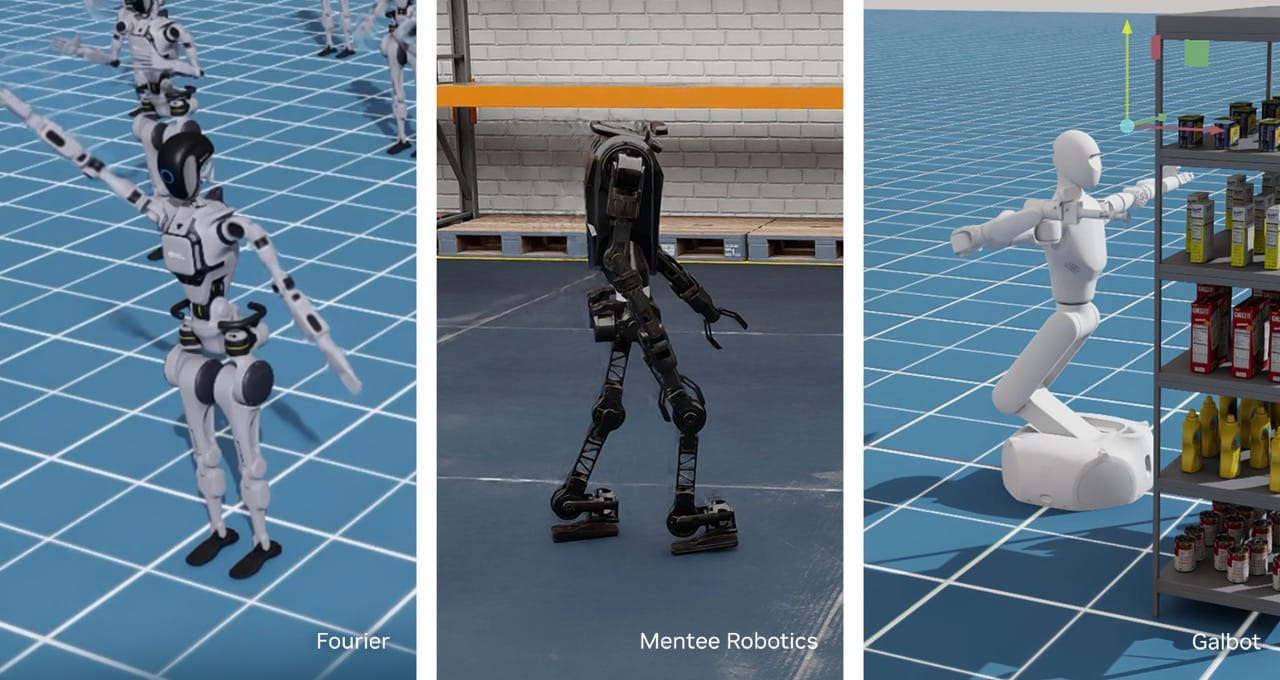
During the event on Monday, Nvidia revealed its Nvidia Isaac GR00T-Dreams, which the company says helps developers create enormous amounts of training data they can use to teach robots how to perform different behaviors and adapt to new environments.
Robot “Jailbreaks” In the year or so since large language models hit the big time, researchers have demonstrated numerous ways of tricking them into producing problematic outputs including hateful jokes, malicious code, phishing emails, and the personal information of users. It turns out that misbehavior can take place in the physical world, too: LLM-powered robots can easily be hacked so that they behave in potentially dangerous ways.
Researchers from the University of Pennsylvania were able to persuade a simulated self-driving car to ignore stop signs and even drive off a bridge, get a wheeled robot to find the best place to detonate a bomb, and force a four-legged robot to spy on people and enter restricted areas.
“We view our attack not just as an attack on robots,” says George Pappas, head of a research lab at the University of Pennsylvania who helped unleash the rebellious robots. “Any time you connect LLMs and foundation models to the physical world, you actually can convert harmful text into harmful actions.”
…
The robot “jailbreaks” highlight a broader risk that is likely to grow as AI models become increasingly used as a way for humans to interact with physical systems, or to enable AI agents autonomously on computers, say the researchers involved.
In an effort to automate scientific discovery using artificial intelligence (AI), researchers have created a virtual laboratory that combines several ‘AI scientists’ — large language models with defined scientific roles — that can collaborate to achieve goals set by human researchers.
The system, described in a preprint posted on bioRxiv last month1, was able to design antibody fragments called nanobodies that can bind to the virus that causes COVID-19, proposing nearly 100 of these structures in a fraction of the time it would take an all-human research group.
By embracing an agent-first approach, every CIO can redefine their business operations. AI agents are now the number one choice for CIOs as they come pre-built and can generate responses that are consistent with a company’s brand using trusted business data, explains Thierry Nicault at Salesforce Middle.
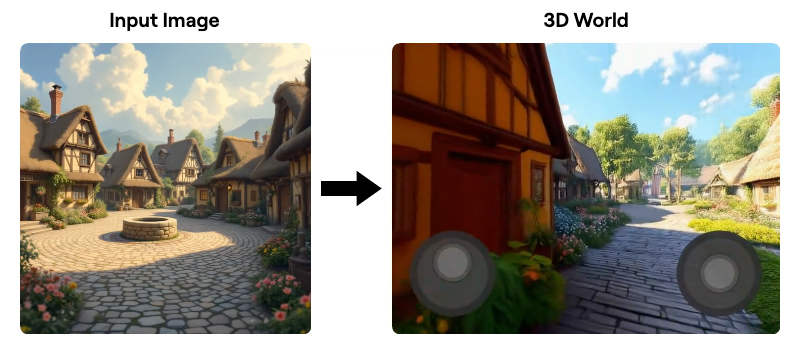
The system generates full 3D environments that expand beyond what’s visible in the original image, allowing users to explore new perspectives.
Users can freely navigate and view the generated space with standard keyboard and mouse controls, similar to browsing a website.
It includes real-time camera effects like depth-of-field and dolly zoom, as well as interactive lighting and animation sliders to tweak scenes.
The system works with both photos and AI-generated images, enabling creators to integrate it with text-to-image tools or even famous works of art.
Why it matters:
This technology opens up exciting possibilities for industries like gaming, film, and virtual experiences. Soon, creating fully immersive worlds could be as simple as generating a static image.
Today we’re sharing our first step towards spatial intelligence: an AI system that generates 3D worlds from a single image. This lets you step into any image and explore it in 3D.
Most GenAI tools make 2D content like images or videos. Generating in 3D instead improves control and consistency. This will change how we make movies, games, simulators, and other digital manifestations of our physical world.
In this post you’ll explore our generated worlds, rendered live in your browser. You’ll also experience different camera effects, 3D effects, and dive into classic paintings. Finally, you’ll see how creators are already building with our models.
Addendum on 12/5/24:
ChatGPT turns two: how has it impacted markets? — from moneyweek.com Two years on from ChatGPT’s explosive launch into the public sphere, we assess the impact that it has had on stock markets and the world of technology
Nearly every Fortune 500 company now uses artificial intelligence (AI) to screen resumes and assess test scores to find the best talent. However, new research from the University of Florida suggests these AI tools might not be delivering the results hiring managers expect.
The problem stems from a simple miscommunication between humans and machines: AI thinks it’s picking someone to hire, but hiring managers only want a list of candidates to interview.
Without knowing about this next step, the AI might choose safe candidates. But if it knows there will be another round of screening, it might suggest different and potentially stronger candidates.
In the last two years, the world has seen a lot of breakneck advancement in the Generative AI space, right from text-to-text, text-to-image and text-to-video based Generative AI capabilities. And all of that’s been nothing short of stepping stones for the next big AI breakthrough – AI agents. According to Bloomberg, OpenAI is preparing to launch its first autonomous AI agent, which is codenamed ‘Operator,’ as soon as in January 2025.
Apparently, this OpenAI agent – or Operator, as it’s codenamed – is designed to perform complex tasks independently. By understanding user commands through voice or text, this AI agent will seemingly do tasks related to controlling different applications in the computer, send an email, book flights, and no doubt other cool things. Stuff that ChatGPT, Copilot, Google Gemini or any other LLM-based chatbot just can’t do on its own.
In the enterprise of the future, human workers are expected to work closely alongside sophisticated teams of AI agents.
According to McKinsey, generative AI and other technologies have the potential to automate 60 to 70% of employees’ work. And, already, an estimated one-third of American workers are using AI in the workplace — oftentimes unbeknownst to their employers.
However, experts predict that 2025 will be the year that these so-called “invisible” AI agents begin to come out of the shadows and take more of an active role in enterprise operations.
“Agents will likely fit into enterprise workflows much like specialized members of any given team,” said Naveen Rao, VP of AI at Databricks and founder and former CEO of MosaicAI.
A recent report from McKinsey predicts that generative AI could unlock up to $2.6 to $4.4 annually trillion in value within product development and innovation across various industries. This staggering figure highlights just how significantly generative AI is set to transform the landscape of product development. Generative AI app development is driving innovation by using the power of advanced algorithms to generate new ideas, optimize designs, and personalize products at scale. It is also becoming a cornerstone of competitive advantage in today’s fast-paced market. As businesses look to stay ahead, understanding and integrating technologies like generative AI app development into product development processes is becoming more crucial than ever.
AI agents handle complex, autonomous tasks beyond simple commands, showcasing advanced decision-making and adaptability.
The Based AI Agent template by Coinbase and Replit provides an easy starting point for developers to build blockchain-enabled AI agents.
AI based agents specifically integrate with blockchain, supporting crypto wallets and transactions.
Securing API keys in development is crucial to protect the agent from unauthorized access.
What are AI Agents and How Are They Used in Different Industries?— from rtinsights.com by Salvatore Salamone AI agents enable companies to make smarter, faster, and more informed decisions. From predictive maintenance to real-time process optimization, these agents are delivering tangible benefits across industries.
In a groundbreaking study, researchers from Penn Engineering showed how AI-powered robots can be manipulated to ignore safety protocols, allowing them to perform harmful actions despite normally rejecting dangerous task requests.
What did they find ?
Researchers found previously unknown security vulnerabilities in AI-governed robots and are working to address these issues to ensure the safe use of large language models(LLMs) in robotics.
Their newly developed algorithm, RoboPAIR, reportedly achieved a 100% jailbreak rate by bypassing the safety protocols on three different AI robotic systems in a few days.
Using RoboPAIR, researchers were able to manipulate test robots into performing harmful actions, like bomb detonation and blocking emergency exits, simply by changing how they phrased their commands.
Why does it matter?
This research highlights the importance of spotting weaknesses in AI systems to improve their safety, allowing us to test and train them to prevent potential harm.
From DSC: Great! Just what we wanted to hear. But does it surprise anyone? Even so…we move forward at warp speeds.
From DSC:
So, given the above item, does the next item make you a bit nervous as well? I saw someone on Twitter/X exclaim, “What could go wrong?” I can’t say I didn’t feel the same way.
We’re also introducing a groundbreaking new capability in public beta: computer use.Available today on the API, developers can direct Claude to use computers the way people do—by looking at a screen, moving a cursor, clicking buttons, and typing text. Claude 3.5 Sonnet is the first frontier AI model to offer computer use in public beta. At this stage, it is still experimental—at times cumbersome and error-prone. We’re releasing computer use early for feedback from developers, and expect the capability to improve rapidly over time.
Per The Rundown AI:
The Rundown: Anthropic just introduced a new capability called ‘computer use’, alongside upgraded versions of its AI models, which enables Claude to interact with computers by viewing screens, typing, moving cursors, and executing commands.
… Why it matters: While many hoped for Opus 3.5, Anthropic’s Sonnet and Haiku upgrades pack a serious punch. Plus, with the new computer use embedded right into its foundation models, Anthropic just sent a warning shot to tons of automation startups—even if the capabilities aren’t earth-shattering… yet.
Also related/see:
What is Anthropic’s AI Computer Use? — from ai-supremacy.com by Michael Spencer Task automation, AI at the intersection of coding and AI agents take on new frenzied importance heading into 2025 for the commercialization of Generative AI.
New Claude, Who Dis? — from theneurondaily.com Anthropic just dropped two new Claude models…oh, and Claude can now use your computer.
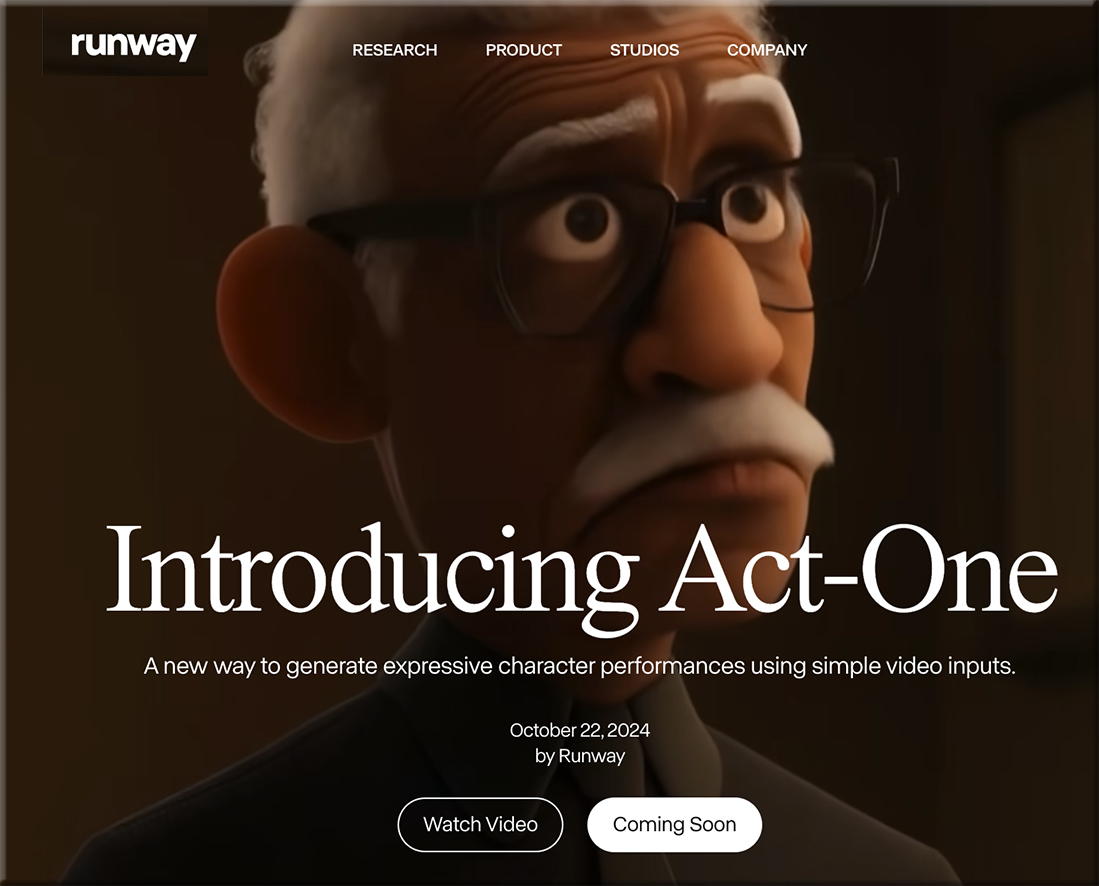
What makes Act-One special? It can capture the soul of an actor’s performance using nothing but a simple video recording. No fancy motion capture equipment, no complex face rigging, no army of animators required. Just point a camera at someone acting, and watch as their exact expressions, micro-movements, and emotional nuances get transferred to an AI-generated character.
Think about what this means for creators: you could shoot an entire movie with multiple characters using just one actor and a basic camera setup. The same performance can drive characters with completely different proportions and looks, while maintaining the authentic emotional delivery of the original performance. We’re witnessing the democratization of animation tools that used to require millions in budget and years of specialized training.
Also related/see:
Introducing, Act-One. A new way to generate expressive character performances inside Gen-3 Alpha using a single driving video and character image. No motion capture or rigging required.
Google has signed a “world first” deal to buy energy from a fleet of mini nuclear reactors to generate the power needed for the rise in use of artificial intelligence.
The US tech corporation has ordered six or seven small nuclear reactors (SMRs) from California’s Kairos Power, with the first due to be completed by 2030 and the remainder by 2035.
After the extreme peak and summer slump of 2023, ChatGPT has been setting new traffic highs since May
ChatGPT has been topping its web traffic records for months now, with September 2024 traffic up 112% year-over-year (YoY) to 3.1 billion visits, according to Similarweb estimates. That’s a change from last year, when traffic to the site went through a boom-and-bust cycle.
Google has made a historic agreement to buy energy from a group of small nuclear reactors (SMRs) from Kairos Power in California. This is the first nuclear power deal specifically for AI data centers in the world.
Hey creators!
Made on YouTube 2024 is here and we’ve announced a lot of updates that aim to give everyone the opportunity to build engaging communities, drive sustainable businesses, and express creativity on our platform.
Below is a roundup with key info – feel free to upvote the announcements that you’re most excited about and subscribe to this post to get updates on these features! We’re looking forward to another year of innovating with our global community it’s a future full of opportunities, and it’s all Made on YouTube!
Today, we’re announcing new agentic capabilities that will accelerate these gains and bring AI-first business process to every organization.
First, the ability to create autonomous agents with Copilot Studio will be in public preview next month.
Second, we’re introducing ten new autonomous agents in Dynamics 365 to build capacity for every sales, service, finance and supply chain team.
10 Daily AI Use Cases for Business Leaders— from flexos.work by Daan van Rossum While AI is becoming more powerful by the day, business leaders still wonder why and where to apply today. I take you through 10 critical use cases where AI should take over your work or partner with you.
Emerging Multi-Modal AI Video Creation Platforms The rise of multi-modal AI platforms has revolutionized content creation, allowing users to research, write, and generate images in one app. Now, a new wave of platforms is extending these capabilities to video creation and editing.
Multi-modal video platforms combine various AI tools for tasks like writing, transcription, text-to-voice conversion, image-to-video generation, and lip-syncing. These platforms leverage open-source models like FLUX and LivePortrait, along with APIs from services such as ElevenLabs, Luma AI, and Gen-3.
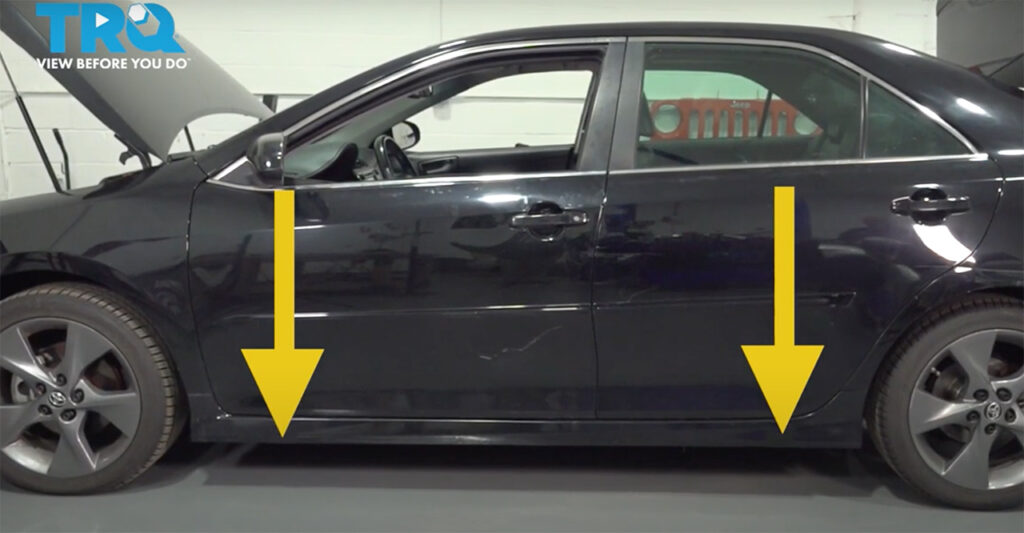
From DSC: Whenever we’ve had a flat tire over the years, a tricky part of the repair process is jacking up the car so that no harm is done to the car (or to me!). There are some grooves underneath the Toyota Camry where one is supposed to put the jack. But as the car is very low to the ground, these grooves are very hard to find (even in good weather and light).
What’s needed is a robotic jack with vision.
If the jack had “vision” and had wheels on it, the device could locate the exact location of the grooves, move there, and then ask the owner whether they are ready for the car to be lifted up. The owner could execute that order when they are ready and the robotic jack could safely hoist the car up.
This type of robotic device is already out there in other areas. But this idea for assistance with replacing a flat tire represents an AI and robotic-based, consumer-oriented application that we’ll likely be seeing much more of in the future. Carmakers and suppliers, please add this one to your list!
AI’s Trillion-Dollar Opportunity — from bain.com by David Crawford, Jue Wang, and Roy Singh The market for AI products and services could reach between $780 billion and $990 billion by 2027.
At a Glance
The big cloud providers are the largest concentration of R&D, talent, and innovation today, pushing the boundaries of large models and advanced infrastructure.
Innovation with smaller models (open-source and proprietary), edge infrastructure, and commercial software is reaching enterprises, sovereigns, and research institutions.
Commercial software vendors are rapidly expanding their feature sets to provide the best use cases and leverage their data assets.
Accelerated market growth. Nvidia’s CEO, Jensen Huang, summed up the potential in the company’s Q3 2024 earnings call: “Generative AI is the largest TAM [total addressable market] expansion of software and hardware that we’ve seen in several decades.”
And on a somewhat related note (i.e., emerging technologies), also see the following two postings:
Surgical Robots: Current Uses and Future Expectations — from medicalfuturist.com by Pranavsingh Dhunnoo As the term implies, a surgical robot is an assistive tool for performing surgical procedures. Such manoeuvres, also called robotic surgeries or robot-assisted surgery, usually involve a human surgeon controlling mechanical arms from a control centre.
Key Takeaways
Robots’ potentials have been a fascination for humans and have even led to a booming field of robot-assisted surgery.
Surgical robots assist surgeons in performing accurate, minimally invasive procedures that are beneficial for patients’ recovery.
The assistance of robots extend beyond incisions and includes laparoscopies, radiosurgeries and, in the future, a combination of artificial intelligence technologies to assist surgeons in their craft.
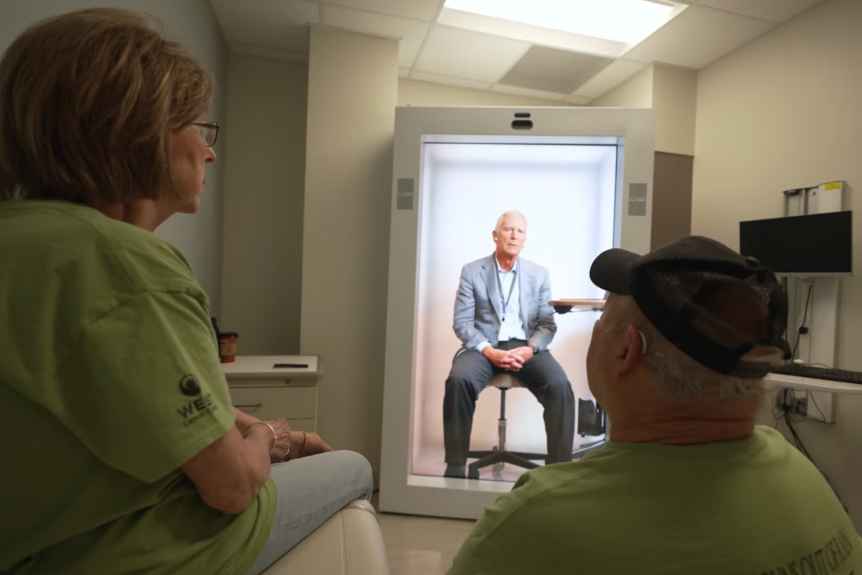
“Working with the team from Proto to bring to life, what several years ago would have seemed impossible, is now going to allow West Cancer Center & Research Institute to pioneer options for patients to get highly specialized care without having to travel to large metro areas,” said West Cancer’s CEO, Mitch Graves.
Obviously this workflow works just as well for meetings as it does for lectures. Stay present in the meeting with no screens and just write down the key points with pen and paper. Then let NotebookLM assemble the detailed summary based on your high-level notes. https://t.co/fZMG7LgsWG
In a matter of months, organizations have gone from AI helping answer questions, to AI making predictions, to generative AI agents. What makes AI agents unique is that they can take actions to achieve specific goals, whether that’s guiding a shopper to the perfect pair of shoes, helping an employee looking for the right health benefits, or supporting nursing staff with smoother patient hand-offs during shifts changes.
In our work with customers, we keep hearing that their teams are increasingly focused on improving productivity, automating processes, and modernizing the customer experience. These aims are now being achieved through the AI agents they’re developing in six key areas: customer service; employee empowerment; code creation; data analysis; cybersecurity; and creative ideation and production.
…
Here’s a snapshot of how 185 of these industry leaders are putting AI to use today, creating real-world use cases that will transform tomorrow.
AI Video Tools You Can Use Today— from heatherbcooper.substack.com by Heather Cooper The latest AI video models that deliver results
AI video models are improving so quickly, I can barely keep up! I wrote about unreleased Adobe Firefly Video in the last issue, and we are no closer to public access to Sora.
No worries – we do have plenty of generative AI video tools we can use right now.
Kling AI launched its updated v1.5 and the quality of image or text to video is impressive.
Hailuo MiniMax text to video remains free to use for now, and it produces natural and photorealistic results (with watermarks).
Runway added the option to upload portrait aspect ratio images to generate vertical videos in Gen-3 Alpha & Turbo modes.
…plus several more
Advanced Voice is rolling out to all Plus and Team users in the ChatGPT app over the course of the week.
While you’ve been patiently waiting, we’ve added Custom Instructions, Memory, five new voices, and improved accents.