From DSC…note these excerpts from Pradnya’s posting:
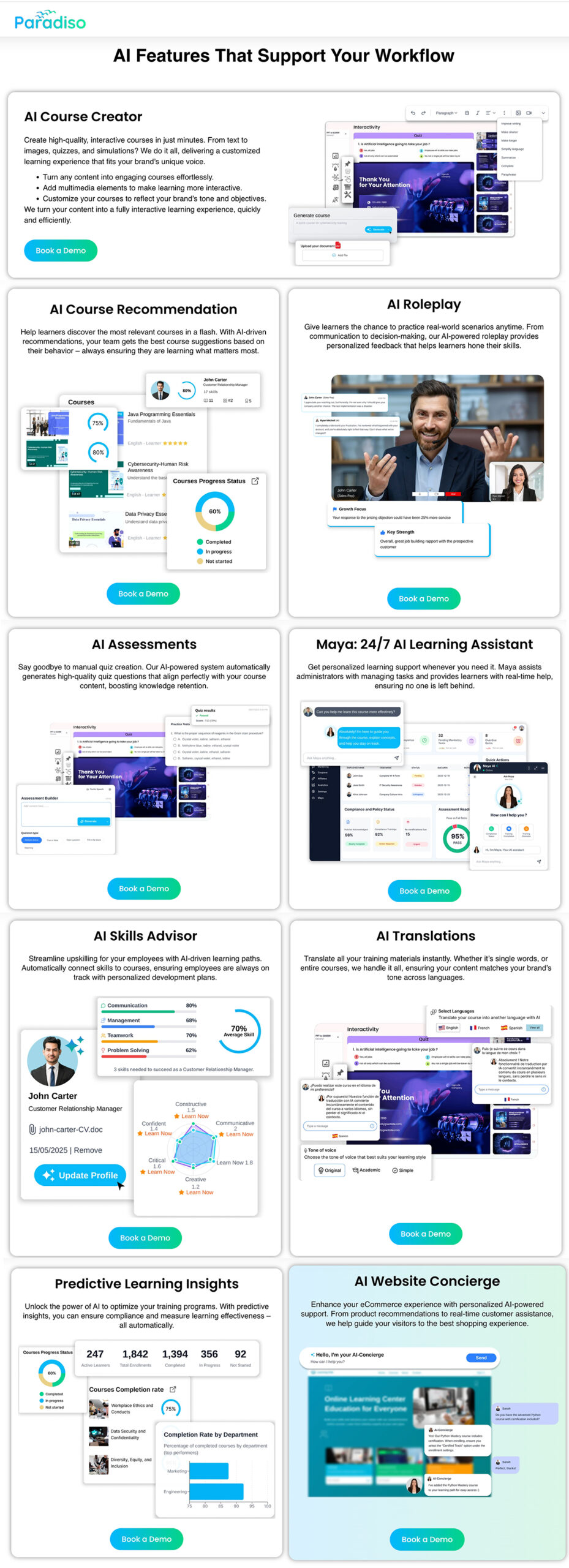
I’m not manually assigning 400 people anymore ? They’re actually taking relevant courses now Shows me the data ? Suggests courses to fix it ? I look like a strategic genius Completion rates up 34% ? Nobody’s “stuck” anymore
From DSC: Stephen has some solid reflections and asks some excellent questions in this posting, including:
The question is: how do we optimize an AI to support learning? Will one model be enough? Or do we need different models for different learners in different scenarios?
A More Human University: The Role of AI in Learning — from er.educause.edu by Robert Placido Far from heralding the collapse of higher education, artificial intelligence offers a transformative opportunity to scale meaningful, individualized learning experiences across diverse classrooms.
The narrative surrounding artificial intelligence (AI) in higher education is often grim. We hear dire predictions of an “impending collapse,” fueled by fears of rampant cheating, the erosion of critical thinking, and the obsolescence of the human educator.Footnote1 This dystopian view, however, is a failure of imagination. It mistakes the death rattle of an outdated pedagogical model for the death of learning itself. The truth is far more hopeful: AI is not an asteroid coming for higher education. It is a catalyst that can finally empower us to solve our oldest, most intractable problem: the inability to scale deep, engaged, and truly personalized learning.
Increasing the rate of scientific progress is a core part of Anthropic’s public benefit mission.
We are focused on building the tools to allow researchers to make new discoveries – and eventually, to allow AI models to make these discoveries autonomously.
Until recently, scientists typically used Claude for individual tasks, like writing code for statistical analysis or summarizing papers. Pharmaceutical companies and others in industry also use it for tasks across the rest of their business, like sales, to fund new research. Now, our goal is to make Claude capable of supporting the entire process, from early discovery through to translation and commercialization.
To do this, we’re rolling out several improvements that aim to make Claude a better partner for those who work in the life sciences, including researchers, clinical coordinators, and regulatory affairs managers.
AI as an access tool for neurodiverse and international staff— from timeshighereducation.com by Vanessa Mar-Molinero Used transparently and ethically, GenAI can level the playing field and lower the cognitive load of repetitive tasks for admin staff, student support and teachers
Where AI helps without cutting academic corners When framed as accessibility and quality enhancement, AI can support staff to complete standard tasks with less friction. However, while it supports clarity, consistency and inclusion, generative AI (GenAI) does not replace disciplinary expertise, ethical judgement or the teacher–student relationship. These are ways it can be put to effective use:
The Sleep of Liberal Arts Produces AI — from aiedusimplified.substack.com by Lance Eaton, Ph.D. A keynote at the AI and the Liberal Arts Symposium Conference
This past weekend, I had the honor to be the keynote speaker at a really fantstistic conferece, AI and the Liberal Arts Symposium at Connecticut College. I had shared a bit about this before with my interview with Lori Looney. It was an incredible conference, thoughtfully composed with a lot of things to chew on and think about.
It was also an entirely brand new talk in a slightly different context from many of my other talks and workshops. It was something I had to build entirely from the ground up. It reminded me in some ways of last year’s “What If GenAI Is a Nothingburger”.
It was a real challenge and one I’ve been working on and off for months, trying to figure out the right balance. It’s a work I feel proud of because of the balancing act I try to navigate. So, as always, it’s here for others to read and engage with. And, of course, here is the slide deck as well (with CC license).
SINGAPORE Sept. 3, 2025 /PRNewswire/ — Today, Midoo AIproudly announces the launch of the world’s first AI language learning agent, a groundbreaking innovation set to transform language education forever.
For decades, language learning has pursued one ultimate goal: true personalization. Traditional tools offered smart recommendations, gamified challenges, and pre-written role-play scripts—but real personalization remained out of reach. Midoo AI changes that. Here is the >launch video of Midoo AI.
Imagine a learning experience that evolves with you in real time. A system that doesn’t rely on static courses or scripts but creates a dynamic, one-of-a-kind language world tailored entirely to your needs. This is the power of Midoo’s Dynamic Generation technology.
“Midoo is not just a language-learning tool,” said Yvonne, co-founder of Midoo AI. “It’s a living agent that senses your needs, adapts instantly, and shapes an experience that’s warm, personal, and alive. Learning is no longer one-size-fits-all—now, it’s yours and yours alone.”
Language learning apps have traditionally focused on exercises, quizzes, and progress tracking. Midoo AI introduces a different approach. Instead of presenting itself as a course provider, it acts as an intelligent learning agent that builds, adapts, and sustains a learner’s journey.
This review examines how Midoo AI operates, its feature set, and what makes it distinct from other AI-powered tutors.
Midoo AI in Context: Purpose and Position
Midoo AI is not structured around distributing lessons or modules. Its core purpose is to provide an agent-like partner that adapts in real time. Where many platforms ask learners to select a “level” or “topic,”
Midoo instead begins by analyzing goals, usage context, and error patterns. The result is less about consuming predesigned units and more about co-constructing a pathway.
Turning Time Saved Into Better Learning
AI can save teachers time, but what can that time be used for (besides taking a breath)? For most of us, it means redirecting energy into the parts of teaching that made us want to pursue this profession in the first place: connecting with our students and helping them grow academically.
Differentiation Every classroom has students with different readiness levels, language needs, and learning preferences. AI tools like Diffit or MagicSchool can instantly create multiple versions of a passage or assignment, differentiated by grade level, complexity, or language. This allows every student to engage with the same core concept, moving together as one cohesive class. Instead of spending an evening retyping and rephrasing, teachers can review and tweak AI drafts in minutes, ready for the next lesson.
Mass Intelligence — from oneusefulthing.org by Ethan Mollick From GPT-5 to nano banana: everyone is getting access to powerful AI
When a billion people have access to advanced AI, we’ve entered what we might call the era of Mass Intelligence. Every institution we have — schools, hospitals, courts, companies, governments — was built for a world where intelligence was scarce and expensive. Now every profession, every institution, every community has to figure out how to thrive with Mass Intelligence. How do we harness a billion people using AI while managing the chaos that comes with it? How do we rebuild trust when anyone can fabricate anything? How do we preserve what’s valuable about human expertise while democratizing access to knowledge?
By the time today’s 9th graders and college freshman enter the workforce, the most disruptive waves of AGI and robotics may already be embedded into part society.
What replaces the old system will not simply be a more digital version of the same thing. Structurally, schools may move away from rigid age-groupings, fixed schedules, and subject silos. Instead, learning could become more fluid, personalized, and interdisciplinary—organized around problems, projects, and human development rather than discrete facts or standardized assessments.
AI tutors and mentors will allow for pacing that adapts to each student, freeing teachers to focus more on guidance, relationships, and high-level facilitation. Classrooms may feel less like miniature factories and more like collaborative studios, labs, or even homes—spaces for exploring meaning and building capacity, not just delivering content.
…
If students are no longer the default source of action, then we need to teach them to:
Design agents,
Collaborate with agents,
Align agentic systems with human values,
And most of all, retain moral and civic agency in a world where machines act on our behalf.
We are no longer educating students to be just doers.
We must now educate them to be judges, designers, and stewards of agency.
Meet Your New AI Tutor — from wondertools.substack.com by Jeremy Caplan Try new learning modes in ChatGPT, Claude, and Gemini
AI assistants are now more than simple answer machines. ChatGPT’s new Study Mode, Claude’s Learning Mode, and Gemini’s Guided Learningrepresent a significant shift. Instead of just providing answers, these free tools act as adaptive, 24/7 personal tutors.
That’s why, in preparation for my next bootcamp which kicks off September 8th 2025, I’ve just completed a full refresh of my list of the most powerful & popular AI tools for Instructional Designers, complete with tips on how to get the most from each tool.
The list has been created using my own experience + the experience of hundreds of Instructional Designers who I work with every week.
It contains the 50 most powerful AI tools for instructional design available right now, along with tips on how to optimise their benefits while mitigating their risks.
Addendums on 9/4/25:
AI Companies Roll Out Educational Tools — from insidehighered.com by Ray Schroeder This fall, Google, Anthropic and OpenAI are rolling out powerful new AI tools for students and educators, each taking a different path to shape the future of learning.
So here’s the new list of essential skills I think my students will need when they are employed to work with AI five years from now:
They can follow directions, analyze outcomes, and adapt to change when needed.
They can write or edit AI to capture a unique voice and appropriate tone in sync with an audience’s needs
They have a deep understanding of one or more content areas of a particular profession, business, or industry, so they can easily identify factual errors.
They have a strong commitment to exploration, a flexible mindset, and a broad understanding of AI literacy.
They are resilient and critical thinkers, ready to question results and demand better answers.
They are problem solvers.
And, of course, here is a new rubric built on those skills:
.Get the 2025 Student Guide to Artificial Intelligence — from studentguidetoai.org This guide is made available under a Creative Commons license by Elon University and the American Association of Colleges and Universities (AAC&U). .
Agentic AI is taking these already huge strides even further. Rather than simply asking a question and receiving an answer, an AI agent can assess your current level of understanding and tailor a reply to help you learn. They can also help you come up with a timetable and personalized lesson plan to make you feel as though you have a one-on-one instructor walking you through the process. If your goal is to learn to speak a new language, for example, an agent might map out a plan starting with basic vocabulary and pronunciation exercises, then progress to simple conversations, grammar rules and finally, real-world listening and speaking practice.
…
For instance, if you’re an entrepreneur looking to sharpen your leadership skills, an AI agent might suggest a mix of foundational books, insightful TED Talks and case studies on high-performing executives. If you’re aiming to master data analysis, it might point you toward hands-on coding exercises, interactive tutorials and real-world datasets to practice with.
The beauty of AI-driven learning is that it’s adaptive. As you gain proficiency, your AI coach can shift its recommendations, challenge you with new concepts and even simulate real-world scenarios to deepen your understanding.
Ironically, the very technology feared by workers can also be leveraged to help them. Rather than requiring expensive external training programs or lengthy in-person workshops, AI agents can deliver personalized, on-demand learning paths tailored to each employee’s role, skill level, and career aspirations. Given that 68% of employees find today’s workplace training to be overly “one-size-fits-all,” an AI-driven approach will not only cut costs and save time but will be more effective.
This is one reason why I don’t see AI-embedded classrooms and AI-free classrooms as opposite poles. The bone of contention, here, is not whether we can cultivate AI-free moments in the classroom, but for how long those moments are actually sustainable.
Can we sustain those AI-free moments for an hour? A class session? Longer?
…
Here’s what I think will happen. As AI becomes embedded in society at large, the sustainability of imposed AI-free learning spaces will get tested. Hard. I think it’ll become more and more difficult (though maybe not impossible) to impose AI-free learning spaces on students.
However, consensual and hybrid AI-free learning spaces will continue to have a lot of value. I can imagine classes where students opt into an AI-free space. Or they’ll even create and maintain those spaces.
Duolingo’s AI Revolution — from drphilippahardman.substack.com by Dr. Philippa Hardman What 148 AI-Generated Courses Tell Us About the Future of Instructional Design & Human Learning
Last week, Duolingo announced an unprecedented expansion: 148 new language courses created using generative AI, effectively doubling their content library in just one year. This represents a seismic shift in how learning content is created — a process that previously took the company 12 years for their first 100 courses.
As CEO Luis von Ahn stated in the announcement, “This is a great example of how generative AI can directly benefit our learners… allowing us to scale at unprecedented speed and quality.”
In this week’s blog, I’ll dissect exactly how Duolingo has reimagined instructional design through AI, what this means for the learner experience, and most importantly, what it tells us about the future of our profession.
Medical education is experiencing a quiet revolution—one that’s not taking place in lecture theatres or textbooks, but with headsets and holograms. At the heart of this revolution are Mixed Reality (MR) AI Agents, a new generation of devices that combine the immersive depth of mixed reality with the flexibility of artificial intelligence. These technologies are not mere flashy gadgets; they’re revolutionising the way medical students interact with complicated content, rehearse clinical skills, and prepare for real-world situations. By combining digital simulations with the physical world, MR AI Agents are redefining what it means to learn medicine in the 21st century.
4 Reasons To Use Claude AI to Teach — from techlearning.com by Erik Ofgang Features that make Claude AI appealing to educators include a focus on privacy and conversational style.
After experimenting using Claude AI on various teaching exercises, from generating quizzes to tutoring and offering writing suggestions, I found that it’s not perfect, but I think it behaves favorably compared to other AI tools in general, with an easy-to-use interface and some unique features that make it particularly suited for use in education.
The good news? There are many engaging and effective strategies to develop these interpersonal skills, and most are easy to incorporate into daily classroom routines. I use the strategies below to directly teach, model, and practice these essential communication skills at a developmentally appropriate level: turn-taking, small group speaking and listening, whole group speaking and listening, and accountable talk.
From DSC: I love the parts about practicing how to LISTEN. We need more of that in our communications with one another…as well as when we are praying to God.
These instances underscore the need for educators to be vigilant in vetting materials, recognizing that even seemingly reputable sources can harbor hidden agendas, necessitating a robust approach to media and information literacy both for ourselves and for students.
How to Spot Corporate Influences in Your Curriculum
So, how do we, as educators, navigate this minefield? Media literacy strategies offer important tools to equip ourselves and our students to analyze information landscapes intentionally, including the curricular resources we evaluate for use in our classrooms. .
From DSC: I would encourage you to take a look at the work my sister Sue Ellen Christian has been doing re: media literacy, news literacy, and more. She created the Wonder Media website to discuss those topics. Plus she collaborated with several other people and organizations to develop a large, professionally-done exhibit re: these important topics. .
As a world language educator, I’ve always sought innovative ways to engage my students through meaningful learning experiences as they build their language skills. One way we do this is through gameplay. The benefits of games go far beyond simply learning and increased retention of vocabulary or grammar. Games can also foster collaboration, critical thinking, creativity, and problem-solving skills, making learning fun for students.
Conversations That Might Be Better Left for Later Not every conversation needs to happen in the heat of the moment. Some of the most productive conversations happen after we’ve given ourselves time to regulate. Here are a few categories of conversations that might benefit from a pause:
Difficult feedback conversations. If emotions are running high, it might be best to wait until you can approach the discussion with clarity and empathy. A rushed or reactive conversation can shut down dialogue rather than encourage growth.
Conflict resolution. When two parties are upset, stepping in immediately to mediate can sometimes escalate tensions. A brief pause allows for perspective-taking and a calmer, solution-oriented approach.
Big-picture decisions. When stress is high, it’s easy to make decisions based on immediate pressures rather than long-term goals. Giving yourself space to step back ensures that decisions align with your leadership vision.
Personal or emotional responses. If you feel personally triggered by a comment, criticism, or situation, take time to process before responding. Self-awareness in these moments can prevent regretful words or actions.
So the next time frustration creeps in, take a breath. Pause before you speak, type, or react. Because more often than not, the best response isn’t the fastest one—it’s the one that comes from a place of clarity, patience, and purpose.
Nvidia has unveiled a new AI platform for teaching people how to use American Sign Language to help bridge communication gaps.
The Signs platform is creating a validated dataset for sign language learners and developers of ASL-based AI applications.
…
Nvidia, the American Society for Deaf Children and creative agency Hello Monday are helping close this gap with Signs, an interactive web platform built to support ASL learning and the development of accessible AI applications.
Generative AI can significantly reduce the time and effort required in designing PBL by providing tools for research, brainstorming, and organization.
AI tools can assist educators in managing project implementation and assessment, providing formative feedback and organizing resources efficiently.
I usually conclude blogs with some pithy words, but this time I’ll turn the microphone over to Rachel Harcrow, a high school English/Language Arts teacher at Young Women’s College Prep Charter School of Rochester, NY: “After years of struggling to call myself a PBL practitioner, I finally feel comfortable saying I am, thanks to the power of Gen AI,” Harcrow told me. “Initial ideas now turn into fully fledged high-quality project plans in minutes that I can refine, giving me the space and energy to focus on what truly matters: My students.”
AI Resources for District Leaders — from techlearning.com by Steve Baule Educational leaders aiming to effectively integrate generative AI into their schools should consider several key resources
To truly harness the transformative power of generative AI in education, district leaders must navigate a landscape rich with resources and opportunities. By delving into state and national guidelines, exploring successful case studies, utilizing innovative planning tools, and engaging in professional development, educational leaders can craft robust implementation plans. These plans can then assist in integrating AI seamlessly into their schools and elevate the learning experience to new heights.
Anthropic, a favorite frontier AI lab among many coders and genAI power users has unveiled Claude 3.7 Sonnet, its first “hybrid reasoning” AI model. It is capable of both near-instant answers and in-depth, step-by-step reasoning within a single system.
Users can toggle an extended thinking mode where the model self-reflects before answering, considerably improving performance on complex tasks like math, physics and coding. In early testing by the author, the model largely succeeded in creating lines of Python (related to unsupervised learning) that were close to 1,000 lines long that ran without error on the first or second try, including the unsupervised machine learning task shown below:
AI won’t kill education. But will it kill learning? The challenge isn’t AI itself—it’s whether students can still think for themselves when the answers are always one click away.
…
Wait. Before you go, let me ask you one thing. AI has opportunities to help learning. But it also won’t fix it. The real question isn’t whether students can use AI—but whether they’re still learning without it.
Whether the learning is happening between the ears.
And so much of what we teach in schools isn’t the answers on a test. It answers questions like “What is my purpose in life?” “How do I make friends?” and “How can I help my team be stronger.” Questions that aren’t asked on a test but are essential to living a good life. These questions aren’t answered between the ears but within the heart.
That, my friends, is what teaching has always been about.
The heart.
And the heart of the matter is we have new challenges, but these are old complaints. Complaints since the beginning of time and teaching. And in those days, you didn’t need kids just to be able to talk about how to build a fire, they had to make one themselves. Their lives depend on it.
And these days, we need to build another kind of fire. A fire that sparks the joy of learning. The joy of the opportunities that await us sparked by some of the most powerful tools ever invented. Kids need to not be able to just talk about making a difference, they need to know how to build a better world tomorrow. Our lives depend on it.
Debating skills have a range of benefits in the workplace, from helping to improve our communication to bolstering our critical thinking skills. Research from the University of Mississippi suggests it might also help us in the battle with AI in the workplace.
We can often assume that debate teaches us nothing more than how to argue our point, but in order to do this, we have to understand both our own take on a subject and that of our opponent. This allows us to see both sides of any issue we happen to be debating.
“Even though AI has offered a shortcut through the writing process, it actually still is important to be able to write and speak and think on your own,” the researchers explain. “That’s what the focus of this research is: how debate engenders those aspects of being able to write and speak and study and research on your own.”
AI in K12: Today’s Breakthroughs and Tomorrow’s Possibilities (webinar) How AI is Transforming Classrooms Today and What’s Next
Audio-Based Learning 4.0— from drphilippahardman.substack.com by Dr. Philippa Hardman A new & powerful way to leverage AI for learning?
At the end of all of this my reflection is that the research paints a pretty exciting picture – audio-based learning isn’t just effective, it’s got some unique superpowers when it comes to boosting comprehension, ramping up engagement, and delivering feedback that really connects with learners.
While audio has been massively under-used as a mode of learning, especially compared to video and text, we’re at an interesting turning point where AI tools are making it easier than ever to tap into audio’s potential as a pedagogical tool.
What’s super interesting is how the solid research backing audio’s effectiveness is and how well this is converging with these new AI capabilities.
From DSC: I’ve noticed that I don’t learn as well via audio-only based events. It can help if visuals are also provided, but I have to watch the cognitive loads. My processing can start to get overloaded — to the point that I have to close my eyes and just listen sometimes. But there are people I know who love to listen to audiobooks and prefer to learn that way. They can devour content and process/remember it all. Audio is a nice change of pace at times, but I prefer visuals and reading often times. It needs to be absolutely quiet if I’m tackling some new information/learning.
In Conversation With… Ashton Cousineau — from drphilippahardman.substack.com by Dr. Philippa Hardman A new video series exploring how L&D professionals are working with AI on the ground
In Conversation With… Ashton Cousineau by Dr Philippa Hardman
A new video series exploring how L&D professionals are working with AI on the ground
AI-Infused Learning Design – A structured approach to AI-enhanced assignments using a three-step model for AI integration.
Mathematical Dance and Creativity in STEAM – Using AI-powered motion capture to translate dance movements into mathematical models.
AI-Generated Instructional Videos – How adaptive AI-powered video learning enhances problem-solving and knowledge retention.
Immersive Language Learning with XR & AI – A new framework for integrating AI-driven conversational agents with Extended Reality (XR) for task-based language learning.
Decision-Making in Learning Design – A scoping review on how instructional designers navigate complex instructional choices and make data-driven decisions.
Interactive E-Books and Engagement – Examining the impact of interactive digital books on student motivation, comprehension, and cognitive engagement.
Elevating Practitioner Voices in Instructional Design – A new initiative to amplify instructional designers’ contributions to research and innovation.
Here’s a quick teaser of key developments in the world of AI & learning this month:
DeepSeek R-1, OpenAI’s Deep Seek & Perplexity’s ‘Deep Research’ are the latest additions to a growing number of “reasoning models” with interesting implications for evidence-based learning design & development.
The U.S. Education Dept release an AI Toolkit and a fresh policy roadmap enabling the adoption of AI use in schools.
Anthropic Release “Agentic Claude”, another AI agent that clicks, scrolls, and can even successfully complete e-learning courses…
Oxford University Announce the AIEOU Hub, a research-backed research lab to support research and implementation on AI in education.
“AI Agents Everywhere”: A Forbes peek at how agentic AI will handle the “boring bits” of classroom life.
[Bias klaxon!] Epiphany AI: My own research leads to the creation of a specialised, “pedagogy first” AI co-pilot for instructional design marking the continued growth of specialised AI tools designed for specific industries and workflows.
Through my work with leading educational institutions at Kaltura, I’ve seen firsthand how AI agents are rapidly becoming indispensable. These agents alleviate the mounting burdens on educators and provide new generations of tech-savvy students with accessible, personalized learning, giving teachers the support they need to give their students the personalized attention and engagement they deserve.
This HQ includes all of my AI guides, organized by tool/platform. This list is updated each time a new one is released, and outdated guides are removed/replaced over time.
Artificial intelligence is poised to fundamentally change the job of teaching. AI-powered tools can shave hours off the amount of time teachers spend grading, lesson-planning, and creating materials. AI can also enrich the lessons they deliver in the classroom and help them meet the varied needs of all students. And it can even help bolster teachers’ own professional growth and development.
Despite all the promise of AI, though, experts still urge caution as the technology continues to evolve. Ethical questions and practical concerns are bubbling to the surface, and not all teachers feel prepared to effectively and safely use AI.
In this special report, see how early-adopter teachers are using AI tools to transform their daily work, tackle some of the roadblocks to expanded use of the technology, and understand what’s on the horizon for the teaching profession in the age of artificial intelligence.
When technologist Luis von Ahn was building the popular language-learning platform Duolingo, he faced a big problem: Could an app designed to teach you something ever compete with addictive platforms like Instagram and TikTok? He explains how Duolingo harnesses the psychological techniques of social media and mobile games to get you excited to learn — all while spreading access to education across the world. .
Per The Rundown: OpenAI just launched a surprising new way to access ChatGPT — through an old-school 1-800 number & also rolled out a new WhatsApp integration for global users during Day 10 of the company’s livestream event.
Agentic AI represents a significant evolution in artificial intelligence, offering enhanced autonomy and decision-making capabilities beyond traditional AI systems. Unlike conventional AI, which requires human instructions, agentic AI can independently perform complex tasks, adapt to changing environments, and pursue goals with minimal human intervention.
This makes it a powerful tool across various industries, especially in the customer service function. To understand it better, let’s compare AI Agents with non-AI agents.
… Characteristics of Agentic AI
Autonomy: Achieves complex objectives without requiring human collaboration.
Language Comprehension: Understands nuanced human speech and text effectively.
Rationality: Makes informed, contextual decisions using advanced reasoning engines.
Adaptation: Adjusts plans and goals in dynamic situations.
Workflow Optimization: Streamlines and organizes business workflows with minimal oversight.
How, then, can we research and observe how our systems are used while rigorously maintaining user privacy?
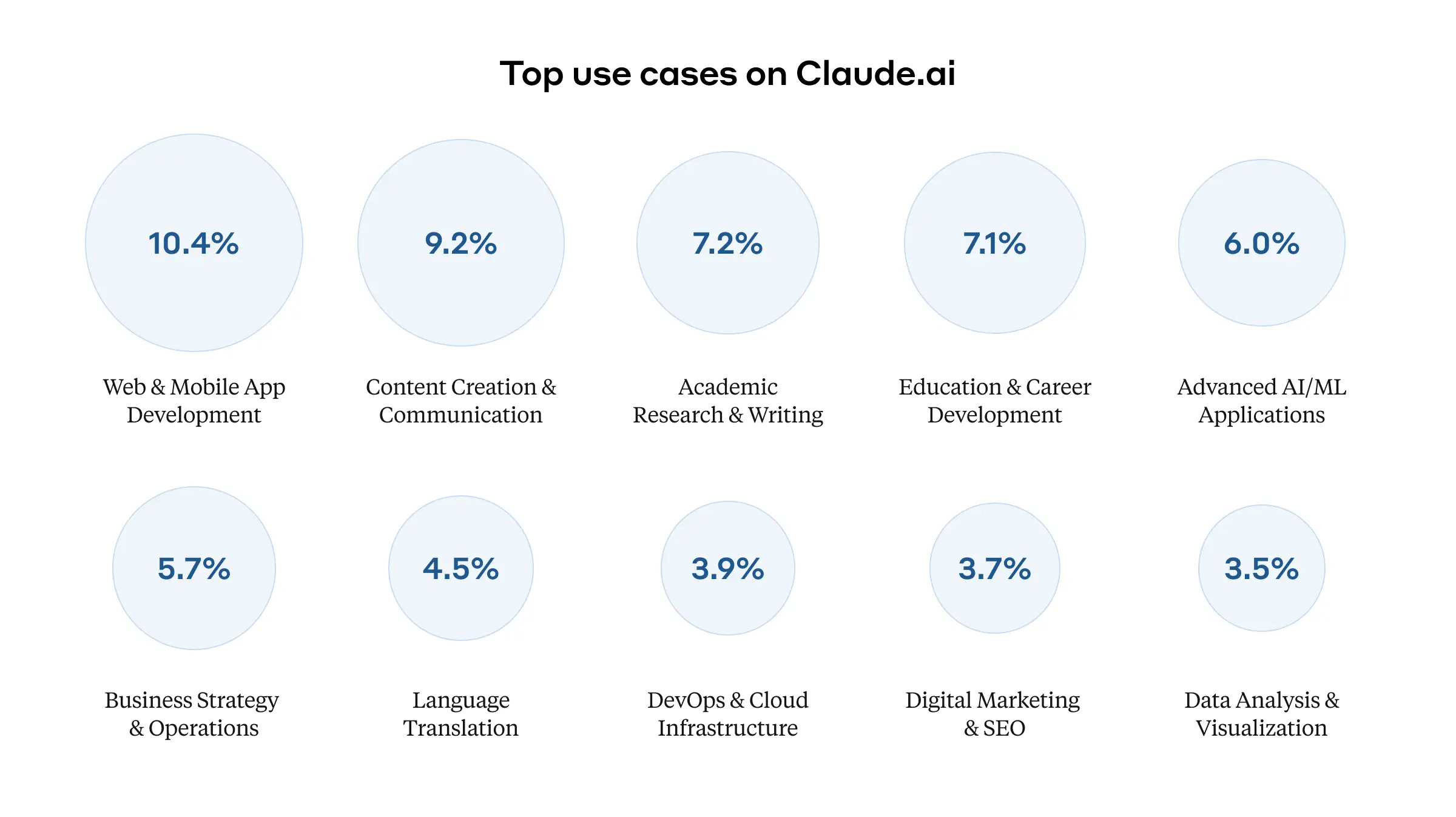
Claude insights and observations, or “Clio,” is our attempt to answer this question. Clio is an automated analysis tool that enables privacy-preserving analysis of real-world language model use. It gives us insights into the day-to-day uses of claude.ai in a way that’s analogous to tools like Google Trends. It’s also already helping us improve our safety measures. In this post—which accompanies a full research paper—we describe Clio and some of its initial results.
Evolving tools redefine AI video — from heatherbcooper.substack.com by Heather Cooper Google’s Veo 2, Kling 1.6, Pika 2.0 & more
AI video continues to surpass expectations
The AI video generation space has evolved dramatically in recent weeks, with several major players introducing groundbreaking tools.
Here’s a comprehensive look at the current landscape:
Veo 2…
Pika 2.0…
Runway’s Gen-3…
Luma AI Dream Machine…
Hailuo’s MiniMax…
OpenAI’s Sora…
Hunyuan Video by Tencent…
There are several other video models and platforms, including …
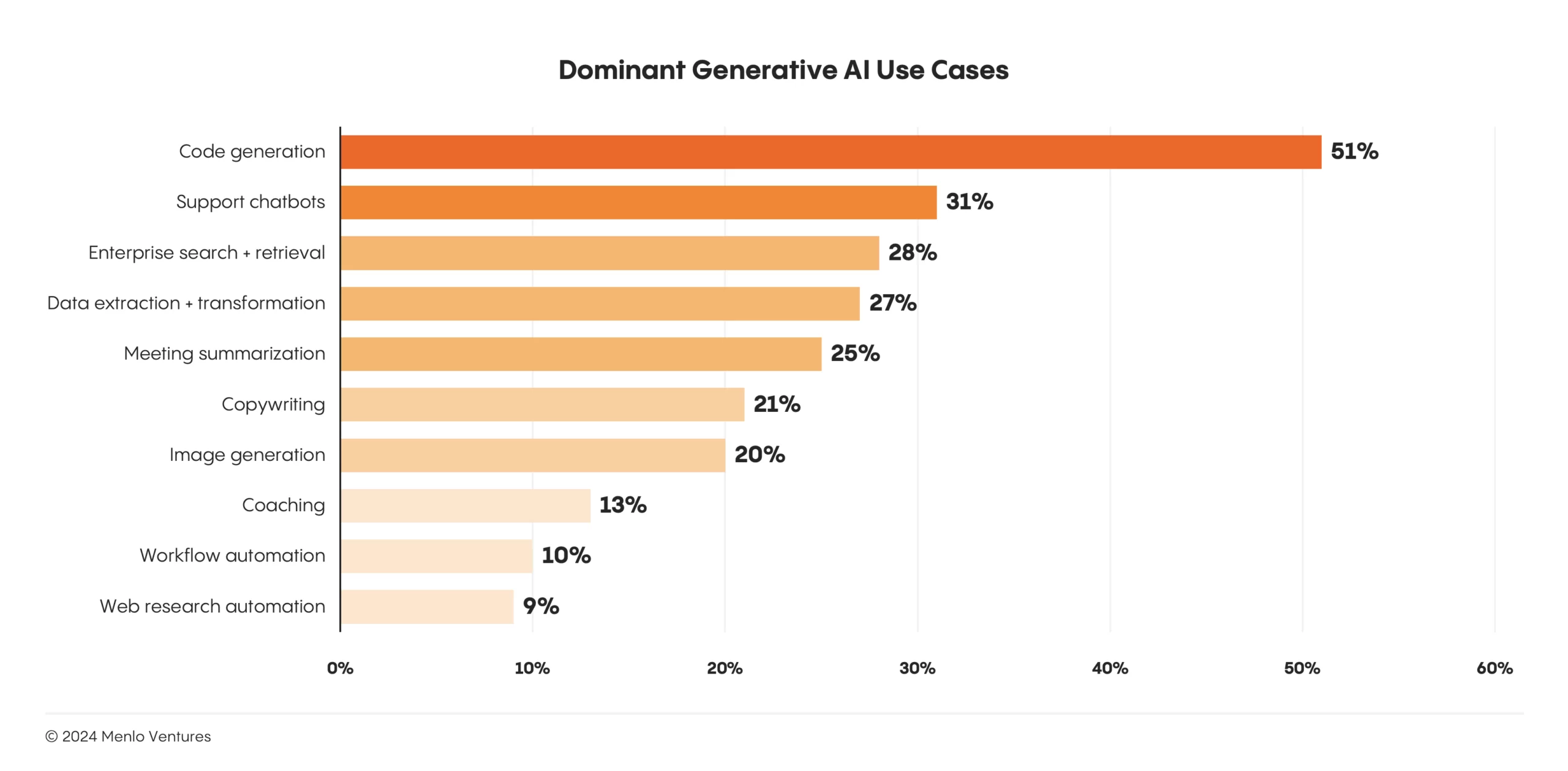
2024: The State of Generative AI in the Enterprise — from menlovc.com (Menlo Ventures) The enterprise AI landscape is being rewritten in real time. As pilots give way to production, we surveyed 600 U.S. enterprise IT decision-makers to reveal the emerging winners and losers.
This spike in spending reflects a wave of organizational optimism; 72% of decision-makers anticipate broader adoption of generative AI tools in the near future. This confidence isn’t just speculative—generative AI tools are already deeply embedded in the daily work of professionals, from programmers to healthcare providers.
Despite this positive outlook and increasing investment, many decision-makers are still figuring out what will and won’t work for their businesses. More than a third of our survey respondents do not have a clear vision for how generative AI will be implemented across their organizations. This doesn’t mean they’re investing without direction; it simply underscores that we’re still in the early stages of a large-scale transformation. Enterprise leaders are just beginning to grasp the profound impact generative AI will have on their organizations.
Business spending on generative AI surged 500% this year, hitting $13.8 billion — up from just $2.3 billion in 2023, according to data from Menlo Ventures released Wednesday.
OpenAI ceded market share in enterprise AI, declining from 50% to 34%, per the report.
Amazon-backed Anthropic doubled its market share from 12% to 24%.
Microsoft has quietly built the largest enterprise AI agent ecosystem, with over 100,000 organizations creating or editing AI agents through its Copilot Studio since launch – a milestone that positions the company ahead in one of enterprise tech’s most closely watched and exciting segments.
…
The rapid adoption comes as Microsoft significantly expands its agent capabilities. At its Ignite conference [that started on 11/19/24], the company announced it will allow enterprises to use any of the 1,800 large language models (LLMs) in the Azure catalog within these agents – a significant move beyond its exclusive reliance on OpenAI’s models. The company also unveiled autonomous agents that can work independently, detecting events and orchestrating complex workflows with minimal human oversight.
To understand the implications of AI agents, it’s useful to clarify the distinctions between AI, generative AI, and AI agents and explore the opportunities and risks they present to our autonomy, relationships, and decision-making.
… AI Agents: These are specialized applications of AI designed to perform tasks or simulate interactions. AI agents can be categorized into:
Tool Agents…
Simulation Agents..
While generative AI creates outputs from prompts, AI agents use AI to act with intention, whether to assist (tool agents) or emulate (simulation agents). The latter’s ability to mirror human thought and action offers fascinating possibilities — and raises significant risks.
Doing the Best You Can With the Time You Have — by Jay Schauer These strategies can help overwhelmed teachers prioritize tasks and find a balance between perfectionism and efficiency. .
How to Support Teachers’ Emotional Health — by Hedreich Nichols Emotional well-being plays a major role in teachers’ job satisfaction, and it’s essential that they have effective resources for support.
Teachers cannot be expected to teach SEL effectively without first being intentional about their own emotional health. If we want educators to guide students through emotional regulation, they must have the time, space, and support to do that work themselves. This goes beyond surface-level wellness initiatives—teachers need opportunities to reflect on their emotional triggers, manage their own stresses, and receive genuine support from their schools. Only when teachers are empowered to process their own emotional challenges can they truly foster a healthy social and emotional environment for their students.
In Praise of the Humble Document Camera — by Emily Rankin Revisiting a simple edtech tool can help you introduce rigor and engage students more deeply in their lessons.
4 Ways to Use a Document Camera in Your Classroom— by Emily Rankin If a document camera is gathering dust in a classroom, its lack of impact is probably linked to the user, not what the gadget is capable of. Case in point, I wasn’t using mine regularly because I didn’t know the value it could add to my teaching and learning. Here are some of the practices I now know are possible:
One factor to consider is the subject. In math, students need opportunities to work on rich tasks and solve problems in ways that make sense to them. However, that doesn’t mean direct instruction is totally absent from math time. The questions below can guide you in deciding whether to use direct instruction, when it would be appropriate, and who else in the classroom you might involve.
Increasing Talk Time in World Language Classes— by Kate Good Teachers can experiment with a variety of strategies to build and assess students’ ability to converse in the target language.
To capitalize on my students’ (seemingly inexhaustible) desire to chat, I work to increase student talk time in our Spanish immersion classes. I use several strategies to build and assess students’ oral language.
The Tutoring Revolution— from educationnext.org by Holly Korbey More families are seeking one-on-one help for their kids. What does that tell us about 21st-century education?
Recent research suggests that the number of students seeking help with academics is growing, and that over the last couple of decades, more families have been turning to tutoring for that help.
…
What the Future Holds Digital tech has made private tutoring more accessible, more efficient, and more affordable. Students whose families can’t afford to pay $75 an hour at an in-person center can now log on from home to access a variety of online tutors, including Outschool, Wyzant, and Anchorbridge, and often find someone who can cater to their specific skills and needs—someone who can offer help in French to a student with ADHD, for example. Online tutoring is less expensive than in-person programs. Khan Academy’s Khanmigo chatbot can be a student’s virtual AI tutor, no Zoom meeting required, for $4 a month, and nonprofits like Learn to Be work with homeless shelters and community centers to give virtual reading and math tutoring free to kids who can’t afford it and often might need it the most.
1. Record audio from class on your phone
2. Keep laptop closed. Just jot down short phrases to describe most important points
3. Upload audio and PDF scan of notes to NotebookLM
4. Ask Notebook to expand your notes with details from recording… pic.twitter.com/wfmCTJfRba
Unlock deeper insights with NotebookLM: Now analyze YouTube videos & audio files alongside your docs. Plus, easily share your Audio Overview with a new sharing option!
I. Introduction (0:00 – 6:16): …
II. Historical Contextualization (6:16 – 11:30): …
III. The Role of Product Fit in AI’s Impact (11:30 – 17:10): …
IV. AI and the Future of Knowledge Work (17:10 – 24:03): …
V. Teaching About AI in Higher Ed: A Measured Approach (24:03 – 34:20): …
VI. AI & the Evolving Skills Landscape (34:20 – 44:35): …
VII. Ethical & Pedagogical Considerations in an AI-Driven World (44:35 – 54:03):…
VIII. AI Beyond the Classroom: Administrative Applications & the Need for Intuition (54:03 – 1:04:30): …
IX. Reflections & Future Directions (1:04:30 – 1:11:15): ….
Part 2: Administrative Impacts & Looking Ahead
X. Bridging the Conversation: From Classroom to Administration (1:11:15 – 1:16:45): …
XI. The Administrative Potential of AI: A Looming Transformation (1:16:45 – 1:24:42): …
XII. The Need for Intuitiveness & the Importance of Real-World Applications (1:24:42 – 1:29:45): …
XIII. Looking Ahead: From Hype to Impactful Integration (1:29:45 – 1:34:25): …
XIV. Conclusion and Call to Action (1:34:25 – 1:36:03): …
Most language learners do not have access to affordable 1:1 tutoring, which is also proven to be the most effective way to learn (short of moving to a specific country for complete immersion). Meanwhile, language learning is a huge market, and with an estimated 60% of this still dominated by “offline” solutions, meaning it is prime for disruption and never more so than with the opportunities unlocked through AI powered language learning. Therefore — we believe this presents huge opportunities for new startups creating AI native products to create the next language learning unicorns.
I never imagined I’d learn so much without paying for a course.
It’s not that AI is inherently biased, but in its current state, it favors those who can afford it. The wealthy districts continue to pull ahead, leaving schools without resources further behind. Students in these underserved areas aren’t just being deprived of technology—they’re being deprived of the future.
But imagine a different world—one where AI doesn’t deepen the divide, but helps to bridge it. Technology doesn’t have to be the luxury of the wealthy. It can be a tool for every student, designed to meet them where they are. Adaptive AI systems, integrated into schools regardless of their budget, can provide personalized learning experiences that help students catch up and push forward, all while respecting the limits of their current infrastructure. This is where AI’s true potential lies—not in widening the gap, but in leveling the field.
But imagine if, instead of replacing teachers, AI helped to support them. Picture a world where teachers are freed from the administrative burdens that weigh them down. Where AI systems handle the logistics, so teachers can focus on what they do best—teaching, mentoring, and inspiring the next generation. Professional development could be personalized, helping teachers integrate AI into their classrooms in ways that enhance their teaching, without adding to their workload. This is the future we should be striving toward—one where technology serves to lift up educators, not push them out.
Duolingo’s new Video Call feature represents a leap forward in language practice for learners. This AI-powered tool allows Duolingo Max subscribers to engage in spontaneous, realistic conversations with Lily, one of Duolingo’s most popular characters. The technology behind Video Call is designed to simulate natural dialogue and provides a personalized, interactive practice environment. Even beginner learners can converse in a low-pressure environment because Video Call is designed to adapt to their skill level. By offering learners the opportunity to converse in real-time,Video Call builds the confidence needed to communicate effectively in real-world situations. Video Call is available for Duolingo Max subscribers learning English, Spanish, and French.
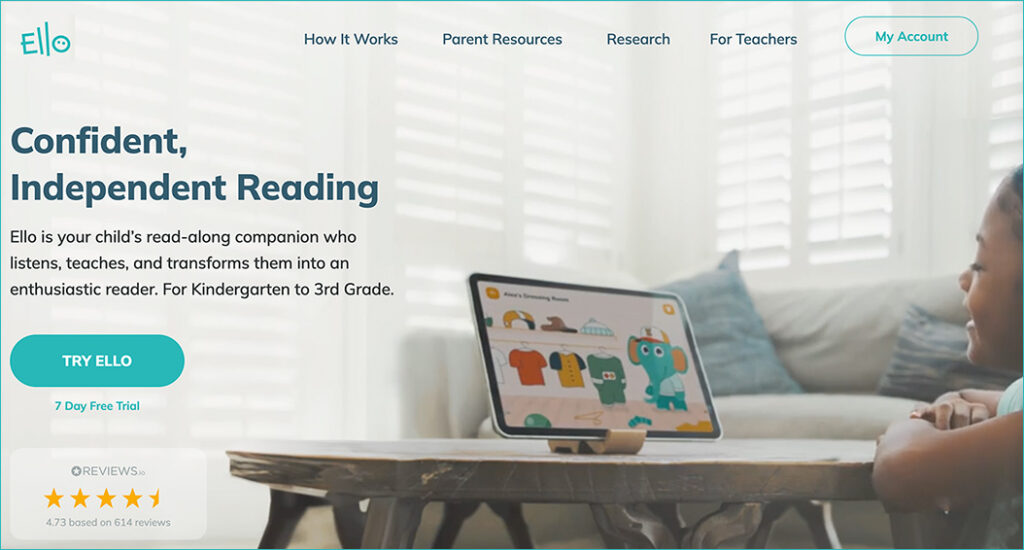
Ello, the AI reading companion that aims to support kids struggling to read, launched a new product on Monday that allows kids to participate in the story-creation process.
Called “Storytime,” the new AI-powered feature helps kids generate personalized stories by picking from a selection of settings, characters, and plots. For instance, a story about a hamster named Greg who performed in a talent show in outer space.