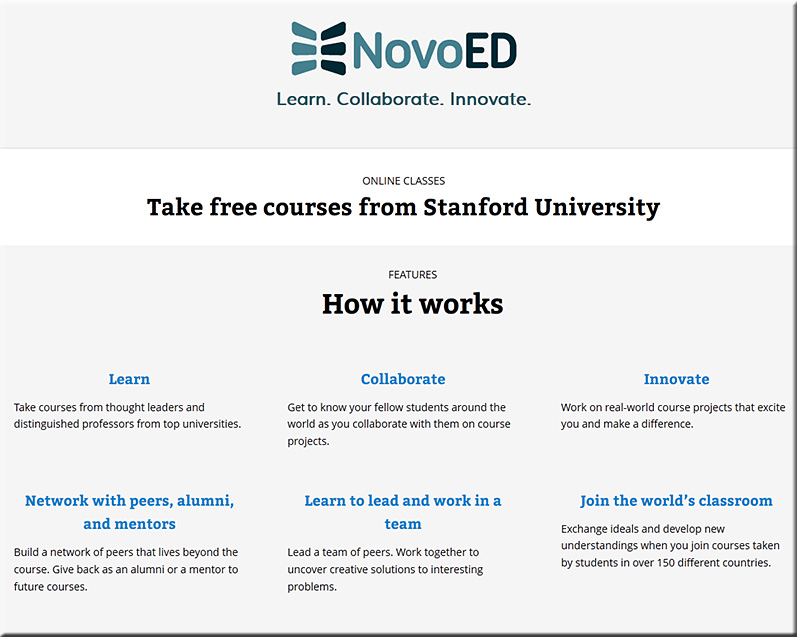
NovoED-StanfordApril2013


About

NovoEd is the only online learning platform that provides a connected, effective and engaging learning environment for students using a combination of techniques in crowd sourcing, design and analysis of reputation systems, and algorithm design.

NovoEd’s philosophy is to advance the online learning experience by making online courses more experiential, interactive, and collaborative. On our platform, students not only have access to lectures by thought leaders and professors from top universities, but they are also able to form teams with people around the world and work on class projects.

NovoEd uses online learning to deliver learning opportunities at massive scale. We offer courses and programs by thought leaders in a wide range of fields and in partnership with universities. By fostering online collaboration, team work and project-based learning, we nurture problem solving, collaboration, and leadership while addressing specific topics and business opportunities.

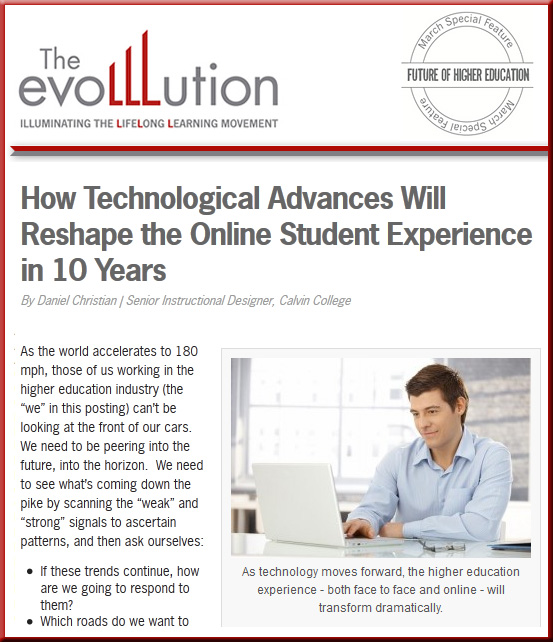
My thoughts on the future of higher education -- March 2013 by Daniel Christian


Also, the PDF file of this article is here.

.

From DSC:
Though the title of this article I wrote says 10 years, it may be more or less (and given the pace of change, I would lean towards sooner rather than later).  

If you haven’t read Christensen’s/Horn’s/Johnson’s work re: disruption — such as Disrupting Class and/or The Innovator’s Dilemma — it would be worth your time to do so. They are right on the mark. What they have been asserting is happening within higher education.  The article briefly addresses face-to-face learning and hybrid learning as well.  Readers of this blog will know that I have been pressing for higher ed to reinvent itself in order to stay relevant. There is danger in the status quo, especially when the conversation continues to move away from traditional higher education.

See other perspectives out at evoLLLution.com as well.


The professors who make the MOOCs — from The Chronicle by Steve Kolowich

Excerpt:

Like many professors at top-ranked institutions, Mr. Sedgewick was very skeptical about online education. But he was intrigued by the notion of bringing his small Princeton course on algorithms, which he had taught for five years, to a global audience. So after Princeton signed a deal with an upstart company called Coursera to offer MOOCs, he volunteered for the front lines.


Photo illustration

Dave Chidley for The Chronicle


Items re: multi-screen media — eventually this trend/convergence enables “Learning from the Living [Class] Room”

PayWizard launches first dedicated payment and subscriber management solution for TV and media industry — from PayWizard

Excerpt:

London, 21 February 2013 – PayWizard, specialists in payment and subscription management, has launched the TV and media industry’s first dedicated, end to end payment and subscription solution. The integrated solution brings together a strong heritage in the Pay-TV market with a deep understanding of the challenges TV operators and media companies face in monetising the multiplatform world.

Using its award-winning modular Payment and Subscription platform, PayWizard combines payment processing, intelligent subscriber management technology and real-time customer service operations to tailor-make solutions that enhance the consumer experience across all screens.

With 16.8 billion video-enabled devices set to be in the global marketplace by 2015, content owners are facing the challenge of enhancing existing services while creating compelling experiences that embrace new routes to market. PayWizard’s comprehensive set of products and services has enabled clients, such as the UK’s biggest commercial broadcaster, ITV, to address these commercial challenges by enabling new monetisation strategies to drive revenue and profitability.


Also see:

.

ConnectedTVSummit-London-2013


.


Nagra-Kudelskidotcom-March2013


.

civolution-march2013

.

Also see:


From DSC:
See the categories listed above for the items/topics/disciplines/trends that are relevant here.


Addendum:

Check this out!

Massive Open Online Course offered by UMass Boston to feature the first adaptive MOOC technology
Enables students to be taught according to individual learning strategies

Excerpt from email:

(Boston, MA) – February 27, 2013 – If you’ve ever been in a course and struggled because you just aren’t “getting it,” the reason might be less your ability than the way in which the material is being presented.

New technology is now allowing online course environments to analyze how individual students learn, customizing instruction to individualized learning strategies. The College of Advancing and Professional Studies (CAPS) at the University of Massachusetts Boston has teamed up with USDLA 21st Century Sponsor, Synaptic Global Learning (SGL), to use the new learning management system, Adaptive Mobile Online Learning (AMOL), to deliver the first adaptive Massive Online Open Course (a-MOOC) ever offered. The course launches March 25.

PhilipsSmartTV-March2013

unbound-Matt-MacInnis-Feb2013


Some notes from DSC — with thanks to Mr. Steven Chevalia for the initial resource/video:

Changes in the past were mainly about the methods of getting knowledge onto paper.

Only 3 key medium changes

  1. Oral speaking/tradition to writing
  2. Writing to print
  3. Print to electronic

But now, the traditional book model is coming unbound.

Amazon.com:

  • Controls customers — 30% of books sold through them
  • Controls product – forced to build products that are a $10 text model

Inkling is introducing two main changes to get away from that empire’s methods of doing business:

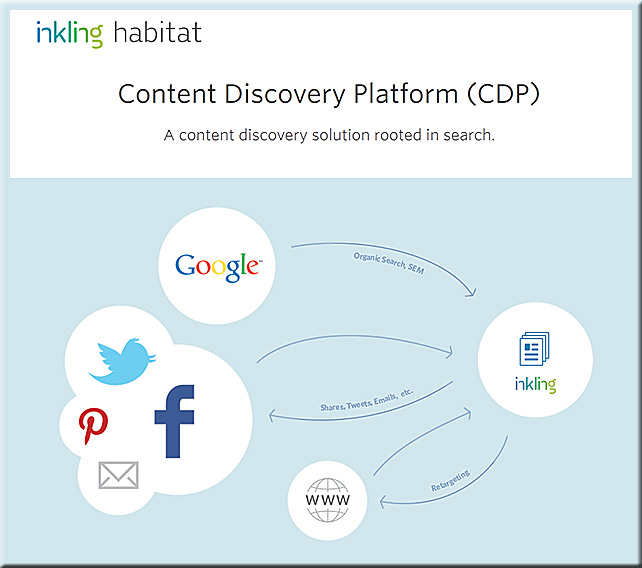
  1. A way to build for the medium — Inkling Habitat  — “The only collaborative publishing environment designed for professionals.”
  2. A new way to discover and sell your materials (which uses normal Google searches vs having to go through Amazon.com) — Inkling’s Content Discovery Platform


Inkling-CDP-Jan2013


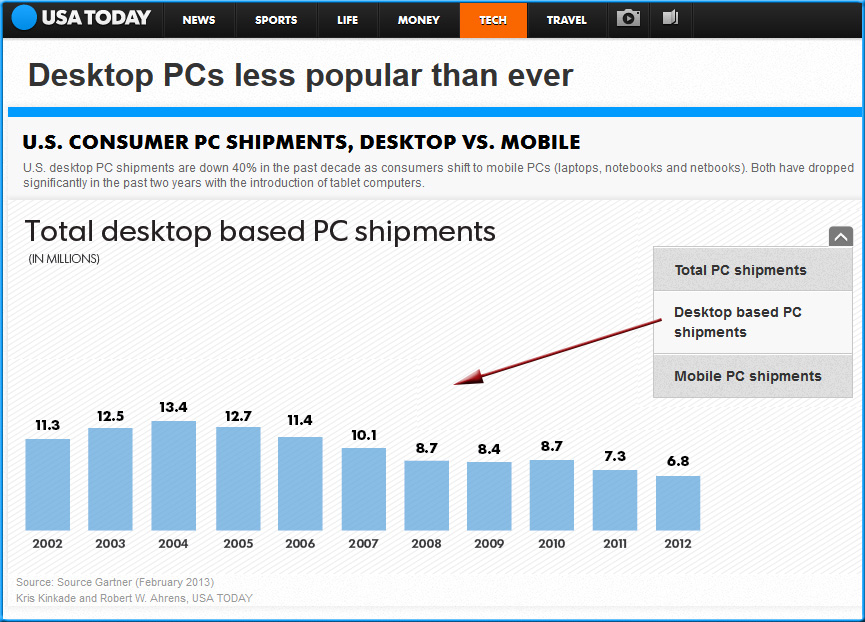
Desktop PCs less popular than ever — from Scott Martin and Jon Swartz, USA TODAY — with thanks to Mr. Rick DeVries at Calvin College for this resource


DesktopPCsLessPopThanEver-Feb2013

The Master List of the Collaborative Economy: Rent and Trade Everything — from web-strategist.com by Jeremiah Owyang

Excerpt:

[Collaborative Economy Defined:  A digital system that manages the coordination of buyers and sellers who offer or exchange used products and remnant services]

Beyond the buzz, where are MOOCs really going? — from wired.com by Michael Horn and Clayton Christensen

Excerpt:

MOOCs can be much more than marketing and edutainment. We believe they are likely to evolve into a “scale business”: one that relies on the technology and data backbone of the medium to optimize and individualize learning opportunities for millions of students.

This is very different than simply putting a video of a professor lecturing online.

imgZine-Feb2013

.

From DSC:
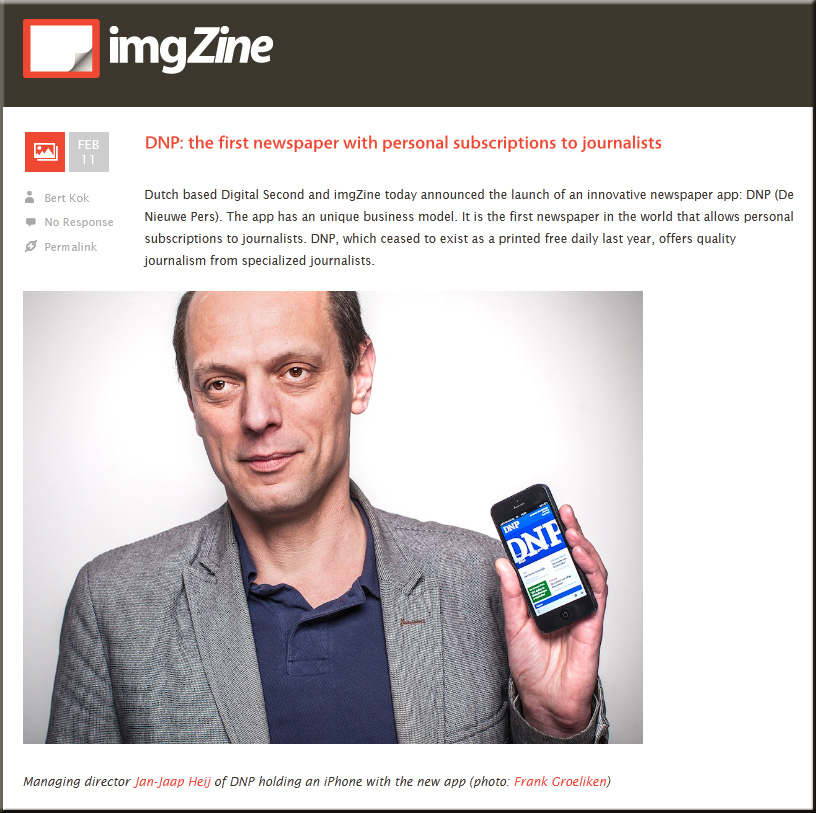
Hmmmm…I wonder how this might apply to education? Will we move more towards personal brands vs. institutional brands?

College branding: The tipping point — from forbes.com by Roger Dooley

Excerpt:

Change is coming to this market. While there are multiple issues of increasing importance to schools, two stand out as major game-changers.


From DSC:
Important notes for the boards throughout higher education to consider:


Your institution can’t increase tuition by one dime next year. If you do, you will become more and more vulnerable to being disrupted. Instead, work very hard to go in the exact opposite direction. Find ways to discount tuition by 50% or more — that is, if you want to stay in business.

Sounds like the scene in Apollo 13, doesn’t it? It is. (i.e. as Tom Hanks character is trying to get back to Earth and has very little to do it with. The engineers back in the United States are called upon to “do the impossible.”)

Some possibilities:

  • Pick your business partners and begin pooling resources and forming stronger consortia. Aim to reduce operating expenses, share the production of high-quality/interactive online courses, and create new streams of income. Experimentation will be key.
  • Work with IBM, Apple, Knewton and the like to create/integrate artificial intelligence into your LMS/CMS in order to handle 80% of the questions/learning issues. (Most likely, the future of MOOCs involves this very sort of thing.)
  • Find ways to create shorter courses/modules and offer them via online-based exchanges/marketplaces.  But something’s bothering me with this one..perhaps we won’t have the time to develop high-quality, interactive, multimedia-based courses…are things moving too fast?
  • Find ways to develop and offer subscription-based streams of content


Curbing the cost of college: Coursera wins approval to offer online courses for credit for under $200 — from techcrunch.com by Rip Empson

Excerpt:

Up until now, the startup has not offered degrees or credits for its online classes, which has meant that Coursera classes have existed mostly as a way to pursue supplementary or continuing education — not as part of degree programs. But that changed today, as Coursera announced [last Thursday morning] that five of its courses have been approved for “credit equivalency” by the American Council on Education (ACE). This means that students who complete these five courses can receive college transfer credit at institutions that accept ACE recommendations.

So, importantly, Coursera’s new credit equivalency doesn’t automatically mean that every university it has partnered with automatically guarantees credit for the approved courses; instead, institutions have the option to accept or decline credit. In other words, it’s up to them.

Also see:

Creative learning on mass, or the MIT MOOC –– from daveswhiteboard.com by Dave Ferguson

Excerpt (emphasis DSC):

Just this morning, I came across MIT Media Lab’s announcement for its Learning Creative Learning online course. You can read about it or skim the outline to make your own judgment; I’m enjoying the laid-back description, which tracks with my previous massive open online course experience:

  • “This is a big experiment. Things will break. We don’t have all the answer.”
  • “We hope that participants will jump in as collaborators rather than passive recipients.”
  • “Check out our shiny new platform. Actually, don’t, because we didn’t build a shiny new platform.”

The object formerly known as the textbook –– from The Chronicle by Jeff Young

.

Don't Call Them Textbooks 1

Holly Gressley for The Chronicle


Excerpt:

Textbook publishers argue that their newest digital products shouldn’t even be called “textbooks.” They’re really software programs built to deliver a mix of text, videos, and homework assignments. But delivering them is just the beginning. No old-school textbook was able to be customized for each student in the classroom. The books never graded the homework. And while they contain sample exam questions, they couldn’t administer the test themselves.

One publisher calls its products “personalized learning experiences,” another “courseware,” and one insists on using its own brand name, “MindTap.” For now, this new product could be called “the object formerly known as the textbook.”


From DSC:
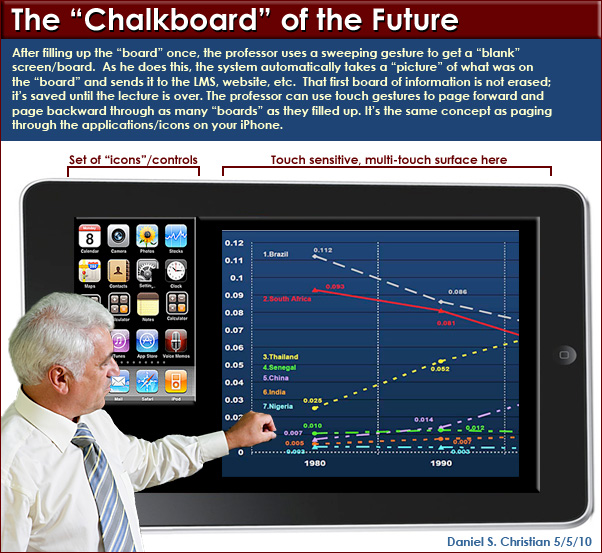
Imagine how this sort of thing might fit into the “chalkboard of the future” — as applications and content flow onto the “board” from open source repositories and/or from the publishers’ cloud-based repositories of content…

.

Daniel Christian: The Chalkboard of the Future

.

or in learning from the living room…

.

The Living [Class] Room -- by Daniel Christian -- July 2012 -- a second device used in conjunction with a Smart/Connected TV


Also see:

A seat at the table at last — from campustechnology.com by Andrew Barbour
One result of the Year of the MOOC is that IT is finally getting a say in the strategic direction of the institution.

Excerpt:

It’s interesting that it took an external force to propel IT into this inner circle. I can’t recall how many stories CT has run proposing strategies for how CIOs could win a place at the table. At the end of the day, though, changing an institution as hidebound as the average college is not easily tackled from within. In contrast, there’s nothing like a little existential angst to shake things up.

But MOOCs aren’t the only drivers of this change. We often think of BYOD as stripping IT of control but–on the broader stage–it may be playing its own part in elevating IT’s profile on campus. For years, faculty resisted IT recommendations on how technology could improve teaching and learning. Saying no was easy–preserving the status quo always is. That’s changing now. BYOD is a force that faculty can’t resist. It is, after all, their customers bringing the devices to school. Suddenly, faculty are faced with demands for new styles of teaching that accommodate student preferences for technology and much more. Enter IT and a host of others who see the potential of tech in education.

Also relevant/see:

  • The University’s Dilemma–– from strategy-business.com by Tim Laseter; with thanks to Ross Dawson for the recent tweet on this

How free online courses are changing the traditional liberal arts education — from PBS.org
As tuition costs continue to rise, it seems counterintuitive that professors at top universities would give away their courses for free. But that’s exactly what they’re doing, on web-based platforms known as “Massive Open Online Courses.” Spencer Michels reports on how a boom in online learning could change higher education.

Excerpt from Under the cloud of knowledge deficiency — from xED Book by George Siemens:

I’ve been tagging interesting articles and websites since 2011 here on Diigo. My co-author, Bonnie Stewart, has been tagging MOOC articles here on Delicious. If you don’t feel like reading hundreds of articles, Sir John Daniel provides a solid analysis of MOOCs. Don’t forget to look at the peer reviewed MOOC articles. Several colleagues have found Clay “the McGuyver of MP3 metaphors – explaining all phenomenon in the world through the lens of MP3?s and Napster since 1999? Shirky’s evaluation of MOOCs helpful: Napster, Udacity, and the Academy.

Beyond the MOOC Hype: Answers to the five biggest MOOC questions (Part 1) — from the EvoLLLution NewsWire

Beyond the MOOC hype: Answers to the five biggest MOOC questions (Part 2) — from the EvoLLLution NewsWire

MOOCS, online learning, and the wrong conversation — from insidehighered.com by Joshua Kim

Excerpt:
  • Where are your institution’s strengths? 
  • What do you want to be known for?
  • Where have your faculty made a name for themselves in research and in global conversations? 
  • Can you use MOOCS to grow awareness of your strengths? 
  • Can you use blended and online learning to aggregate demand for degree programs in your specialization?  
  • Can you find mechanisms to invest in faculty, scholarship, courses, and teaching and learning? 
Addendums:


Great item here as well:


Also, addendums on 7/3/13:

Addendum on 7/8/13:

Abstract

Massive open online courses (MOOCs) are a recent addition to the range of online learning options. Since 2008, MOOCs have been run by a variety of public and elite universities, especially in North America. Many academics have taken interest in MOOCs recognising the potential to deliver education around the globe on an unprecedented scale; some of these academics are taking a research-oriented perspective and academic papers describing their research are starting to appear in the traditional media of peer reviewed publications. This paper presents a systematic review of the published MOOC literature (2008-2012): Forty-five peer reviewed papers are identified through journals, database searches, searching the Web, and chaining from known sources to form the base for this review. We believe this is the first effort to systematically review literature relating to MOOCs, a fairly recent but massively popular phenomenon with a global reach. The review categorises the literature into eight different areas of interest, introductory, concept, case studies, educational theory, technology, participant focussed, provider focussed, and other, while also providing quantitative analysis of publications according to publication type, year of publication, and contributors. Future research directions guided by gaps in the literature are explored.

Keywords: MOOC; massive open online course; massively open online course; systematic review; connectivism


Tagged with: • •  

UK university joins US online partnership — from bbc.co.uk by Sean Coughlan BBC News education correspondent


Prof Daphne Koller, Co-Founder of Coursera and Professor Sir Timothy O'Shea, Principal of The University of Edinburgh
.
Daphne Koller, co-founder of Coursera, and Edinburgh University’s principal,
Sir Timothy O’Shea, sign up to the online partnership
© 2025 | Daniel Christian