MOOC-Skeptical Provosts — from insidehighered.com by Ry Rivard

Excerpt:

The provosts of Big 10 universities and the University of Chicago are in high-level talks to create an online education network across their campuses, which collectively enroll more than 500,000 students a year.

And these provosts from some of America’s top research universities have concluded that they – not corporate entrepreneurs and investors — must drive online education efforts.

…

But the provosts are now questioning universities’ need to partner with external providers in the first place.

…

“The main thing for us is… how can the CIC schools be proactive in terms of innovation and learning?” he said. “How can we be of more benefit to students jointly?”

…

Right now, the high-level talks among administrators has yet to trickle down to faculty. Provost Adesida said the Illinois faculty will play a big role in deciding whatever comes next.   “We don’t move without consulting with faculty,” Adesida said.

.

From DSC:
Don’t get me wrong, I don’t think MOOCs are done baking yet…but…

  • Funny how a little serious competition causes some eyes and ears to be open to change.
  • Funny how Thrun and Koller/Ng had to leave traditional higher ed in order to develop Udacity and Coursera, respectively.
  • Funny how when one’s peers finally move forward with something, then one thinks that now they need to move forward with that same thing. 
  • Funny how folks are suddenly interested in innovation when their wallets/enrollments/businesses are being impacted.
  • Funny how higher ed wakes up from partaking in its own conversations/journals/publications/research when the true “customers” now have choices.

I wonder how much more innovation we might actually see from insider higher education if a big player does purchase Coursera…?


Addendums:

  • The Academe-Academic Complex –– from HuffingtonPost.com by Peter Weddle
    Excerpt:
    Now, to be perfectly clear, a college education is absolutely essential for many jobs in a modern economy. It is not, however, sufficient for sustained or even initial employment — at least as that education is currently delivered. What’s missing? An equally rigorous education in the body of knowledge and set of skills required for effective career self-management. Why? Because for the past 75 years, America’s colleges and universities have been graduating career idiot savants. They’ve taught their students a whole lot about this or that field of study, but absolutely nothing about how to make a career in those fields.
    …
    From discovering one’s inherent talent to setting effective short and long goals, from dealing with the inevitable obstacles that arise in a career to ensuring one’s expertise stays at the state-of-the-art, there is more than enough to be taught, more than enough to be learned in a career self-management course of study, and it’s high time the academe-academic complex embraced it.
    .
  • Mozilla’s debuts Open Badges to showcase out-of-school learning and skills — from edsurge.com


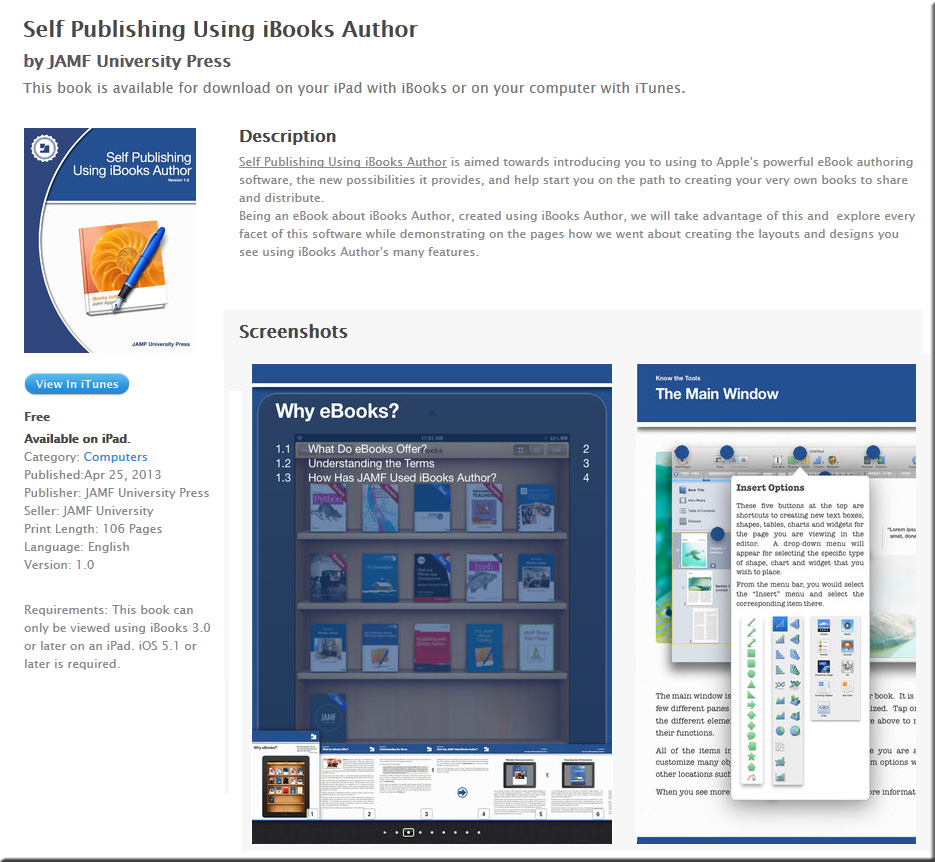
iBooksAuthor-JAMF-SW-June2013


Description
Self Publishing Using iBooks Author is aimed towards introducing you to using to Apple’s powerful eBook authoring software, the new possibilities it provides, and help start you on the path to creating your very own books to share and distribute.

Being an eBook about iBooks Author, created using iBooks Author, we will take advantage of this and  explore every facet of this software while demonstrating on the pages how we went about creating the layouts and designs you see using iBooks Author’s many features.

Free.
Available on iPad.

From DSC:

  • What if you want to allow some remote students to come on into your face-to-face classroom?
    .
  • What if you want to allow those remote students to be seen and communicated with at eye level?
    .
  • What if you want Remote Student A to join Group 1, and Remote Student B to join Group 2?
    .

Well…how about using one of these devices  in order to do so!


New video collaboration robot: TelePresence gets moving — from cisco.com by Dave Evans

Excerpt:

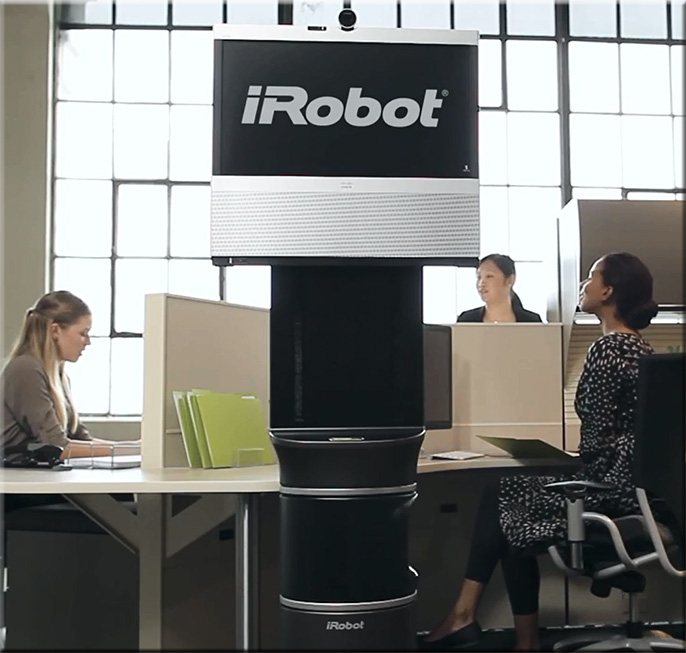
That is why Cisco’s new joint effort with iRobot—demonstrated publicly this week for the first time—is so exciting: We’ve created a mobile Cisco TelePresence unit that brings collaboration to you—or, conversely, brings you to wherever you need to collaborate. Called iRobot Ava 500, this high-definition video collaboration robot combines Cisco TelePresence with iRobot’s mobility and self-navigation capabilities, enabling freedom of movement and spontaneous interactions with people thousands of miles away.

.

irobot-june-10-2013
.

iRobot Ava™ 500 Video Collaboration Robot — published on Jun 10, 2013
iRobot and Cisco have teamed to bring the Ava 500 video collaboration robot to market. The robot blends iRobot’s autonomous navigation with Cisco’s TelePresence to enable people working off-site to participate in meetings and presentations where movement and location spontaneity are important. The new robot is also designed to enable mobile visual access to manufacturing facilities, laboratories, customer experience centers and other remote facilities.


.

Double Robotics Double

http://www.doublerobotics.com/img/use-office.jpg


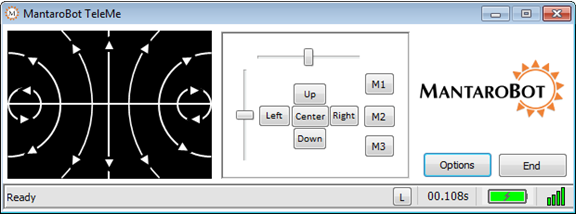
MantaroBot™ TeleMe


From Attack of the Telepresence Robots! — from BYTE  by Rick Lehrbaum

.

Kubi

http://twimgs.com/informationweek/byte/reviews/2013-Jan/robotic-telepresence/kubi.jpg


MantaroBot “TeleMe” VGo Communications “VGo” Anybots “QB” Suitable Technologies “Beam”


.

RP-7i ROBOT

RP-7i Remote Presence Robot


Also see:


Hacking the Academy: A book crowdsourced in one week — from MPublishing/University of Michigan Press

.

On May 21, 2010, we posted these intentionally provocative questions online:

Can an algorithm edit a journal? Can a library exist without books? Can students build and manage their own learning management platforms? Can a conference be held without a program? Can Twitter replace a scholarly society?

We asked for contributions to a collectively produced volume that would explore how the academy might be beneficially reformed using digital media and technology. The process of creating the edited volume itself would be a commentary on the way things are normally done in scholarly communication, with submissions coming in through multiple channels, including blogs, Twitter, and email, and in multiple formats—everything from a paragraph to a long essay to multimedia. We also encouraged interactivity—the possibility that contributors could speak directly to each other, rather than creating the inert, isolated chapters that normally populate edited volumes. We then sent out notices via our social networks, which quickly and extensively disseminated the call for submissions. Finally, we gave contributors a mere seven days, the better to focus their attention and energy.

Preface | Dan Cohen and Tom Scheinfeldt

.

Excerpt from “About the Book“

MPublishing, the publishing division of the University of Michigan Library, is pleased to announce the open-access version of Hacking the Academy, The
Edited Volume
. The volume is forthcoming in print under the University of Michigan Press digitalculturebooks imprint.

This volume was assembled and edited by Dan Cohen and Tom Scheinfeldt from the best of over 300 submissions received during a spirited week when the two editors actively solicited ideas for how the academy could be beneficially reformed using digital media and technology. For more on the unusual way this book was put together, please start with Cohen and Scheinfeldt’s preface.


Northern Arizona wins regional accreditor’s approval for personalized learning program –– from nextgenlearning.org by Nancy Millichap

Excerpt (emphasis DSC):

It’s all systems go, at last: Northern Arizona University, one of the ten institutions presently developing breakthrough degree programs with NGLC support, recently got the green light to start enrolling students in their Personalized Learning program. The Higher Learning Commission of the North Central Association of Colleges and Schools (HLC), NAU’s regional accreditor, approved their application to offer a competency-based degree program that moves away from the credit hour standard to use an approach referred to as “direct assessment” instead. In this approach, students receive credit related not to their presence in a real or virtual classroom for a specified period of time but instead to their successful completion of assessments that show they have mastered clearly defined competencies or are able to perform specific, predetermined tasks. HLC has created a pilot group of four institutions now approved to offer a competency-based degree program: NAU, the University of Wisconsin Colleges (a system of two-year campuses), the University of Wisconsin at Milwaukee, and Capella University.

The management revolution that’s already happening — from forbes.com by Steve Denning

From DSC:
Note how the following excerpts might also apply to higher education in the future (emphasis DSC):

Then globalization and the Internet changed everything. Customers suddenly had real choices, access to instant reliable information and the ability to communicate with each other. Power in the marketplace shifted from seller to buyer. Customers started insisting on “better, cheaper, quicker and smaller,” along with “more convenient, reliable and personalized.” Continuous, even transformational, innovation have become requirements for survival.

…

Initially mature products and firms were wiped out by upstarts that offered cheap substitutes to their products, first capturing low-end customers, and gradually moving upmarket to pick off higher-end customers.

…

Even as hierarchical bureaucracy was failing in the private sector, its practices were infecting government, non-profits, education and health. “Reforms” here usually involved stricter implementation of hierarchical bureaucracy rather than a shift towards more productive management practices. As a result, performance was pushed even further from the frontier of what is possible. Since the public is coming to expect responsiveness from these sectors similar to that of the private sector, satisfaction steadily declined.

…

Their virtue lies in the creative energy with which they are pioneering new ways of adding value.


.

asdfsadf


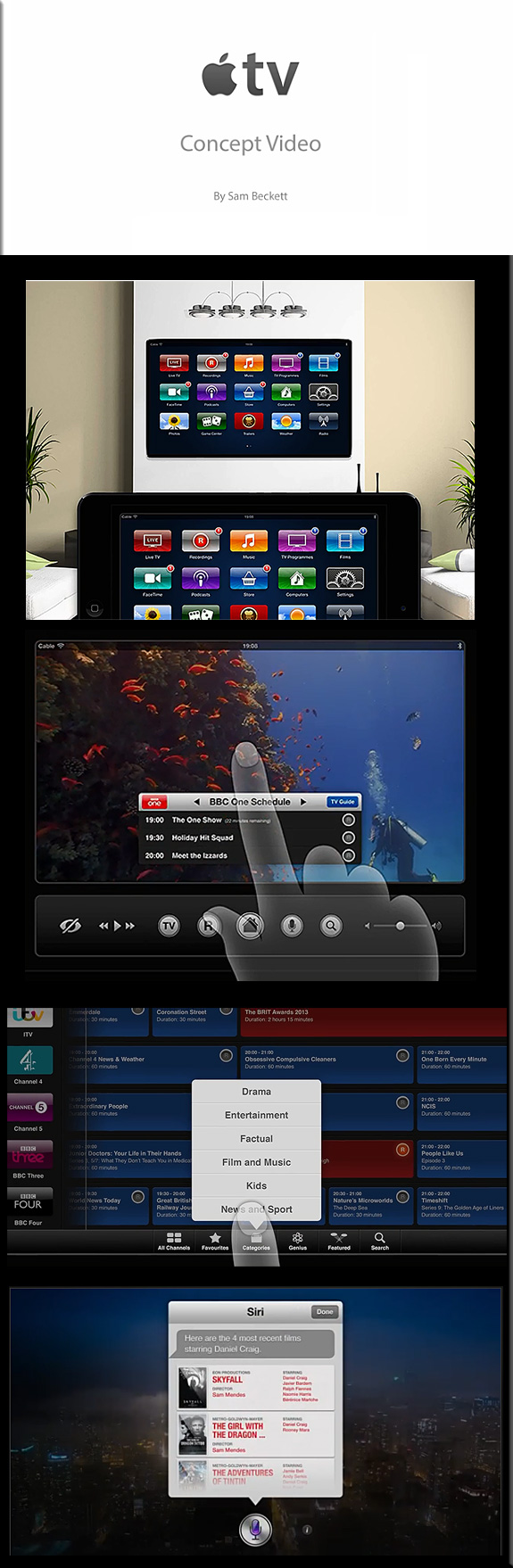
Heads up Jony Ive! You need to see this brilliant concept for the Apple TV! Superb work by Sam Beckett!

BrilliantTVConceptBySamBeckett-May2013


.

From DSC:
Now picture this from the educational standpoint — and what MOOCs could morph into.  The foundation for some serious learning power (from the living room) seems to be developing!

Streams of content/learning channels/cloud-based applications that each of us can create and make available.

Voice recognition, learning analytics, machine-to-machine communications, transmedia and more!  Wow!


.


The Living [Class] Room -- by Daniel Christian -- July 2012 -- a second device used in conjunction with a Smart/Connected TV


State systems go MOOC — from insidehighered.com by Ry Rivard

Excerpt (emphasis DSC):

Universities from New Mexico to New York will join Coursera in a sprawling expansion of the Silicon Valley startup’s efforts to take online education to the masses.

Together, state systems and flagship universities in nine states will help the company test new business models and teaching methods and potentially put Coursera in competition with some of the ed tech industry’s most established players.


Also see:

  • A Q&A on the launch of Penn State’s first MOOC — from by psu.edu
    Anna Divinsky and Keith Bailey talk about the launch of the first of the University’s five massive open online courses.
    Excerpt:
    UNIVERSITY PARK, Pa. — Penn State launched its first massive open online course (MOOC), Introduction to Art: Concepts and Techniques, yesterday — an effort that has been three months in the making. Anna Divinsky, lead faculty member of the Digital Arts Certificate Program at Penn State, has been instrumental in creating the first of the five courses that Penn State is offering this year on the leading MOOC platform, Coursera.

EdX Expands xConsortium to Asia and doubles in size with addition of 15 new global institutions — from prnewswire.com

From MOOC platform edX announces 15 new university partners (from educationdive.com)

These are the new partner institutions:

  • The University of Hong Kong, Hong Kong (HKUx)
  • Hong Kong University of Science & Technology, Hong Kong (HKUSTx)
  • Kyoto University, Japan (KyotoUx)
  • Peking University, Beijing, China (PekingX)
  • Seoul National University, South Korea (SNUx)
  • Tsinghua University, Beijing, China (TsinghuaX)
  • The University of Queensland in Australia (UQx)
  • Karolinska Institutet, Sweden (KIx)
  • Universite catholique de Louvain, Louvain-la-Neuve, Belgium (LouvainX)
  • Technische Universitat Munchen, Germany (TUMx)
  • Berklee College of Music, Boston, Mass. (BerkleeX)
  • Boston University, Boston, Mass. (BUx)
  • Cornell University, Ithaca, N.Y. (CornellX)
  • Davidson College, Davidson, N.C. (DavidsonX)
  • University of Washington, Seattle (UWashingtonX)

Netflix CEO: ‘TV in the future will be like a giant iPad’ [Ligaya ]

Netflix CEO: ‘TV in the future will be like a giant iPad’ — from business.financialpost.com by Armina Ligaya

Excerpt (emphasis DSC):

Q: What do you think is going to happen over the next five or 10 years in internet video?

A: Well, you know, the fundamental thing is the internet has been getting faster. And now it’s video capable, which is really a last-five-years phenomenon. And, internet video will be very transformative across all societies for telemedicine, for online learning, for education. For communication of various sorts. And it brings, whether it’s person to person, or a recorded video like a movie or a TV show, to a person it will be very transformative.

And, TV in the future will be like a giant iPad. It will have a bunch of apps on it, each app will have a unique experience.

…

So we’re getting beyond just a stream of video, which is all broadcast technology can do, to really try to be innovative about the interaction.

.

The Living [Class] Room -- by Daniel Christian -- July 2012 -- a second device used in conjunction with a Smart/Connected TV


From DSC:
It seems that
The Walmart of Education has officially arrived — i.e. a 50%+ discount off normal prices!  A $7000 Masters in Computer Science! 

Are we going to see more partnerships/collaborations like this involving MOOC providers, more “traditional” institutions of Higher Education, as well as the corporate world?

Are we moving more towards the use of teams and consortia and pooling resources?

Are we witnessing the beginning of a more accessible infrastructure to support lifelong learning? 

Is AT&T going to hire the top performers?


Georgia Tech announces Massive Online Master’s Degree in Computer Science — from online.wsj.com
Institute teams with Udacity, AT&T to launch first-of-its-kind advanced degree program

Excerpt:

ATLANTA, May 14, 2013 /PRNewswire/ — The Georgia Institute of Technology College of Computing announced today that it will offer the first professional Online Master of Science degree in computer science (OMS CS) that can be earned completely through the “massive online” format. The degree will be provided in collaboration with online education leader Udacity Inc. and AT&T.

All OMS CS course content will be delivered via the massive open online course (MOOC) format, with enhanced support services for students enrolled in the degree program. Those students also will pay a fraction of the cost of traditional on-campus master’s programs; total tuition for the program is initially expected to be below $7,000. A pilot program, partly supported by a generous gift from AT&T, will begin in the next academic year. Initial enrollment will be limited to a few hundred students recruited from AT&T and Georgia Tech corporate affiliates. Enrollment is expected to expand gradually over the next three years.


Massive (but not open) — from InsideHigherEd.com by Ry Rivard

Excerpt:

The Georgia Institute of Technology plans to offer a $7,000 online master’s degree to 10,000 new students over the next three years without hiring much more than a handful of new instructors.

Georgia Tech will work with AT&T and Udacity, the 15-month-old Silicon Valley-based company, to offer a new online master’s degree in computer science to students across the world at a sixth of the price of its current degree. The deal, announced Tuesday, is portrayed as a revolutionary attempt by a respected university, an education technology startup and a major corporate employer to drive down costs and expand higher education capacity.


Georgia Tech, Udacity to offer Master’s Degree — from edsurge.com

Excerpt (emphasis DSC):

WHOA. Georgia Tech and Udacity today said that they would jointly offer an entirely online master’s degree in computer science with support from AT&T for less than $7,000, total.

That’s a game-changer.

Notes from DSC:

  • Some of the material in this presentation or the website may not be appropriate for a younger audience.
  • Notice how many potential jobs/roles/positions/skillsets can be explored here!

.


TransmediaStoryProductionIntro-April2013

.

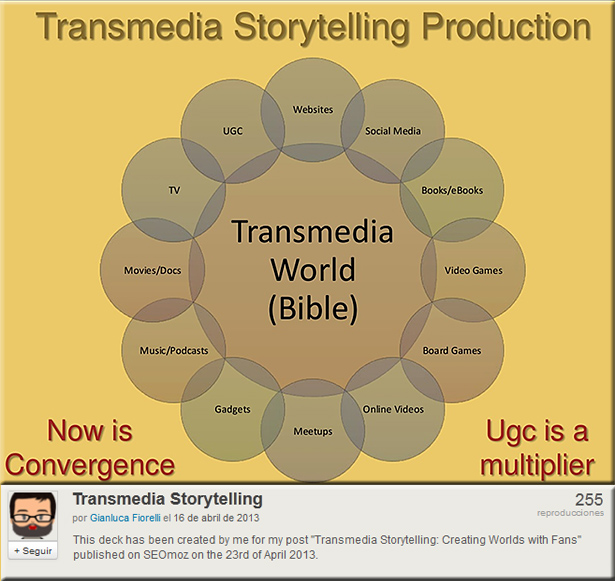
TransmediaStoryProduction-April2013

From DSC:
The word Bible is here not quite I think of as the Bible…but you’ll get the point if you review Gianluca’s presentation.
.

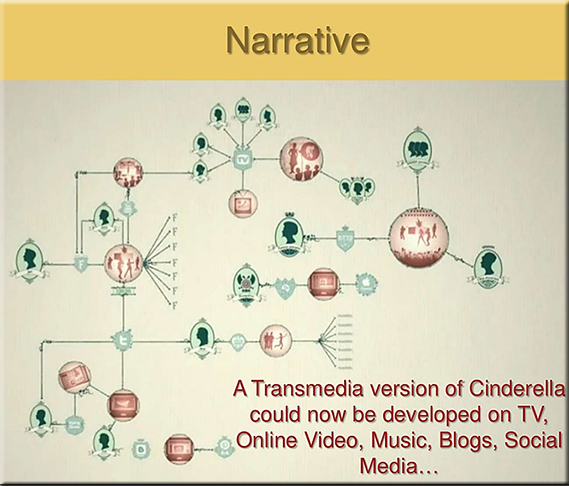
TransmediaStoryProduction2-April2013

.

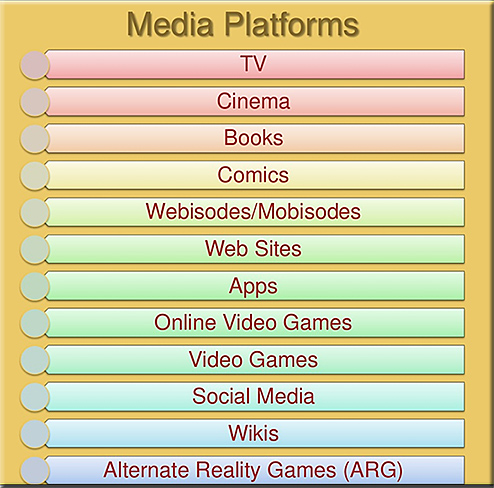
TransmediaStoryProduction3-April2013

.


Questions from DSC:

  • What opportunities might be presented by this type of trend within the worlds of education/training? (i.e. within K-12, higher ed, the corporate world)
  • What sorts of streams of contents could be created for educational/training-related purposes?
  • What sorts of open doors are now present within the world of communications? For a church, a school, a college, a business?
  • How can we incorporate the use of story more effectively in our teaching and learning environments? (If we could do this, we could greatly increase our students’ ROI.)


How to publish an e-book: Resources for authors — by Jane Friedman
.

E-Book Publishing 101

.

Lynda.com
http://www.lynda.com/eBooks-training-tutorials/1310-0.html

UpsideLearning.com
http://www.upsidelearning.com/free-elearning-ebooks.asp

TOC 2013, Matt MacInnis, “Unbound”
https://www.youtube.com/watch?v=pnSvEz8oqpI

McGraw-Hill to Debut Adaptive E-Book for Students
http://blogs.wsj.com/digits/2013/01/07/mcgraw-hill-to-debut-adaptive-e-book-for-students/

The object formerly known as the textbook — from The Chronicle by Jeff Young
http://chronicle.com/article/Dont-Call-Them-Textbooks/136835/

The Professor as Digital Author and Publisher: Creating and Delivering E-Textbooks with iBooks Author and iTunes U – Room design and furniture provided by Herman Miller
http://www.educause.edu/eli/events/eli-annual-meeting/2013/professor-digital-author-and-publisher-creating-and-delivering-e-textbooks-ibooks-author-a

McGraw-Hill & Kno offer a peek into the future of textbooks: They’re dynamic, vocal, adaptive & bring stats to studying – from techcrunch.com by Rip Empson
http://techcrunch.com/2013/01/08/mcgraw-hill-kno-offer-a-peek-into-the-future-of-textbooks-theyre-dynamic-vocal-adaptive-bring-stats-to-studying/


Innovation U — from Southern New Hampshire University by Michelle E. Dunn, Editor

Excerpt:

Blowing Up the Business Model
SNHU has a history of innovation that includes establishing satellite campuses and launching a groundbreaking three-year Honors Program in Business. But more recent initiatives have placed SNHU at the forefront of a movement to fundamentally change American higher education and earned it acclaim from the noted business magazine Fast Company, which placed SNHU 12th on its recent World’s 50 Most Innovative Companies list. Ranked alongside business giants such as Apple, Google, Facebook and Starbucks, SNHU was the only university on the list.

In the Fast Company article highlighting SNHU’s forward thinking, President Paul LeBlanc acknowledged that innovation is imperative to survival in a rapidly changing higher education landscape.

“We want to create the business model that blows up our current business model,” he told the magazine, “because if we don’t, someone else will.”

…

The Innovation Lab
Imagine a new education model that would enable students to earn an SNHU associate degree for less than $3,000 per year.

Making that model a reality is the goal of the SNHU Innovation Lab, an educational incubator that is working to reduce costs, increase access and provide transformational experiences for students who have been marginalized by traditional higher education.

Established last November and staffed by four SNHU academic and technology experts, the Innovation Lab is spearheading the Pathways Project, an initiative that will seek to educate 5,000 disadvantaged students in the next five years. Slated to launch this fall, the project’s pilot degree program will apply a competency-based approach that leverages technology, community support, social networking and strong assessment.


Also see:


BII REPORT: Here’s why the “second screen” industry is set to explode — BusinessInsider.com

BII REPORT: Here’s why the “second screen” industry is set to explode — BusinessInsider.com

Excerpt:

Here’s why the second screen industry will ultimately succeed:

  • Usage is growing rapidly
  • And mass acceptance isn’t even necessary
  • Second screen isn’t really a new activity
  • Second screen apps and sites are bridges


From DSC:
As this article alludes to, I wouldn’t rule the living room out in terms of where interactive, multimedia-based, educationally-related, second screen-based applications will turn up (apps backed up by data mining, AI, and opportunities for social learning). This area is poised for some serious growth. 


The Living [Class] Room -- by Daniel Christian -- July 2012 -- a second device used in conjunction with a Smart/Connected TV

 
© 2025 | Daniel Christian