Top Resources For Students To Discover Real World Problems and Issues

Top Resources For Students To Discover Real World Problems & Issues — from edtechreview.in by Saniya Khan

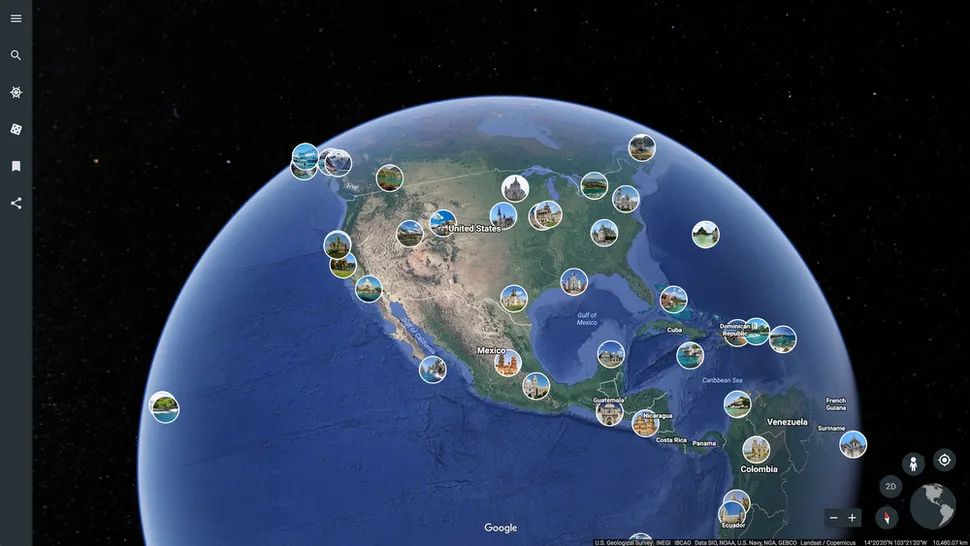
Are you looking for ways to help students learn about world issues: climate change, cultural diversity, biodiversity, education, water crisis, [homelessness] and more to build awareness about global issues and develop global competence?


IAALS’ Comment to the Michigan Supreme Court on Virtual Proceedings and Lessons Learned from the Pandemic — from legaltechmonitor.com by Broke Meyer and Natalie Anne Knowlton

Excerpt:

IAALS, a nonpartisan, non-profit research organization, looks at ways to improve the legal system, specifically in the areas of civil justice, family justice, the judiciary, legal education, and the legal profession. IAALS has been monitoring court practices around the country as it relates to policies around virtual proceedings. As part of our Paths to Justice Summit Series, IAALS has held several virtual convenings with a diverse group of experts and stakeholders across the justice systems. From those convenings, IAALS published two issue papers, “Learning from this Nationwide Pilot Project—Reducing the Costs and Delays of Civil Litigation” and “Learning from this Nationwide Pilot Project—Ensuring Access to Justice in High-Volume Cases.” Both papers focus on lessons learned, upcoming challenges, and areas for further research. In this spirit, we hope to provide a broad perspective on the importance of retaining some of the virtual proceeding processes put in place during the pandemic.

After many years of urging reform in these cases, we have witnessed incredible innovation and adaptability in the Michigan court system during a crisis. IAALS and other leaders in civil justice reform have urged many of these reforms—such as remote hearings—for years, and we have now seen these innovations happen on the ground. Michigan should capitalize on the unique opportunity to evaluate and learn from these changes to improve access to justice.


From DSC:
The articles below made me wonder…what will lawyers, judges, and legislators need to know about Bitcoin, Ethereum, and other cryptocurrencies? (#EmergingTechnologies)


Five Tips for Launching an Online Writing Group — from scholarlyteacher.com by Kristina Rouech,  Betsy VanDeuesen, Holly Hoffman, & Jennifer Majorana — who are all from Central Michigan University

Excerpt:

Making time for writing can be difficult at any stage of your career. Pushing writing aside for grading, lesson planning, meeting with students, and committee work is too easy. However, writing is a necessary part of our careers and has the added benefit of helping us stay current with our practice and knowledge in our field. Lee and Boud (2003) stress that groups should focus on developing peer relationships and writing identity, increasing productivity, and sharing practical writing. Online writing groups can help us accomplish this. With the impact of the COVID-19 pandemic, working online has become a necessity, but it can take time to figure out what works best for you and your writing colleagues. We recommend five tips to help you establish an online writing group that is productive and enjoyable for all participants.


Surviving Among the Giants — from chronicle.com by Scott Carlson
As growth has become higher ed’s mantra, some colleges seek to stay small.

Excerpts:

The pressures on the higher-education business model are changing those attitudes. The Council of Independent Colleges’ fastest-growing initiative is the Online Course Sharing Consortium, which allows small colleges to offer certain courses to students at other institutions. Currently, there are 2,200 enrollments among almost 6,000 courses on the platform.

“The higher-ed business model is broken,” says Jeffrey R. Docking, who has been president of Adrian College for 16 years. “But where it’s most broken — and the first ones that are going to walk the plank — are the small private institutions. The numbers just don’t work.” Combining some backroom functions or arranging consortial purchases is just “dabbling around the edges” — and won’t get close to driving down the cost of tuition by 30 to 40 percent over the next several years, which is what Docking believes is necessary.

From DSC:
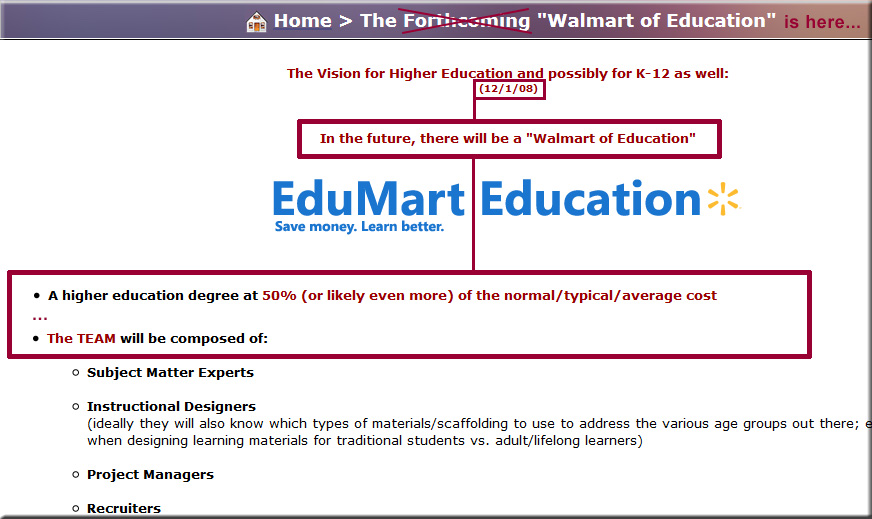
Docking’s last (highlighted) sentence above reminds me of what I predicted back in 2008 when I was working for Calvin College. The vision I relayed in 2008 continues to come to fruition — albeit I’ve since changed the name of the vision.

Back in 2008 I predicted that we would see the days of tuition being cut by 50% or more

From DSC (cont’d):
I was trying to bring down the cost of higher education — which we did with Calvin Online for 4-5 years…before the administration,  faculty members, and even the leadership within our IT and HR Departments let Calvin Online die on the vine. This was a costly mistake for Calvin, as they later became a university — thus requiring that they get into more online-based learning in order to address the adult learner. Had they supported getting the online-based learning plane off the runway, they could have dovetailed nicely into becoming a university. But instead, they dissed the biggest thing to happen within education in the last 500 years (since the invention of the printing press). 

Which brings me to one last excerpted quote here:

“For so many years,” Docking says, “all of these really smart people in Silicon Valley, at the University of Phoenix, at for-profits were saying, We’re going to do it better” — and they came around with their “solutions” in the form of MOOCs, or massive open online courses, and other scaling plans. Small colleges didn’t want to hear it, and, Docking says, maybe it was to their peril.


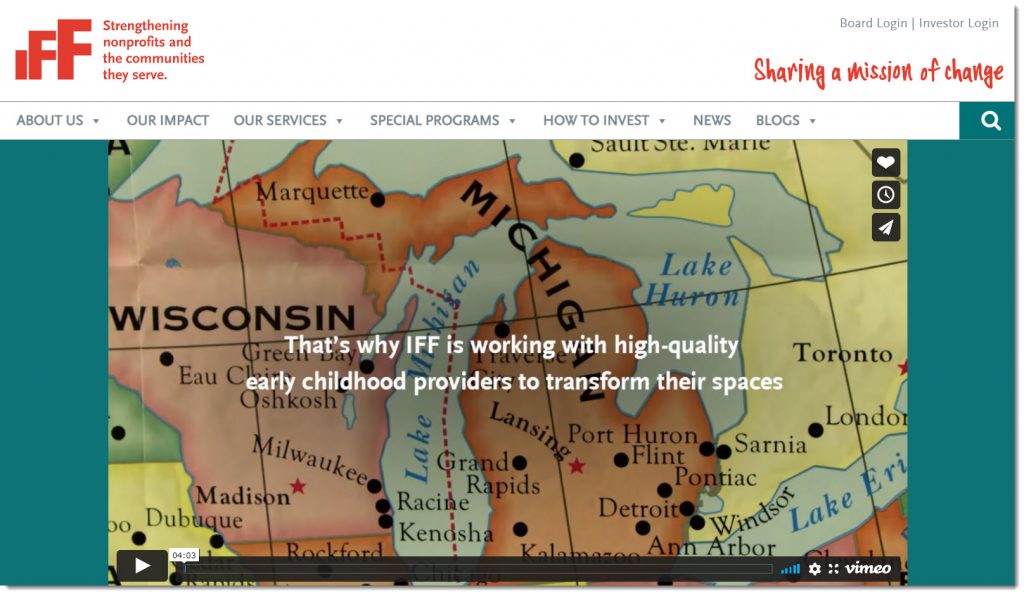
Nice work by IFF for early childhood learning spaces in MI

Excerpt from the IFF website:

Learning Spaces
IFF Learning Spaces aims to increase capacity and improve access to quality early childhood education (ECE) in Detroit, MI and Southeast Grand Rapids, MI.

The free program offers community-based ECE providers:

  1. Grants and consulting services to improve ECE facilities and transform spaces into safe and inspiring learning environments, laying the foundation for positive early childhood experiences.
  2. Technical assistance

Given COVID-19 and its long-term implications, IFF experts are on the ground with Detroit- and Southeast Grand Rapids-based ECE providers to assess facilities and provide funding to align with mandated state guidelines.


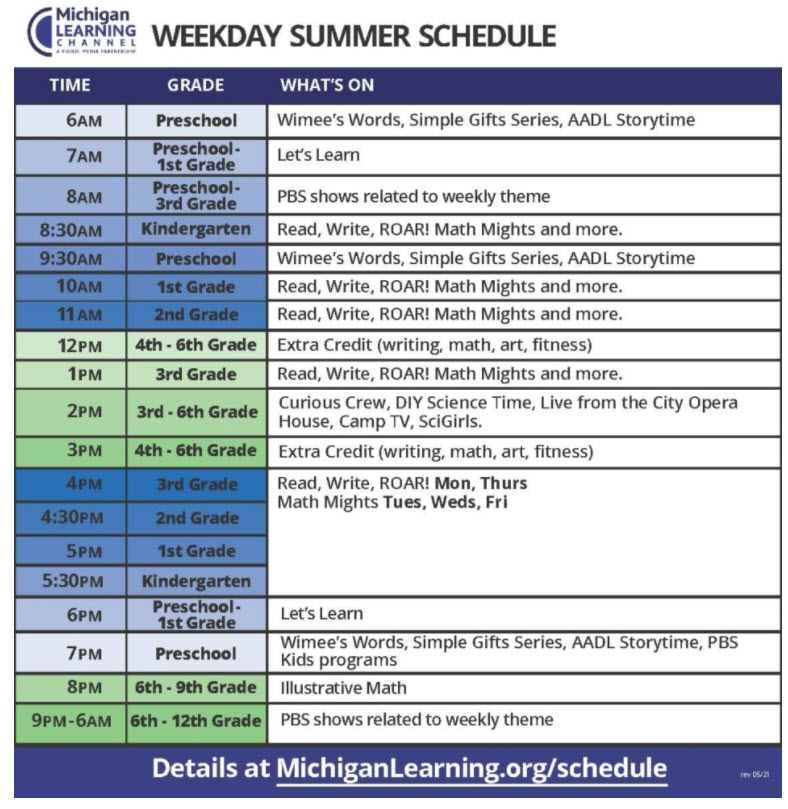
The Michigan Learning Channel is now available through your antenna on ALL Michigan PBS stations! 

The weekday summer 2021 schedule for the Michigan Learning Channel


New Research: Flipped Classrooms Improve Student Academics and Satisfaction — from techlearning.com by Erik Ofgang
A new analysis of more than 317 studies found flipped classrooms to be tremendously successful although a partially flipped classroom might be best of all.

Excerpt:

In a meta analysis recently published in the Review of Educational Research, Bredow and her co-authors examined 317 high-quality studies with a combined sample size of  51,437 college students in which flipped classes were compared to traditional lecture classes taught by the same instructors. They found significant advantages for flipped versus traditional lecture in terms of academics, interpersonal outcomes, and student satisfaction.

But there were also some surprises in where and when flipped classrooms worked.

From DSC:
I love the idea of the flipped classroom due to its powerful ability to turn over more choice and more control to the students. They have much more control over the pacing of the delivery of content.


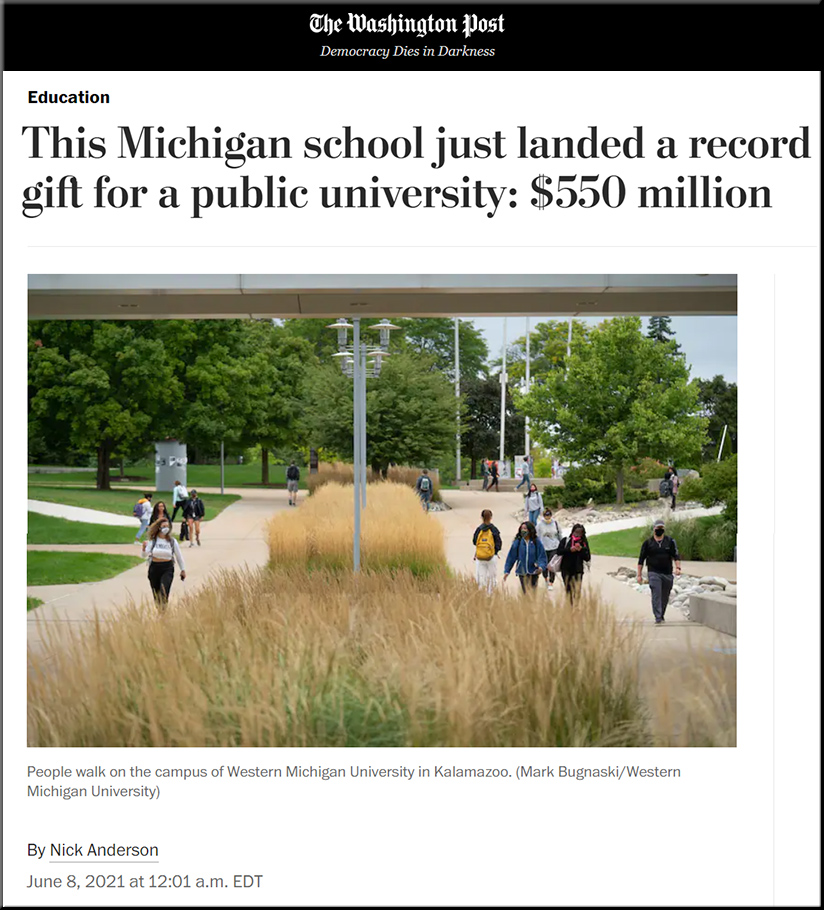
This Michigan school just landed a record gift for a public university: $550 million -- from washingtonpost.com by Nick Anderson

This Michigan school just landed a record gift for a public university: $550 million — from washingtonpost.com by Nick Anderson

Excerpt:

Western Michigan University, usually overshadowed by certain other state schools in Ann Arbor and East Lansing, announced Tuesday that it has landed the largest private gift ever to a public university: $550 million.

The blockbuster donation to the university in Kalamazoo, from anonymous Western Michigan alumni, eclipses the previous record of $500 million on a list kept by the Chronicle of Higher Education.


Michigan appeals to former teachers as districts face ‘dire’ shortage — from mlive.com by Kayla Miller
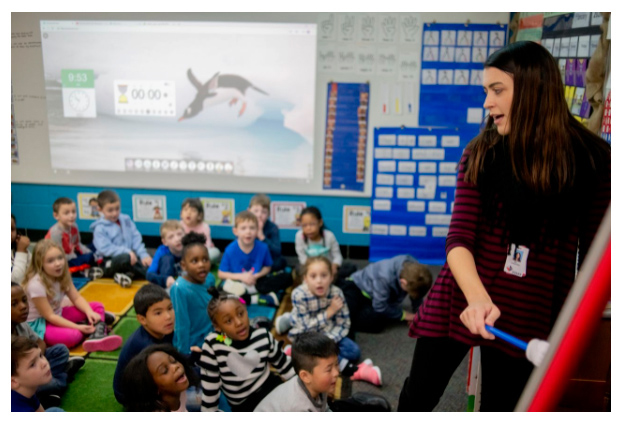
Kindergarten teacher Melissa Sanborn instructs students Kindergarten teacher Melissa Sanborn instructs students…Thursday, Jan. 23, 2020 at Cook Elementary School in Grand Blanc. (Jake May | MLive.com) Jake May | MLive.com

Excerpt:

Looking ahead to August, Beecher Community School District is expecting to be short about a quarter of their needed teaching staff for the 2021-22 school year.

The Flint-area district is one of many schools across Michigan fighting to keep educators in classrooms amid a statewide teacher shortage. The Michigan Department of Education (MDE) is now appealing to former teachers to get recertified and back to work.

David Crim, spokesperson for the Michigan Education Association, said multiple factors are keeping people from pursuing teaching and forcing young teachers to leave the profession.

“There’s no respect for teachers, no respect for the profession and poor compensation,” Crim said. “We have the perfect storm.”

From DSC:
It feels like there are major changes occurring throughout the K-12 learning ecosystems out there. It will be interesting to see what shakes out from this period of disruption.

By the way, those with little respect for teachers clearly have never taught themselves. Teaching is a very difficult profession. You try providing personalized learning to 25-30+ students at a time. Once you begin to scratch the surface, you’re retiring. We need to continue to try to share our knowledge, learnings, effective pedagogies/research, growth, tools, contacts, and more to help the next generation of teachers, students, administrators, and leaders.

Personally, I would like to see teachers have far more agency themselves. Don’t straight jacket them so much with standardized testing every ___ weeks/months. And allow more choice and control for the students (where possible). And allow the damn trains to slow down and/or vary their pace — allow them to stop if necessary for a student or a group of students. 

K-12 education in America is a like a quickly moving train that stops for no one.

I don’t see real personalized learning occurring until more technologies get involved/integrated into the classrooms out there — things like learner preferences, cloud-based learner profiles, AI and more.


From DSC:
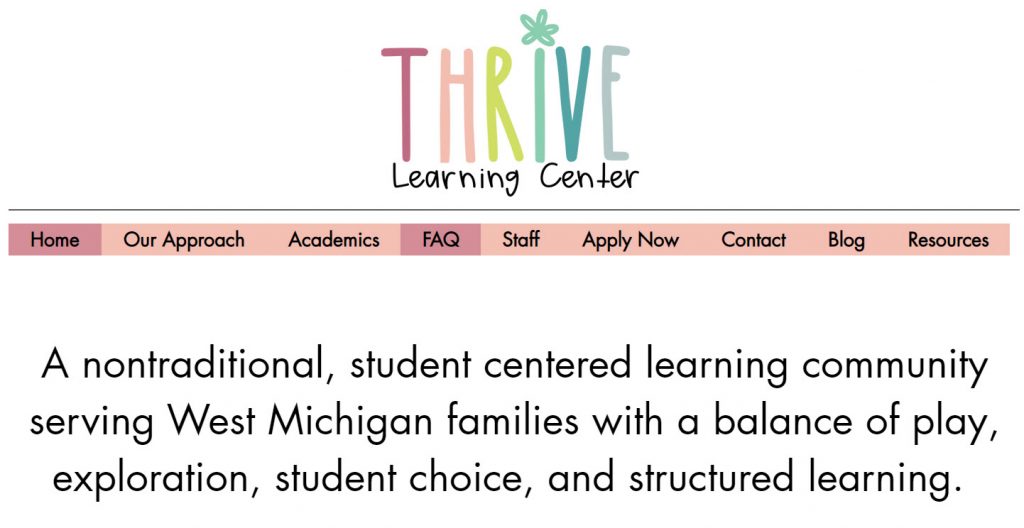
My wife recently told me about The Thrive Learning Center. Though we don’t have any of our kids there, it looks very interesting to me! They offer play, choice, agency, a learning community, a chance to pursue one’s interests, and more! I wish we had seen this several years ago. But maybe it will help someone else out there reenvision what learning could look and be like.


The Thrive Learning Center -- offering a student-centered learning community-- full of choice and agency.


From DSC:
I read an interesting article out at Inside Higher Ed from the other day:

Rejecting Remote Proctoring — from insidehighered.com by Elizabeth Redden
University of Michigan Dearborn made a universitywide decision to reject remote proctoring and invest in faculty development instead.

At the same time many other colleges were considering whether to employ the technologies, UM Dearborn’s leadership made the choice that eproctoring was unacceptably invasive, at least when it comes to students who hadn’t signed up for that kind of surveillance.

From DSC:
Lower stakes assessments offered with a greater variety of ways to check for mastery. That fits in with what I’m reading about re: the topic of Universal Design for Learning (UDL), which offers:

  • Multiple methods of engagement
  • Multiple methods of representation
  • Multiple methods of action & expression <– to demonstrate what they are learning

It also reduces anxiety — something that’s needed in this period of time.

 
© 2025 | Daniel Christian