Nurturing Non-STEM Gifted Kids and Meeting Their Needs — from raisinglifelonglearners.com by Colleen Kessler

Excerpt:

But what about that kid who doesn’t want a new chemistry set or microscope for Christmas? What about the gifted kid who doesn’t really get your science puns? What about the brilliant child who isn’t into STEM at all?

They’re rare, but they’re out there. Artists, chefs, readers, writers, dancers, musicians, linguists, all of the above. Kids who like space just fine, but like nature even more. Gifted kids who can crush their math work but would rather crush pigments. Gifted kids who can learn to code, but whose heart swells when guitar strings strum. Brilliant babes who appreciate the arts, the stories, or are just filled with curiosity that isn’t subject-specific. You see, intelligence isn’t a stereotype. An IQ score isn’t like a horoscope. Scoring a few standard deviations above the norm doesn’t dictate your personality, your likes, dislikes, talents, passions, or hobbies. It means your brain processes information differently than the majority of the population. That’s really it. Intelligence and brilliance are as likely to be found on a stage as they are in a lab. For every Einstein there is a Beethoven, for every Musk there’s a Spielberg.

What Can You Recommend For Students Who Finish Their Work Early? — from teachthought.com

Excerpt:

How to respond when students finish their work early is a classic teacher challenge.

Most of it boils down to lesson design–creating learning opportunities where students are naturally funneled toward extending, improving, and sharing their work so that ‘stopping points’ are more of a matter of scheduling than learning itself.

Motivating your child with ADHD: 7 tips for your homeschool — from raisinglifelonglearners.com by Colleen Kessler

Excerpt:

This series is all about homeschooling a child with ADHD. Today, we are discussing 7 of our best tips for motivating a child with ADHD.

Preparing Kids With Real-World Skills via Ed-Tech — from emergingedtech.com by Kelly Walsh

Excerpt:

Educational technologies enable children to learn things on a whole new level, broadening their minds and their capabilities. The practical applications alone make ed-tech a highly valuable tool in the classroom setting, but these technologies also can enhance kids’ skills as well as their emotional and cultural awareness and intelligence, which can better prepare them for real-world situations and scenarios.

Edumilestones Has Launched Career Lab™ For Progressive Schools — from edtechreview.in

Excerpt:

Edumilestones, a pioneer in career guidance platform has now launched a next-generation Career Lab™ for schools. Based on 11 years of experience in career counselling industry, this technology is set to help students to identify and execute their career goals with clarity and confidence.


Accelerated Digital Skills and the ‘Bootcamp Boom’. — from holoniq.com
The market for accelerated digital skills is stepping up to a whole new level. Bootcamps, among others, are evolving rapidly to meet the opportunity.

Excerpt:

Tech Bootcamps re-skilled and up-skilled over 100,000 professionals globally in 2021, up from less than 20,000 in 2015. We expect this number to reach over 380,000 by 2025 representing over $3B of expenditure with significant upside as tech up-skilling models and modes overlap and converge. Governments, employers, universities and colleges everywhere are embracing rapid, high ROI training to build capacity in software, marketing, cyber and tech sales to drive their economies and growth.

Also from holoniq.com, see:

Also relevant/see:


From DSC:
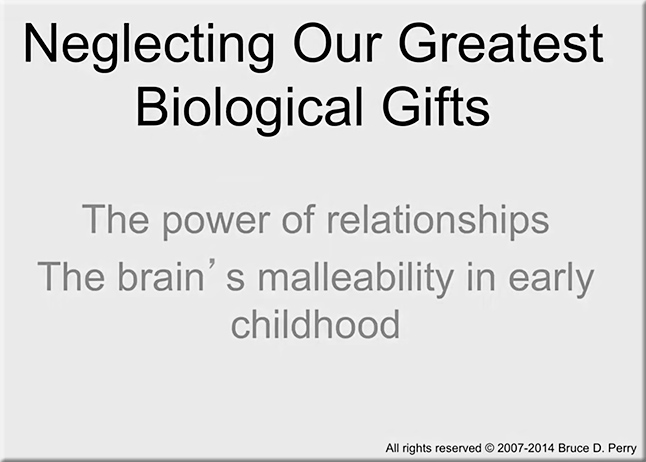
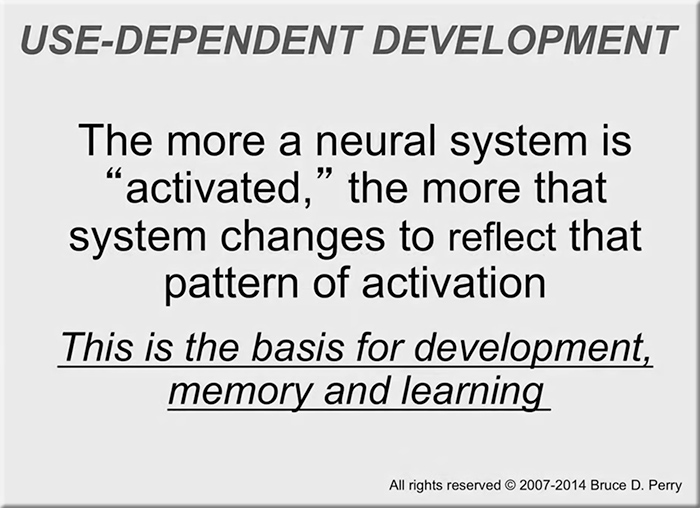
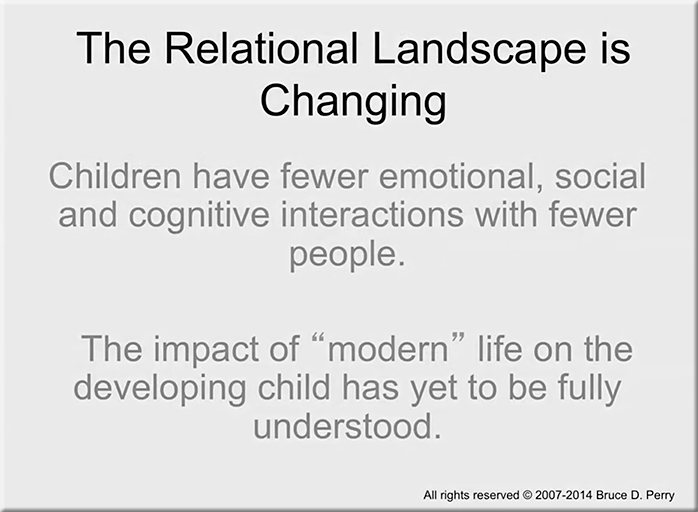
One of my sisters is a Professor of Psychology and she highly recommended that I check out the work of Dr. Bruce D. Perry. Below is an example video that was recorded on October 25, 2014 as part of the 25th Anniversary Chicago Humanities Festival, Journeys. I included some excerpted slides in this posting to give you a flavor of portions of this talk.

Description (emphasis DSC):

Each of us takes the same journey from birth to consciousness—but none of us recalls it. This early stage of life is crucial; Sigmund Freud famously obsessed over it, as do millions of parents every day. What goes on cognitively during that time, and what can parents—and other adults—do to further promote infant well-being? Join renowned psychiatrist Bruce D. Perry, recipient of the 2014 Dolores Kohl Education Prize, for this discussion of early-childhood brain development and its long-term importance.

Social & Emotional Development in Early Childhood [CC]


Tech & Learning Magazine Names the Winners of the Best of 2021 — from techlearning.com
Tech & Learning’s judges deemed these products as standouts for supporting teaching and learning in 2021

Excerpt:

Tech & Learning magazine has named the winners of the Awards of Excellence: Best of 2021 contest, which recognizes educational technology that exceptionally supported teachers and students last year.

 The contest focused on outstanding products that supported education this past year no matter the learning environment, whether face-to-face, remote, or anything in between. Eligible products included hardware, software, curriculum, and more, all divided by grade levels to make it easier to find the solutions you need.

 Each nominee answered the following questions: What specific problem does this product solve? How did your product exceptionally support teaching and learning in 2021? How does your product address the challenges facing education today?


DeepMind Says Its New AI Has Almost the Reading Comprehension of a High Schooler — from futurism.com by Victor Tangermann
A provocative claim!

Excerpt:

Alphabet’s AI research company DeepMind has released the next generation of its language model, and it says that it has close to the reading comprehension of a high schooler — a startling claim.

It says the language model, called Gopher, was able to significantly improve its reading comprehension by ingesting massive repositories of texts online.


The Humanities May Be Declining at Universities — But They’re Thriving on Zoom — from edsurge.com by Rebecca Koenig

Excerpt:

Throughout the pandemic, versions of this close-reading conversation have taken place week after week. Organized through new nonprofits and small startups including the Catherine Project, Night School Bar and Premise, they bring together adults who want to spend their free time talking to strangers about literature and philosophy.

It sounds at first like an ambitious book club—except for the fact that many of these seminars are organized and led by college professors, some so eager to participate that they do it for free.

“Mostly it’s a way for them to do a kind of teaching they can’t do at their regular jobs,” explains Zena Hitz, founder of the Catherine Project and a tutor (faculty member) at St. John’s College in Annapolis, Maryland.

From DSC:
I’ve often thought that online-based learning may be the thing that saves the liberal arts (i.e., available throughout one’s lifetime and would be far less expensive). It would be ironic though, as many liberal arts institutions have not been proponents of online-based learning.


Top 7 Artificial Intelligence Trends In 2022 — from techfunnel.com by Anirudh Menon

Excerpt:

If we look at the last couple of years, we have seen a significant leap in the way Artificial Intelligence is becoming an integral part of many organizations’ business plans. Already the journey of digital transformation has catapulted thanks to Machine Learning and Artificial Intelligence and because of the pandemic situation, we saw significant innovation in the technology front, which will reach new heights in the year 2022 and further.

As strongly claimed by Sundar Pichai, CEO of Google Inc, the impact of artificial intelligence will be far greater than fire and electricity on humanity. Well, it might sound a bit exaggerated but what it implies is that the year 2022 is going to see new developments in this space and it will constantly create new benchmarks.


Top 5 Language Learning Apps in 2021 — per Sinisa Sambolic DMM, 42matters, Zürich

  1. Duolingo: language lessons by Duolingo
    Downloads Over the Last 30 Days: 6,924,751
  2. Learn 33 Languages Free – Mondly by ATi Studios
    Downloads Over the Last 30 Days: 777,312
  3. ELSA Speak: Online English Speaking App for mobile by ELSA
    Downloads Over the Last 30 Days: 537,654
  4. Lingokids – kids playlearning™ by Lingokids – English Learning For Kids
    Downloads Over the Last 30 Days: 533,291
  5. Cake: Free expressions updated daily! by Cake Corp
    Downloads Over the Last 30 Days: 186,041

42matters is a leading provider of mobile app data and app store insights. 42matters facilitates a holistic overview of the mobile app market by leveraging its unique arsenal of machine learning algorithms to research every app and developer on the major app stores and connected TV channel stores. These include the Apple App Store, Google Play, Amazon App Store, Tencent Appstore, AppleTV App Store, Amazon Fire TV, and Roku Channel Store.


50 Sites & Apps for K-12 Education Games — from techlearning.com by Diana Restifo and David Kapuler
Game-based learning is a great way to integrate technology into the classroom while engaging kids with real learning.

Excerpt:

Game-based learning turns potentially tedious study time into an adventurous knowledge quest, complete with catchy soundtracks and digital rewards. It helps keep kids engaged with the subject matter and motivated to pursue greater expertise. Best of all, web- or app-based gameplay integrates easily into both online and in-person classes.

With the demise of Flash at the end of 2020, many favorite educational game sites went under. That’s why we decided to update our popular list below to include the latest and best sites and apps for K-12 education games. Many are free (or offer free basic accounts) and some provide progress tracking and analysis tools for teachers. All will help kids enjoy learning.

Also relevant/see the following resource and excerpt from Goldie Blumenstyk’s The Edge (from the Chronicle of Higher Education)

Creative Acts for Curious People: How to Think, Create, and Lead in Unconventional Ways — by Sarah Stein Greenberg

Excerpt:

Greenberg also makes a compelling case for the “playful and joyous” approaches the d.school has been championing, like the secret handshake or building several prototypes of an ideal chair using tools like cardboard, pipe cleaners, and chewing gum and toothpicks. After so many months of loss and social deprivation, she told me last week, “those elements are more important than ever.”


8 ways to keep learning and developing new skills while at home — from babbel.com by Alice Austin
Being stuck inside doesn’t have to mean an end to personal development. Here’s how to keep learning new things while staying at home.

Excerpt:

Free Code Camp has been assembling a long list of courses that span multiple disciplines, from Data Science and Business to Personal Development and Art. They’re all Massive Open Online Courses (MOOCs), and they allow you to take university-created online classes through providers such as Coursera or Udacity.

So that class you missed out your first time going to college? Now would be the time to go back and really enjoy it.

There are tons of online tutorials on YouTube and many apps that can help you hone your skills. Yousician is an app that provides video tutorials to learn piano, guitar, bass and ukulele. There are other apps that specialize in one area, like Flowkey for piano, or SingTrue for vocals. Whatever instrument you have lying around, there are definitely resources out there for you to improve your skills.


What doors does this type of real-time translation feature open up for learning? [Christian]

From DSC:
For that matter, what does it open up for #JusticeTech? #Legaltech? #A2J? #Telehealth?


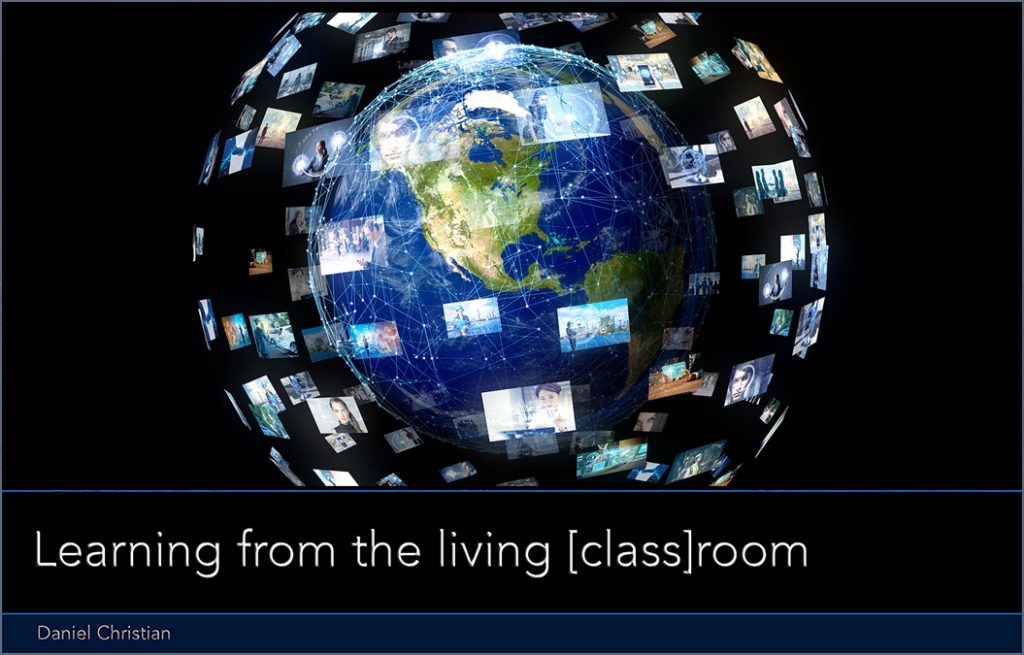
Learning from the living class room


Duolingo filed to go public — from techcrunch.com by Natasha Mascarenhas and Alex Wilhelm
The edtech unicorn reveals 129% 2020 revenue growth

Excerpt:

Duolingo, a Pittsburgh-based language learning business last valued at $2.4 billion, has officially filed to go public.


Zoom will have automatic translation in real time to videoconferences after buying the company Kites — from entrepreneur.com
Video calling platform Zoom bought a German startup specializing in language translation using Artificial Intelligence.

Excerpt:

Through its official blog , Zoom announced that they are in negotiations to acquire the company Karlsruhe Information Technology Solutions , abbreviated Kites . It is a German startup dedicated to the development of real-time machine translation solutions or MT, for its acronym in English.

Also see:

 
© 2025 | Daniel Christian