Coworking spaces team with universities to bridge the gap between classroom and practice — from gigaom.com by Jessica Stillman

Excerpt:

With tuition costs mounting, the national student loan burden growing and employers complaining about a lack of certain job skills, no one is really in love with the current university education system. But with frustration comes creativity, as initiatives of all sorts attempt to dream up a better way. Should we go back to an apprentice system? Is online learning the answer? How about re-imagining universities as coffee shops?

Excerpt from http://blog.eriin.com/tags/collaborative-workspace/

Essentially, Kennel is a collaborative workspace for creative entrepreneurs in Singapore. Set facing the fringe of a forest, with ceiling-to-floor glass windows spanning across the entire space, we like to think that Kennel lets you switch easily between the bustle of Dempsey Hill and the calm serenity of nature. We also love that the walls are covered in Ideapaint, with markers readily available around the entire space for you to write anything on the walls. It is clear that the space was designed for creativity and collaboration to thrive!

.

An alternative to incubators: the co-working space — from venturebeat.com by Genevieve DeGuzman

An alternative to incubators: the co-working space
.

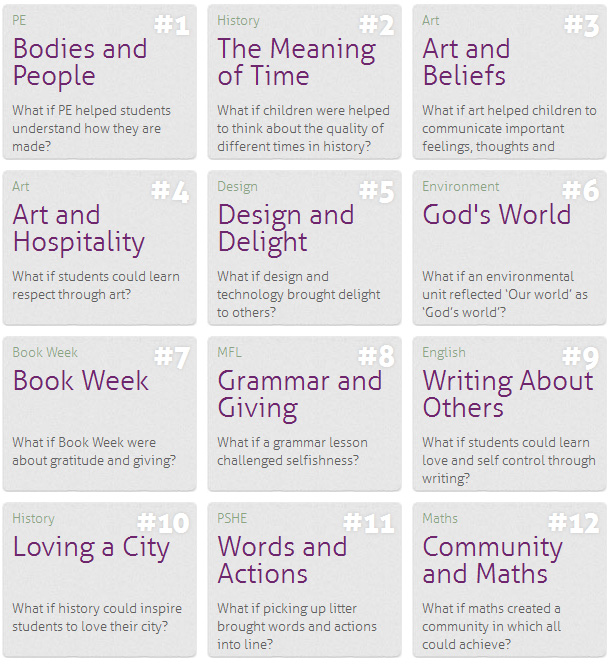
whatiflearning.co.uk -- Examples of connecting Christian faith and teaching across various ages and subjects.


Excerpt:

This site is for teachers who want their classrooms to be places with a Christian ethos whatever the subject or age group you teach. It explores what teaching and learning might look like when rooted in Christian faith, hope, and love. It does this by offering 100+ concrete examples of creative classroom work and an approach which enables you to develop your own examples.

…

‘What if Learning’ is a “distinctively Christian” approach developed by an international partnership of teachers from Australia, the UK and the USA. It is based on the premise that a Christian understanding of life makes a difference to what happens in classrooms. Its aim is to equip teachers to develop their distinctively Christian teaching and learning strategies for their own classrooms.

.

 Addendum on 4-17-12:


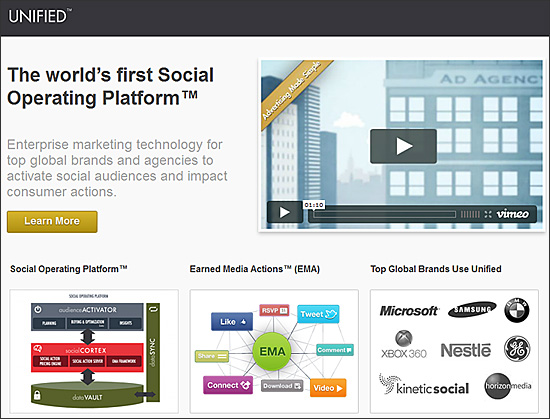
Unified opens an online university for social media marketers — from TechCruch.com by Anthony Ha


unifiedsocial.com

Services > Unified University

The social media landscape is complex and constantly evolving, leaving top global brands and agencies with the challenge of staying on top of the latest trends and best practices. Unified University is a first of its kind – an all-encompassing training, continuing education and certification program, complete with access to the industry leading best practices knowledge base. Unified University is designed to help marketing and agency executives become experts and internal thought leaders on social strategies, platform insights, earned media measurement, and more.

Through Unified University’s comprehensive training program, a social team can get certified on the Unified Social Operating Platform and learn about the latest advances in social advertising. Certification ensures that a team is up to date on the latest options within the social web, including the benefits of advertising across social ecosystems including Facebook, Twitter, LinkedIn, Google+, StumbleUpon and more.

Teams learn that brands may require very different strategies to ultimately achieve similar results. Unified University assures that teams know how to strategically represent brands across all social options while delivering high quality results and maximum ROI.

From DSC:
Is this a part of the future? If higher ed doesn’t respond more forcefully, I’d say so.

Along these lines, from page 408 of the Steve Jobs book:

One of Job’s business rules was to never be afraid of cannibalizing yourself. “If you can’t cannibalize yourself, someone else will,” he said.

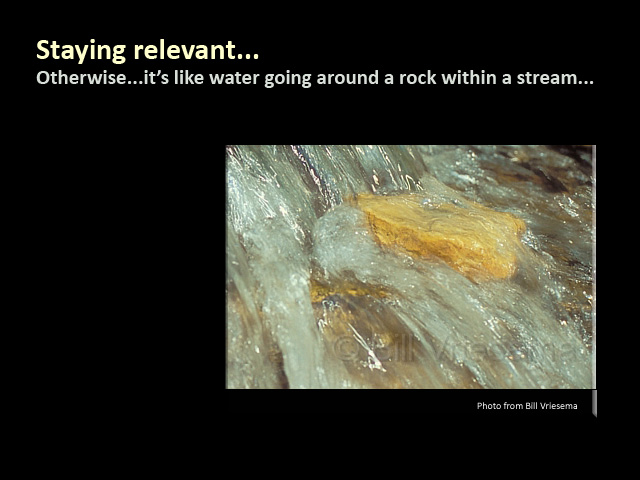
Innovate. Reinvent. Staying relevant. This goes for the accreditation agencies as well.

 Also see:


.

Staying Relevant

From DSC:
For those who don’t think that the conversation is moving outside of academia, here’s yet another example:


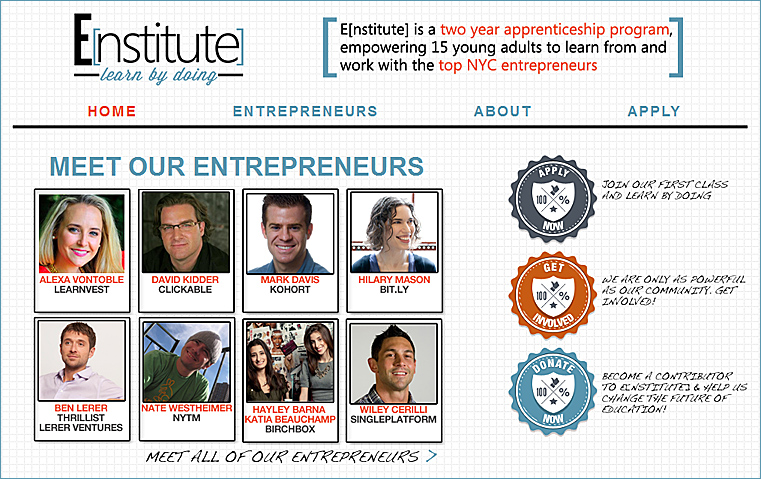
Enstitute U -- A community that educates and prepares Millennials to be valuable and actively participating members of the economy, and society at large, through apprenticeship, hyper-focused curriculum, and real-life projects that have real-life consequences.

.

E[nstitute] was founded on a very simple idea: If you want to be the best, you have to learn from the best. We are creating a community that educates and prepares Millennials to be valuable and actively participating members of the economy, and society at large, through apprenticeship, hyper-focused curriculum, and real-life projects that have real-life consequences.

E[nstitute] is a two-year educational program built on an apprenticeship model that provides an alternative path to traditional post secondary education. E[nstitute] is a full-time commitment.

Also relevant:

Young Black Males, Learning, and Video Games — from dmlcentral.net by Whitney Burke

.

As of 11/20/11 (~2:00pm EST)

.

As of 8/24/11:

usdebtclock.org

.

From DSC:
With the increase in globalization — and from what I’ve seen happening in the financial systems (i.e. how what happens in Europe affects the financial systems in the U.S./Asia/other and vice versa) — it seems clear that we are all in this boat together.  If that’s true, what does that mean for:

  • Businesses and economies around the world?
  • The ability of families and individuals to afford the increasing cost of getting a degree?
  • Higher educational systems — and business models — around the world?
  • How do we resolve such massive problems?
  • What does all of this mean for how we should be educating our students?


Addendum on 11/21/11:

  • Debt committee: Why $1.2 trillion isn’t enough — from money.cnn.com by Jeanne Sahadi
    Excerpts:
    That’s because under the most likely scenario, reducing deficits by $1.2 trillion won’t stop the accumulated debt from growing faster than the economy.
    …
    Thus, to stabilize the debt, Congress would need to pass a debt-reduction plan worth $4 trillion to $6 trillion, budget experts say.

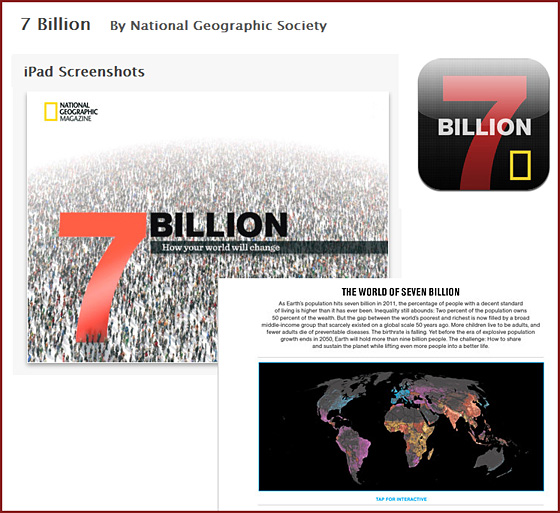
7 billion -- from the National Geographic Society

Also see:


5 ideas for responding to what kids want the nation to know about education — from The Innovative Educator by Lisa Nielsen

Excerpt:

In the session the focus was clear. Educators and the former principal (YAY for administrators) who attended wanted to know how we can hear the children and show them they matter, we love them, and we want to honor their unique passions, talents, interests, and abilities.  We discussed a lot of great ideas.  Here are five ways we discussed addressing what students want from education:

  1. Rather than bubbletests, measure student progress with personal success plans.
  2. Rather than report cards and transcripts allow students to showcase their learning with an authentic ePortfolio.
  3. Rather than work that only has the teacher as the audience, empower students to do real work that matters to them and has a real audience.
  4. Rather than telling students how to meet learning goals, empower them to drive their own learning as participant Deven Black explained he does (visit this link to see how).
  5. Have conversations with students about what their talents are.  You can use the videos in this article that feature students sharing stories about their talents.

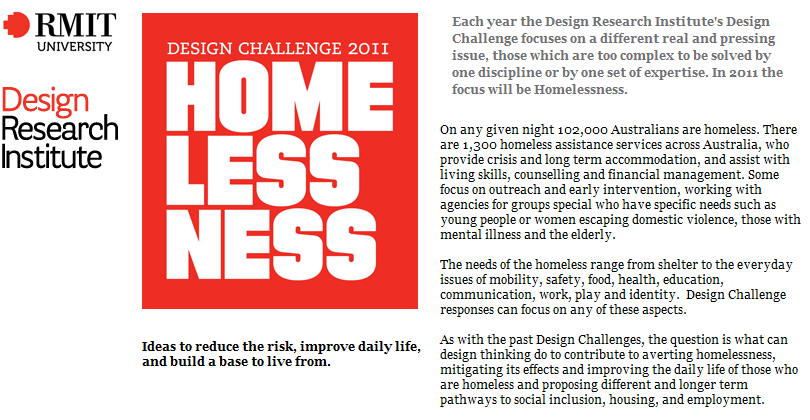
Design Challenge 2011: Homelessness

The Floating University

From their website:

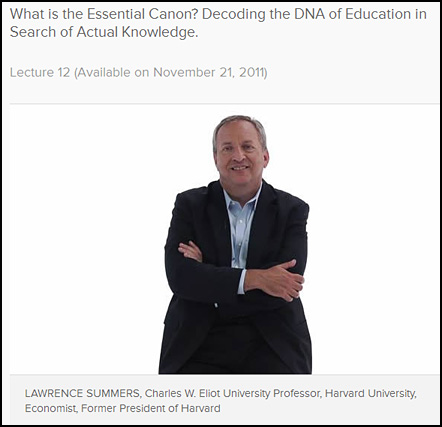
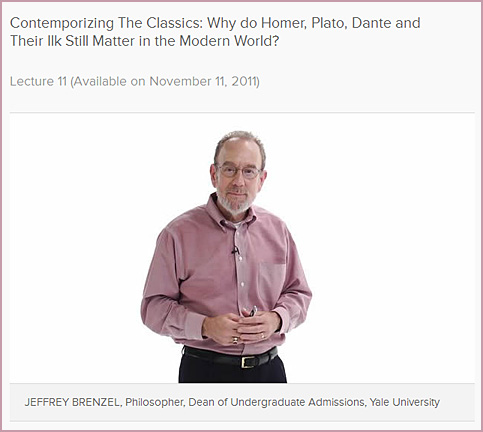
Great Big Ideas delivers the key takeaways of an entire undergraduate education. It’s a survey of twelve major fields delivered by their most important thinkers and practitioners. Each lecture explores the key questions in the field, lays out the methods for answering those inquiries and explains why the field matters. It is an effective introduction to thinking differently, and a primer in the diverse modes of problem solving essential for success in the 21st century.

A wide range of subjects are covered including Psychology, Economics, Biomedical Research, Linguistics, History, Political Philosophy, Globalization, Investing and more. Within each topic, we will discuss the most current, innovative ideas in the field, dissect them, and look at how they impact not only the world-at-large, but our own lives as well. How does Demography predict our planet’s future? How is Linguistics a window to understanding the brain? What are the fundamentals of successful Personal Finance and Investing? Each of these lectures will be presented by top experts from top institutions around the country.

Two example lectures:


From DSC:
I post this not because I believe they have the world’s best educators — they may or may not.  But rather, I post this to:

  1. Provide a great resource for those who love to learn — i.e. lifelong learners
  2. To show another example of the disruption that technologies / the Internet bring to higher education.  Such technologies bring affordable, new models and  learning opportunities into the higher ed landscape in a big way.


Also see:


Social networking meets problem solving — from MIT’s Technology Review by Tom Simonite
The website Jig wants to solve your needs—with a little help from your friends.

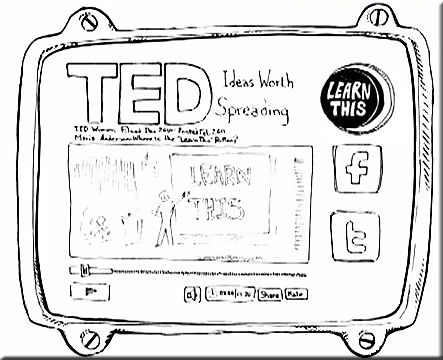
Ignite Great Lakes – Maria Andersen: Where’s the “Learn This” Button? — my thanks to Mr. Paul Simbeck-Hampson for this resource

Dr. Maria H. Andersen is the Learning Futurist for the LIFT Institute and a Math Professor at Muskegon Community College, where she organizes Ignite MCC. She writes the “Teaching with Tech” column for MAA Focus and has recently published articles in Educause Review and The Futurist. Lately she has been spending a lot of time building games for teaching math and musing about the future of learning and higher education. You can find Maria blogging on the Internet at TeachingCollegeMath.com or on Twitter at @busynessgirl.


Maria Andersen: Where's the "Learn This" Button?


SOCRAIT — a new learning layer on the Internet:

  • SOC for social
  • AI for artificial intelligence
  • IT for information technology


Kevin Slavin: How algorithms shape our world [TED]

Description:

Kevin Slavin argues that we’re living in a world designed for — and increasingly controlled by — algorithms. In this riveting talk from TEDGlobal, he shows how these complex computer programs determine: espionage tactics, stock prices, movie scripts, and architecture. And he warns that we are writing code we can’t understand, with implications we can’t control.

Relevant to mathematics; shaping our world; ethics; media; culture; society;
computer science; technologies; stock markets/business; architecture.

© 2025 | Daniel Christian