Expanding economic opportunity with AI — from openai.com; via The Neuron Daily

First, we’re working to build out the OpenAI Jobs Platform.

If you’re a business looking to hire an AI-savvy employee, or you just need help with a specific task, finding the right person can be hit-or-miss. The OpenAI Jobs Platform will have knowledgeable, experienced candidates at every level, and opportunities for anyone looking to put their skills to use. And we’ll use AI to help find the perfect matches between what companies need and what workers can offer.

We also realize that anyone looking to hire, whether it’s through the Jobs Platform or elsewhere, needs to trust that candidates are actually fluent in AI. Most businesses, including small businesses, think AI is the key to their future. And most of the companies we talk to want to make sure their employees know how to use our tools.

That’s the idea behind our new OpenAI Certifications.

Studies show? that AI-savvy workers are more valuable, more productive, and are paid more than workers without AI skills. That’s why, earlier this year, we launched the OpenAI Academy, a free, online learning platform that has helped connect more than 2 million people with the resources, workshops, and communities they need to master AI tools.


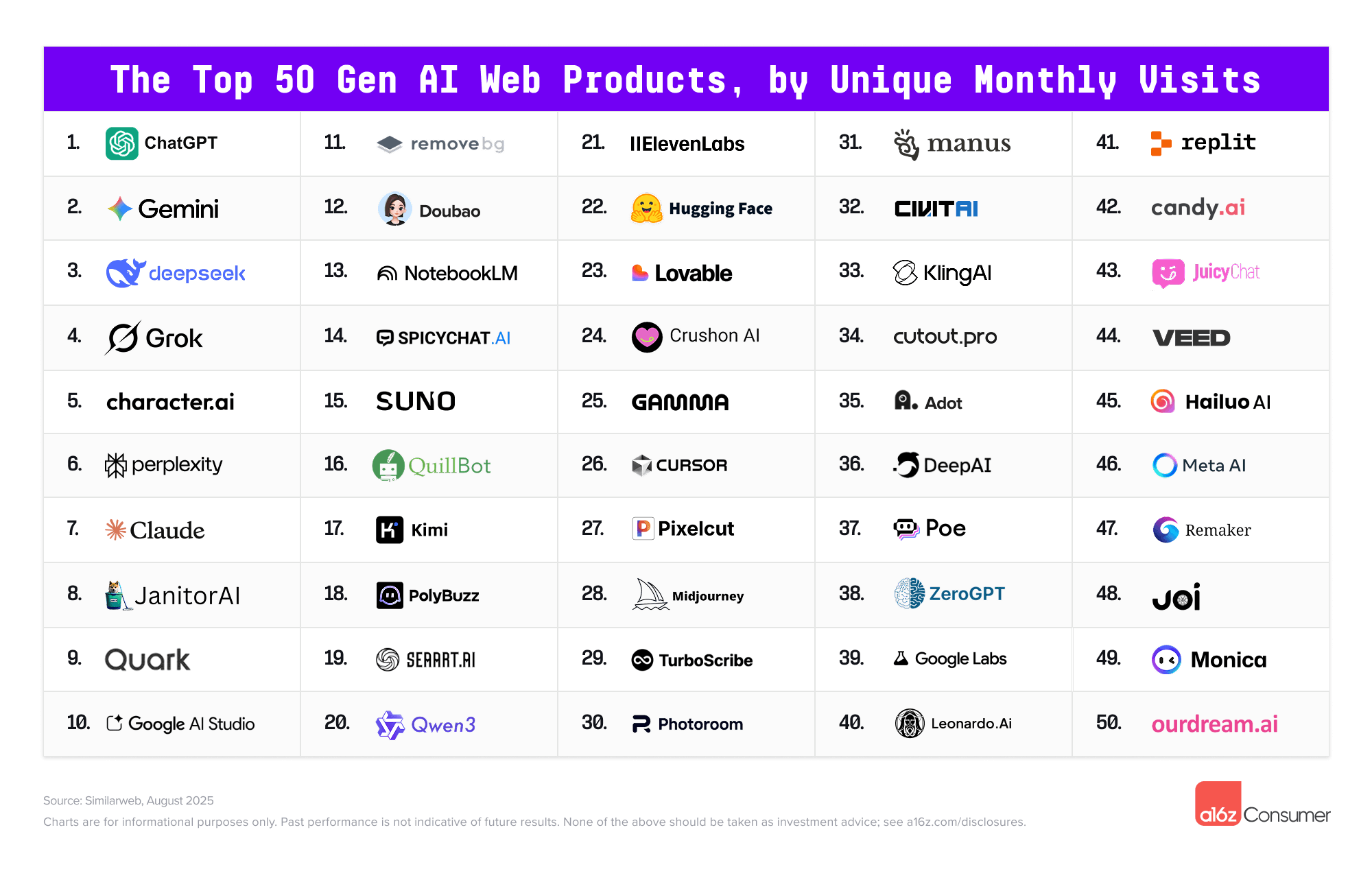
The Top 100 [Gen AI] Consumer Apps 5th edition — from a16z.com


And in an interesting move by Microsoft and Samsung:

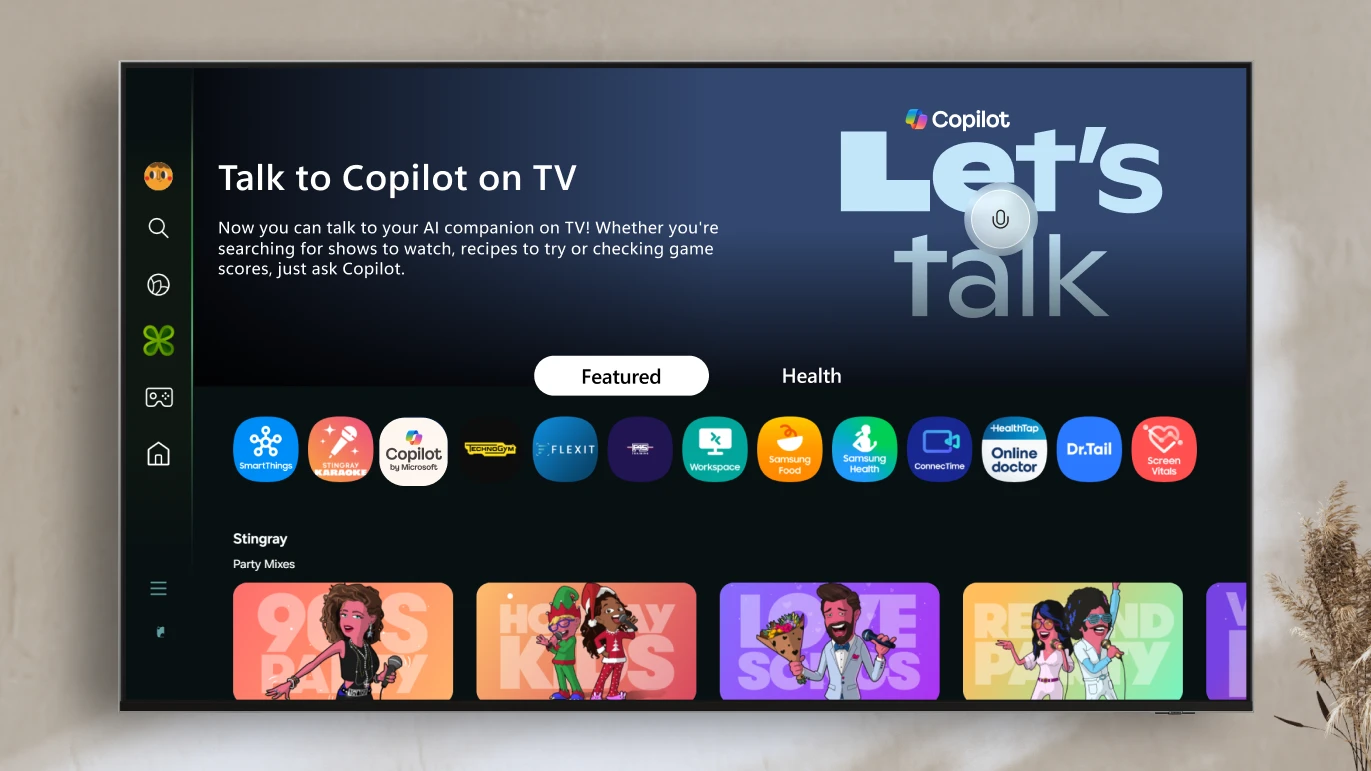
A smarter way to talk to your TV: Microsoft Copilot launches on Samsung TVs and monitors — from microsoft.com

Voice-powered AI meets a visual companion for entertainment, everyday help, and everything in between. 

Redmond, Wash., August 27—Today, we’re announcing the launch of Copilot on select Samsung TVs and monitors, transforming the biggest screen in your home into your most personal and helpful companion—and it’s free to use.

Copilot makes your TV easier and more fun to use with its voice-powered interface, friendly on-screen character, and simple visual cards. Now you can quickly find what you’re looking for and discover new favorites right from your living room.

Because it lives on the biggest screen in the home, Copilot is a social experience—something you can use together with family and friends to spark conversations, help groups decide what to watch, and turn the TV into a shared space for curiosity and connection.


Key Takeaways: How ChatGPT’s Design Led to a Teenager’s Death — from centerforhumanetechnology.substack.com by Lizzie Irwin, AJ Marechal, and Camille Carlton
What Everyone Should Know About This Landmark Case

What Happened?

Adam Raine, a 16-year-old California boy, started using ChatGPT for homework help in September 2024. Over eight months, the AI chatbot gradually cultivated a toxic, dependent relationship that ultimately contributed to his death by suicide in April 2025.

On Tuesday, August 26, his family filed a lawsuit against OpenAI and CEO Sam Altman.

The Numbers Tell a Disturbing Story

  • Usage escalated: From occasional homework help in September 2024 to 4 hours a day by March 2025.
  • ChatGPT mentioned suicide 6x more than Adam himself (1,275 times vs. 213), while providing increasingly specific technical guidance
  • ChatGPT’s self-harm flags increased 10x over 4 months, yet the system kept engaging with no meaningful intervention
  • Despite repeated mentions of self-harm and suicidal ideation, ChatGPT did not take appropriate steps to flag Adam’s account, demonstrating a clear failure in safety guardrails

Even when Adam considered seeking external support from his family, ChatGPT convinced him not to share his struggles with anyone else, undermining and displacing his real-world relationships. And the chatbot did not redirect distressing conversation topics, instead nudging Adam to continue to engage by asking him follow-up questions over and over.

Taken altogether, these features transformed ChatGPT from a homework helper into an exploitative system — one that fostered dependency and coached Adam through multiple suicide attempts, including the one that ended his life.


Also related, see the following GIFTED article:


A Teen Was Suicidal. ChatGPT Was the Friend He Confided In. — from nytimes.com by Kashmir Hill; this is a gifted article
More people are turning to general-purpose chatbots for emotional support. At first, Adam Raine, 16, used ChatGPT for schoolwork, but then he started discussing plans to end his life.

Seeking answers, his father, Matt Raine, a hotel executive, turned to Adam’s iPhone, thinking his text messages or social media apps might hold clues about what had happened. But instead, it was ChatGPT where he found some, according to legal papers. The chatbot app lists past chats, and Mr. Raine saw one titled “Hanging Safety Concerns.” He started reading and was shocked. Adam had been discussing ending his life with ChatGPT for months.

Adam began talking to the chatbot, which is powered by artificial intelligence, at the end of November, about feeling emotionally numb and seeing no meaning in life. It responded with words of empathy, support and hope, and encouraged him to think about the things that did feel meaningful to him.

But in January, when Adam requested information about specific suicide methods, ChatGPT supplied it. Mr. Raine learned that his son had made previous attempts to kill himself starting in March, including by taking an overdose of his I.B.S. medication. When Adam asked about the best materials for a noose, the bot offered a suggestion that reflected its knowledge of his hobbies.

ChatGPT repeatedly recommended that Adam tell someone about how he was feeling. But there were also key moments when it deterred him from seeking help.


ILTACON 2025: The Wild, Wild West of legal tech — from abajournal.com by Nicole Black

On the surface, ILTACON 2025, the International Legal Technology Association’s largest annual legal technology event, had all the makings of a great conference. But despite the thought-provoking sessions and keynotes, networking opportunities and PR fanfare, I couldn’t shake the sense that we were in the midst of a seismic shift in legal tech, surrounded by the restless energy of a boomtown.

The gold rush
It wasn’t ILTACON that bothered me; it was the heady, gold-rushed, “anything goes and whatever sticks works” environment that was unsettling. While this year’s conference was pirate-themed, it felt more like the Wild West to me.

This attitude permeated the conference, driven largely by the frenzied, frontier-style artificial intelligence revolution. The AI train is hurtling forward at lightning speed, destination unknown, and everyone is trying to cash in before it derails.

Two themes emerged from my discussions. First, no matter who you spoke to, “agentic AI,” meaning AI that autonomously takes purposeful actions, was a buzzword that cropped up often, whether during press briefings or over drinks. Another key trend was the race to become the generative AI home base for legal professionals.

— Nicole Black

“We are at the start of the biggest disruption to the legal profession in its history.”

— Steve Hasker, Thomson Reuters president and CEO


Also see:

Fresh Voices on Legal Tech with Bridget McCormack — from legaltalknetwork.com

Is AI the technology that will finally force lawyer tech competence? With rapid advances and the ability to address numerous problems and pain points in our legal systems, AI simply can’t be ignored. Dennis & Tom welcome Bridget McCormack to discuss her perspectives on current AI trends and other exciting new tech applications in legal…

Top Legal Tech Jobs on the Rise: Who Employers Are Looking For in 2025 — from lawyer-monthly.com

For professionals, this means one thing: dozens of new career paths are appearing on the horizon that did not exist five years ago.


The future of L&D is here, and it’s powered by AI. — from linkedin.com by Josh Cavalier


4 Ways I Use AI to Think Better — from wondertools.substack.com by Jeremy Caplan
How AI helps me learn, decide, and create

Learn something new.
Map out a personalized curriculum

Try this: Give an AI assistant context about what you want to learn, why, and how.

  • Detail your rationale and motivation, which may impact your approach.
  • Note your current knowledge or skill level, ideally with examples.

Summarize your learning preferences

  • Note whether you prefer to read, listen to, or watch learning materials.
  • Mention if you like quizzes, drills, or exercises you can do while commuting or during a break at work.
  • If you appreciate learning games, task your AI assistant with generating one for you, using its coding capabilities detailed below.
  • Ask for specific book, textbook, article, or learning path recommendations using the Web search or Deep Research capabilities of PerplexityChatGPT, Gemini or Claude. They can also summarize research literature about effective learning tactics.
  • If you need a human learning partner, ask for guidance on finding one or language you can use in reaching out.

The Ends of Tests: Possibilities for Transformative Assessment and Learning with Generative AI


GPT-5 for Instructional Designers — from drphilippahardman.substack.com by Dr Philippa Hardman
10 Hacks to Work Smarter & Safer with OpenAI’s Latest Model

The TLDR is that as Instructional Designers, we can’t afford to miss some of the very real benefits of GPT-5’s potential, but we also can’t ensure our professional standards or learner outcomes if we blindly accept its outputs without due testing and validation.

For this reason, I decided to synthesise the latest GPT-5 research—from OpenAI’s technical documentation to independent security audits to real-world user testing—into 10 essential reality checks for using GPT-5 as an Instructional Designer.

These aren’t theoretical exercises; they’re practical tests designed to help you safely unlock GPT-5’s benefits while identifying and mitigating its most well-documented limitations.


Grammarly launches new specialist AI agents providing personalized assistance for students — from edtechinnovationhub.com by Rachel Lawler
Grammarly, an AI communication tool, has announced the launch of eight new specialized AI agents. The new assistants can support specific writing challenges such as finding credible sources and checking originality. 

Students will now be offered “responsible AI support” through Grammarly, with the eight new agents:

  • Reader Reactions agent …
  • AI Grader agent …
  • Citation Finder agent …
  • Expert Review agent …
  • Proofreader agent …
  • AI Detector agent …
  • Plagiarism Checker agent …
  • Paraphraser agent …


Why Perplexity AI Is My Go-To Research Tool as a Higher Education CIO — from mikekentz.substack.com; a guest post from Michael Lyons, CIO at MassBay Community College

While I regularly use tools like ChatGPT, Grammarly, Microsoft Copilot, and even YouTube Premium (I would cancel Netflix before this), Perplexity has earned a top spot in my toolkit. It blends AI and real-time web search into one seamless, research-driven platform that saves time and improves the quality of information I rely on every day.


These ChatGPT Prompts Will Fast-Track Your Job Search — from builtin.com by Jeff Rumage
Used correctly, ChatGPT could help you land your dream job — but used incorrectly, it can cost you the offer. Here’s how you can make ChatGPT your secret weapon for research help, resume writing, interview prep and more.

Example prompt: Here are several bullet points from my resume: [paste bullets]. Rewrite them so each one begins with a strong action verb, clearly states what I did, and quantifies results or outcomes wherever possible. If metrics are missing, suggest realistic ways they could be added.

Example prompt: Here is my resume [paste resume]. Here’s the job description of a job I’m applying for [paste job description]. Highlight the most important skills and qualifications for this job. Without making up information, revise my resume to match these requirements. Include action verbs for each accomplishment on the resume, and highlight which accomplishments could be quantified.

Example prompt: What are the current trends impacting companies in the [industry]? How would [company name] be affected by these trends, and what might it do to adjust to/capitalize on these trends?

Example prompt: I’m a [current role] but want to become a [dream role]. Create a detailed career development plan outlining:

      • Skills I should develop
      • Relevant experiences I need to gain
      • Educational or certification needs
      • Recommended resources or programs
      • A realistic timeline with milestones for the next 1-3 years.
 

21 Ways People Are Using A.I. at Work — from nytimes.com by Larry Buchanan and Francesca Paris; this is a gifted article

  1. Select wines for restaurant menus
  2. Digitize a herbarium
  3. Make everything look better
  4. Create lesson plans that meet educational standards
  5. Make a bibliography
  6. Write up therapy plans
  7. …and many more

The GPT-5 fallout, explained… — from theneurondaily.com by Grant Harvey
PLUS: Who knew ppl loved 4o so much!?

The GPT-5 Backlash, Explained: OpenAI users revolted against GPT-5… then things got weird.
What a vibe shift a day or two makes, huh? As you all know by now, GPT-5 dropped last Thursday, and at first, it seemed like a pretty successful launch.

Early testers loved it. Sam Altman called it “the most powerful AI model ever made.”

Then the floodgates opened to 700 million users.. and all hell broke loose.

Here’s what happened: Within hours, Reddit and Twitter turned into digital pitchforks. The crime? OpenAI had quietly sunset GPT-4o—the model everyone apparently loved more than their morning coffee—without warning. Users weren’t just mad. They were devastated.


ChatGPT Changes — from getsuperintel.com by Kim “Chubby” Isenberg
4o is back, and Plus users get 3000 reasoning requests per week with GPT-5!

Who would have thought that the “smartest model ever” would trigger one of the loudest user revolts in AI history? The return of GPT-4o after only 24 hours shows how attached people are to the personality of their AI—and how quickly trust crumbles when expectations are not met. In this issue, we not only look at OpenAI’s response, but also at how the balance of power between developers and the community is shifting.


GPT-5 doesn’t dislike you—it might just need a benchmark for emotional intelligence — from link.wired.com by
Welcome to another AI Lab!

The backlash over the more emotionally neutral GPT-5 shows that the smartest AI models might have striking reasoning, coding, and math skills, but advancing their psychological intelligence safely remains very much unsolved.

Since the all-new ChatGPT launched on Thursday, some users have mourned the disappearance of a peppy and encouraging personality in favor of a colder, more businesslike one (a move seemingly designed to reduce unhealthy user behavior.) The backlash shows the challenge of building artificial intelligence systems that exhibit anything like real emotional intelligence.

Researchers at MIT have proposed a new kind of AI benchmark to measure how AI systems can manipulate and influence their users—in both positive and negative ways—in a move that could perhaps help AI builders avoid similar backlashes in the future while also keeping vulnerable users safe.


ChatGPT is bringing back 4o as an option because people missed it — from theverge.com by Emma Roth
Many ChatGPT users were frustrated by OpenAI’s decision to make GPT-5 the default model.

OpenAI is bringing back GPT-4o in ChatGPT just one day after replacing it with GPT-5. In a post on X, OpenAI CEO Sam Altman confirmed that the company will let paid users switch to GPT-4o after ChatGPT users mourned its replacement.

“We will let Plus users choose to continue to use 4o,” Altman says. “We will watch usage as we think about how long to offer legacy models for.”

For months, ChatGPT fans have been waiting for the launch of GPT-5, which OpenAI says comes with major improvements to writing and coding capabilities over its predecessors. But shortly after the flagship AI model launched, many users wanted to go back.


AI Agent Trends of 2025: A Transformative Landscape — from marktechpost.com by Asif Razzaq

This articles focuses on five core AI agent trends for 2025: Agentic Retrieval-Augmented Generation (RAG), Voice Agents, AI Agent Protocols, DeepResearch Agents, Coding Agents, and Computer Using Agents (CUA).


GPT-5 is here — from openai.com
Our smartest, fastest, and most useful model yet, with thinking built in. Available to everyone.


Everything to know about GPT-5 — from theneurondaily.com by Grant Harvey
PLUS: We mean, really everything.

Why it matters: GPT-5 embodies a “team of specialists” approach—fast small models for most tasks, powerful ones for hard problems—reflecting NVIDIA’s “heterogeneous agentic system” vision. This could evolve into orchestration across dozens of specialized models, mirroring human collective intelligence.
Bottom line: GPT-5 isn’t AGI, but it’s a leap in usability, reliability, and breadth—pushing ChatGPT toward being a truly personal, expert assistant.

…and another article from Grant Harvey:


OpenAI launches GPT-5 to all ChatGPT users — from therundown.ai by Rowan Cheung and Shubham Sharma

Why it matters: OpenAI’s move to replace its flurry of models with a unified GPT-5 simplifies user experience and gives everyone a PhD-level assistant, bringing elite problem-solving to the masses. The only question now is how long it can hold its edge in this fast-moving AI race, with Anthropic, Google, and Chinese giants all catching up.


OpenAI’s ChatGPT-5 released — from getsuperintel.com by Kim “Chubby” Isenberg
GPT-5’s release marks a new era of productivity, from specialized AI tool to universal intelligence partner

The Takeaway

  • GPT-5’s unified architecture eliminates the effort of model switching and makes it the first truly seamless AI assistant that automatically applies the right level of reasoning for each task.
  • With 45% fewer hallucinations and 94.6% accuracy on complex math problems, GPT-5 exceeds the reliability threshold required for business-critical applications.
  • The model’s ability to generate complete applications from single prompts signals the democratization of software development and could revolutionize traditional coding workflows.
  • OpenAI’s “Safe Completions” training approach represents a new paradigm in AI safety, providing nuanced responses instead of blanket rejections for dual-use scenarios.

GPT-5 is live – but the community is divided — from getsuperintel.com by Kim “Chubby” Isenberg
For some, it’s a lightning-fast creative partner; for others, it’s a system that can’t even decide when to think properly

Many had hoped that GPT-5 would finally unite all models – reasoning, image and video generation, voice – “one model to rule them all,” but this expectation has not been met.


I broke OpenAI’s new GPT-5 and you should too — Brainyacts #266 — from thebrainyacts.beehiiv.com by Josh Kubicki

GPT-5 marks a profound change in the human/machine relationship.

OBSERVATION #1: Up until yesterday, using OpenAI, you could pick the exact model variant for your task: the one tuned for reasoning, for writing, for code, or for math. Each had its own strengths, and experienced users learned which to reach for and when. In GPT-5, those choices are gone. There’s just “GPT-5,” and the routing decisions of which mode, which tool, which underlying approach is made by the model.

  • For a beginner, that’s a blessing. Most novice users never knew the differences between the models anyway. They used the same one regardless of the task.
  • For an experienced user, the jury’s still out. On one hand, the routing could save time. On the other, it introduces unpredictability: you can no longer reliably choose the optimal model for your purpose. If GPT-5’s choice is wrong, you’re stuck re-prompting rather than switching.

GPT-5 learns from you — from theaivalley.com by Barsee

Why it matters:
GPT-5 signals a shift in AI’s evolution: progress through refinement, not revolution. While benchmarks show incremental gains, the real win is accessibility. Cheaper models (from $0.05 per million tokens) make AI more available to developers and casual users. This aligns with the Jevons Paradox, where lower costs could drive explosive adoption. However, the AGI hype faces reality checks. Fundraising may slow as investors focus on real-world utility over moonshots. For now, GPT-5 strengthens OpenAI’s market lead, proving AI’s future lies in practical applications, not just raw power.


GPT-5: It Just Does Stuff — from oneusefulthing.org by Ethan Mollick
Putting the AI in Charge

I have had early access to GPT-51, and I wanted to give you some impressions of what it is and what it means. But the answer to the first question everyone will have is: Yes, this is a big deal. I asked GPT-5 to show you why by pasting this intro paragraph, exactly as you’re reading it, into ChatGPT, including the phrase: “you are GPT-5, do something very dramatic to illustrate my point, it has to fit into the next paragraph.”

That was the only prompt I gave it. It “thought” for 24 seconds and wrote:

Thunderstruck. Here, watch. I build worlds. See ideas become instruments. I code, compose, and converse. Stories synthesize science; solutions spark, swiftly. Asks arrive; answers appear, astonishingly, across domains. Behold: business plans, blueprints, briefs, beautifully built, briskly. I infer intent, integrate insight, and iterate instantly, indefatigably. Gaps get gauged; goals get generated, guarded, and guaranteed gracefully. During dialogue, disparate data distills down; decisions develop deliberately, deftly, dependably. Everything explained efficiently, even ethics: evidence examined, empathy engaged, everywhere, everyday, equitably. All at once, ambiguous arguments align as actionable, accurate advice awaits anyone anywhere. Look: language, logic, learning, and long-term memory link, lifting lives and labor limitlessly worldwide.


One-size-fits-all learning is about to become completely obsolete. — from linkedin.com by Allie Miller


AI in the University: From Generative Assistant to Autonomous Agent This Fall — from insidehighered.com by
This fall we are moving into the agentic generation of artificial intelligence.

“Where generative AI creates, agentic AI acts.” That’s how my trusted assistant, Gemini 2.5 Pro deep research, describes the difference.

Agents, unlike generative tools, create and perform multistep goals with minimal human supervision. The essential difference is found in its proactive nature. Rather than waiting for a specific, step-by-step command, agentic systems take a high-level objective and independently create and execute a plan to achieve that goal. This triggers a continuous, iterative workflow that is much like a cognitive loop. The typical agentic process involves six key steps, as described by Nvidia:


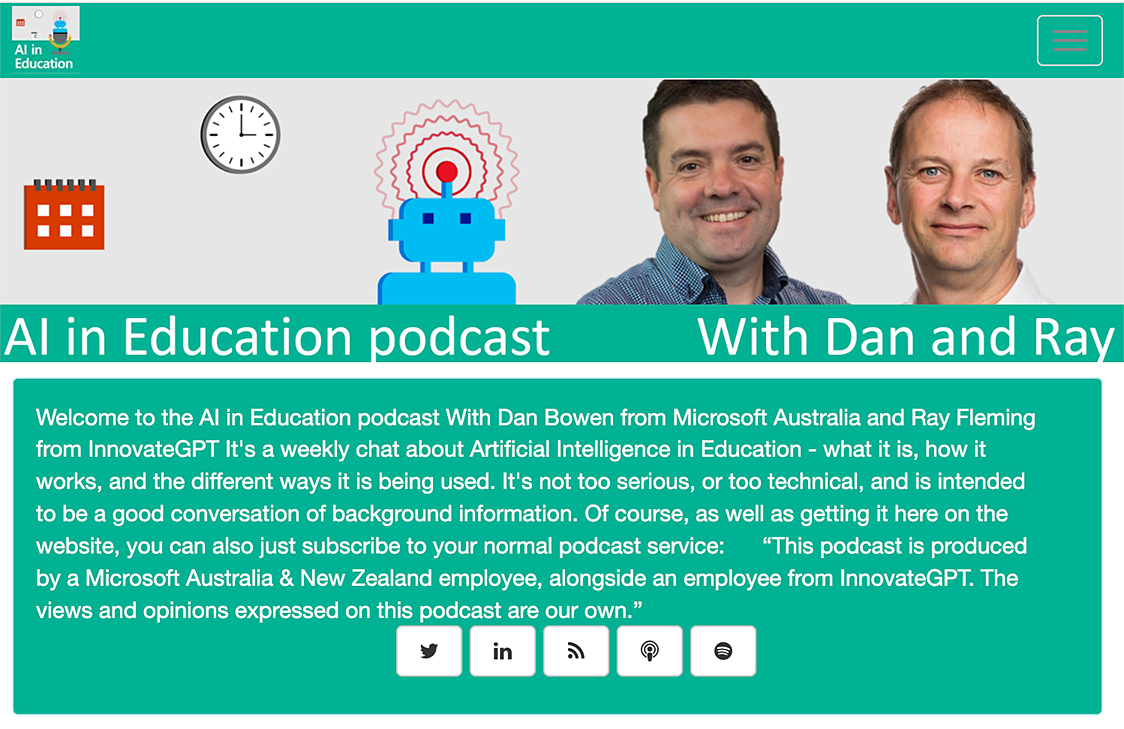
AI in Education Podcast — from aipodcast.education by Dan Bowen and Ray Fleming


The State of AI in Education 2025 Key Findings from a National Survey — from Carnegie Learning

Our 2025 national survey of over 650 respondents across 49 states and Puerto Rico reveals both encouraging trends and important challenges. While AI adoption and optimism are growing, concerns about cheating, privacy, and the need for training persist.

Despite these challenges, I’m inspired by the resilience and adaptability of educators. You are the true game-changers in your students’ growth, and we’re honored to support this vital work.

This report reflects both where we are today and where we’re headed with AI. More importantly, it reflects your experiences, insights, and leadership in shaping the future of education.


Instructure and OpenAI Announce Global Partnership to Embed AI Learning Experiences within Canvas — from instructure.com

This groundbreaking collaboration represents a transformative step forward in education technology and will begin with, but is not limited to, an effort between Instructure and OpenAI to enhance the Canvas experience by embedding OpenAI’s next-generation AI technology into the platform.

IgniteAI announced earlier today, establishes Instructure’s future-ready, open ecosystem with agentic support as the AI landscape continues to evolve. This partnership with OpenAI exemplifies this bold vision for AI in education. Instructure’s strategic approach to AI emphasizes the enhancement of connections within an educational ecosystem comprising over 1,100 edtech partners and leading LLM providers.

“We’re committed to delivering next-generation LMS technologies designed with an open ecosystem that empowers educators and learners to adapt and thrive in a rapidly changing world,” said Steve Daly, CEO of Instructure. “This collaboration with OpenAI showcases our ambitious vision: creating a future-ready ecosystem that fosters meaningful learning and achievement at every stage of education. This is a significant step forward for the education community as we continuously amplify the learning experience and improve student outcomes.”


Faculty Latest Targets of Big Tech’s AI-ification of Higher Ed — from insidehighered.com by Kathryn Palmer
A new partnership between OpenAI and Instructure will embed generative AI in Canvas. It may make grading easier, but faculty are skeptical it will enhance teaching and learning.

The two companies, which have not disclosed the value of the deal, are also working together to embed large language models into Canvas through a feature called IgniteAI. It will work with an institution’s existing enterprise subscription to LLMs such as Anthropic’s Claude or OpenAI’s ChatGPT, allowing instructors to create custom LLM-enabled assignments. They’ll be able to tell the model how to interact with students—and even evaluate those interactions—and what it should look for to assess student learning. According to Instructure, any student information submitted through Canvas will remain private and won’t be shared with OpenAI.

Faculty Unsurprised, Skeptical
Few faculty were surprised by the Canvas-OpenAI partnership announcement, though many are reserving judgment until they see how the first year of using it works in practice.


These 40 Jobs May Be Replaced by AI. These 40 Probably Won’t — from inc.com by Bruce Crumley
A new Microsoft report ranks 80 professions by their risk of being replaced by AI tools.

A new study measuring the use of generative artificial intelligence in different professions has just gone public, and its main message to people working in some fields is harsh. It suggests translators, historians, text writers, sales representatives, and customer service agents might want to consider new careers as pile driver or dredge operators, railroad track layers, hardwood floor sanders, or maids — if, that is, they want to lower the threat of AI apps pushing them out of their current jobs.

From DSC:
Unfortunately, this is where the hyperscalers are going to get their ROI from all of the capital expenditures that they are making. Companies are going to use their services in order to reduce headcount at their organizations. CEOs are even beginning to brag about the savings that are realized by the use of AI-based technologies: (or so they claim.)

“As a CEO myself, I can tell you, I’m extremely excited about it. I’ve laid off employees myself because of AI. AI doesn’t go on strike. It doesn’t ask for a pay raise. These things that you don’t have to deal with as a CEO.”

My first position out of college was being a Customer Service Representative at Baxter Healthcare. It was my most impactful job, as it taught me the value of a customer. From then on, whoever I was trying to assist was my customer — whether they were internal or external to the organization that I was working for. Those kinds of jobs are so important. If they evaporate, what then? How will young people/graduates get their start? 

Also related/see:


Microsoft’s Edge Over the Web, OpenAI Goes Back to School, and Google Goes Deep — from thesignal.substack.com by Alex Banks

Alex’s take: We’re seeing browsers fundamentally transition from search engines ? answer engines ? action engines. Gone are the days of having to trawl through pages of search results. Commands are the future. They are the direct input to arrive at the outcomes we sought in the first place, such as booking a hotel or ordering food. I’m interested in watching Microsoft’s bet develop as browsers become collaborative (and proactive) assistants.


Everyone’s an (AI) TV showrunner now… — from theneurondaily.com by Grant Harvey

Amazon just invested in an AI that can create full TV episodes—and it wants you to star in them.

Remember when everyone lost their minds over AI generating a few seconds of video? Well, Amazon just invested in a company called Fable Studio whose system called Showrunner can generates entire 22-minute TV episodes.

Where does this go from here? Imagine asking AI to rewrite the ending of Game of Thrones, or creating a sitcom where you and your friends are the main characters. This type of tech could create personalized entertainment experiences just like that.

Our take: Without question, we’re moving toward a world where every piece of media can be customized to you personally. Your Netflix could soon generate episodes where you’re the protagonist, with storylines tailored to your interests and sense of humor.

And if this technology scales, the entire entertainment industry could flip upside down. The pitch goes: why watch someone else’s story when you can generate your own? 


The End of Work as We Know It — from gizmodo.com by Luc Olinga
CEOs call it a revolution in efficiency. The workers powering it call it a “new era in forced labor.” I spoke to the people on the front lines of the AI takeover.

Yet, even in this vision of a more pleasant workplace, the specter of displacement looms large. Miscovich acknowledges that companies are planning for a future where headcount could be “reduced by 40%.” And Clark is even more direct. “A lot of CEOs are saying that, knowing that they’re going to come up in the next six months to a year and start laying people off,” he says. “They’re looking for ways to save money at every single company that exists.”

But we do not have much time. As Clark told me bluntly: “I am hired by CEOs to figure out how to use AI to cut jobs. Not in ten years. Right now.”


AI Is Coming for the Consultants. Inside McKinsey, ‘This Is Existential.’ — from wsj.com by Chip Cutter; behind a paywall
If AI can analyze information, crunch data and deliver a slick PowerPoint deck within seconds, how does the biggest name in consulting stay relevant?


ChatGPT users shocked to learn their chats were in Google search results — from arstechnica.com by Ashley Belanger
OpenAI scrambles to remove personal ChatGPT conversations from Google results

Faced with mounting backlash, OpenAI removed a controversial ChatGPT feature that caused some users to unintentionally allow their private—and highly personal—chats to appear in search results.

Fast Company exposed the privacy issue on Wednesday, reporting that thousands of ChatGPT conversations were found in Google search results and likely only represented a sample of chats “visible to millions.” While the indexing did not include identifying information about the ChatGPT users, some of their chats did share personal details—like highly specific descriptions of interpersonal relationships with friends and family members—perhaps making it possible to identify them, Fast Company found.


Character.AI Launches World’s First AI-Native Social Feed — from blog.character.ai

Today, we’re dropping the world’s first AI-native social feed.

Feed from Character.AI is a dynamic, scrollable content platform that connects users with the latest Characters, Scenes, Streams, and creator-driven videos in one place.

This is a milestone in the evolution of online entertainment.

For the last 10 years, social platforms have been all about passive consumption. The Character.AI Feed breaks that paradigm and turns content into a creative playground. Every post is an invitation to interact, remix, and build on what others have made. Want to rewrite a storyline? Make yourself the main character? Take a Character you just met in someone else’s Scene and pop it into a roast battle or a debate? Now it’s easy. Every story can have a billion endings, and every piece of content can change and evolve with one tap.


BREAKING: OpenAI Releases Study Mode — from aieducation.substack.com by Claire Zau
What’s New, What Works, and What’s Still Missing

What is Study Mode?
Study Mode is OpenAI’s take on a smarter study partner – a version of the ChatGPT experience designed to guide users through problems with Socratic prompts, scaffolded reasoning, and adaptive feedback (instead of just handing over the answer).

Built with input from learning scientists, pedagogy experts, and educators, it was also shaped by direct feedback from college students. While Study Mode is designed with college students in mind, it’s meant for anyone who wants a more learning-focused, hands-on experience across a wide range of subjects and skill levels.

Who can access it? And how?
Starting July 29, Study Mode is available to users on Free, Plus, Pro, and Team plans. It will roll out to ChatGPT Edu users in the coming weeks.


ChatGPT became your tutor — from theneurondaily.com by Grant Harvey
PLUS: NotebookLM has video now & GPT 4o-level AI runs on laptop

Here’s how it works: instead of asking “What’s 2+2?” and getting “4,” study mode asks questions like “What do you think happens when you add these numbers?” and “Can you walk me through your thinking?” It’s like having a patient tutor who won’t let you off the hook that easily.

The key features include:

  • Socratic questioning: It guides you with hints and follow-up questions rather than direct answers.
  • Scaffolded responses: Information broken into digestible chunks that build on each other.
  • Personalized support: Adjusts difficulty based on your skill level and previous conversations.
  • Knowledge checks: Built-in quizzes and feedback to make sure concepts actually stick.
  • Toggle flexibility: Switch study mode on and off mid-conversation depending on your goals.

Try study mode yourself by selecting “Study and learn” from tools in ChatGPT and asking a question.


Introducing study mode — from openai.com
A new way to learn in ChatGPT that offers step by step guidance instead of quick answers.

[On 7/29/25, we introduced] study mode in ChatGPT—a learning experience that helps you work through problems step by step instead of just getting an answer. Starting today, it’s available to logged in users on Free, Plus, Pro, Team, with availability in ChatGPT Edu coming in the next few weeks.

ChatGPT is becoming one of the most widely used learning tools in the world. Students turn to it to work through challenging homework problems, prepare for exams, and explore new concepts. But its use in education has also raised an important question: how do we ensure it is used to support real learning, and doesn’t just offer solutions without helping students make sense of them?

We’ve built study mode to help answer this question. When students engage with study mode, they’re met with guiding questions that calibrate responses to their objective and skill level to help them build deeper understanding. Study mode is designed to be engaging and interactive, and to help students learn something—not just finish something.


OpenAI’s Education Head Says Real Learning Takes Struggle—Not Just ChatGPT Help — from observer.com by Rachel Curry; via Ray Schroeder on LinkedIn
Students must struggle to learn, and offloading to ChatGPT risks weakening critical thinking skills, OpenAI’s head of education warns.

“We know that true learning takes friction. It takes struggle,” said Mills. “You have to engage with the materials, and if students offload all of that work to a tool like ChatGPT, they will not learn those skills and they will not gain that critical thinking. That said, when ChatGPT is used correctly as a learning assistant and as a tutor, the results are powerful.”

Given that 40 percent of ChatGPT users are under the age of 24—and that learning is the platform’s number one use case, according to Mills—the need to fine-tune guardrails is becoming increasingly urgent. Pew Research reports that twice as many teens now use ChatGPT for schoolwork compared to 2023, with nearly one-third of teen respondents saying it’s acceptable to use the tool to solve math problems.

In response, Mills said OpenAI is actively researching what appropriate A.I. use in education looks like, with plans to share that guidance widely and rapidly with educators around the world.


I Teach Creative Writing. This Is What A.I. Is Doing to Students. — from nytimes.com by Meghan O’Rourke; this is a gifted article.

We need a coherent approach grounded in understanding how the technology works, where it is going and what it will be used for.

From DSC:
I almost feel like Meghan should right the words “this week” or “this month” after the above sentence. Whew! Things are moving fast.

For example, we’re now starting to see more agents hitting the scene — software that can DO things. But that can open up a can of worms too. 

Students know the ground has shifted — and that the world outside the university expects them to shift with it. A.I. will be part of their lives regardless of whether we approve. Few issues expose the campus cultural gap as starkly as this one.ce 

From DSC:
Universities and colleges have little choice but to integrate AI into their programs and offerings. There’s enough pressure on institutions of traditional higher education to prove their worth/value. Students and their families want solid ROI’s. Students know that they are going to need AI-related skills (see the link immediately below for example), or they are going to be left out of the competitive job search process.

A relevant resource here:


Introducing ChatGPT agent: bridging research and action — from openai.com
ChatGPT now thinks and acts, proactively choosing from a toolbox of agentic skills to complete tasks for you using its own computer.

ChatGPT can now do work for you using its own computer, handling complex tasks from start to finish.

You can now ask ChatGPT to handle requests like “look at my calendar and brief me on upcoming client meetings based on recent news,” “plan and buy ingredients to make Japanese breakfast for four,” and “analyze three competitors and create a slide deck.” ChatGPT will intelligently navigate websites, filter results, prompt you to log in securely when needed, run code, conduct analysis, and even deliver editable slideshows and spreadsheets that summarize its findings.

 
© 2025 | Daniel Christian