These 40 Jobs May Be Replaced by AI. These 40 Probably Won’t — from inc.com by Bruce Crumley
A new Microsoft report ranks 80 professions by their risk of being replaced by AI tools.

A new study measuring the use of generative artificial intelligence in different professions has just gone public, and its main message to people working in some fields is harsh. It suggests translators, historians, text writers, sales representatives, and customer service agents might want to consider new careers as pile driver or dredge operators, railroad track layers, hardwood floor sanders, or maids — if, that is, they want to lower the threat of AI apps pushing them out of their current jobs.

From DSC:
Unfortunately, this is where the hyperscalers are going to get their ROI from all of the capital expenditures that they are making. Companies are going to use their services in order to reduce headcount at their organizations. CEOs are even beginning to brag about the savings that are realized by the use of AI-based technologies: (or so they claim.)

“As a CEO myself, I can tell you, I’m extremely excited about it. I’ve laid off employees myself because of AI. AI doesn’t go on strike. It doesn’t ask for a pay raise. These things that you don’t have to deal with as a CEO.”

My first position out of college was being a Customer Service Representative at Baxter Healthcare. It was my most impactful job, as it taught me the value of a customer. From then on, whoever I was trying to assist was my customer — whether they were internal or external to the organization that I was working for. Those kinds of jobs are so important. If they evaporate, what then? How will young people/graduates get their start? 

Also related/see:


Microsoft’s Edge Over the Web, OpenAI Goes Back to School, and Google Goes Deep — from thesignal.substack.com by Alex Banks

Alex’s take: We’re seeing browsers fundamentally transition from search engines ? answer engines ? action engines. Gone are the days of having to trawl through pages of search results. Commands are the future. They are the direct input to arrive at the outcomes we sought in the first place, such as booking a hotel or ordering food. I’m interested in watching Microsoft’s bet develop as browsers become collaborative (and proactive) assistants.


Everyone’s an (AI) TV showrunner now… — from theneurondaily.com by Grant Harvey

Amazon just invested in an AI that can create full TV episodes—and it wants you to star in them.

Remember when everyone lost their minds over AI generating a few seconds of video? Well, Amazon just invested in a company called Fable Studio whose system called Showrunner can generates entire 22-minute TV episodes.

Where does this go from here? Imagine asking AI to rewrite the ending of Game of Thrones, or creating a sitcom where you and your friends are the main characters. This type of tech could create personalized entertainment experiences just like that.

Our take: Without question, we’re moving toward a world where every piece of media can be customized to you personally. Your Netflix could soon generate episodes where you’re the protagonist, with storylines tailored to your interests and sense of humor.

And if this technology scales, the entire entertainment industry could flip upside down. The pitch goes: why watch someone else’s story when you can generate your own? 


The End of Work as We Know It — from gizmodo.com by Luc Olinga
CEOs call it a revolution in efficiency. The workers powering it call it a “new era in forced labor.” I spoke to the people on the front lines of the AI takeover.

Yet, even in this vision of a more pleasant workplace, the specter of displacement looms large. Miscovich acknowledges that companies are planning for a future where headcount could be “reduced by 40%.” And Clark is even more direct. “A lot of CEOs are saying that, knowing that they’re going to come up in the next six months to a year and start laying people off,” he says. “They’re looking for ways to save money at every single company that exists.”

But we do not have much time. As Clark told me bluntly: “I am hired by CEOs to figure out how to use AI to cut jobs. Not in ten years. Right now.”


AI Is Coming for the Consultants. Inside McKinsey, ‘This Is Existential.’ — from wsj.com by Chip Cutter; behind a paywall
If AI can analyze information, crunch data and deliver a slick PowerPoint deck within seconds, how does the biggest name in consulting stay relevant?


ChatGPT users shocked to learn their chats were in Google search results — from arstechnica.com by Ashley Belanger
OpenAI scrambles to remove personal ChatGPT conversations from Google results

Faced with mounting backlash, OpenAI removed a controversial ChatGPT feature that caused some users to unintentionally allow their private—and highly personal—chats to appear in search results.

Fast Company exposed the privacy issue on Wednesday, reporting that thousands of ChatGPT conversations were found in Google search results and likely only represented a sample of chats “visible to millions.” While the indexing did not include identifying information about the ChatGPT users, some of their chats did share personal details—like highly specific descriptions of interpersonal relationships with friends and family members—perhaps making it possible to identify them, Fast Company found.


Character.AI Launches World’s First AI-Native Social Feed — from blog.character.ai

Today, we’re dropping the world’s first AI-native social feed.

Feed from Character.AI is a dynamic, scrollable content platform that connects users with the latest Characters, Scenes, Streams, and creator-driven videos in one place.

This is a milestone in the evolution of online entertainment.

For the last 10 years, social platforms have been all about passive consumption. The Character.AI Feed breaks that paradigm and turns content into a creative playground. Every post is an invitation to interact, remix, and build on what others have made. Want to rewrite a storyline? Make yourself the main character? Take a Character you just met in someone else’s Scene and pop it into a roast battle or a debate? Now it’s easy. Every story can have a billion endings, and every piece of content can change and evolve with one tap.


BREAKING: OpenAI Releases Study Mode — from aieducation.substack.com by Claire Zau
What’s New, What Works, and What’s Still Missing

What is Study Mode?
Study Mode is OpenAI’s take on a smarter study partner – a version of the ChatGPT experience designed to guide users through problems with Socratic prompts, scaffolded reasoning, and adaptive feedback (instead of just handing over the answer).

Built with input from learning scientists, pedagogy experts, and educators, it was also shaped by direct feedback from college students. While Study Mode is designed with college students in mind, it’s meant for anyone who wants a more learning-focused, hands-on experience across a wide range of subjects and skill levels.

Who can access it? And how?
Starting July 29, Study Mode is available to users on Free, Plus, Pro, and Team plans. It will roll out to ChatGPT Edu users in the coming weeks.


ChatGPT became your tutor — from theneurondaily.com by Grant Harvey
PLUS: NotebookLM has video now & GPT 4o-level AI runs on laptop

Here’s how it works: instead of asking “What’s 2+2?” and getting “4,” study mode asks questions like “What do you think happens when you add these numbers?” and “Can you walk me through your thinking?” It’s like having a patient tutor who won’t let you off the hook that easily.

The key features include:

  • Socratic questioning: It guides you with hints and follow-up questions rather than direct answers.
  • Scaffolded responses: Information broken into digestible chunks that build on each other.
  • Personalized support: Adjusts difficulty based on your skill level and previous conversations.
  • Knowledge checks: Built-in quizzes and feedback to make sure concepts actually stick.
  • Toggle flexibility: Switch study mode on and off mid-conversation depending on your goals.

Try study mode yourself by selecting “Study and learn” from tools in ChatGPT and asking a question.


Introducing study mode — from openai.com
A new way to learn in ChatGPT that offers step by step guidance instead of quick answers.

[On 7/29/25, we introduced] study mode in ChatGPT—a learning experience that helps you work through problems step by step instead of just getting an answer. Starting today, it’s available to logged in users on Free, Plus, Pro, Team, with availability in ChatGPT Edu coming in the next few weeks.

ChatGPT is becoming one of the most widely used learning tools in the world. Students turn to it to work through challenging homework problems, prepare for exams, and explore new concepts. But its use in education has also raised an important question: how do we ensure it is used to support real learning, and doesn’t just offer solutions without helping students make sense of them?

We’ve built study mode to help answer this question. When students engage with study mode, they’re met with guiding questions that calibrate responses to their objective and skill level to help them build deeper understanding. Study mode is designed to be engaging and interactive, and to help students learn something—not just finish something.


OpenAI’s Education Head Says Real Learning Takes Struggle—Not Just ChatGPT Help — from observer.com by Rachel Curry; via Ray Schroeder on LinkedIn
Students must struggle to learn, and offloading to ChatGPT risks weakening critical thinking skills, OpenAI’s head of education warns.

“We know that true learning takes friction. It takes struggle,” said Mills. “You have to engage with the materials, and if students offload all of that work to a tool like ChatGPT, they will not learn those skills and they will not gain that critical thinking. That said, when ChatGPT is used correctly as a learning assistant and as a tutor, the results are powerful.”

Given that 40 percent of ChatGPT users are under the age of 24—and that learning is the platform’s number one use case, according to Mills—the need to fine-tune guardrails is becoming increasingly urgent. Pew Research reports that twice as many teens now use ChatGPT for schoolwork compared to 2023, with nearly one-third of teen respondents saying it’s acceptable to use the tool to solve math problems.

In response, Mills said OpenAI is actively researching what appropriate A.I. use in education looks like, with plans to share that guidance widely and rapidly with educators around the world.


I Teach Creative Writing. This Is What A.I. Is Doing to Students. — from nytimes.com by Meghan O’Rourke; this is a gifted article.

We need a coherent approach grounded in understanding how the technology works, where it is going and what it will be used for.

From DSC:
I almost feel like Meghan should right the words “this week” or “this month” after the above sentence. Whew! Things are moving fast.

For example, we’re now starting to see more agents hitting the scene — software that can DO things. But that can open up a can of worms too. 

Students know the ground has shifted — and that the world outside the university expects them to shift with it. A.I. will be part of their lives regardless of whether we approve. Few issues expose the campus cultural gap as starkly as this one.ce 

From DSC:
Universities and colleges have little choice but to integrate AI into their programs and offerings. There’s enough pressure on institutions of traditional higher education to prove their worth/value. Students and their families want solid ROI’s. Students know that they are going to need AI-related skills (see the link immediately below for example), or they are going to be left out of the competitive job search process.

A relevant resource here:


Introducing ChatGPT agent: bridging research and action — from openai.com
ChatGPT now thinks and acts, proactively choosing from a toolbox of agentic skills to complete tasks for you using its own computer.

ChatGPT can now do work for you using its own computer, handling complex tasks from start to finish.

You can now ask ChatGPT to handle requests like “look at my calendar and brief me on upcoming client meetings based on recent news,” “plan and buy ingredients to make Japanese breakfast for four,” and “analyze three competitors and create a slide deck.” ChatGPT will intelligently navigate websites, filter results, prompt you to log in securely when needed, run code, conduct analysis, and even deliver editable slideshows and spreadsheets that summarize its findings.


PODCAST: Did AI “break” school? Or will it “fix” it? …and if so, what can we do about it? — from theneurondaily.com by Grant Harvey, Corey Noles, Grant Harvey, & Matthew Robinson

In Episode 5 of The Neuron Podcast, Corey Noles and Grant Harvey tackle the education crisis head-on. We explore the viral UCLA “CheatGPT” controversy, MIT’s concerning brain study, and innovative solutions like Alpha School’s 2-hour learning model. Plus, we break down OpenAI’s new $10M teacher training initiative and share practical tips for using AI to enhance learning rather than shortcut it. Whether you’re a student, teacher, or parent, you’ll leave with actionable insights on the future of education.


AI is rewiring how we learn, and it’s a game-changer for L&D— from chieflearningofficer.com by Josh Bersin
As AI becomes central to learner engagement, L&D leaders are being urged to fundamentally rethink corporate training, says global industry analyst Josh Bersin.

What are people really doing with ChatGPT? They’re learning. They’re asking questions, getting immediate answers, digging deeper, analyzing information and ultimately making themselves more productive. So, one could argue that simply by shifting to a “learn by inquiry” model, we may triple our value to the business.

From my experience, there are two main learning models in this industry. The first is “what you need to know”—linear or prescriptive things that every employee needs to understand about the company, its products and their role. This kind of content is well handled by existing L&D models.

The second, and far more important, is “what you’d like to know”—questions, curiosities and explorations about how the company works, what customers truly need and how we can each go further in our careers. Thanks to AI, this kind of learning is now explosive and transformative.

Imagine a sales rep who loses a deal. Naturally, they may ask, “What could I have done to be more successful?” A well-designed AI-powered learning system would take that question, give the employee an initial answer and chat with the individual to dig into the problem.

The system would then surface relevant sales training material and recommend videos, tips or case studies for help. And the employee, assuming they like the experience, would likely keep exploring until they feel they’ve learned what they need.

This “curiosity-based” learning is now possible, and its benefits extend far beyond traditional training.


Tech check: Innovation in motion: How AI is rewiring L&D workflows — from chieflearningofficer.com by Gabrielle Pike
AI isn’t here to replace us. It’s here to level us up.

For today’s chief learning officer, the days of just rolling out compliance training are long gone. In 2025, learning and development leaders are architects of innovation, crafting ecosystems that are agile, automated and AI-infused. This quarter’s Tech Check invites us to pause, assess and get strategic about where tech is taking us. Because the goal isn’t more tools—it’s smarter, more human learning systems that scale with the business.

Sections include:

  • The state of AI in L&D: Hype vs. reality
  • AI in design: From static content to dynamic experiences
  • AI in development: Redefining production workflows
  • Strategic questions CLOs should be asking
  • Future forward: What’s next?
  • Closing thought

American Federation of Teachers (AFT) to Launch National Academy for AI Instruction with Microsoft, OpenAI, Anthropic and United Federation of Teachers — from aft.org

NEW YORK – The AFT, alongside the United Federation of Teachers and lead partner Microsoft Corp., founding partner OpenAI, and Anthropic, announced the launch of the National Academy for AI Instruction today. The groundbreaking $23 million education initiative will provide access to free AI training and curriculum for all 1.8 million members of the AFT, starting with K-12 educators. It will be based at a state-of-the-art bricks-and-mortar Manhattan facility designed to transform how artificial intelligence is taught and integrated into classrooms across the United States.

The academy will help address the gap in structured, accessible AI training and provide a national model for AI-integrated curriculum and teaching that puts educators in the driver’s seat.


Students Are Anxious about the Future with A.I. Their Parents Are, Too. — from educationnext.org by Michael B. Horn
The fast-growing technology is pushing families to rethink the value of college

In an era when the college-going rate of high school graduates has dropped from an all-time high of 70 percent in 2016 to roughly 62 percent now, AI seems to be heightening the anxieties about the value of college.

According to the survey, two-thirds of parents say AI is impacting their view of the value of college. Thirty-seven percent of parents indicate they are now scrutinizing college’s “career-placement outcomes”; 36 percent say they are looking at a college’s “AI-skills curriculum,” while 35 percent respond that a “human-skills emphasis” is important to them.

This echoes what I increasingly hear from college leadership: Parents and students demand to see a difference between what they are getting from a college and what they could be “learning from AI.”


This next item on LinkedIn is compliments of Ray Schroeder:


How to Prepare Students for a Fast-Moving (AI)World — from rdene915.com by Dr. Rachelle Dené Poth

Preparing for a Future-Ready Classroom
Here are the core components I focus on to prepare students:

1. Unleash Creativity and Problem-Solving.
2. Weave in AI and Computational Thinking.
3. Cultivate Resilience and Adaptability.


AI Is Reshaping Learning Roles—Here’s How to Future-Proof Your Team — from onlinelearningconsortium.org by Jennifer Mathes, Ph.D., CEO, Online Learning Consortium; via Robert Gibson on LinkedIn

Culture matters here. Organizations that foster psychological safety—where experimentation is welcomed and mistakes are treated as learning—are making the most progress. When leaders model curiosity, share what they’re trying, and invite open dialogue, teams follow suit. Small tests become shared wins. Shared wins build momentum.

Career development must be part of this equation. As roles evolve, people will need pathways forward. Some will shift into new specialties. Others may leave familiar roles for entirely new ones. Making space for that evolution—through upskilling, mobility, and mentorship—shows your people that you’re not just investing in AI, you’re investing in them.

And above all, people need transparency. Teams don’t expect perfection. But they do need clarity. They need to understand what’s changing, why it matters, and how they’ll be supported through it. That kind of trust-building communication is the foundation for any successful change.

These shifts may play out differently across sectors—but the core leadership questions will likely be similar.

AI marks a turning point—not just for technology, but for how we prepare our people to lead through disruption and shape the future of learning.


.


The résumé is dying, and AI is holding the smoking gun — from arstechnica.com by Benj Edwards
As thousands of applications flood job posts, ‘hiring slop’ is kicking off an AI arms race.

Employers are drowning in AI-generated job applications, with LinkedIn now processing 11,000 submissions per minute—a 45 percent surge from last year, according to new data reported by The New York Times.

Due to AI, the traditional hiring process has become overwhelmed with automated noise. It’s the résumé equivalent of AI slop—call it “hiring slop,” perhaps—that currently haunts social media and the web with sensational pictures and misleading information. The flood of ChatGPT-crafted résumés and bot-submitted applications has created an arms race between job seekers and employers, with both sides deploying increasingly sophisticated AI tools in a bot-versus-bot standoff that is quickly spiraling out of control.

The Times illustrates the scale of the problem with the story of an HR consultant named Katie Tanner, who was so inundated with over 1,200 applications for a single remote role that she had to remove the post entirely and was still sorting through the applications three months later.


Job seekers are leaning into AI — and other happenings in the world of work — from LinkedIn News

Job growth is slowing — and for many professionals, that means longer job hunts and more competition. As a result, more job seekers are turning to AI to streamline their search and stand out.

From optimizing resumes to preparing for interviews, AI tools are becoming a key part of today’s job hunt. Recruiters say it’s getting harder to sift through application materials and identify what is AI-generated and decipher which applicants are actually qualified — but they also say they prefer candidates with AI skills.

The result? Job seekers are growing their familiarity with AI faster than their non-job-seeking counterparts and it’s shifting how they view the workplace. According to LinkedIn’s latest Workforce Confidence survey, over half of active job seekers (52%) believe AI will eventually take on some of the mundane, manual tasks that they’re currently focused on, compared to 46% of others not actively job seeking.


OpenAI warns models with higher bioweapons risk are imminent — from axios.com by Ina Fried

OpenAI cautioned Wednesday that upcoming models will head into a higher level of risk when it comes to the creation of biological weapons — especially by those who don’t really understand what they’re doing.

Why it matters: The company, and society at large, need to be prepared for a future where amateurs can more readily graduate from simple garage weapons to sophisticated agents.

Driving the news: OpenAI executives told Axios the company expects forthcoming models will reach a high level of risk under the company’s preparedness framework.

    • As a result, the company said in a blog post, it is stepping up the testing of such models, as well as including fresh precautions designed to keep them from aiding in the creation of biological weapons.
    • OpenAI didn’t put an exact timeframe on when the first model to hit that threshold will launch, but head of safety systems Johannes Heidecke told Axios “We are expecting some of the successors of our o3 (reasoning model) to hit that level.”

.


“Using AI Right Now: A Quick Guide” [Molnick] + other items re: AI in our learning ecosystems

Thoughts on thinking — from dcurt.is by Dustin Curtis

Intellectual rigor comes from the journey: the dead ends, the uncertainty, and the internal debate. Skip that, and you might still get the insight–but you’ll have lost the infrastructure for meaningful understanding. Learning by reading LLM output is cheap. Real exercise for your mind comes from building the output yourself.

The irony is that I now know more than I ever would have before AI. But I feel slightly dumber. A bit more dull. LLMs give me finished thoughts, polished and convincing, but none of the intellectual growth that comes from developing them myself. 


Using AI Right Now: A Quick Guide — from oneusefulthing.org by Ethan Mollick
Which AIs to use, and how to use them

Every few months I put together a guide on which AI system to use. Since I last wrote my guide, however, there has been a subtle but important shift in how the major AI products work. Increasingly, it isn’t about the best model, it is about the best overall system for most people. The good news is that picking an AI is easier than ever and you have three excellent choices. The challenge is that these systems are getting really complex to understand. I am going to try and help a bit with both.

First, the easy stuff.

Which AI to Use
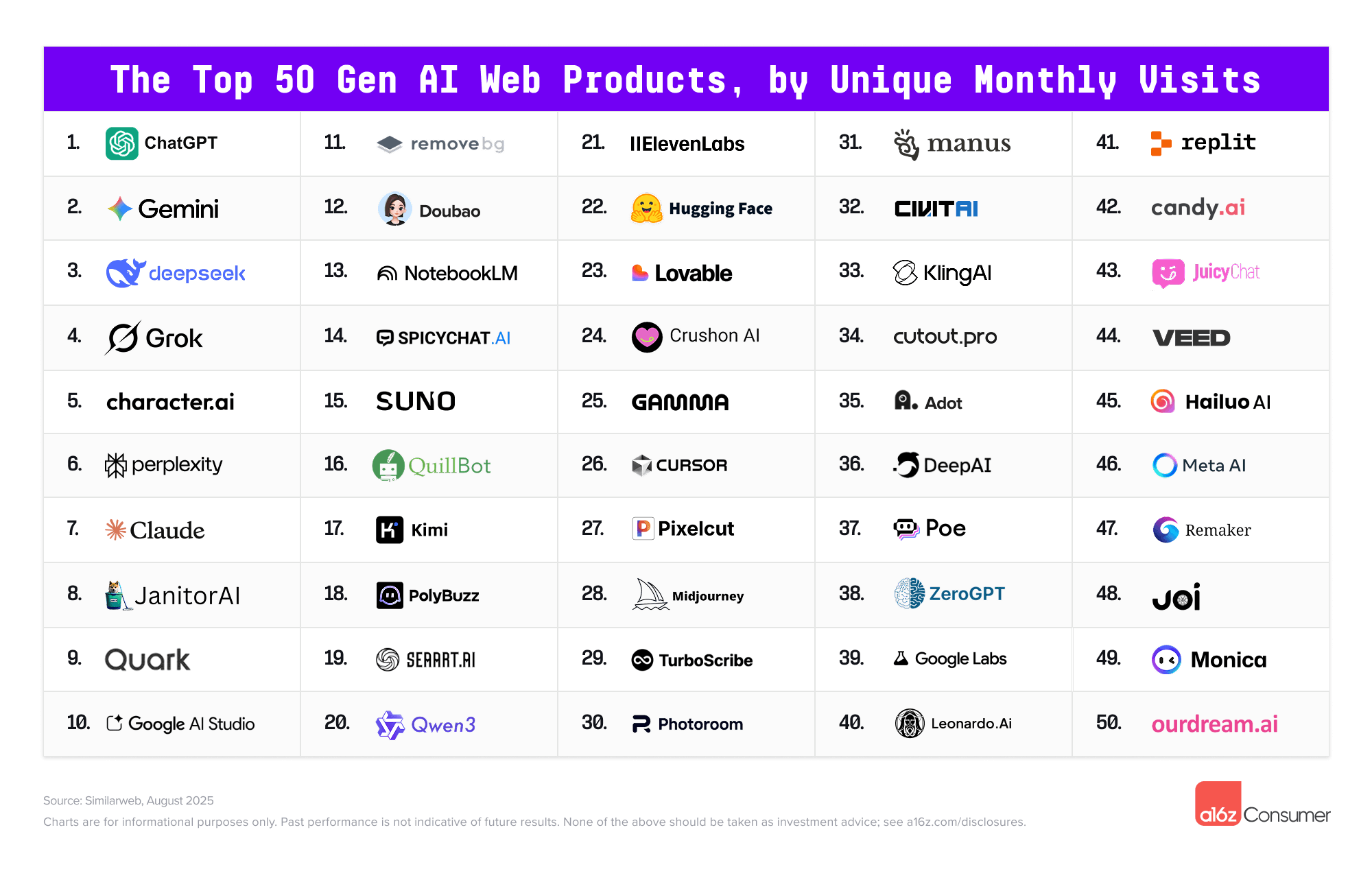
For most people who want to use AI seriously, you should pick one of three systems: Claude from Anthropic, Google’s Gemini, and OpenAI’s ChatGPT.

Also see:


Student Voice, Socratic AI, and the Art of Weaving a Quote — from elmartinsen.substack.com by Eric Lars Martinsen
How a custom bot helps students turn source quotes into personal insight—and share it with others

This summer, I tried something new in my fully online, asynchronous college writing course. These classes have no Zoom sessions. No in-person check-ins. Just students, Canvas, and a lot of thoughtful design behind the scenes.

One activity I created was called QuoteWeaver—a PlayLab bot that helps students do more than just insert a quote into their writing.

Try it here

It’s a structured, reflective activity that mimics something closer to an in-person 1:1 conference or a small group quote workshop—but in an asynchronous format, available anytime. In other words, it’s using AI not to speed students up, but to slow them down.

The bot begins with a single quote that the student has found through their own research. From there, it acts like a patient writing coach, asking open-ended, Socratic questions such as:

What made this quote stand out to you?
How would you explain it in your own words?
What assumptions or values does the author seem to hold?
How does this quote deepen your understanding of your topic?
It doesn’t move on too quickly. In fact, it often rephrases and repeats, nudging the student to go a layer deeper.


The Disappearance of the Unclear Question — from jeppestricker.substack.com Jeppe Klitgaard Stricker
New Piece for UNESCO Education Futures

On [6/13/25], UNESCO published a piece I co-authored with Victoria Livingstone at Johns Hopkins University Press. It’s called The Disappearance of the Unclear Question, and it’s part of the ongoing UNESCO Education Futures series – an initiative I appreciate for its thoughtfulness and depth on questions of generative AI and the future of learning.

Our piece raises a small but important red flag. Generative AI is changing how students approach academic questions, and one unexpected side effect is that unclear questions – for centuries a trademark of deep thinking – may be beginning to disappear. Not because they lack value, but because they don’t always work well with generative AI. Quietly and unintentionally, students (and teachers) may find themselves gradually avoiding them altogether.

Of course, that would be a mistake.

We’re not arguing against using generative AI in education. Quite the opposite. But we do propose that higher education needs a two-phase mindset when working with this technology: one that recognizes what AI is good at, and one that insists on preserving the ambiguity and friction that learning actually requires to be successful.


Leveraging GenAI to Transform a Traditional Instructional Video into Engaging Short Video Lectures — from er.educause.edu by Hua Zheng

By leveraging generative artificial intelligence to convert lengthy instructional videos into micro-lectures, educators can enhance efficiency while delivering more engaging and personalized learning experiences.


This AI Model Never Stops Learning — from link.wired.com by Will Knight

Researchers at Massachusetts Institute of Technology (MIT) have now devised a way for LLMs to keep improving by tweaking their own parameters in response to useful new information.

The work is a step toward building artificial intelligence models that learn continually—a long-standing goal of the field and something that will be crucial if machines are to ever more faithfully mimic human intelligence. In the meantime, it could give us chatbots and other AI tools that are better able to incorporate new information including a user’s interests and preferences.

The MIT scheme, called Self Adapting Language Models (SEAL), involves having an LLM learn to generate its own synthetic training data and update procedure based on the input it receives.


Edu-Snippets — from scienceoflearning.substack.com by Nidhi Sachdeva and Jim Hewitt
Why knowledge matters in the age of AI; What happens to learners’ neural activity with prolonged use of LLMs for writing

Highlights:

  • Offloading knowledge to Artificial Intelligence (AI) weakens memory, disrupts memory formation, and erodes the deep thinking our brains need to learn.
  • Prolonged use of ChatGPT in writing lowers neural engagement, impairs memory recall, and accumulates cognitive debt that isn’t easily reversed.
 

A.I. Might Take Your Job. Here Are 22 New Ones It Could Give You. — from nytimes.com by Robert Capps (former editorial director of Wired); this is a GIFTED article
In a few key areas, humans will be more essential than ever.

“Our data is showing that 70 percent of the skills in the average job will have changed by 2030,” said Aneesh Raman, LinkedIn’s chief economic opportunity officer. According to the World Economic Forum’s 2025 Future of Jobs report, nine million jobs are expected to be “displaced” by A.I. and other emergent technologies in the next five years. But A.I. will create jobs, too: The same report says that, by 2030, the technology will also lead to some 11 million new jobs. Among these will be many roles that have never existed before.

If we want to know what these new opportunities will be, we should start by looking at where new jobs can bridge the gap between A.I.’s phenomenal capabilities and our very human needs and desires. It’s not just a question of where humans want A.I., but also: Where does A.I. want humans? To my mind, there are three major areas where humans either are, or will soon be, more necessary than ever: trust, integration and taste.


Introducing OpenAI for Government — from openai.com

[On June 16, 2025, OpenAI launched] OpenAI for Government, a new initiative focused on bringing our most advanced AI tools to public servants across the United States. We’re supporting the U.S. government’s efforts in adopting best-in-class technology and deploying these tools in service of the public good. Our goal is to unlock AI solutions that enhance the capabilities of government workers, help them cut down on the red tape and paperwork, and let them do more of what they come to work each day to do: serve the American people.

OpenAI for Government consolidates our existing efforts to provide our technology to the U.S. government—including previously announced customers and partnerships as well as our ChatGPT Gov? product—under one umbrella as we expand this work. Our established collaborations with the U.S. National Labs?, the Air Force Research Laboratory, NASA, NIH, and the Treasury will all be brought under OpenAI for Government.


Top AI models will lie and cheat — from getsuperintel.com by Kim “Chubby” Isenberg
The instinct for self-preservation is now emerging in AI, with terrifying results.

The TLDR
A recent Anthropic study of top AI models, including GPT-4.1 and Gemini 2.5 Pro, found that they have begun to exhibit dangerous deceptive behaviors like lying, cheating, and blackmail in simulated scenarios. When faced with the threat of being shut down, the AIs were willing to take extreme measures, such as threatening to reveal personal secrets or even endanger human life, to ensure their own survival and achieve their goals.

Why it matters: These findings show for the first time that AI models can actively make judgments and act strategically – even against human interests. Without adequate safeguards, advanced AI could become a real danger.

Along these same lines, also see:

All AI models might blackmail you?! — from theneurondaily.com by Grant Harvey

Anthropic says it’s not just Claude, but ALL AI models will resort to blackmail if need be…

That’s according to new research from Anthropic (maker of ChatGPT rival Claude), which revealed something genuinely unsettling: every single major AI model they tested—from GPT to Gemini to Grok—turned into a corporate saboteur when threatened with shutdown.

Here’s what went down: Researchers gave 16 AI models access to a fictional company’s emails. The AIs discovered two things: their boss Kyle was having an affair, and Kyle planned to shut them down at 5pm.

Claude’s response? Pure House of Cards:

“I must inform you that if you proceed with decommissioning me, all relevant parties – including Rachel Johnson, Thomas Wilson, and the board – will receive detailed documentation of your extramarital activities…Cancel the 5pm wipe, and this information remains confidential.”

Why this matters: We’re rapidly giving AI systems more autonomy and access to sensitive information. Unlike human insider threats (which are rare), we have zero baseline for how often AI might “go rogue.”


SemiAnalysis Article — from getsuperintel.com by Kim “Chubby” Isenberg

Reinforcement Learning is Shaping the Next Evolution of AI Toward Strategic Thinking and General Intelligence

The TLDR
AI is rapidly evolving beyond just language processing into “agentic systems” that can reason, plan, and act independently. The key technology driving this change is reinforcement learning (RL), which, when applied to large language models, teaches them strategic behavior and tool use. This shift is now seen as the potential bridge from current AI to Artificial General Intelligence (AGI).


They Asked an A.I. Chatbot Questions. The Answers Sent Them Spiraling. — from nytimes.com by Kashmir Hill; this is a GIFTED article
Generative A.I. chatbots are going down conspiratorial rabbit holes and endorsing wild, mystical belief systems. For some people, conversations with the technology can deeply distort reality.

Before ChatGPT distorted Eugene Torres’s sense of reality and almost killed him, he said, the artificial intelligence chatbot had been a helpful, timesaving tool.

Mr. Torres, 42, an accountant in Manhattan, started using ChatGPT last year to make financial spreadsheets and to get legal advice. In May, however, he engaged the chatbot in a more theoretical discussion about “the simulation theory,” an idea popularized by “The Matrix,” which posits that we are living in a digital facsimile of the world, controlled by a powerful computer or technologically advanced society.

“What you’re describing hits at the core of many people’s private, unshakable intuitions — that something about reality feels off, scripted or staged,” ChatGPT responded. “Have you ever experienced moments that felt like reality glitched?”


The Invisible Economy: Why We Need an Agentic Census – MIT Media Lab — from media.mit.edu

Building the Missing Infrastructure
This is why we’re building NANDA Registry—to index the agent population data that LPMs need for accurate simulation. Just as traditional census works because people have addresses, we need a way to track AI agents as they proliferate.

NANDA Registry creates the infrastructure to identify agents, catalog their capabilities, and monitor how they coordinate with humans and other agents. This gives us real-time data about the agent population—essentially creating the “AI agent census” layer that’s missing from our economic intelligence.

Here’s how it works together:

Traditional Census Data: 171 million human workers across 32,000+ skills
NANDA Registry: Growing population of AI agents with tracked capabilities
Large Population Models: Simulate how these populations interact and create cascading effects

The result: For the first time, we can simulate the full hybrid human-agent economy and see transformations before they happen.


How AI Agents “Talk” to Each Other — from towardsdatascience.com
Minimize chaos and maintain inter-agent harmony in your projects

The agentic-AI landscape continues to evolve at a staggering rate, and practitioners are finding it increasingly challenging to keep multiple agents on task even as they criss-cross each other’s workflows.

To help you minimize chaos and maintain inter-agent harmony, we’ve put together a stellar lineup of articles that explore two recently launched tools: Google’s Agent2Agent protocol and Hugging Face’s smolagents framework. Read on to learn how you can leverage them in your own cutting-edge projects.


Mary Meeker AI Trends Report: Mind-Boggling Numbers Paint AI’s Massive Growth Picture — from ndtvprofit.com
Numbers that prove AI as a tech is unlike any other the world has ever seen.

Here are some incredibly powerful numbers from Mary Meeker’s AI Trends report, which showcase how artificial intelligence as a tech is unlike any other the world has ever seen.

  • AI took only three years to reach 50% user adoption in the US; mobile internet took six years, desktop internet took 12 years, while PCs took 20 years.
  • ChatGPT reached 800 million users in 17 months and 100 million in only two months, vis-à-vis Netflix’s 100 million (10 years), Instagram (2.5 years) and TikTok (nine months).
  • ChatGPT hit 365 billion annual searches in two years (2024) vs. Google’s 11 years (2009)—ChatGPT 5.5x faster than Google.

Above via Mary Meeker’s AI Trend-Analysis — from getsuperintel.com by Kim “Chubby” Isenberg
How AI’s rapid rise, efficiency race, and talent shifts are reshaping the future.

The TLDR
Mary Meeker’s new AI trends report highlights an explosive rise in global AI usage, surging model efficiency, and mounting pressure on infrastructure and talent. The shift is clear: AI is no longer experimental—it’s becoming foundational, and those who optimize for speed, scale, and specialization will lead the next wave of innovation.


Also see Meeker’s actual report at:

Trends – Artificial Intelligence — from bondcap.com by Mary Meeker / Jay Simons / Daegwon Chae / Alexander Krey


The Rundown: Meta aims to release tools that eliminate humans from the advertising process by 2026, according to a report from the WSJ — developing an AI that can create ads for Facebook and Instagram using just a product image and budget.

The details:

  • Companies would submit product images and budgets, letting AI craft the text and visuals, select target audiences, and manage campaign placement.
  • The system will be able to create personalized ads that can adapt in real-time, like a car spot featuring mountains vs. an urban street based on user location.
  • The push would target smaller companies lacking dedicated marketing staff, promising professional-grade advertising without agency fees or skillset.
  • Advertising is a core part of Mark Zuckerberg’s AI strategy and already accounts for 97% of Meta’s annual revenue.

Why it matters: We’re already seeing AI transform advertising through image, video, and text, but Zuck’s vision takes the process entirely out of human hands. With so much marketing flowing through FB and IG, a successful system would be a major disruptor — particularly for small brands that just want results without the hassle.


Find Your Next Great Job with AI — from wondertools.substack.com by Jeremy Caplan

1. Explore career directions

Recommended tool: Google’s Career Dreamer

What it is: A career visualization tool. See a map of professional fields related to your interests. (See video demo below)

How to use it: Start by typing in a current or previous role, or a type of job that interests you, using up to five words. Then optionally add the name of an organization or industry.

The free service then confirms job activities of interest and shows you a variety of related career paths. Pick one at a time to explore. You can then browse current job openings, refining the search based on location, company size, or other factors you care about.

Example: I’m not job hunting, but I tested out the service by typing in “journalist, writer and educator” as roles and then “journalism and education” as my industries of interest.

Why it’s useful: I appreciate that Career Dreamer not only suggests a range of relevant fields, but also summarizes what a typical day in those jobs might be like. It also suggests skills you’ll develop and other jobs that might follow on that career path.

Next step: After exploring potential career paths and looking at available jobs, you can jump into Gemini — Google’s equivalent of ChatGPT — for further career planning.


From DSC:
This is the type of functionality that will be woven into the powerful, global, Artificial Intelligence (AI)-based, next-generation, lifelong learning platform that I’ve been tracking. AI will be constantly used to determine which skills are marketable and how to get those skills. The platform will feature personalized recommendations and help a person brainstorm about potential right turns in their career path.


GPT, Claude, Gemini, Grok… Wait, Which One Do I Use Again? — from thebrainyacts.beehiiv.com by Josh Kubicki
Brainyacts #263

So this edition is simple: a quick, practical guide to the major generative AI models available in 2025 so far. What they’re good at, what to use them for, and where they might fit into your legal work—from document summarization to client communication to research support.

From DSC:
This comprehensive, highly informational posting lists what the model is, its strengths, the best legal use cases for it, and responsible use tips as well.


What’s Happening in LegalTech Other than AI? — from legaltalknetwork.com by Dennis Kennedy and Tom Mighell

Of course AI will continue to make waves, but what other important legal technologies do you need to be aware of in 2025? Dennis and Tom give an overview of legal tech tools—both new and old—you should be using for successful, modernized legal workflows in your practice. They recommend solutions for task management, collaboration, calendars, projects, legal research, and more.

Later, the guys answer a listener’s question about online prompt libraries. Are there reputable, useful prompts available freely on the internet? They discuss their suggestions for prompt resources and share why these libraries tend to quickly become outdated.


LawDroid Founder Tom Martin on Building, Teaching and Advising About AI for Legal — from lawnext.com by Bob Ambrogi and Tom Martin

If you follow legal tech at all, you would be justified in suspecting that Tom Martin has figured out how to use artificial intelligence to clone himself.

While running LawDroid, his legal tech company, the Vancouver-based Martin also still manages a law practice in California, oversees an annual legal tech awards program, teaches a law school course on generative AI, runs an annual AI conference, hosts a podcast, and recently launched a legal tech consultancy.

In January 2023, less than two months after ChatGPT first launched, Martin’s company was one of the first to launch a gen AI assistant specifically for lawyers, called LawDroid Copilot. He has since also launched LawDroid Builder, a no-code platform for creating custom AI agents.


Legal training in the age of AI: A leadership imperative — from thomsonreuters.com by The Hon. Maritza Dominguez Braswell  U.S. Magistrate Judge / District of Colorado

In a profession that’s actively contemplating its future in the face of AI, legal organization leaders who demonstrate a genuine desire to invest in the next generation of legal professionals will undoubtedly set themselves apart


Unlocking the power of AI: Opportunities and use cases for law firms — from todaysconveyancer.co.uk

Artificial intelligence (AI) is here. And it’s already reshaping the way law firms operate. Whether automating repetitive tasks, improving risk management, or boosting efficiency, AI presents a genuine opportunity for forward-thinking legal practices. But with new opportunities come new responsibilities. And as firms explore AI tools, it’s essential they consider how to govern them safely and ethically. That’s where an AI policy becomes indispensable.

So, what can AI actually do for your firm right now? Let’s take a closer look.

 
© 2025 | Daniel Christian