The Third Horizon of Learning Shifting beyond the Industrial Model — from gettingsmart.com by Sujata Bhatt & Mason Pashia

Over 24 blog posts, we have sketched a bold vision of what this next horizon of education looks like in action and highlighted the many innovators working to bring it to life. These pioneers are building new models that prioritize human development, relationships, and real-world relevance as most valuable. They are forging partnerships, designing and adopting transformative technologies, developing new assessment methods, and more. These shifts transform the lived experiences of young people and serve the needs of families and communities. In short, they are delivering authentic learning experiences that better address the demands of today’s economy, society, and learners.

We’ve aggregated our findings from this blog series and turned it into an H3 Publication. Inside, you’ll find our key transformation takeaways for school designers and system leaders, as well as a full list of the contributing authors. Thank you to all of the contributors, including LearnerStudio for sponsoring the series and Sujata Bhatt at Incubate Learning for authorship, editing and curation support throughout the entirety of the series and publication.
.


Online higher education is projected to pass an impressive if little-noticed milestone this year: For the first time, more American college students will be learning entirely online than will be learning 100 percent in person.


Most college students are taking online classes, but they’re paying just as much as in-person students — from hechingerreport.org by Jon Marcus
Rather than lowering the price, some universities use online courses to subsidize everything else

Online higher education is projected to pass an impressive if little-noticed milestone this year: For the first time, more American college students will be learning entirely online than will be learning 100 percent in person.

Bittner’s confusion about the price is widespread. Eighty percent of Americans think online learning after high school should cost less than in-person programs, according to a 2024 survey of 1,705 adults by New America.


8 Weeks Left to Prepare Students for the AI-Enhanced Workplace — from insidehighered.com by Ray Schroeder
We are down to the final weeks left to fully prepare students for entry into the AI-enhanced workplace. Are your students ready?

The urgent task facing those of us who teach and advise students, whether they be degree program or certificate seeking, is to ensure that they are prepared to enter (or re-enter) the workplace with skills and knowledge that are relevant to 2025 and beyond. One of the first skills to cultivate is an understanding of what kinds of services this emerging technology can provide to enhance the worker’s productivity and value to the institution or corporation.

Given that short period of time, coupled with the need to cover the scheduled information in the syllabus, I recommend that we consider merging AI use into authentic assignments and assessments, supplementary modules, and other resources to prepare for AI.


Learning Design in the Era of Agentic AI — from drphilippahardman.substack.com by Dr Philippa Hardman
Aka, how to design online async learning experiences that learners can’t afford to delegate to AI agents

The point I put forward was that the problem is not AI’s ability to complete online async courses, but that online async courses courses deliver so little value to our learners that they delegate their completion to AI.

The harsh reality is that this is not an AI problem — it is a learning design problem.

However, this realisation presents us with an opportunity which we overall seem keen to embrace. Rather than seeking out ways to block AI agents, we seem largely to agree that we should use this as a moment to reimagine online async learning itself.


8 Schools Innovating With Google AI — Here’s What They’re Doing — from forbes.com by Dan Fitzpatrick

While fears of AI replacing educators swirl in the public consciousness, a cohort of pioneering institutions is demonstrating a far more nuanced reality. These eight universities and schools aren’t just experimenting with AI, they’re fundamentally reshaping their educational ecosystems. From personalized learning in K-12 to advanced research in higher education, these institutions are leveraging Google’s AI to empower students, enhance teaching, and streamline operations.


Essential AI tools for better work — from wondertools.substack.com by Jeremy Caplan
My favorite tactics for making the most of AI — a podcast conversation

AI tools I consistently rely on (areas covered mentioned below)

  • Research and analysis
  • Communication efficiency
  • Multimedia creation

AI tactics that work surprisingly well 

1. Reverse interviews
Instead of just querying AI, have it interview you. Get the AI to interview you, rather than interviewing it. Give it a little context and what you’re focusing on and what you’re interested in, and then you ask it to interview you to elicit your own insights.”

This approach helps extract knowledge from yourself, not just from the AI. Sometimes we need that guide to pull ideas out of ourselves.


From DSC:
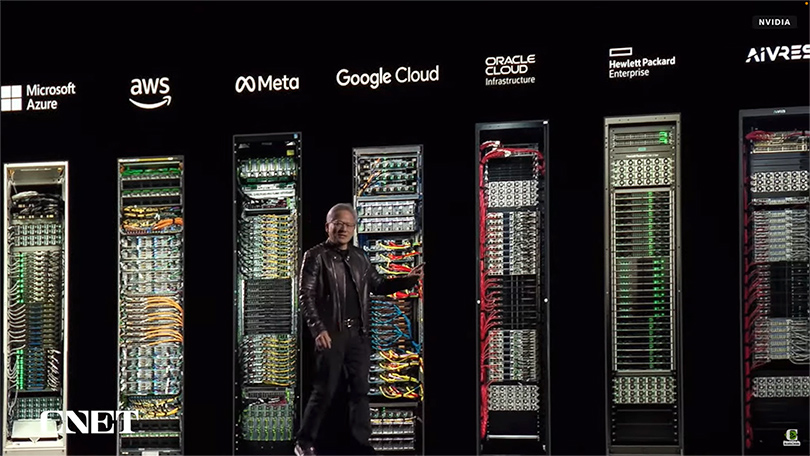
Look out Google, Amazon, and others! Nvidia is putting the pedal to the metal in terms of being innovative and visionary! They are leaving the likes of Apple in the dust.

The top talent out there is likely to go to Nvidia for a while. Engineers, programmers/software architects, network architects, product designers, data specialists, AI researchers, developers of robotics and autonomous vehicles, R&D specialists, computer vision specialists, natural language processing experts, and many more types of positions will be flocking to Nvidia to work for a company that has already changed the world and will likely continue to do so for years to come. 


NVIDIA’s AI Superbowl — from theneurondaily.com by Noah and Grant
PLUS: Prompt tips to make AI writing more natural

That’s despite a flood of new announcements (here’s a 16 min video recap), which included:

  1. A new architecture for massive AI data centers (now called “AI factories”).
  2. A physics engine for robot training built with Disney and DeepMind.
  3. partnership with GM to develop next-gen vehicles, factories and robots.
  4. A new Blackwell chip with “Dynamo” software that makes AI reasoning 40x faster than previous generations.
  5. A new “Rubin” chip slated for 2026 and a “Feynman” chip set for 2028.

For enterprises, NVIDIA unveiled DGX Spark and DGX Station—Jensen’s vision of AI-era computing, bringing NVIDIA’s powerful Blackwell chip directly to your desk.


Nvidia Bets Big on Synthetic Data — from wired.com by Lauren Goode
Nvidia has acquired synthetic data startup Gretel to bolster the AI training data used by the chip maker’s customers and developers.


Nvidia, xAI to Join BlackRock and Microsoft’s $30 Billion AI Infrastructure Fund — from investopedia.com by Aaron McDade
Nvidia and xAI are joining BlackRock and Microsoft in an AI infrastructure group seeking $30 billion in funding. The group was first announced in September as BlackRock and Microsoft sought to fund new data centers to power AI products.


Nvidia CEO Jensen Huang says we’ll soon see 1 million GPU data centers visible from space — from finance.yahoo.com by Daniel Howley
Nvidia CEO Jensen Huang says the company is preparing for 1 million GPU data centers.


Nvidia stock stems losses as GTC leaves Wall Street analysts ‘comfortable with long term AI demand’ — from finance.yahoo.com by Laura Bratton
Nvidia stock reversed direction after a two-day slide that saw shares lose 5% as the AI chipmaker’s annual GTC event failed to excite investors amid a broader market downturn.


Microsoft, Google, and Oracle Deepen Nvidia Partnerships. This Stock Got the Biggest GTC Boost. — from barrons.com by Adam Clark and Elsa Ohlen


The 4 Big Surprises from Nvidia’s ‘Super Bowl of AI’ GTC Keynote — from barrons.com by Tae Kim; behind a paywall

AI Super Bowl. Hi everyone. This week, 20,000 engineers, scientists, industry executives, and yours truly descended upon San Jose, Calif. for Nvidia’s annual GTC developers’ conference, which has been dubbed the “Super Bowl of AI.”


Who does need college anymore? About that book title … — from Education Design Lab

As you may know, Lab founder Kathleen deLaski just published a book with a provocative title: Who Needs College Anymore? Imagining a Future Where Degrees Won’t Matter.

Kathleen is asked about the title in every media interview, before and since the Feb. 25 book release. “It has generated a lot of questions,” she said in our recent book chat. “I tell people to focus on the word, ‘who.’ Who needs college anymore? That’s in keeping with the design thinking frame, where you look at the needs of individuals and what needs are not being met.”

In the same conversation, Kathleen reminded us that only 38% of American adults have a four-year degree. “We never talk about the path to the American dream for the rest of folks,” she said. “We currently are not supporting the other really interesting pathways to financial sustainability — apprenticeships, short-term credentials. And that’s really why I wrote the book, to push the conversation around the 62% of who we call New Majority Learners at the Lab, the people for whom college was not designed.” Watch the full clip

She distills the point into one sentence in this SmartBrief essay:  “The new paradigm is a ‘yes and’ paradigm that embraces college and/or other pathways instead of college or bust.”

What can colleges do moving forward?
In this excellent Q&A with Inside Higher Ed, Kathleen shares her No. 1 suggestion: “College needs to be designed as a stepladder approach, where people can come in and out of it as they need, and at the very least, they can build earnings power along the way to help afford a degree program.”

In her Hechinger Report essay, Kathleen lists four more steps colleges can take to meet the demand for more choices, including “affordability must rule.”

From white-collar apprenticeships and micro-credential programs at local community colleges to online bootcamps, self-instruction using YouTube, and more—students are forging alternative paths to GREAT high-paying jobs. (source)


The $100 billion disruption: How AI is reshaping legal tech — from americanbazaaronline.com by Rohan Hundia and Rajesh Mehta

The Size of the Problem: Judicial Backlog and Inefficiencies
India has a massive backlog of more than 47 million pending cases, with civil litigation itself averaging 1,445 days in resolution. In the United States, federal courts dispose of nearly 400,000 cases a year, and complex litigations take years to complete. Artificial intelligence-driven case law research, contract automation, and predictive analytics will cut legal research times by 90%, contract drafting fees by 60%, and hasten case settlements, potentially saving billions of dollars in legal costs.

This is not just an evolution—it is a permanent change toward data-driven jurisprudence, with AI supplementing human capabilities, speeding up delivery of justice, and extending access to legal services. The AI revolution for legal tech is not on its way; it is already under way, dismantling inefficiencies and transforming the legal world in real time.


Scaling and Improving Legal Tech Projects — from legaltalknetwork.com by Taylor Sartor, Luigi Bai, David Gray, and Cat Moon

Legal tech innovators discuss how they are working to scale and improve their successful projects on Talk Justice. FosterPower and Legal Aid Content Intelligence (LACI) leverage technology to make high-quality legal information available to people for free online. Both also received Technology Initiative Grants (TIG) from the Legal Services Corporation to launch their projects. Then, in 2024 they were both selected for a different TIG, called the Sustainability, Enhancement and Adoption (SEA) grant. This funding supports TIG projects that have demonstrated excellent results as they improve their tools and work to increase uptake.


Are Entry-Level Jobs Going Away? The Hidden Workforce Shift — from forbes.com by Dr. Diane Hamilton; via Ryan Craig

The problem is that these new roles demand a level of expertise that wasn’t expected from entry-level candidates in the past. Where someone might have previously learned on the job, they are now required to have relevant certifications, AI proficiency, or experience with digital platforms before they even apply.

Some current and emerging job titles that serve as entry points into industries include:

  • Digital marketing associate – This role often involves content creation, social media management, and working with AI-driven analytics tools.
  • Junior AI analyst – Employees in this role assist data science teams by labeling and refining machine learning datasets.
  • Customer success associate – Replacing traditional customer service roles, these professionals help manage AI-enhanced customer support systems.
  • Technical support specialist – While this role still involves troubleshooting software, it now often includes AI-driven diagnostics and automation oversight.
 

ABA Tech Survey Finds Growing Adoption of AI in Legal Practice, with Efficiency Gains as Primary Driver — from lawnext.com by Bob Ambrogi

There has been a significant increase in the adoption of artificial intelligence-based tools among law firms, with 30% of respondents now using AI technology compared to just 11% in 2023, according to the just-released 2024 edition of the American Bar Association’s Legal Technology Survey Report.

It finds that time savings and increased efficiency remain the dominant perceived benefits of AI implementation in legal practice.

The report, published Wednesday by the ABA’s Legal Technology Resource Center, is based on a survey that gathered responses from 512 attorneys in private practice across various firm sizes.


Also re: the legal world:

Why The GC-Legal Ops Partnership Is More Critical Than Ever — from abovethelaw.com by Stephanie Corey
The future of in-house legal isn’t about working in silos — it’s about working together.

AI is rapidly changing the way legal work gets done. Legal Ops can help GCs navigate this shift — identifying the right tools, ensuring responsible AI adoption, and optimizing processes so legal teams can focus on high-value work.
 

Blind Spot on AI — from the-job.beehiiv.com by Paul Fain
Office tasks are being automated now, but nobody has answers on how education and worker upskilling should change.

Students and workers will need help adjusting to a labor market that appears to be on the verge of a historic disruption as many business processes are automated. Yet job projections and policy ideas are sorely lacking.

The benefits of agentic AI are already clear for a wide range of organizations, including small nonprofits like CareerVillage. But the ability to automate a broad range of business processes means that education programs and skills training for knowledge workers will need to change. And as Chung writes in a must-read essay, we have a blind spot with predicting the impacts of agentic AI on the labor market.

“Without robust projections,” he writes, “policymakers, businesses, and educators won’t be able to come to terms with how rapidly we need to start this upskilling.”


5 Legal Tech Trends Set to Impact Law Firms in 2025 — from programminginsider.com by Marc Berman

The legal industry is experiencing swift changes, with technology becoming an ever more crucial factor in its evolution. As law firms respond to shifting client demands and regulatory changes, the pace of change is accelerating. Embracing legal tech is no longer just an advantage; it’s a necessity.

According to a Forbes report, 66% of legal leaders acknowledge this trend and intend to boost their investments in legal tech moving forward. From artificial intelligence streamlining workflows to cloud computing enabling globalized legal services, the legal landscape is undergoing a digital revolution.

In this article, we’ll explore five key legal tech trends that will define how law firms operate in 2025.


GenAI, Legal Ops, and The Future of Law Firms: A Wake-Up Call? — from echlawcrossroads.com by Stephen Embry

A new study from the Blickstein Group reveals some distributing trends for law firms that represent businesses, particularly large ones. The Study is entitled  Legal Service Delivery in the Age of AI. The Study was done jointly by FTI Technologies, a consulting group, and Blickstein. It looks at law department legal operations.

The Findings

GenAI Use by Legal Ops Personnel

The responses reflect a bullish view of what GenAI can do in the legal marketplace but also demonstrate GenAi has a ways to go:

  • Almost 80% of the respondents think that GenAI will become an “essential part of the legal profession.
  • 81% believe GenAi will drive improved efficiencies
  • Despite this belief, only some 30% have plans to purchase GenAI tools. For 81%, the primary reason for obtaining and using GenAI tools is the efficiencies these tools bring.
  • 52% say their GenAI strategy is not as sophisticated as they would like or nonexistent.

The biggest barrier to the use of GenAI among the legal ops professions is cost and security concerns and the lack of skilled personnel available to them.


Voting Is Closed, Results Are In: Here are the 15 Legal Tech Startups Selected for the 2025 Startup Alley at ABA TECHSHOW — from lawnext.com by Bob Ambrogi

Voting has now closed and your votes have been tallied to pick the 15 legal tech startups that will get to participate as finalists in the ninth-annual Startup Alley at ABA TECHSHOW 2025, taking place April 2-5 in Chicago.

These 15 finalists will face off in an opening-night pitch competition that is the opening event of TECHSHOW, with the conference’s attendees voting at the conclusion of the pitches to pick the top winners.


Balancing innovation and ethics: Applying generative AI in legal work — from legal.thomsonreuters.com

Generative artificial intelligence (GenAI) has brought a new wave of opportunities to the legal profession, opening doors to greater efficiency and innovation. Its rapid development has also raised questions about its integration within the legal industry. As legal professionals are presented with more options for adopting new technologies, they now face the important task of understanding how GenAI can be seamlessly — and ethically — incorporated into their daily operations.


Emerging Trends in Court Reporting for 2025: Legal Technology and Advantages for Law Firms — from jdsupra.com

The court reporting industry is evolving rapidly, propelled by technological advancements and the increasing demand for efficiency in the legal sector. For 2025, trends such as artificial intelligence (AI), real-time transcription technologies, and data-driven tools are reshaping how legal professionals work. Here’s an overview of these emerging trends and five reasons law firms should embrace these advancements.


The Real Deal — from workshift.org
A series exploring what we know about the quality of nondegree credentials.

The above link/page includes the posting:

Understanding Influencers in the World of Nondegree Credentials — by Michelle Van Noy and Tom Hilliard
There’s no single arbiter of nondegree quality, but rather a host of “quality influencers” who seek to shape the market.

They respond to needs that the degree-credit system has not efficiently met: quick start-up, shorter sequences, relationships with third-party credential issuers, real-time employer engagement, and so on. The complexity of the needs of the market and of learners has led to a proliferation of diverse credentials, and a landscape that continues to evolve in surprising directions.

Amid this complexity, there’s no one single arbiter of quality but rather a host of “quality influencers” who seek to shape the market in different ways. Exploring who those influencers are, how they approach their work, and what they seek to accomplish is essential to understanding what quality means for noncredit credentials—and what could happen in years to come.


The Rise of the Heretical Leader — from ditchthattextbook.com; a guest post by Dan Fitzpatrick

Now is the time for visionary leadership in education. The era of artificial intelligence is reshaping the demands on education systems. Rigid policies, outdated curricula, and reliance on obsolete metrics are failing students. A recent survey from Resume Genius found that graduates lack skills in communication, collaboration, and critical thinking. Consequently, there is a growing trend in companies hiring candidates based on skills instead of traditional education or work experience. This underscores the urgent need for educational leaders to prioritize adaptability and innovation in their systems. Educational leaders must embrace a transformative approach to keep pace.

[Heretical leaders] bring courage, empathy, and strategic thinking to reimagine education’s potential. Here are their defining characteristics:

  • Visionary Thinking: They identify bold, innovative paths to progress.
  • Courage to Act: These leaders take calculated risks to overcome resistance and inertia.
  • Relentless Curiosity: They challenge assumptions and seek better alternatives.
  • Empathy for Stakeholders: Understanding the personal impact of change allows them to lead with compassion.
  • Strategic Disruption: Their deliberate actions ensure systemic improvements.
    These qualities enable Heretical leaders to reframe challenges as opportunities and drive meaningful change.

From DSC:
Readers of this blog will recognize that I believe visionary leadership is extremely important — in all areas of our society, but especially within our learning ecosystems. Vision trumps data, at least in my mind. There are times when data can be used to support a vision, but having a powerful vision is more lasting and impactful than relying on data to drive the organization.

So while I’d vote for a different term other than “heretical leaders,” I get what Dan is saying and I agree with him. Such leaders are going against the grain. They are swimming upstream. They are espousing perspectives that others often don’t buy into (at least initially or for some time). 

Such were the leaders who introduced online learning into the K-16 educational systems back in the late ’90s and into the next two+ decades. The growth of online-based learning continues and has helped educate millions of people. Those leaders and the people who worked for such endeavors were going against the grain.

We haven’t seen the end point of online-based learning. I think it will become even more powerful and impactful when AI is used to determine which jobs are opening up, and which skills are needed for those jobs, and then provide a listing of sources of where one can obtain that knowledge and develop those skills. People will be key in this vision. But so will AI and personalized learning. It will be a collaborative effort.

By the way, I am NOT advocating for using AI to outsource our thinking. Also, having basic facts and background knowledge in a domain is critically important, especially to use AI effectively. But we should be teaching students about AI (as we learn more about it ourselves). We should be working collaboratively with our students to understand how best to use AI. It’s their futures at stake.


The number of 18-year-olds is about to drop sharply, packing a wallop for colleges — and the economy — from hechingerreport.org by Jon Marcus
America is about to go over the ‘demographic cliff’

That’s because the current class of high school seniors is the last before a long decline begins in the number of 18-year-olds — the traditional age of students when they enter college.

This so-called demographic cliff has been predicted ever since Americans started having fewer babies at the advent of the Great Recession around the end of 2007 — a falling birth rate that has not recovered since, except for a slight blip after the Covid-19 pandemic, according to the Centers for Disease Control.

Demographers say it will finally arrive in the fall of this year. That’s when recruiting offices will begin to confront the long-anticipated drop-off in the number of applicants from among the next class of high school seniors.

“A few hundred thousand per year might not sound like a lot,” Strohl said. “But multiply that by a decade and it has a big impact.”

From DSC:
I remember seeing graphics about this demographic cliff over a decade ago…so institutions of traditional higher education have seen this coming for many years now (and the article references this as well). But it’s still important and the ramifications of this could be significant for many colleges and universities out there (for students, faculty, staff, and administrations).

  • Will there be new business models?
  • More lifelong learning models?
  • Additions to the curricula?

I sure hope so.


Higher Ed’s Governance Problem — from chronicle.com by Brian Rosenberg; via Ryan Craig
Boards are bloated and ineffectual.

According to the Association of Governing Boards of Universities and Colleges, the average size of a private nonprofit college or university board is 28 (larger than a major-league baseball roster), though boards of elite colleges tend to skew even larger: closer to 40, according to a study done by McKinsey.

By way of comparison, the average size of the board of directors of a publicly traded company in the United States is nine. If that seems too “corporate,” consider that the average size of the board of a nonprofit health-care institution is 13…

Still, anyone who studies organizational effectiveness would tell you that college and university boards are much too large, as would almost any college or university president when speaking off the record. Getting 12 people to spend significant time studying serious challenges and then reaching consensus about how to tackle those challenges is a heavy lift. Doing this with 25 or 35 or 45 people is close to impossible.


From Google ads to NFL sponsorships: Colleges throw billions at marketing themselves to attract students — from hechingerreport.org by Jon Marcus
Marketing and branding are getting big budgets and advertising is setting new records

In fact, the sum is small compared to what other colleges and universities are investing in advertising, marketing and promotion, which has been steadily rising and is on track this year to be nearly double what it was last year.

Among the reasons are a steep ongoing decline in enrollment, made worse by the pandemic, and increasing competition from online providers and others.

“Private schools in particular are acutely conscious of the demographics in this country. They’re competing for students, and marketing is how you have to do that.”

John Garvey, president, Catholic University


From DSC:
And for you students out there, check this sound advice out!


How Generative AI Is Shaping the Future of Law: Challenges and Trends in the Legal Profession — from thomsonreuters.com by Raghu Ramanathan

With this mind, Thomson Reuters and Lexpert hosted a panel featuring law firm leaders and industry experts discussing the challenges and trends around the use of generative AI in the legal profession.?Below are insights from an engaging and informative discussion.

Sections included:

  • Lawyers are excited to implement generative AI solutions
  • Unfounded concerns about robot lawyers
  • Changing billing practices and elevating services
  • Managing and mitigating risks

Adopting Legal Technology Responsibly — from lexology.com by Sacha Kirk

Here are fundamental principles to guide the process:

  1. Start with a Needs Assessment…
  2. Engage Stakeholders Early…
  3. Choose Scalable Solutions…
  4. Prioritise Security and Compliance…
  5. Plan for Change Management…

Modernizing Legal Workflows: The Role Of AI, Automation, And Strategic Partnerships — from abovethelaw.com by Scott Angelo, Jared Gullbergh, Nancy Griffing, and Michael Owen Hill
A roadmap for law firms.  

Angelo added, “We really doubled down on AI because it was just so new — not just to the legal industry, but to the world.” Under his leadership, Buchanan’s efforts to embrace AI have garnered significant attention, earning the firm recognition as one of the “Best of the Best for Generative AI” in the 2024 BTI “Leading Edge Law Firms” survey.

This acknowledgment reflects more than ambition; it highlights the firm’s ability to translate innovative ideas into actionable results. By focusing on collaboration and leveraging technology to address client demands, Buchanan has set a benchmark for what is possible in legal technology innovation.

The collective team followed these essential steps for app development:

  • Identify and Prioritize Use Cases…
  • Define App Requirements…
  • Leverage Pre-Built Studio Apps and Templates…
  • Incorporate AI and Automation…
  • Test and Iterate…
  • Deploy and Train…
  • Measure Success…

Navigating Generative AI in Legal Practice — from linkedin.com by Colin Levy

The rise of artificial intelligence (AI), particularly generative AI, has introduced transformative potential to legal practice. For in-house counsel, managing legal risk while driving operational efficiency increasingly involves navigating AI’s opportunities and challenges. While AI offers remarkable tools for automation and data-driven decision-making, it is essential to approach these tools as complementary to human judgment, not replacements. Effective AI adoption requires balancing its efficiencies with a commitment to ethical, nuanced legal practice.

Here a few ways in which this arises:


How to adopt GenAI within your legal department or law practice — from legaldive.com by Justin Bachman
Capital spending and ROI will be top of mind for legal executives moving forward with AI legal tools in 2025. Here are some best practices.

Dive Brief:

  • Debate about whether to use artificial intelligence in legal practice has ended. Discussions today are focused on costs, returns and how to best incorporate the technology into departments and outside law firms, according to an expert panel of legal tech specialists.
  • Buyers of generative AI solutions will encounter “a lot of confusion and a lot of opacity” on pricing, with multiple commercial models, George Socha, senior vice president of brand awareness at legal tech firm Reveal, said on a recent webinar. Long-term or firm contracts are best avoided for most legal tech customers, said Lee Wielenga, chief information officer at U.S. Legal Support.
  • Legal executives should consider small-group pilot projects for AI tools, focused on areas where routine, mundane tasks would benefit from automation, according to the panel. Software used in a business setting typically comes with permissioning access for employees, and generative AI adoption is likely to follow similar models.

Along the lines of legaltech, also see:

 
© 2025 | Daniel Christian