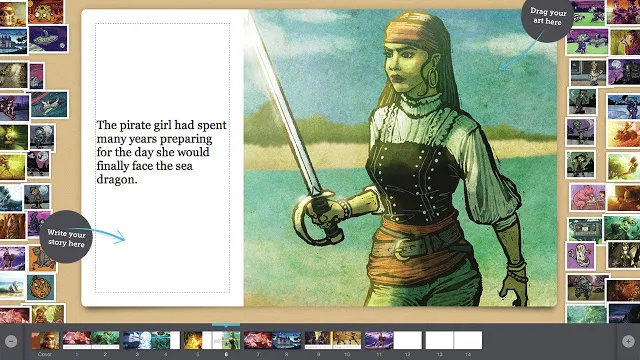
5 of the Best Tools To Teach Storytelling — from techlearning.com by Luke Edwards
Use these best tools to teach storytelling to help students progress towards mastery

The best tools to teach storytelling can also be some of the most ideal ways to engage students, both creatively and more generally with education. From sparking their imaginations to helping structure a creative toolset, these digital assistants can be powerful in the classroom and beyond.

Giving a student the ability to structure and tell a compelling story can help to empower them in terms of literacy, empathy, and critical thinking.

Students can be given the opportunity to explore historical perspectives, dive into personal narratives, build fictional worlds, and present research in a story form. All of which helps strengthen communication skills while learning at the same time.
.


Centering work-based learning on the 4 As—authenticity, aspiration, ability, agency — from explore.gpsed.org

In the rush to expand work-based learning (WBL), it is easy to focus on the “placement”—the logistics of getting a student into a workplace. But a placement alone isn’t a strategy. If an experience doesn’t help a student build the internal capacity to navigate their own future, we are simply checking a box.

At GPS Ed, we believe WBL is most powerful when viewed as a sequenced journey of career literacy. It starts with early awareness and exploration, giving students the chance to “try on” different roles, and scales up to intensive, hands-on experiences. By centering this journey on the 4 As—authenticity, aspiration, ability, agency—we ensure that the time invested by students, schools, and employers yields a lifelong return.


Also see:


Something Big Is Happening — from shumer.dev by Matt Shumer; see below from the BIG Questions Institute, where I got this article from

I’ve spent six years building an AI startup and investing in the space. I live in this world. And I’m writing this for the people in my life who don’t… my family, my friends, the people I care about who keep asking me “so what’s the deal with AI?” and getting an answer that doesn’t do justice to what’s actually happening. I keep giving them the polite version. The cocktail-party version. Because the honest version sounds like I’ve lost my mind. And for a while, I told myself that was a good enough reason to keep what’s truly happening to myself. But the gap between what I’ve been saying and what is actually happening has gotten far too big. The people I care about deserve to hear what is coming, even if it sounds crazy.


They’ve now done it. And they’re moving on to everything else.

The experience that tech workers have had over the past year, of watching AI go from “helpful tool” to “does my job better than I do”, is the experience everyone else is about to have. Law, finance, medicine, accounting, consulting, writing, design, analysis, customer service. Not in ten years. The people building these systems say one to five years. Some say less. And given what I’ve seen in just the last couple of months, I think “less” is more likely.

The models available today are unrecognizable from what existed even six months ago. The debate about whether AI is “really getting better” or “hitting a wall” — which has been going on for over a year — is over. It’s done. Anyone still making that argument either hasn’t used the current models, has an incentive to downplay what’s happening, or is evaluating based on an experience from 2024 that is no longer relevant. I don’t say that to be dismissive. I say it because the gap between public perception and current reality is now enormous, and that gap is dangerous… because it’s preventing people from preparing.


What “Something Big Is Happening” Means for Schools — from/by the BIG Questions Institute
Matt Shumer’s newsletter post Something Big is Happening has been read over 80 million times within the week when it was published, on February 9.

Still, it’s worth reading Shumer’s post. Given the claims and warnings in Something Big Is Happening (and countless other articles), how would you truly, honestly respond to these questions:

  • What will the purpose of school be in 5 years?
  • What are we doing now that we must leave behind right away?
  • What can we leave behind gradually?
  • What does rigor look like in this AI-powered world?
  • Does our strategy look like making adjustments at the margins or are we preparing our students for a fundamental shift?
  • What is our definition of success? How do the the implications of AI and jobs (and other important forces, from geopolitical shifts and climate change, to mental health needs and shifting generational values) impact the outcomes we prioritize? What is the story of success we want to pass on to our students and wider community?
 

Make Gatherings More Engaging — from wondertools.substack.com by Jeremy Caplan
Tested tools for quizzes, online discussions, & shareable docs

The hardest part of teaching — or leading meetings — is sparking engagement. Getting people to engage enthusiastically with something new can be tough. It’s especially challenging if people are overwhelmed, super busy, or just tired.

As we aim to stretch people’s thinking in a new direction, tools are just one part of the overall picture. But they can help. Last week I shared five tools for creating learning paths, interactive lessons, and new kinds of digital notebooks. Today’s follow-up recommendations focus on creative engagement.

You don’t have to be a teacher to find these resources for opening up participation useful. If you lead a team, run meetings, or collaborate with colleagues, you can benefit from these tools.

I’ve baked into this post multiple ways to engage.


National Study of Special Education Spending — from air.org

Federal, state, and local policymakers and education leaders urgently need up-to-date national estimates for what is spent to provide special education services to inform their funding policies and budget for special education expenses.

The National Study of Special Education Spending’s (NSSES) purpose is to update our understanding of the costs of special education and related services. The study will collect information from a national sample of districts and schools about what is spent to educate students with disabilities, as well as what states and districts spend to operate their special education programs and comply with federal and state laws. The Institute of Education Sciences within the Department of Education has partnered with AIR, NORC at the University of Chicago, and Allovue, a PowerSchool Company, to design the study.

Pilot Study
A pilot study for the NSSES study will take place during the 2024/25 and 2025/26 school years. The pilot study’s findings will help inform the study design for the full-scale national study, which is planned for 2026/27 school year.

The timeline for the 2025/26 pilot study is:

  • Summer 2025: District recruitment
  • Fall 2025: School recruitment within participating districts and sampling students within participating schools
  • December 2025—February 2026: Data collection, including surveys with district and school staff and financial data from districts
  • Spring 2026: Analysis of pilot study data and preparation for full-scale study
 

Confidence, Engagement, and Love: The Missing Alumni Data that Will Transform K-12 — from gettingsmart.com by Corey Mohn

Ten years ago, we made a bet on relationships over replication. Instead of franchising a model, we chose to build an ecosystem—the CAPS Network—grounded in the belief that an entrepreneurial approach would create ripples of innovation with exponential scaling power. We believed that by harnessing the power of relationships for good, we could help more students discover who they are and where they belong in the world.

Today, with over 1,200 alumni voices captured in our 2025 Alumni Impact Study, we’re seeing those ripples turn into waves. And we believe these waves can and will be surfed by educators all across the globe. We are committed to the idea that our purpose (providing more students in more places the time and space for self-discovery) is more important than our brand. As such, we want our learnings to be leveraged by anyone and everyone to make a positive impact.


Confidence, Engagement, and Love explores the data we rarely track but desperately need. This piece argues that alumni confidence, sustained engagement, and a sense of being loved by their school communities are leading indicators of long-term success. It challenges K–12 systems to look beyond test scores and graduation rates and instead ask what happens after students leave, who stays connected, and how belonging shapes opportunity. The result is a call to rethink accountability around relationships, not just results.


Early Signs of Dyslexia in Kids and When to Get Help — from intelligenthq.com by Pallavi Singal

Children develop at different speeds, and that’s completely normal. However, some learning struggles feel more persistent and harder to explain. Many parents start to worry when reading or spelling does not improve over time, even with regular practise.

Dyslexia in children is more common than many people realise, yet it is often misunderstood. The early signs of dyslexia in kids can be subtle, especially in younger children and they don’t always appear all at once. Because of this, they are easy to miss at first.

This guide breaks down the signs by age, from early years to primary school and beyond. It also explains what to look out for and what practical steps you can take next, so you feel informed, supported and confident about how to help your child.


Jim VandeHei’s note to his kids: Blunt AI talk — from axios.com by CEO Jim VandeHei
Axios CEO Jim VandeHei wrote this note to his wife, Autumn, and their three kids. She suggested sharing it more broadly since so many families are wrestling with how to think and talk about AI. So here it is …

Dear Family:
I want to put to words what I’m hearing, seeing, thinking and writing about AI.

  • Simply put, I’m now certain it will upend your work and life in ways more profound than the internet or possibly electricity. This will hit in months, not years.
  • The changes will be fast, wide, radical, disorienting and scary. No one will avoid its reach.

I’m not trying to frighten you. And I know your opinions range from wonderment to worry. That’s natural and OK. Our species isn’t wired for change of this speed or scale.

  • My conversations with the CEOs and builders of these LLMs, as well as my own deep experimentation with AI, have shaken and stirred me in ways I never imagined.

All of you must figure out how to master AI for any specific job or internship you hold or take. You’d be jeopardizing your future careers by not figuring out how to use AI to amplify and improve your work. You’d be wise to replace social media scrolling with LLM testing.

Be the very best at using AI for your gig.

more here.


Also see:


Also relevant/see:


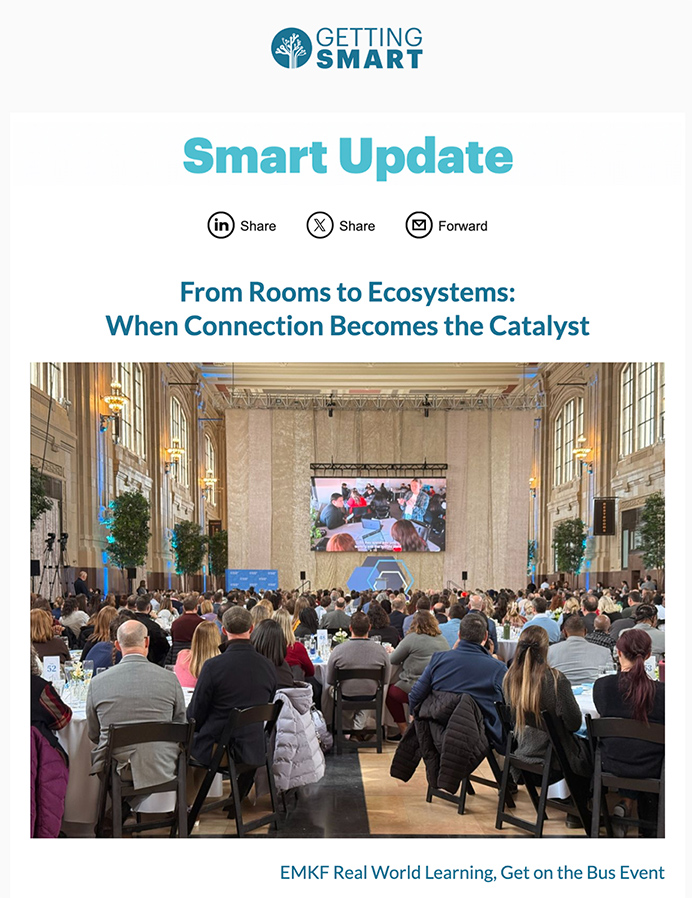
From Rooms to Ecosystems: When Connection Becomes the Catalyst

Some gatherings change not just in size, but in meaning. What started as a small, intentional space to celebrate partners has grown into a moment that reflects how an entire ecosystem has matured. Each year, the room fills with more leaders, more relationships, and more shared language about what learning can look like when people are genuinely connected. It is less about an event on the calendar and more about what it represents: an education community that knows each other, trusts each other, and keeps showing up.

That kind of connection did not happen by accident. Through efforts like Get on the Bus, hosted by the Ewing Marion Kauffman Foundation, networking for education leaders has shifted from transactional to relational. Students lead. Stories anchor the work. Conversations happen across tables, sectors, and roles. System leaders, intermediaries, industry partners, and civic organizations are not passing business cards. They are building shared understanding and social capital that lasts long after the room clears.

This week’s newsletter carries that same energy. You will find examples of learning that travels beyond buildings, leadership conversations grounded in real tensions, and models that reflect what becomes possible when ecosystems are aligned. When people feel connected to one another and to a common purpose, the work gets clearer, stronger, and more human. That sense of belonging is not just powerful. It is foundational to what comes next.


Town Hall Recap: What’s Next in Learning 2026 — from gettingsmart.com by Tom Vander Ark, Nate McClennen, Shawnee Caruthers, Victoria Andrews

As we enter 2026, the Getting Smart team is diving deep into the convergence of human potential and technological opportunity. Our annual Town Hall isn’t just a forecast—it’s a roadmap for the year ahead. We will explore how human-centered AI is reshaping pedagogy, the power of participation, and the new realities of educational leadership. Join us as we define the new dispositions for future-ready educators and discover how to build meaningful, personalized pathways for every student.


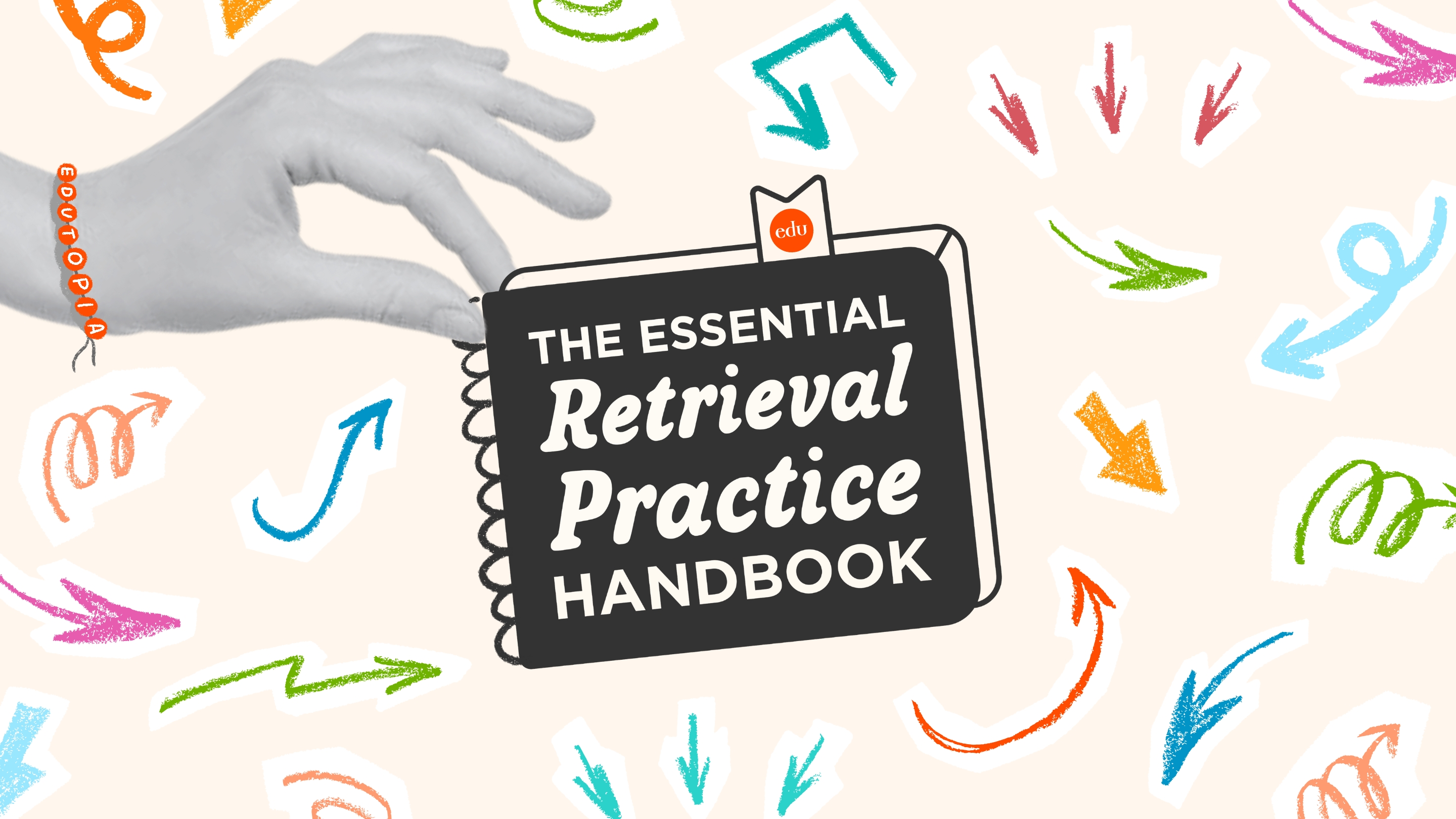
The Essential Retrieval Practice Handbook — from edutopia.org
Retrieval practice is one of the most effective ways to strengthen learning. Here’s a collection of our best resources to use in your classroom today.
January 29, 2026


Also see:

What is retrieval practice? — from retrievalpractice.org

When we think about learning, we typically focus on getting information into students’ heads. What if, instead, we focus on getting information out of students’ heads?


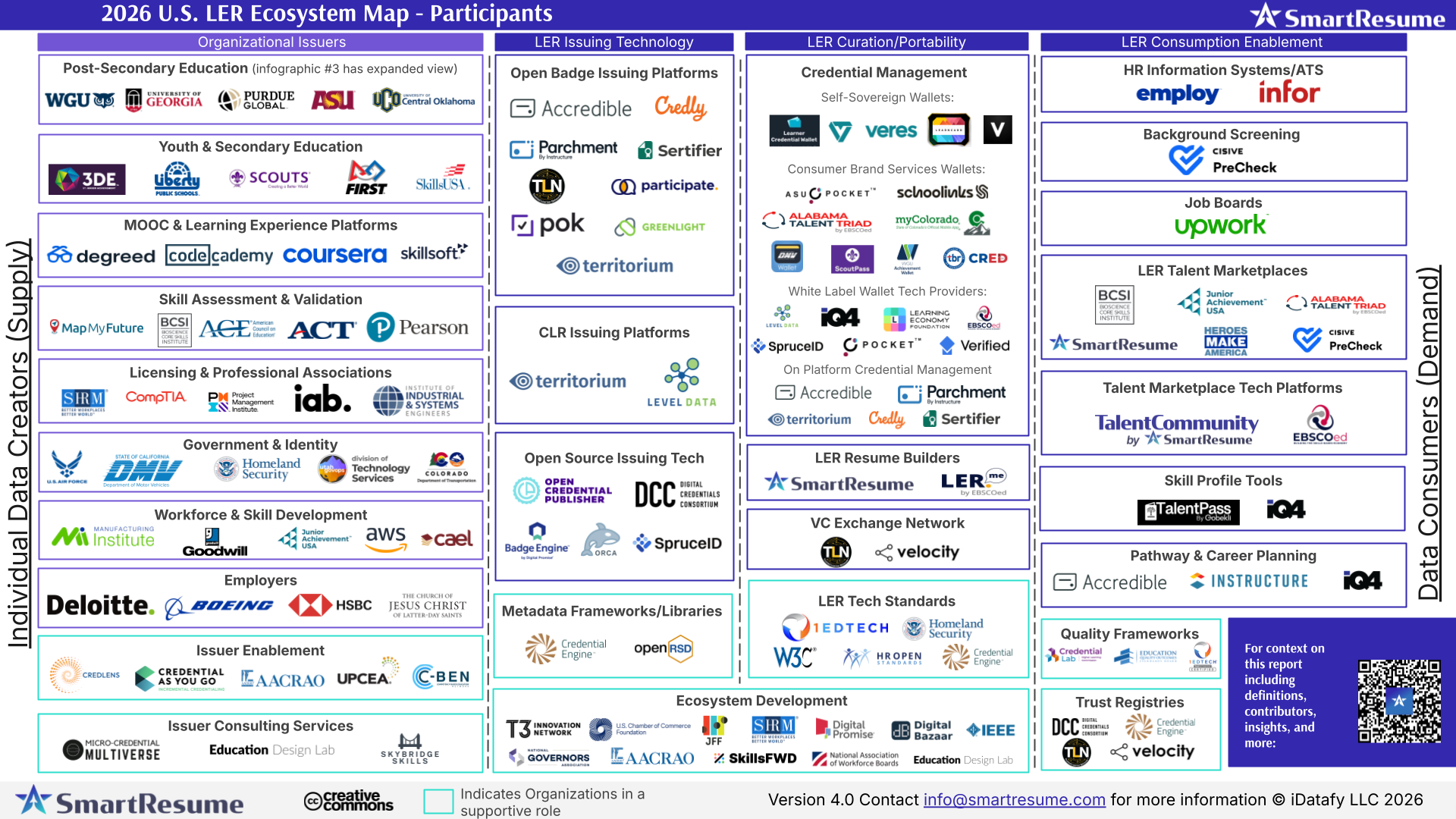
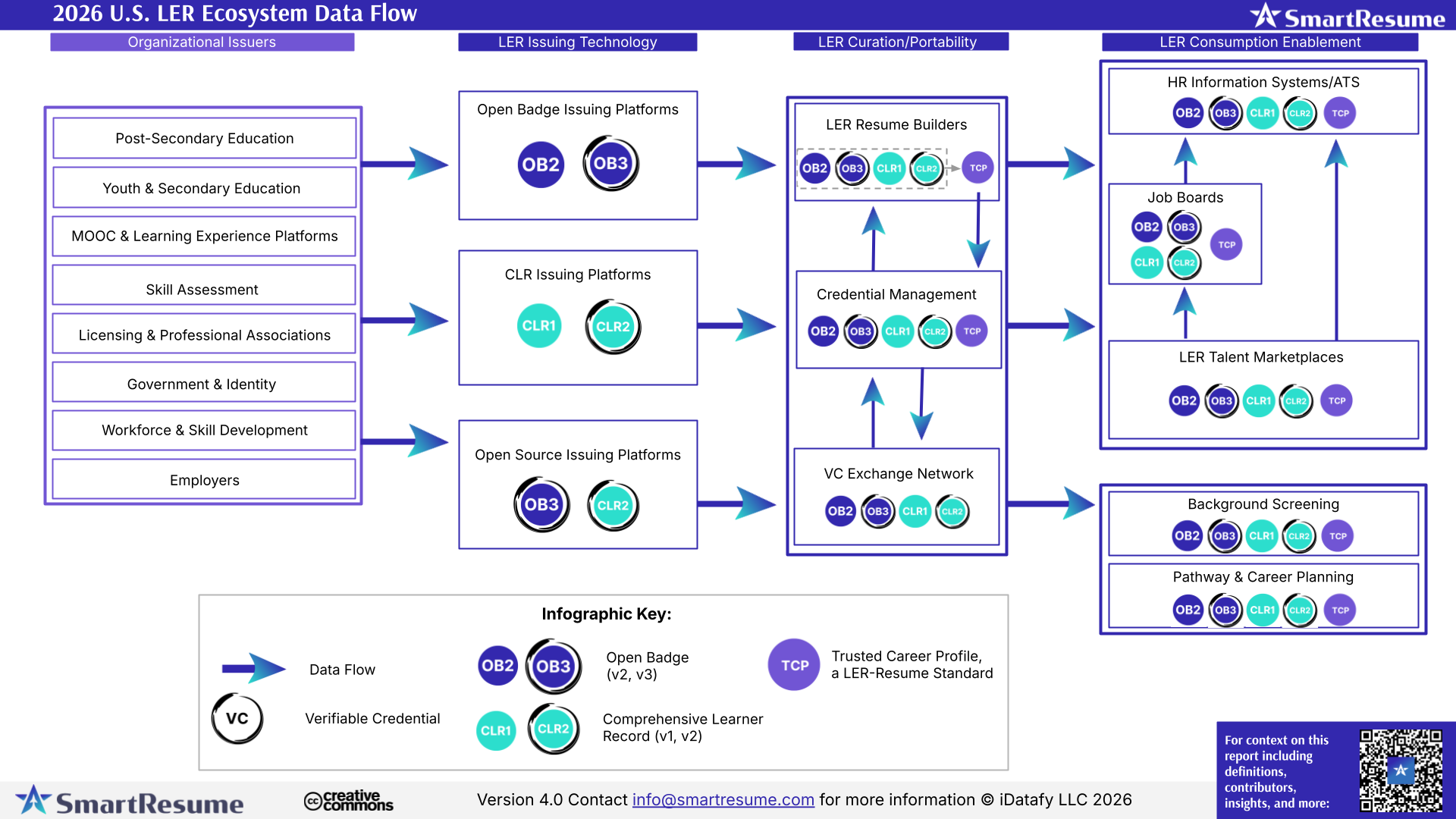
The Learning and Employment Records (LER) Report for 2026: Building the infrastructure between learning and work — from smartresume.com; with thanks to Paul Fain for this resource

Executive Summary (excerpt)

This report documents a clear transition now underway: LERs are moving from small experiments to systems people and organizations expect to rely on. Adoption remains early and uneven, but the forces reshaping the ecosystem are no longer speculative. Federal policy signals, state planning cycles, standards maturation, and employer behavior are aligning in ways that suggest 2026 will mark a shift from exploration to execution.

Across interviews with federal leaders, state CIOs, standards bodies, and ecosystem builders, a consistent theme emerged: the traditional model—where institutions control learning and employment records—no longer fits how people move through education and work. In its place, a new model is being actively designed—one in which individuals hold portable, verifiable records that systems can trust without centralizing control.

Most states are not yet operating this way. But planning timelines, RFP language, and federal signals indicate that many will begin building toward this model in early 2026.

As the ecosystem matures, another insight becomes unavoidable: records alone are not enough. Value emerges only when trusted records can be interpreted through shared skill languages, reused across contexts, and embedded into the systems and marketplaces where decisions are made.

Learning and Employment Records are not a product category. They are a data layer—one that reshapes how learning, work, and opportunity connect over time.

This report is written for anyone seeking to understand how LERs are beginning to move from concept to practice. Whether readers are new to the space or actively exploring implementation, the report focuses on observable signals, emerging patterns, and the practical conditions required to move from experimentation toward durable infrastructure.
 

“The building blocks for a global, interoperable skills ecosystem are already in place. As education and workforce alignment accelerates, the path toward trusted, machine-readable credentials is clear. The next phase depends on credentials that carry value across institutions, industries, states, and borders; credentials that move with learners wherever their education and careers take them. The question now isn’t whether to act, but how quickly we move.”

– Curtiss Barnes, Chief Executive Officer, 1EdTech


The above item was from Paul Fain’s recent posting, which includes the following excerpt:

SmartResume just published a guide for making sense of this rapidly expanding landscape. The LER Ecosystem Report was produced in partnership with AACRAO, Credential Engine, 1EdTech, HR Open Standards, and the U.S. Chamber of Commerce Foundation. It was based on interviews and feedback gathered over three years from 100+ leaders across education, workforce, government, standards bodies, and tech providers.

The tools are available now to create the sort of interoperable ecosystem that can make talent marketplaces a reality, the report argues. Meanwhile, federal policy moves and bipartisan attention to LERs are accelerating action at the state level.

“For state leaders, this creates a practical inflection point,” says the report. “LERs are shifting from an innovation discussion to an infrastructure planning conversation.”


From Stephanie T.’s posting out on LinkedIn

The lesson isn’t to make school reports more like Spotify Wrapped.

It’s to design reports that are accessible, timely, and readable — without losing the humanity that makes teacher insight meaningful.

If a report is too difficult to access, or arrives too late to matter, who is it really for?


Reflecting on Education in 2025 — from by Dr. Rachelle Dené Poth

Educators have become more discerning about initiatives to invest in, tools to explore, and expectations to set. The question “Can we do this?” shifted to “Should we do this? And “Why?” Which then led to the “How” part.

This shift showed up in conversations around curriculum, assessment, technology use, and student well-being. Schools began reducing or being more selective rather than layering, which helped educators to adjust better to change. Leaders focused more on coherence instead of compliance. And in some conversations I had or articles I read, I noticed respectful pushback on practices that added complexity without improving learning.

I think this is why the recalibration mattered.

AI has become less about “cheating” and more about helping students and others learn how to think, evaluate, and create responsibly in an AI-infused world.

Educators have become more discerning about initiatives to invest in, tools to explore, and expectations to set. The question “Can we do this?” shifted to “Should we do this? And “Why?” Which then led to the “How” part.


6 Ed Tech Tools to Try in 2026 — from cultofpedagogy.com by Jennifer Gonzalez

It’s that time again ~ the annual round-up of tech tools we think are worth a look this year. This year I really feel like there’s something for everyone: history teachers, math and science teachers, people who run makerspaces, teachers interested in music or podcasting, writing teachers, special ed teachers, and anyone whose course content could be made clearer through graphic organizers.


Also somewhat relevant here, see:


© 2025 | Daniel Christian