U.S. debt $417 billion below the debt ceiling — from CNN.com by Jeanne Sahadi

Excerpt:

The debt ceiling is currently set at $16.394 trillion. At the end of August, the amount of debt subject to that limit — which excludes certain types of debt was $15.977 trillion, roughly $417 billion below the cap. Since the government typically borrows between $100 billion and $125 billion a month, that means it’s on track to hit the ceiling sometime in December. But the Treasury Department will likely be able to use “extraordinary measures” to keep the debt just below the legal limit for a couple of months.

Bottom line:
Congress will likely need to raise the ceiling in early 2013 or Treasury will risk defaulting on the country’s legal obligations by failing to pay all of its bills in full and on time.

From DSC:
At some point, if we don’t turn things around, the vast majority of our tax dollars will go to pay for interest on our debt…and. nothing. else.
 

My hats off to Clayton Christensen and Henry Eyring!  My respect level just went up yet another notch for these two people.

Seeing as Clayton is a Professor at ***Harvard‘s*** Business School and Henry is an ***Administrator*** at Brigham Young University, their stance and recent letter to college and university trustees nationwide is a wonderful example of true leadership.   They risked many things by taking a stand and urging institutions of higher education to change. Their purpose is noble. Their message should be heeded.

From the website of the American Council of Trustees and Alumni: (emphasis by DSC)

Clayton Christensen: higher ed trustees “crucial as never before”
Harvard Business School professor (and bestselling author of The Innovator’s Dilemma) Clayton M. Christensen and Henry J. Eyring of Brigham Young University recently sent a letter to college and university trustees nationwide, recognizing a critical turning point for the future of higher education. “If you’ve been serving for more than a few years, you’ve seen a big change in the nature of trustees meetings,” the authors wrote. “Before the downturn of 2008, the agenda tended to focus on growth and on ways to fund it…. At some point, the bubble was bound to burst—or at least start to sag. Now that it has, your role becomes crucial as never before.” The letter urges trustees to demand innovative solutions to expand student access and improve academic quality at their institutions: “The innovators can do more than merely avoid disruption. They can help usher in a new age of higher education, one of unprecedented access and quality, a combined industrial revolution and renaissance.”


.

Addendum on 7/16/12:

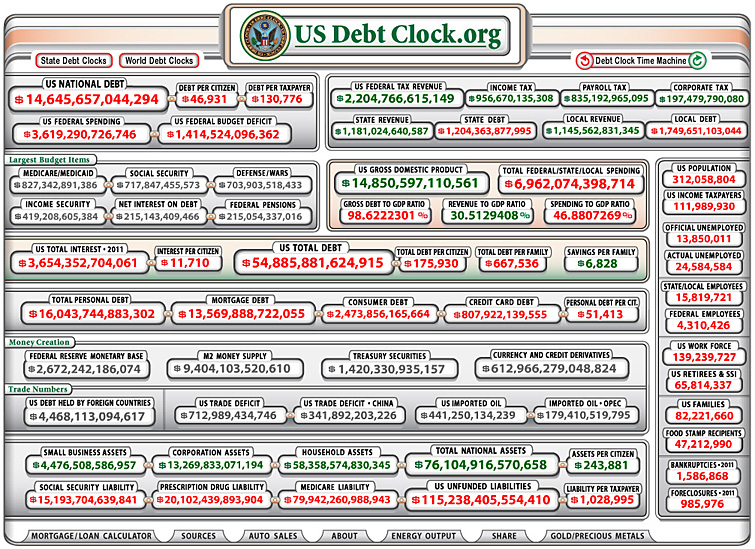
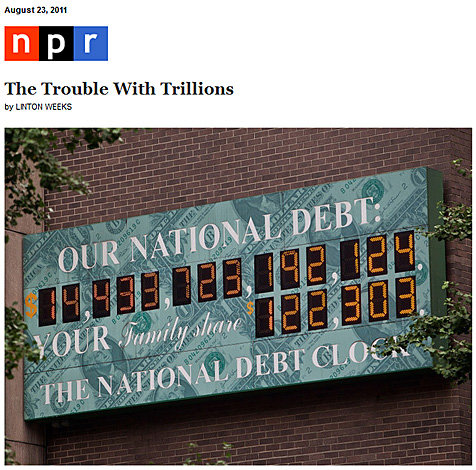
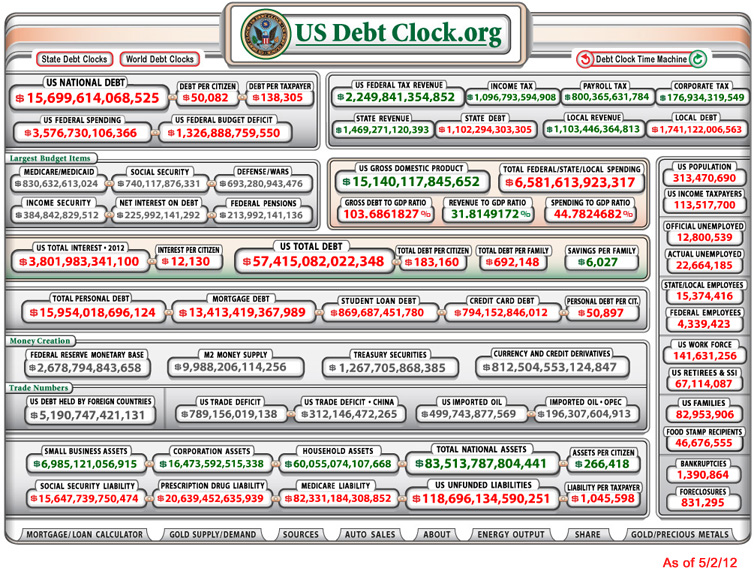
http://www.usdebtclock.org/

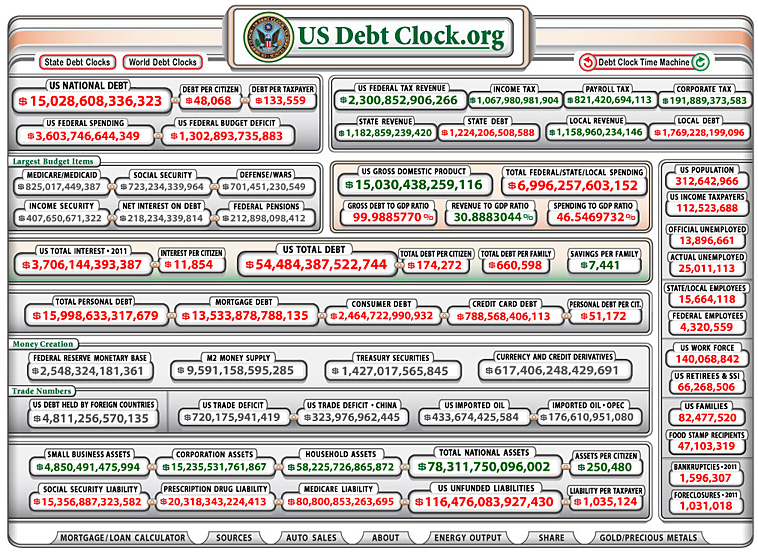
 …and back from previous dates:


As of 11-20-11


usdebtclock.org

As of 8-24-11


Also see:


Addendum on 5/7/12:

2011 Year in Review: Global Changes in Tuition Fee Policies and Student Financial Assistance.

Excerpt:

All around the world, the pace of change in higher education is accelerating. In the face of continued increases in participation, demographic change and – in the west at least – profound fiscal crises, higher education institutions are increasingly being required to raise funds from students as opposed to relying on transfers from governments. Indeed, the pace of policy change is coming so quickly that it is difficult to keep track of all the relevant developments in different parts of the world.

In this, the second edition of Year in Review: Tuition Fees and Student Assistance, we outline the major changes related to higher education affordability around the world in 2011. In order to keep our sample manageable, we have kept our inquiries to a selection of 40 countries that collectively best represent the global situation:

The G-40 consists of: Argentina, Australia, Brazil, Canada, Chile, China, Colombia, Egypt, Finland, France, Germany, Hong Kong, India, Indonesia, Iran, Israel, Italy, Japan, Korea (Republic of), Malaysia, Mexico, the Netherlands, Nigeria, Pakistan, Philippines, Poland, Russian Federation, Saudi Arabia, Singapore, South Africa, Spain, Sweden, Switzerland, Taiwan, Thailand, Turkey, Ukraine, United Kingdom, United States, Vietnam.

Marcucci, Pamela and Usher, Alex (2012). 2011 Year in Review:
Global Changes in Tuition Fee Policies and Student Financial Assistance.
Toronto: Higher Education Strategy Associates.


Below are the concluding paragraphs of Introducing Bennett Hypothesis 2.0 [by Andrew Gillen, Center for College Affordability and Productivity, with emphasis below from DSC)

Original Bennett Hypothesis + a couple refinements + Bowen’s Rule = Bennett Hypothesis 2.0.

The original Bennett Hypothesis held that increases in financial aid will lead to higher tuition, but the empirical evidence testing the hypothesis is inconclusive. The next generation of the concept, Bennett Hypothesis 2.0, adds three refinements.

1.  All Aid is Not Created Equal
2.  Selectivity, Tuition Caps, and Price Discrimination are Important
3.  Don’t Ignore the Dynamic Story

These three refinements not only help explain the mixed empirical evidence, but also provide a better understanding of the relationship between financial aid and tuition. While the first two refinements weaken the link between the two (lessening our concern about Bennett Hypothesis 2.0), the third refinement strengthens the link, implying that we should almost always be concerned about financial aid leading to higher tuition.

Given the current structure of the higher education system, Bennett Hypothesis 2.0 implies that the government will always be fighting a losing battle to increase access to college or improve college affordability since “additional government [financial aid] funds keep providing revenues that, under the current incentive system, increase costs.”54  As higher financial aid pushes costs higher, it inevitably puts upward pressure on tuition. Higher tuition, of course, reduces college affordability, leading to calls for more financial aid, setting the vicious cycle in motion all over again.

Bennett Hypothesis 2.0 exacerbates rather than causes out of control spending by colleges, the ultimate cause of which is Bowen’s Rule. Nevertheless, that is no excuse for ill-designed financial aid programs to pour fuel the fire.  As Bennett noted:

“Federal student aid policies do not cause college price inflation, but there is little doubt that they help make it possible.”55

Those words remain just as true today as they were a quarter century ago.

From DSC:
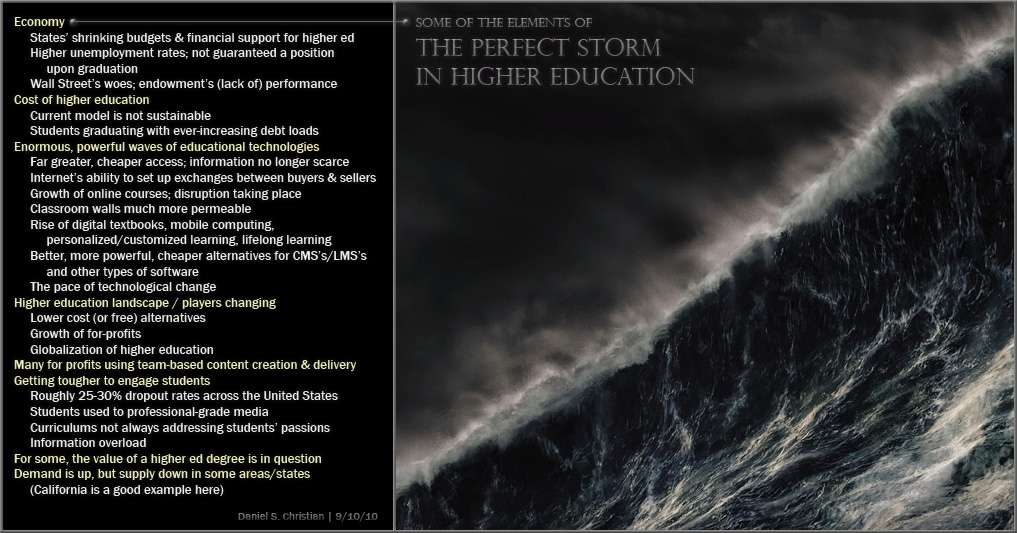
This report seems to show that the current system is only serving to expand the higher ed bubble even further; surely a pop will be heard in the future (if it hasn’t already at some individual colleges and universities).  Such a financial aid system seems to be causing one of the elements of the perfect storm — the cost of higher ed — to mount its waves to an even higher level.  (Keep in mind I created the image below in September 2010, but many of these forces are still with us today.)

The perfect storm in higher ed


Excerpts from An open letter to university administrators by Clayton Christensen

Defending the status quo is futile, and it’s no fun. Given fiscal realities beyond the control of university administrators, defending the operational status quo means choosing between big, focused cuts or death by a thousand small ones. Trading up to a larger school offers no escape from the grisly task of doing less with less.

Clinging to tradition will worsen individual and institutional disruption, while embracing innovation will hasten a new era of higher education productivity—not only of well-educated degree holders, but of new knowledge.

 Also see:

.

BERKELEY, Calif. — Across the nation, a historic collapse in state funding for higher education threatens to diminish the stature of premier public universities and erode their mission as engines of upward social mobility.

Official calls for urgency on college costs— from the New York Times by Tamar Lewin

Excerpts:

As Occupy movement protests helped push spiraling college costs into the national spotlight, Education Secretary Arne Duncan urged higher-education officials Tuesday to “think more creatively — and with much greater urgency” about ways to contain costs and reduce student debt.

“Three in four Americans now say that college is too expensive for most people to afford,” Mr. Duncan said. “That belief is even stronger among young adults — three-fourths of whom believe that graduates today have more debt than they can manage.”

Also see:

Addendum later on 11/30/11:

.

(Official Department of Education Photo by Joshua Hoover)

“My chief message today is a sobering one,” said Secretary Duncan yesterday at the annual Federal Student Aid conference in Las Vegas, Nev. “I want to ask you, and the entire higher education community, to look ahead and start thinking more creatively—and with much greater urgency—about how to contain the spiraling costs of college and reduce the burden of student debt on our nation’s students.”

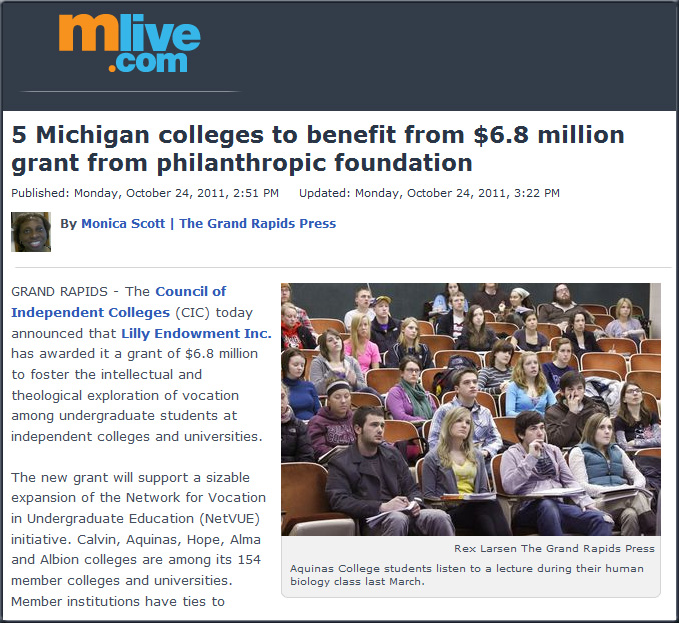
5 Michigan colleges to benefit from $6.8 million grant from philanthropic foundation -- from mlive.com by Monica Scott

Excerpt:

“We have discovered that structured programs that encourage and guide students in the theological exploration of vocation do indeed help them draw on the wisdom of their religious traditions as they make decisions about their futures and figure out how to lead lives that really matter,” said Craig Dykstra, the Lilly Endowment’s senior vice president for religion.

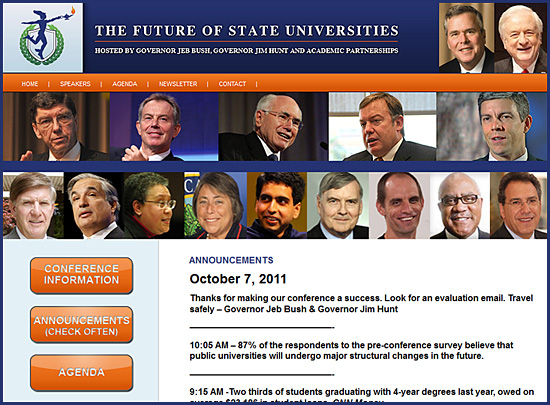
Check out some of these announcements from The Future of State Universities 2011 Conference


From DSC:
Following are some of the announcements from last week’s the Future of State Universities Conference (oddly enough, I couldn’t find any blogs, recordings, etc. here…)


————————————————-
October 7, 2011
————————————————-

10:05 AM – 87% of the respondents to the pre-conference survey believe that public universities will undergo major structural changes in the future.

————————————————-

9:15 AM –Two thirds of students graduating with 4-year degrees last year, owed on average $23,186 in student loans. CNN Money

Student loan debt has eclipsed credit card debt at $1.0 trillion and counting.

————————————————-

In 2010 Open Universities Australia grew 35%–the largest increase on record. The Australian

————————————————-
October 6, 2011
————————————————-

3:45 PM – 57% of people surveyed by Pew and the Chronicle say that the cost of college outweighs its value. Boston Magazine

Unemployment rate for people under 25 is 54% and 9 out of 10 college grads are planning to move back in with their parents. Boston Magazine

————————————————-

2:45 PM – Only 11% of respondents to the pre-conference survey believe that student readiness for college is stable or increasing.

————————————————-

2:00 PM – 100% of presidents and 75% of provosts and deans that responded to the pre-conference survey believe that faculty interactions with students will change significantly in the coming years.

————————————————-

1:00 PM – Stanford professor Thrun offered his, “Introduction to Artificial Intelligence” course online and free. 130,000 students signed up. —They will get the same lectures as students paying $50,000, same assignments, same exams, and, if they pass, “a statement of accomplishment”, but not Stanford credit. “Literally,” Thrun says, “we can probably get the same quality of education I teach in class for 1 to 2 percent of the cost.” The New York Times

————————————————-

12:25 PM – iTunes U online is running 300 million downloads a year, with 350,000 lectures offered by more than 1,000 universities worldwide. BBC News Oxford has 10 million downloads—130,000 per week. More than half the people using them are from the US and China.

————————————————-

9:45 am – 50% of respondents to the pre-conference survey believe that foreign universities will increasingly become competitors with U.S. universities for U.S. students.

95% believe that foreign students will be a major source of students in the future.

————————————————-

9:35 am – Did you know: global higher education enrollment increased 53% in the last decade?

Did you know: 20% of all college students in the world are studying outside of their home country.


————————————————-
October 5, 2011
————————————————-

5:00 pm – Pre-conference Survey:

  • 90% of respondents to the pre-conference survey believe that state funding for higher education will continue to decline.
  • 85% believe that federal funding for higher education will decrease in the future.
  • 75% believe that public support for higher education is destined to decline as costs increase.
  • 13% believe that public universities are well prepared to market their online programs effectively.


From DSC:
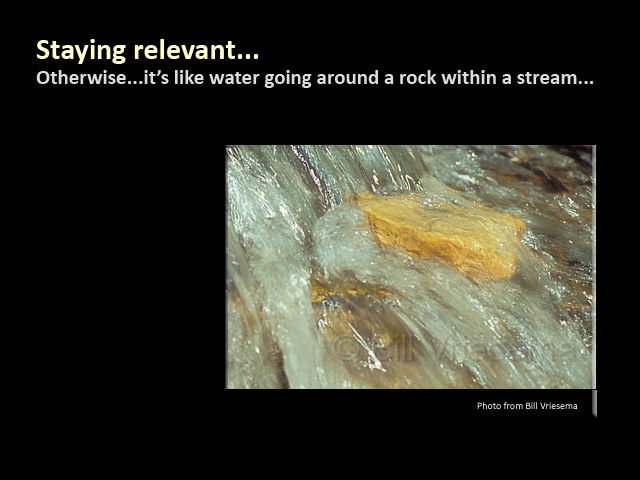
Besides the words “reinvent” and  innovation— and the phrase “the perfect storm” — the following graphic comes to my mind yet again:


Staying Relevant

The impact of new business models for higher education on student financing

Financing Higher Education in Developing Countries
Think Tank | Bellagio Conference Centre | 8-12 August 2011

Sir John Daniel (Commonwealth of Learning)
&
Stamenka Uvali-Trumbi (UNESCO)

Excerpt:

The aim of this paper has been to suggest that in discussing student financing we need to look beyond the current standard model classroom teaching to the likely developments in learning systems over the next decade. These have the potential to cut costs dramatically and thereby lessen the challenge of student financing.

That is fortunate because nearly one-third of the world’s population (29.3%) is under 15. Today there are 165 million people enrolled in tertiary education.[2] Projections suggest that that participation will peak at 263 million in 2025.[3] Accommodating the additional 98 million students would require more than four major campus universities (30,000 students) to open every week for the next fifteen years unless alternative models emerge. (emphasis DSC)

Also see:

OER for beginners: An introduction to sharing learning resources openly in healthcare education
The Higher Education Academy (HEA) (www.heacademy.ac.uk) and the Joint information Systems Committee (JISC) (www.jisc.ac.uk) are working in partnership to develop the HEFCE-funded Open Educational Resources (OER) programme, supporting UK higher education institutions in sharing their teaching and learning resources freely online across the world.

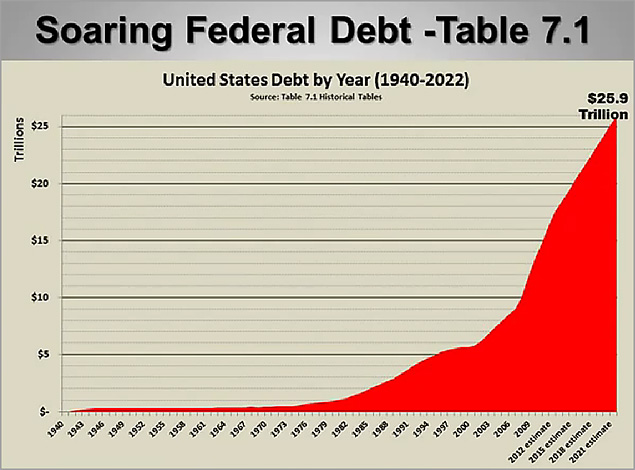
A visualization of the United States Debt — from usdebt.kleptocracy.us

From DSC:
Though this is the U.S. debt, the ramifications of this affect the entire globe. I believe my cousin, Mr. Stephen Gibson, is correct when he says that we may well be heading towards a “Global Reset.”


usdebt.kleptocracy.us


http://usdebt.kleptocracy.us/


Also see:

usdebtclock.org

— as of 8/24/11 around noon


Addendums later on 8/24/11 from Academic Impressions:


First day of sessionMPR Photo/Jeffrey Thompson

Just what are states pledging for higher ed these days?

  • Fidelity® study finds significant shifts over 5-yr period in how families tackle rising college costs
    Fifth Annual College Savings Indicator Study finds parents projected to meet only 16% of college costs, despite improved savings habits
    BOSTON – Fidelity Investments®, a leader in helping families save for college, today announced the results of its fifth annual College Savings Indicator study, which found significant shifts in savings behavior from 2007 to 2011, with more families: 1) starting to save in the preschool years despite financial pressures, 2) seeking guidance and saving for college using a dedicated account, such as a tax-advantaged 529 college savings plan, and 3) making shared sacrifices to achieve their college savings goals.

    The study features the College Savings Indicator, a calculation of the percentage of projected college costs the typical American family is on track to cover, based on its current and expected savings. After four consecutive years of decline, the Indicator held steady to the prior year at 16 percent, down from 24 percent in 2007, when Fidelity first launched the study. While overall preparedness has declined, a larger percentage of parents — more than two-thirds (67 percent) — have begun saving for college costs, compared with 58 percent five years ago.

Excerpt:

The news this summer is teeming with trillions. The national debt is more than $14 trillion. In a recent report, the credit rating agency Moody’s says the 1,600-plus U.S.-based companies it rates harbored some $1.2 trillion in cash at the end of 2010. The newly minted congressional supercommittee is charged with finding ways to pare the federal deficit by at least $1.2 trillion in the next decade.

Trillion. It’s the new black — tres chic, tres cher. The higher-water mark. If you’re not talking trillions, you’re talking chump change. All of a sudden we are tossing the term around like we understand it.


From DSC:
As always with my Learning Ecosystems blog, see the tags and categories that I referenced here as to how I think this item is especially relevant.


Tagged with:  

The Top 20 VC Power Bloggers Of 2010 — from TechCrunch

A lot of venture capitalists and super angels are not only active investors, but also active bloggers. Below is a list of the top 20 VC power bloggers as compiled by Larry Cheng of Volition Capital based on traffic data from Compete. The metric being used here is average monthly unique visitors during the fourth quarter of 2010.

Tagged with:  

One from DSC:


What goes up...must come down -- by Daniel S. Christian

Abstract:
A perfect storm has been building within higher education. Numerous, powerful forces have been converging that either already are or soon will be impacting the way higher education is offered and experienced. This paper focuses on one of those forces – the increasing price tag of obtaining a degree within higher education.  It will seek to show that what goes up…must come down.  Some less expensive alternatives are already here today; but the most significant changes and market “corrections” appear to be right around the corner. That is, higher education is a bubble about to burst.

One from CNBC:

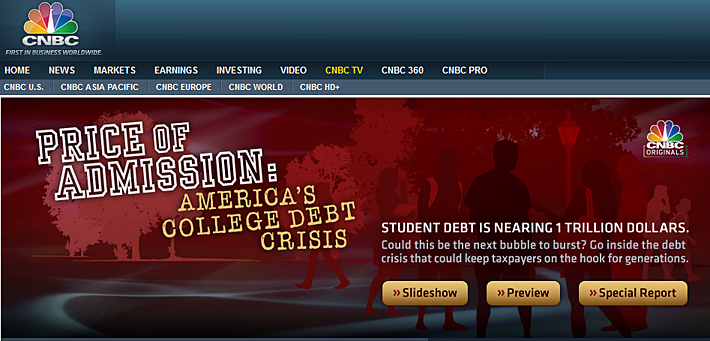
Price of Admission: America's College Debt Crisis

— from CNBC on Monday, January 3, 2011

Also see:

From DSC:
Disclosure: I work for Calvin College. However, I publish the above items in the hopes that those of us at Calvin and within higher education as a whole will choose to innovate — that we will think outside the box in order to greatly lower the cost of providing a degree within higher education. It would be very helpful to future students, families, communities, nations.

No matter how you look at it, pain — but also opportunities — are ahead. Change will not be easy, nor will it be comfortable.  It will most likely be very scary and very tough. At least for me, this posting and the topic it discusses evokes major soul and heart searching for me. Nevertheless, the questions remain:

  • What changes do we need to make so that institutions of higher education can become more affordable? Stay relevant? Be sustainable over time?
  • What should we put in place of the current “status quo”?
  • Who receives the pain? Who enjoys the opportunities?

Also see:


Addendum on 1-19-11:

Student Loan Docume -- videos on Vimeo

http://www.defaultmovie.com/


Addendum on 1/22/10:
The Bubble: Higher Education’s Precarious Hold on Consumer Confidence — from National Association of Scholars


© 2025 | Daniel Christian