Some resources/items re: audio-based feedback

Tagged with:  

The Internet of things

The Internet of things — from Alan Radding

Excerpt:

The Internet of Things has the potential to change our businesses and our lives as much as or possibly more than today’s Internet. It has been a long time in coming, maybe since the advent of bar codes but certainly since the development of RFID tags.

Among the recognized thought leaders is McKinsey. You can check out a piece they posted in March here. IBM has a clever 5-minute video that introduces it here.

The Internet of Things is another aspect of the digital transformation of the world. IBM has given it the Smarter Planet label. Others call it the global digital nervous system. It is the collection of devices, phones, computers, sensors, and more that are continuously communicating digitized information. And once that information is digitized, we can begin to do something with it. What kind of information do you need to advance your business objectives?

When IBM talks about the Smarter Planet, it is talking about the Internet of Things. IBM sees it as the intelligence being infused into the systems and processes that make the world work — into things no one would recognize as computers: cars, appliances, roadways, power grids, clothes, even natural systems such as agriculture and waterways.

Would your business like to know how people actually use your products? It might change the way you create, design, build, and market. Of course, you could approximate some of this information through focus groups, but they are costly and imperfect. Sensors built into your products and communicating back to you about how they are actually being used would give you the real thing.

Ambient Insight Reports Resilient US eLearning Market

U.S. self-paced e-Learning revenues reached $18.2 Million in 2010 — from Ambient Insight Reports by Tyson Greer, Chief Executive Officer

Seattle, WA – January 20, 2010 – The US market for self-paced e-Learning will grow to $24.2 billion by 2015 according to a new report by Ambient Insight called, “The US Market for Self-paced eLearning Products and Services: 2010-2015 Forecast and Analysis.”

This report forecasts five-year online learning expenditures by eight buyer segments: consumer, corporate, federal government, state and local government, PreK-12 academic, higher education, non-profits and associations, and healthcare.

The five-year compound annual growth rate (CAGR) growth rate for Self-paced eLearning across all eight of the buyer segments is 5.9%, but growth is much higher in particular segments. For example, growth rates in the PreK-12, healthcare, and association segments are 16.8%, 16.3%, and 14.3%, respectively.

For mobile learning:

The US Market for Mobile Learning Products and Services: 2009-2014 Forecast and Analysis
The US market for Mobile Learning products and services reached $632.2 million in 2009. The demand is growing by a five-year compound annual growth rate (CAGR) of 18.3% and revenues will reach $1.4 billion by 2014.

Royalty Free Music and EmbedPlus — from The Thinking Stick by Jeff Utecht

Excerpt on EmbedPlus:

“You can set times in the video to skip to, you can slow the video down, and rewind. Some pretty cool extra features….and all for free.”

Project-based learning

Tagged with:  

More church websites invite posting of prayers — from USAToday.com by Cathy Lynn Grossman

Need prayer power? Try the World Wide Web. More than four in 10 Protestant churches with websites now invite people to post pleas to the Lord on the main church site so volunteers and staff can chime in on the soulful call, according to a new survey.

Tagged with:  

Galatians 6:7-8

Galatians 6:7-8

Do not be deceived: God cannot be mocked. A man reaps what he sows. Whoever sows to please their flesh, from the flesh will reap destruction; whoever sows to please the Spirit, from the Spirit will reap eternal life.
Tagged with:  

Matthew 7:7-8

Matthew 7:7-8

[Ask, Seek, Knock]  Ask and it will be given to you; seek and you will find; knock and the door will be opened to you. For everyone who asks receives; the one who seeks finds; and to the one who knocks, the door will be opened.
Tagged with:  

EDUCAUSE Learning Initiative 2011 Online Spring Focus Session: Seeking Evidence of Impact

Join us April 13 and 14 for “Seeking Evidence of Impact,” the 2011 ELI Online Spring Focus Session, where we will engage the teaching and learning community in exploring initial questions on seeking evidence. Do our innovations accomplish our desired outcomes? How do we define “impact”? How do we measure impact? Through plenary sessions and various institutional case studies, we will:

  • Examine research strategies designed to evaluate teaching and learning innovation and practice
  • Review various approaches and designs for collecting evidence
  • Explore evaluation tools and methodologies and how they can be used to effectively measure the impact of our innovations and practices
  • Discuss evidence-of-impact challenges and opportunities at various institutional levels and across various institutional types and controls (public, private, two year, four year)
  • Learn how to infuse instructional objectives and pedagogy into the evidence-seeking process
  • Tour institutional case studies and the research frameworks that have been used to evaluate their effectiveness and construct future improvements
Tagged with:  

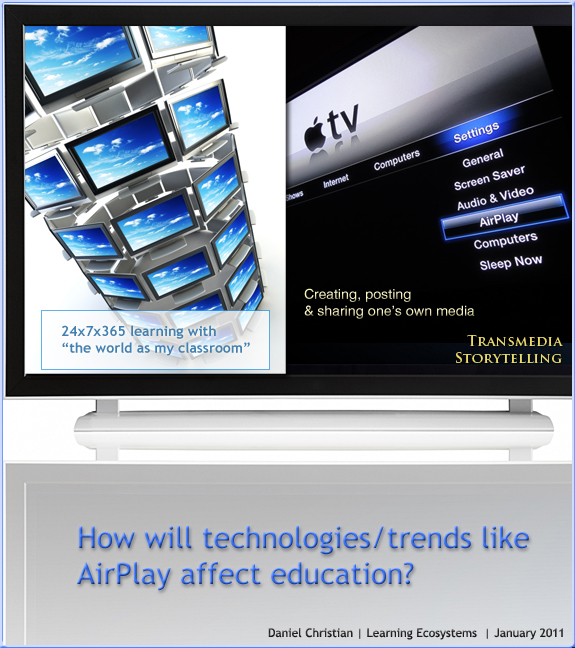
Millions of TV’s (as completely converged/Internet-connected devices) = millions of learners?!?

From DSC:

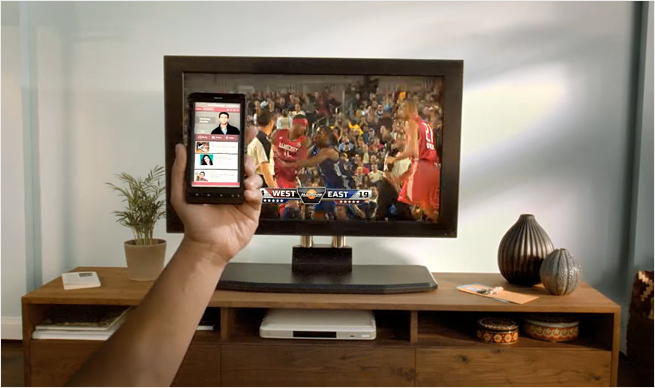
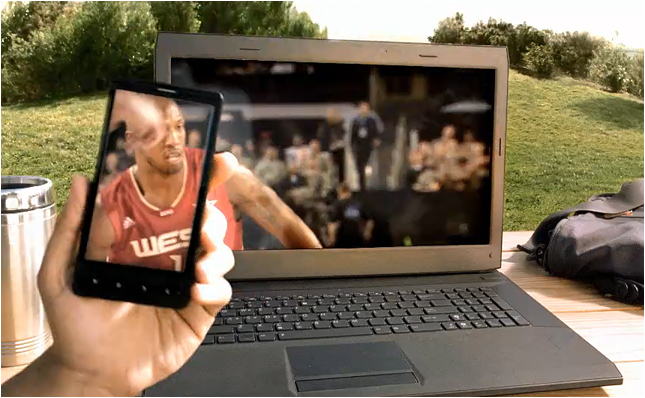
The other day, I created/posted the top graphic below. Take the concepts below — hook them up to engines that use cloud-based learner profiles — and you have some serious potential for powerful, global, ubiquitous learning! A touch-sensitive panel might be interesting here as well.

Come to think of it, add social networking, videoconferencing, and web-based collaboration tools — the power to learn would be quite impressive.  Multimedia to the nth degree.

Then add to that online marketplaces for teaching and learning — where you can be both a teacher and a learner at the same time — hmmm…

.

.

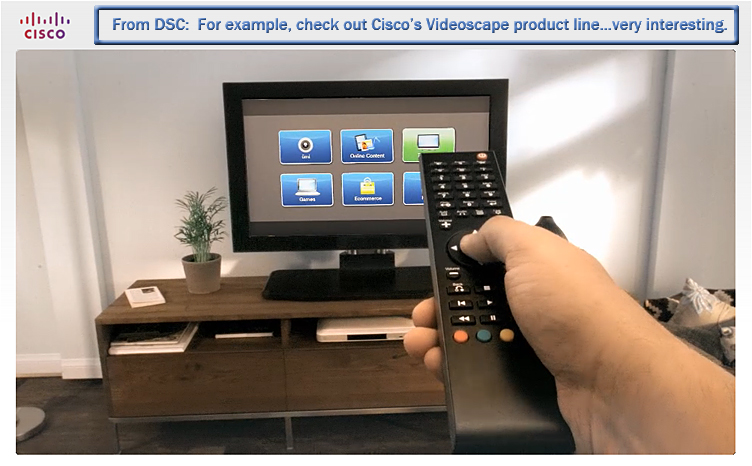
From DSC:
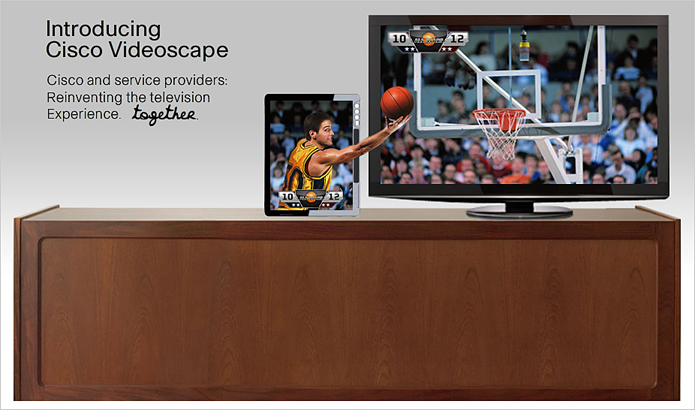
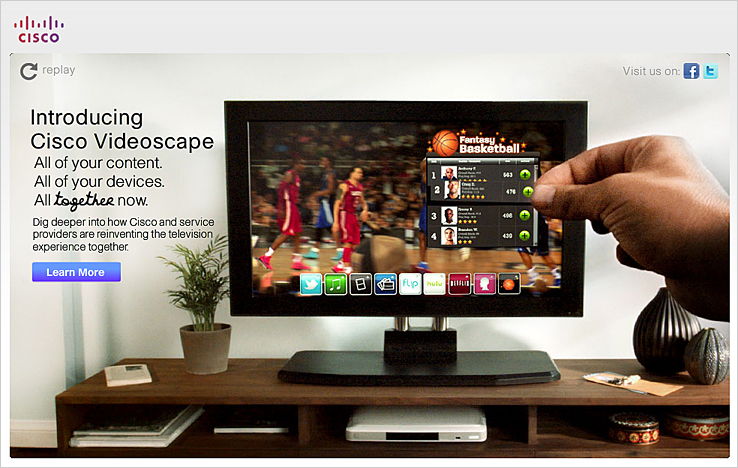
Then today, I saw Cisco’s piece on their Videoscape product line! Check it out!

.

.


.

.

.

.

PreK-12 dominates growth in e-learning

PreK-12 dominates growth in e-learning — from The Journal by David Nagel

Driven in part by rapid growth in online education, by 2015, preK-12 academic institutions in the United States will spend $4.9 billion on “self-paced” electronic learning products and services, according to a new report released this week by research firm Ambient Insight. That represents a compound annual growth rate of 16.8 percent from 2010 spending levels, outpacing every other segment, including higher education and healthcare.

The report, “The US Market for Self-paced eLearning Products and Services: 2010-2015 Forecast and Analysis,” encompasses a category of electronic learning that Ambient Insight refers to as “self-paced,” which includes learning management, classroom management, and learning content management systems, along with student information systems and hosted learning platforms, among others. This category does not include mobile learning, gaming, or several other major e-learning categories. (Ambient Insight’s detailed methodology and category definitions can be found here.)

Tagged with:  
Tagged with:  

Algebra, meet the iPad: A year-long study explores learning with the tablet — fromMind/Shift by Tina Barseghian

HMH Fuse

Excerpt:

Q. How will the iPad-taught class different from a traditional algebra class?

What we’ve seen in practice is the fact that it’s bringing everything to one place that’s making it exciting. The convenience factor, the simplicity factor — that’s revolutionary. For example, if you’re working through a lesson, there are three or four algorithms presented. With a textbook, if you want to learn more about one of the examples, you have to stop looking in your book and go online to our website and navigate that particular section and view our video there.

Instead, on the iPad, you simply click on “view video” and up comes our professor, Dr. Edward Burger, the Bill Nye of education. Students have written to him saying he’s changed their opinion of what math is. So to have him right there, you can see how it’s natural for students to tap “view video,” as opposed to setting their book down and going to the computer.

Another example is, when students are working on a problem, they can simply click on “check answer,” and up comes, “that’s correct, and here’s why,” or “that’s incorrect, and here’s why.” As opposed to when they’re working on paper or even online, those pieces are a little more drawn out.

The Future of Higher Education -- upcoming conference in London, March 2011

Tagged with:  
© 2025 | Daniel Christian