Ten years ago, we made a bet on relationships over replication. Instead of franchising a model, we chose to build an ecosystem—the CAPS Network—grounded in the belief that an entrepreneurial approach would create ripples of innovation with exponential scaling power. We believed that by harnessing the power of relationships for good, we could help more students discover who they are and where they belong in the world.
Today, with over 1,200 alumni voices captured in our 2025 Alumni Impact Study, we’re seeing those ripples turn into waves. And we believe these waves can and will be surfed by educators all across the globe. We are committed to the idea that our purpose (providing more students in more places the time and space for self-discovery) is more important than our brand. As such, we want our learnings to be leveraged by anyone and everyone to make a positive impact.
Confidence, Engagement, and Loveexplores the data we rarely track but desperately need. This piece argues that alumni confidence, sustained engagement, and a sense of being loved by their school communities are leading indicators of long-term success. It challenges K–12 systems to look beyond test scores and graduation rates and instead ask what happens after students leave, who stays connected, and how belonging shapes opportunity. The result is a call to rethink accountability around relationships, not just results.
A Moment That Changed My View of Teaching I’ll never forget a student I’ll call Jalen. He was bright and quick with answers, sharp in debate, but he had built a wall around himself after a difficult year at home. He’d stopped turning in work and began sitting silently in the back of the room, disengaged and defiant.
One afternoon, instead of lecturing him about missing assignments, I asked a different question: “What would make school feel worth showing up for again?”
That simple question opened a door. Over the following weeks, Jalen began sharing ideas for projects connected to his interests, designing sneakers and exploring how geometry applies to shoe patterns. I adapted lessons to let him create, design, and analyze. Slowly, his confidence returned. Months later, he told me, “You made me feel like my ideas mattered.”
That moment reminded me that teaching isn’t just about delivering content; it’s about restoring belief in learning, and in oneself.
Play brings joy and happiness to learning. Infusing play in schools prepares kids as future citizens.
When you play a game with your friends, how do you feel?
When you see children playing with other children, what do you notice?
Ask a child if they remember the worksheet they filled out last week.
Did they have fun?
Do they remember what they learned?
Let’s play more and discover how learning unfolds.
Schools can invest in more play through games, interactive experiences, and just making learning fun. Providing engaging activities through play creates learners who become critical thinkers, researchers, and designers.
Empowering Students Through a Focus on Incremental Progress — from edutopia.org by Kathy Collier Elementary teachers can help students feel confident tackling big goals by encouraging them to focus on getting a little bit better every day.
Discovering Global Sounds Through the Recorder — from edutopia.org by Nina Stern, JoDee Scissors Music teachers can guide exploration of musical styles from around the world to spark elementary students’ curiosity and build community.
From DSC: One of my sisters shared this piece with me. She is very concerned about our society’s use of technology — whether it relates to our youth’s use of social media or the relentless pressure to be first in all things AI. As she was a teacher (at the middle school level) for 37 years, I greatly appreciate her viewpoints. She keeps me grounded in some of the negatives of technology. It’s important for us to listen to each other.
No matter whether you are a student or a teacher, sometimes it can be difficult to find motivation to start or complete a task. Instead, you may spend hours procrastinating with other activities and that opens an unhelpful cycle of stress and unhappiness. Stressful environments which are common in educational settings can increase the likelihood of maladaptive procrastination (1) and hamper motivation. This digest offers four resources on ways to think about and boost (self-)motivation.
How To Get Hired During the AI Apocalypse — from kathleendelaski.substack.com by Kathleen deLaski And other discussions to have with your kids on the way to college graduation
A less temporary, more existential threat to the four year degree: AI could hollow out the entry level job market for knowledge workers (i.e. new college grads). And if 56% of families were saying college “wasn’t worth it” in 2023,(WSJ), what will that number look like in 2026 or beyond? The one of my kids who went to college ended up working in a bike shop for a year-ish after graduation. No regrets, but it came as a shock to them that they weren’t more employable with their neuroscience degree.
A colleague provided a great example: Her son, newly graduated, went for a job interview as an entry level writer last month and he was asked, as a test, to produce a story with AI and then use that story to write a better one by himself. He would presumably be judged on his ability to prompt AI and then improve upon its product. Is that learning how to DO? I think so. It’s using AI tools to accomplish a workplace task.
Also relevant in terms of the job search, see the following gifted article:
‘We Are the Most Rejected Generation’— from nytimes.com by David Brooks; gifted article David talks admissions rates for selective colleges, ultra-hard to get summer internships, a tough entry into student clubs, and the job market.
Things get even worse when students leave school and enter the job market. They enter what I’ve come to think of as the seventh circle of Indeed hell. Applying for jobs online is easy, so you have millions of people sending hundreds of applications each into the great miasma of the internet, and God knows which impersonal algorithm is reading them. I keep hearing and reading stories about young people who applied to 400 jobs and got rejected by all of them.
It seems we’ve created a vast multilayered system that evaluates the worth of millions of young adults and, most of the time, tells them they are not up to snuff.
Many administrators and faculty members I’ve spoken to are mystified that students would create such an unforgiving set of status competitions. But the world of competitive exclusion is the world they know, so of course they are going to replicate it.
And in this column I’m not even trying to cover the rejections experienced by the 94 percent of American students who don’t go to elite schools and don’t apply for internships at Goldman Sachs. By middle school, the system has told them that because they don’t do well on academic tests, they are not smart, not winners. That’s among the most brutal rejections our society has to offer.
A wide range of roles can or will quickly be replaced with AI, including inside sales representatives, customer service representatives, junior lawyers, junior accountants, and physicians whose focus is diagnosis.
Dario Amodei — CEO of Anthropic, one of the world’s most powerful creators of artificial intelligence — has a blunt, scary warning for the U.S. government and all of us:
AI could wipe out half of all entry-level white-collar jobs — and spike unemployment to 10-20% in the next one to five years, Amodei told us in an interview from his San Francisco office.
Amodei said AI companies and government need to stop “sugar-coating” what’s coming: the possible mass elimination of jobs across technology, finance, law, consulting and other white-collar professions, especially entry-level gigs.
Why it matters: Amodei, 42, who’s building the very technology he predicts could reorder society overnight, said he’s speaking out in hopes of jarring government and fellow AI companies into preparing — and protecting — the nation.
Rick: What kinds of strategies do you think would help?
Richard: In education, we should expand the use of male-friendly teaching methods, such as more hands-on and active learning approaches. We should also consider redshirting boys—starting them in school a year later—to account for developmental differences between boys and girls. We should also introduce more male mentors and role models in schools, particularly in elementary education, where male teachers are scarce. In the workforce, apprenticeship and vocational training programs need to be expanded to create pathways into stable employment for young men who may not pursue a four-year degree. Career counseling should also emphasize diverse pathways to ensure that boys who may not thrive in a traditional academic setting still have opportunities for success. Additionally, fatherhood policies should recognize the importance of male engagement in family life, supporting fathers in their role as caregivers and providers.
While on the topic of K12 education, also see:
How Electives Help All Students Succeed — from edutopia.org by Miriam Plotinsky Giving students a choice of electives increases engagement and allows them to develop skills outside of core academic subjects.
I recently conducted a student focus group on the topic of school attendance. One of the participants, a high school junior who admitted to being frequently late or absent, explained why she still came to school: “I never want to miss Drama. My teacher is awesome. Her class is the reason I show up every day.” As the rest of the focus group chimed in with similar thoughts, I reflected on the power that elective courses hold for students of all ages.
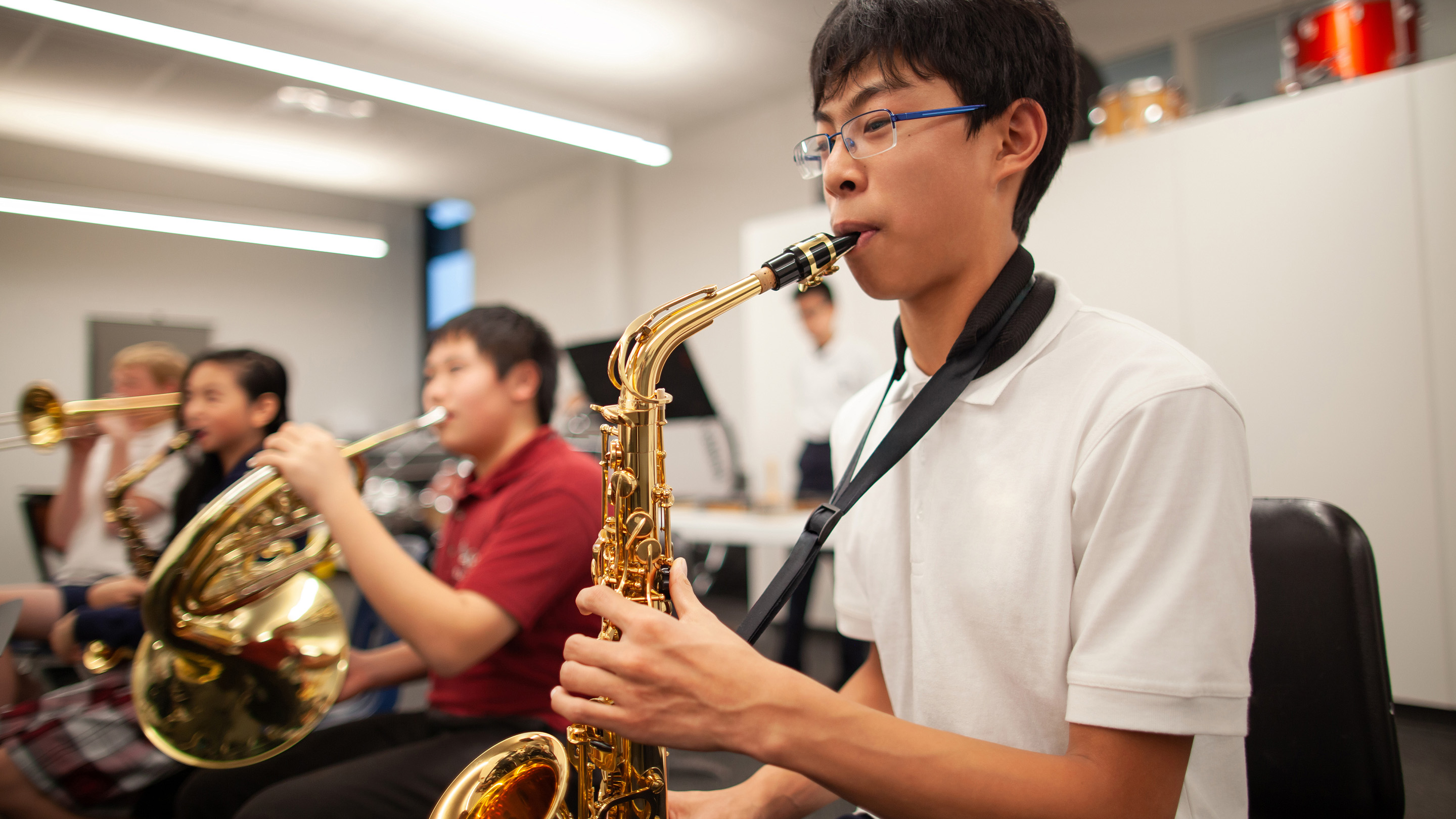
These courses, from jazz band to yoga, cement students’ sense of self not just in their primary and secondary years, but also in their journey toward adulthood. In these tight economic times, schools or districts often slash electives to save money on staffing, which is highly detrimental to student success. Instead, not only should budget cuts be made elsewhere, but also elective offerings should increase to heighten student choice and well-being.
Boosting Engagement by Taking Math Outdoors— from edutopia.org by Sandy Vorensky Bringing elementary students outside for math lessons provides a welcome change of pace and a chance for new activities.
How to Help Students Avoid Procrastinating — from edutopia.org by Sarah Kesty A simple strategy can help students map out their assignments in manageable chunks so they can stay on top of their work.
Long-term projects and assignments present a unique challenge for many students, requiring several layers of executive function skills, like planning and time management, to be able to manage steps over an extended period of time. Much to our frustration, students may procrastinate or avoid working on an assignment when it seems overwhelming. This can lead to late, missing, or incomplete work, or it can push students into a stressful all-nighter, as they complete an assignment designed to take weeks in the span of just a few hours.
An effective way to address the challenges of overwhelm and procrastination—and a way that requires only a tweak to your teaching instead of another task on your plate—is to teach students to “scan and plan.” Scan and plans happen during the introduction of an assignment, usually one that takes more than a few steps. Teachers organically fold in the scan and plan approach as a layer to the assignment’s announcement to the class.
When technologist Luis von Ahn was building the popular language-learning platform Duolingo, he faced a big problem: Could an app designed to teach you something ever compete with addictive platforms like Instagram and TikTok? He explains how Duolingo harnesses the psychological techniques of social media and mobile games to get you excited to learn — all while spreading access to education across the world. .
A Three-Phase, Rational System of Education — from petergray.substack.com by Peter Gray; with thanks to Dr. Kate Christian for this resource What will replace k-12 and college?
A Three-Phase, Rational System of Education I don’t know just how or how fast the change will happen, but I think the days of K-12 and four years of college are numbered and sanity will begin to prevail in the educational world. I envision a future with something like the following three-phase approach to education:
Phase I. Discovery: Learning about your world, your self, and how the two fit together.… Phase II. Exploring a career path.… Phase III. Becoming credentialed for specialized work.…
One of my biggest goals as an educator is to show students how the material they learn in class can be applied to real-world situations. In my finance courses, this often means taking what we’re learning about financial calculations and connecting it to decisions they’ll have to make as adults. For example, I’ve used real-life scenarios like buying a car with a loan, paying off student debt, saving for a wedding, or calculating mortgage payments for a future home purchase. I even use salary data to show students what they could realistically afford given average salaries after graduation, helping them relate to the financial decisions they will face after college.
These practical examples don’t just keep students engaged; they also demonstrate the immediate value of learning financial principles. I often hear students express frustration when they feel like they’re learning concepts that won’t apply to their lives. But when I use real scenarios and provide tools like financial calculators to show them exactly how they’ll use this knowledge in their future, their attitude changes. They become more motivated to engage with the material because they see its relevance beyond the classroom.
This is not your standard back-to-school story, about school supplies or first-day butterflies.
It’s about how school-aged members of Gen Z — that’s 12- to 18-year-olds — are feeling about school and the future. And according to a new national survey, those feelings are a little worrying.
School engagement is down. The middle- and high-schoolers surveyed find school less interesting than they did just last year, and only about half believe they’re being challenged “in a good way.” The problem is especially acute for teens who say they don’t want to go to college right out of high school.
“The conversations that [K-12 schools are] having with middle-schoolers and high-schoolers are predominantly about college,” says Zach Hrynowski, a senior education researcher at Gallup. “Even the kids who are like, ‘I don’t want to go to college,’ what are they hearing the most about? College. We’re not talking to them about apprenticeships, internships, starting a business, entrepreneurial aspirations or jobs that don’t require a college degree.”
The future of career exploration is virtual — from fastcompany.com by Bharani Rajakumar Maximizing our investment and reinvigorating the workforce will take a whole new approach to educating students about the paths that await.
A PUSH TOWARD EXPERIENTIAL LEARNING There is an answer to our narrow-view career exploration, and it starts with experiential learning.
Over the last decade, educational institutions have been reaping the rewards of more engrossing learning experiences. As Independent School magazine wrote a decade ago, when experiential learning was becoming more popular, by setting young people “loose to solve real-world problems, we are helping students find that essential spark not only to build their academic résumés, but also to be creative, caring, capable, engaged human beings.”
Rather than take students on field trips, we have the technology to create extended reality (XR) experiences that take students on a journey of what various careers actually look like in action.
Despite modern technological advancements in classroom tools, many educational settings still center around a traditional model where the teacher is the primary source of information and students passively receive content.
Slowly, learning environments are inviting students to actively participate and take ownership of their learning through collaborative projects, inquiry-based experiences, and real-world problem-solving, thereby transforming traditional educational roles and practices.
How Humans Do (and Don’t) Learn— from drphilippahardman.substack.com by Dr. Philippa Hardman One of the biggest ever reviews of human behaviour change has been published, with some eye-opening implications for how we design & deliver learning experiences
Excerpts (emphasis DSC):
This month, researchers from the University of Pennsylvania publishedone of the biggest ever reviews of behaviour change efforts– i.e. interventions which do (and don’t) lead to behavioural change in humans.
…
Research into human behaviour change suggests that, in order to impact capability in real, measurable terms, we need to rethink how we typically design and deliver training.
The interventions which we use most frequently to behaviour change – such as video + quiz approaches and one off workshops – have a negligible impact on measurable changes in human behaviour.
For learning professionals who want to change how their learners think and behave, this research shows conclusively the central importance of:
Shifting attention away from the design of content to the design of context.
Delivering sustained cycles of contextualised practice, support & feedback.
I quickly decided to take a different tack with my students, and instead asked each of them, “What problem in the world do you think you want to solve? If you could go to a school of hunger, poverty, Alzheimer’s disease, mental health … what kind of school would you want to attend?” This is when they started nodding vigorously.
What each of them identified was a grand challenge, or what Stanford d.school Executive Director Sarah Stein Greenberg has called: purpose learning. In a great talk for Wired, Greenberg asks,
What if students declared missions not majors? Or even better, what if they applied to the School of Hunger or the School of Renewable Energy? These are real problems that society doesn’t have answers to yet. Wouldn’t that fuel their studies with some degree of urgency and meaning and real purpose that they don’t yet have today?