Get Ready to Relearn How to Use the Internet — from bloomberg.com by Tyle Cowen; with thanks to Sam DeBrule for this resource
Everyone knows that an AI revolution is coming, but no one seems to realize how profoundly it will change their day-to-day life.

Excerpts:

This year has brought a lot of innovation in artificial intelligence, which I have tried to keep up with, but too many people still do not appreciate the import of what is to come. I commonly hear comments such as, “Those are cool images, graphic designers will work with that,” or, “GPT-3 is cool, it will be easier to cheat on term papers.” And then they end by saying: “But it won’t change my life.”

This view is likely to be proven wrong — and soon, as AI is about to revolutionize our entire information architecture. You will have to learn how to use the internet all over again.

Change is coming. Consider Twitter, which I use each morning to gather information about the world. Less than two years from now, maybe I will speak into my computer, outline my topics of interest, and somebody’s version of AI will spit back to me a kind of Twitter remix, in a readable format and tailored to my needs.

The AI also will be not only responsive but active. Maybe it will tell me, “Today you really do need to read about Russia and changes in the UK government.” Or I might say, “More serendipity today, please,” and that wish would be granted.

Of course all this is just one man’s opinion. If you disagree, in a few years you will be able to ask the new AI engines what they think.

Some other recent items from Sam DeBrule include:

Natural Language Assessment: A New Framework to Promote Education — from ai.googleblog.com by Kedem Snir and Gal Elidan

Excerpt:

In this blog, we introduce an important natural language understanding (NLU) capability called Natural Language Assessment (NLA), and discuss how it can be helpful in the context of education. While typical NLU tasks focus on the user’s intent, NLA allows for the assessment of an answer from multiple perspectives. In situations where a user wants to know how good their answer is, NLA can offer an analysis of how close the answer is to what is expected. In situations where there may not be a “correct” answer, NLA can offer subtle insights that include topicality, relevance, verbosity, and beyond. We formulate the scope of NLA, present a practical model for carrying out topicality NLA, and showcase how NLA has been used to help job seekers practice answering interview questions with Google’s new interview prep tool, Interview Warmup.

How AI could help translate extreme weather alerts — from axios.com by Ayurella Horn-Muller

Excerpt:

A startup that provides AI-powered translation is working with the National Weather Service to improve language translations of extreme weather alerts across the U.S.

Using GPT-3 to augment human intelligence — from escapingflatland.substack.com by Henrik Karlsson

Excerpt:

When I’ve been doing this with GPT-3, a 175 billion parameter language model, it has been uncanny how much it reminds me of blogging. When I’m writing this, from March through August 2022, large language models are not yet as good at responding to my prompts as the readers of my blog. But their capacity is improving fast and the prices are dropping.

Soon everyone can have an alien intelligence in their inbox.


Innova: A Revolution in Education? — from gettingsmart.com by Chris Terrill

Key Points

  • Innova Schools is designed to rapidly cut through the vast inequities that exist and be a lever for change in Latin America.
  • Innova has the potential to revolutionize education around the globe.

Excerpts (emphasis DSC):

The initial school start-up was funded by Carlos Rodriguez Pastor, a Peruvian businessman. He saw an opportunity to provide high-quality schools in areas where the government struggled to supply essential education services (Peru and Colombia consistently rank near the bottom on the global education survey). He enlisted the famed US design firm IDEO to develop a comprehensive program that would eventually be utilized in multiple countries.

From DSC:
Stop the presses. I love that idea of using IDEO to be involved here. It seems like that is a positive step towards implementing Design Thinking within our learning ecosystems.

In the original model, the founders designed a rigorous, engaging, personalized curriculum, with a heavy emphasis on Project-Based Learning. I wanted to know if and how that is actualized, and how that is enacted across multiple countries in schools thousands of miles apart.

Finally, IDEO’s work included a design for the physical structure of schools to be quickly and economically replicated at each location; how was that design working? The vision for Innova may be one of the most ambitious educational undertakings today. What lessons can I, as an individual educational leader, and we, as a global education community, learn from their work?

The Maker Space and the Gaming Lab demonstrate clearly how digital competency is a central element of their curriculum. I saw highly engaging lessons that were perfectly synced with classroom projects, pursuing a bigger goal of equipping Colombian students to fill the digital labor gap. 


HundrED Global Collection 2023 — from hundred.org
Meet the 100 most impactful innovations that are changing the face of education in a post-COVID world.
The HundrED Global Collection 2023

Excerpt:

The year 2022 has been a year to look to the future, as the global education conversation moves again toward themes of education transformation and the futures of education. The 100 innovations selected for this year’s global collection are impacting the lives of over 95 million students worldwide. The collection highlights the important role of teachers in education innovation; the continued need for students to develop 21st century skills, including social and emotional learning; an increasing focus on student wellbeing and mental health; and equity in education.

For more information, download the full Global Collection 2023 report.
You can also browse the innovation pages of the selected innovators here.
.

From DSC:
Here’s an excerpt of the email I received today from EducationHQ out of Australia — though I think it applies here in the United States as well:

.

Amplify and value teachers’ voice in education policymaking: researchers — from educationhq.com
Amplify and value teachers’ voice in education policymaking: researchers

Excerpt:

Monash University’s Teachers’ Perceptions of their Work Survey has revealed teachers’ waning satisfaction in their role and highlighted their…

Also from educationhq.com

Teachers changed my life: Trauma-informed education shows kids they matter — from educationhq.com by Beck Thompson
.

Nonprofit Bringing Businesses to Life in the Classroom — to the Tune of $400,000 — from the74million.org by Tim Newcomb
Making candles out of crayons, building birdhouses, fashioning furniture: Real World Scholars has helped 50,000 students become entrepreneurs

Not much entices a second grader to skip out on recess to get back to schoolwork. But excitement around a classroom-run business can do just that, especially when it means creating candles out of crayons and selling them in the local community.

Students design their ideal urban home in My ArchiSchool exhibition — from dezeen.com

Students were able to bring family members to the exhibition. Architectural model by Ethan Chan

Excerpt:

Promotion: fifty-two students presented digital designs and architectural models of their ideal home as part of Hong Kong-based education institute My ArchiSchool’s latest exhibition. As part of the exhibition, My ArchiSchool students were asked to design their ideal home within an urban environment. The exhibition, which took place on 2 October 2022 at the Sky100 on the 100th floor of the International Commerce Centre in Hong Kong, showcased photomontages of digital designs presented alongside physical models.

5 Resources that help students become digital citizens — from rdene915.com by Rachelle Dene Poth

Excerpt:

We need to create opportunities for students to become more digitally aware and literate, and to be responsible when using technology. There are many ways to do this, depending on our content area and grade level. We can model best practices for our students, bring in a specific digital citizenship curriculum to guide them through their learning, or use digital tools and resources available to have students explore and create.

Helping students learn to safely navigate what has become a highly digital world is something that we are all responsible for. Students need to be aware of the impact of their posts online, how to create and manage social accounts and protect their information, and how to properly access and use resources they obtain through technology.

3 Reasons School and District Leaders Should Get on Social Media — from edweek.org by Marina Whiteleather

Excerpt:

School and district leaders can—and should—be using social media in their work.

That’s the message shared by Stephanie McConnell, a superintendent in the Hawkins Independent School District in Texas, and Salome Thomas-El, a K-8 principal in Delaware, during an Education Week K-12 Essentials forum on Oct. 13.

At the event, McConnell and Thomas-El provided insights and advice for school leaders who are hesitant to post on certain social platforms or unsure how to use them.


What might the ramifications be for text-to-everything? [Christian]

From DSC:

  • We can now type in text to get graphics and artwork.
  • We can now type in text to get videos.
  • There are several tools to give us transcripts of what was said during a presentation.
  • We can search videos for spoken words and/or for words listed within slides within a presentation.

Allie Miller’s posting on LinkedIn (see below) pointed these things out as well — along with several other things.


This raises some ideas/questions for me:

  • What might the ramifications be in our learning ecosystems for these types of functionalities? What affordances are forthcoming? For example, a teacher, professor, or trainer could quickly produce several types of media from the same presentation.
  • What’s said in a videoconference or a webinar can already be captured, translated, and transcribed.
  • Or what’s said in a virtual courtroom, or in a telehealth-based appointment. Or perhaps, what we currently think of as a smart/connected TV will give us these functionalities as well.
  • How might this type of thing impact storytelling?
  • Will this help someone who prefers to soak in information via the spoken word, or via a podcast, or via a video?
  • What does this mean for Augmented Reality (AR), Mixed Reality (MR), and/or Virtual Reality (VR) types of devices?
  • Will this kind of thing be standard in the next version of the Internet (Web3)?
  • Will this help people with special needs — and way beyond accessibility-related needs?
  • Will data be next (instead of typing in text)?

Hmmm….interesting times ahead.


Here Are Some Dos And Don’ts Of Disability Language — from forbes.com by Andrew Pulrang

Excerpt:

Is there a way for anyone to navigate disability language clearly, safely, and respectfully?

Obviously, it’s impossible to satisfy everyone. But that doesn’t mean there are no useful guidelines. Here are a few tips to sort through the competing schools of thought on disability language, and ride the various waves of popularity and revision that disability language goes through.

1. Recognize obviously insulting terms and stop using or tolerating them.
2. Aim to be factual, descriptive, and simple, not condescending, sentimental, or awkward.
3. Respect disabled people’s actual language preferences.

Disability Language Style Guide — from National Center on Disaplity and Journalism (ncdj.org)

Disability and Health Overview  — from cdc.gov

Research Center | ALICE in focus studies:
Financial Hardship Among People With Disabilities

Excerpt:

According to the outdated Federal Poverty Level, 18% of people with disabilities in the U.S. lived in poverty in 2019. Yet United For ALICE data shows that another 34% were also struggling, in households that earned above the FPL but less than what it costs to afford the basics. These households are ALICE: Asset Limited, Income Constrained, Employed.

Disability & Socioeconomic Status — from the American Psychological Association (apa.org)

Excerpt:

Socioeconomic status (SES) encompasses not just income but also educational attainment, financial security, and subjective perceptions of social status and social class. Socioeconomic status can encompass quality of life attributes as well as the opportunities and privileges afforded to people within society. Poverty, specifically, is not a single factor but rather is characterized by multiple physical and psychosocial stressors. Further, SES is a consistent and reliable predictor of a vast array of outcomes across the life span, including physical and psychological health. Thus, SES is relevant to all realms of behavioral and social science, including research, practice, education and advocacy.

Those with Disabilities Earn 37% Less on Average; Gap is Even Wider in Some States — air.org

Subminimum Wage and Sheltered Workshops — from United Way of South Central Michigan

Congress enacted the Fair Labor Standards Act in 1938 as part of the New Deal; one of the Act’s provisions, Section 14 (c), grants special certificates allowing for the employment of workers with disabilities below the federal minimum wage.

Many employers operating under 14(c) have historically employed people with disabilities in segregated work centers commonly referred to as sheltered workshops. This creates a situation where the employer profits from paying sub-minimum wages to their employees with disabilities. Some states have prohibited the practice of subminimum wages and sheltered workshops altogether; however as of 2020, 46 states and the District of Columbia continue to allow 14(c) certificates. The U.S. Commission on Civil Rights revealed that in 2017 and 2018, the average wage of a person with a disability working under a 14(c) certificate was $3.34 per hour and the average number of hours worked was 16 hours per week, making the average wage just $53.44 per week.

Employment First is a state and national movement to help individuals with disabilities realize their fullest employment potential through the achievement of individual, competitive, and integrated employment outcomes. Employment First in Michigan has established guidelines to help move the state to community-based and integrated employment by using executive orders and passing legislation.


Radar Trends to Watch: August 2022 — from oreilly.com by Mike Loukides
Developments in Security, Quantum Computing, Energy, and More

Excerpt:

The large model train keeps rolling on. This month, we’ve seen the release of Bloom, an open, large language model developed by the BigScience collaboration, the first public access to DALL-E (along with a guide to prompt engineering), a Copilot-like model for generating regular expressions from English-language prompts, and Simon Willison’s experiments using GPT-3 to explain JavaScript code.

On other fronts, NIST has released the first proposed standard for post-quantum cryptography (i.e., cryptography that can’t be broken by quantum computers). CRISPR has been used in human trials to re-engineer a patient’s DNA to reduce cholesterol. And a surprising number of cities are paying high tech remote workers to move there.


Some learning-related tips from Eva Keiffenheim’s Learn Letter


Excerpts from Eva’s 6/15/22 letter re: learning a language — with Mathias Barra, who “has studied about 20 languages and is fluent in six”

2) The best way to mastery is by making language learning part of your life
There’s no single best way to study languages. Mathias approached every language differently.

The most important thing is to find some activities that you actually enjoy in the language. For example, you can:

  • watch a Netflix series with double subtitles with the free Language Reactor extension
  • reading a book in the language you’re learning, for example with easy readers?
  • go to radio.garden and listen to the language you’re learning
  • switch your phone settings to another language
  • write your diary in the language you’re learning

“The best way to study languages is not to limit it to study time, but to make it part of your life, for example, through exposure.”

Some tools and resources Mathias recommends:

  • iTalki offers 1-on-1 lessons in more than 150 languages
  • Journaly allows you to type a text that natives correct
  • Slowly connects you with a language tandem for writing letters
  • HiNative gets you answers from native speakers
  • Speechling helps you work on listening comprehension

See the full interview here.

And from Eva’s 6/22/22 Learn Letter:

According to this concept, there’s an optimal arousal level for task performance. The Yerkes-Dodson Law says there is an empirical relationship between stress and performance. Yerkes and Dodson discovered that the optimal arousal level depends on the complexity and difficulty of the task.

From DSC:
Reading a bit about the Yerkes-Dodson Law, I was reminded of a bad learning experience from years ago. I recall sitting in a conference room at Baxter Healthcare and I was trying to learn more about programming.  I had just been switched into a new group and my new supervisor was trying to teach me some basic items (basic to him, anyway). He was getting increasingly frustrated at me for not understanding some things. The more frustrated he got, the less I could even concentrate on what he was saying and trying to teach me. 

Along these lines, I also remember a relative trying to teach another relative some new things. Again, the more upset the “teacher” got, the less able the “learner” was able to concentrate. It didn’t end well. 

Oh…what’s that?! I’m hearing a loud “Amen!!!” coming from countless music teachers and students out there too. 

For these kinds of reasons, I want to learn more about the place of emotion in our learning ecosystems.


Will Learning Move into the Metaverse? — from learningsolutionsmag.com by Pamela Hogle

Excerpt:

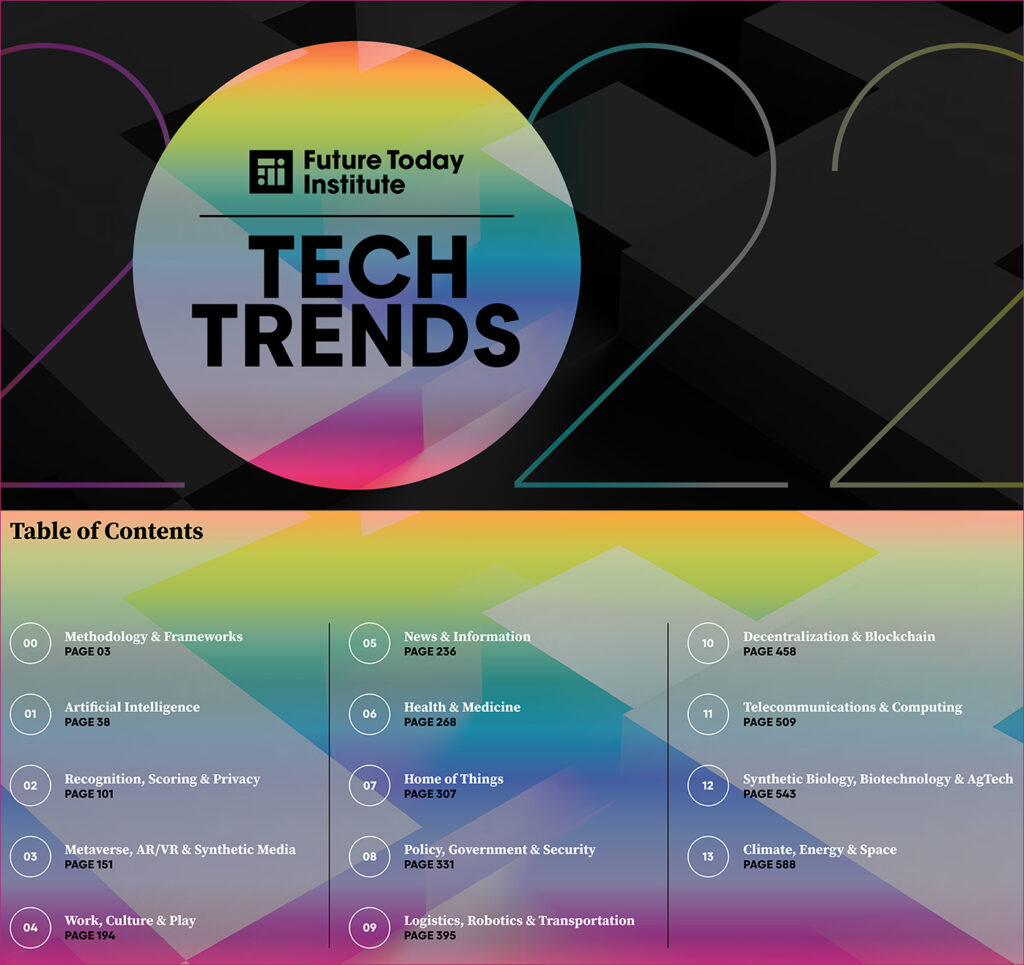
In its 2022 Tech Trends report, the Future Today Institute predicts that, “The future of work will become more digitally immersive as companies deploy virtual meeting platforms, digital experiences, and mixed reality worlds.”

Learning leaders are likely to spearhead the integration of their organizations’ workers into a metaverse, whether by providing training in using the tools that make a metaverse possible or through developing training and performance support resources that learners will use in an immersive environment.

Advantages of moving some workplace collaboration and learning into a metaverse include ease of scaling and globalization. The Tech Trends report mentions personalization at scale and easy multilingual translation as advantages of “synthetic media”—algorithmically generated digital content, which could proliferate in metaverses.

Also see:

Future Institute Today -- Tech Trends 2022


Also from learningsolutionsmag.com, see:

Manage Diverse Learning Ecosystems with Federated Governance

Excerpt:

So, over time, the L&D departments eventually go back to calling their own shots.

What does this mean for the learning ecosystem? If each L&D team chooses its own learning platforms, maintenance and support will be a nightmare. Each L&D department may be happy with the autonomy but learners have no patience for navigating multiple LMSs or going to several systems to get their training records.

Creating common infrastructure among dispersed groups
Here you have the problem: How can groups that have no accountability to each other share a common infrastructure?


From DSC:
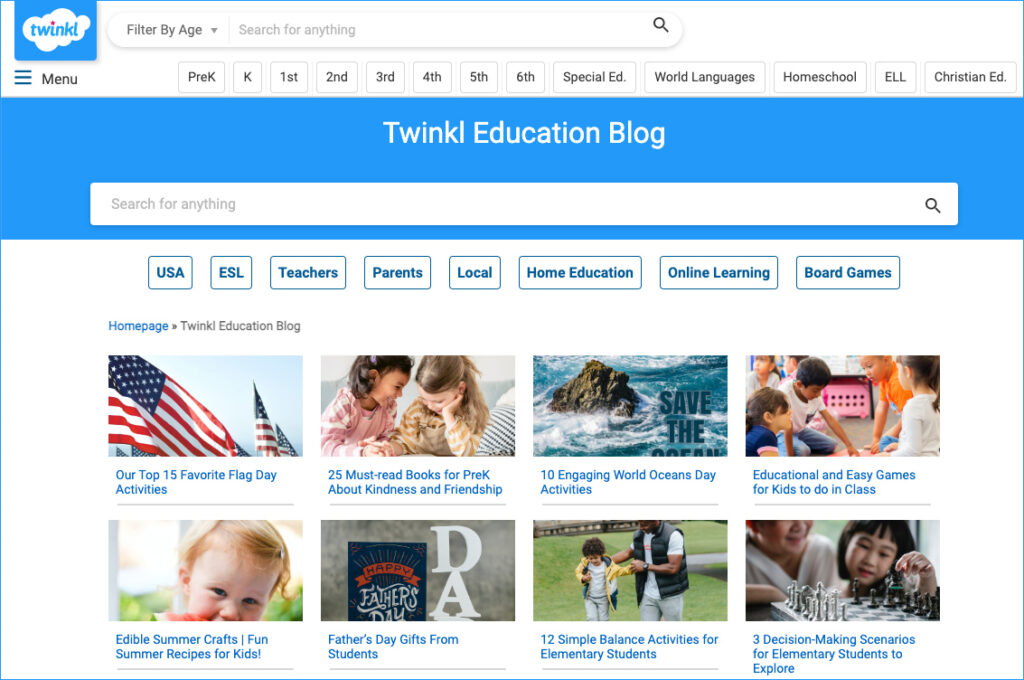
This looks like an interesting set of educational resources!

This is a screenshot of the Twinkl Education Blog


From DSC:
One of our daughters — the one who is going to be teaching third graders next year — said that the above siteand resources reminded her of Teachers Pay Teachers. So I thought I’d include that here as well.

This is a screenshot of the Teachers Pay Teachers website


Google accelerates audiobook production exponentially — from provideocoalition.com by Allan Tépper

Excerpt:

In March 2022, I published Google’s Aloud auto-dubs your English video in Castilian or Portuguese, free. Now, Google is doing a similar quantum leap for audiobook production. In fact, I already converted and published one of my own books as an audiobook successfully using Google’s semi-automatic voices. Ahead, I’ll explain how Google’s process can convert the manuscript into a presentable audiobook in a few hours instead of over a month of work, using one of Google’s automated voices which are available for different languages and regions.


From DSC:
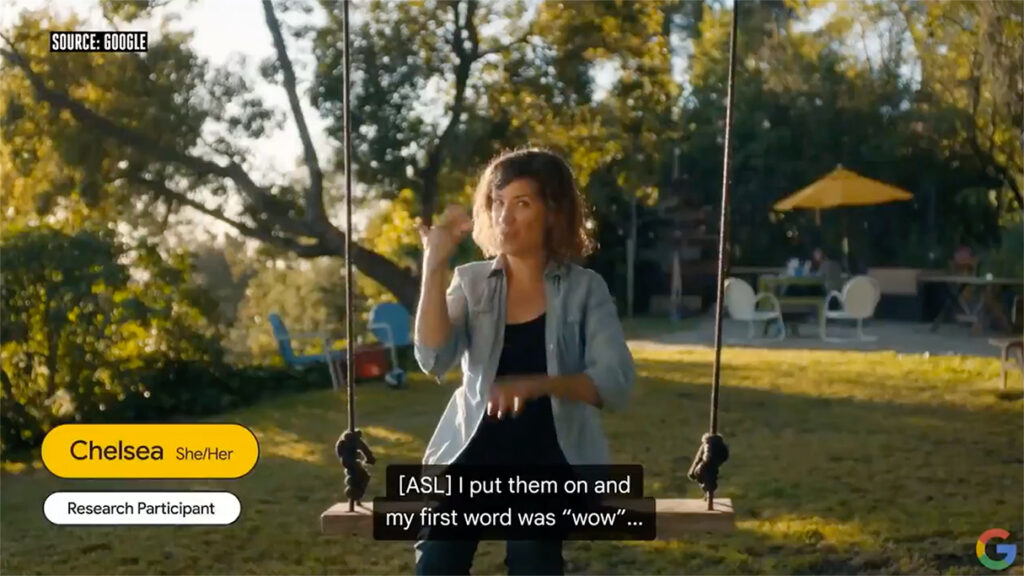
I love the parts about seeing instant language translations — including sign language! Very cool indeed!
(With thanks to Ori Inbar out on Twitter for this resource.)

Realtime American Sign Language translation via potential set of AR glasses from Google

Also see:


Radar trends to watch: May 2022 — from oreilly.com
Developments in Web3, Security, Biology, and More

Excerpt:

April was the month for large language models. There was one announcement after another; most new models were larger than the previous ones, several claimed to be significantly more energy efficient.


The amazing opportunities of AI in the future of the educational metaverse [Darbinyan]

The amazing opportunities of AI in the future of the educational metaverse — from forbes.com by Rem Darbinyan

Excerpt:

Looking ahead, let’s go over several potential AI-backed applications of the metaverse that can empower the education industry in many ways.

Multilingual Learning Opportunities
Language differences may be a real challenge for students from different cultures as they may not be able to understand and keep up with the materials and assignments. Artificial intelligence, VR and AR technologies can enhance multilingual accessibility for learners no matter where they are in the world. Speech-to-text, text-to-speech and machine translation technologies enrich the learning process and create more immersive learning environments.

AI can process multiple languages simultaneously and provide real-time translations, enabling learners to engage with the materials in the language of their choice. With the ability to instantly transcribe speech across multiple languages, artificial intelligence removes any language barriers for students, enabling them to be potentially involved, learn and communicate in any language.

Artificial Intelligence (AI) in Education Market size exceeded USD 1 billion in 2020 and is expected to grow at a CAGR of over 40% between 2021 and 2027. (source)

Along the lines of innovation within our educational learning ecosystems, see:

3 Questions for Coursera’s Betty Vandenbosch & U-M’s Lauren Atkins Budde on XR — from insidehighered.com by Joshua Kiim
How might extended reality shape the future of learning?

Excerpts (emphasis DSC):

[Lauren Atkins Budde] “Being able to embed quality, effective extended reality experiences into online courses is exponentially a game-changer. One of the persistent constraints of online learning, especially at scale, is how do learners get hands-on practice? How do they experience specific contexts and situations? How do they learn things that are best experienced? XR provides that opportunity for actively doing different kinds of tasks, in various environments, in ways that would otherwise not be possible. It will open up  Lauren Atkins Buddeboth how we teach online and also what we teach online.”

These courses are really exciting and cover a broad range of disciplines, which is particularly important. To choose the right subjects, we did an extensive review of insights from industry partners, learners and market research on in-demand and emerging future-of-work skills and then paired that with content opportunities where immersive learning is really a value-add and creates what our learning experience designers call “embodied learning.”

Addendum on 5/1/22:
Can the Metaverse Improve Learning? New Research Finds Some Promise — from edsurge.com by Jeffrey R. Young

“The findings support a deeper understanding of how creating unique educational experiences that feel real (i.e., create a high level of presence) through immersive technology can influence learning through different affective and cognitive processes including enjoyment and interest,” Mayer and his colleagues write.


The Pros and Cons of Developing AI-Powered Corporate Training Videos with Synthesia — from blog.commlabindia.com by Saritha Esaboyuna
Synthesia is a game-changing invention that uses AI (Artificial Intelligence) to generate videos from text inputs. It enables designers to not only natively localise content but also to create and update existing films.

Excerpt:

You don’t need an editing studio, expensive equipment, or a high-end video editing program to design a video. All you need is Synthesia. Actors, cameras, and microphones are no longer required! You can produce high quality AI-enabled videos in over 50 languages just by adding text with Synthesia.


Also see:

From DSC:
Teachers and faculty members might want to try this out as well — especially if you have multiple languages being spoken in your classroom. And/or perhaps IT Departments and Help Desks could look at this as well.


© 2025 | Daniel Christian