Over the top: the new war for TV is just beginning [Patel]

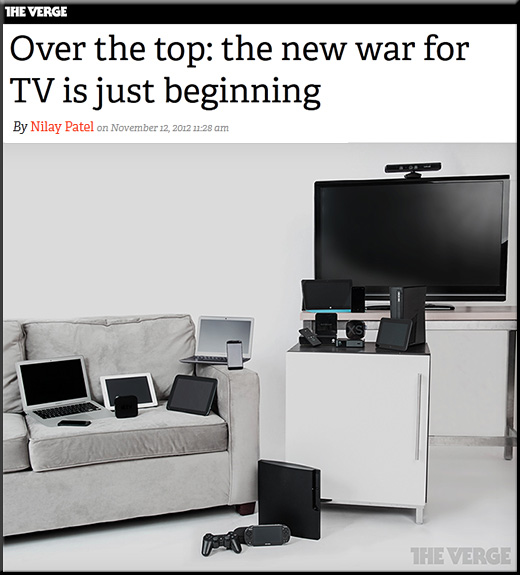
Over the top: the new war for TV is just beginning  -- from The Verge by Nilay Patel -- November 12 2012


.

 Future of TV


.
The Living [Class] Room -- by Daniel Christian -- July 2012 -- a second device used in conjunction with a Smart/Connected TV


.

From DSC:
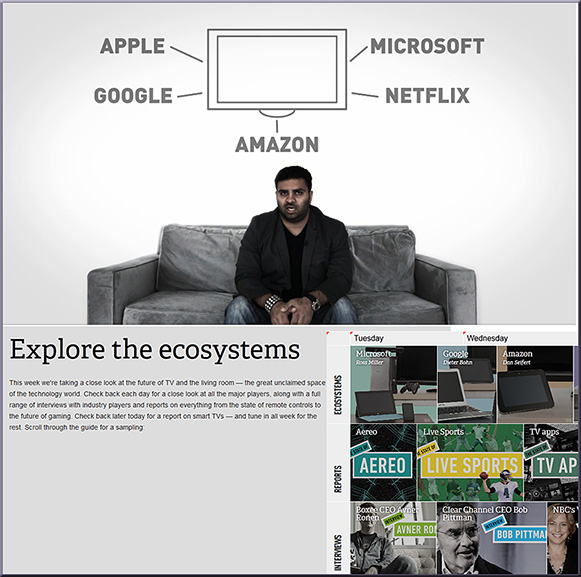
I’m beginning to wonder if many of us will be moving off of Moodle, Sakai, Bb Learn, Desire2Learn, etc. to platforms and ecosystems that are being created by Apple, Google, Amazon, and Microsoft.  Rockstar professors on “primetime” — or anytime. If that happens, you can be sure there will be teams of specialists creating and delivering the content and learning experiences.


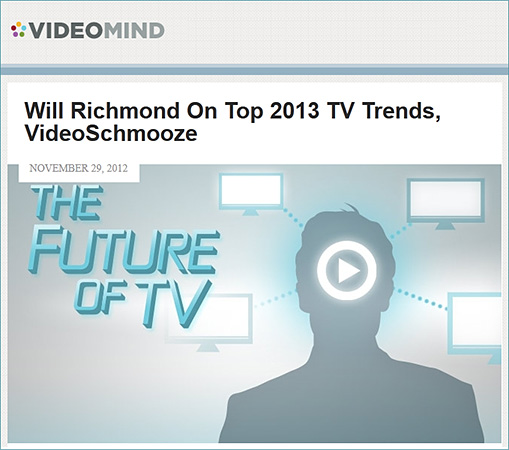
Will Richmond on Top 2013 TV Trends [from Videomind by Greg Franzese]

Will Richmond on Top 2013 TV Trends -- from Videomind by Greg Franzese -- 11-29-2012


From DSC:
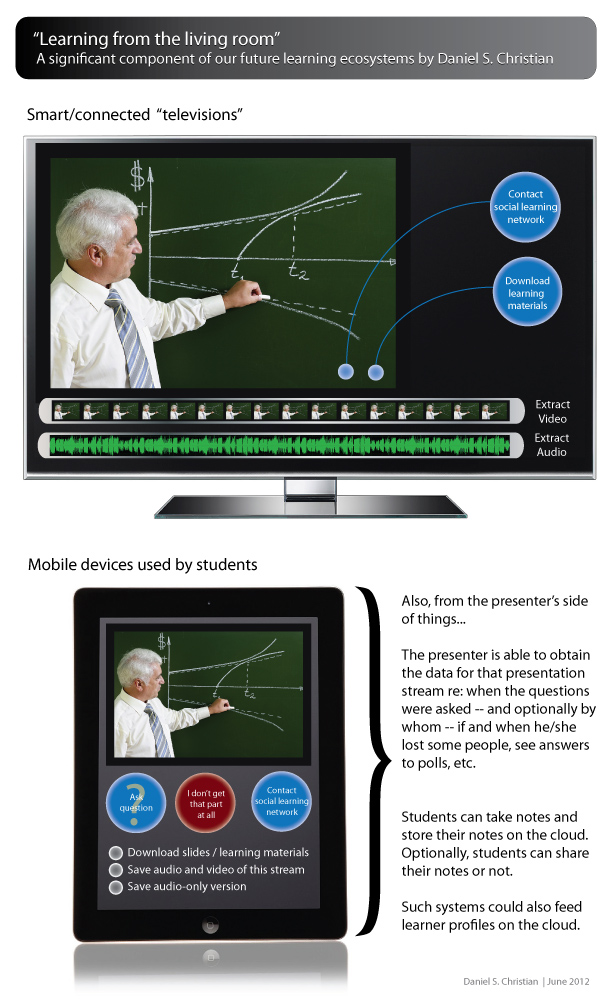
I continue to watch this space as the foundations are being put into place for what I’m calling, “Learning from the Living [Class] Room.”

.

Learning from the living room -- a component of our future learning ecosystems -- by Daniel S. Christian, June 2012


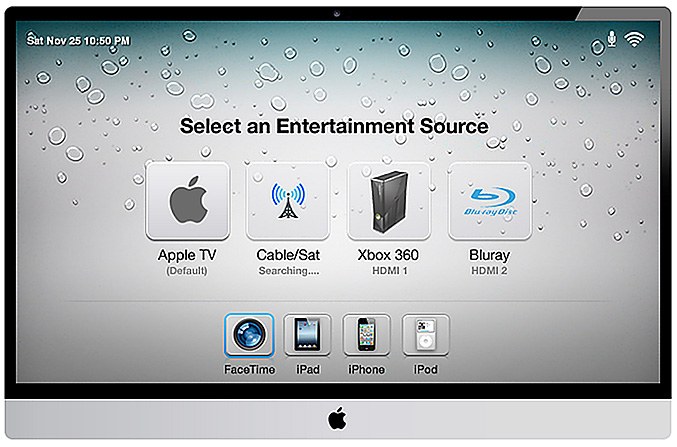
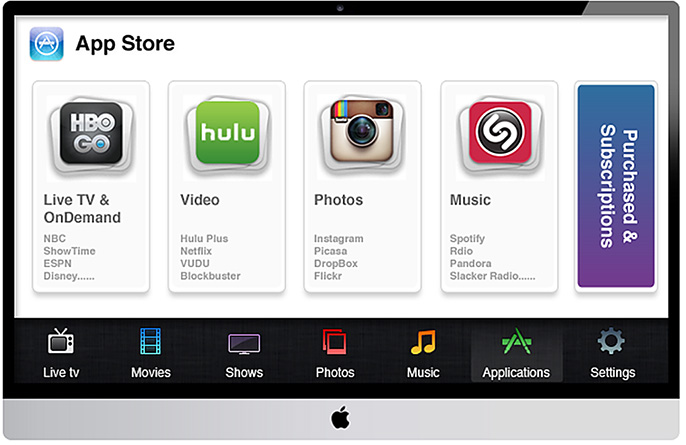
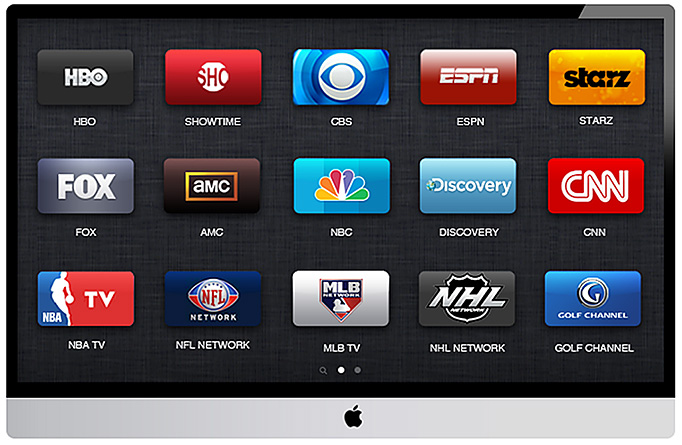
An innovative, sharp concept for a potential Apple TV

An à la carte Apple TV concept integrates Siri, FaceTime, and cable/satellite providers (Gallery) — from 9to5mac.com by Jordan Kahn

Example “screenshots” from this concept:

Apple TV Concept - Nov 2012

.


Also see:


From DSC:
This relates to what I’m calling “Learning from the Living [Class] Room”

.

The Living [Class] Room -- by Daniel Christian -- July 2012 -- a second device used in conjunction with a Smart/Connected TV


From DSC:
I understand that Mr. George Lucas is going to express his generosity in donating the $4.05 billion from the sale of Lucasfilm to education.

Here’s a question/idea that I’d like to put forth to Mr. Lucas (or to the United States Department of Education, or to another interested/committed party):

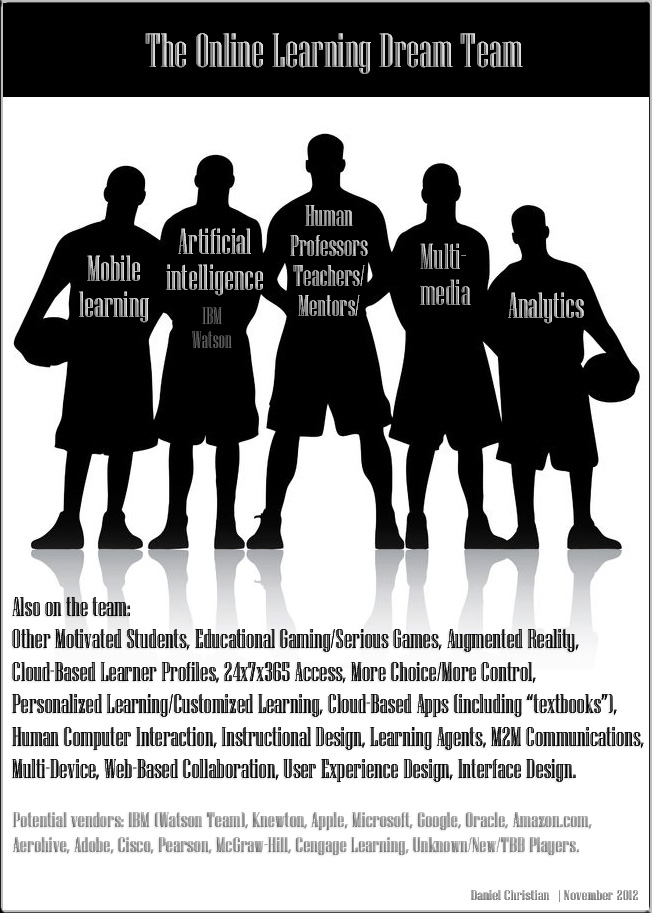
Would you consider using the $4+ billion gift to build an “Online Learning Dream Team?”

.

Daniel Christian -- The Online Learning Dream Team - as of November 2012

.

 Original image credit (before purchased/edited by DSC)
yobro10 / 123RF Stock Photo


From DSC:
What do you think? What other “players” — technologies, vendors, skillsets, etc. — should be on this team?

  • Perhaps videography?
  • Online tutoring?
  • Student academic services?
  • Animation?
  • Digital photography?


Excerpt:

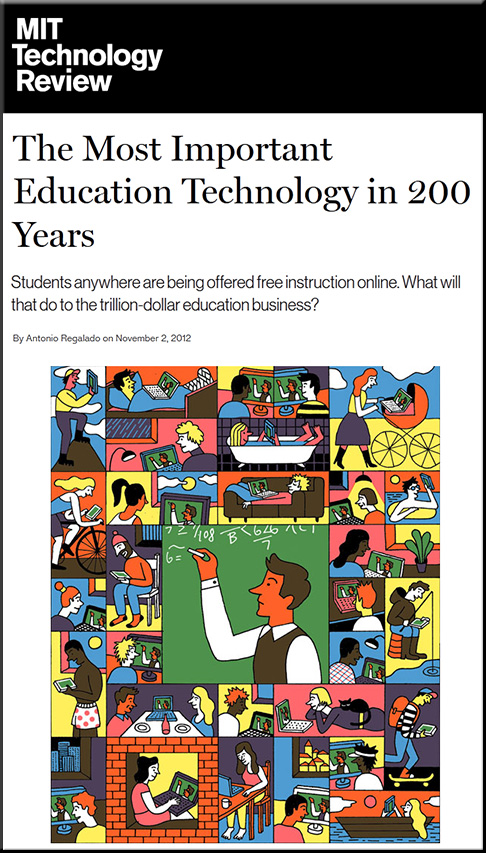
Agarwal believes that education is about to change dramatically. The reason is the power of the Web and its associated data-crunching technologies. Thanks to these changes, it’s now possible to stream video classes with sophisticated interactive elements, and researchers can scoop up student data that could help them make teaching more effective. The technology is powerful, fairly cheap, and global in its reach. EdX has said it hopes to teach a billion students.

.

Which brings me to this graphic:


asdfsadf


Also see:


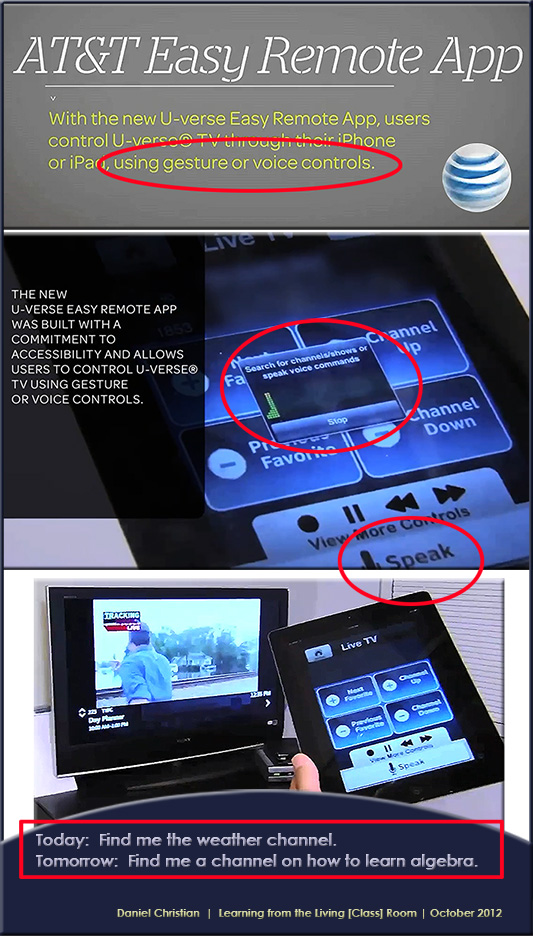
Today: Find me a weather channel. Tomorrow: Find me a channel on how to learn algrebra. By Daniel Christian


Excerpt:

The voice control functions of the Easy Remote app are powered by the AT&T Watson? speech recognition technology using AT&T’s Speech API, which uses advanced natural language processing to recognize and understand spoken words. Also developed in AT&T Labs, AT&T Watson? speech recognition technology has been powering advanced speech services in the marketplace for many years and is now available for third-party developers to use in their own apps.

Also see:


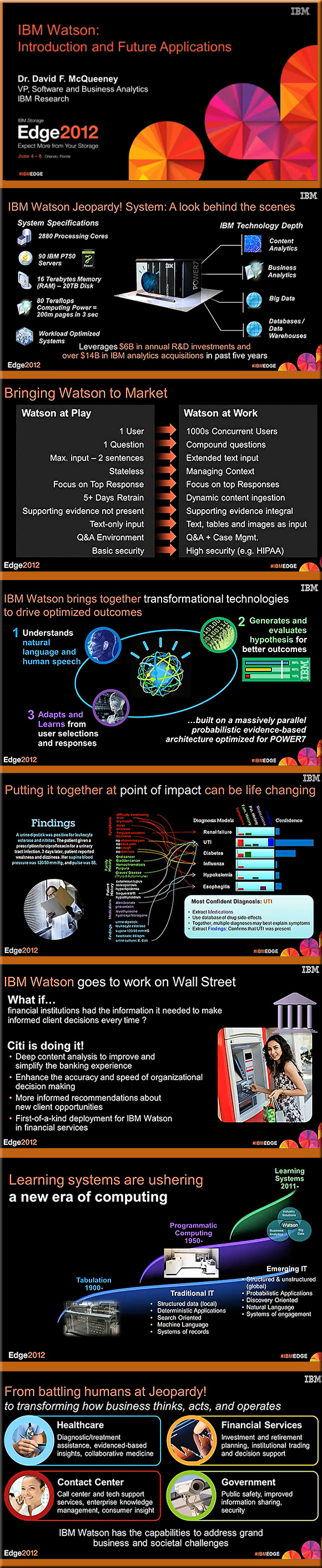
IBM’s Watson expands commercial applications, aims to go mobile  — from singularityhub.com by Jason Dorrier

.

From DSC:
This relates to what I was trying to get at with the posting on mobile learning.  I would add the word “Education” to the list of industries that the technologies encapsulated in Watson will impact in the future. Combine this with the convergence that’s enabling/building the Learning from the Living [Class] Room environment, and you have one heck of an individualized, data-driven, learning ecosystem that’s available 24 x 7 x 365 — throughout your lifetime!!!

.


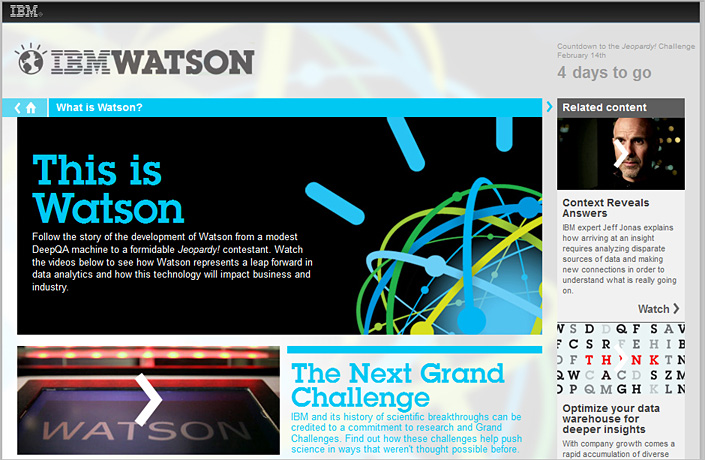
IBM Watson-Introduction and Future Applications


Also relevant here are some visions/graphics I created from 2012 and from 2008:


.

The Living [Class] Room -- by Daniel Christian -- July 2012 -- a second device used in conjunction with a Smart/Connected TV


.


.

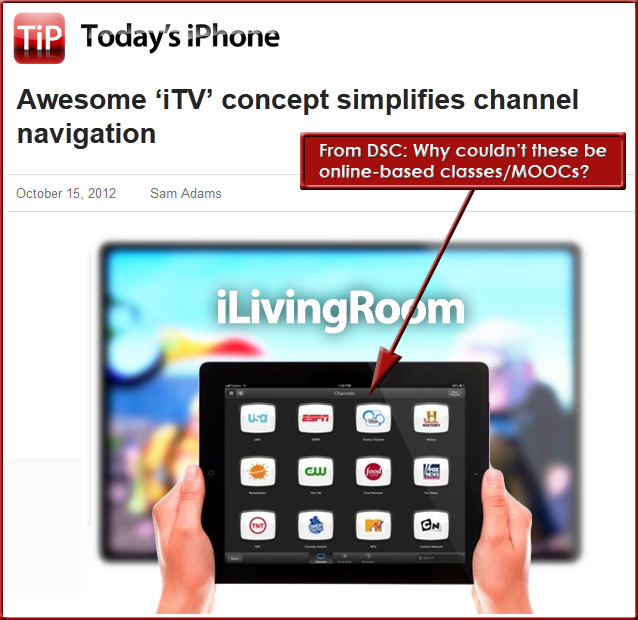
Why couldn't these channels represent online-based courses/MOOCs? Daniel Christian - 10-17-12


.


The power and possibility of mobile learning — as cross posted from evoLLLution.com (for LifeLong Learning)
Daniel S. Christian | October 2012

As I sat down to write about mobile learning, I struggled with narrowing down the scope of what I was going to attempt to address.  Which angle(s) should I take?

And then I reflected on my morning so far. I helped my daughter wake up to the sounds of a song coming from my iPhone.  She opened one eye, then the other, and soon, she was dancing around the room.  Success!

I then proceeded to listen to my iPhone as I drove my car into work – it gave me the energy I needed to start my internal engines.  (By the way, the idea of automobile-based technologies continues to grow, opening up further possibilities; but that’s a topic for another day.)

Then I caught up with a friend for coffee and he reached for his iPad.  He showed me an app for the local Art Prize competition that’s currently going on in our area.  He mentioned that if a person wasn’t in the immediately vicinity of the Art Prize event, that person could not vote on any of the pieces.  However, if the GPS-based coordinates were within the approved range, a person could use that app to:

  • Vote on which pieces of artwork that they liked
  • Find out where the artwork was located (at numerous locations on a map)
  • Learn more about the pieces themselves – what the pieces were made of, hear the artists’ thoughts on why they created what they created, etc.

So by the time I pulled up to my PC at 9:00am, I had already been positively impacted by mobile technology in several ways.  The common words and phrases that are often used to describe mobile learning and mobile technologies rang true and popped back into my mind: ubiquitous, always on, always connected, 24x7x365, convenient, etc.

As I enjoy peering into the future as well as pulse checking a variety of items, I would like to ask the following questions concerning the potential power and possibility of mobile learning as well as the relevant, emerging set of technologies that enable it:

  • Q:  What happens when the technologies behind IBM’s Watson and Apple’s Siri get perfected and integrated into learning-based products and services? What types of devices will be able to tap into those products and services?
    A:  IBM’s Watson beat the best human players in a game of Jeopardy and is now being used as a data analytics engine for the medical community, wading through terabytes of patient healthcare information and research data in order to determine how best to treat illnesses.  So, such technologies hold some serious promise in terms of at least addressing the lower to mid-levels of Bloom’s Taxonomy. For 2012, tablets, smart phones, laptops, notebooks would be likely candidates of accessing these types of products/services. But we are just at the embryonic stages of the Smart/Connected TV, and I have it that such a device will become an important and commonly-used mechanism for accessing such cloud-based applications and services in the future.
    .
  • Q: Will students of all ages have access to their own virtual tutors so to speak? From any device at any time?
    A: Yes; this is highly likely, especially given the current (and increasing) levels of investments being made in educational technology related areas.  It’s very feasible to think that Apple, IBM, Google, Microsoft, McGraw-Hill, Pearson, or some other organization with deep pockets will develop such virtual tutoring products and services.
    .
  • Q:  What will happen when a virtual tutor is unable to resolve or address the student’s issue to the student’s satisfaction?  Will the student be able to instantly access a human tutor – with the option of keeping the existing work/issue/problem visible to the human tutor?
    A:  Yes, again…highly likely. This will open up new opportunities for faculty members, teachers, instructors, trainers, and tutors.  Getting experience in teaching online is a solid career move at this point in history.  (Also relevant will be those people creating applications and technically supporting them. An understanding of web-based videoconferencing and collaboration tools will be helpful here.)
    .
  • Q:  How will the convergence of the television, the computer, and the telephone impact what can be done with learning-based applications and experiences?
    A:  We are just beginning to see the ecosystems changing and adapting to deal with the convergence of the television, the computer, and the telephone.  The Smart/Connected TV – along with “second screen” based applications – is being driven by innovations involving the entertainment, marketing, and advertising industries.  But it’s not a stretch to think that educationally-related content will be right behind such innovative solutions.
    .
  • Q:  How will the multiple screens phenomenon affect how content can be consumed and discussed?
    A:   I created a couple of graphics along these lines that attempt to capture a potential vision here. I call it “Learning from the Living [Class] Room,” and it continues to develop in front of our eyes. We could be watching a “lecture” on a big screen and simultaneously interacting with people throughout the world on our smaller screens.

The Living [Class] Room -- by Daniel Christian -- July 2012 -- a second device used in conjunction with a Smart/Connected TV


.

Learning from the living room -- a component of our future learning ecosystems -- by Daniel S. Christian, June 2012

  • Q:  How will mobile conferencing affect what can be achieved?
    A:  Mobile-based conferencing will provide 24x7x365 opportunities for learning – and communications – to occur.  Such technologies have applications even in more traditional face-to-face classroom settings.  For a few possibilities here, see how mobile technologies are used in this vision by Intel  as well as in this vision by Corning.


Great vision from Intel!

.

Great vision from Corning!

.

  • Q:  What sort of creative doors are opened when a story can be told across a variety of “channels” and means?  And what sorts of skill sets do we need to start building – or continue to build – in order to help students find work in these emerging fields?
    A:  Create a Google Alert on transmedia and/or transmedia-based storytelling and you will get a sense of what’s happening in this arena.  There will be huge opportunity for creative, innovative folks out there!  Being versed in new media would be a solid idea if one hopes to pursue careers in these burgeoning fields. That is, building at least a rudimentary skill set of how to creatively use text, graphics, animations, digital audio, digital video, and interactive programming to deliver and obtain information would be very beneficial here.
    .
  • Q:  What types of analytics will be tracked and fed into one’s cloud-based learner profile?
    A:  It will depend upon where we want such technologies to take us.  However, think about the applications and implications of this approach if a web-based profile were used to:

    • Feed a workplace-based exchange – matching buyers and sellers of services
    • Inform a learning agent on which topics/disciplines that person wants to learn more about – helping that person obtain a highly-personalized, customized, relevant, engaging, productive learning experience with a solid ROI
    • Inform a cloud-based app on what prior knowledge one has and where to begin the “next lesson”
      .
  • Q:  Will courses become apps?  Will what we know of TV programs become apps and, if so, how will that affect what each of us can contribute to our own communities of practice?
    A:  Just as the web has enabled individuals to deliver their own podcasts, information, etc. – essentially becoming their own radio stations to a degree – the ecosystems being built up around the Smart/Connected TVs could help each of us become our own TV station. The potential is huge in terms of further developing and sharing knowledge within communities of practice.
    .
  • Q:  Will educational gaming dove-tail nicely with mobile learning and emerging technologies such as augmented reality, 3D, and connected television?
    Yes, the synergies and foundational pieces are already coming into place.
    .
  • Q:  How will the bring-your-own-device (BYOD) situation affect what can occur in the face-to-face classroom?
    A:  Students will be able to seamlessly and efficiently contribute content to the discussions in a face-to-face classroom without breaking the flow of the classroom.  An example graphic can be found here.
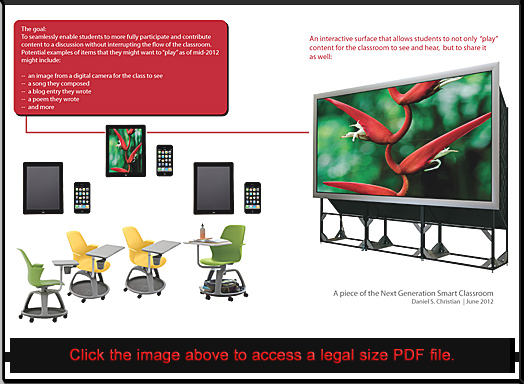
 

A piece of the Next Generation Smart Classroom -- Daniel Christian -- June 2012


The topics and potential routes that additional articles could take are almost endless.  But I think it’s safe to say that mobile, lifelong learning is here to stay.

Listed below are some recent articles and resources if you are interested in pursuing the topic of mobile learning.  I also have a section on my Learning Ecosystems blog dedicated to mobile learning.

If you are interested in what I’m calling Learning from the Living [Class] Room, you might be interested in these postings.


Some recent articles/resources regarding mobile learning:


Addendum:


Tagged with:  

Your future TV is not about Tele-Vision — from FastCompany.com by Kit Eaton

Excerpt (emphasis below from DSC; also see the above categories to see how I see this as a highly-relevant component to our future learning ecosystems):

Then imagine what a hybrid of Apple’s tech and efforts like GetGlue, Shazam, and other interactive systems will be like when they’re more integrated into your 2017 smart TV. The big screen in your living room won’t be a one-way window into another world you can’t touch anymore. It’ll be a discovery engine, a way to learn facts, interact with the world, talk to people, find new and surprising content to absorb. Advertisers will love it, and companies like Nielsen–which largely has to guess all those stats about who watches which show at primetime nowadays–will be able to get accurate data…which may mean more appealing shows.


The Living [Class] Room -- by Daniel Christian -- July 2012 -- a second device used in conjunction with a Smart/Connected TV


Also see:

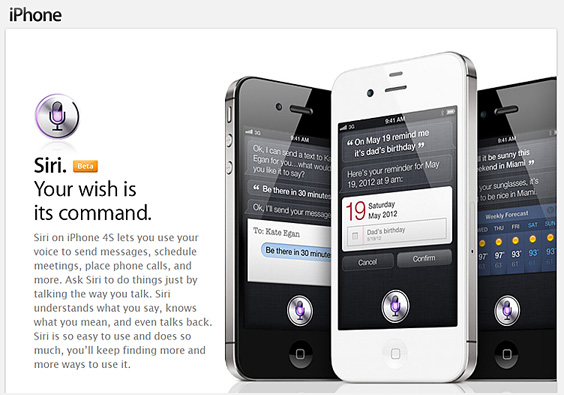
When the technologies behind Watson and Siri get perfected and integrated into the “Learning from the Living [Class] Room” environment [Christian]


From DSC:

When the technologies behind IBM’s Watson and Apple’s Siri get perfected and integrated into products and services that will make up the near future “Learning from the Living [Class] Room” environment— there will be:


  • A high degree of personalization and customization — available 24x7x365 on multiple kinds of devices
    .
  • The option to turn on tracking and analytics — reporting from which can be moved into the learner’s cloud-based profile upon completion of the unit/activity/badge
    .
  • Students of all ages will have access to their own virtual tutors so to speak
    .
  • When a virtual tutor is unable to resolve or address the student’s issue to the student’s satisfaction, the student will be able to instantly access a human tutor (with the option of keeping the existing work/issue/problems visible to the human tutor)


IBM's Watson -- incredible AI!


The Living [Class] Room -- by Daniel Christian -- July 2012 -- a second device used in conjunction with a Smart/Connected TV


.

Addendums:


“Learning from the living room” — Part I [Christian]

Learning from the living room -- a component of our future learning ecosystems -- by Daniel S. Christian, June 2012


Legal size PDF here


Addendum on 7/3/12 from an article I wrote for EvoLLLution.com (for LifeLong Learning):
Establishing better collaboration between the corporate world and higher education [Christian]

In the near future, perhaps we could have second screen-based activities whereby corporate leaders are giving TED-like presentations or expressing the current issues in their worlds via a program on Smart TVs, and the students are communicating and collaborating about these presentations via tablets or smart phones.  Perhaps there will be electronic means whereby students could submit their ideas and feedback to the presenting companies (and whereby selected ideas could be rewarded in terms of free products or services that the company produces).

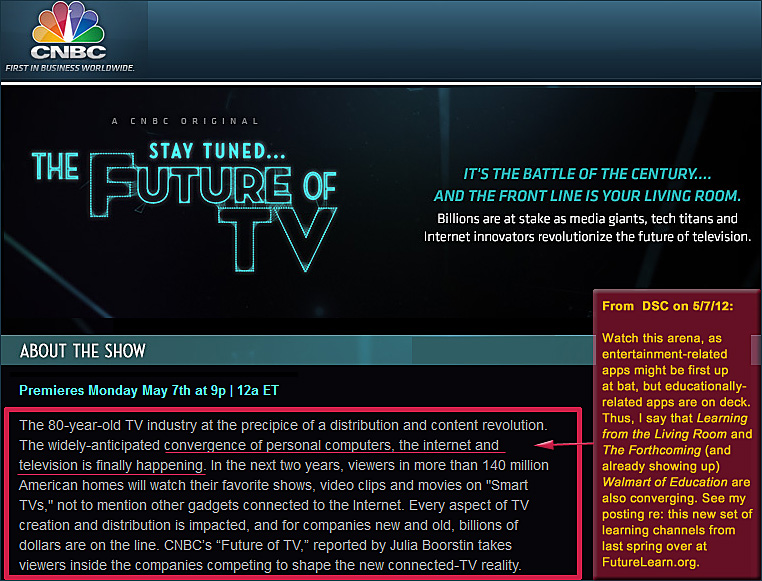
The Future of TV  - special from CNBC which airs tonight - May 7, 2012

.

Also see:

and…


Addendums on 5/8/12:

Double vision: TV gets interactive — from thetowntalk.com by Fraizer Moore

Piers Fawkes: The future of TV — from psfk.com by Piers Fawkes

A solid Q&A with such questions as:

  • The old hierarchical vertical order of: channel – series – episode, seems to be in danger, letting the horizontal disorder take its place. What do you think broadcasters can do to serve people during this shift?
  • The TV channel is being challenged, first by VOD and now by internet based services. How do you think the TV channels’ role will evolve in the next 5 years? Will the traditional push-based model maintain its centrality or will users be looking for search-only and pull-based alternatives?
  • A new form of TV means new revenue models. Who do you think will finance the next successful TV show in 10 years and how? Will the new channels’ role generate new business models? How you imagine them?
  • To protect our brain from information overload we need to filter and recommendations are a form of filtering. How do you think people’s recommendations will shape the future role of TV channels in the next years to come?
  • Artificial Intelligence, Smart Agents and algorithms are directing us into a world of Adaptive User Interfaces capable of recognizing different users and provide them with an anticipated, personalized experience. How do you think the future TV will shape around people’s habits and tastes?

McGraw-Hill report demonstrates power of adaptive learning technology to personalize education and support needs of 21st century students — prnewsire.com
Report illustrates how personalized learning is the key to engage, retain and graduate students and prepare them for the global workforce

Excerpt:

NEW YORK, April 12, 2012 /PRNewswire/ — A new report released today by the McGraw-Hill Education characterizes adaptive learning technology as the lynchpin in personalizing education in today’s K-12 and higher education classrooms. According to the report, adaptive learning technology, also known as a computer-assisted smart tutor, helps teachers tailor instruction for every student in the class, effectively creating a “class of one” and significantly improving learning outcomes.

…

The authors highlight three of McGraw-Hill’s adaptive programs:

  • LearnSmart is the leading interactive study tool for higher education that adaptively assesses students’ skill and knowledge levels to track which topics students have mastered and which require further instruction and practice. It then adjusts the learning content based on students’ strengths and weaknesses…
  • Power of U is a revolutionary, digitally rich personalized middle school math pilot program that uses real-time assessment data to group students in ways that allow them to learn at their own pace, in their own style, using the medium that works best for them…
  • ALEKS®, one of the pioneer products to use adaptive learning technology, is a web-based assessment and learning system created by the ALEKS Corporation and exclusively distributed by McGraw-Hill Higher Education to colleges and universities.

.

From DSC:
These are the types of technologies that will make their way into courses that you can take from your Smart/Connected TV (i.e. “learning from your living room” and “The Forthcoming Walmart of Education” trends continue to develop and are moving one step closer to reality).  


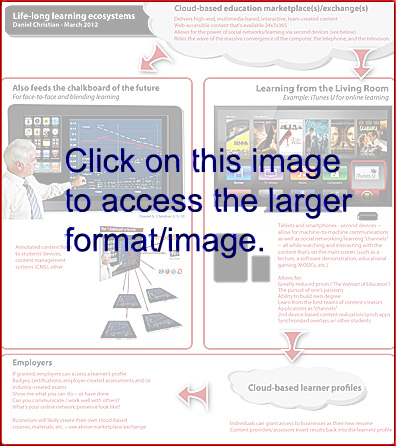
Lifelong learning ecosystems!!! A powerful vision for our future [Daniel Christian]

From DSC:
The vision below involves:
(click on the image below to access it)
 

  • The convergence of the telephone, the television, and the computer
  • Cloud-based education stores/marketplaces/exchanges
  • Second screen devices and machine-to-machine communications
  • Social networking/learning
  • Smart classrooms/learning spaces
  • Content recognition/synchronization applications
  • Apps as “channels”
  • Web-based learner profiles
  • Video overlays
  • New business models in higher ed
  • New jobs/needs for the future
  • A new way for employers to hire highly-effective employees/contractors/consultants
  • …and more


Click this thumbnail image to access the larger image / vision

.

 
© 2025 | Daniel Christian