


Mary Meeker AI Trends Report: Mind-Boggling Numbers Paint AI’s Massive Growth Picture — from ndtvprofit.com
Numbers that prove AI as a tech is unlike any other the world has ever seen.
Here are some incredibly powerful numbers from Mary Meeker’s AI Trends report, which showcase how artificial intelligence as a tech is unlike any other the world has ever seen.
- AI took only three years to reach 50% user adoption in the US; mobile internet took six years, desktop internet took 12 years, while PCs took 20 years.
- ChatGPT reached 800 million users in 17 months and 100 million in only two months, vis-à-vis Netflix’s 100 million (10 years), Instagram (2.5 years) and TikTok (nine months).
- ChatGPT hit 365 billion annual searches in two years (2024) vs. Google’s 11 years (2009)—ChatGPT 5.5x faster than Google.
Above via Mary Meeker’s AI Trend-Analysis — from getsuperintel.com by Kim “Chubby” Isenberg
How AI’s rapid rise, efficiency race, and talent shifts are reshaping the future.
The TLDR
Mary Meeker’s new AI trends report highlights an explosive rise in global AI usage, surging model efficiency, and mounting pressure on infrastructure and talent. The shift is clear: AI is no longer experimental—it’s becoming foundational, and those who optimize for speed, scale, and specialization will lead the next wave of innovation.
Also see Meeker’s actual report at:
Trends – Artificial Intelligence — from bondcap.com by Mary Meeker / Jay Simons / Daegwon Chae / Alexander Krey

The Rundown: Meta aims to release tools that eliminate humans from the advertising process by 2026, according to a report from the WSJ — developing an AI that can create ads for Facebook and Instagram using just a product image and budget.
The details:
- Companies would submit product images and budgets, letting AI craft the text and visuals, select target audiences, and manage campaign placement.
- The system will be able to create personalized ads that can adapt in real-time, like a car spot featuring mountains vs. an urban street based on user location.
- The push would target smaller companies lacking dedicated marketing staff, promising professional-grade advertising without agency fees or skillset.
- Advertising is a core part of Mark Zuckerberg’s AI strategy and already accounts for 97% of Meta’s annual revenue.
Why it matters: We’re already seeing AI transform advertising through image, video, and text, but Zuck’s vision takes the process entirely out of human hands. With so much marketing flowing through FB and IG, a successful system would be a major disruptor — particularly for small brands that just want results without the hassle.
The AI-enhanced learning ecosystem: A case study in collaborative innovation — from chieflearningofficer.com by Kevin Jennings
How artificial intelligence can serve as a tool and collaborative partner in reimagining content development and management.
Learning and development professionals face unprecedented challenges in today’s rapidly evolving business landscape. According to LinkedIn’s 2025 Workplace Learning Report, 67 percent of L&D professionals report being “maxed out” on capacity, while 66 percent have experienced budget reductions in the past year.
Despite these constraints, 87 percent agree their organizations need to develop employees faster to keep pace with business demands. These statistics paint a clear picture of the pressure L&D teams face: do more, with less, faster.
This article explores how one L&D leader’s strategic partnership with artificial intelligence transformed these persistent challenges into opportunities, creating a responsive learning ecosystem that addresses the modern demands of rapid product evolution and diverse audience needs. With 71 percent of L&D professionals now identifying AI as a high or very high priority for their learning strategy, this case study demonstrates how AI can serve not merely as a tool but as a collaborative partner in reimagining content development and management.
.

How we use GenAI and AR to improve students’ design skills — from timeshighereducation.com by Antonio Juarez, Lesly Pliego and Jordi Rábago who are professors of architecture at Monterrey Institute of Technology in Mexico; Tomas Pachajoa is a professor of architecture at the El Bosque University in Colombia; & Carlos Hinrichsen and Marietta Castro are educators at San Sebastián University in Chile.
Guidance on using generative AI and augmented reality to enhance student creativity, spatial awareness and interdisciplinary collaboration
Blend traditional skills development with AI use
For subjects that require students to develop drawing and modelling skills, have students create initial design sketches or models manually to ensure they practise these skills. Then, introduce GenAI tools such as Midjourney, Leonardo AI and ChatGPT to help students explore new ideas based on their original concepts. Using AI at this stage broadens their creative horizons and introduces innovative perspectives, which are crucial in a rapidly evolving creative industry.
Provide step-by-step tutorials, including both written guides and video demonstrations, to illustrate how initial sketches can be effectively translated into AI-generated concepts. Offer example prompts to demonstrate diverse design possibilities and help students build confidence using GenAI.
Integrating generative AI and AR consistently enhanced student engagement, creativity and spatial understanding on our course.
How Texas is Preparing Higher Education for AI — from the74million.org by Kate McGee
TX colleges are thinking about how to prepare students for a changing workforce and an already overburdened faculty for new challenges in classrooms.
“It doesn’t matter if you enter the health industry, banking, oil and gas, or national security enterprises like we have here in San Antonio,” Eighmy told The Texas Tribune. “Everybody’s asking for competency around AI.”
It’s one of the reasons the public university, which serves 34,000 students, announced earlier this year that it is creating a new college dedicated to AI, cyber security, computing and data science. The new college, which is still in the planning phase, would be one of the first of its kind in the country. UTSA wants to launch the new college by fall 2025.
But many state higher education leaders are thinking beyond that. As AI becomes a part of everyday life in new, unpredictable ways, universities across Texas and the country are also starting to consider how to ensure faculty are keeping up with the new technology and students are ready to use it when they enter the workforce.
In the Room Where It Happens: Generative AI Policy Creation in Higher Education — from er.educause.edu by Esther Brandon, Lance Eaton, Dana Gavin, and Allison Papini
To develop a robust policy for generative artificial intelligence use in higher education, institutional leaders must first create “a room” where diverse perspectives are welcome and included in the process.
Q&A: Artificial Intelligence in Education and What Lies Ahead — from usnews.com by Sarah Wood
Research indicates that AI is becoming an essential skill to learn for students to succeed in the workplace.
Q: How do you expect to see AI embraced more in the future in college and the workplace?
I do believe it’s going to become a permanent fixture for multiple reasons. I think the national security imperative associated with AI as a result of competing against other nations is going to drive a lot of energy and support for AI education. We also see shifts across every field and discipline regarding the usage of AI beyond college. We see this in a broad array of fields, including health care and the field of law. I think it’s here to stay and I think that means we’re going to see AI literacy being taught at most colleges and universities, and more faculty leveraging AI to help improve the quality of their instruction. I feel like we’re just at the beginning of a transition. In fact, I often describe our current moment as the ‘Ask Jeeves’ phase of the growth of AI. There’s a lot of change still ahead of us. AI, for better or worse, it’s here to stay.
AI-Generated Podcasts Outperform Textbooks in Landmark Education Study — form linkedin.com by David Borish
A new study from Drexel University and Google has demonstrated that AI-generated educational podcasts can significantly enhance both student engagement and learning outcomes compared to traditional textbooks. The research, involving 180 college students across the United States, represents one of the first systematic investigations into how artificial intelligence can transform educational content delivery in real-time.
What can we do about generative AI in our teaching? — from linkedin.com by Kristina Peterson
So what can we do?
- Interrogate the Process: We can ask ourselves if we I built in enough checkpoints. Steps that can’t be faked. Things like quick writes, question floods, in-person feedback, revision logs.
- Reframe AI: We can let students use AI as a partner. We can show them how to prompt better, revise harder, and build from it rather than submit it. Show them the difference between using a tool and being used by one.
- Design Assignments for Curiosity, Not Compliance: Even the best of our assignments need to adapt. Mine needs more checkpoints, more reflective questions along the way, more explanation of why my students made the choices they did.
Teachers Are Not OK — from 404media.co by Jason Koebler
The response from teachers and university professors was overwhelming. In my entire career, I’ve rarely gotten so many email responses to a single article, and I have never gotten so many thoughtful and comprehensive responses.
One thing is clear: teachers are not OK.
…
In addition, universities are contracting with companies like Microsoft, Adobe, and Google for digital services, and those companies are constantly pushing their AI tools. So a student might hear “don’t use generative AI” from a prof but then log on to the university’s Microsoft suite, which then suggests using Copilot to sum up readings or help draft writing. It’s inconsistent and confusing.
I am sick to my stomach as I write this because I’ve spent 20 years developing a pedagogy that’s about wrestling with big ideas through writing and discussion, and that whole project has been evaporated by for-profit corporations who built their systems on stolen work. It’s demoralizing.
How To Get Hired During the AI Apocalypse — from kathleendelaski.substack.com by Kathleen deLaski
And other discussions to have with your kids on the way to college graduation
A less temporary, more existential threat to the four year degree: AI could hollow out the entry level job market for knowledge workers (i.e. new college grads). And if 56% of families were saying college “wasn’t worth it” in 2023,(WSJ), what will that number look like in 2026 or beyond? The one of my kids who went to college ended up working in a bike shop for a year-ish after graduation. No regrets, but it came as a shock to them that they weren’t more employable with their neuroscience degree.
A colleague provided a great example: Her son, newly graduated, went for a job interview as an entry level writer last month and he was asked, as a test, to produce a story with AI and then use that story to write a better one by himself. He would presumably be judged on his ability to prompt AI and then improve upon its product. Is that learning how to DO? I think so. It’s using AI tools to accomplish a workplace task.
Also relevant in terms of the job search, see the following gifted article:
‘We Are the Most Rejected Generation’ — from nytimes.com by David Brooks; gifted article
David talks admissions rates for selective colleges, ultra-hard to get summer internships, a tough entry into student clubs, and the job market.

Things get even worse when students leave school and enter the job market. They enter what I’ve come to think of as the seventh circle of Indeed hell. Applying for jobs online is easy, so you have millions of people sending hundreds of applications each into the great miasma of the internet, and God knows which impersonal algorithm is reading them. I keep hearing and reading stories about young people who applied to 400 jobs and got rejected by all of them.
It seems we’ve created a vast multilayered system that evaluates the worth of millions of young adults and, most of the time, tells them they are not up to snuff.
Many administrators and faculty members I’ve spoken to are mystified that students would create such an unforgiving set of status competitions. But the world of competitive exclusion is the world they know, so of course they are going to replicate it.
And in this column I’m not even trying to cover the rejections experienced by the 94 percent of American students who don’t go to elite schools and don’t apply for internships at Goldman Sachs. By middle school, the system has told them that because they don’t do well on academic tests, they are not smart, not winners. That’s among the most brutal rejections our society has to offer.
Fiverr CEO explains alarming message to workers about AI — from iblnews.org
Fiverr CEO Micha Kaufman recently warned his employees about the impact of artificial intelligence on their jobs.
The Great Career Reinvention, and How Workers Can Keep Up — from workshift.org by Michael Rosenbaum
A wide range of roles can or will quickly be replaced with AI, including inside sales representatives, customer service representatives, junior lawyers, junior accountants, and physicians whose focus is diagnosis.
Behind the Curtain: A white-collar bloodbath — from axios.com by Jim VandeHei and Mike Allen
Dario Amodei — CEO of Anthropic, one of the world’s most powerful creators of artificial intelligence — has a blunt, scary warning for the U.S. government and all of us:
- AI could wipe out half of all entry-level white-collar jobs — and spike unemployment to 10-20% in the next one to five years, Amodei told us in an interview from his San Francisco office.
- Amodei said AI companies and government need to stop “sugar-coating” what’s coming: the possible mass elimination of jobs across technology, finance, law, consulting and other white-collar professions, especially entry-level gigs.
Why it matters: Amodei, 42, who’s building the very technology he predicts could reorder society overnight, said he’s speaking out in hopes of jarring government and fellow AI companies into preparing — and protecting — the nation.
Opinions | This Baltimore program shows how to fight generational poverty – from washingtonpost.com by Leana S. Wen; this is a gifted article
How one grassroots organization is teaching young people leadership skills and giving them hope.
She recognized their desperation and felt called to return and use what she had learned to help them realize a different future. So she set up an organization, HeartSmiles, to do just that — one young person at a time.
Holifield’s experience is one that city officials and public health workers can learn from. If they want to disrupt the generational cycle of poverty, trauma and hopelessness that afflicts so many communities, a good place to focus their efforts is children.
…
How can communities overcome inertia and resignation? Holifield’s organization starts with two core interventions. The first is career and leadership development. Children as young as 8 go to the HeartSmiles center to participate in facilitated sessions on youth entrepreneurship, budgeting and conflict resolution. Those who want to explore certain career paths are matched with professionals in these fields.
…
The second part of her vision is youth-led mentorship, which involves pairing young people with those not much older than they are.
Also relevant/see:
Lost boys, trapped men, and the role of lifers in prison education — from college-inside.beehiiv.com by Charlotte West
This week, we’re publishing Part 2 of a Q&A with Erik Maloney, a lifer in Arizona, and Kevin Wright, a criminal justice professor at Arizona State University. They co-authored Imprisoned Minds, a book about trauma and healing published in December 2024, over the course of seven years. Check out Part 1 of the Q&A.
West: The fact that you created your own curriculum to accompany the book makes me think about the role of lifers in creating educational opportunities in prisons. What do you see as the role of lifers in filling some of these gaps?
Maloney: I’ve said for years that lifers are so underutilized in prison. It’s all about punishment for what you’re in for, and [the prison system] overlooks us as a resource. We are people who, if allowed to be educated properly, can teach courses indefinitely while also being a role model for those with shorter sentences. This gives the lifer meaning and purpose to do good again. He serves as a mentor, whether he likes it or not, to [those] people coming into the prisons. When they see him doing well, it inspires others to want to do well.But if it’s all about punishment, and a person has no meaning and no purpose in life, then all they have is hopelessness. With hopelessness comes despair, and with despair, you have rampant drug and alcohol abuse in prison, and violence stems from that.
Boys Are Struggling in School. What Can Be Done? — from edweek.org by Rick Hess
Scholar Richard Reeves says it’s time to take a hard look at gender equity
Rick: What kinds of strategies do you think would help?
Richard: In education, we should expand the use of male-friendly teaching methods, such as more hands-on and active learning approaches. We should also consider redshirting boys—starting them in school a year later—to account for developmental differences between boys and girls. We should also introduce more male mentors and role models in schools, particularly in elementary education, where male teachers are scarce. In the workforce, apprenticeship and vocational training programs need to be expanded to create pathways into stable employment for young men who may not pursue a four-year degree. Career counseling should also emphasize diverse pathways to ensure that boys who may not thrive in a traditional academic setting still have opportunities for success. Additionally, fatherhood policies should recognize the importance of male engagement in family life, supporting fathers in their role as caregivers and providers.
While on the topic of K12 education, also see:
How Electives Help All Students Succeed — from edutopia.org by Miriam Plotinsky
Giving students a choice of electives increases engagement and allows them to develop skills outside of core academic subjects.

I recently conducted a student focus group on the topic of school attendance. One of the participants, a high school junior who admitted to being frequently late or absent, explained why she still came to school: “I never want to miss Drama. My teacher is awesome. Her class is the reason I show up every day.” As the rest of the focus group chimed in with similar thoughts, I reflected on the power that elective courses hold for students of all ages.
These courses, from jazz band to yoga, cement students’ sense of self not just in their primary and secondary years, but also in their journey toward adulthood. In these tight economic times, schools or districts often slash electives to save money on staffing, which is highly detrimental to student success. Instead, not only should budget cuts be made elsewhere, but also elective offerings should increase to heighten student choice and well-being.
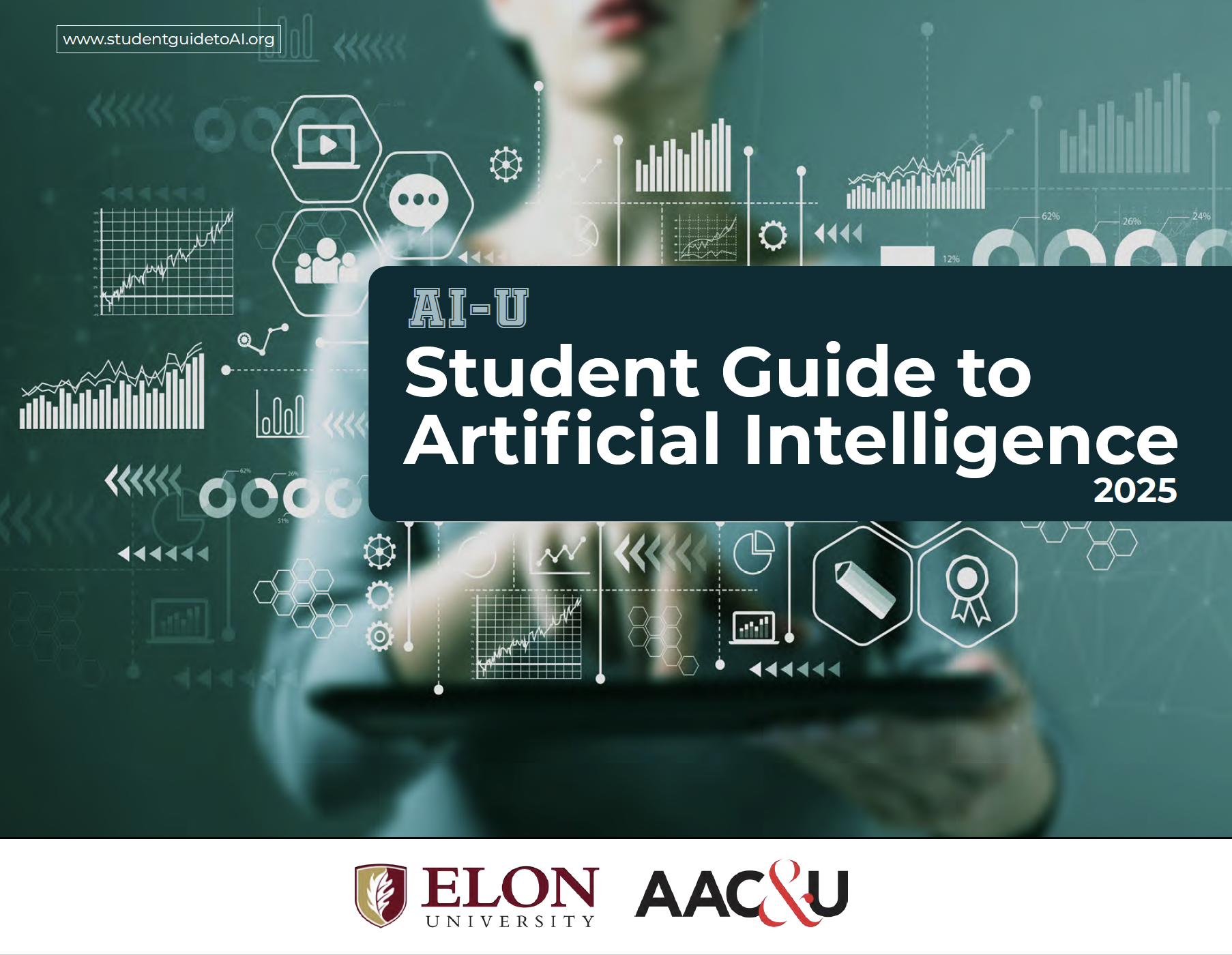
.Get the 2025 Student Guide to Artificial Intelligence — from studentguidetoai.org
This guide is made available under a Creative Commons license by Elon University and the American Association of Colleges and Universities (AAC&U).
.
AI Isn’t Just Changing How We Work — It’s Changing How We Learn — from entrepreneur.com by Aytekin Tank; edited by Kara McIntyre
AI agents are opening doors to education that just a few years ago would have been unthinkable. Here’s how.
Agentic AI is taking these already huge strides even further. Rather than simply asking a question and receiving an answer, an AI agent can assess your current level of understanding and tailor a reply to help you learn. They can also help you come up with a timetable and personalized lesson plan to make you feel as though you have a one-on-one instructor walking you through the process. If your goal is to learn to speak a new language, for example, an agent might map out a plan starting with basic vocabulary and pronunciation exercises, then progress to simple conversations, grammar rules and finally, real-world listening and speaking practice.
…
For instance, if you’re an entrepreneur looking to sharpen your leadership skills, an AI agent might suggest a mix of foundational books, insightful TED Talks and case studies on high-performing executives. If you’re aiming to master data analysis, it might point you toward hands-on coding exercises, interactive tutorials and real-world datasets to practice with.
The beauty of AI-driven learning is that it’s adaptive. As you gain proficiency, your AI coach can shift its recommendations, challenge you with new concepts and even simulate real-world scenarios to deepen your understanding.
Ironically, the very technology feared by workers can also be leveraged to help them. Rather than requiring expensive external training programs or lengthy in-person workshops, AI agents can deliver personalized, on-demand learning paths tailored to each employee’s role, skill level, and career aspirations. Given that 68% of employees find today’s workplace training to be overly “one-size-fits-all,” an AI-driven approach will not only cut costs and save time but will be more effective.
What’s the Future for AI-Free Spaces? — from higherai.substack.com by Jason Gulya
Please let me dream…
This is one reason why I don’t see AI-embedded classrooms and AI-free classrooms as opposite poles. The bone of contention, here, is not whether we can cultivate AI-free moments in the classroom, but for how long those moments are actually sustainable.
Can we sustain those AI-free moments for an hour? A class session? Longer?
…
Here’s what I think will happen. As AI becomes embedded in society at large, the sustainability of imposed AI-free learning spaces will get tested. Hard. I think it’ll become more and more difficult (though maybe not impossible) to impose AI-free learning spaces on students.
However, consensual and hybrid AI-free learning spaces will continue to have a lot of value. I can imagine classes where students opt into an AI-free space. Or they’ll even create and maintain those spaces.
Duolingo’s AI Revolution — from drphilippahardman.substack.com by Dr. Philippa Hardman
What 148 AI-Generated Courses Tell Us About the Future of Instructional Design & Human Learning
Last week, Duolingo announced an unprecedented expansion: 148 new language courses created using generative AI, effectively doubling their content library in just one year. This represents a seismic shift in how learning content is created — a process that previously took the company 12 years for their first 100 courses.
As CEO Luis von Ahn stated in the announcement, “This is a great example of how generative AI can directly benefit our learners… allowing us to scale at unprecedented speed and quality.”
In this week’s blog, I’ll dissect exactly how Duolingo has reimagined instructional design through AI, what this means for the learner experience, and most importantly, what it tells us about the future of our profession.
Are Mixed Reality AI Agents the Future of Medical Education? — from ehealth.eletsonline.com
Medical education is experiencing a quiet revolution—one that’s not taking place in lecture theatres or textbooks, but with headsets and holograms. At the heart of this revolution are Mixed Reality (MR) AI Agents, a new generation of devices that combine the immersive depth of mixed reality with the flexibility of artificial intelligence. These technologies are not mere flashy gadgets; they’re revolutionising the way medical students interact with complicated content, rehearse clinical skills, and prepare for real-world situations. By combining digital simulations with the physical world, MR AI Agents are redefining what it means to learn medicine in the 21st century.
4 Reasons To Use Claude AI to Teach — from techlearning.com by Erik Ofgang
Features that make Claude AI appealing to educators include a focus on privacy and conversational style.
After experimenting using Claude AI on various teaching exercises, from generating quizzes to tutoring and offering writing suggestions, I found that it’s not perfect, but I think it behaves favorably compared to other AI tools in general, with an easy-to-use interface and some unique features that make it particularly suited for use in education.
In many traditional school buildings, the design sends an unspoken message: “Sit down. Follow instructions. Stay within the lines.”
But imagine what students might believe about themselves and the world if their learning environment said instead:
“You belong here. Your ideas matter. Explore freely.”
For another item related to learning spaces, see:
Choosing the Right Technology for Today’s HyFlex Classroom — from edtechmagazine.com by Gaurav Bradoo
Long-lasting adoption of the HyFlex learning modality means higher education institutions shouldn’t be afraid to invest in tools that can enhance the student experience.
The answer? Solutions built for quick and easy installation, designed to work across multiple platforms and equipped with remote update and troubleshooting features. Anything we can do to reduce the number of cords, components and required steps during installation will assist AV staff. Prioritizing user-friendly design will cut down on help tickets across the lifespan of a device, and choosing features such as remote update capability can streamline maintenance. The bottom line is that simplicity and ease of deployment are not nice-to-haves. They are essential.
I’ve visited universities where instructors are faced with control panels with laminated cheat sheets next to them. These panels are often overloaded, acting as the room system as well, and not designed with simplicity or teaching flow in mind as it relates to capturing and streaming content for HyFlex teaching.

Along the lines of learning and working/office spaces…I’d like to thank Daan van Rossum for this next article (below emphasis from DSC). Daan mentioned that:
- Phil Kirschner (ex-McKinsey, WeWork, JLL, Forbes contributor) just published a sharp piece on The Workline entitled Vibe Officing: The Antidote to Office Mandates.
- In it, Phil introduces “Vibe Officing”—challenges the mandate-vs-flexibility debate with a third way: designing office spaces people want to return to, not because they’re told to, but because they actually enjoy being there. He also touches on how AI can enable personalized nudges to improve workplace journeys.
