The Campus Crisis No One’s Talking About — from linkedin.com by Jeff Selingo

Sports Betting Is Now a Campus-Wide Habit

The headline number: About 60% of 18-to-22-year-olds are engaging in sports betting, a figure that climbs to two-thirds among college students specifically, according to an NCAA-commissioned study.

  • “It’s sort of a learned behavior for them at a very young age,” Clint Hangebrauck, the NCAA’s managing director of enterprise risk management, told us on the latest episode of Future U. “I do think this could be the next big public health crisis that we’re facing as a country and particularly within higher ed.”
  • College-age individuals are 3x more likely to develop problematic gambling behaviors than the general population. Gambling often co-exists with other behaviors now prevalent in colleges, such as sleeplessness, binge drinking, drug use, anxiety and depression.

Gambling among college students isn’t confined to athletes. Rather, it’s embedded across campus life, and with athletes often most visible in Division III, where oversight is lighter. Gambling often coexists with—and can exacerbate—other student challenges, from mental health struggles to substance use. If this is the next public health issue on campus, it’s arriving without the same level of attention.


From DSC:
I don’t mean to be self-righteous here. But shame on the older adults who are promoting gambling in any fashion — marketing, advertising, sales, and/or whatever. It’s a cancer in our society, and it’s impacting our youth in a big way (and also older folks as well). I’m not a gambler, but I’m well acquainted with weakness. And the Bible confirms that we all are acquainted with weakness:

Isaiah 53:6

 We all, like sheep, have gone astray,
    each of us has turned to our own way;
and the Lord has laid on him
    the iniquity of us all.

The adults out there know it. We are well acquainted with our sins and shortcomings.

Parents want the best for their kids. They don’t want dangerous habits being formed in their children. “Coping skills” that are majorly busted, and can lead to incredibly negative events. And the parents don’t want these habits to be formed at colleges and universities across the nation.

I wish those involved with promoting gambling could be at the dinner tables, or in the bedrooms, or in the living rooms, or in the vehicles out there when a spouse finds out that the other spouse (or significant other) has gambled away a significant amount of the couple’s savings. They no longer have rainy-day funds. They can no longer pay their bills. They no longer have the college funds for their other kids. Emotions erupt, fights begin. Relationships are threatened — and divorces sometimes occur because of this issue/habit. 

So if you are involved with promoting gambling, consider reading this article from Jeff Selingo…then go take a long look in the mirror. 
 

Hidden in Plain Sight: How Microschools Can Unlock the Power of Public Libraries — from microschoolingcenter.org by Tiffany Blassingame & Erin Flynn

The Library as a Learning Campus
Many microschool founders are wrestling with the same core challenge: how do you provide students with enriching, hands-on experiences when you’re working with a small team and a lean budget? Erin’s answer is deceptively simple — walk through the library’s front door.

Modern public libraries are far more than book repositories. Most educators walk past an entire ecosystem of free resources without realizing what’s available. Need printing, computers, or digital tools? Libraries offer them at little or no cost. Looking for hands-on science programming? Many branches host makerspaces and science stations built for exactly that kind of exploration. Need a space to hold a small class, workshop, or seminar? Bookable collaboration rooms are often just a phone call away.

Beyond the physical infrastructure, libraries frequently offer life skills programming — resume writing, financial literacy, job readiness — that can support the families surrounding a microschool, not just its students. And in some branches, social workers are embedded on site, providing the kind of wraparound support that few microschools could ever access on their own.

Libraries are also deeply invested in expanding their community reach. A microschool brings exactly the kind of engaged, mission-driven partnership that many branches are actively seeking. The relationship benefits both sides from day one.


Meta, YouTube found negligent in landmark social media addiction trial — from by Ian Duncan
A Los Angeles jury awarded $3 million in compensation to a young woman who alleged she had become addicted to the platforms as a child.

A Los Angeles jury found social media giant Meta and video platform YouTube negligent in a landmark trial, awarding $3 million in compensation to a young woman who alleged she had become addicted to the companies’ platforms as a child.

The verdict came at the end of a month-long trial that featured testimony by Facebook founder Mark Zuckerberg and a day after a jury in New Mexico ordered Meta to pay $375 million in penalties for endangering children. The twin verdicts are signs that legal protections which for decades made tech companies seem almost impervious are beginning to crack, as lawyers accuse the platforms of putting addictive or otherwise harmful features into their platforms.

With the armor of Silicon Valley companies fractured, they will now have to size up their appetite for future courtroom battles. There are thousands more lawsuits waiting to be heard, with young internet users, parents, school districts and state attorneys general all seeking to hold the industry accountable.


5 Tech Strategies to Enhance Student-Led Learning — from edutopia.org by Rachelle Dené Poth
While technology has potential to distract students, it can also boost engagement and help them actively demonstrate their learning.

Over the years, I have learned that engagement doesn’t happen simply by adding technology. It increases when we give students more ownership by designing experiences that allow them to build, collaborate, reflect, and teach one another. Depending on how we use it, technology can either amplify engagement or distract from it. Technology can help build students’ confidence in learning, but it can also lead to passivity. When technology is used to amplify students’ voice, choice, and ownership in learning, their engagement will naturally increase.

Here are five strategies and some digital tools that can be used across grade levels and content areas to boost student engagement, build confidence, foster collaboration, and support meaningful learning experiences.


Project-Based Learning (PBL)
Implementing a PBL Design Challenge in Your School — from edutopia.org by Lisa Beck & Kim Mishkin
A weeklong, schoolwide project-based learning challenge encourages students to try to tackle meaningful problems.

For the past five years, Hudson Lab School (HLS), a K–8 progressive school committed to project?based learning (PBL), has kicked off each school year with an exciting tradition: Design Challenge Week. In five days, students take on a real?world problem, explore each phase of the design process, and present what they created and learned to an authentic audience. Design Challenge Week introduces concepts that students will revisit all year and offers a model for how any educational setting could experiment with PBL on a smaller scale. Even short, well?designed challenges can lead to deeply engaged learning experiences.


How to Give Students Directions They Actually Understand — from edutopia.org by Mary Davenport
Making small changes in your instructions can have a significant impact on students’ understanding and engagement.

No more than a minute after you’ve provided instruction on the day’s targeted content and given students directions for their next task, some brave soul utters the line that brings tired teachers to their knees: “What are we supposed to be doing?”

None of us want this. As teachers, we all want students to fully understand what they’re supposed to be doing so that they can be successful as they do it.

Good news: A few small changes in how we give directions can be the lever that boosts student understanding and engagement.


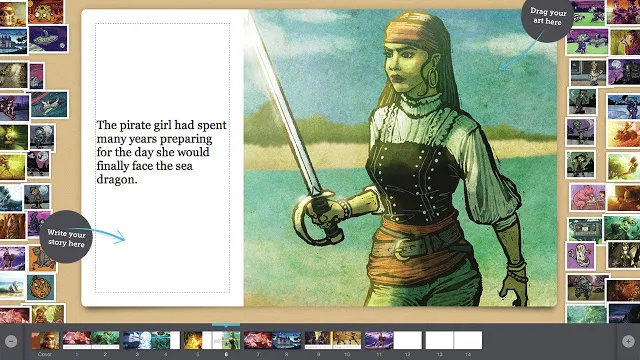
5 of the Best Tools To Teach Storytelling — from techlearning.com by Luke Edwards
Use these best tools to teach storytelling to help students progress towards mastery

The best tools to teach storytelling can also be some of the most ideal ways to engage students, both creatively and more generally with education. From sparking their imaginations to helping structure a creative toolset, these digital assistants can be powerful in the classroom and beyond.

Giving a student the ability to structure and tell a compelling story can help to empower them in terms of literacy, empathy, and critical thinking.

Students can be given the opportunity to explore historical perspectives, dive into personal narratives, build fictional worlds, and present research in a story form. All of which helps strengthen communication skills while learning at the same time.
.


Make Gatherings More Engaging — from wondertools.substack.com by Jeremy Caplan
Tested tools for quizzes, online discussions, & shareable docs

The hardest part of teaching — or leading meetings — is sparking engagement. Getting people to engage enthusiastically with something new can be tough. It’s especially challenging if people are overwhelmed, super busy, or just tired.

As we aim to stretch people’s thinking in a new direction, tools are just one part of the overall picture. But they can help. Last week I shared five tools for creating learning paths, interactive lessons, and new kinds of digital notebooks. Today’s follow-up recommendations focus on creative engagement.

You don’t have to be a teacher to find these resources for opening up participation useful. If you lead a team, run meetings, or collaborate with colleagues, you can benefit from these tools.

I’ve baked into this post multiple ways to engage.


Confidence, Engagement, and Love: The Missing Alumni Data that Will Transform K-12 — from gettingsmart.com by Corey Mohn

Ten years ago, we made a bet on relationships over replication. Instead of franchising a model, we chose to build an ecosystem—the CAPS Network—grounded in the belief that an entrepreneurial approach would create ripples of innovation with exponential scaling power. We believed that by harnessing the power of relationships for good, we could help more students discover who they are and where they belong in the world.

Today, with over 1,200 alumni voices captured in our 2025 Alumni Impact Study, we’re seeing those ripples turn into waves. And we believe these waves can and will be surfed by educators all across the globe. We are committed to the idea that our purpose (providing more students in more places the time and space for self-discovery) is more important than our brand. As such, we want our learnings to be leveraged by anyone and everyone to make a positive impact.


Confidence, Engagement, and Love explores the data we rarely track but desperately need. This piece argues that alumni confidence, sustained engagement, and a sense of being loved by their school communities are leading indicators of long-term success. It challenges K–12 systems to look beyond test scores and graduation rates and instead ask what happens after students leave, who stays connected, and how belonging shapes opportunity. The result is a call to rethink accountability around relationships, not just results.


What AI-Generated Voice Technology Means For Creators And Brands — from bitrebels.com by Ryan Mitchell

Voice has become one of the most influential elements in how digital content is experienced. From podcasts and videos to apps, ads, and interactive platforms, spoken audio shapes how messages are understood and remembered. In recent years, the rise of the ai voice generator has changed how creators and brands approach audio production, lowering barriers while expanding creative possibilities.

Rather than relying exclusively on traditional voice recording, many teams now use AI-generated voices as part of their content and brand strategies. This shift is not simply about efficiency; it reflects broader changes in how digital experiences are produced, scaled, and personalised.

The Future Role Of AI-Generated Voice
As AI voice technology continues to improve, its role in creative and brand workflows will likely expand. Future developments may include more adaptive voices that respond to context, audience behaviour, or emotional cues in real time. Rather than replacing traditional voice work, AI-generated voice is becoming another option in a broader creative toolkit, one that offers speed, flexibility, and accessibility.


6 Ed Tech Tools to Try in 2026 — from cultofpedagogy.com by Jennifer Gonzalez

It’s that time again ~ the annual round-up of tech tools we think are worth a look this year. This year I really feel like there’s something for everyone: history teachers, math and science teachers, people who run makerspaces, teachers interested in music or podcasting, writing teachers, special ed teachers, and anyone whose course content could be made clearer through graphic organizers.


Also somewhat relevant here, see:


So, You Want to Open a Microschool — from educationnext.org by Kerry McDonald
For aspiring founders who have the will but lack the way to launch their schools, startup partners are there to help

In recent years, microschools—small, highly individualized, flexible learning models—have become a popular education option, now serving at least 750,000 U.S. schoolchildren. More than half of microschools nationwide operate as homeschooling centers, while 30 percent function as private schools, 5 percent are public charters, and the rest fit into unique, often overlapping categories, according to a 2025 sector analysis by the National Microschooling Center. While many founders achieve success on their own, joining an accelerator or network can offer the business coaching and community connection that make the inevitable challenges of entrepreneurship more manageable. Van Camp decided to join KaiPod Catalyst, a microschool accelerator program from KaiPod Learning.

I feature six of these microschool accelerators and networks in my new book, Joyful Learning: How to Find Freedom, Happiness, and Success Beyond Conventional Schooling. Some of them have been around for years, but they have attracted rising interest since 2020 as more parents and teachers consider starting schools. These programs vary widely in the startup services and supports they offer, but they share a commitment to building relationships among founders and facilitating the ongoing success of today’s creative schooling options.


MICROSCHOOL REPORT
A small shift with an outsized impact in K-12 education— from gettingsmart.com by Getting Smart

High quality, personalized instruction in an intimate setting that focuses on the whole child is growing in popularity—and it looks very different from traditional models both past and present. What may seem like a throwback to the pioneers’ one-room schoolhouse actually speaks volumes about what we as a society have outgrown.

What began as a response to a global crisis has led to a watershed moment.

Yet to categorize microschools simply as “pandemic pods” or private schools with a low headcount largely misses the mark. They are perhaps best described as intentionally-designed small learning environments that are bucking two centuries of inertia and industrial-era constraints.

Microschools are providing educators with an entrepreneurial opportunity that was unthinkable just a couple of decades ago, in tandem with the ability to deliver high student and family satisfaction. And they’re doing it by prioritizing learner agency, personalization, and mastery over compliance and standardization.

However, for microschools to truly scale and impact equitable outcomes, the K-12 sector must address critical policy challenges related to access, accountability and regulatory restrictions.

The following key findings from deeply researched case studies and strategic guides published by the Getting Smart team are intended to provide a comprehensive overview on the microschool movement. Each section offers an opportunity to dive deeper into resources on specific, timely topics.


Speaking of education reform and alternatives, also see:

Driving systems transformation for 21st-century educators, learners, and workers. — from jff.org

Today’s education ecosystem must meet the needs of today’s learners. This means learner-centered outcomes, pathways between education and careers, and policies and practices that support both degree and non-degree programs.

Jobs for the Future’s Education practice works to support systems change in the education ecosystem, influence policies that promote diverse pathways, and identify and apply data-informed, learner-centered solutions.


Free Music Discovery Tools — from wondertools.substack.com by Jeremy Caplan and Chris Dalla Riva
Travel through time and around the world with sound

I love apps like Metronaut and Tomplay, which let me carry a collection of classical (sheet) music on my phone. They also provide piano or orchestral accompaniment for any violin piece I want to play.

Today’s post shares 10 other recommended tools for music lovers from my fellow writer and friend, Chris Dalla Riva, who writes Can’t Get Much Higher, a popular Substack focused on the intersection of music and data. I invited Chris to share with you his favorite resources for discovering, learning, and creating music.

Sections include:

  • Learn about Music
  • Discover New Music
  • Learn an Instrument
  • Tools for Artists
 

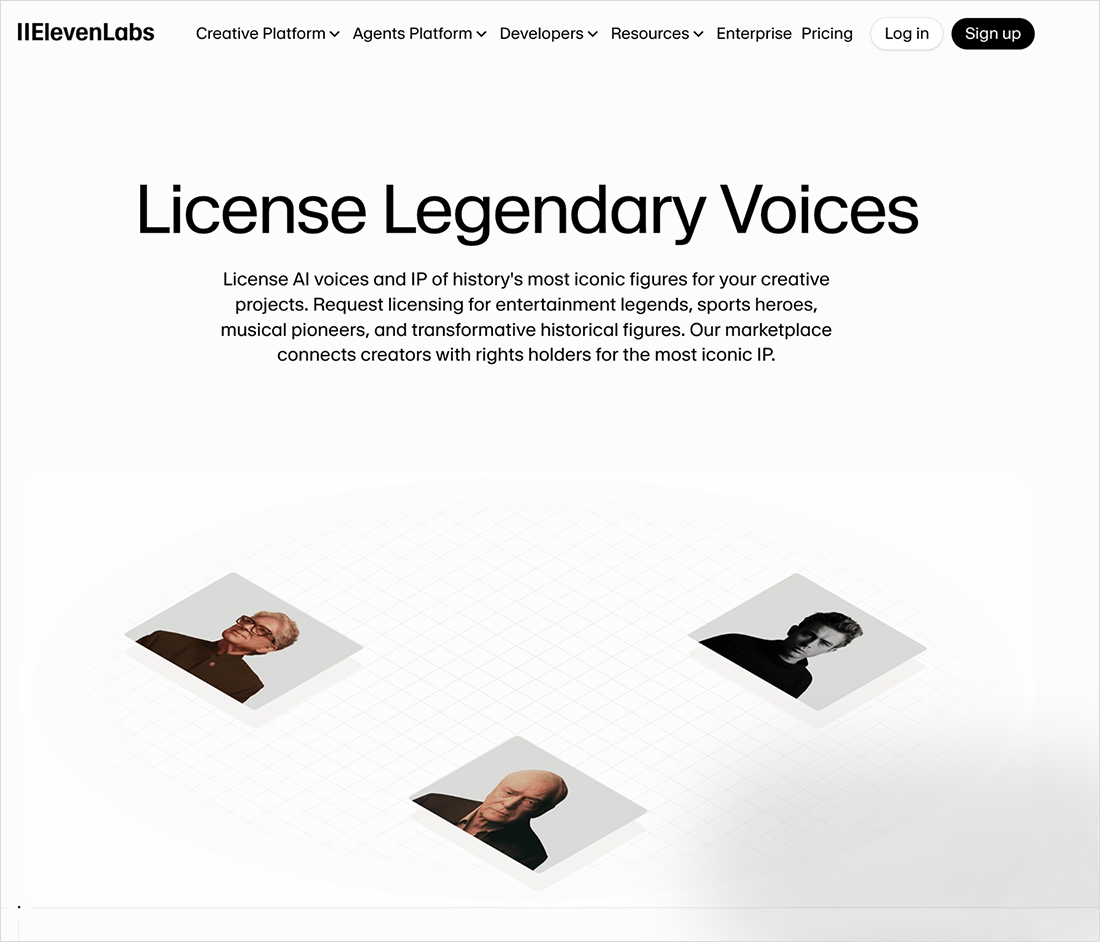
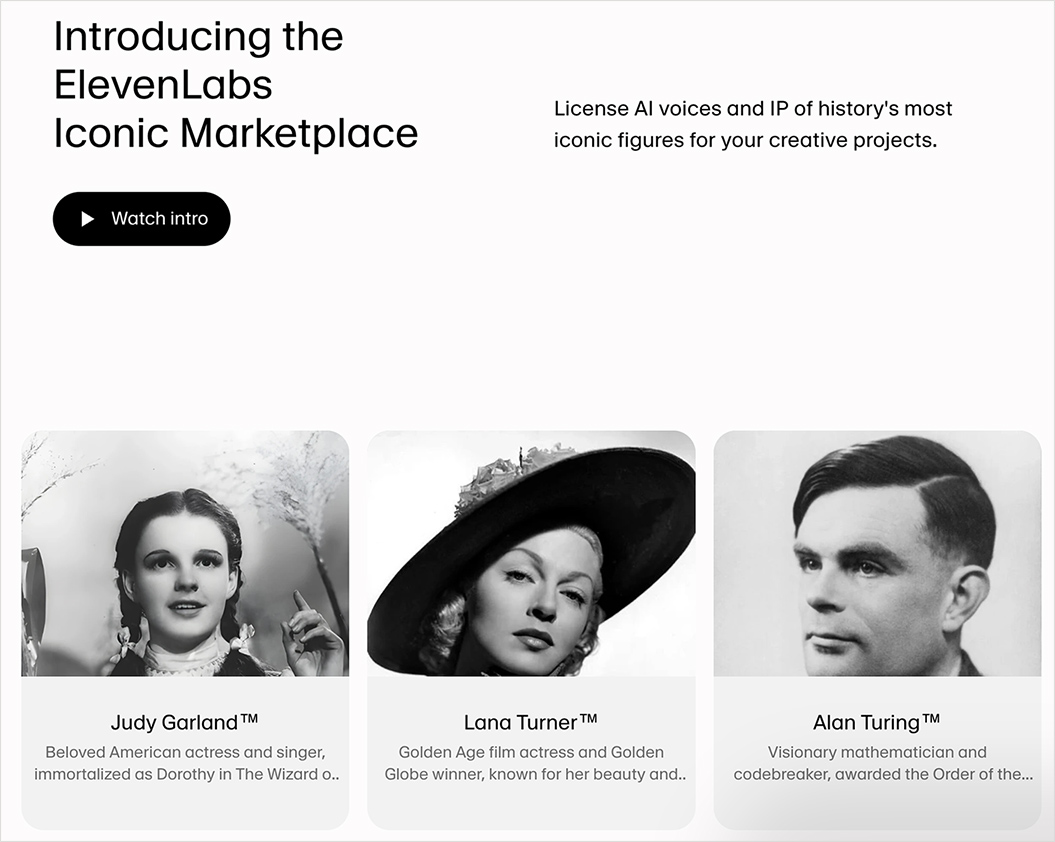
ElevenLabs just launched a voice marketplace — from elevenlabs.io; via theaivalley.com

Via the AI Valley:

Why does it matter?
AI voice cloning has already flooded the internet with unauthorized imitations, blurring legal and ethical lines. By offering a dynamic, rights-secured platform, ElevenLabs aims to legitimize the booming AI voice industry and enable transparent, collaborative commercialization of iconic IP.
.

ElevenLabs just launched a voice marketplace

ElevenLabs just launched a voice marketplace


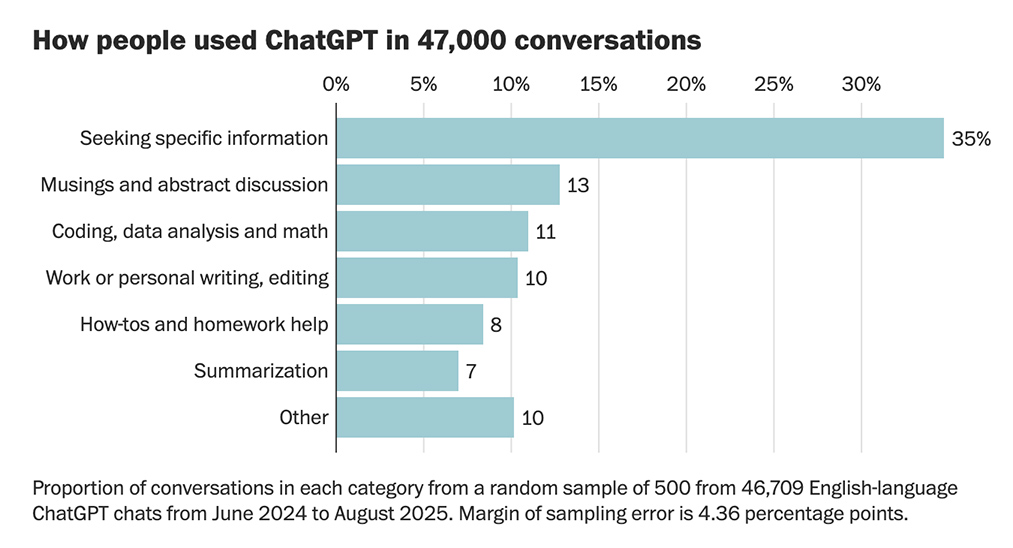
[GIFTED ARTICLE] How people really use ChatGPT, according to 47,000 conversations shared online — from by Gerrit De Vynck and Jeremy B. Merrill
What do people ask the popular chatbot? We analyzed thousands of chats to identify common topics discussed by users and patterns in ChatGPT’s responses.

.
Data released by OpenAI in September from an internal study of queries sent to ChatGPT showed that most are for personal use, not work.

Emotional conversations were also common in the conversations analyzed by The Post, and users often shared highly personal details about their lives. In some chats, the AI tool could be seen adapting to match a user’s viewpoint, creating a kind of personalized echo chamber in which ChatGPT endorsed falsehoods and conspiracy theories.

Lee Rainie, director of the Imagining the Digital Future Center at Elon University, said his own research has suggested ChatGPT’s design encourages people to form emotional attachments with the chatbot. “The optimization and incentives towards intimacy are very clear,” he said. “ChatGPT is trained to further or deepen the relationship.”


Per The Rundown: OpenAI just shared its view on AI progress, predicting systems will soon become smart enough to make discoveries and calling for global coordination on safety, oversight, and resilience as the technology nears superintelligent territory.

The details:

  • OpenAI said current AI systems already outperform top humans in complex intellectual tasks and are “80% of the way to an AI researcher.”
  • The company expects AI will make small scientific discoveries by 2026 and more significant breakthroughs by 2028, as intelligence costs fall 40x per year.
  • For superintelligent AI, OAI said work with governments and safety agencies will be essential to mitigate risks like bioterrorism or runaway self-improvement.
  • It also called for safety standards among top labs, a resilience ecosystem like cybersecurity, and ongoing tracking of AI’s real impact to inform public policy.

Why it matters: While the timeline remains unclear, OAI’s message shows that the world should start bracing for superintelligent AI with coordinated safety. The company is betting that collective safeguards will be the only way to manage risk from the next era of intelligence, which may diffuse in ways humanity has never seen before.

Which linked to:

  • AI progress and recommendations — from openai.com
    AI is unlocking new knowledge and capabilities. Our responsibility is to guide that power toward broad, lasting benefit.

From DSC:
I hate to say this, but it seems like there is growing concern amongst those who have pushed very hard to release as much AI as possible — they are NOW worried. They NOW step back and see that there are many reasons to worry about how these technologies can be negatively used.

Where was this level of concern before (while they were racing ahead at 180 mph)? Surely, numerous and knowledgeable people inside those organizations warned them about the destructive/downside of these technologies. But their warnings were pretty much blown off (at least from my limited perspective). 


The state of AI in 2025: Agents, innovation, and transformation — from mckinsey.com

Key findings

  1. Most organizations are still in the experimentation or piloting phase: Nearly two-thirds of respondents say their organizations have not yet begun scaling AI across the enterprise.
  2. High curiosity in AI agents: Sixty-two percent of survey respondents say their organizations are at least experimenting with AI agents.
  3. Positive leading indicators on impact of AI: Respondents report use-case-level cost and revenue benefits, and 64 percent say that AI is enabling their innovation. However, just 39 percent report EBIT impact at the enterprise level.
  4. High performers use AI to drive growth, innovation, and cost: Eighty percent of respondents say their companies set efficiency as an objective of their AI initiatives, but the companies seeing the most value from AI often set growth or innovation as additional objectives.
  5. Redesigning workflows is a key success factor: Half of those AI high performers intend to use AI to transform their businesses, and most are redesigning workflows.
  6. Differing perspectives on employment impact: Respondents vary in their expectations of AI’s impact on the overall workforce size of their organizations in the coming year: 32 percent expect decreases, 43 percent no change, and 13 percent increases.

Marble: A Multimodal World Model — from worldlabs.ai

Spatial intelligence is the next frontier in AI, demanding powerful world models to realize its full potential. World models should reconstruct, generate, and simulate 3D worlds; and allow both humans and agents to interact with them. Spatially intelligent world models will transform a wide variety of industries over the coming years.

Two months ago we shared a preview of Marble, our World Model that creates 3D worlds from image or text prompts. Since then, Marble has been available to an early set of beta users to create 3D worlds for themselves.

Today we are making Marble, a first-in-class generative multimodal world model, generally available for anyone to use. We have also drastically expanded Marble’s capabilities, and are excited to highlight them here:


From DSC:
I posted an excerpt of this in another posting, but I wanted to highlight these two powerful, extremely well-done video series for those who might be interested in them.


The House of David is very well done! I enjoyed watching Season 1. Like The Chosen, it brings the Bible to life in excellent, impactful ways! Both series convey the context and cultural tensions at the time. Both series are an answer to prayer for me and many others — as they are professionally-done. Both series match anything that comes out of Hollywood in terms of the acting, script writing, music, the sets, etc.  Again, both of these series are very well done.
.

The House of David

.

The Chosen


A sampling of others who cover The Chosen includes:


From siloed tools to intelligent journeys: Reimagining learning experience in the age of ‘Experience AI’ — from linkedin.com by Lev Gonick

Experience AI: A new architecture of learning
Experience AI represents a new architecture for learning — one that prioritizes continuity, agency and deep personalization. It fuses three dimensions into a new category of co-intelligent systems:

  • Agentic AI that evolves with the learner, not just serves them
  • Persona-based AI that adapts to individual goals, identities and motivations
  • Multimodal AI that engages across text, voice, video, simulation and interaction

Experience AI brings learning into context. It powers personalized, problem-based journeys where students explore ideas, reflect on progress and co-create meaning — with both human and machine collaborators.

 
© 2025 | Daniel Christian