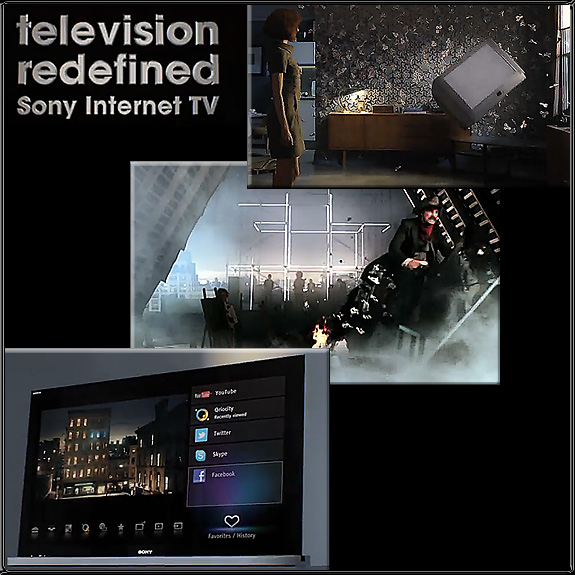
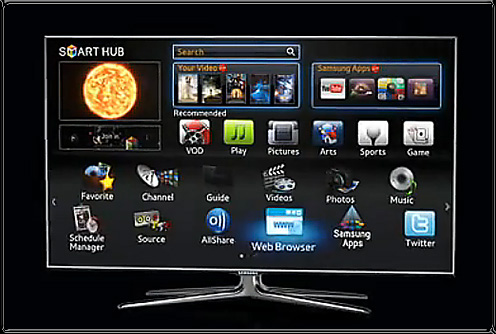
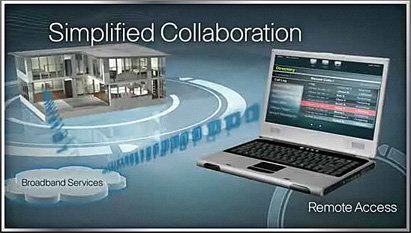
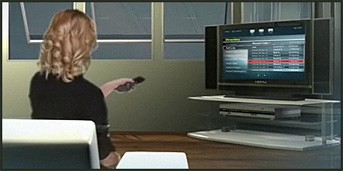
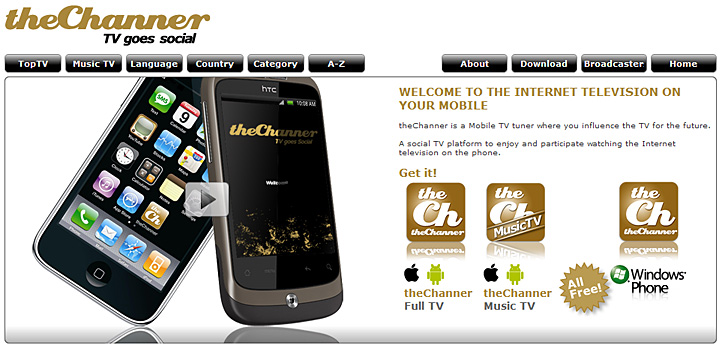
The future of television: Why you won’t recognize your television just a few years from now — from iptvmagazine.com by Scott Puopolo, Cisco

Excerpt:

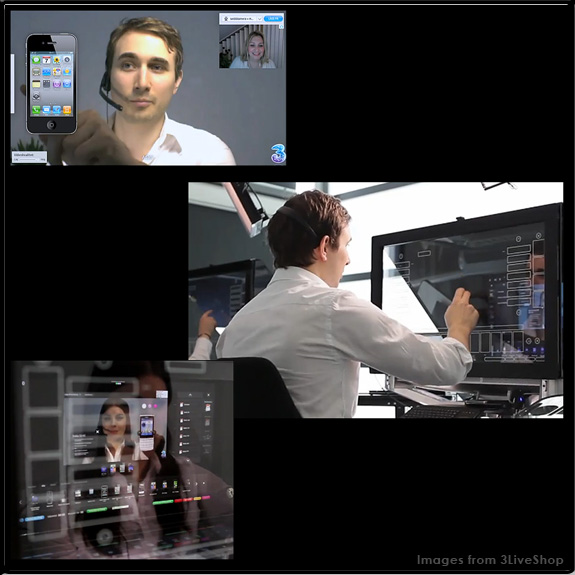
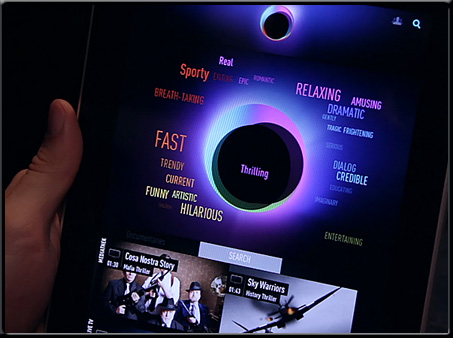
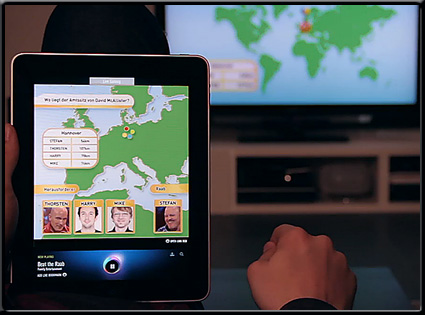
Imagine you are watching a program on your refrigerator. You browse through the program choices using hand gestures. When you walk into the bathroom, the display of your program automatically transfers to the display inside the bathroom mirror.

Does this seem farfetched? All of these capabilities are here now and research gathered by the Cisco “Internet Business Solutions Group” (IBSG) from manufacturers, content producers, service broadcasters and academic experts identifies amazing predictions of what is going to happen in the TV industry and when these changes are likely to occur.

Analysis of the research shows that the three main influences to these events happening include technology, consumer behavior and business models. Multiple supporting technologies have emerged including displays (digital paper and projection devices), ultra-high bandwidth connections and new types of human interfaces (sensory devices). The ways consumers discover and consume media are changing including using social networks (Digg) and on demand content (YouTube), and participating in the creation of TV programs. Business models are changing from pushing a limited number of linear based channels to aggregating many content sources (NetFlix), recommending relevant programs, and adapting media for specific viewers (personalized ads on Facebook). Using this information, the IBSG has identified 10 Predictions for the future of TV.

Study: 30% of all US households already have TV connected to Internet

New consumer research from Leichtman Research Group, Inc. (LRG) finds that 30% of all households have at least one television set connected to the Internet via a video game system, a Blu-ray player, and/or the TV set itself — up from 24% a year ago. Overall, 10% of all adults watch video from the Internet via one of these devices at least weekly, compared to 5% last year. This increased usage is heavily driven by Netflix subscribers, with 30% of Netflix subscribers watching video from the Internet via one of these connected devices weekly, compared to 3% weekly use among all non-Netflix subscribers.


Also see:

Addendums:


From DSC:
Why post this? Because:

  1. These postings demonstrate a continued convergence, a continued trend that is impacting the distribution of content. If it hasn’t already (in some shape or form), online-based learning — with social networking capabilities/functionality baked in — will be entering your living room. Given the budgetary pressures out there, such change may happen sooner rather than later.
  2. The Forthcoming Walmart of Education is definitely involved here.


A hugely powerful vision: A potent addition to our learning ecosystems of the future


Daniel Christian:
A Vision of Our Future Learning Ecosystems


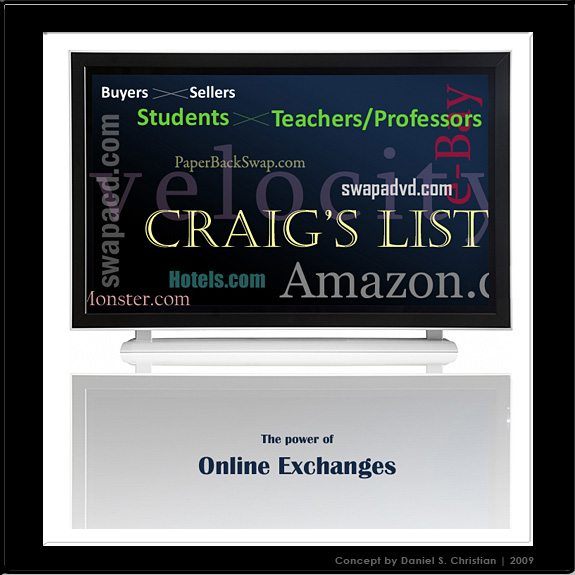
In the near future, as the computer, the television, the telephone (and more) continues to converge, we will most likely enjoy even more powerful capabilities to conveniently create and share our content as well as participate in a global learning ecosystem — whether that be from within our homes and/or from within our schools, colleges, universities and businesses throughout the world.

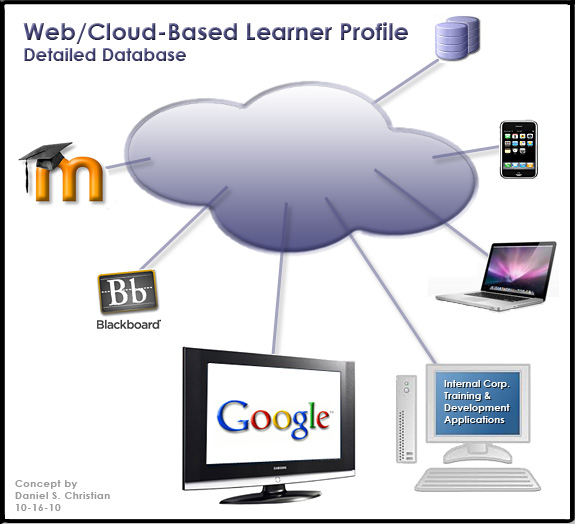
We will be teachers and students at the same time — even within the same hour — with online-based learning exchanges taking place all over the virtual and physical world.  Subject Matter Experts (SME’s) — in the form of online-based tutors, instructors, teachers, and professors — will be available on demand. Even more powerful/accurate/helpful learning engines will be involved behind the scenes in delivering up personalized, customized learning — available 24x7x365.  Cloud-based learner profiles may enter the equation as well.

The chances for creativity,  innovation, and entrepreneurship that are coming will be mind-blowing! What employers will be looking for — and where they can look for it — may change as well.

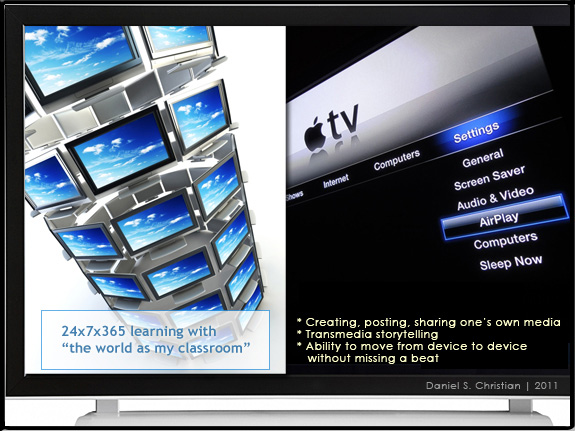
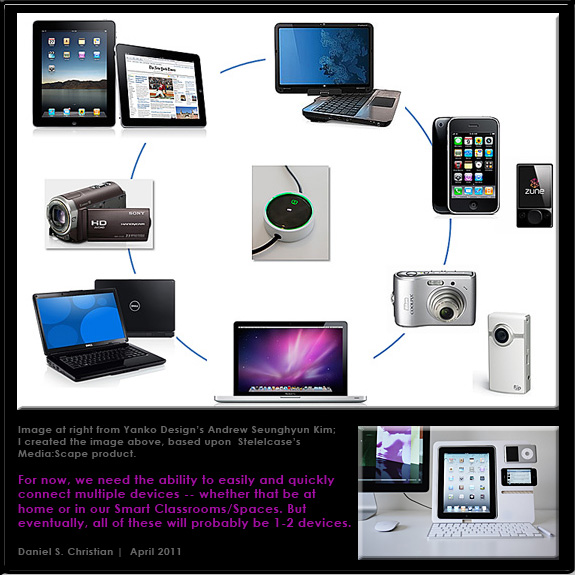
What we know today as the “television” will most likely play a significant role in this learning ecosystem of the future. But it won’t be like the TV we’ve come to know. It will be much more interactive and will be aware of who is using it — and what that person is interested in learning about. Technologies/applications like Apple’s AirPlay will become more standard, allowing a person to move from device to device without missing a  beat. Transmedia storytellers will thrive in this environment!

Much of the professionally done content will be created by teams of specialists, including the publishers of educational content, and the in-house teams of specialists within colleges, universities, and corporations around the globe. Perhaps consortiums of colleges/universities will each contribute some of the content — more readily accepting previous coursework that was delivered via their consortium’s membership.

An additional thought regarding higher education and K-12 and their Smart Classrooms/Spaces:
For input devices…
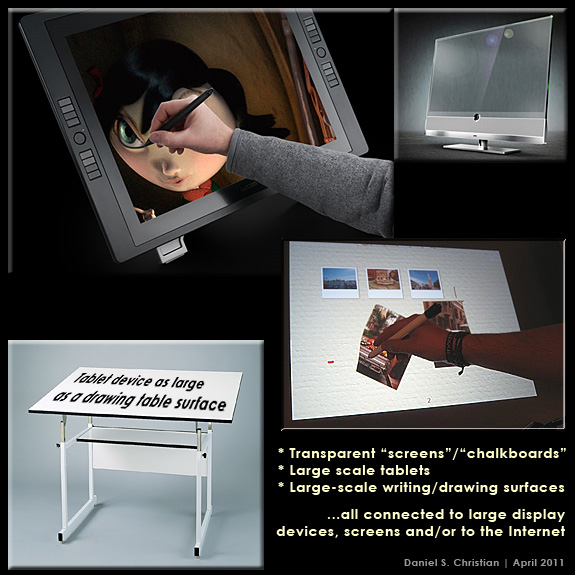
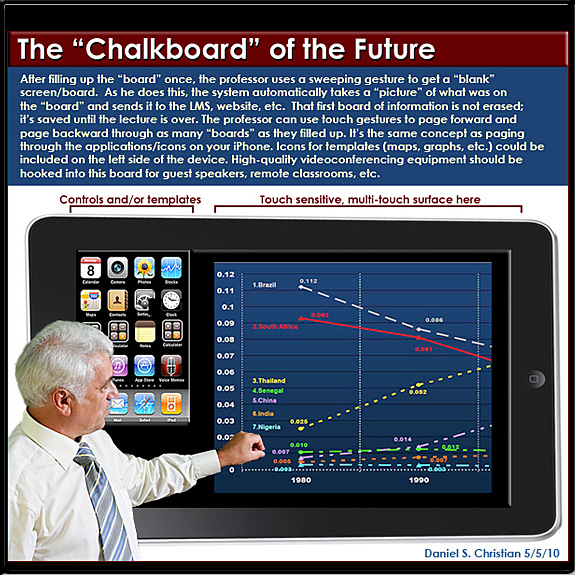
The “chalkboards” of the future may be transparent, or they may be on top of a drawing board-sized table or they may be tablet-based. But whatever form they take and whatever is displayed upon them, the ability to annotate will be there; with the resulting graphics saved and instantly distributed. (Eventually, we may get to voice-controlled Smart Classrooms, but we have a ways to go in that area…)

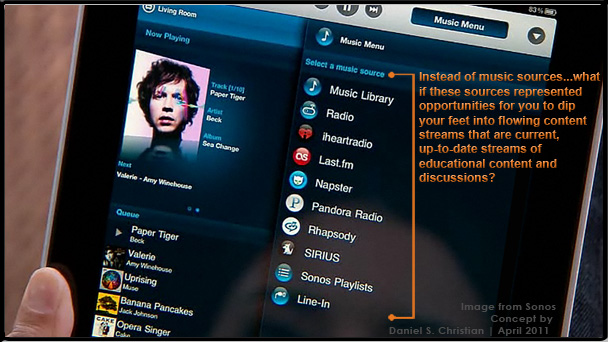
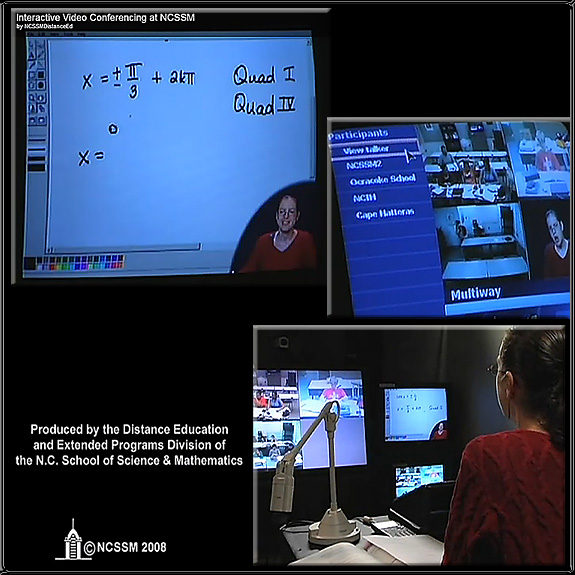
Below are some of the graphics that capture a bit of what I’m seeing in my mind…and in our futures.

Alternatively available as a PowerPoint Presentation (audio forthcoming in a future version)
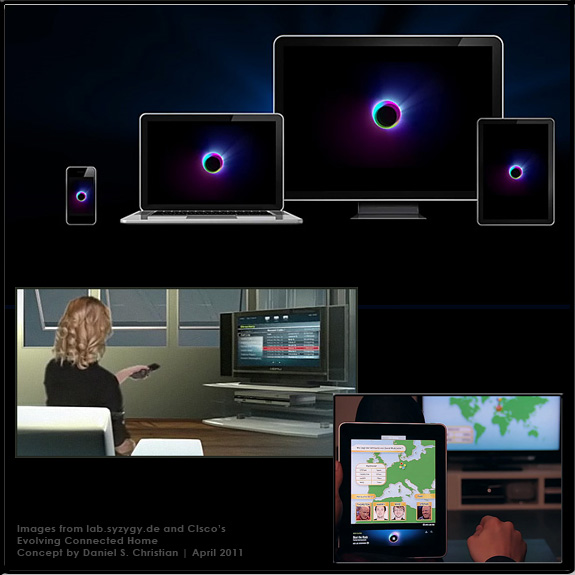


— from Daniel S. Christian | April 2011

See also:

Addendum on 4-14-11:
 

Tagged with: • • • • • • • • • • • • • • • • • • • • • • • • • • • • • • • • • • • • • • • • • • • • • • • • • • • • • • • • • • • • • • • • • • • • • • • • • • • • • • • • • • • • • • • • • • • • • • • • • • • • • • • • • • • • • • • • • • •  

From DSC:
Crestron’s Media Controllers do a nice job of moving the complexities of technology into the background — providing an easy to use, touch-panel interface to their media controllers (i.e. to control such “sources” as desktop computers, laptops, DVD/VHS players, document cameras, audio inputs from iPods/iPads, etc.).  So no longer do you need to search for the correct remote (of the 5-10 remotes on your lectern) — you just use the touch-sensitive panel to drive your media. Very nice. The downsides to this set of technologies are the costs involved to purchase and install the equipment, as well as developing the necessary skillset to configure and maintain them.


Also see:


…and http://www.crestron.com/markets/classroom_campus_room_and_building_automation/

… and Crestron Debuts Versatile TPMC-9L Wall Mount Touch Panel Delivering Speed, Performance And Style At A Great Value
Crestron announced today [3/31/11] that the new TPMC-9L Wall Mount Touch Panel, the latest addition to its family of Core 3 OS-ready panels, is now shipping. TPMC-9L is the perfect-sized touch screen – large enough to enjoy a full, rich interactive user experience with a minimalist design that remains discreet in any setting. A 9” widescreen provides more space for designing custom graphical interfaces, and a larger display for viewing cover art, control apps and scores of other dynamic content. TPMC-9L also offers a slew of cool new media and communications tools like widgets and high-definition streaming video for IP/Web security cameras that instantly enhance whole home and building automation systems.


The Future of TV- from ElectricTV.com -- March 2011

Tagged with: • •  

Tagged with: • • •  

The Future of television: Sweeping change at breakneck speed — from Cisco by Scott Puopolo, Carlos Cordero, William Gerhardt, Kate Griffin, Leszek Izdebski, and David Parsons, Cisco IBSG Service Provider Practice
10 reasons you won’t recognize your television in the not-too-distant future

Also see their blog posting on this.

.


.
Reminds me of a graphic I created a while back…

.

The pace has changed -- don't come onto the track in a Model T

Also see:

drund.com
Also see:

  • Drund gives devs & users all-in-one tool for connected devices — from Mashable.com
    Dev shop Azork launched Monday Drund, a broad, agnostic development and management platform for apps across all connected devices and browsers.

    The platform also has an aspect for users, allowing them to “manage their online life from any Internet connected device,” according to a release.

    Cross-platform development, especially in the mobile sector, is something of a rare and difficult promise to make. Developing not only for the two most popular mobile OSes but also for desktops and web browsers is a time- and resource-consuming consuming proposition; but leaning on “all-in-one” dev tools can sometimes lead to messy results and spaghetti code.

    Drund makes the promise of “single platform development,” saying that devs can create each app just once and deploy it to any web or mobile browser — including IE, FireFox, Chrome, Safari, and all the mobile browsers, too.

Tagged with: • • • • •  

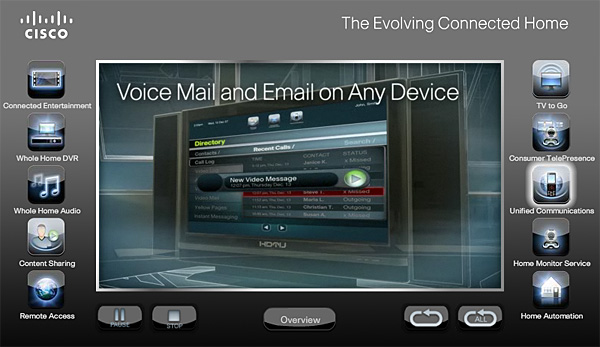
The connected life at home -- from Cisco

.

.

From DSC:

How will these types of technologies affect what we can do with K-12 education/higher education/workplace training and development? I’d say they will open up a world of new applications and opportunities for those who are ready to innovate; and these types of technologies will move the “Forthcoming Walmart of Education” along.

Above item from:

Tagged with: • • • • • • • • • • • • • • • • • • • • • • • • • • • • • • • • • • • • • • • • • • • • • • • • • • • • • • • • • • • • • • • • • • • • • • • •  

What television is *really* becoming — by Philip Leigh at Inside Digital Media, Inc.

Excerpts:

Nicholas Negroponte who founded MIT’s Media Lab correctly put it sixteen years ago when he wrote in Being Digital “…the future open-architecture television is the personal computer, period.”

…

Televisions will become giant windows into the Internet Cloud. They’ll transform into electronic hearths through which family members gather to remotely share communications and social experiences as much as to watch videos. In addition to watching “TV” shows and movies, they’ll use future televisions for video phone calls, FaceBook updates, news feeds, interactive gaming, and knowledge quests within the nearly infinite mind of the Internet. Moreover, such features will augment one another. For example, FaceBook socializing will alert us to new videos our friends are watching.

The television-as-Internet-window will ultimately have a more intuitive interface. It’s likely to provide a combination of icon-apps as well as Internet browsing. Although the man-machine interface will continue to offer a mouse-and-keyboard for a while we’ll also use a gesture sensitive interface like Microsoft Kinect demonstrated in this video.

Tagged with: • • • •  

USA Today puts good news on the front page, places the rise in U.S. living standards in perspective — from forbes.com by Stuart Anderson

Everyone knows bad news sells better than good news. But since good news so rarely gets reported it seems USA Today decided to turn conventional wisdom on its head and report on its front page not only good news but data that place in historical context just how well Americans live today. (Find article here.)

.

From DSC:
As I make my (almost) daily trip to Starbuck’s and enter into the coffee store, I often see the newspapers on my way to get my cup of coffee. The front pages always “feature” some photo of someone’s  violent actions (blood, war, protests, murder, etc.)  — some piece of the latest “death and dying” report. I can’t stand the agenda that this pushes — making money off of the hardships of others and depicting a world that is full of violence, chaos, and worthlessness.

I have long prayed for those in media to use their media to bring glory to God and to use the POWER that they have to help edify others (i.e. build them up) — and to make the world a better place to live in. Too many journalists just go along with their company’s agenda to make the most money possible — instead of trying to make the world a better place and to do the right thing. The sort of agenda often being pushed by the news organizations reminds me of a Philip Morris type of plan — making money off of others’ deaths.

It always bothers me when I see the glimmer of excitement in the broadcasters’ eyes/voices when they just got the “scoop” on some new murder, or murder trial or fight. What I would rather see is the broadcaster’s somber countenance — being one of dismay or sadness. (As we are all in this boat together.)

Now…bringing this reflection/rant closer to home:

  • With the Internet, each of us now has the ability to be our own TV station, newspaper, magazine, etc.   Let’s treat that power with respect — and try to make the world a better place to live in.
Tagged with: • • • •  
© 2025 | Daniel Christian