From DSC:
The massive convergence of the telephone, the television, and the computer continues.  How that media gets to us is also changing (i.e. the cord cutting continues). 

What types of innovative learning experiences can be crafted as “TV” becomes more interactive, participatory, and engaging? What happens if technologies like WebRTC make their way into our browsers and we can videoconference with each other without having to download anything?

What doors open for for us when Google, Apple, or an Amazon.com delivers your “shows” vs. NBC/ABC/CBS/etc.?

 The items below cause me to reflect on those questions…


.

Streaming devices lead the way to Smart TV — from nytimes.com by Brian Stelter

Julia Yellow


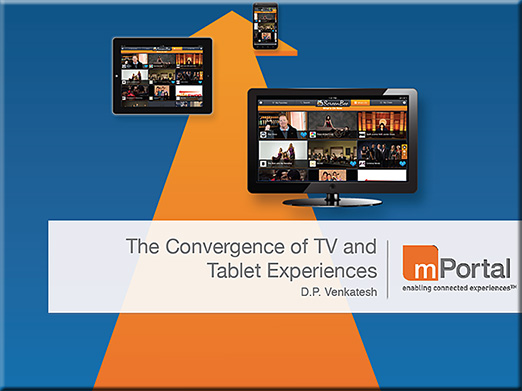
ConvergenceTVTablet-DPVenkatesh-Aug2013


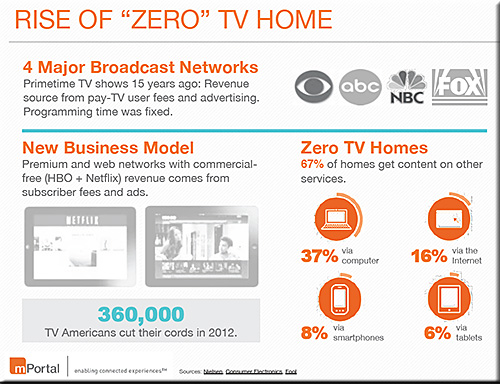
ConvergenceTVTablet2-DPVenkatesh-Aug2013


.

Is Google ready to buy its way into TV with an NFL deal? — from allthingsd.com by Peter Kafka

Excerpt:

Here’s a fun combination to ponder: The world’s most powerful media company and America’s most popular sport.

That could happen if Google buys the rights to the NFL’s Sunday Ticket package, the all-you-can-eat subscription-TV service currently owned by DirecTV.


Cord Cliff Coming: What happens to TV when Netflix streams live events? — from allthingsd.com by Ben Elowitz, CEO, Wetpaint


 Addendums on 8/22/13:


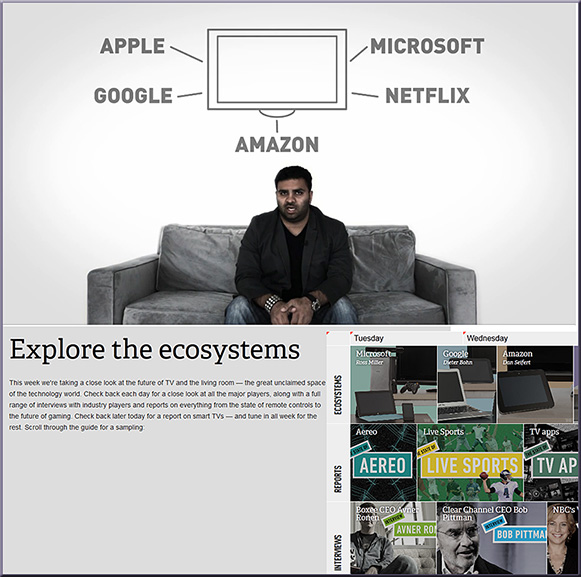
The tv of tomorrow and the living room of the future

by beutlerink.
Explore more infographics like this one on the web’s largest information design community – Visually.


Plugin-free video conferencing now in Chrome Beta Android — from tomsguide.com by Kevin Parrish


Excerpt (emphasis DSC):

Google is growing ever so closer in bringing the Chrome desktop experience to Android. The company said that the latest browser beta release for the mobile platform now supports WebRTC and the Web Audio API. That means web developers can create real-time communications applications that can be used within the Chrome browser on Android devices without the need for a plugin.

“WebRTC enables real-time communication such as video-conferencing in the browser,” the Chrome team said on Tuesday. “It consists of three independent components: getUserMedia, which provides access to the user’s webcam and microphone; PeerConnection, which sets up calls with the ability to traverse NATs and firewalls; and DataChannels, which establishes peer-to-peer data communication between browsers.”

Also see:


From DSC:
Some items that made me think of this posting:


Specs:

  • Six feet, two inches tall (1.88m)
  • 330 pounds (150kg)
  • On-board real-time control computer
  • On-board hydraulic pump and thermal management
  • Tethered for networking and 480-V three-phase power at 15 kW
  • Two arms, two legs, a torso and a head
  • 28 hydraulically actuated joints
  • Carnegie Robotics sensor head with LIDAR and stereo sensors
  • Two sets of hands, one provided by iRobot and one by Sandia National Labs


Drone Home — from time.com by Lev Grossman  — also see TIME: “Rise of the Robots” Special Issue

Excerpt:

Flying a drone, even just a Parrot, makes you realize what a radically new and deeply strange technology drones are. A drone isn’t just a tool; when you use it you see and act through it — you inhabit it. It expands the reach of your body and senses in much the same way that the Internet expands your mind. The Net extends our virtual presence; drones extend our physical presence. They are, along with smart phones and 3-D printing, one of a handful of genuinely transformative technologies to emerge in the past 10 years.

.

Bioengineers 3D print tiny functioning human liver — from wired.co.uk


Peek inside Tesla’s robotic factory — from wired.com

.


From DSC:
And, if you are up to filtering through a great deal of content, create some
Google Alerts on the following things to see what’s happening with them:
.
  • Internet of Things
    .
  • Augmented reality
    .
  • WebRTC
    .
  • Artificial intelligence
    .
  • Self-driving cars
    .
  • Wearable technologies


A swiveling proxy that will even wear a tutu — from nytimes.com by Bobbie Brown

.

John W. Adkisson for The New York Times

.

Excerpt:

SUMTER, S.C. — Lexie Kinder solves problems during math class, earns gold stars from her teacher and jokes with classmates at her elementary school.

All without leaving her living room.

Born with a chronic heart disorder that weakened her immune system and made attending school risky, Lexie, 9, was tutored at her home in Sumter for years. But this spring, her family began experimenting with an alternative — a camera-and-Internet-enabled robot that swivels around the classroom and streams two-way video between her school and house.


From DSC:
I sometimes get the feeling that I’m coming across as though I want everyone to learn from their living room and that’s it; end of story.  But that’s not the case.  I just get encouraged/excited about the opportunities that various technologies can provide for us, if we leverage them properly.  Ultimately, I see blended solutions being the most effective solutions in the future. But this article is a great example of when technology can benefit someone.


Much faster Wi-Fi coming soon — from CNN by David Goldman
A new, faster version of Wi-Fi was officially rubber-stamped Wednesday.

Excerpt:

The latest Wi-Fi technology, called “802.11ac,” offers speeds of up to 1.3 Gigabits per second. That’s fast enough to transfer an entire high-definition movie to a tablet in under 4 minutes, share photo albums with friends in a matter of seconds or stream three HD videos at the same time. It’s more than double the top speed of the previous standard, known as 802.11n.

Those speeds are theoretical maximums — very few people have anything close to 1 Gigabit speeds from their home broadband connection. Average speeds are less than 1% of that. But the faster speeds mean the new Wi-Fi standard will offer a much bigger pipeline for all those videos, songs and games that a growing number of people are streaming on multiple devices simultaneously.


Also see:

  • Apple adopts 802.11ac wireless standard quickly as new study forecasts the next standard to follow in 2015 — from patentlyapple.com
    Excerpt:
    According to a new report that was just released, the growth of 802.11ac and 802.11ad will occur in very different ways over the next few years. The adoption of 802.11ac is expected to explode into devices including smartphones right out of the gate this year while 802.11ad will see a more modest and staggered growth pace. 802.11ac is being pushed into smartphones by key carriers’ device requirements that are in sync with 802.11ac hotspot plans for more robust Wi-Fi offloading.
  • Wireless witch: Should you buy an 802.11ac router? — from pcmag.com by Samara Lynn
    802.11ac is all the rage among networking vendors, with all their 802.11ac routers touting incredible speeds. But is 802.11ac worth the investment?
    To Buy or not to Buy?
    So, what’s the short answer on upgrading to an 802.11ac router right now? If you’re an early tech adopter and Wi-Fi enthusiast, definitely check out 11ac. Everyone else is better off waiting until the technology matures. What if your old router dies and you’re not upgrading so much as replacing hardware? The same applies: if you’re comfortable with tweaking settings to get the most out of your router, by all means check out the 802.11ac routers on the market. At the the very least, you shouldn’t lose performance; in certain cases, you might see improvements. If you’re more of a plug and play user, however, stick with 802.11n, for now.

Ten things you should know about WebRTC — from cioinsight.com by Dennis McCafferty

Excerpt:

Don’t you think it would be great if you could engage with customers, employees, and partners accessing voice, video and data-sharing apps on a Web browser without any plug-ins? Thanks to developments with WebRTC technology, this is becoming a reality. To lend greater insight into this topic, Constellation Research Inc. has come out with a recent report, Ten Things CIOs Should Know about WebRTC. In it, author E. Brent Kelly reveals that WebRTC has the potential to take concepts pioneered by programs such as Skype to the next level. Ordinary Web developers will be able to, for example, use basic JavaScript application programming interfaces (APIs) to craft fully functioning voice, video and data-collaboration apps, or embed these capabilities with other apps with just a few lines of code. As a result, CIOs can lead their organizations to greater levels of employee productivity and customer engagement. “WebRTC may prove to be as disruptive to communications and collaboration as the World Wide Web was for information,” says Kelly, a vice president and principal analyst at Constellation.

iDoctor: Could a smartphone be the future of medicine?

Description of video (which was done back in January 2013):

One of the world’s top physicians, Dr. Eric Topol, has a prescription that could improve your family’s health and make medical care cheaper. The cardiologist claims that the key is the smartphone. Topol has become the foremost expert in the exploding field of wireless medicine. Dr. Nancy Snyderman reports.

 .

iDoctor-Jan2013


Also see:


Netflix CEO: ‘TV in the future will be like a giant iPad’ [Ligaya ]

Netflix CEO: ‘TV in the future will be like a giant iPad’ — from business.financialpost.com by Armina Ligaya

Excerpt (emphasis DSC):

Q: What do you think is going to happen over the next five or 10 years in internet video?

A: Well, you know, the fundamental thing is the internet has been getting faster. And now it’s video capable, which is really a last-five-years phenomenon. And, internet video will be very transformative across all societies for telemedicine, for online learning, for education. For communication of various sorts. And it brings, whether it’s person to person, or a recorded video like a movie or a TV show, to a person it will be very transformative.

And, TV in the future will be like a giant iPad. It will have a bunch of apps on it, each app will have a unique experience.

…

So we’re getting beyond just a stream of video, which is all broadcast technology can do, to really try to be innovative about the interaction.

.

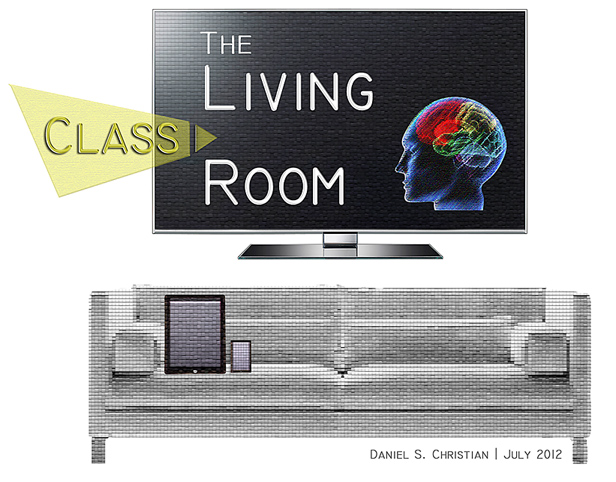
The Living [Class] Room -- by Daniel Christian -- July 2012 -- a second device used in conjunction with a Smart/Connected TV


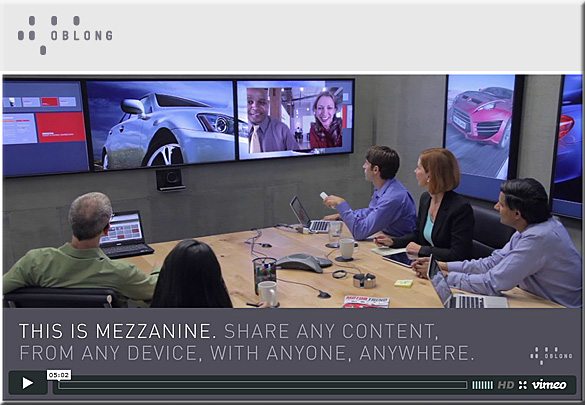
Mezzanine-from-Oblong-May2013


.

Mezzanine2-from-Oblong-May2013

.

.

From the Oblong.com website:

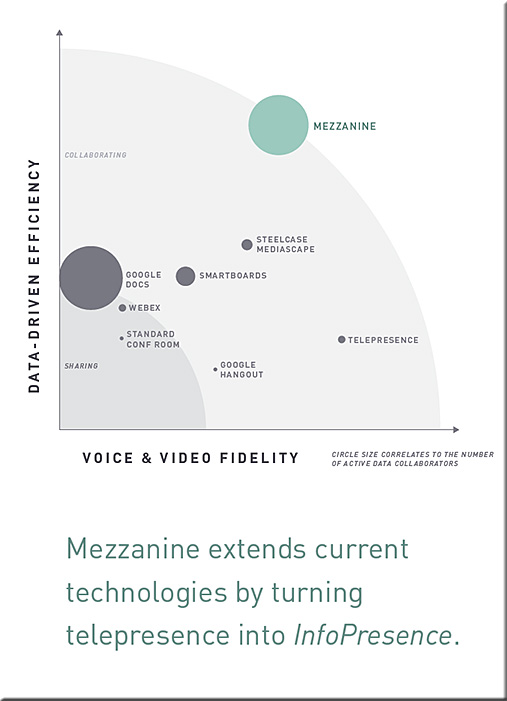
Mezzanine™ is a collaborative conference room solution that introduces multi-user, multi-screen, multi-device collaboration. This is next-generation communication: share any content from any device with anyone, anywhere.

Mezzanine transforms creative teamwork, executive meetings, and sales presentations into real-time, collaborative work sessions. Mezzanine expands on existing telepresence technology by providing what we call InfoPresence™—the incorporation of multiple users, multiple devices, and multiple streams of information in the collaboration environment. The future of conference room collaboration is here.

A Mezzanine workspace lets any person on a network bring their own device and share content and applications with any colleague, anywhere in the world, interactively. Mezzanine is a collaborative conference room solution combining presentation design and delivery, application sharing, whiteboard capture, and video conferencing, all within a framework of multi-participant control.

.

Also see:

  • Oblong Technovates with LA High School
    .
  • Oblong at OME
    Oblong Industries recently participated at OME, a summit hosted by UC San Francisco.  The two-day summit focused on charting the future of precision medicine—an emerging field combining big data with clinical research and patient care to deliver insights and advances in treatment that is more targeted and enables improved patient outcomes.


Cisco and Wharton School unveil the learning experience of the future — from newsroom.cisco.com


Also see:

Click to view larger image on Flickr

Excerpt:

PHILADELPHIA and SAN FRANCISCO – The Wharton School of the University of Pennsylvania and Cisco [on 2/25/13] unveiled the learning experience of the future — one that blends life-size visual communication via telepresence with collaboration technologies that significantly enhance the way faculty, students and alumni interact and learn, no matter how distant they may be from physical classrooms.

Over the top: the new war for TV is just beginning [Patel]

Over the top: the new war for TV is just beginning  -- from The Verge by Nilay Patel -- November 12 2012


.

 Future of TV


.
The Living [Class] Room -- by Daniel Christian -- July 2012 -- a second device used in conjunction with a Smart/Connected TV


.

From DSC:
I’m beginning to wonder if many of us will be moving off of Moodle, Sakai, Bb Learn, Desire2Learn, etc. to platforms and ecosystems that are being created by Apple, Google, Amazon, and Microsoft.  Rockstar professors on “primetime” — or anytime. If that happens, you can be sure there will be teams of specialists creating and delivering the content and learning experiences.


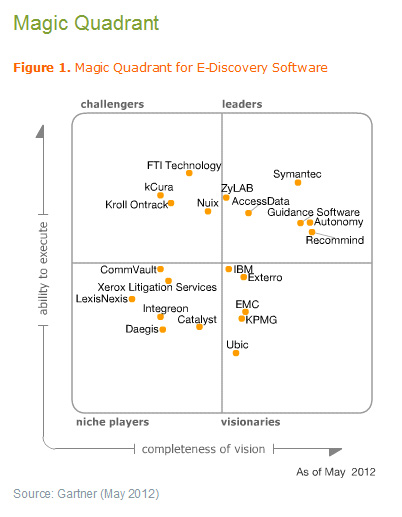
Magic Quadrant 2012 for E-Discovery Software — from Gartner.com

.

Excerpt:

The e-discovery market landscape has shifted dramatically as end users have begun to demand more complete e-discovery functionality. Many vendors are responding with broader end-to-end functionality. New products, acquisitions and shifts in buying patterns have led to a radically altered picture.

.

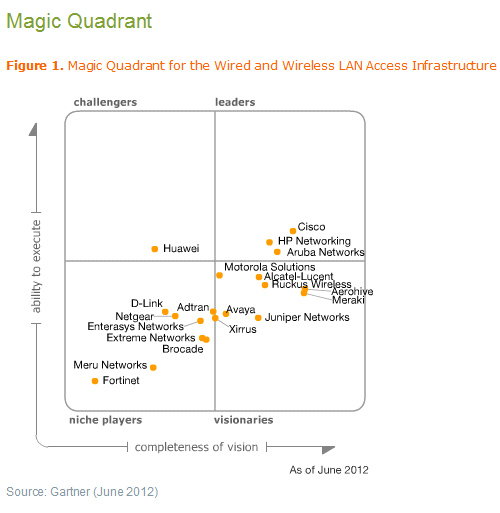
Magic Quadrant for the Wired and Wireless LAN Access Infrastructure — from Gartner.com

Connectivity at the edge of an enterprise network is more than just a wired or wireless LAN infrastructure. Enterprises must chose infrastructure vendors that support network services, including security and management, and can integrate wired and wireless networking products.


Tagged with: • • • • •  
© 2025 | Daniel Christian