Notes from DSC:

  • Some of the material in this presentation or the website may not be appropriate for a younger audience.
  • Notice how many potential jobs/roles/positions/skillsets can be explored here!

.


TransmediaStoryProductionIntro-April2013

.

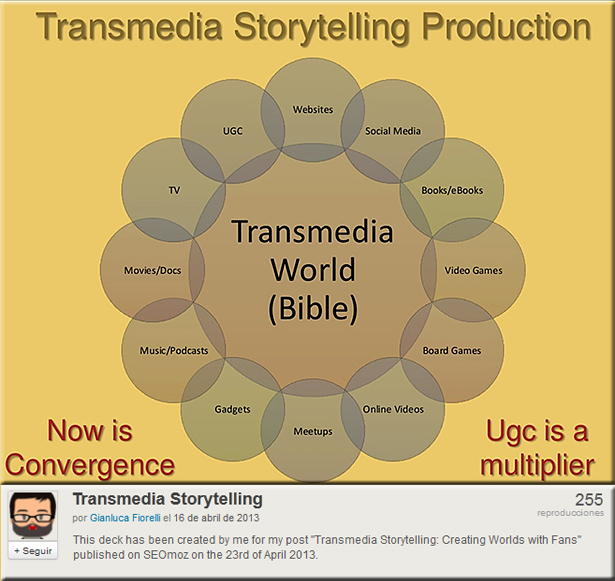
TransmediaStoryProduction-April2013

From DSC:
The word Bible is here not quite I think of as the Bible…but you’ll get the point if you review Gianluca’s presentation.
.

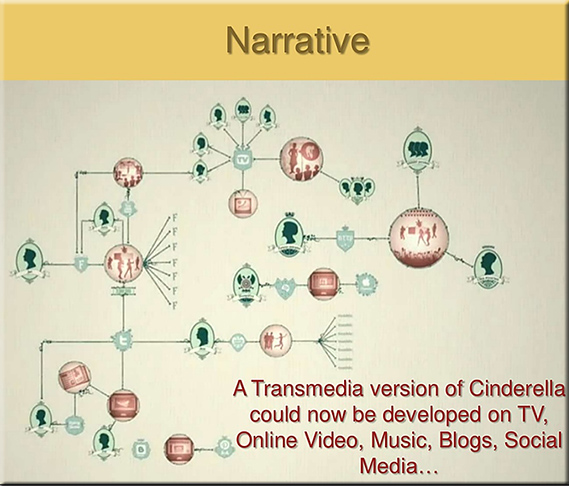
TransmediaStoryProduction2-April2013

.

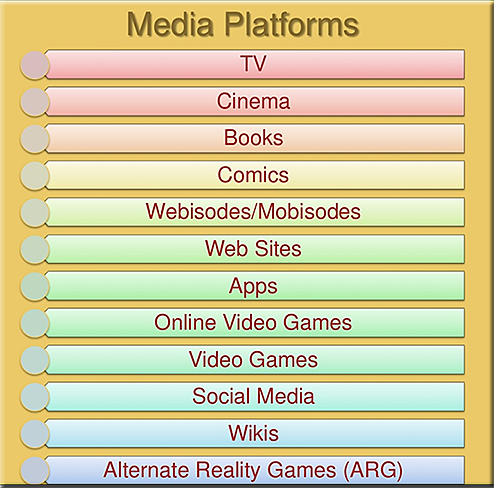
TransmediaStoryProduction3-April2013

.


Questions from DSC:

  • What opportunities might be presented by this type of trend within the worlds of education/training? (i.e. within K-12, higher ed, the corporate world)
  • What sorts of streams of contents could be created for educational/training-related purposes?
  • What sorts of open doors are now present within the world of communications? For a church, a school, a college, a business?
  • How can we incorporate the use of story more effectively in our teaching and learning environments? (If we could do this, we could greatly increase our students’ ROI.)


My reflections on “MOOCs of Hazard” – a well-thought out, balanced article by Andrew Delbanco


From DSC: Below are my reflections on MOOCs of Hazard — from newrepublic.com by Andrew Delbanco — who asks:  Will online education dampen the college experience? Yes. Will it be worth it? Well…


.
While I’m not sure that I agree with the idea that online education will dampen the college experience — and while I could point to some amazing capabilities that online education brings to the table in terms of true global exchanges — I’ll instead focus my comments on the following items:


1) Massively Open Online Courses (MOOCs) are recent experiments — ones that will continue to change/morph into something else.
They are half-baked at best, but they should not be taken lightly. Christensen, Horn, Johnson are spot on with their theories of disruption here, especially as they relate to innovations occurring within the virtual/digital realm.  For example, the technologies behind IBM’s Watson could be mixed into the list of ingredients that will be used to develop MOOCs in the future.  It would be a very powerful, effective MOOC indeed if you could get the following parties/functionalities to the table:

  • IBM — to provide Watson like auto-curation/filtering capabilities, artificial intelligence (AI) capabilities, as well as data mining/learning analytics expertise, joined by
  • Several highly-creative firms from the film/media/novel/storytelling industry, who would be further joined by
  • Experts from Human Computer Interaction (HCI)/user interface/user experience design teams, who would be further joined by
  • Programmers and interaction specialists from educational gaming endeavors (and from those who can design simulations), joined by
  • Instructional designers, joined by
  • The appropriate Subject Matter Experts who can be reached by the students as necessary, joined by
  • Those skilled in research and library services, joined by
  • Legal experts to assist with copyright issues, joined by
  • Other specialists in mobile learning,  3D, web development, database administration, animation, graphic design, musicians, etc.

It won’t be long before this type of powerful team gets pulled together — from some organizations(s) with deep pockets — and the content is interacted with and presented to us within our living rooms via connected/Smart TVs and via second screen devices/applications.

2) The benefits of MOOCs
  • For colleges/universities:
    • MOOCs offer some serious marketing horsepower (rather than sound pedagogical tools, at this point in time at least)
    • They are forcing higher ed to become much more innovative
    • They provide great opportunities to build one’s personalized learning networks, as they bring forth those colleagues who are interested in topic A, B, or C
    • They move us closer to team-based content creation and delivery
      .
  • For students:
    • They offer a much less expensive option to go exploring disciplines for themselves…to see if they enjoy (and/or are gifted in) topic A, B or C
    • They provide great opportunities to build one’s personalized learning networks, as they bring forth those colleagues who are interested in topic A, B, or C
    • They provide a chance to see what it’s like to learn about something in a digital/virtual manner

3)  The drawbacks of MOOCs:
  • MOOCs are not nearly the same thing as what has come to be known as “online learning” — at least in the higher ed industry. MOOCs do not yet offer what more “traditional” (can I say that?) online learning provides: Far more support and pedagogical/instructional design, instructor presence and dialog, student academic support services, advising, more student-to-student and student-to-faculty interaction, etc.
    .
  • MOOCs are like drinking from a firehose — there are too many blogs/RSS feeds, twitter feeds, websites, and other resources to review.

4) It would be wise for all of us to be involved with such experiments and have at least a subset of one’s college or university become much more nimble/responsive.


Also see:

Tagged with: •  

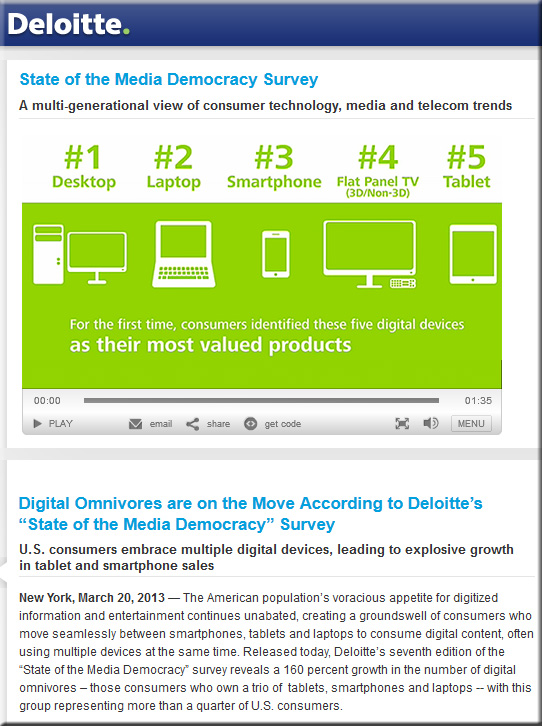
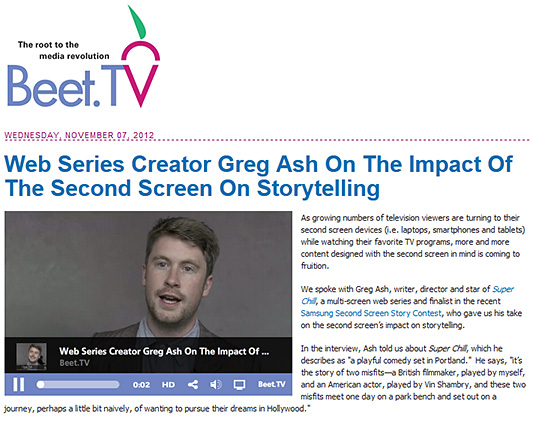
Items re: multi-screen media — eventually this trend/convergence enables “Learning from the Living [Class] Room”

PayWizard launches first dedicated payment and subscriber management solution for TV and media industry — from PayWizard

Excerpt:

London, 21 February 2013 – PayWizard, specialists in payment and subscription management, has launched the TV and media industry’s first dedicated, end to end payment and subscription solution. The integrated solution brings together a strong heritage in the Pay-TV market with a deep understanding of the challenges TV operators and media companies face in monetising the multiplatform world.

Using its award-winning modular Payment and Subscription platform, PayWizard combines payment processing, intelligent subscriber management technology and real-time customer service operations to tailor-make solutions that enhance the consumer experience across all screens.

With 16.8 billion video-enabled devices set to be in the global marketplace by 2015, content owners are facing the challenge of enhancing existing services while creating compelling experiences that embrace new routes to market. PayWizard’s comprehensive set of products and services has enabled clients, such as the UK’s biggest commercial broadcaster, ITV, to address these commercial challenges by enabling new monetisation strategies to drive revenue and profitability.


Also see:
.

ConnectedTVSummit-London-2013


.


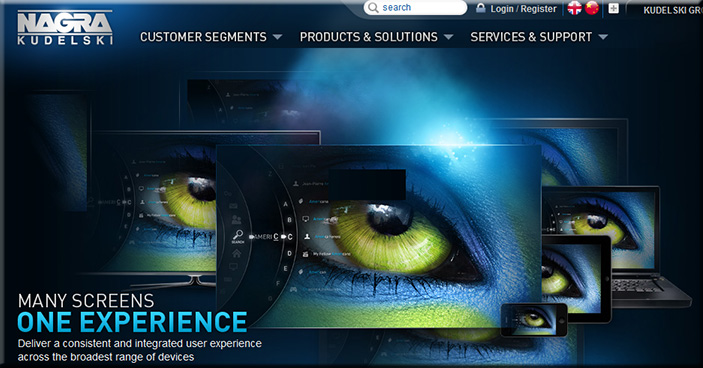
Nagra-Kudelskidotcom-March2013


.

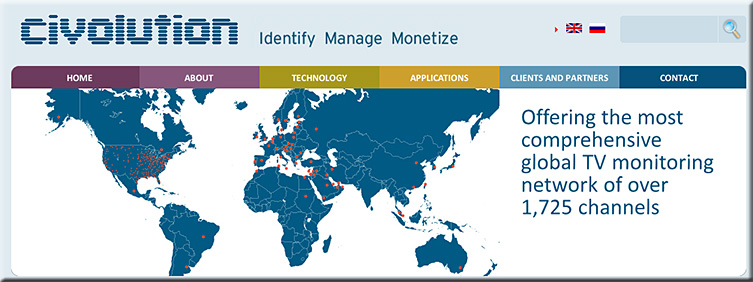
civolution-march2013

.

Also see:
 

From DSC:
See the categories listed above for the items/topics/disciplines/trends that are relevant here.


Addendum:

Check this out!

Massive Open Online Course offered by UMass Boston to feature the first adaptive MOOC technology
Enables students to be taught according to individual learning strategies

Excerpt from email:

(Boston, MA) – February 27, 2013 – If you’ve ever been in a course and struggled because you just aren’t “getting it,” the reason might be less your ability than the way in which the material is being presented.

New technology is now allowing online course environments to analyze how individual students learn, customizing instruction to individualized learning strategies. The College of Advancing and Professional Studies (CAPS) at the University of Massachusetts Boston has teamed up with USDLA 21st Century Sponsor, Synaptic Global Learning (SGL), to use the new learning management system, Adaptive Mobile Online Learning (AMOL), to deliver the first adaptive Massive Online Open Course (a-MOOC) ever offered. The course launches March 25.

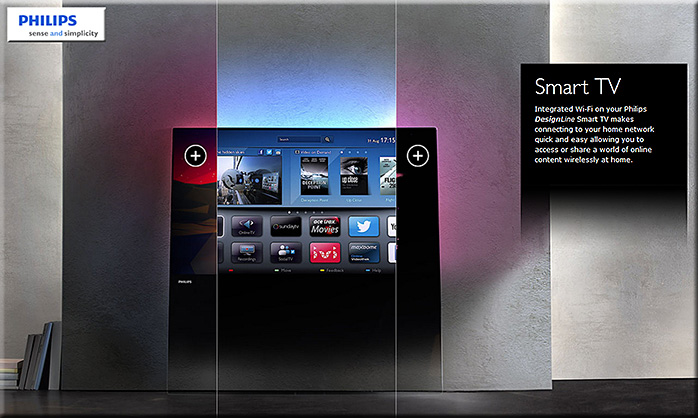
PhilipsSmartTV-March2013

From DSC:
Some reflections on “Hollywood meets higher ed“ — a thought-provoking post by Amanda Ripley

Excerpt:

But online classes are different than the in-person kind: Not only do they have a huge potential profit upside, given the ability to attract tens of thousands of students worldwide, but they are, at their best, performances. No one likes to say this out loud in academia, but it’s true: the most impactful MOOCs are also entertaining. The teacher does not need to be a singing, dancing, joke-telling maniac, but the teacher does need to be riveting, one way or another. The production quality needs to be high. Or the students will evaporate, clicking off to Facebook or Twitter or one of the many other online classes multiplying on the Internet.


From DSC:
I post this with a fair amount of hesitation, as mixing the words “higher ed” with Hollywood makes me very uneasy…but Amanda makes some good points in her posting and she highlights yet another potential disruption to the way things are:


creativelive-mardch2013


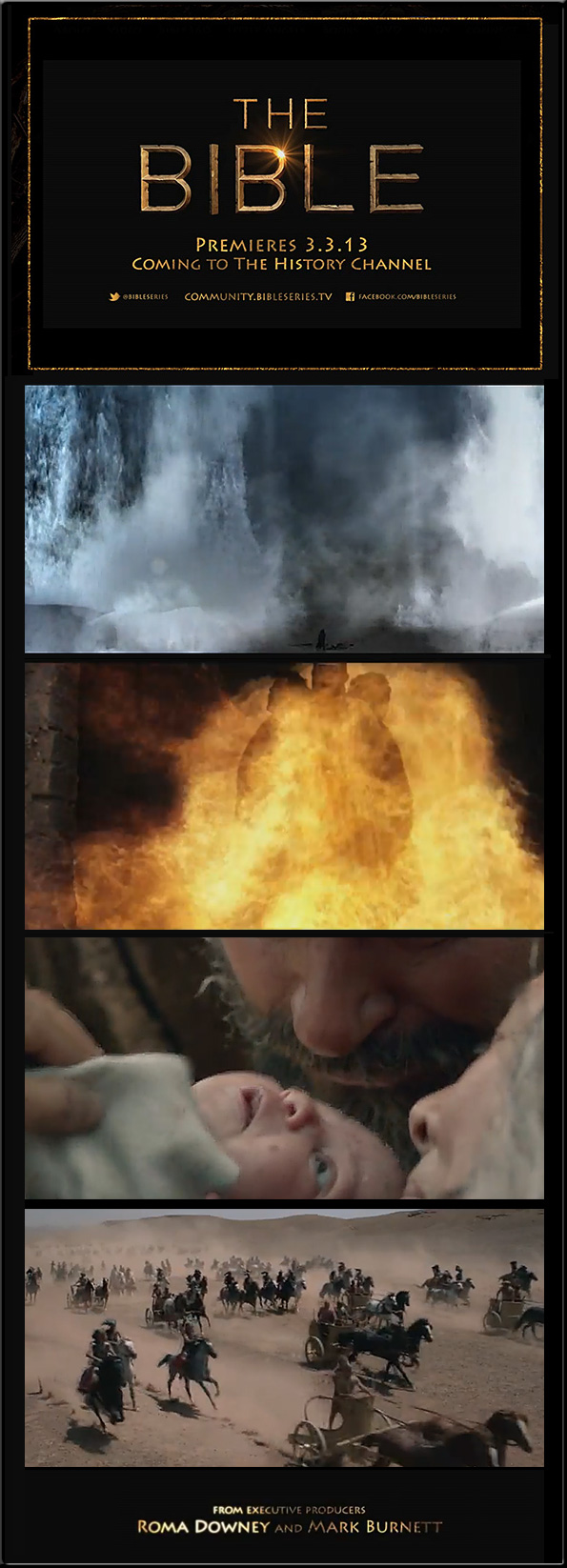
http://www.bibleseries.tv/


The Bible — Trailer / Video


Per YouVersion:

The Bible series, from television’s top husband-and-wife team Roma Downey and Mark Burnett, is the greatest visualization of the Bible we’ve ever seen. From Genesis to Revelation, this five-part series combines a powerful collection of stories with live action and truly amazing CGI.

We’re thrilled that the Bible App has been named the official app of The Bible series.

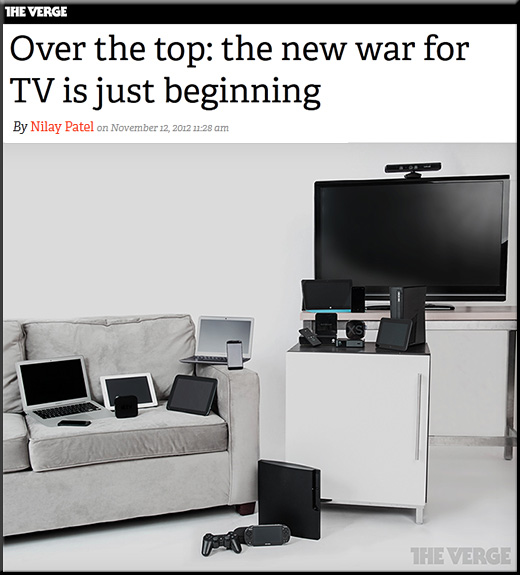
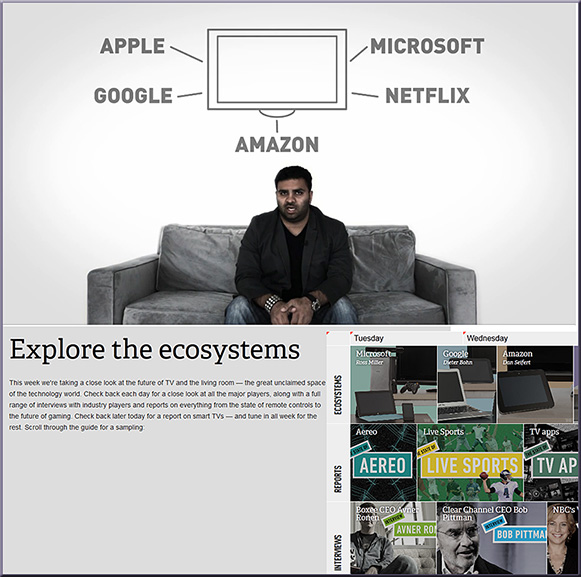
Over the top: the new war for TV is just beginning [Patel]

Over the top: the new war for TV is just beginning  -- from The Verge by Nilay Patel -- November 12 2012


.

 Future of TV


.
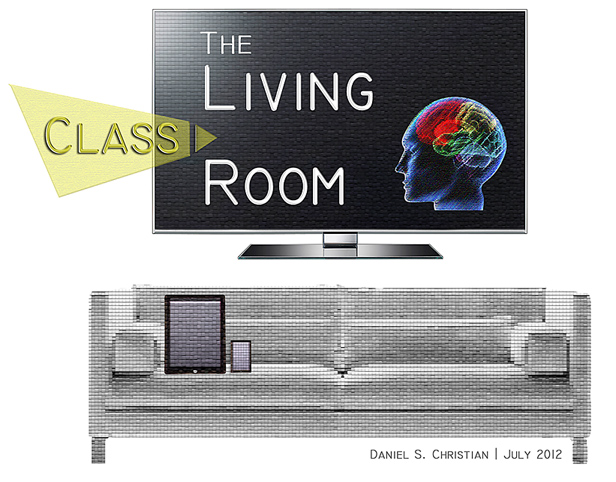
The Living [Class] Room -- by Daniel Christian -- July 2012 -- a second device used in conjunction with a Smart/Connected TV


.

From DSC:
I’m beginning to wonder if many of us will be moving off of Moodle, Sakai, Bb Learn, Desire2Learn, etc. to platforms and ecosystems that are being created by Apple, Google, Amazon, and Microsoft.  Rockstar professors on “primetime” — or anytime. If that happens, you can be sure there will be teams of specialists creating and delivering the content and learning experiences.


An innovative, sharp concept for a potential Apple TV

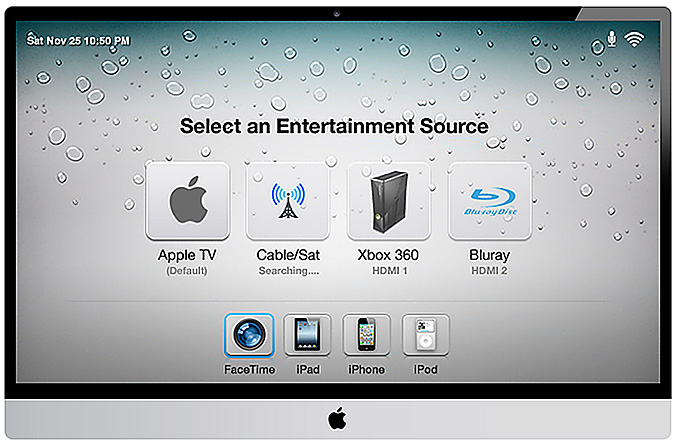
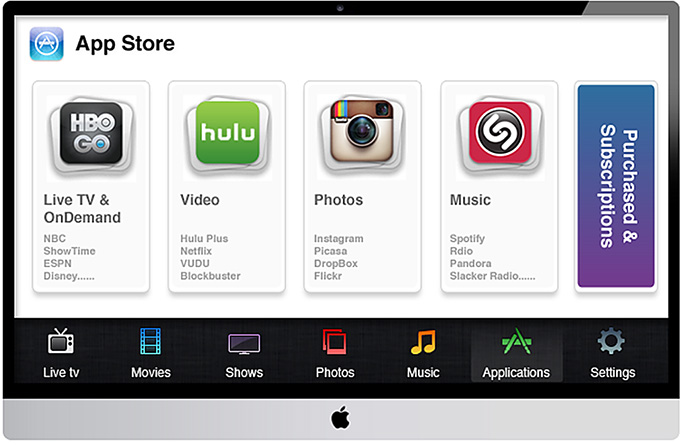
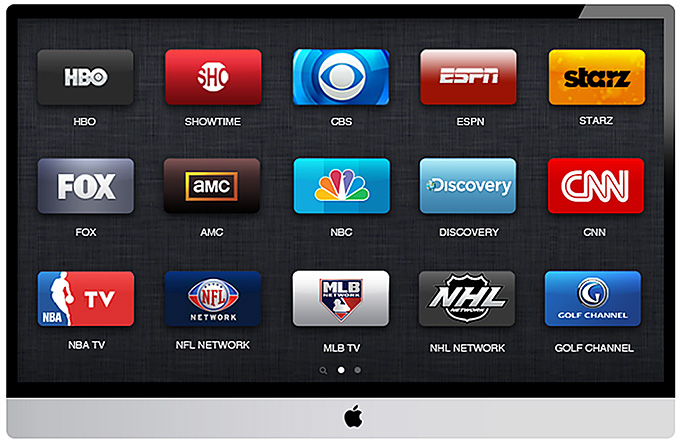
An à la carte Apple TV concept integrates Siri, FaceTime, and cable/satellite providers (Gallery) — from 9to5mac.com by Jordan Kahn

Example “screenshots” from this concept:

Apple TV Concept - Nov 2012

.


Also see:
 

From DSC:
This relates to what I’m calling “Learning from the Living [Class] Room”

.

The Living [Class] Room -- by Daniel Christian -- July 2012 -- a second device used in conjunction with a Smart/Connected TV


.

From DSC:
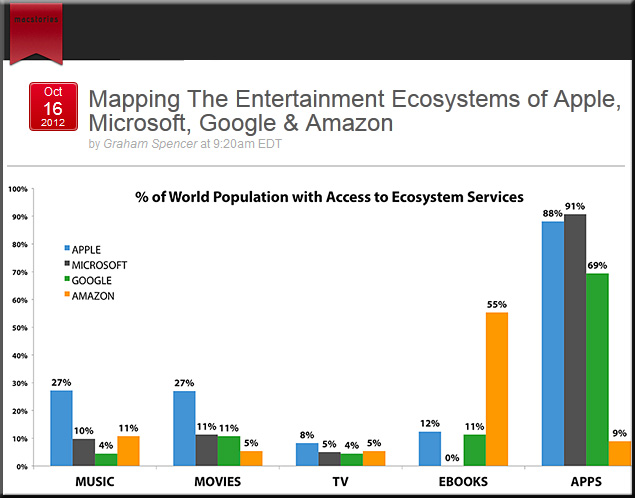
Entertainment-related ecosystems now…but educationally-related ecosystems could be coming up next…

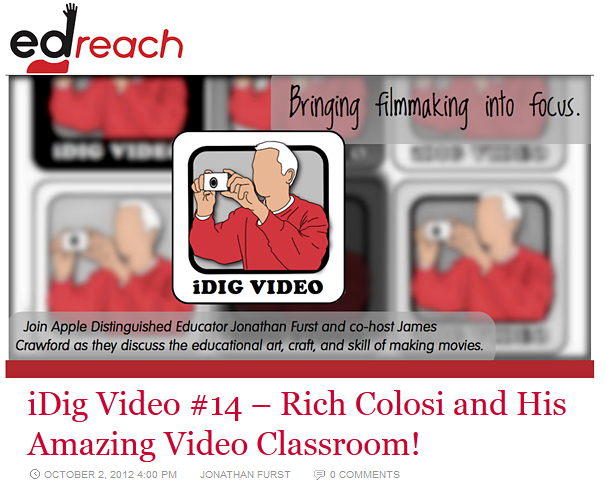
Rich Colosi and His Amazing Video Classroom!


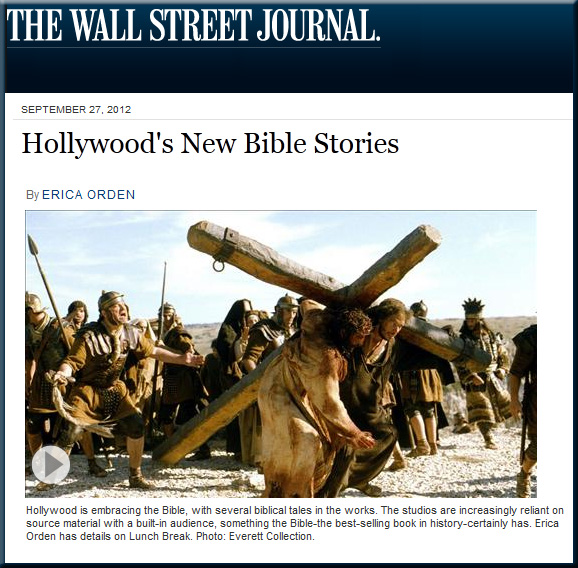
Hollywood's new Bible stories -- from the Wall Street Journal by Erica Orden

The future of Microsoft’s Xbox? Interactive “TV” — from readwriteweb.com by Mark Hachman
.

The future of Microsoft’s Xbox appears to be moving briskly toward interactive TV,
based on a high-profile hire of CBS Entertainment’s former television chief and the
launch of two interactive TV “programs” that tap into Microsoft’s Kinect peripheral.

.

1.5 million homes cut the cord in Q1 2012 — from videomind.ooyala.com by Greg Franzese

Excerpt:

Americans continue to gobble up online video, watching almost 35 hours a week across all connected screens.

Nielsen’s Cross Platform Report for the first quarter of 2012 found the average TV consumer is watching six fewer minutes of traditional television per day, but overall viewing continues to grow as more people watch TV content online. (Our Online Video Index data shows a similar trend, as people watch more movies, sports and TV shows online.)

sadf


asdf

© 2025 | Daniel Christian