


On 09/20/2012,
in communications, creativity, drama/theater, history, media/film,
by Daniel Christian
On 09/10/2012,
in Apple, collaboration, digital audio, digital learning, digital storytelling, digital video, e-publishing related items (EPUB and more), media/film, multimedia, new media literacies, reinvent, teaching & learning,
by Daniel Christian
On 09/08/2012,
in 21st century, cloud-based computing / apps / other cloud-related, communications, digital video, Learning from the Living [Class] Room, media/film, TVs,
by Daniel Christian
Vidmind launches cloud TV platform to let anyone create a white labeled Netflix — from betakit.com by Erin Bury
Excerpt:
Tel Aviv-based startup Vidmind came out of stealth today and debuted its cloud-based TV solution, which lets operators, broadcasters and retailers essentially create a white labeled version of Netflix. The company provides an Android-based set top box that can be branded for any company, cloud infrastructure to build a streaming TV service, back-end management for operators, clients for multiple platforms including mobile tablet and PC, and built-in second screen and social features so viewers can interact around content.
Also see:
- Vidmind launches first Open End-to-End OTT Video Platform-as-a-Service at IBC — from digitaltvnews.net
- FIOS TV exec: Cord cutting is growing, and changing the TV biz — from gigaom.com by Janko Roettgers
Many cable TV operators still argue that cord cutting doesn’t exist, but Verizon’s FIOS TV director Maitreyi Krishnaswamy thinks it’s real, and growing. But that’s not all: Krishnaswamy is also arguing that it might change the industry by putting pressure on studios.

On 07/23/2012,
in media/film,
by Daniel Christian

Techs related to transmedia storytelling may pave the way nicely for more educationally-related apps
On 05/29/2012,
in 21st century, 24x7x365 access, A/V -- audio/visual, digital storytelling, emerging technologies, future, Learning from the Living [Class] Room, media/film, storytelling, television, trends, TVs, videoconferencing,
by Daniel Christian
From DSC:
As the massive convergence of the computer, the telephone, and the television continues, other trends are also taking place that may eventually impact how we interact with educationally-related content. That is, the main screen of our living rooms might be delivering a 5-10 minute “lecture”, but our tablets and smart phones may be in our laps as we interact around this content with others.
Along these lines, as transmedia storytelling develops, the use of multiple devices and methods to consume and contribute to content may be setting the stages for how things can get done with more educationally-related applications.
Consider this excerpt from Complex TV: Transmedia Storytelling — by Jason Mittell, Associate Professor of American Studies and Film & Media Culture at Middlebury College:
As television series have become more complex in their narrative strategies, television itself has expanded its scope across a number of screens and platforms, complicating notions of medium-specificity at the very same time that television seems to have a clearer sense of distinct narrative form. This chapter explores how television narratives are expanded and complicated through transmedia extensions, including video games, novelizations, websites, online video, and alternate reality games. With specific analyses of transmedia strategies for Lost and Breaking Bad, I consider how television’s transmedia storytelling is grappling with issues of canonicity and audience segmentation, how transmedia reframes viewer expectations for the core television serial, and what transmedia possibilities might look like going forward.
Also relevant/see:
- Please don’t ruin the second screen — from techcrunch.com by Somrat Niyogi
Excerpt:
The second screen space is going to be a multi-billion dollar market. Just last week, Tim Cook announced that 67M iPads were sold in less than two years. It took more than 24 years to sell that many Macs. With the growing trend of second screen activity (i.e. using tablets while you watch TV), there is bound to be major disruption in the TV industry. - Comcast connects Skype HD videoconferencing to the living room TV — from networkworld.com by Larry Hettick
Excerpt:
With the Skype on Xfinity service customers will also be able to:
• Make and receive Skype-to-Skype video and audio calls or send instant messages via Skype on a TV while watching their favorite TV show at the same time, and accept incoming Skype calls during a TV show with the help of Caller ID.
• Import Skype friends into a global address book which can also contain Facebook, Outlook, Gmail and smartphone contacts so subscribers can find friends who already use Skype and see when contacts are online and available to talk.
• Communicate with the hundreds of millions of connected Skype users around the globe, whether on a Skype-enabled TV, PC or mobile device. - A TV platform so disruptive everyone’s suing it — from fastcompany.com by David Zax
Excerpt:
We chat with Chet Kanojia of Aereo, the new TV-where-and-when-you-want-it service that has a few legal troubles. Could Aereo finally disrupt the loathed cable bundle–and TV altogether? - Now serving the latest in exponential growth: YouTube!— from singularityhub.com by David J. Hill.
.

Addendum on 6/2/12
On 05/17/2012,
in art, cloud-based computing / apps / other cloud-related, creativity, K-12 related, media/film, play, story, storytelling,
by Daniel Christian
Also see:
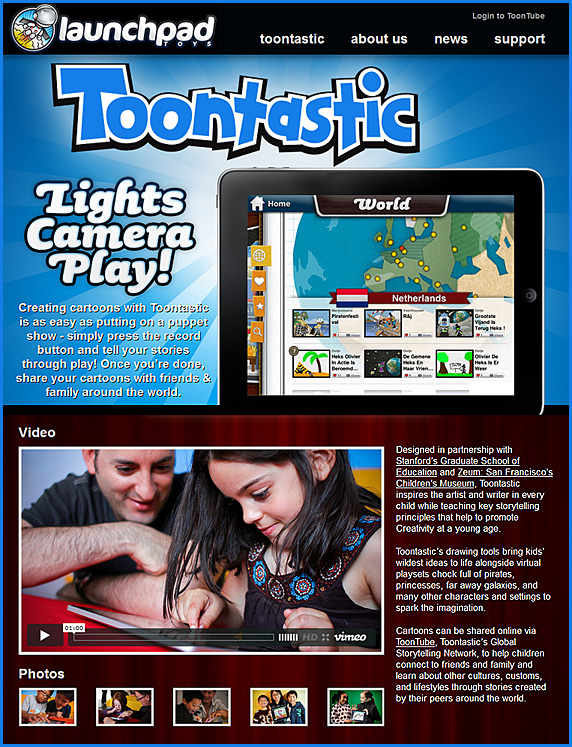
- Planet Earth – Narrated by kids — from the blog at launchpadtoys.com — by Thushan Amarasiriwardena
On 05/15/2012,
in 21st century, A/V -- audio/visual, media/film, multimedia, online media, television, TVs,
by Daniel Christian
Beyond Smart TV: ‘Surfaces’ prototype reveals the television of tomorrow — from wired.com by Christina Bonnington
Excerpt:
“In a few years’ time, you’ll be able to buy a TV that covers an entire wall, acting like wallpaper,” NDS chief marketing officer Nigel Smith told Wired. In this way, the TV could take the form of a gigantic canvas, providing layers of additional information, as well as different levels of immersion.
Because wall-sized TVs are hard to come by, NDS created a $30,000 setup comprised of six LCDs arranged in a rectangular array. The onscreen system is coded in HTML5 and runs on Chrome. A second screen experience, also coded in HTML5, provides remote control functionality in the browser of an iPad.
Xbox 360 hailed as a game-changer for Connected TV — from v-net.tv by John Moulding
Excerpt:
The Xbox 360 will be a game-changing device in the Connected TV market now that Microsoft has decided to transform it from a games console into a general entertainment hub. That is the view of Christian Bombrun, Deputy General Manager, Web, at M6, the French broadcaster that last December became the first free French channel to be available via a games console. “The difference between the Xbox and connected TVs is that this device is very well connected. Most people that buy a connected TV do not even know they are getting one and they do not plug it into the Internet,” he argues. “Xbox 360 users have already connected the device to enhance the gaming experience.”

The evolving definition of television — from readwriteweb.com by John Paul Titlow
Excerpt:
What will be interesting to watch is what evolves around that big screen – everything from the little screens and the apps they contain to the way that real-time communication and other data from the Web are integrated into the experience.
.

Keynote: Changing the user-experience: How will we watch TV in the future? –– keynote by Stefan Jenzowsky, Head of Multimedia, Siemens CMT — at the Connected TV Summit 2012
Ikea’s Uppleva TV will be a smart TV, have video streaming apps — from SlashGear.com by Mark Raby
.

.
When Smart TV gets smart — from uievolution.com by Pete Schwab, Senior Director, at UIEvolution.
Two-thirds of Americans watch at least one online video per day — from VideoMind.com by Greg Franzese
PANEL: Next steps for Connected TV –– from net.tv
Addendums on 5/17/12:
- Global Market Leader Visiware, Inc. Defines the Next Generation of Social TV
700 Interactive Televised Shows Aired Across 10 Countries Using Visiware’s Second-Screen PlayAlong™
NEW YORK, May 16, 2012 — /PRNewswire/ — Visiware, Inc., a global leader in the interactive television industry, announced today it has reached a milestone of 700 interactive TV shows aired across 10 countries using its second-screen PlayAlong™ product. PlayAlong™ provides TV viewers with the ability to interact real-time from their second-screen devices during their favorite programs. - As multi-screen TV matures, customer experience is key — from v-net.tv by John Moulding
- Ooyala.com

On 04/23/2012,
in collaboration, creativity, digital storytelling, disruption, media/film, multimedia, new media literacies, story, storytelling, web-based collaboration,
by Daniel Christian
“Hollywood will be destroyed and no one will notice,” Wales said. But it won’t be Wikipedia (or Encarta) that kills the moviemaking industry: ” Collaborative storytelling and filmmaking will do to Hollywood what Wikipedia did to Encyclopedia Britannica,” he said.
— quote from Jimmy Wales to Hollywood: You’re Doomed (And Not Because of Piracy) at wired.com by Ryan Singel
On 04/13/2012,
in animation, art, cloud-based computing / apps / other cloud-related, creativity, media/film, music, productivity / tips and tricks, storytelling, tools,
by Daniel Christian
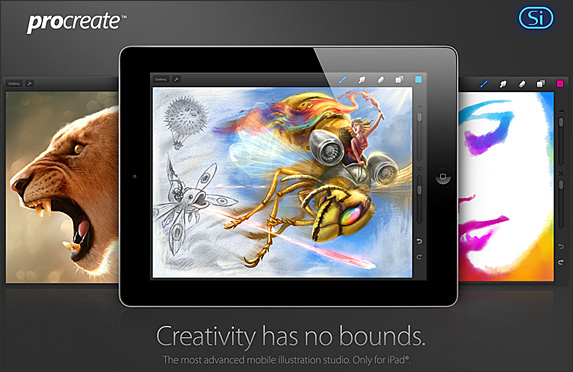
Animator creates incredible musical painting with $5 iPad app [VIDEO] — from Mashable by Christine Erickson
Excerpt:
“I really recommend it to anyone who does storyboards, concept art and animators, filmmakers, producers, whatever — this is the future,” says the video’s lead animator and director, Whitney Alexander. (You can see the full making-of here.)
Also see:
On 03/27/2012,
in digital audio, media/film,
by Daniel Christian

.
.
Addendum on 3/16/12:
On 02/08/2012,
in 21st century, 24x7x365 access, A/V -- audio/visual, Artificial Intelligence/Agents/LLMs/and Related, Augmented Reality (AR), changing business models, cloud-based computing / apps / other cloud-related, convergence, Daniel S. Christian, digital audio, digital learning, digital storytelling, digital textbooks, digital video, education technology, emerging technologies, ethics, future, game-changing environment, innovation, internet, learning agents, learning ecosystem, Learning from the Living [Class] Room, machine-to-machine communications, media/film, mobile learning, mobile technologies, MOOCs -- Massive Open Online Courses, more voice more choice more control, multimedia, Near Field Communication (NFC), new media literacies, online learning, online media, online tutoring, pace of change, personalized/customized learning, presentations, publishing, reinvent, relationships, robotics, social learning / networks, social media, society, staying relevant, teaching & learning, technologies for your home, technology (general), television, tools, trends, TVs, ubiquitous learning, user experience (UX), vision/possibilities, web-based collaboration,
by Daniel Christian
.
.
From DSC:
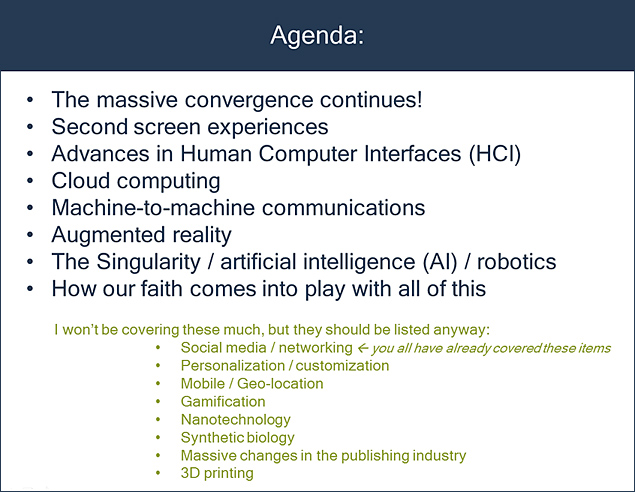
In case it’s helpful, clicking on this link or on one of the images above will link you to a recent presentation that I did for an Interim course at Calvin College entitled, “Social Media for Business?” As the class had already covered a lot of the topics relating to social media, my job was to focus more on some of the recent emerging trends and technologies. I will continue to keep pulse checking on those technologies which will allow for ubiquitous, mobile (as well as from the living room), 24x7x365, multimedia-based learning.
NOTE:
- Almost all of the images on the slides are linked up to web-based resources; so if you see something of interest, go ahead and click on that image/slide in order to learn more about that topic/article/etc.
On 01/13/2012,
in 21st century, A/V -- audio/visual, communications, curriculum, digital audio, digital video, education technology, K-12 related, media/film, multimedia, new media literacies,
by Daniel Christian
On 01/12/2012,
in 21st century, 24x7x365 access, A/V -- audio/visual, educational games / serious games, emerging technologies, media/film, online media, technologies for your home, television, TVs,
by Daniel Christian
.
What is motion design and how can you use it? Video 101 — from onlinevideo.net and Vimeo Video School
Excerpt:
Motion design is everywhere! You can see it in TV shows, movie credits, and of course right here on Vimeo. But what is motion design? How do you define motion design? Well read on my friends, as we jump into this new world…